
全球治理

Search documents
“为维护世界和平贡献中国智慧、中国方案”
Ren Min Ri Bao· 2025-11-26 22:21
巴勒斯坦人民斗争阵线总书记马吉达拉尼在接受本报记者采访时表示,作为联合国安理会常任理事国, 中国始终坚持不干涉内政原则,建设性参与解决国际热点问题。长期以来,中方一贯支持各国人民自主 探索发展道路,支持中东国家团结协作解决地区安全问题。在中国共产党领导下,中国取得举世瞩目的 发展成就,并努力促进全球公平正义,推动世界和平与发展。 马吉达拉尼曾赴北京参加巴勒斯坦各派内部和解对话。他高度赞赏中方在巴勒斯坦问题上秉持的公道正 义立场。他表示,巴勒斯坦14个派别共同签署的《北京宣言》具有重要意义,是推动解决巴勒斯坦问 题、实现中东和平稳定的重要一步。"中国始终坚持正义立场,支持巴勒斯坦成为联合国正式会员国, 支持恢复巴勒斯坦民族合法权利。中国在解决巴勒斯坦问题等国际事务上发挥着日益重要的作用,为维 护世界和平贡献中国智慧、中国方案。"马吉达拉尼说,期望国际社会根据中方提出的"三步走"倡议, 制定落实"两国方案"的具体时间表和路线图,推动巴勒斯坦问题全面、公正、持久解决。 马吉达拉尼曾多次访问中国,见证了中国在全面深化改革开放进程中取得的辉煌成就。"在中国共产党 领导下,中国在诸多领域取得巨大进步,成功摆脱绝对贫困,走 ...
凝聚全球治理共识 共创多边合作未来
Ren Min Ri Bao· 2025-11-26 21:11
近日,由全球化智库(CCG)主办、中国国际贸易学会协办的第十届中国全球智库创新年会在北京举办。 作为连续10年举办的国际高端智库交流平台,本届年会汇聚来自全球50多个国家和地区的200余名嘉 宾,涵盖政府官员、外交使节、国际组织代表、专家学者、企业高管及青年代表,围绕"全球治理与多 边合作"这一主题探讨如何坚守多边主义、推进完善全球治理。 多国人士积极评价中国多领域贡献 在开幕式上,CCG创始人兼理事长王辉耀指出:"全球治理从来不是零和博弈,而是关于共担责任、共 同发展的事业。世界需要大国之间的合作,同样也需要更多国家在全球事务中发出自己的声音。因此, 如何构建一个更加公平、包容、高效的全球治理体系成为我们时代的重要课题。"在本届年会中,中国 的发展成就以及对全球合作的贡献,成为多位外国嘉宾讨论和肯定的热点。 "中国在科技领域发展迅速,在多数行业都已经取得领先地位。"美国哥伦比亚大学教授杰弗里.萨克斯 特别强调了中国在绿色能源领域的决定性作用,认为中国在绿色发展和数字技术方面为满足全球需求做 出了巨大贡献。 经济合作与发展组织(OECD)驻华代表海博认为,地缘政治紧张、贸易保护主义、气候变化等都在考验 现有多 ...
全球治理需要更多“南方”力量
Jing Ji Ri Bao· 2025-11-26 00:08
Group 1 - The core viewpoint of the article emphasizes the significance of the recent multilateral international meetings held in Brazil and South Africa, showcasing the "Southern" perspective in global governance and the need for increased international dialogue and cooperation [1][2] - The COP30 conference in Brazil, marking the 10th anniversary of the Paris Agreement, focused on actionable commitments regarding climate adaptation and compensation, reflecting the priorities of Southern nations [1] - The G20 summit in Johannesburg was notable for being the first held on the African continent, highlighting the development needs and unique perspectives of African countries in the global governance reform process [1] Group 2 - The article discusses the ongoing challenges posed by hegemonism, unilateralism, and protectionism, as well as the widening North-South divide and ecological degradation, which necessitate a stronger voice for the Global South in international affairs [2] - The absence of the United States at these meetings is highlighted, particularly given its status as the largest historical emitter of greenhouse gases, indicating a divergence from the mainstream international community [2] - Despite progress in addressing climate change and poverty, significant gaps remain, with 83% of countries classified as "highly unequal" and nearly 700 million people living in extreme poverty, underscoring the need for coordinated global action [3]
中意高校共议:如何培育更多新时代的“马可·波罗”
Zhong Guo Qing Nian Bao· 2025-11-23 22:39
Core Viewpoint - The dialogue between Chinese and Italian universities aims to cultivate a new generation of "Marco Polos" to enhance global governance and cross-cultural cooperation through educational collaboration [1][5]. Group 1: Educational Collaboration - The 2025 Sino-Italian University Presidents Dialogue held in Beijing focused on themes such as interdisciplinary integration, collaborative innovation, and global governance talent cultivation [1]. - Chinese universities, such as Renmin University, are exploring diverse educational pathways, including a tri-degree management program with Italy and the establishment of platforms for youth engagement in global governance [2]. - The collaboration has led to the establishment of 11 new cooperative educational institutions and projects, nearly 200 student exchange programs, and five joint research laboratories over the past year [5]. Group 2: Interdisciplinary Integration - Beijing University collaborates with Italian institutions on projects like the International Thermonuclear Experimental Reactor and digital humanities research, emphasizing the importance of interdisciplinary integration in higher education [3]. - South China University of Technology is deepening cooperation with Italian universities in urban design and business management, focusing on green manufacturing and digital transformation [3]. - The need for universities to adapt to the demands of the knowledge-based society is highlighted, with a focus on creating innovative research and educational models that cater to the new generation [3]. Group 3: Global Governance and Skills Development - Italian universities are emphasizing the importance of soft skills such as cross-cultural communication and leadership in their curricula to prepare students for global governance challenges [2]. - The establishment of Confucius Classrooms and global governance training programs aims to enhance students' capabilities in soft skills and global awareness [2]. - The integration of humanities into engineering education is seen as a way to equip students with a comprehensive understanding of global issues [3]. Group 4: Industry and Academia Integration - The need to break down barriers between academia and industry is emphasized, with initiatives like the Sino-Italian Engineering Innovation Academy focusing on sustainable development and interdisciplinary knowledge [4]. - Shanghai International Studies University is leveraging language as a strategic resource to support the development of language intelligence applications, directly addressing industry needs [4]. - The collaboration between universities and industries aims to create a fusion ecosystem that connects innovation chains with industrial chains [5].
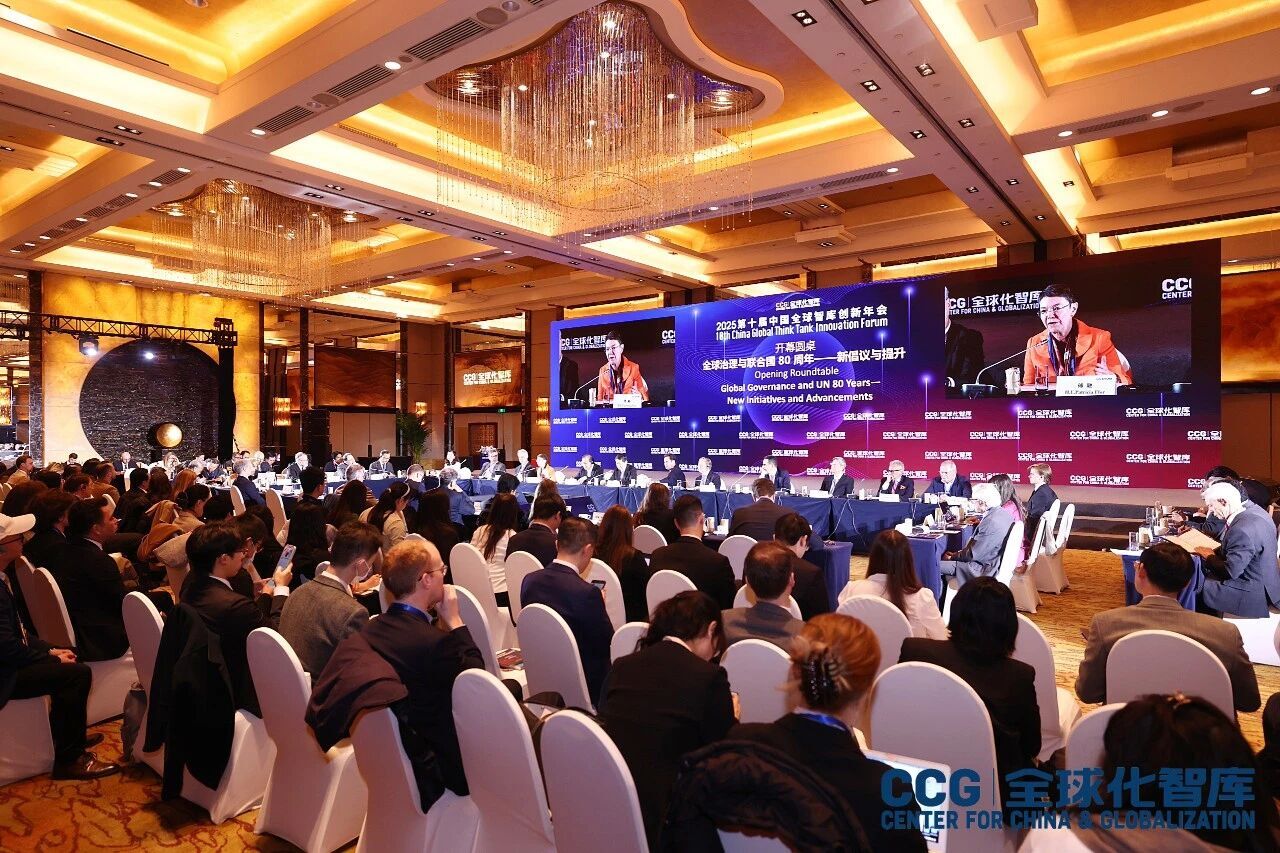
第十届中国全球智库创新年会在京举办
Zhong Guo Jing Ji Wang· 2025-11-22 09:14
商务部中国国际贸易学会会长金旭在发言中指出,当今世界正处于高度不确定与多重危机交织的时代,经济复苏乏力、地缘冲突不断、数字鸿沟扩大,单边 主义与保护主义持续抬头,严重削弱了全球合作基础,也加剧了信任与和平赤字。在此背景下,坚持以联合国为核心的国际体系、重申多边主义的价值,是 国际社会应对挑战的唯一正确道路。 在主题为"全球治理与联合国80周年——新倡议与提升"的开幕圆桌讨论中,与会嘉宾表示,联合国应在和平、安全、发展与人权等领域持续发挥核心作用, 各国需在国际法与多边机制框架下深化协作,共同推动建设更具包容性和有效性的全球治理体系。 本届年会由全球化智库(CCG)主办、中国国际贸易学会(CAIT)协办,吸引全球50多个国家和地区的200余位嘉宾参与,涵盖政府官员、国际组织代表、专家 学者、企业高管及30余位国际青年领袖代表。 11月20日,第十届中国全球智库创新年会在北京举办。来自全球多国的政界、学界、商界及智库领域代表齐聚一堂,围绕全球治理改革、创新合作深化、多 极化世界构建、全球南方崛起、供应链韧性、绿色转型等核心议题,展开全方位、多层次的深入交流与多维研讨。 CCG创始人兼理事长、国务院原参事王辉耀在致 ...

香港国际金融学会主席肖耿:中美宏观经济格局差异
Sou Hu Cai Jing· 2025-11-20 17:53
Core Insights - The article discusses the significant differences in macroeconomic structures between China and the United States, emphasizing China's transition from GDP growth to wealth creation, accumulation, and inheritance as crucial for achieving the goal of national prosperity and strength [2][3]. Economic Development Model Transformation - China is shifting from a focus on rapid economic scale expansion to prioritizing quality and efficiency, aiming for sustainable wealth growth and intergenerational wealth transfer [4]. - Coastal regions in China have largely entered a high-income development stage through industrial upgrades and innovation [4]. - China's military modernization and defense capabilities have effectively maintained national sovereignty and territorial integrity, contributing to regional stability [4]. Structural Contradictions and Historical Analysis - The article highlights the stark contrast between the U.S.'s excessive consumption and China's high savings rate, which has historical roots dating back to post-World War II economic conditions [6][7]. - The U.S. transitioned from a trade surplus to a trade deficit due to changes in monetary policy after the dollar was decoupled from gold, leading to a consumption-driven economy [7][8]. Wealth Effect Disparities - Real estate serves as a primary wealth vehicle, with U.S. property values having doubled over the past decade, significantly boosting consumer confidence and investment [9]. - In contrast, China's real estate market has seen a decline, with property values estimated to have dropped by about one-third, equating to a loss of wealth comparable to one GDP [9]. Policy Innovation and Future Directions - The article suggests that China needs to adjust its macroeconomic policies to create ample space for wealth creation, accumulation, and inheritance [14]. - It emphasizes the importance of diversifying demand sources and leveraging Hong Kong's unique position to foster innovative cooperation models, particularly in the context of the "H-share" listing and potential blockchain integration [14][15].

第十届中国全球智库创新年会举行 与会人士吁合作完善全球治理
Zhong Guo Xin Wen Wang· 2025-11-20 15:50
经济合作与发展组织(OECD)驻华代表海博认为,地缘政治紧张、贸易保护主义、气候变化等都在考验 着现有的多边合作机制,这就需要更多处于不同发展阶段的国家开展合作,通过亚太经合组织(APEC) 等重要平台,达成共识、分享经验。 中新社北京11月20日电 (记者张焕迪)第十届中国全球智库创新年会20日在北京举行,来自全球50多个国 家的200多位嘉宾齐聚一堂,探讨完善全球治理等重要议题,呼吁各方协作努力,为完善全球治理贡献 力量。 全球化智库(CCG)创始人兼理事长王辉耀在开幕式致辞中指出,当今世界正进入一个充满深刻不确定性 的新时代。全球治理体系正在经历重大调整,支撑国际秩序的长期共识正在被重新界定。 他指出,全球治理从来不是零和博弈,而是关于共担责任、共同发展的事业。世界需要大国之间的合 作,同样也需要更多国家在全球事务中发出自己的声音。 中国国际贸易学会会长金旭表示,面对挑战,回到以联合国为核心的国际秩序以及高举多边主义的旗帜 是唯一正确的选择。我们必须要超越零和博弈的心态,坚持通过共商来捍卫全球多边主义。 金旭进一步指出,中国提出全球治理倡议,主要目的是实现共同发展,为全球秩序贡献中国智慧和中国 解决方案 ...

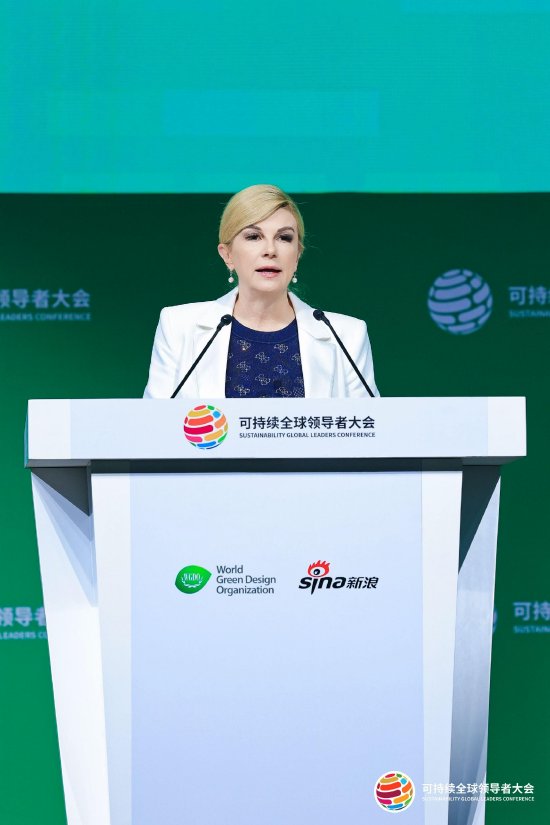
克罗地亚前总统科琳达·格拉巴尔—基塔罗维奇:以“携手共进”精神推动全球可持续治理
Xin Lang Cai Jing· 2025-11-20 06:49
她特别强调了体育在加速可持续创新方面的独特价值。作为全球供应链的一环,体育能凝聚政治分歧、 激发合作与变革。现代奥运会已超越国家荣誉,成为一项承载社会经济与环境价值的"全球使命"。通过 奥运投资,可提升区域凝聚力、能源效率并促进循环经济。她分享了三大深刻洞察:临时场馆成功转变 为永久性模块化设施;供应链通过采用循环纺织品与低碳材料变得更清洁,促使赛事与品牌走向合作; 以及借助广受信任的运动员作为信使,能极大提升公众参与度。 在总结中,她以克罗地亚语"携手共进"勉励全场,强调若选择互操作性而非支离破碎,选择切实转型而 非空喊口号,必能实现供应链透明与绿色市场,并认识到可持续发展是"最值得投资的增长战略"。 她盛赞上海充满无限可能,呼吁从此地出发,以互相尊重、创造性解决问题和跨界合作的精神,将治理 转化为进步的引擎。她最后强调,可持续性已不仅是时代的智慧测试,更是设计美好未来的蓝图,要确 保"每一欧元、每一人民币、每一美元,都能创造共同价值"。 以下为发言全文: 2025可持续全球领导者大会于10月16日-18日在上海市黄浦区世博园区召开。克罗地亚共和国第四任总 统、国际奥委会委员科琳达·格拉巴尔—基塔罗维奇(K ...
中欧青年对话会2025在京举行
人民网-国际频道 原创稿· 2025-11-19 01:48
Core Viewpoint - The dialogue conference held in Beijing focuses on the future of China-Europe relations, emphasizing the role of youth in fostering cooperation and addressing global challenges as the two regions approach the 50th anniversary of their diplomatic ties in 2025 [2][3]. Group 1: Importance of Youth in China-Europe Relations - Youth are seen as the future and hope of China-Europe relations, playing an irreplaceable role in promoting healthy and stable development [2]. - The conference aims to enhance understanding and trust among youth representatives from both regions, facilitating multi-faceted cooperation [2][4]. - Youth representatives express a commitment to being inheritors of friendship and promoters of cooperation between China and Europe [4]. Group 2: Perspectives from Key Speakers - Zhao Rui highlights the significance of the conference in the context of the 50th anniversary of China-EU relations, calling for youth to take on historical responsibilities [2]. - Pablo Iglesias Turrión emphasizes the need for Europe to strengthen friendly cooperation with China, viewing it as the best choice amid a reshaped global landscape [2]. - Grzegorz W. Kołodko notes that global youth generally recognize and have confidence in China's development achievements and future prospects [2]. Group 3: Future Cooperation and Global Governance - Chang Jian outlines that mutual respect, seeking common ground while reserving differences, and open cooperation are key to the next 50 years of China-Europe relations [3]. - Eberhard Sandner discusses China's recent institutional developments that provide new solutions for global governance and reshape international understanding [3]. - The conference features four sub-forums focusing on various aspects of future cooperation, with over 100 youth representatives engaging in discussions [4]. Group 4: Cultural Exchange and Understanding - Prior to the conference, over 60 European youth representatives visited Hangzhou to experience Chinese culture and innovation firsthand [4]. - The dialogue emphasizes the importance of open communication and curiosity among youth to rebuild mutual trust between China and Europe [3].
携手推动全球治理公正化
Jing Ji Ri Bao· 2025-11-13 22:20
Group 1 - Malaysia's Prime Minister Anwar expressed the country's willingness to join BRICS, highlighting the platform's role in fostering a more just and equitable global governance system [1] - Anwar's statement reflects Malaysia's proactive stance on multilateral cooperation and the shared desire among developing countries to enhance their international voice and improve global governance [1] - The current global governance system is primarily dominated by a few developed countries, leading to the underrepresentation of developing nations' interests in key decision-making processes [1] Group 2 - The growth rate of emerging markets and developing economies is projected to be 4.2% in 2024, more than double that of developed economies, indicating a significant shift in global economic dynamics [1] - Over the past 20 years, developing countries have contributed 80% to global economic growth, underscoring their increasing importance in the international economic landscape [1] - The BRICS cooperation mechanism has gained widespread recognition among global South countries, providing new development opportunities and promoting a more democratic international relationship [2]