单边主义

Search documents
外交部:中方祝贺乌拉圭接任 “77国集团和中国”2026年主席国
Xin Lang Cai Jing· 2026-01-16 18:01
Group 1 - The core viewpoint is that China congratulates Uruguay on assuming the presidency of the "Group of 77 and China" for 2026, expressing expectations for enhanced unity and cooperation under Uruguay's leadership [1][2] - The "Group of 77 and China" is highlighted as a crucial force in safeguarding the common interests of developing countries and improving the global governance system, emphasizing its irreplaceable role in international affairs [1][2] - The spokesperson emphasizes the need for developing countries to unite against unilateralism and bullying actions, particularly in the context of current international turbulence and challenges to multilateralism [2] Group 2 - The UN Secretary-General reiterated the importance of multilateralism and cooperation during the handover ceremony, reflecting a common sentiment in the international community against unilateral actions [2] - There is a call for the development agenda to return to the center of international discussions, with a focus on building a community with a shared future for humanity [2]
中欧电动汽车案“软着陆”具有积极意义
Zhong Guo Xin Wen Wang· 2026-01-16 13:08
Group 1 - The core viewpoint of the article highlights the significant progress made between China and the EU in resolving the electric vehicle trade and investment disputes, marking a positive development after two years of negotiations [1][2] - The agreement serves as a strong signal of support for multilateral trade systems, emphasizing that despite the challenges posed by unilateralism, China and the EU are committed to upholding multilateralism and WTO rules [2][3] - The electric vehicle industry is strategically important for both China and the EU, and the recent consensus demonstrates the potential for cooperation and finding mutually beneficial solutions through dialogue [3][4] Group 2 - The consensus reached between China and the EU introduces a new cooperative model, utilizing price commitments as an alternative to anti-subsidy tariffs, which respects both parties' interests [4] - The price commitment agreement allows Chinese companies to negotiate better terms, potentially leading to higher profits per vehicle, despite a possible short-term reduction in export volumes [4] - The detailed rules established in the guidance document regarding minimum import prices and EU sales prices reflect a balanced and non-discriminatory approach, aligning with existing WTO regulations [4]
外交部:中方祝贺乌拉圭接任“77国集团和中国”2026年主席国
Xin Hua She· 2026-01-16 11:42
Group 1 - The core viewpoint is that China congratulates Uruguay on assuming the presidency of the "Group of 77 and China" for 2026, expressing expectations for enhanced unity and cooperation under Uruguay's leadership [1][2] - The "Group of 77 and China" is recognized as a vital force in safeguarding the common interests of developing countries and improving the global governance system, emphasizing its irreplaceable role in international affairs [1] - China, as the largest developing country, stands firmly with the "Group of 77" to defend international fairness and justice, and to protect the common interests of developing nations [1] Group 2 - The UN Secretary-General Antonio Guterres highlighted the importance of multilateralism and cooperation during the handover ceremony, reflecting a shared sentiment in the international community against unilateral actions [2] - In the context of a turbulent international situation and challenges to multilateralism, developing countries are urged to unite and collectively oppose unilateralism and bullying actions to safeguard their legitimate development interests [2] - There is an expectation for the "Group of 77 and China" to further consolidate cooperation and promote development issues back to the center of the international agenda, working together to build a community with a shared future for mankind [2]
普京:俄罗斯支持加强联合国的核心作用
Xin Hua She· 2026-01-15 14:56
Core Viewpoint - Russia supports strengthening the core role of the United Nations, emphasizing the importance of the principles established by the UN Charter in the face of unilateral actions by some countries [1] Group 1 - President Putin expressed concerns about some countries imposing their will on others and replacing diplomatic means with unilateral actions [1] - He reiterated that Russia adheres to a balanced and constructive foreign policy [1] - Russia aims to maintain mutually beneficial relationships with all partners [1]
特朗普紧急发文,直言美国可能“要完”,中国或成为其自救的关键
Sou Hu Cai Jing· 2026-01-15 12:11
Group 1 - Trump's recent social media post suggests that if the Supreme Court rules against his tariff policy, the U.S. economy could face severe consequences [1][3] - The tariff policy, implemented through an executive order, has faced legal challenges from multiple states and corporations, claiming it violates the Constitution by bypassing Congress [3][5] - If the Supreme Court rules against the tariffs, the U.S. government may have to refund hundreds of billions of dollars in tariffs and additional costs incurred by businesses, potentially exceeding one trillion dollars [3][5] Group 2 - Analysts suggest that China could play a crucial role in alleviating the situation, as the U.S. relies heavily on Chinese imports, particularly in the electronics sector where two-thirds of chips come from China [7][8] - A ruling against the tariffs could prompt the U.S. to adjust its strategy and collaborate with China, potentially avoiding significant refunds and allowing U.S. companies to benefit from the Chinese market [8][10] - Previous trade talks between the U.S. and China have shown that cooperation can ease pressures on businesses, indicating a mutual benefit in reducing tariffs [10][12] Group 3 - The potential ruling could have broader implications, affecting not only U.S.-China relations but also the global supply chain, with other countries like the EU also expressing concerns over U.S. tariffs [14][16] - Trump's approach to tariffs appears to be short-sighted, as legal challenges threaten the foundation of his manufacturing strategy, highlighting the need for dialogue with China [16][18] - The current economic climate necessitates a reevaluation of unilateral trade policies, emphasizing the importance of cooperation for global economic stability [18]

全球媒体聚焦 | 美媒:美国政府的单边主义行径将导致一个没有规则的世界
Xin Lang Cai Jing· 2026-01-15 09:07
本届美国政府上台以来,不断采取单边主义行动。近期,美国不仅对委内瑞拉发动突然袭击,强行控制 委内瑞拉总统马杜罗夫妇,扣押委内瑞拉石油资产,还声称将动用一切手段获得丹麦自治领地格陵兰 岛。美国《外交事务》杂志近日刊发美国国际法学者的文章《一个没有规则的世界》,从国际法的角度 分析了美国政府种种行为给国际秩序带来的危害。 美国《外交事务》网站截图 作者指出,如今陷入危机的已不只是现行的国际法律体系,还有规则的存续及其对国家权力行使的约 束。 文章说,美国政府的言行令人不安之处不仅在于其违法行为。更甚的是,美国官员彻底抛弃了法律约 束。本届美国政府的行事逻辑仿佛是,单靠武力威胁或动用武力,就能为自身攫取法律赋予的权力。曾 在战争被明令禁止后遭到彻底摒弃的炮舰外交,如今再度死灰复燃。美国正凭借石油封锁、强制性扣押 以及军事威胁等手段,逼迫其他国家做出政治和经济上的让步。此举意在宣扬一套荒谬主张:强权即公 理,实力本身就能凭空催生权力,全然无需任何正当理由。 作者批评道,本届美国政府对《联合国宪章》所确立的禁止使用武力这一国际准则的公然无视,可能会 导致这一准则彻底崩塌。 文章说,过去一年来,美国政府一直在攻击和瓦解现 ...
两艘中国油轮直接掉头!特朗普抢5000万桶委石油,转头发现中方一桶也不买!
Sou Hu Cai Jing· 2026-01-15 02:29
特朗普政府上任伊始,就以"美国优先"为口号,试图通过强化对外干预,保护美国的能源利益。在这一背景下,美国对委内瑞拉这个石油资源丰富的国家展 开了猛烈攻击,企图通过控制其石油产业,实现对全球市场的影响。 美国石油巨头们的沉默也反映出一种不安和怀疑。现阶段,全球油价波动和地缘政治的不确定性,使得投资委内瑞拉的风险陡然攀升,令人望而却步。特朗 普自以为的金山银山,其实不过是块"烫手山芋",没有人愿意在这样的政治风暴中捡便宜。 中国在能源供应上的多元化已经为其提供了强有力的支持。虽然委内瑞拉的原油在中国进口中占据一定比例,但并非不可替代。中东、俄罗斯,以及非洲等 地区的石油资源,都可以成为中国的后盾。在面对美国的威胁时,中国能够迅速调整战略,以实现资源的灵活配置。 中国的能源进口途径早已涵盖多个国家和地区,导致其并不依赖于某一特定供应国。更重要的是,中国市场的巨大需求,使得其他国家愿意主动寻求与中国 的合作。阿根廷的牛肉、巴西的农产品,以及秘鲁和智利的矿产,无不显示出中国在全球供应链中的重要地位。 特朗普的策略看似是要通过控制资源来抑制中国的发展,但实际上却成了他的又一战略败笔。无论是想用委内瑞拉的原油来威胁中国,还 ...
特朗普紧急发文,直言:美国可能会完蛋,中国已是他的最大救星
Sou Hu Cai Jing· 2026-01-14 12:37
Group 1 - The core issue facing the U.S. is the uncertainty surrounding the tariff case, which has significant implications for the economy and international standing [1][7][9] - The U.S. is heavily reliant on China for rare earth elements, which are crucial for modern technology and military applications, and the domestic rare earth industry has stagnated [20][22] - The upcoming visit to China in April is seen as a potential opportunity for Trump to resolve trade disputes and seek cooperation in critical areas like rare earths and chips [22][24] Group 2 - The EU's recent shift in policy towards China, opting for a "minimum price commitment" instead of high tariffs, undermines U.S. efforts to pressure China and complicates the situation for American car manufacturers [11][13] - The internal divisions within NATO and the EU's prioritization of their own interests over U.S. directives indicate a decline in U.S. influence on the global stage [18][29] - The ongoing U.S.-China competition is centered on the control of rare earths and chips, which are essential for maintaining technological and economic advantages [18][20]
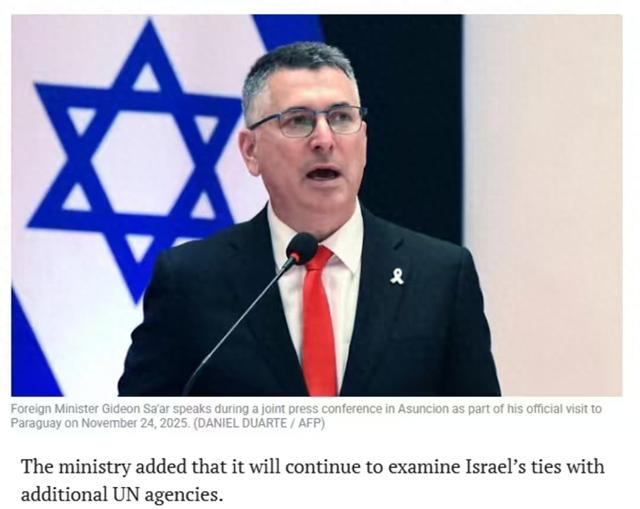
以色列宣布“退群”,步美国后尘为哪般?
Xin Lang Cai Jing· 2026-01-14 11:24
转自:北京日报客户端 当地时间13日,以色列外交部长萨尔宣布,以色列决定退出多个联合国机构及相关组织。以方称,这些 机构存在"反以色列偏见"等问题。 以色列退出的机构包括联合国秘书长儿童与武装冲突问题特别代表办公室、联合国妇女署、联合国贸易 和发展会议、联合国西亚经济社会委员会、联合国文明联盟、联合国能源机制以及全球移民与发展论 坛。 《以色列 时报》网站报道截图 此前,美国总统特朗普签署备忘录,指示美国退出31个联合国实体和35个非联合国组织,合计66个国际 组织。李子昕认为,如果以色列效仿美国进行大规模"退群",必然既有收益也有代价,但很显然代价非 常高昂。 以色列外交部称,将继续审查与其他联合国机构的合作关系,并在未来作出进一步决定。 中国国际问题研究院助理研究员李子昕: 以色列这一选择带有"捡软柿子捏"的倾向:一方面,这些机构多属联合国下属的咨询性或倡议性 组织,不具备安理会或国际法院那样的强制力,退出成本较低;另一方面,它们高度依赖道德权 威与舆论影响力,以色列的退出行动可以直接削弱这些机构报告的可信度,并将国际视线转移至 所谓的"机构偏见"上,从而规避实质性问责。 以色列外交部明确表示将继续审查与 ...
伊朗得到中国声援,特朗普当即调转枪口:对华加关税,马上执行!
Sou Hu Cai Jing· 2026-01-14 07:19
然而,就在中国对伊朗展开支持的时候,特朗普却再度高调出击。他在1月12日宣布对伊朗的商业伙伴加征25%关税,这一政策表面上是针对伊朗,实际 上,特朗普的真实意图无疑是要威逼伊朗的最大贸易伙伴——中国。 最近,关于伊朗的局势引起了国际社会的广泛关注,而中国在此期间的表态与行动则令人深思。在全球经济和地缘政治的复杂背景下,伊朗的动荡并不仅仅 是一个局部危机,它反映出更深层次的经济困境和大国博弈。与此同时,特朗普再次将目光投向中国,试图通过关税威胁来牵制这一世界大国。这一系列事 件不仅会影响中东地区的稳定,也可能重塑国际关系的格局。 伊朗内乱自去年12月28日开始,迅速蔓延至全国,造成了111名安全人员的丧生。根本原因在于经济的崩溃。2025年,伊朗的通胀率竟然飙升到了48.6%, 食品价格上涨超过70%。对于普通民众来说,每月的收入仅有百余美元,连基本生活都无法维持。这样的经济压力,让整个社会的矛盾激化,抗议与骚乱随 之而来。 而这些问题的背后,是美国及其西方盟友对伊朗实施的多轮制裁,整体经济环境的恶化使得中产阶级也无法继续维持原有水平。此外,内部的政治斗争也加 剧了这种动荡。改革派总统佩泽希齐扬与保守派之间的冲 ...