
战略性新兴产业

Search documents
产业布局更加优化
Xin Lang Cai Jing· 2026-01-30 04:13
Group 1 - The State-owned Assets Supervision and Administration Commission (SASAC) is advancing the restructuring and integration of state-owned enterprises (SOEs) to optimize the layout and structure of the state-owned economy, in line with the directives from the 20th National Congress [1][2] - New central enterprises are being established, focusing on national energy security and green development, including the formation of China Yajiang Group and China Chang'an Automobile Group, aimed at enhancing competitiveness in the automotive industry and promoting high-quality development of smart connected new energy vehicles [1][2] - Professional integration is being promoted, including the consolidation of cruise operation resources to create a "national team" for China's cruise industry and the integration of power battery resources by companies like China FAW to support high-quality development in the new energy vehicle sector [1][2] Group 2 - SASAC will focus on the "three concentrations" of state-owned capital, using restructuring and integration as a means to build more world-class enterprises [2] - The emphasis will be on strategic safety, industry leadership, and public service, with efforts to strengthen and optimize central enterprises [2] - High-quality mergers and acquisitions will be supported to acquire core elements and seize technological advantages, fostering the development of strategic emerging industries and future industries [2]
21社论丨积极财政政策靠前发力,推动实现经济“开门红”
21世纪经济报道· 2026-01-30 00:49
Core Viewpoint - The article discusses the issuance of local government bonds in China, highlighting a significant increase in the scale and structure of bond issuance for 2026, driven by proactive fiscal policies aimed at supporting economic growth and project funding [1][2]. Group 1: Bond Issuance Overview - As of January 27, 2026, a total of 584.7 billion yuan in local bonds has been issued, with new special bonds accounting for 196.2 billion yuan, representing 33.6% of the total [1]. - The planned issuance of local bonds for the first quarter exceeds 2.5 trillion yuan, marking the highest level for the same period in three years [1]. Group 2: Bond Structure - The first quarter's planned issuance includes 764.4 billion yuan in new special bonds and 1.21 trillion yuan in refinancing special bonds, making up 29.5% and 46.7% of the total issuance plan, respectively [2]. - New special bonds will focus on high-quality projects that can quickly generate tangible results, while refinancing bonds will primarily be used to repay maturing debts and optimize debt structures [2]. Group 3: Issuance Mechanism - The "self-examination and self-issuance" pilot program is expected to expand, enhancing issuance efficiency and local autonomy [3]. - This mechanism requires local governments to take on greater responsibility for project quality and risk management, leading to differentiated bond issuance rates based on regional fiscal health and project viability [3]. Group 4: Fund Utilization - New special bonds will emphasize project orientation and strategic layout, targeting major projects outlined in the national "14th Five-Year Plan" [4]. - The funding will support critical infrastructure related to food security, energy security, and emerging industries such as quantum technology and artificial intelligence [4]. - There will be an optimization of the mechanism for using special bonds as project capital, increasing the capital usage ratio to attract more social capital into major projects [5].


纵深推进质量强企强链强县建设
Zheng Quan Ri Bao· 2026-01-29 22:56
Group 1 - The core viewpoint of the news is that the National Market Supervision Administration has made significant progress in quality enhancement during the "14th Five-Year Plan" period, providing a solid quality foundation for high-quality development [1][2] - The quality work mechanism has been continuously optimized, and the macro policy system has become more robust [1] - Quality improvement efforts have been substantial, leading to a continuous increase in high-quality supply [1] - The effectiveness of quality infrastructure has been released, highlighting its supporting role in the industry [1] - Quality safety supervision has been continuously strengthened, further solidifying the safety defense for people's livelihoods [1] Group 2 - Small and micro enterprises are recognized as an important force in building a quality strong nation [2] - The administration has implemented the "Small and Micro Enterprises Quality Certification Improvement Action," achieving notable results [2] - Moving into the "15th Five-Year Plan," the focus will be on enhancing quality governance effectiveness and establishing a solid quality foundation for modern Chinese development [2]
推动人工智能融入新兴产业
Jing Ji Ri Bao· 2026-01-29 22:09
不过,也应重视存在的挑战,比如部分领域仍存在基础理论供给不足、与实体经济融合不紧密、产业链 高端环节竞争力不强等问题。接下来,要聚焦关键问题,找到科学的解决办法。 加强人工智能基础理论与核心技术供给。面向世界科技前沿与国家重大需求,强化对人工智能基础理 论、关键算法等技术的有组织科研。发挥新型举国体制优势,推动国家实验室、高等院校、科技领军企 业组建联合体,力争取得重大技术的原创性突破。加快开源开放,建设国际先进的算法模型库与工具 链,改变关键核心技术受制于人的局面。 促进人工智能与战略性新兴产业深度融合。强化场景的牵引作用,聚焦新一代信息技术、生物技术、新 能源、新材料等战略性新兴产业,系统梳理市场的智能化需求。通过开展"揭榜挂帅"等方式,鼓励人工 智能企业与各行业联合开展技术攻关。加速技术成果的工程化与规模化落地,让人工智能成为提升产业 创新能力的通用赋能工具。 2025年以来,人工智能发展呈现走旺态势。通过深度嵌入生物制造、低空经济、新材料等领域,人工智 能正超越传统工具范畴,成为驱动新兴产业跃升的核心引擎。深刻把握其赋能新兴产业的规律,对于我 国构筑现代化产业竞争新优势、赢得发展主动权至关重要。 在我 ...
山东省今年将制定数据、促进公平竞争等法规
Qi Lu Wan Bao· 2026-01-29 14:49
齐鲁晚报·齐鲁壹点记者 杨璐 1月29日上午,山东省十四届人大四次会议举行第二次全体会议,听取省人大常委会副主任、党组书记 杨东奇作山东省人民代表大会常务委员会工作报告。 报告显示,省人大常委会今年将加强重点领域、新兴领域立法,制定数据、促进公平竞争、土地管理、 供销社合作、气候资源保护和开发利用、烟草专卖法实施、平安建设、罕见病防治、妇女权益保障、青 少年体育促进、地名管理、监督法实施等法规。 立法创新出台多个"全国首件" 2025年是"十四五"收官之年。省人大常委会聚焦良法善治,扎实推进科学立法、民主立法、依法立法, 持续加强重点领域、新兴领域立法,不断提高立法质量,着力发挥立法引领推动作用。省人大常委会制 定地方性法规、决定8件,修改法规10件,批准设区的市报批法规52件。 报告显示,加强经济领域立法,制定民营经济促进条例,出台数字经济促进条例,修改专利条例、优化 营商环境条例,制定粮食安全保障条例等。加强社会民生领域立法,制定退役军人保障条例,修改预防 未成年人犯罪条例、供热条例、文物保护条例、实施道路交通安全法办法、消防条例等。加强民主法治 领域立法,修改省人民代表大会议事规则、实施代表法办法,修改 ...
启动上市辅导,福建德尔欲二度闯关IPO!公司回应:暂未确定申报板块
Sou Hu Cai Jing· 2026-01-29 13:57
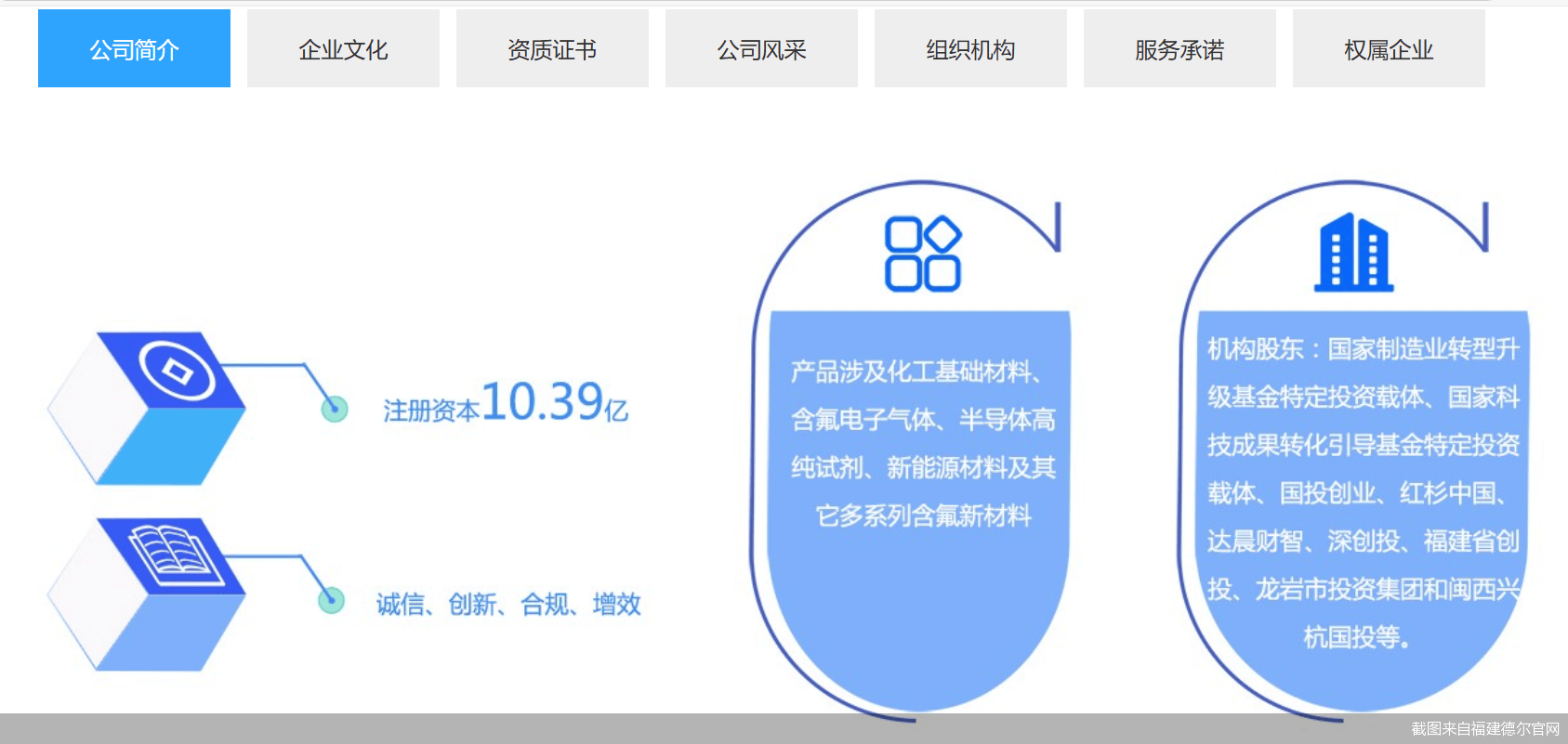
Core Viewpoint - Fujian Del Technology Co., Ltd. is attempting to relaunch its IPO less than six months after withdrawing its previous application, indicating a strong commitment to its business development and growth strategy [1][3]. Group 1: Company Overview - Fujian Del was established in June 2014 with a registered capital of 1.039 billion yuan, focusing on the fluorochemical industry, including the research, production, and sales of various fluorine-containing new materials [3][4]. - The company’s products are widely used in semiconductor chips, LED chips, flat panel displays, communication optical fibers, energy storage batteries, and photovoltaic power generation [3]. Group 2: IPO History - The company’s previous IPO application was accepted on June 30, 2023, and entered the inquiry stage on July 27, 2023, but was ultimately withdrawn on August 22, 2025 [3][4]. - The withdrawal was described as a strategic decision based on the company's development strategy and the IPO review pace at that time [4]. Group 3: Financial Performance - Fujian Del's revenue from 2021 to 2024 was approximately 1.255 billion yuan, 1.698 billion yuan, 1.418 billion yuan, and 1.687 billion yuan, respectively, with corresponding net profits of about 303 million yuan, 221 million yuan, 119 million yuan, and 131 million yuan [4]. - The company anticipates achieving over 2 billion yuan in revenue and significant net profit growth in 2025, although specific financial data is still under audit [4][5]. Group 4: Future Plans and Funding - The company plans to focus its fundraising efforts on "bottleneck" technologies within the semiconductor materials industry, aligning with national strategic emerging industries [5]. - Specific fundraising amounts and project details are yet to be determined based on the company's development stage [5]. Group 5: Shareholding Structure - Fujian Del has no controlling shareholder, with actual control held by Lai Zongming, Hua Xiangbin, and Huang Tianliang, who collectively own 35.06% of the shares [6]. - The company has previously addressed concerns regarding its actual control in response to inquiries from the stock exchange, confirming that the three founders have signed agreements to jointly control the company [6]. Group 6: Previous Fundraising Plans - In its prior IPO attempt, Fujian Del aimed to raise approximately 1.945 billion yuan, which was intended for projects including a production line for electronic-grade trifluorochloromethane and semiconductor-grade electronic materials [7].
FICC日报:关注股指企稳时机
Hua Tai Qi Huo· 2026-01-29 06:24
Macroeconomic Analysis - The total assets of central enterprises are expected to exceed 95 trillion yuan by the end of 2025, with fixed asset investment reaching 5.1 trillion yuan, including 2.5 trillion yuan in strategic emerging industries[1] - The total profit for the year is projected to be 2.5 trillion yuan[1] - The Federal Reserve has maintained the benchmark interest rate at 3.50%-3.75%, following three consecutive rate cuts of 25 basis points[1] Market Performance - The Shanghai Composite Index rose by 0.27% to close at 4151.24 points, while the ChiNext Index fell by 0.57%[1] - The trading volume in the Shanghai and Shenzhen markets increased to approximately 3 trillion yuan[1] - The NASDAQ index in the U.S. rose by 0.17% to 23857.45 points[1] Futures Market Insights - The basis for stock index futures (IF, IC, IM) has continued to recover, with the current contracts maintaining a premium[1] - Trading volume for stock index futures has decreased, while open interest for IH and IF has increased[1] Investment Strategy - Domestic market sell-off has shown a clear phase characteristic, with initial focus on products related to the CSI 300 and SSE 50, now shifting towards the CSI 1000[2] - The CSI 500 index has only seen a 13% reduction in scale, indicating relatively limited outflow pressure and showcasing a stronger advantage[2] Risk Factors - There are potential downward risks for stock indices if domestic policies do not meet expectations, if overseas monetary policies exceed expectations, or if geopolitical risks escalate[3]
关注股指企稳时机
Hua Tai Qi Huo· 2026-01-29 05:51
FICC日报 | 2026-01-29 关注股指企稳时机 市场分析 美联储按兵不动。宏观方面,截至2025年底,央企资产总额突破95万亿元,完成固定资产投资5.1万亿元,其中战 略性新兴产业投资2.5万亿元;全年实现利润总额2.5万亿元。国务院国资委表示,将扎实做好新央企组建和战略性 重组,研究起草推动央企培育新兴支柱产业工作文件,探索组建"AI+"产业共同体。海外方面,美联储维持基准利 率在3.50%-3.75%不变,在连续三次降息25个基点后暂停行动,符合市场预期。鲍威尔在新闻发布会上表示,加息 并非任何人对下一步行动的基本假设,不相信美联储会丧失独立性,将建议下一届美联储主席远离政治。 指数分化。现货市场,A股三大指数震荡分化,上证指数涨0.27%收于4151.24点,创业板指跌0.57%。行业方面, 板块指数涨多跌少,有色金属、石油石化、煤炭行业涨幅超3%,传媒、国防军工、美容护理行业跌幅居前。当日 沪深两市成交额升至约3万亿元。海外方面,美国三大股指收盘涨跌不一,纳指涨0.17%报23857.45点。 期指保持升水。期货市场,基差方面,IF、IC、IM基差延续回升,当月合约保持升水。成交持仓方面,股 ...
最高法:涉战略性新兴产业知识产权案件数量和占比逐年攀升
Zhong Guo Jing Ying Bao· 2026-01-29 05:48
记者注意到,近年来最高法院知识产权法庭处理的高额赔偿案件数量和赔偿金额都明显增长。对此郃中 林回应称,近年来高额赔偿案件越来越多的原因,首先是因为《知识产权强国建设纲要(2021—2035 年)》明确提出,全面建立并实施侵权惩罚性赔偿制度,加大损害赔偿力度。近年来,民法典和知识产 权专门法均规定了知识产权侵权惩罚性赔偿,并提高了法定赔偿数额。高额判赔是积极落实政策和严格 执行法律的必然结果。其次,严格保护知识产权,是适应知识产权客体的无形性、侵权行为的隐蔽性、 当前市场上侵权行为仍易发多发等因素的规律使然。再次,我国进入高质量发展阶段,知识产权越来越 成为企业核心资产和市场竞争利器,其市场价值越来越大,侵权行为危害程度也随之增大。 近年来,法庭受理案件越来越聚焦"高精尖"技术领域,涉战略性新兴产业案件数量和占比逐年攀升,高 额赔偿案件数量和赔偿金额随之都有较大幅度增长。其中,技术秘密高额赔偿案件占比较高;但专利高 额赔偿案件也屡见不鲜,赔偿额过1亿元的也有3件,超1000万元的至少有33件。数据显示,仅2025年, 法庭就在30案中适用惩罚性赔偿,共计11.3亿元,案均约3800万元;在32案中确定1000万 ...
龙头引领、梯队发展 资本市场“三湘板块”稳步壮大 | 决胜 “十四五” 擘画 “十五五”・地方资本市场高质量发展之湖南篇
Sou Hu Cai Jing· 2026-01-29 05:31
Core Viewpoint - During the "14th Five-Year Plan" period, Hunan's capital market has achieved significant breakthroughs in nurturing listed companies, optimizing sector structure, gathering innovative momentum, and fulfilling social responsibilities, thereby injecting strong vitality into the province's economic and social development [1] Group 1: Company Growth and Economic Impact - The number of A-share listed companies in Hunan increased from 116 at the end of 2020 to 146 by the end of 2025, ranking 11th nationally and 3rd in central China [5] - By the end of 2025, the total market value of Hunan's A-share listed companies is projected to reach 1.89 trillion yuan, a 7.5% increase from the end of 2020 [5] - In 2024, Hunan's listed companies achieved total operating revenue of 899.77 billion yuan, accounting for 16.9% of the province's GDP, and a net profit attributable to shareholders of 42.01 billion yuan, representing 19.2% of the industrial profit in the province [5] Group 2: Manufacturing Sector and Tax Contributions - As of the end of 2024, there are 93 manufacturing listed companies in Hunan, making up nearly 70% of the total number of listed companies in the province [6] - The total tax contribution from these manufacturing companies reached 27.036 billion yuan in 2024, surpassing the total of all other nine industries combined [6] Group 3: Sector Structure Optimization - The capital market in Hunan has seen continuous upgrades in sector structure and performance during the "14th Five-Year Plan" period, with strategic emerging industries becoming new growth engines [7] - Among the 14 newly listed companies, 13 belong to strategic emerging industries, with 9 classified as "specialized, refined, and innovative" small giant enterprises [7] - The distribution of listed companies spans various boards, with 36.99% on the Shenzhen main board, and 42% of "hard technology" companies listed on the Sci-Tech Innovation Board [7] Group 4: International Expansion and Revenue Growth - In 2024, Hunan's listed companies achieved overseas revenue of 157.573 billion yuan, accounting for 17.51% of total revenue, marking an 86.85% increase since 2020 [8] - Companies like Zoomlion and Lens Technology are enhancing their global competitiveness through localization strategies and AI hardware delivery capabilities [8] Group 5: R&D Investment and Innovation - In 2024, total R&D investment by Hunan's listed companies reached 32.34 billion yuan, with an overall R&D intensity of 3.6%, exceeding the national average of 2.1% [10] - The number of patents held by Hunan's listed companies grew by 48.4% from 29,860 in 2020 to 44,312 by the end of 2024 [10] Group 6: Social Responsibility and ESG Initiatives - In response to the new "National Nine Articles" policy, 88 listed companies in Hunan implemented cash dividends totaling over 22.7 billion yuan in 2024, a 130% increase from 2020 [13] - Over half of the listed companies published independent ESG reports in 2024, reflecting a commitment to sustainable development and social responsibility [13]
