
直播带货

Search documents
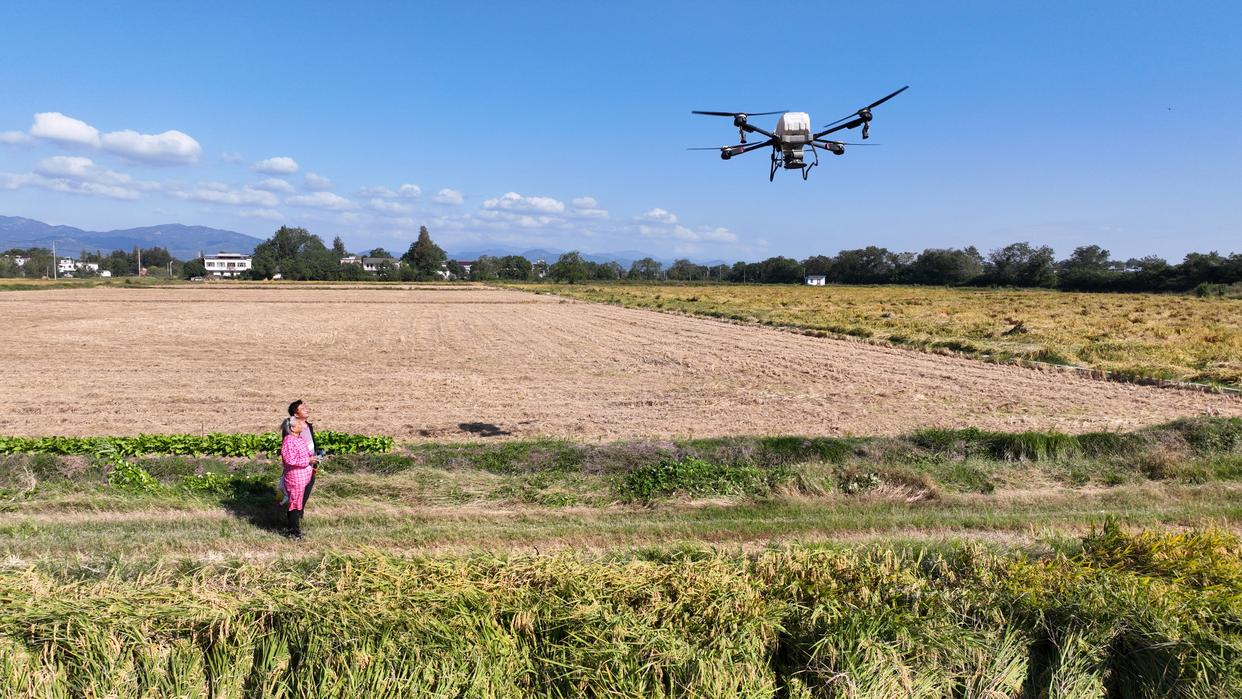
新职业故事丨飞无人机 直播带货 82岁奶奶成了“新农人”
Xin Hua She· 2025-10-29 03:22
Core Viewpoint - The article highlights the innovative use of agricultural drones by an elderly woman, Dai Shuying, who, with the guidance of her grandson, Wang Tiantian, operates the drone for farming tasks, showcasing the integration of technology in modern agriculture and the empowerment of older generations in utilizing new tools [3][31]. Group 1: Drone Operation and Agricultural Efficiency - Dai Shuying operates a drone to assist in fertilizing a wheat field, demonstrating the practical application of technology in agriculture [1][3]. - The drone significantly increases efficiency, allowing one person to cover 600 acres in a day, compared to traditional methods that only manage a few acres [9][10]. - Wang Tiantian prepares the drone's flight path and settings, ensuring safety and ease of use for his grandmother [5][8]. Group 2: Intergenerational Learning and Engagement - Dai Shuying's curiosity about the drone technology led her to learn its operation, supported by her grandson, which fosters a strong family bond [8][27]. - The duo engages in creating short videos and live streaming, which not only serves as entertainment but also promotes their agricultural products [15][21]. - Their interactions and shared activities, such as filming and live selling, have attracted a significant online following, enhancing their social engagement [17][24]. Group 3: Economic Benefits and Market Access - By selling processed rice instead of raw grain, they can earn approximately double the income, showcasing the financial advantages of modern agricultural practices [27]. - The live streaming platform provides a new channel for sales, allowing them to connect with customers beyond their local area [24][31]. - Dai Shuying expresses satisfaction with the improved quality of life and increased income from their farming activities, reflecting the positive impact of technology on rural livelihoods [31][35].

2.1亿天价诉讼终审落槌,周大生赔偿278万元
Xin Jing Bao· 2025-10-24 01:35
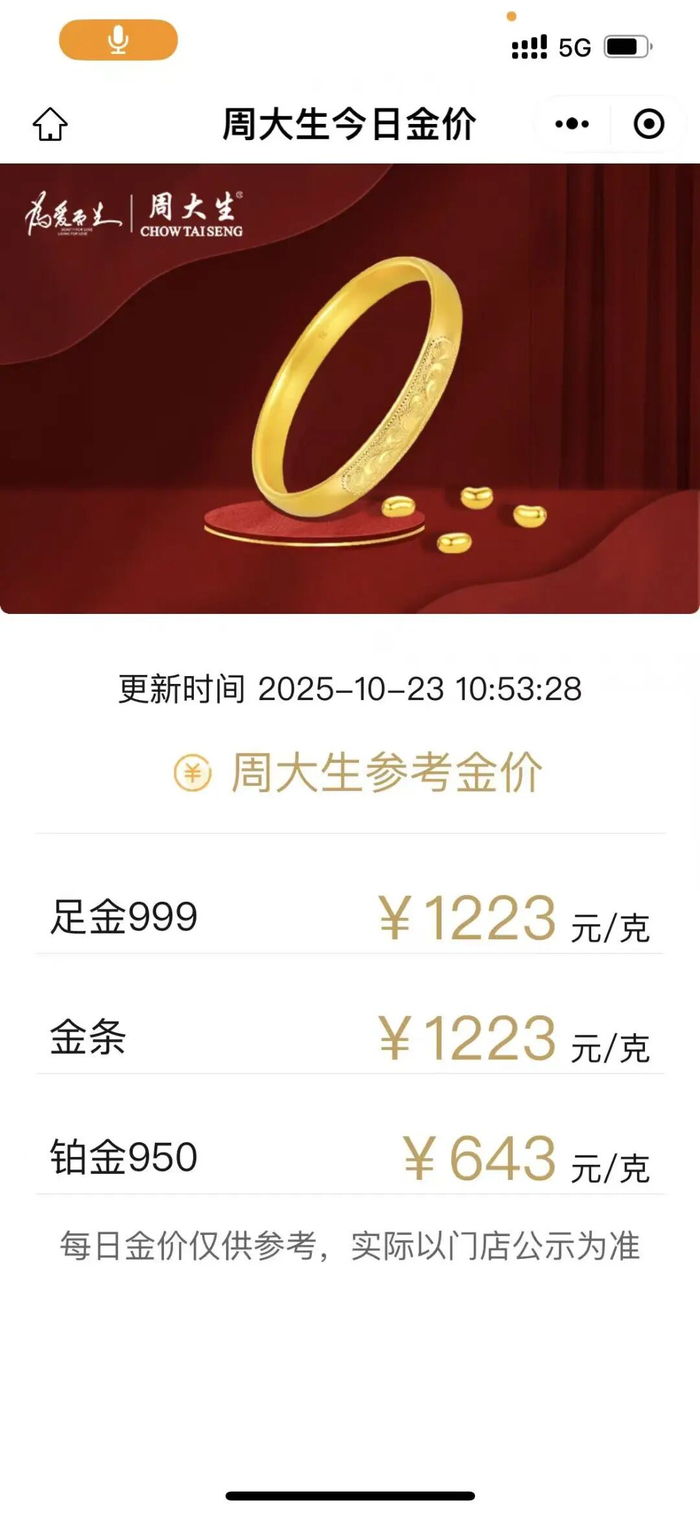
Core Viewpoint - The long-standing contract dispute involving Zhou Dasheng Jewelry Co., Ltd. has concluded, with the company ordered to pay 2.78 million yuan, while facing significant operational challenges and declining revenues in its franchise business [1][7][9]. Group 1: Legal Outcome - The court upheld the original ruling, dismissing the appeal from Shenzhen Waterbeika Information Technology Co., Ltd., which had sought 211 million yuan in damages [1][7]. - Zhou Dasheng has already made provisions for the 2.78 million yuan in bad debt, indicating that the ruling will not impact its current or future profits [1][8]. Group 2: Financial Performance - Zhou Dasheng reported a 43.92% year-on-year decline in revenue for the first half of 2025, totaling 4.597 billion yuan, with a slight decrease of 1.27% in net profit to 594 million yuan [9]. - The company's franchise business saw a drastic revenue drop of 59.12%, with a net reduction of 290 stores, leading to a closure rate of 9.16% [9][10]. Group 3: Strategic Initiatives - In response to declining performance, Zhou Dasheng is accelerating its online transformation by establishing a joint venture with Wuyou Media Group to focus on short video and live-streaming sales [10]. - The joint venture aims to leverage a "traffic + supply chain" model to enhance brand visibility and sales conversion through live streaming [10]. Group 4: Market Conditions - The jewelry industry is facing challenges due to fluctuating gold prices, with Zhou Dasheng adjusting its gold jewelry prices by 6% to 30% in response to market conditions [10][11]. - Competitors like Chow Tai Fook are also planning price increases, indicating a broader trend of rising costs in the industry [11].
港股异动 | 巨子生物(02367)反弹逾8% 控股股东增持50万股股份 花旗称市场对预售表现反应过度
Zhi Tong Cai Jing· 2025-10-23 01:53
Core Viewpoint - Juzi Bio (02367) has seen a rebound of over 8%, with a current price of HKD 41.9 and a trading volume of HKD 400 million, following the announcement of share purchases by its controlling shareholder, Juzi Holding [1] Group 1: Shareholder Activity - Juzi Holding purchased 500,000 shares of Juzi Bio on the announcement date, amounting to approximately HKD 19.3 million [1] - Since the disclosure of the share purchase plan on June 9, 2025, Juzi Holding has cumulatively acquired 3.666 million shares, investing a total of about HKD 178 million [1] - Following these purchases, Juzi Holding's shareholding increased to 585 million shares, representing 54.61% of the company's total issued shares, with intentions to further increase holdings based on market conditions and regulatory requirements [1] Group 2: Market Analysis - Citigroup recently released a report indicating that the market's reaction to Juzi Bio's pre-sale performance decline during the Double 11 event, particularly in relation to Li Jiaqi's live-streaming sales, is exaggerated [1] - Although Li Jiaqi's live-streaming sales trends are significant indicators for Double 11 performance, the contribution from other KOLs and the company's own live-streaming efforts has sharply increased, reducing Li Jiaqi's relative impact [1] - Despite the competitive landscape, there has been no negative feedback from customers regarding the company's products or brand, and Citigroup anticipates a recovery in sales for Juzi Bio in the fiscal year 2026, given the low base this year, suggesting that the company's valuation remains attractive [1]
巨子生物反弹逾8% 控股股东增持50万股股份 花旗称市场对预售表现反应过度
Zhi Tong Cai Jing· 2025-10-23 01:47
Core Viewpoint - Juzi Biotechnology (02367) experienced a rebound of over 8%, with a current price of HKD 41.9 and a trading volume of HKD 400 million [1] Group 1: Shareholder Activity - Juzi Holding, the controlling shareholder, purchased 500,000 shares of the company on the announcement date, amounting to approximately HKD 19.3 million [1] - Since the disclosure of the buyback plan on June 9, 2025, Juzi Holding has cumulatively acquired 3.666 million shares, investing a total of about HKD 178 million [1] - Following these purchases, Juzi Holding's shareholding increased to 585 million shares, representing 54.61% of the company's total issued shares, with intentions to further increase holdings based on market conditions and regulatory requirements [1] Group 2: Market Analysis - Citigroup recently released a report indicating that the market's reaction to Juzi Biotechnology's pre-sale performance decline during the Double 11 event, particularly in Li Jiaqi's live-streaming sales, is overly pessimistic [1] - Although Li Jiaqi's live-streaming sales are a significant indicator for Double 11 performance, the contribution from other KOLs and the company's own live-streaming efforts has been rapidly increasing, reducing reliance on any single influencer [1] - Despite the competitive landscape, there has been no negative feedback from customers regarding the company's products or brand [1] - Given the low base this year, Citigroup anticipates a recovery in sales for Juzi Biotechnology in the fiscal year 2026, maintaining that the company's valuation remains attractive [1]
3天3亿,董宇辉双11单挑李佳琦
商业洞察· 2025-10-22 09:23
Core Viewpoint - The article discusses the contrasting approaches of two prominent livestreaming hosts, Dong Yuhui and Li Jiaqi, during the Double Eleven shopping festival, highlighting Dong's proactive strategy and Li's more subdued presence this year [2][4][18]. Group 1: Dong Yuhui's Strategy - Dong Yuhui created a large-scale livestreaming event for Double Eleven, attracting nearly 70 million viewers and generating over 300 million yuan in sales from October 9 to 11 [4][13]. - This year, Dong Yuhui demonstrated greater focus and commitment compared to last year, where he was less involved in livestreaming during the same period [9][10]. - Dong Yuhui's team has adopted a more professional approach, including pre-announcing products and extending livestream hours, which aligns with strategies used by other successful hosts [14][15]. Group 2: Li Jiaqi's Shift - Li Jiaqi's marketing for Double Eleven has been notably less aggressive this year, particularly regarding the "red envelope rain" promotions that previously generated significant buzz [19][22]. - Despite still being a leading figure in sales, Li Jiaqi's livestreaming performance has not returned to previous peak levels, with his sales figures showing a decline compared to past years [23][29]. - Li Jiaqi's change in mindset reflects a more relaxed approach to expectations, indicating a shift in his overall strategy and engagement with the audience [24]. Group 3: Market Dynamics - The competition between Dong Yuhui and Li Jiaqi is intensifying as both target similar demographics, with Dong Yuhui's audience primarily consisting of middle-class consumers in high-tier cities [26][28]. - The livestreaming e-commerce market is experiencing slower growth, with projections indicating a decline from 197% growth in 2020 to around 18% from 2024 to 2026 [26][31]. - Dong Yuhui is benefiting from the growth of Douyin's e-commerce platform, which has seen a 34% increase in growth, contrasting with the slower growth of Taobao's livestreaming segment [31][32].

电商平台披露双11阶段战报 高端美妆与科技产品成增长引擎
Zheng Quan Shi Bao Wang· 2025-10-21 12:03
Core Insights - The 2023 Double 11 shopping festival is characterized by "pre-positioning" and "segmented" strategies, reflecting intensified competition among platforms and a shift from price-driven to value-driven consumer behavior [1][4] - High-end beauty and technology products are emerging as key growth drivers, indicating a trend towards quality, brand, and innovation over mere low prices [1] Group 1: Sales Performance - JD.com initiated its 11.11 sales on October 9, reporting over 52,000 brands with transaction amounts increasing by over 300% year-on-year, and over 3,300 categories seeing over 100% growth [1] - On Tmall, during the first hour of sales on October 20, 80 brands surpassed 100 million in sales, with 30,516 brands doubling their sales compared to the previous year [2] - The beauty sector led the sales surge on Tmall, with brands like Proya and Estée Lauder achieving significant sales milestones within minutes of the sale start [2] Group 2: Live Streaming Impact - Live streaming has become a new growth avenue for brands, with Douyin reporting a 500% year-on-year increase in live sales from over 41,000 merchants during the first phase of Double 11 [3] - On Taobao, several live streaming hosts achieved over 100 million in sales within the first hour, surpassing last year's performance [3] - JD.com also reported a significant increase in live streaming orders, with overall order volume up by over 280% year-on-year [3] Group 3: E-commerce Trends - Content-driven e-commerce and influencer marketing are reshaping the competitive landscape, with platforms focusing on creator ecosystems and content conversion capabilities [4] - The competition has evolved beyond mere sales figures to include innovation in business models, enhanced consumer experiences, and ecosystem competition [4]

巨子生物再跌超4% 可复美在双十一预售中表现平淡 花旗称市场反应过度
Zhi Tong Cai Jing· 2025-10-21 07:52
Core Viewpoint - The stock of Giant Bio (02367) has dropped over 4%, halving from its year-to-date high of 85.79 HKD, currently trading at 39.22 HKD with a transaction volume of 745 million HKD [1] Group 1: Company Performance - The pre-sale performance of Giant Bio's subsidiary, Kefu Mei, during this year's "Double Eleven" event has been lackluster [1] - According to Citigroup's report, the main products of Giant Bio showed a decline in performance during the pre-sale on October 15 in Li Jiaqi's live stream [1] - Citigroup noted that the company's promotional strategy has become more stringent, making its pricing less attractive compared to other brands [1] Group 2: Market Reaction and Future Outlook - Citigroup believes that the market's reaction to the decline in pre-sale performance during the first day of Double Eleven is overblown [1] - Although sales trends from Li Jiaqi's live streaming are important indicators for Double Eleven performance, the contribution from this channel has significantly decreased due to the growth of other KOLs and the company's own live streaming efforts [1] - Despite the intense competition, there has been no negative feedback from customers regarding the company's products or brand [1] - Given the low base this year, Citigroup expects Giant Bio's sales to recover in the fiscal year 2026, and the company's valuation remains attractive [1]
非洲记者盛赞阿克苏电商!水果不尝太亏,“甜蜜”卖向世界
Zhong Guo Xin Wen Wang· 2025-10-17 12:33
Core Insights - The article highlights the visit of a media delegation to the Aksu E-commerce Industrial Park, focusing on fruit sales, industry development, employment generation, and live-streaming sales [1] Group 1: Industry Development - The Aksu E-commerce Industrial Park is actively promoting fruit sales through live-streaming, which is enhancing market reach and visibility for local products [1] - The local e-commerce association aims to respond to national calls for high-quality development by creating standardized agricultural product brands [1] Group 2: Employment and Market Expansion - The live-streaming initiatives are not only boosting fruit sales but also generating significant employment opportunities in the region [1] - The efforts are part of a broader strategy to introduce Aksu's high-quality products to both domestic and international consumers [1] Group 3: International Recognition - Journalists from Africa expressed their admiration for the local fruits, emphasizing the quality and uniqueness of Aksu's offerings [1] - The positive feedback from international media indicates a growing interest in Aksu's agricultural products on a global scale [1]
港股异动 | 巨子生物(02367)续跌近3% 昨日重挫逾15% 花旗指其双11开局疲软
智通财经网· 2025-10-17 06:04
Group 1 - The core viewpoint of the news is that the market's reaction to the pre-sale performance of Giant Bio during the live broadcast by influencer Li Jiaqi is considered excessive, as the company's promotional strategy has made its products less price-attractive compared to competitors [1][2] - Giant Bio's stock price has seen significant volatility, with a drop of over 15% recently and reaching a new low of 40.6 HKD, reflecting investor concerns about its sales performance [1] - Citigroup's report indicates that the company's revenue growth is expected to be 16% year-on-year in the second half of the year, despite a projected decline of 10% on Tmall [2] Group 2 - Citigroup predicts that Giant Bio's sales will recover in the fiscal year 2026, with a high growth rate of 19% due to a low base and no negative customer feedback [2] - The target price for Giant Bio's stock has been adjusted from 69.4 HKD to 55.4 HKD based on a 20 times price-to-earnings ratio for the fiscal year 2026, while maintaining a "buy" rating [2] - The performance of KOL live broadcasts is noted to be declining, impacting the company's sales, with expectations of a 25% increase on Douyin and a 100% increase on JD, while offline sales are expected to grow by 10% [2]
巨子生物续跌近3% 昨日重挫逾15% 花旗指其双11开局疲软
Zhi Tong Cai Jing· 2025-10-17 06:02
Core Viewpoint - The stock of Giant Bio (02367) has experienced significant volatility, with a recent drop of nearly 3% after a previous decline of over 15%, reaching a new low of 40.6 HKD, attributed to market reactions to its pre-sale performance during a major live-streaming event [1] Group 1: Stock Performance - Giant Bio's stock opened high but fell sharply, with a midday drop of nearly 3%, and a previous day decline exceeding 15% [1] - The stock price hit a new low of 40.6 HKD, marking the lowest point in over a year [1] - As of the latest update, the stock was down 2.92%, with a trading volume of 678 million HKD [1] Group 2: Market Analysis - Citigroup's report indicates that the market's reaction to Giant Bio's pre-sale performance during the live-streaming event with influencer Li Jiaqi was excessive [1] - The report highlights that Giant Bio's main products were less price-competitive due to stricter promotional strategies compared to other brands [1] - Citigroup predicts a relatively weak performance for Giant Bio in Q3 and the first two weeks of October, primarily due to fewer KOL live-streaming events [1] Group 3: Revenue Forecast - Citigroup forecasts a 16% year-on-year revenue growth for Giant Bio in the second half of the year, with specific expectations of a 10% decline on Tmall, a 25% increase on Douyin, a 100% growth on JD, and a 10% increase in offline sales [1] - For the fiscal year 2026, Citigroup anticipates a continuation of high growth at 19% due to a low base and no negative customer feedback [1] - The target price for Giant Bio has been adjusted from 69.4 HKD to 55.4 HKD based on a 20x price-to-earnings ratio for the fiscal year 2026, while maintaining a "buy" rating despite lowering profit forecasts [1]