自动驾驶

Search documents
美股三大指数高开,英伟达涨超1%
Ge Long Hui· 2026-03-17 13:36
Group 1 - The three major U.S. stock indices opened higher, with the Nasdaq up 0.37%, the S&P 500 up 0.46%, and the Dow Jones up 0.69% [1] - Nvidia's stock rose over 1% as CEO Jensen Huang raised the revenue forecast for its 2027 computing chip to $1 trillion [1] - Micron Technology's stock increased by over 2%, with its HBM4 production line having commenced mass production and shipping in the first quarter, receiving a price target increase to $525 from RBC [1] - Uber's stock surged over 4% as the company plans to launch a global fleet of autonomous vehicles powered by Nvidia's Level 4 software in the first half of next year [1]


魏建军:车企用无底线的价格战提高市占率,长城不会这么做;文远知行Robotaxi GXR预计下月初在新加坡开放公众运营丨汽车交通日报
创业邦· 2026-03-17 10:13
Group 1 - CEO Wei Jianjun of Great Wall Motors stated that the company will not engage in reckless price wars to increase market share, emphasizing a long-term strategy that protects the rights of employees, dealers, and suppliers [2] - XPeng Motors announced the rollout schedule for its second-generation VLA across different models starting March 19, with the P7 Ultra being the first to receive the update, followed by G7 and X9 Ultra [2] - WeRide's Robotaxi GXR is set to begin public operations in Singapore on April 1, following a trial phase in collaboration with Grab in the Punggol area [2] - Cao Cao Mobility has launched over 3,600 virtual pick-up and drop-off points for its Robotaxi service in Hangzhou, aiming to enhance operational scale and coverage in key urban areas [2]




全年45.05亿单 GTV增超28% 滴滴在海外不止于打车
Mei Ri Jing Ji Xin Wen· 2026-03-17 09:31
Core Insights - Didi's domestic business remains stable, with a total transaction volume of 13.735 billion orders in 2025, reflecting a year-on-year growth of 10.8% [1][13] - Didi's international business is entering a rapid growth phase, with international order volume reaching 4.505 billion in 2025, accounting for approximately one-third of the daily order volume of its Chinese operations [1][17] Domestic Business Performance - In Q4 2025, Didi's core platform (including both domestic and international businesses) saw a year-on-year order volume increase of 13.5%, totaling 4.844 billion orders, with a peak daily order volume exceeding 65 million [4][16] - Didi's domestic order volume grew by 10.1% year-on-year to 3.578 billion in Q4, with an average daily order volume of 38.9 million [4][16] - The company has maintained double-digit growth in domestic orders for 12 consecutive quarters since 2023, driven by increasing personalized travel demands and service quality expectations [4][16] International Business Growth - Didi's international business achieved a year-on-year order volume growth of 24.5% in Q4 2025, reaching 1.265 billion orders, with an average daily order volume of nearly 14 million [5][17] - The total order volume for international operations in 2025 was 4.505 billion, reflecting a year-on-year growth of 24.7% and a compound annual growth rate of 32% over the past three years [5][17] - Didi's international business has become profitable, particularly in key markets like Brazil and Mexico, demonstrating self-sustaining capabilities [7][19] Strategic Developments - Didi is focusing on strategic investments in Latin America, particularly in Brazil and Mexico, to create long-term value and sustainable growth [8][20] - The company is developing a one-stop service platform overseas, integrating ride-hailing, food delivery, and financial services to enhance user experience [9][21] - In Mexico, Didi has expanded from a ride-hailing platform to include financial and food delivery services, covering over 70 cities and serving more than 30 million users [10][22] Competitive Landscape - Didi's user base in Brazil has reached 55 million, with approximately 1.5 million drivers, covering over 3,300 towns [10][22] - Compared to competitors, Didi's brand recognition and traffic from ride-hailing services have reduced customer acquisition costs for its food delivery business [12][24] - The integration of motorcycle services into the delivery platform enhances operational efficiency, allowing for dual-use of drivers for both ride-hailing and delivery services [12][24]

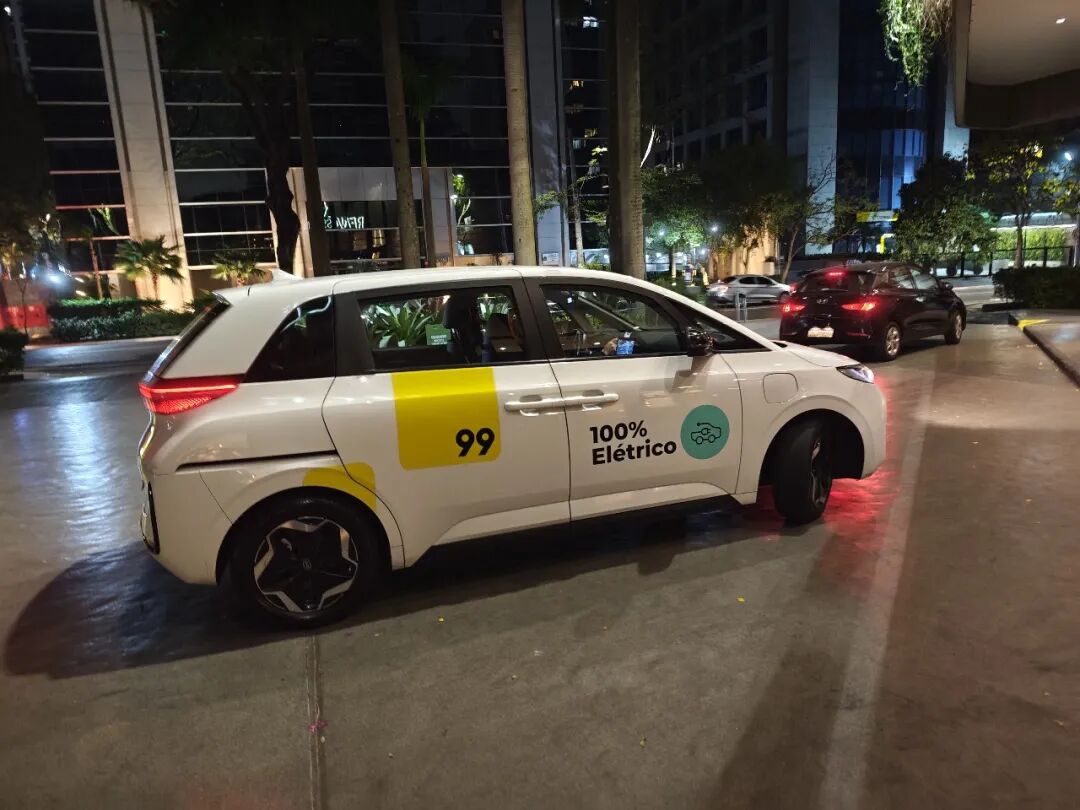
美股异动|优步盘前涨超2%,与英伟达扩大至在自动驾驶领域的合作
Ge Long Hui· 2026-03-17 08:25
Core Viewpoint - Uber and Nvidia announced plans to deploy autonomous taxi fleets in Los Angeles and the San Francisco Bay Area by the first half of 2027, with a goal to expand to 28 major cities across four continents by 2028, ultimately aiming to deploy over 100,000 L4 autonomous vehicles equipped with Nvidia's advanced AI technology on the Uber platform [1] Group 1 - Uber's stock rose over 2% in pre-market trading, reaching $76.19 [1] - The autonomous vehicle network is expected to rapidly expand as the technology matures, indicating significant growth potential for Uber in the autonomous driving sector [1] - Nvidia's CEO highlighted that the autonomous vehicle revolution is underway, marking it as the first robot industry to exceed a trillion-dollar scale [1] Group 2 - Nvidia's Hyperion platform and Alpamayo open inference model provide vehicles with three core capabilities: precise perception of the surrounding environment, intelligent reasoning in complex scenarios, and safe execution of driving decisions, laying the technological foundation for scalable L4 autonomous driving [1]
现代起亚将在部分车型中采用英伟达自动驾驶技术
Xin Lang Cai Jing· 2026-03-17 04:32
Core Viewpoint - Hyundai Motor and its subsidiary Kia Motors announced a partnership with Nvidia to integrate advanced autonomous driving technology into select vehicle models, enhancing their collaboration in future mobility solutions [1][2]. Group 1: Partnership Details - The partnership will involve the integration of Hyundai and Kia's software-defined vehicle (SDV) technology with Nvidia's L2+ level autonomous driving capabilities to jointly develop next-generation autonomous driving systems [1][2]. - The collaboration will leverage Nvidia's data platform and artificial intelligence (AI) technology, systematically integrating accumulated data into a unified learning process [1][2]. Group 2: Autonomous Driving Levels - L2 level autonomous driving systems require drivers to remain fully attentive, continuously monitoring the environment and ready to take control of the vehicle [2][4]. - L3 level vehicles can perform certain driving tasks, such as lane changes, without driver intervention under specific conditions [2][4]. - L4 vehicles can operate autonomously in limited environments but cannot function if necessary conditions are not met [2][4]. - L5 vehicles are capable of fully autonomous driving in all conditions without human intervention [2][4]. Group 3: Future Mobility Vision - The expansion of collaboration with Nvidia marks a significant step for Hyundai Motor Group in achieving a vision of safe and reliable autonomous driving technology [3]. - The company aims to enhance its technological competitiveness through a unified group collaboration framework, progressing from L2 and above autonomous driving systems to L4 level driverless taxi services [3]. - The integrated autonomous driving architecture will be built on Nvidia's Drive Hyperion platform, scalable from L2 to L4 levels [3].
何小鹏直播“坦白”:每月烧3个亿,赌第二代VLA,我们心里也慌
创业邦· 2026-03-17 04:14
Core Viewpoint - The live session with Xiaopeng Motors' chairman He Xiaopeng and the head of the General Intelligent Center, Liu Xianming, revealed a bold commitment to a single technological path, focusing on the development of the second-generation VLA (Vision-Language-Action model) autonomous driving system, which represents a significant investment and a shift in driving logic through AI [6][7][9]. Investment and Development Strategy - Xiaopeng Motors is investing 300 million yuan (approximately 43 million USD) monthly for over a year in the development of a fully self-researched system encompassing chips, compilers, software architecture, and data integration [9]. - The second-generation VLA is the product of this investment, undergoing multiple iterations before its launch, with the current version being the fourth major iteration and the 28th minor version [9][10]. Safety and User Experience - Safety is a primary concern, as demonstrated by a case where the VLA system recognized children on the road but did not decelerate sufficiently to stop, highlighting the need for further improvements [12]. - The goal of the second-generation VLA is to enhance user confidence, aiming to make even inexperienced drivers feel safe and willing to drive [13]. Technological Advancements - The system's ability to navigate complex situations, such as rerouting during road closures, showcases its advanced reasoning capabilities, although there is a desire for quicker decision-making [15]. - Xiaopeng Motors aims to leap from Level 2 to Level 4 autonomous driving, bypassing Level 3, to maintain competitiveness in the global market [16][18]. Future Vision - The company envisions a comprehensive integration of various vehicle systems into a single intelligent system, likening it to a "super intelligent agent" or robot capable of performing complex tasks [18]. - Upcoming software updates for various models are scheduled for March and April, with the expectation that users will gain a new understanding of the future of autonomous driving and robotics [19].

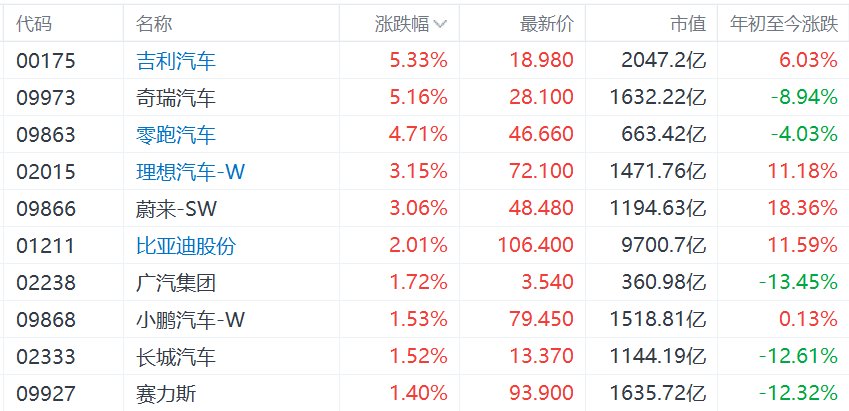
港股异动丨汽车股走强,吉利汽车涨超5%,英伟达与比亚迪吉利等车企合作打造L4级自动驾驶汽车
Ge Long Hui A P P· 2026-03-17 04:07
Group 1 - The Hong Kong stock market saw a strong performance in the automotive sector, with companies like Geely Auto and Chery Auto rising over 5%, and Li Auto and NIO increasing by over 3% [1] - NVIDIA announced collaborations with several automakers, including BYD, Geely, Hyundai, and Nissan, to develop L4 autonomous vehicles using the NVIDIA DRIVE Hyperion platform [1] - BYD, Geely, and Nissan are working on next-generation L4 passenger vehicle projects that will feature advanced autonomous capabilities for complex urban road scenarios [1] Group 2 - The stock performance of key automotive companies includes: - Geely Auto: up 5.33% to HKD 18.980, market cap of HKD 204.72 billion, year-to-date increase of 6.03% [2] - Chery Auto: up 5.16% to HKD 28.100, market cap of HKD 163.22 billion, year-to-date decrease of 8.94% [2] - Li Auto: up 3.15% to HKD 72.100, market cap of HKD 147.18 billion, year-to-date increase of 11.18% [2] - NIO: up 3.06% to HKD 48.480, market cap of HKD 119.46 billion, year-to-date increase of 18.36% [2] - BYD: up 2.01% to HKD 106.400, market cap of HKD 970.07 billion, year-to-date increase of 11.59% [2]


禾赛和英伟达合作再深化,共建自动驾驶与机器人安全新标准
Jin Rong Jie· 2026-03-17 03:04
Core Insights - Hesai Technology has joined the NVIDIA Halos AI system detection lab, the first globally recognized project certified by the American National Standards Institute National Accreditation Board (ANAB) [1][3] - The NVIDIA Halos system is a comprehensive safety framework for physical AI, aimed at ensuring the safe development of autonomous vehicles and robotics [1][3] Group 1: Company Developments - Hesai's CEO, Li Yifan, emphasized that safety and reliability are paramount for the widespread application of autonomous systems, especially as they move towards large-scale deployment [3] - The company has delivered over 2 million LiDAR units globally, which are used in advanced driver-assistance systems (ADAS), autonomous vehicles, and robotics [3][4] - Hesai has established a "three-in-one" safety system that integrates functional safety, expected functional safety, and cybersecurity into its LiDAR system design [4] Group 2: Industry Collaboration - The partnership with NVIDIA builds on a long-term collaboration that began in 2019, reinforcing Hesai's position as a key ecosystem partner [4] - Hesai has been selected as a LiDAR partner for NVIDIA's "DRIVE AGX Hyperion 10" platform, which aims to help various vehicle models achieve Level 4 autonomous driving capabilities [4] - The collaboration is part of a broader industry effort to create a credible safety system as autonomous technology transitions from research to large-scale deployment [5]


英伟达GTC重磅:Hyperion 10绑定比亚迪等四车企,物理AI驱动优步自动驾驶“加速跑”
Zhi Tong Cai Jing· 2026-03-17 01:58
Group 1 - Nvidia's CEO Jensen Huang announced a strategic alliance with Uber to build the world's largest autonomous driving network, set to begin commercial operations in Los Angeles and the San Francisco Bay Area in the first half of 2027 [1] - The network aims to deploy over 100,000 L4 autonomous vehicles equipped with Nvidia's advanced AI technology by 2028 across 28 major cities on four continents [1] - Nvidia's DRIVE Hyperion platform has been integrated with major automotive manufacturers, including BYD, Geely, Nissan, Hyundai, Kia, and Isuzu, to develop next-generation L4 vehicles [1] Group 2 - Nvidia is deepening its collaboration with Hyundai and Kia to enhance their competitive edge in autonomous driving technology, aiming to transition from L2+ to L4 level autonomous taxi services [2] - The company is also expanding its partnerships with global robotics manufacturers to advance breakthroughs in physical AI, collaborating with over ten leading firms in the industry [2] - Nvidia launched the new generation of the Cosmos world model, integrating the Isaac simulation framework and Isaac GR00T N technology module to accelerate the transition to intelligent robotics [2] Group 3 - Companies such as AGIBOT, Humanoid, LG Electronics, NEURA Robotics, and Noble Machines are adopting Nvidia's Isaac GR00T N model to move humanoid robots from the lab to large-scale production, accelerating their commercialization [3]
汽车早餐 | 鹿政华获提名接任福田汽车总经理;消息称奔驰与吉利汽车初步磋商深化合作;新一代小米SU7将于3月19日上市
Zhong Guo Qi Che Bao Wang· 2026-03-17 01:34
Group 1: Fuel Cell Vehicles - The Ministry of Industry and Information Technology, the Ministry of Finance, and the National Development and Reform Commission aim for a national fuel cell vehicle ownership of 100,000 units by 2030, doubling the number from 2025 [2] Group 2: Trade Relations - The Ministry of Commerce criticized the U.S. for misusing the 301 investigation procedure, which disrupts global supply chain stability and violates WTO rules [3] Group 3: Transportation Data - From March 9 to March 15, the national highway truck traffic reached 52.803 million vehicles, a 14.75% increase compared to the previous week [4] Group 4: Lithium Battery Recycling Standards - Hainan Province is seeking public opinion on new local standards for lithium battery recycling, requiring a minimum processing capacity of 20,000 tons per year and a recovery rate of over 98% for nickel, cobalt, and manganese [5] Group 5: Autonomous Driving - Uber and Motional launched a commercial autonomous taxi service in Las Vegas, allowing users to call self-driving electric vehicles for free through the app, with full autonomous service expected by the end of 2026 [7] Group 6: Electric Vehicle Developments - Lucid Group announced a new Midsize platform with three models, starting at under $50,000, as part of its strategy to scale operations and achieve profitability [8] Group 7: Battery Supply Contracts - Samsung SDI signed a contract worth 1.5 trillion KRW for energy storage system batteries, with production set to take place at a joint venture facility in Indiana, USA [9] - POSCO Future M signed a supply agreement for artificial graphite anode materials for lithium-ion batteries, valued at approximately $675 million, with a contract period extending to 2032 [10] Group 8: Corporate Changes - Foton Motor announced the recommendation of Lu Zhenghua as the new general manager, replacing Wu Xibin [11] Group 9: Strategic Collaborations - Mercedes-Benz is in preliminary discussions with Geely to deepen cooperation, focusing on next-generation electric vehicle projects in China [12] Group 10: Financial Performance - GAC Group reported a projected negative gross margin for 2025, citing a 22.83% decline in sales of its self-owned brand vehicles and increased promotional expenses [13] Group 11: New Product Launch - Xiaomi announced the launch of the new generation SU7 on March 19, featuring significant improvements in safety, control, and luxury [14] Group 12: Strategic Partnerships in Autonomous Vehicles - Hesai Technology will deepen its strategic partnership with Neolix, supplying high-performance lidar solutions for their new generation of autonomous delivery vehicles [16] Group 13: Funding in Flying Cars - XPeng Huitian secured nearly $200 million in a new round of equity financing, bringing its total funding in the flying car sector to approximately $1 billion [17]