Workflow
美元指数
icon
Search documents
美元指数创尼克松担任美国总统以来最大的上半年跌幅
news flash· 2025-06-30 21:10
美元指数2025年上半年累计下跌10.8%,创1973年以来最差同期表现——当时累计下跌14.8%。与现任 美国总统特朗普贸易和关税政策主张相关的不确定性、以及他一而再再而三地要求美联储降息,都给美 元造成沉重的下行压力。 ...
美元指数上半年下跌10.8%,创1973年以来最大上半年跌幅
news flash· 2025-06-30 21:06
美元指数上半年下跌10.8%,创1973年以来最大上半年跌幅。 ...
美元录得2017年以来最长月度连跌,欧元自09年以来第四次实现连涨八天
news flash· 2025-06-30 20:18
Core Points - The Bloomberg Dollar Index is experiencing its longest consecutive monthly decline in eight years, primarily due to attention on Trump's latest large-scale tax cut plan in Congress [1] - The Bloomberg Spot Dollar Index fell by 0.4% in June, marking a total decline of 2.1% for the month; this is the sixth consecutive month of decline, the longest streak since 2017 [1] - The ICE Dollar Index has dropped over 10% in 2025, representing the worst first half performance since 1973 [1] - The Euro has risen by 0.5% to 1.1775 USD, reaching its highest level since September 2021; this marks the Euro's eighth consecutive day of gains, a feat achieved only four times since March 2009 [1]
【美元指数30日下跌】7月1日讯,衡量美元对六种主要货币的美元指数当天下跌0.54%,在汇市尾市收于96.875。截至纽约汇市尾市,1欧元兑换1.1776美元,高于前一交易日的1.1700美元;1英镑兑换1.3718美元,高于前一交易日的1.3697美元。1美元兑换144.20日元,低于前一交易日的144.70日元;1美元兑换0.7934瑞士法郎,低于前一交易日的0.7998瑞士法郎;1美元兑换1.3625加元,低于前一交易日的1.3715加元;1美元兑换9.4665瑞典克朗,低于前一交易日的9.4973瑞
news flash· 2025-06-30 20:09
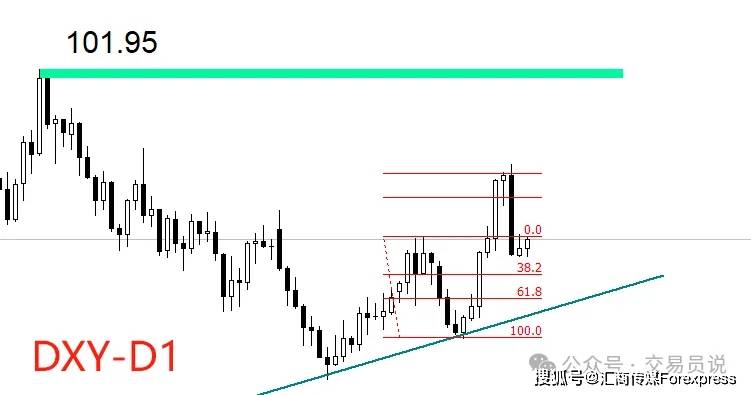
金十数据7月1日讯,衡量美元对六种主要货币的美元指数当天下跌0.54%,在汇市尾市收于96.875。截 至纽约汇市尾市,1欧元兑换1.1776美元,高于前一交易日的1.1700美元;1英镑兑换1.3718美元,高于 前一交易日的1.3697美元。1美元兑换144.20日元,低于前一交易日的144.70日元;1美元兑换0.7934瑞士 法郎,低于前一交易日的0.7998瑞士法郎;1美元兑换1.3625加元,低于前一交易日的1.3715加元;1美 元兑换9.4665瑞典克朗,低于前一交易日的9.4973瑞典克朗。 美元指数 美元指数30日下跌 ...
周一(6月30日)纽约尾盘,ICE美元指数下跌0.56%,报96.853点。彭博美元指数跌0.46%,报1190.43点。
news flash· 2025-06-30 19:25
周一(6月30日)纽约尾盘,ICE美元指数下跌0.56%,报96.853点。 彭博美元指数跌0.46%,报1190.43点。 ...
中辉期货有色观点-20250630
Zhong Hui Qi Huo· 2025-06-30 06:14
中辉有色观点 | 品种 | 核心观点 | 主要逻辑及价格区间 | | --- | --- | --- | | 黄金 | 高位震荡 | 尽管降息预期增加,但是关税风险、地缘局势在上周减少,黄金价格大幅回调。, | | | | 中长期不确定性仍然较多,长期全球秩序尚在重塑,黄金战略配置。【760-790】 | | | | 白银跟随黄金大幅调整。目前,金银比价目前回归正常区间,目前白银基本面 | | 白银 | 区间震荡 | 变化不大,盘面关注 8700 附近表现,考虑到白银的品种特性弹性较大,操作上 | | | | 做好仓位控制。【8600-8900】 | | | | 特朗普威胁提前任命新美联储主席,降息预期走高,美元指数走弱,铜围绕 8 万关 | | 铜 | 多单持有 | 口震荡盘整,建议前期铜多单继续持有,部分可逢高止盈兑现,警惕铜高位回落风 | | | | 险,中长期我们对铜依旧看好。沪铜关注区间【79000,81000】 | | | | 宏观和板块情绪积极,秘鲁大型锌冶炼减产,锌延续反弹,震荡走强,关注上 | | 锌 | 反弹 | 方缺口压力位,长期看,锌供增需弱,把握逢高空机会。沪锌关注区间【22200, ...
黄金关注驱动博弈,白银谨慎对待
Guo Mao Qi Huo· 2025-06-30 06:04
1. Report Industry Investment Rating No relevant content provided. 2. Core Views of the Report - Gold: The medium - to long - term upward trend remains unchanged, but there is a game in short - to medium - term drivers. Trump's policy combination will push up the US federal government debt, weaken the US dollar credit, and with factors like the approaching Fed rate cut, complex global geopolitical situation, and continued central bank gold purchases, the gold price will rise in the long run. However, in the short - to medium - term, factors such as the impact of tariff policies on the US economy, the Fed's rate - cut timing and space, and the potential rebound of the US dollar index will affect the gold price [1][17][18]. - Silver: The medium - term logic is expected to return to the fundamentals, and there will still be downward pressure in the second half of the year. After the recent significant catch - up, the silver price will be influenced by its commodity attributes. With an increase in global supply, a decrease in demand, and a narrowing supply - demand gap in 2025, coupled with risks to industrial and photovoltaic silver demand, the silver price is expected to be weak, and the gold - silver ratio may remain high [2][19][74]. 3. Summary by Relevant Catalogs 3.1 1. 2025 H1 Market Review - Gold: In H1 2025, Trump's policies increased market uncertainty, weakened the US dollar, and with central bank gold purchases and geopolitical risks, the gold price rose strongly. Gold ETF inflows, especially in April, were a key driving force. After April, the gold price fluctuated at a high level due to policy adjustments and market sentiment changes. COMEX gold rose about 28.2%, and SHFE gold rose about 26.1% [8][9][10]. - Silver: It generally followed the gold price but was restricted by its industrial attributes. After being sold off in early April, it rebounded and reached a new high in late May and early June. COMEX silver rose about 22.7%, and SHFE silver rose about 18.7% [10]. 3.2 2. 2025 H2 Precious Metals Market Outlook - Gold: The long - term upward trend remains unchanged, supported by factors such as the weakening of the US dollar credit, continued central bank gold purchases, and the approaching Fed rate cut. However, in the short - to medium - term, there are uncertainties in the US economy, Fed policy, and the US dollar index, which will affect the gold price [17][18][19]. - Silver: The medium - term logic will return to the fundamentals. With an increase in supply, a decrease in demand, and risks to industrial and photovoltaic demand, the silver price is expected to be weak, and the gold - silver ratio may remain high [19][74]. 3.3 3. Main Macroeconomic Influencing Factors Analysis 3.3.1 Medium - to Long - Term Perspective: Gold's Upward Trend Remains Unchanged - The tariff policy and fiscal deficit expansion will weaken the US dollar credit, and the demand for hedging against the US dollar credit risk will support the gold price [20][21]. - Global central banks will continue to purchase gold due to the increasing US dollar credit risk and geopolitical uncertainties, providing support for the gold price [22]. - The market's hedging demand will remain due to the uncertainty of tariff policies and geopolitical situations [23]. 3.3.2 Short - to Medium - Term Perspective: Driving Forces Are in a Game - **Impact of Tariff Policy Negotiations and Tax Cuts on the US Economy**: The tariff policy may cause the US economy to weaken, boosting the precious metals market. However, a controllable trade agreement and the implementation of tax and expenditure bills may offset the negative impact on the precious metals market. The US employment market is relatively stable but has hidden risks, inflation may rise in the second half of the year, and consumer spending and PMI show signs of slowdown [30][31][41]. - **Approaching Fed Rate Cut but Limited Space**: The Fed is expected to cut rates, but the timing may be late and the space limited, which will support the precious metals market but also restrict the short - term upward space of the gold price [44][45][48]. - **Be Wary of the Risk of a Temporary Rebound in the US Dollar**: Although the US dollar index has declined, factors such as the high 10 - year US Treasury yield and the US's relative economic advantage may limit its further decline and even cause a rebound, which will suppress the gold price [56][57]. 3.4 4. Fundamental Influencing Factors Analysis 3.4.1 Gold: The Driving Force of Key Factor ETFs May Weaken in H2 - **Supply**: In Q1 2025, global gold supply increased slightly, with an increase in mined gold and a decrease in recycled gold. Gold inventories in major exchanges generally increased [60]. - **Demand**: In Q1 2025, global gold demand increased, with a significant increase in investment demand, especially gold ETF inflows. In May, gold ETFs had a net outflow. In H2, economic uncertainties will support gold investment demand, but the driving force of gold ETFs may weaken, while central bank gold purchases will still support the price [65][66]. 3.4.2 Silver: The Medium - Term Logic Is Expected to Return to the Fundamentals - **Supply**: The global silver supply is expected to increase in 2025, and the visible inventory has increased. The US may impose tariffs on key metals, but the inventory has not decreased significantly [74][75]. - **Demand**: The global silver demand is expected to decrease in 2025, with a decline in physical demand in various fields and a slowdown in photovoltaic silver demand. However, investment demand is expected to increase, which will support the silver price to some extent. The silver price is expected to fluctuate weakly, and the gold - silver ratio may remain high [80][81][88].
商品期货早班车-20250630
Zhao Shang Qi Huo· 2025-06-30 04:17
Report Industry Investment Ratings No relevant content provided. Core Views of the Report - The macro - environment shows positive signs with the easing expectation of global tariff frictions and the decline of the US dollar index, but some commodities face fundamental pressures and potential risks [2]. - Most commodities are expected to show an oscillatory trend in the short - term, and the medium - and long - term supply - demand patterns of some commodities will gradually become more relaxed [2][7][8][9]. Summary by Commodity Categories Basic Metals - **Aluminum**: The electrolytic aluminum factory maintains high - load production, with a slight increase in operating capacity and a slight decrease in the aluminum product start - up rate. Although the macro - environment is favorable, the fundamentals face the dual pressures of weakening demand and weakening cost support, so it is recommended to be cautiously bullish [2]. - **Alumina**: The alumina factory's production is stable, with a slight increase in operating capacity. The electrolytic aluminum factory maintains high - load production. With the weak operation of the US dollar index and the strengthening of the Fed's interest - rate cut expectation, the alumina futures price is expected to oscillate within a range, and it is recommended to wait and see [2]. - **Industrial Silicon**: Affected by factory production cuts and coal price increases, the price rebounded. The supply may increase in the future, and the demand has some uncertainties. After the futures price rebounds, the rebound amplitude may be limited. It is recommended to wait and see [2]. - **Lithium Carbonate**: The domestic supply elasticity is greater than the demand elasticity. The production is expected to reach a new high in June, and the inventory will continue to accumulate. In the short - term, the price is expected to oscillate and rebound, and it is recommended to wait and see or short at high prices above 65,000 yuan [2]. - **Polycrystalline Silicon**: The price is affected by the cost - end and the production situation. The short - term capital attention is high, and it is recommended to wait and see if there are anti - involution actions in the industry [3]. Black Industry - **Rebar**: The supply - demand of steel is relatively balanced, with a narrowing futures premium and high valuation. It is expected that the steel futures and spot prices will continue to oscillate this week, and it is recommended to close short positions [3]. - **Iron Ore**: The supply - demand is neutral, and the medium - term oversupply pattern remains unchanged. The valuation is neutral. It is expected that the iron ore futures and spot prices will continue to oscillate this week, and it is recommended to close short positions and hold long positions [3]. - **Coking Coal**: The overall supply - demand is relatively loose, but the fundamentals are gradually improving. The futures are slightly at a premium to the spot. It is expected that the coking coal futures and spot prices will continue to oscillate this week, and it is recommended to close short positions and hold long positions [3]. Agricultural Products - **Soybean Meal**: The short - term US soybeans are in a range - bound state. The domestic soybean arrivals will be large later, and the unilateral trend follows the international cost end. It is necessary to focus on the USDA report [4][5]. - **Corn**: The supply - demand this year has tightened marginally. The spot price is expected to be strong, and the futures price is expected to oscillate strongly [5]. - **White Sugar**: The Brazilian sugar - making ratio is expected to remain high. The Zhengzhou sugar 09 contract is expected to oscillate weakly later, and it is recommended to short in the futures market, sell call options, and lock the futures price for sugar users [5]. - **Cotton**: The international cotton export sales have decreased, and the domestic downstream start - up rate has declined. It is recommended to buy at low prices and adopt a range - bound strategy [5]. - **Palm Oil**: The supply in the production area is weakening marginally, and the demand for exports has increased. The short - term supply - demand is increasing, and it is in a relatively balanced state. It is recommended to pay attention to the production in the production area and the biodiesel policy [5]. - **Eggs**: The supply is high, and the demand is affected by low prices. The cost provides support, and the futures and spot prices are expected to oscillate [5]. - **Hogs**: The short - term pig price is expected to be strong, and the medium - term supply will continue to increase, and the price center will gradually move down. It is recommended to pay attention to the enterprise's slaughter rhythm and secondary fattening trends [6]. - **Apples**: The early - maturing varieties' opening prices will affect the futures price. It is recommended to wait and see [6]. Energy and Chemicals - **LLDPE**: The domestic supply is increasing, and the import is expected to decrease slightly. The demand is improving marginally. The short - term market will oscillate, and it is recommended to short far - month contracts at high prices in the long - term [7]. - **PVC**: The fundamentals change little. The supply will increase in the third quarter, and the social inventory is decreasing. It is recommended to sell call options above 4,950 yuan [7]. - **PTA**: The short - term supply of PX and PTA is decreasing, and the inventory is decreasing. The polyester load has decreased slightly. It is recommended to hold long positions in PX, pay attention to positive arbitrage opportunities in PTA in the short - term, and short the processing margin at high prices in the long - term [8]. - **Rubber**: The supply is increasing steadily, and the downstream demand has some resilience. The short - term market will oscillate, and it is recommended to wait and see or short lightly above 14,000 yuan, and hold positive arbitrage positions in RU - NR [8]. - **Glass**: The supply - demand is weak. The supply will increase in July, and the inventory is difficult to digest. It is recommended to short at high prices for hedging [8]. - **PP**: The supply is increasing, and the demand is differentiated. The short - term market will oscillate weakly, and it is recommended to short far - month contracts at high prices in the long - term [8]. - **MEG**: The supply is at a high level and has room for further increase. The inventory is at a low level. The polyester load has decreased slightly. It is recommended to short at high prices in the short - term [9]. - **Crude Oil**: The short - term demand support is strong, but the medium - and long - term supply is expected to be in surplus. It is recommended to short at high prices [9]. - **Styrene**: The supply inventory is accumulating slightly in the short - term, and the demand is under pressure. It is recommended to pay attention to the export demand. The short - term market will oscillate, and it is recommended to short far - month contracts at high prices in the long - term [9]. - **Ethylene Benzene (EB)**: The short - term pure benzene and styrene inventories are accumulating slightly. The demand is affected by the profit situation and export prospects. The short - term market will oscillate, and it is recommended to short far - month contracts at high prices in the long - term [9]. - **Soda Ash**: The supply is at a high level, and the downstream demand has some problems. It is in a weak - balance state, and it is recommended to hedge at high prices [9][10].
三大人民币汇率指数上周全线下挫,CFETS按周跌0.56
Sou Hu Cai Jing· 2025-06-30 02:56
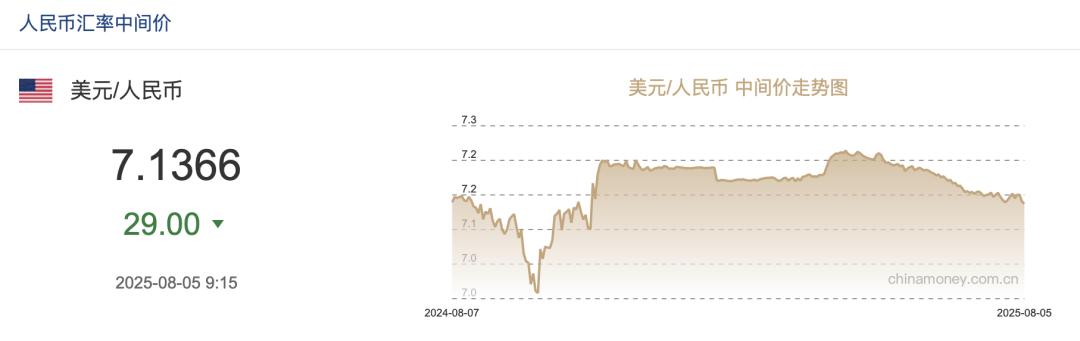
Core Viewpoint - The recent decline in the three major RMB exchange rate indices indicates a weakening of the Chinese yuan against a basket of currencies, with the CFETS index hitting its lowest level since December 2020 [1][2]. Exchange Rate Indices - The CFETS RMB exchange rate index is reported at 95.36, down 0.56% week-on-week, marking a low not seen since December 2020 [1][2]. - The BIS currency basket RMB exchange rate index stands at 100.73, down 0.78% week-on-week, the lowest since July 2023 [1][2]. - The SDR currency basket RMB exchange rate index is at 90.21, down 0.54% week-on-week, the lowest since August 2020 [1][2]. Market Context - The geopolitical situation and rising expectations for a Federal Reserve rate cut have contributed to a decline in the US dollar, which fell 1.52% last week to 97.26, its lowest in nearly three years [5]. - Non-USD currencies saw gains, with the Swiss franc rising 2.35%, the British pound up 1.97%, and the euro increasing by 1.7% [5]. - The onshore RMB against the USD closed at 7.1711, down 126 basis points for the week, while the offshore RMB closed at 7.1729, down 65 basis points, a decline of 0.09% [5]. Analyst Insights - Analysts suggest that the future trajectory of the RMB is closely tied to the outlook for the US dollar, with a clear direction for gradual appreciation of the RMB in the medium to long term [6]. - Li Liuyang, Chief Analyst at CICC, indicates that the RMB exchange rate will maintain a moderate appreciation in a weak dollar environment, supported by stable exchange rate policies [5][6]. Economic Data - The National Bureau of Statistics reported that from January to May, profits of large-scale industrial enterprises totaled 27,204.3 billion yuan, an increase of 6,034.1 billion yuan compared to the previous four months [7]. - The Ministry of Finance reported that from January to May, total operating revenue of state-owned enterprises was 328,062.5 billion yuan, a year-on-year decrease of 0.1%, while total profits were 16,514.5 billion yuan, down 2.8% year-on-year [8].
三年多新低!美元指数一度跌破97关口
Sou Hu Cai Jing· 2025-06-27 14:12
Core Viewpoint - The recent decline of the US dollar index, which has dropped over 10% since the beginning of the year, is influenced by expectations of interest rate cuts by the Federal Reserve and geopolitical factors affecting market confidence [1][2][3]. Group 1: Dollar Index Movement - On June 26, the dollar index fell below the 97 mark, reaching its lowest level since February 2022 [1]. - The dollar has weakened against major currencies, including a drop to a new low against the euro since September 2021 and a decline against the yen and Swiss franc [1]. - The dollar index has decreased over 6.5% since the announcement of "reciprocal tariffs" by the Trump administration on April 2 [1][2]. Group 2: Federal Reserve and Interest Rate Expectations - The market is increasingly betting on interest rate cuts, with a 20.7% probability for a cut in July and a 90.3% probability for a cut in September [5]. - Recent economic data, including a significant downward revision of Q1 GDP and weak consumer spending, supports the case for further rate cuts [5][6]. - Analysts predict that the Federal Reserve may implement up to seven rate cuts in 2026, potentially lowering the terminal rate to between 2.5% and 2.75% [5]. Group 3: Geopolitical and Trade Factors - The ongoing trade war and tariff policies are expected to shrink global trade volumes, negatively impacting the dollar's role as a global trade currency [2]. - Geopolitical tensions, particularly in the Middle East, have raised concerns but have not yet led to significant inflationary pressures, which could influence the Fed's decisions [2][3]. Group 4: Market Sentiment and Investor Behavior - A survey by Bank of America indicates that shorting the dollar has become the third-largest trade among global fund managers, following bullish positions on gold and major US stocks [2]. - Concerns over the independence of the Federal Reserve have been heightened by President Trump's consideration of early nominations for a new Fed chair, which could undermine investor confidence [3][4]. Group 5: Future Outlook for the Dollar - The dollar is expected to continue experiencing low volatility, with potential further declines as the market has already priced in expected rate cuts [6]. - The relative overvaluation of the dollar may lead to a rebalancing of capital flows, potentially weakening the dollar in the medium to long term [6][7].