
人民币国际化

Search documents
不要被SWIFT骗了!国际支付:欧元22.77%,英镑7.38%,人民币呢?
Sou Hu Cai Jing· 2025-10-27 15:01
Core Viewpoint - The internationalization of the Renminbi (RMB) is progressing steadily, and its global influence is underestimated when solely relying on SWIFT payment rankings [3][6][10]. Group 1: RMB's Global Payment Position - The SWIFT ranking places RMB fifth in global payments, leading to skepticism about its international influence [3]. - SWIFT's statistics include all payments processed through its system, which may not accurately reflect RMB's usage since many domestic transactions do not go through SWIFT [6]. - The establishment of CIPS (Cross-Border Interbank Payment System) allows for significant RMB transactions that are not captured in SWIFT's data, indicating a more substantial global presence than suggested by rankings [6][12]. Group 2: RMB in Trade and Investment - Many countries along the Belt and Road Initiative are increasingly using RMB for direct trade settlements, reducing reliance on USD and EUR [8]. - As of mid-2025, foreign holdings of RMB assets exceeded 10 trillion, demonstrating strong international demand for RMB-denominated bonds and stocks [8][10]. - RMB's share in global trade financing reached over 7% by September 2025, second only to USD, highlighting its growing acceptance in international trade [12]. Group 3: RMB's Role in Global Financial Stability - Since 2016, RMB has been included in the IMF's SDR basket, signifying its status alongside major currencies like USD and EUR [10]. - In times of global financial instability, RMB has emerged as a safe-haven asset, with many central banks entering into currency swap agreements with China [10][14]. - The trend of "de-dollarization" globally is creating opportunities for RMB to gain further traction as an alternative currency [14]. Group 4: Future Outlook for RMB Internationalization - The internationalization of RMB is a gradual process, with its global payment share increasing from less than 1% in 2011 to a more significant figure today [12][14]. - The development of CIPS enhances the speed and security of RMB transactions, attracting more countries to adopt RMB for settlements [14]. - The future of RMB internationalization is promising, contingent on China's economic stability and ongoing financial reforms [14][16].


2025金融街论坛|朱鹤新:统筹推进人民币国际化与资本项目高质量开放
Bei Jing Shang Bao· 2025-10-27 14:25
Core Viewpoint - The speech by the Deputy Governor of the People's Bank of China emphasizes the importance of high-level institutional opening in the foreign exchange sector and the promotion of the internationalization of the Renminbi alongside high-quality capital account opening [1] Group 1: Foreign Exchange Management Reforms - The focus is on enhancing overall planning for reforms in the foreign exchange sector, particularly in direct investment, cross-border financing, and securities investment [1] - A comprehensive policy package for cross-border investment and financing was launched in September, indicating proactive measures to facilitate international financial activities [1] Group 2: Upcoming Policies - Upcoming policies include the implementation of integrated currency pools for multinational companies and management of funds for domestic enterprises listed overseas, aimed at streamlining foreign exchange management [1] - The integration of innovative foreign exchange management reforms will be piloted in free trade zones to foster a new landscape of autonomous opening [1]

特朗普出席晚宴前,预告中美结局,中国加速囤黄金,一个时代完结
Sou Hu Cai Jing· 2025-10-27 13:38
10月24日,特朗普将启程前往亚洲访问,可就在出发前一晚,他突然放话称"我认为中美会取得很好的结果,每个人都会非常高兴。" 另一边,中国央行公布9月再增持1.24吨黄金,连续第11个月加仓。 这场外交与金融的同步动作,引发外界高度关注。为什么中国在这个节骨眼上持续增持黄金?特朗普又为何要在出发前提前定调? 10月24日晚,特朗普登上"空军一号",从美国启程,开启他第二任期的首次亚洲访问。 首站马来西亚,之后是日本,再到韩国,节奏十分紧凑。 他此行的路线图并不复杂,但每一站背后,都是一场精密的经济部署。 10月27日,特朗普将抵达日本,与新任首相高市早苗会面。 他将再次要求日方兑现5500亿美元的对美投资承诺——这是石破茂政府时期达成的协议。 特朗普的逻辑很简单:换投资、降关税。 而到了韩国,特朗普则将推动落实3500亿美元的投资协议,涉及汽车、芯片、能源等多个领域。 这些投资,不是普通合作,而是有条件的政治绑定。更关键的是,美国还在推动日韩企业,在东盟设厂替代中国供应链。 特朗普意图很明确:把盟友的钱和生产线,从中国往外拉。 然后,再带着这些经济筹码,在韩国与中国谈判。 按白宫公布的行程,10月30日,特朗普 ...
星展:香港可助力海合会筹集CNH和绿色债券 推动当地资产配置多元化
Zhi Tong Cai Jing· 2025-10-27 13:05
Group 1 - The core viewpoint is that Hong Kong can act as a super connector to assist the Gulf Cooperation Council (GCC) in raising CNH and green bonds, thereby diversifying asset allocation in the Saudi Arabian asset management market from real estate (36%) and equities (34%) [1] - The report titled "Global Capital New Route: Strategic Intersection of GCC and Asia" highlights the increasing investment demand due to global green transformation and economic slowdown, necessitating bond issuance to support economic transition [1] - From 2014 to 2024, GCC investments have been steadily increasing, primarily in the energy sector, which accounts for 62% of the total [1] Group 2 - Saudi Arabia's asset management sector is projected to grow steadily at an annual rate of 12% from 2015 to 2024, reaching a total managed asset value of $290 billion by the first quarter of 2025 [1] - The GCC and Hong Kong have launched their ETFs on each other's platforms, with trading volumes for individual ETFs ranging from $10 million to $20 million year-to-date [2]
金融街论坛丨国家外汇局:将出台新政策更大力度推动贸易创新发展
Xin Hua Wang· 2025-10-27 12:35
Core Viewpoint - The People's Bank of China and the State Administration of Foreign Exchange will introduce nine policy measures to enhance trade innovation and facilitate cross-border trade and investment, aiming to create a more open and efficient foreign exchange management system [1][2]. Group 1: Policy Measures - Nine new policy measures will be implemented to promote trade innovation and development [1]. - Policies will include the integration of domestic and foreign currency pools for multinational corporations and management of funds for domestic companies listed overseas [1]. - Integrated foreign exchange management reforms will be piloted in free trade zones to support new levels of autonomous opening-up [1]. Group 2: Market Development - The foreign exchange market's trading volume is expected to grow by 37% in 2024 compared to 2020, while the scale of foreign-related income and expenditure is projected to increase by 64% [1]. - In the first three quarters of this year, China's foreign-related income and expenditure reached a record high of 11.6 trillion USD [1]. Group 3: Future Goals - The future foreign exchange management system will focus on being "more convenient, more open, more secure, and smarter" [2]. - There will be an emphasis on enhancing the foreign exchange policy system that rewards integrity with convenience, particularly in trade facilitation [2]. - The management will also aim to deepen reforms in direct investment, cross-border financing, and securities investment [2].
朱鹤新:将聚焦贸易便利化,新出台9条政策措施
Zheng Quan Ri Bao Wang· 2025-10-27 12:28
Core Viewpoint - The People's Bank of China emphasizes the need for a more convenient, open, secure, and intelligent foreign exchange management system, focusing on the integration of development and security [1] Group 1: Foreign Exchange Management - The State Administration of Foreign Exchange (SAFE) aims to enhance the foreign exchange policy system based on the principle of "more integrity, more convenience" [1] - There will be a comprehensive planning of reforms to promote the internationalization of the Renminbi and high-quality opening of capital projects [1] - The focus will be on improving foreign exchange supervision and risk prevention capabilities under open conditions to mitigate external risks [1] Group 2: Trade Facilitation Policies - SAFE plans to introduce nine new policy measures to enhance trade facilitation and promote innovative trade development [1] - Policies will include the implementation of integrated foreign exchange management reforms in pilot free trade zones [1] - New measures will support multinational companies' integrated currency pools and management of funds for domestic companies listed overseas [1]
林毅夫:美国若采取单边措施将推动更多国家改用人民币
Sou Hu Cai Jing· 2025-10-27 11:49
Core Viewpoint - The potential replacement of the US dollar is not solely dependent on China, but rather on global needs, especially if the US continues to implement unilateral measures that create uncertainty in international trade and finance [1][4]. Group 1: Global Financial System - The current global financial and trade system is predominantly based on the US dollar, which serves as a measurement and reserve currency established post-World War II [3][4]. - China, as the world's second-largest economy and the largest trading nation, is concerned with both its own development and the stability of the global financial system [3][4]. Group 2: Renminbi Internationalization - If more countries begin to use the renminbi as a unit of account, it will be a natural evolution driven by global needs rather than a unilateral push from China [4]. - The use of renminbi in trade is seen as beneficial not only for China but also for countries that engage in trade with China, highlighting a mutual advantage [3][4]. Group 3: China's Role - China's primary focus is on its own economic development, aiming to become a significant force for global stability and development [4]. - The country does not seek to challenge the existing financial system unless faced with unilateral actions from the US that create instability [4].
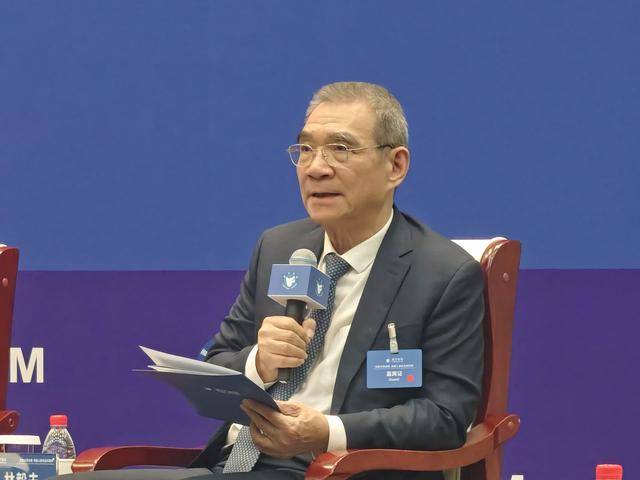
重磅!2025金融街论坛年会召开,央行、金融监管总局、证监会、外汇局发声
新浪财经· 2025-10-27 10:52
Core Viewpoint - The 2025 Financial Street Forum Annual Meeting is being held in Beijing, focusing on "Global Financial Development under Innovation, Transformation, and Restructuring" [2] Group 1: Central Bank Policies - The People's Bank of China (PBOC) will resume open market operations for government bonds, which is crucial for enhancing monetary policy tools and supporting bond market reforms [3] - The PBOC plans to further optimize the digital RMB management system, supporting more commercial banks to operate digital RMB services [4] - The PBOC will explore mechanisms to provide liquidity to non-bank institutions under specific circumstances, balancing market stability and risk prevention [5] Group 2: Credit Repair and Risk Management - The PBOC is researching policies to support personal credit repair, particularly for individuals who have defaulted due to uncontrollable circumstances like the pandemic [7] - The PBOC will continue to combat the operation and speculation of virtual currencies to maintain economic and financial order [8] Group 3: Financial Regulatory Reforms - The Financial Regulatory Administration will deepen supply-side structural reforms in finance, promoting a more reasonable institutional layout and enhancing the quality and resilience of development [9] - The administration will increase efforts in disposing of non-performing assets and capital replenishment, ensuring the stability of the financial system [10][13] - The administration aims to correct disorderly competition and maintain a healthy and fair financial order [11][12] Group 4: Investor Protection and Market Stability - The China Securities Regulatory Commission (CSRC) will release opinions to strengthen the protection of small and medium investors in the capital market, introducing 23 practical measures [15] - The CSRC will optimize the interconnection mechanism to enhance the quality of overseas listing filings and deepen cooperation between mainland and Hong Kong markets [16] Group 5: International Financial Cooperation - The National Foreign Exchange Administration will introduce policies to facilitate trade and enhance the management of cross-border capital flows, focusing on high-level openness [22][24] - The administration reported that the scale of foreign-related receipts and payments reached $11.6 trillion in the first three quarters, a historical high for the same period [22]
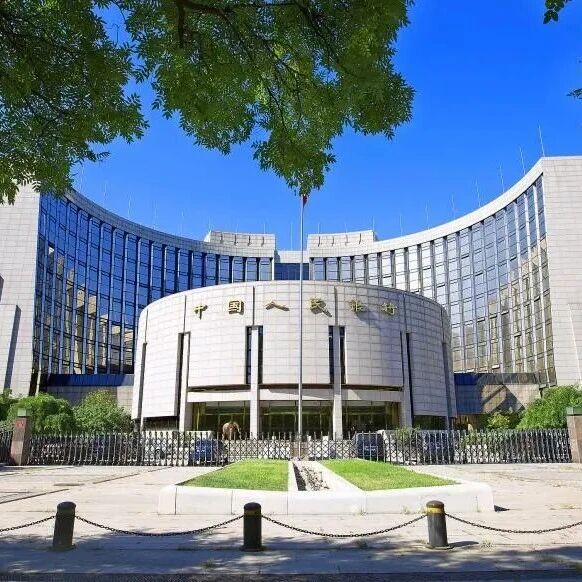
经济高质量发展需平衡好消费和投资|宏观经济
清华金融评论· 2025-10-27 10:39
Group 1 - The core viewpoint of the article emphasizes the importance of the "14th Five-Year Plan" as a crucial step towards achieving the second centenary goal by 2035, focusing on high-quality economic development and the balance between qualitative improvement and reasonable quantitative growth [2][3]. - The plan sets a target for maintaining an average annual GDP growth rate of over 4.5% over the next decade, aiming for a per capita GDP exceeding $20,000 by 2035 [3]. - The article highlights the significance of innovation-driven economic development, particularly through the integration of technological and industrial innovation, with a focus on enhancing the productive service sector [5][6]. Group 2 - The article discusses the need for a virtuous cycle between consumption and investment to expand domestic demand, marking a significant shift in macroeconomic policy towards boosting consumption and improving investment efficiency [8][9]. - It suggests that effective consumption can stimulate total demand and promote high-quality investment, advocating for a balanced interaction between consumption and investment [8][9]. - The article also mentions the importance of tax reforms to enhance local government incentives for promoting consumption, such as optimizing the VAT distribution mechanism [9]. Group 3 - The article addresses the internationalization of the RMB and the need for exchange rate policies to adapt to new circumstances, highlighting China's dual investment strategy of "bringing in" and "going out" [10][11]. - It notes that China's direct investment outflow has surpassed foreign direct investment inflow since 2015, with a diversification of trade partners and a decrease in trade concentration among the top three partners [11]. - The article suggests that the RMB could be considered a quasi-safe-haven currency, which would enhance its role in global investment portfolios and mitigate capital outflow pressures [12].

朱鹤新:统筹推进人民币国际化与资本项目高质量开放
Xin Lang Cai Jing· 2025-10-27 10:23
Core Viewpoint - The People's Bank of China aims to develop a more convenient, open, secure, and intelligent foreign exchange management system, focusing on balancing development and security [1] Group 1: Foreign Exchange Management Reforms - The State Administration of Foreign Exchange will promote reforms in bank foreign exchange operations and enhance the facilitation of trade and investment [1] - A policy system will be established that rewards integrity with greater convenience in foreign exchange [1] Group 2: Internationalization and Capital Account Opening - There will be a coordinated approach to advance the internationalization of the Renminbi and the high-quality opening of the capital account [1] - Key areas for reform include direct investment, cross-border financing, and securities investment in foreign exchange management [1] Group 3: Risk Management and Stability - The focus will be on improving foreign exchange supervision and risk prevention capabilities under open conditions [1] - The aim is to effectively guard against external risk shocks and provide more stability and certainty to promote open cooperation and enhance economic resilience [1]