
习近平经济思想

Search documents
体系化学理化研究 | 构建21世纪政治经济学的几点思考
Sou Hu Cai Jing· 2025-10-06 09:18
Core Ideas - The article emphasizes the need to construct a 21st-century political economy that reflects China's unique experiences and offers solutions to global challenges, guided by Xi Jinping's economic thought [1][3][5] Group 1: Theoretical Framework - Xi Jinping's economic thought serves as a comprehensive theoretical summary for China's economic development, providing a foundation for the construction of a 21st-century political economy [3][4] - The historical context of political economy shows that significant theoretical advancements arise from profound reflections on transformative practices, indicating that China's reform and modernization can inspire new theories [4][5] Group 2: Global Context and Challenges - The world is undergoing unprecedented changes, with issues such as economic imbalance, widening wealth gaps, and ecological crises becoming increasingly complex, necessitating a return to classical political economy concerns [1][2] - The dominance of Western economic paradigms has limited China's academic discourse and global understanding, highlighting the importance of developing a political economy that reflects Chinese practices and engages in international dialogue [5][6] Group 3: Key Issues in Political Economy - The fundamental purpose of development should focus on ethical values and social equity, moving beyond the Western economic model that often leads to wealth polarization [6][7] - The dynamics of development must consider new drivers such as technological innovation and data factors, emphasizing the role of new productive forces in shaping economic growth [6][8] - The relationship between economy and politics is crucial, with a need to clarify the roles of political parties, government, and markets in economic governance [7][8] Group 4: Environmental and Global Governance - Addressing the relationship between development and the environment is essential, advocating for a green development model that harmonizes economic growth with ecological sustainability [11][12] - The article discusses the challenges of economic globalization and the need for a fairer global governance system, proposing that China's initiatives can contribute to a more inclusive global economic order [12][13]

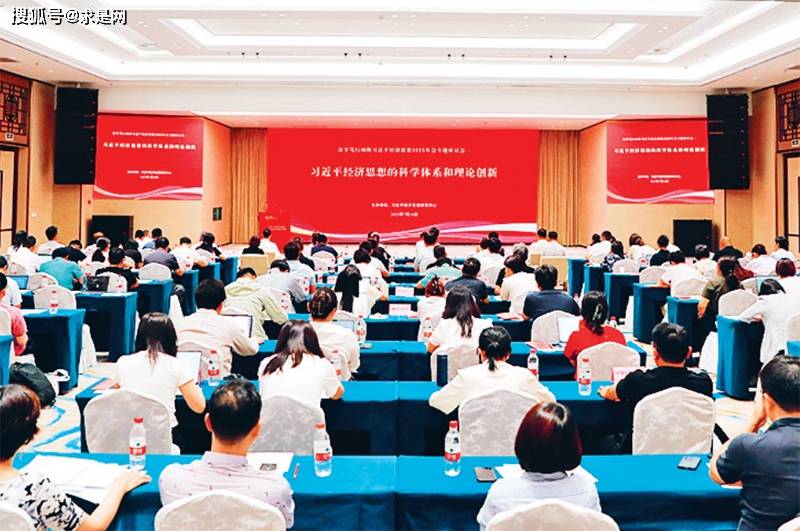
中国经济发展具有开放共赢性
Xin Hua Wang· 2025-10-06 00:15
Core Points - China's commitment to high-level openness and sharing development opportunities with the world remains unchanged, emphasizing a win-win approach in economic globalization [2][3] - China has been a significant contributor to global economic growth, maintaining a contribution rate of around 30% [3] - The country has established itself as a leader in global supply chain stability, particularly during the COVID-19 pandemic, ensuring the resilience of its manufacturing sector [4] - The Belt and Road Initiative has evolved into the largest international cooperation platform, enhancing connectivity and economic collaboration across multiple regions [5] - China's market presents vast opportunities for global investment, with significant import and consumption figures, and a commitment to reducing trade barriers [6] Group 1 - China's role as a beneficiary and contributor to economic globalization is highlighted, with a focus on multilateralism and the importance of the WTO [3] - The country has maintained a stable supply chain during global disruptions, showcasing its manufacturing capabilities and commitment to global economic recovery [4] - The Belt and Road Initiative has led to the completion of major infrastructure projects, enhancing international trade and cooperation [5] Group 2 - China's market size and growth potential are emphasized, with substantial annual consumption and import figures, creating opportunities for international businesses [6] - The country has implemented zero-tariff policies for the least developed countries, promoting inclusive trade practices [6] - Continuous efforts to improve the business environment and expand foreign investment access are noted, particularly in manufacturing and service sectors [6]
中国经济发展具有开放共赢性(习近平经济思想指引下的中国经济专论)
Ren Min Ri Bao· 2025-10-05 21:52
Group 1 - The core viewpoint emphasizes China's unwavering commitment to high-level openness and sharing development opportunities with the world, promoting economic globalization towards a more open, inclusive, and balanced direction [1] Group 2 - China has been a significant contributor to global economic growth, maintaining a contribution rate of around 30% to world economic growth, especially during crises like the Asian financial crisis and the 2008 financial crisis [2] - The country stands as a defender and promoter of true multilateralism, supporting the multilateral trading system centered around the WTO and advocating for reforms in global economic governance [2] Group 3 - China has ensured the resilience and stability of global industrial and supply chains, particularly during the COVID-19 pandemic, significantly aiding global economic recovery [3] - Over the past decade, China has established the largest and most complete new energy industrial chain, leading to a more than 60% reduction in the average cost of wind power and over 80% for photovoltaic power generation [3] Group 4 - The Belt and Road Initiative has evolved into the largest international cooperation platform, with significant projects completed, including the China-Laos Railway and the Jakarta-Bandung High-Speed Railway [4] - The China-Europe Railway Express has operated over 110,000 trains, revitalizing trade routes and enhancing connectivity [4] Group 5 - China is committed to expanding high-level foreign openness, creating vast opportunities for global development, with nearly 50 trillion yuan in annual consumption and over 20 trillion yuan in imports [5] - The country has implemented zero-tariff treatment for 100% of products from the least developed countries that have diplomatic relations with China, and the China International Import Expo has seen a cumulative intended transaction amount exceeding 500 billion USD [5]
人民日报:科学客观看待我国当前经济发展态势
Ren Min Ri Bao· 2025-10-02 01:16
Economic Overview - The overall sentiment regarding China's current economic situation is optimistic, with a belief that the economy is showing signs of improvement and has a promising future [1][2] - China's economy is characterized by stability and resilience, with key macroeconomic indicators such as economic growth, employment, prices, and international balance of payments performing well [2] Economic Performance - In the first half of the year, China's economic growth rate significantly exceeded that of most economies, positioning it as a stabilizing force in global economic growth [2] - Exports showed strong resilience, with an export growth rate of 6.9% in the first eight months, particularly in new energy vehicles and integrated circuits, which saw growth rates exceeding 20% [2] Innovation and Transformation - Innovation is highlighted as the primary driving force for development, with significant advancements in key technologies and the emergence of notable innovative products [3] - The transition from old to new economic drivers is accelerating, with high-tech manufacturing growth outpacing overall industrial growth [3] Risk Management and Social Welfare - While acknowledging existing economic risks, measures have been taken to mitigate these challenges, ensuring that social welfare remains a priority [4] - The actual growth of per capita disposable income for residents has outpaced economic growth, indicating improvements in living standards [4] Sectoral Disparities - The process of industrial transformation is uneven, with some sectors and regions advancing more rapidly than others, leading to disparities in economic experiences [5] - For instance, industries leveraging artificial intelligence are seeing salary growth at twice the rate of other sectors, while the real estate sector is experiencing job losses and salary reductions [5] Future Potential - China's economic development still holds significant potential in areas such as technology, labor, and capital, with a strong emphasis on research and development [6] - The complete and well-supported industrial system, along with substantial consumer and investment potential, is expected to bolster domestic circulation [6]
科学客观看待我国当前经济发展态势(习近平经济思想指引下的中国经济专论)
Ren Min Ri Bao· 2025-10-01 22:11
Group 1 - The overall sentiment regarding China's current economic situation is optimistic, with a belief in its resilience and potential for future growth [1][5] - Economic indicators such as growth, employment, prices, and international balance of payments are performing well, with China's economic growth rate in the first half of the year significantly higher than most economies [1][3] - Exports have shown strong resilience, with an export growth rate of 6.9% in the first eight months, particularly in new energy vehicles and integrated circuits, which saw growth rates exceeding 20% [1][3] Group 2 - Innovation is highlighted as a key driver of development, with significant advancements in core technologies and the emergence of notable tech products, including AI applications and robotics [2][5] - The transition from old to new economic drivers is accelerating, with high-tech manufacturing growth outpacing overall industrial growth, and a steady increase in the share of modern service industries [2][5] - The green and low-carbon transition is making progress, with a continued decline in energy consumption per unit of GDP, contributing to a more sustainable economic development [2] Group 3 - There are recognized risks and challenges in the current economic environment, including external uncertainties and domestic demand weaknesses, particularly in consumption [3][4] - Despite these challenges, the government is focused on maintaining economic stability and ensuring the well-being of the population, with real disposable income growth outpacing economic growth [3][4] - Measures have been taken to address food and energy security, with successful grain production and stable electricity supply during peak demand [3] Group 4 - Economic transformation is not uniform, with disparities across regions and industries, leading to varied experiences among different economic entities [4] - Industries that effectively utilize technology, such as AI, are seeing significant improvements in employee compensation, while traditional sectors like real estate are facing challenges [4] - The government aims to address these disparities through reforms and policies to ensure broader access to economic benefits [4] Group 5 - Looking ahead, China's economy has substantial potential driven by factors such as a strong workforce, significant R&D investment, and a complete industrial system [5] - The country maintains a high level of R&D personnel and expenditure relative to GDP, indicating a robust foundation for future innovation [5] - The leadership and institutional advantages of the socialist system are seen as critical for ensuring stable and sustainable economic growth [5]
人民日报钟才文:中国GDP今年预计可达140万亿元
Ren Min Ri Bao· 2025-10-01 02:28
Economic Growth and Achievements - Since the establishment of New China and especially after the reform and opening up, China's economic development has been remarkable, with GDP growing from 367.9 billion yuan in 1978 to an expected 134.9 trillion yuan in 2024, averaging an annual growth rate of 8.8%, significantly higher than the global average of about 3% during the same period [1] - During the 14th Five-Year Plan period, China's GDP surpassed 100 trillion yuan in 2020 and has since crossed the thresholds of 110 trillion, 120 trillion, and 130 trillion yuan, with an expectation to reach 140 trillion yuan this year [1] Leadership and Governance - The leadership of the Communist Party of China (CPC) provides fundamental guarantees for economic and social development through top-level design, overall layout, coordination, and implementation [1] - The CPC's long-term governance avoids policy shortsightedness and instability seen in Western multi-party systems, serving as a "stability anchor" for China's economic development [1] Theoretical Framework and Innovation - The CPC continuously innovates its theoretical framework to provide scientific guidance for economic and social development, adhering to the principles of "liberating thoughts, seeking truth from facts, and maintaining integrity while innovating" [2] - Xi Jinping's economic thought introduces new concepts such as "new development concepts" and "new development patterns," which build upon traditional socialist models while adapting to contemporary needs [2] Strategic Planning and Macro Control - The combination of strategic planning and effective macroeconomic control is a unique advantage for long-term economic stability, guiding resource allocation and ensuring orderly implementation of development goals [2] - China emphasizes the importance of macroeconomic control systems to manage economic fluctuations and maintain operations within a reasonable range [2] People-Centric Development - A people-centered development approach is crucial for long-term economic stability, focusing on improving living standards and ensuring that development benefits are equitably shared among the population [3] - The successful poverty alleviation of nearly 100 million people and the establishment of the world's largest social security system reflect the commitment to shared development [3] Market Economy and Production Relations - The integration of socialism with a market economy has injected continuous vitality into China's economic development, with a focus on balancing government and market roles [4] - Recent efforts have been made to optimize production relations to align with new productive forces, enhancing resource allocation efficiency and promoting high-quality economic development [4] Innovation and Market Potential - China's vast domestic market, with over 1.4 billion people and more than 400 million middle-income individuals, creates significant potential for innovation and economic growth [5] - The interaction between supply and demand fosters a conducive environment for innovation, reducing costs and accelerating technological advancements to meet the evolving needs of the population [5] Conclusion - The long-term stable development of China's economy is a result of strong leadership from the CPC and the synergistic effects of various factors, indicating a robust trend and logic behind the rapid economic growth and social stability [5]
深刻认识中国经济长期稳定发展的内在逻辑
Xin Hua Wang· 2025-09-30 23:20
Core Insights - The article emphasizes the internal logic behind China's long-term stable economic development, highlighting the role of the Communist Party's leadership and strategic planning [2][3][4]. Group 1: Economic Achievements - Since the establishment of New China and particularly after the reform and opening-up, China's GDP has grown from 367.9 billion yuan in 1978 to an expected 134.9 trillion yuan in 2024, averaging an annual growth rate of 8.8%, significantly higher than the global average of about 3% during the same period [2]. - During the 14th Five-Year Plan period, China's GDP surpassed 100 trillion yuan in 2020 and is projected to reach 140 trillion yuan this year [2]. Group 2: Leadership and Governance - The leadership of the Communist Party provides a fundamental guarantee for economic and social development through top-level design, overall layout, and effective coordination [2][3]. - The Party's long-term governance avoids the policy shortsightedness seen in Western multi-party systems, serving as a "stability anchor" for China's economic development [2]. Group 3: Theoretical Framework - The continuous innovation of the theoretical system provides a scientific guide for economic and social development, with Xi Jinping's economic thought introducing new concepts such as "new development concepts" and "new development patterns" [3]. - The integration of traditional socialist models with contemporary practices has led to a unique economic development path [3]. Group 4: People-Centric Development - The focus on a people-centered development philosophy has led to significant improvements in living standards, with nearly 100 million people lifted out of poverty and the establishment of the world's largest social security system [4]. - The alignment of national development goals with the aspirations of the populace has strengthened public trust and support for the government [4]. Group 5: Market Economy and Innovation - The combination of socialism with a market economy has injected continuous vitality into China's economic development, with reforms focusing on the relationship between government and market [5]. - The establishment of a high-level socialist market economy has optimized resource allocation and maximized efficiency, driving high-quality economic growth [5]. Group 6: Market Size and Innovation - China's vast domestic market, with over 1.4 billion people and more than 400 million middle-income individuals, creates significant potential for innovation and economic growth [6]. - The interaction between supply and demand has lowered innovation costs and accelerated technological advancements, meeting the evolving needs of the population [6].
深刻认识中国经济长期稳定发展的内在逻辑(习近平经济思想指引下的中国经济专论)
Ren Min Ri Bao· 2025-09-30 22:02
Economic Growth and Achievements - Since the establishment of New China and especially after the reform and opening up, China's economic development has been remarkable, with GDP growing from 367.9 billion yuan in 1978 to an expected 140 trillion yuan in 2024, averaging an annual growth rate of 8.8%, significantly higher than the global average of about 3% during the same period [1] - During the 14th Five-Year Plan period, China's GDP surpassed 100 trillion yuan in 2020 and has since crossed the thresholds of 110 trillion, 120 trillion, and 130 trillion yuan, with projections to reach 140 trillion yuan this year [1] Leadership and Governance - The leadership of the Communist Party of China (CPC) provides fundamental guarantees for economic and social development through top-level design, overall layout, coordination, and implementation [1] - The CPC's long-term governance avoids policy shortsightedness and instability seen in multi-party systems, serving as a "stability anchor" for China's economic development [1] Theoretical Framework and Innovation - The CPC continuously innovates its theoretical framework to provide scientific guidance for economic and social development, adhering to the principles of "liberating thoughts, seeking truth from facts, and maintaining integrity while innovating" [2] - Xi Jinping's economic thought introduces new concepts such as "new development concepts" and "new development patterns," which build upon traditional socialist models while surpassing Western development models [2] Strategic Planning and Macroeconomic Control - China employs medium- and long-term strategic planning to guide economic and social development, ensuring effective allocation of resources across cycles [2] - The country emphasizes improving macroeconomic control systems and enhancing counter-cyclical adjustments to maintain economic stability and confidence [2] People-Centric Development - The focus on a people-centered development approach has led to significant improvements in living standards, with nearly 100 million people lifted out of poverty and the establishment of the world's largest social security system [3] - The alignment of national development goals with the aspirations of the populace has strengthened public trust and support for the government [3] Market Economy and Production Relations - The integration of socialism with a market economy has been a significant achievement of the CPC, promoting effective market mechanisms alongside proactive government involvement [4] - Recent efforts have been made to optimize production relations to align with new productive forces, enhancing resource allocation efficiency and driving high-quality economic development [4] Innovation and Market Potential - China's vast domestic market, with over 1.4 billion people and a growing middle-income group, creates a robust environment for innovation and economic growth [5] - The country has made breakthroughs in emerging industries such as artificial intelligence, 5G, new energy, and biomedicine, fostering a positive interaction between supply and demand that accelerates technological advancement [5] Conclusion - The long-term stable development of China's economy is a result of strong leadership from the CPC and the synergistic interaction of various factors, forming a powerful collective force [5]
从全球视角看新时代中国经济的跨越与蝶变
Xin Hua Wang· 2025-09-29 23:34
Core Insights - The article emphasizes the significant transformation and resilience of the Chinese economy under Xi Jinping's leadership, highlighting its strategic focus on high-quality development and a new development pattern in contrast to other major economies [2][5]. Economic Growth and Development - Since the 18th National Congress, China's GDP has grown from 54 trillion yuan to nearly 135 trillion yuan from 2012 to 2024, with an average annual growth rate of 6%, nearly double the global average of 3.1% [2]. - The International Monetary Fund (IMF) reports that China's economy is gradually shifting towards a higher quality, more balanced, and sustainable growth model [2]. Innovation and Competitiveness - China's innovation capabilities have significantly improved, with its global innovation index ranking rising from 34th in 2012 to 10th in 2025, marking it as one of the fastest-improving economies in innovation over the past decade [3]. - In 2024, China filed 70,160 patents under the Patent Cooperation Treaty, surpassing the United States and Japan by 30% and 45%, respectively [3]. Regional Development and Coordination - The article discusses the successful implementation of major regional strategies such as the Beijing-Tianjin-Hebei integration and the Yangtze River Economic Belt, which have led to significant improvements in urban-rural development and poverty alleviation [4]. - Nearly 100 million rural residents have been lifted out of poverty, with rural income growth outpacing urban income growth for several consecutive years [4]. Green Transformation - China's commitment to green development is highlighted, with a focus on ecological protection and sustainable growth, leading to a significant rise in its energy transition index ranking by 66 places to 12th by 2025 [4]. International Trade and Influence - China has adopted a proactive opening-up strategy, establishing 22 free trade pilot zones and becoming a major trading partner for over 150 countries, maintaining the world's largest goods trade volume [5]. - The share of China's economy in the global economy increased from 11.3% in 2012 to 17.1% in 2024, providing new opportunities for win-win cooperation with other countries [5]. Social Welfare and Quality of Life - The article notes improvements in the quality of life for Chinese citizens, with life expectancy reaching 79 years and safety indices surpassing those of several developed countries [6]. - Continuous efforts in public welfare have enhanced the sense of gain, happiness, and security among the population [6].
《习近平的文化情缘》《习近平经济思想系列讲读》在港澳多家主流媒体播出
Xin Hua She· 2025-09-29 08:33
Group 1 - The documentary "Cultural Affection of Xi Jinping" showcases Xi Jinping's thoughts on cultural heritage and development, emphasizing the importance of cultural prosperity for national strength [1][2] - The program "Xi Jinping's Economic Thought Series" explains key concepts such as "high-quality development is the hard truth of the new era" and "the people's aspiration for a better life is our goal," supported by over 100 grassroots case studies [1][2] - Both programs are broadcasted across multiple mainstream media platforms in Macau and Hong Kong, aiming to enhance national pride and unity among compatriots [2] Group 2 - The Central Radio and Television Station produced a documentary commemorating the 80th anniversary of the victory in the War of Resistance, along with nine other quality films, to be showcased in Hong Kong and Macau [2]