国产人形机器人

Search documents
2025年是国产人形机器人技术突破关键一年
财联社· 2026-03-04 05:05
Group 1 - The core viewpoint emphasizes that the key to technological innovation and development lies in the autonomy and control of core technologies [2] - During the "14th Five-Year Plan" period, there will be a focus on strengthening original innovation and tackling key core technologies, promoting deep integration of technological and industrial innovation [2] - The year 2025 is identified as a critical year for breakthroughs in domestic humanoid robot technology and its application scenarios, indicating a future full of possibilities [3]


科学有答案 创新无止境(院士讲科普·年终特别报道)
Ren Min Wang· 2025-12-26 22:21
Core Insights - By 2025, China is expected to achieve significant breakthroughs in various scientific fields, including quantum technology and lunar research, contributing to the nation's technological self-reliance and innovation [3][5]. Group 1: Space Exploration - The Chang'e 6 mission is set to return samples from the moon's far side, revealing new insights into lunar oxidation mechanisms and marking a major scientific breakthrough in lunar research [4]. - The Tianwen-2 probe will conduct close-range exploration of a near-Earth asteroid, with a sample return expected by the end of 2027, indicating a shift towards long-term space exploration and resource utilization [4]. - China plans to advance its lunar research station, manned lunar missions, Mars sample return, and Jupiter system exploration, enhancing its capabilities in deep space exploration [4]. Group 2: Quantum Computing - Quantum computing is identified as a critical future technology, with China focusing on achieving full autonomy in quantum computing through the development of hardware and software systems [7]. - The third-generation superconducting quantum computer "Benyuan Wukong" has been launched, participating in numerous collaborations across key industries and achieving international cooperation in quantum computing [8]. - The development of quantum computing is likened to building a rocket, emphasizing the importance of integrating hardware and software for effective functionality [7]. Group 3: Brain-Computer Interfaces - Brain-computer interface technology is evolving to connect biological intelligence with machine intelligence, utilizing advanced decoding and encoding techniques to interpret brain signals [9]. - Clinical advancements in brain-computer interfaces are being made, with the establishment of comprehensive clinical trial centers and the initiation of global trials [11]. - The technology aims to redefine the boundaries of intelligence by merging carbon-based and silicon-based systems, enhancing cognitive capabilities [10]. Group 4: Digital Intelligence Technologies - Digital intelligence technologies, including cloud computing and artificial intelligence, are seen as essential tools for enhancing innovation across various industries [13]. - The integration of digital technologies into industrial processes is expected to significantly improve production efficiency and transform manufacturing paradigms [13]. - Open collaboration and resource sharing are highlighted as accelerators for technological advancement, contributing to global challenges [14]. Group 5: Hydrogen Energy - Hydrogen energy is recognized as a vital component of the renewable energy revolution, complementing electricity and supporting sustainable development [16]. - China has made significant progress in hydrogen fuel cell technology and is establishing a related industrial chain to enhance the role of hydrogen in the energy transition [17]. - The future of hydrogen energy will focus on tailored solutions that meet specific regional needs, ensuring its benefits for society [16]. Group 6: Research Talent Development - Universities are positioned as key players in nurturing research talent, aligning educational programs with national strategic needs [19]. - The emphasis is on practical applications of research, encouraging scientists to engage with industry and address real-world challenges [19]. - A supportive environment for young researchers is essential, promoting innovation and allowing for flexible evaluation of research outcomes [20]. Group 7: Basic Research Support - Basic research in China is gaining increased attention and funding, although it still lags behind developed countries in terms of investment [22]. - Continuous support for basic research is necessary, including funding stability and diverse investment channels to foster groundbreaking discoveries [22][23]. - A positive research culture is crucial for sustaining long-term engagement in basic research, promoting a supportive atmosphere for scientists [23]. Group 8: Science Popularization - The relationship between scientific innovation and public science education is emphasized, with efforts to enhance public understanding of science [24][25]. - Initiatives aimed at improving scientific literacy among youth are seen as foundational for future technological advancements [25][26].
政策利好叠加产业突破,港股科网板块未来可期
Mei Ri Jing Ji Xin Wen· 2025-11-19 03:15
Group 1 - The capital market policies in China have significantly increased in intensity over the past two years, focusing on supporting technological development [1] - The reform direction of the capital market aims to optimize resource allocation and guide orderly flow of factors to serve the development of new productive forces [1] - Recent technological breakthroughs in areas such as large models, robotics, smart vehicles, and quantum computing are driven by top-level policy design that enhances the innovation ecosystem [1] Group 2 - The strategic competition between China and the US has evolved from trade friction to technology, with the US intensifying technology restrictions on China [1] - External pressures have accelerated China's pace of independent innovation, transitioning from a "follower" to a "leader" in technology [1] - Significant breakthroughs have been achieved in key technology fields in China since 2024, including Huawei's Ascend chips nearing international leading performance and domestic humanoid robots breaking foreign monopolies [1] Group 3 - The Chinese technology sector is witnessing a shift from technological catch-up to partial leadership in certain areas, exemplified by iFlytek's large model capabilities surpassing international counterparts and BYD's electric platform technology being exported to international giants [1] - This "pressure-response-breakthrough" innovation paradigm is reshaping the global technology competition landscape [1] Group 4 - The Hong Kong stock market is gathering domestic AI core assets, covering the entire industry chain including computing power, models, software applications, and hardware terminals, positioning itself as a pioneer in the revaluation of Chinese assets [2] - The Hong Kong Stock Connect Technology ETF (159101) covers the entire technology industry chain, while the Hang Seng Internet ETF (513330) focuses on leading internet companies [3]
AI进化速递丨俄罗斯推出首款国产人形机器人
Di Yi Cai Jing· 2025-11-12 12:58
Group 1 - Alibaba's first self-developed flagship dual-display AI glasses are scheduled for release on November 27 [1] - Hon Hai Precision Industry (Foxconn) will announce details of its collaboration with OpenAI next week [1] - UBTECH's first batch of hundreds of full-size industrial humanoid robots, Walker S2, has begun mass production and delivery [1] - Russia has launched its first domestically produced humanoid robot [1]

国产机器人大跳迈克尔杰克逊舞蹈,现存相关企业近100万家
Huan Qiu Wang· 2025-10-31 08:09
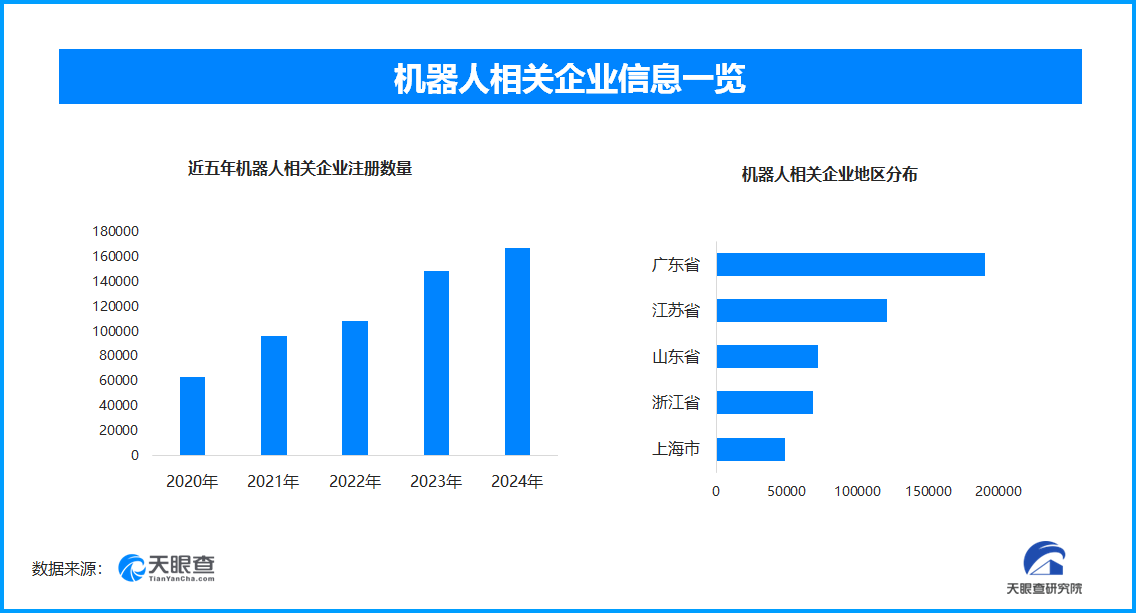
Core Insights - A domestically developed humanoid robot has gained significant attention online for its impressive dance skills, particularly mimicking Michael Jackson's "moonwalk" [1] - Another humanoid robot showcases elegant ballet-like movements, highlighting the capabilities of domestic robots in dance [1] - The entry-level humanoid robot is priced at 29,900 yuan, significantly lowering the barriers for research and application in humanoid robotics [1] - A larger robot features 31 degrees of freedom, demonstrating smooth and natural movements, with capabilities in martial arts and runway performances [1] - The Chinese robotics industry is emerging on the global stage, with robots transitioning from laboratory settings to practical applications, indicating a potential for widespread integration into daily life [1] Industry Overview - As of now, there are over 999,000 registered robotics-related companies in China, with approximately 206,000 new registrations in 2025 [1] - The registration trend for robotics companies has shown a year-on-year increase over the past five years, with a peak expected in 2024 at over 167,000 companies [1] - Guangdong and Jiangsu provinces lead in the number of robotics-related companies, collectively accounting for over 311,000, which is 31.2% of the total [2] - Other notable provinces include Shandong, Zhejiang, and Shanghai, contributing to the growth of the robotics sector in China [2]
“十四五”,中国经济做对了什么
Jing Ji Ri Bao· 2025-10-19 23:32
Core Viewpoint - Despite global economic uncertainties, China's economy has shown a robust upward trend, achieving significant milestones in GDP growth [1] Group 1: Economic Performance - China's total economic output has consistently surpassed 110 trillion, 120 trillion, and 130 trillion yuan, with a five-year economic increment equivalent to creating a third-largest economy in the world [1] - In September, China's total import and export value reached 4.04 trillion yuan, marking an 8% year-on-year increase, the highest monthly growth rate this year [3] - The country's foreign trade has remained stable and resilient, with a record high of 20 trillion yuan in import and export scale in the first half of the year [3] Group 2: Policy and Leadership - The leadership of the Communist Party of China (CPC) is deemed essential for addressing risks and challenges, ensuring social stability, and providing a "stability anchor" for long-term economic development [2][5] - The CPC has effectively broken down overall development goals into specific targets and processes, ensuring strategic continuity and policy stability through the implementation of five-year plans [4] Group 3: Strategic Planning - The "14th Five-Year Plan" emphasizes the importance of expanding domestic demand, technological innovation, and high-level opening up, marking a shift from reliance on investment and exports to a new growth model driven by domestic demand and innovation [8] - The integration of strategic planning with macroeconomic policies enhances resource allocation efficiency and stabilizes market expectations [6] Group 4: Market and Government Interaction - The effective market and proactive government approach is crucial for resource allocation and risk management, aiming to build a high-level socialist market economy [10] - The government plays a vital role in creating favorable conditions for enterprises, particularly in areas like public research and support for small and medium-sized enterprises [12] Group 5: Future Outlook - By 2035, China aims to achieve basic socialist modernization and reach a per capita GDP level comparable to that of developed countries, with the "15th Five-Year Plan" being a critical period for this transition [12]
四中全会召开前夕,《人民日报》发表八篇“钟才文”署名文章|宏观经济
清华金融评论· 2025-10-10 23:57
Core Viewpoint - The article emphasizes the resilience and potential of the Chinese economy amidst global uncertainties, highlighting its transition towards high-quality development and the opportunities it presents for both domestic and international stakeholders [3][10][21]. Economic Growth and Transformation - Since the 18th National Congress, China's GDP has grown from 54 trillion yuan to nearly 135 trillion yuan from 2012 to 2024, with an average annual growth rate of 6%, nearly double the global average of 3.1% [3][10]. - The contribution of consumption to economic growth is expected to reach around 63% during the 14th Five-Year Plan period, while investment's contribution will drop to below 28% [4]. Innovation and Competitiveness - China has risen from 34th to 10th in the global innovation index from 2012 to 2025, with a 30% increase in patent applications compared to the US and 45% compared to Japan [5][22]. - The number of high-level STEM graduates exceeds 5 million annually, reinforcing the talent pool for innovation and industrial upgrades [22][23]. Regional Development and Poverty Alleviation - Significant progress has been made in regional development strategies, with nearly 100 million rural residents lifted out of poverty, marking a historic achievement in poverty alleviation [5][8]. - The income growth rate for rural residents has consistently outpaced that of urban residents, indicating a shift in consumption dynamics [5]. Green Transition - China's commitment to ecological civilization has led to a significant rise in its energy transition index, moving up 66 places to rank 12th globally [6]. - The country aims for carbon neutrality and has established the world's largest renewable energy system, with substantial investments in green technologies [36]. Open Economy and Global Integration - China has become a major trading partner for over 150 countries, maintaining the world's largest goods trade volume for several consecutive years [7][21]. - The Belt and Road Initiative has emerged as a significant platform for international cooperation, enhancing China's global economic influence [41]. Consumer Market Expansion - By 2025, China's retail sales are projected to exceed 50 trillion yuan, solidifying its position as the world's second-largest consumer market [23][24]. - The online retail sector has maintained its status as the largest globally for 12 consecutive years, indicating robust consumer demand [23]. Infrastructure Development - There remains a substantial demand for traditional and new infrastructure, particularly in underdeveloped regions, which presents long-term economic benefits [24]. - Investments in smart city initiatives and urban renewal projects are expected to create significant opportunities in the construction and technology sectors [24]. Social Welfare and Quality of Life - The average life expectancy in China is projected to reach 79 years by 2024, ranking 4th among 53 middle and high-income countries [8]. - Continuous improvements in social security and healthcare systems are enhancing the overall quality of life for citizens [35].
四中全会前,人民日报连发八篇钟才文,传递什么信号
21世纪经济报道· 2025-10-07 23:56
Group 1 - The core viewpoint of the article emphasizes the long-term stability and resilience of China's economy under the guidance of Xi Jinping's economic thought, highlighting the significant achievements and transformations since the 18th National Congress of the Communist Party of China [3][4][8] - China's GDP is projected to grow from 54 trillion yuan in 2012 to nearly 135 trillion yuan by 2024, with an average annual growth rate of 6%, nearly double the global average of 3.1% [3][4] - The shift from traditional factor-driven growth to innovation-driven growth is evident, with the contribution of consumption to economic growth expected to reach around 63% during the 14th Five-Year Plan period [4][5] Group 2 - The article discusses the deep transformation of development dynamics, with innovation becoming the primary driving force, as evidenced by China's rise in the global innovation index from 34th in 2012 to 10th by 2025 [4][5] - The rural income growth rate has consistently outpaced urban income growth, with nearly 100 million rural poor lifted out of poverty, marking a significant achievement in poverty alleviation [5][6] - China's commitment to green transformation is highlighted, with a focus on ecological protection and sustainable development, as reflected in the significant improvements in environmental quality [6][31] Group 3 - The article outlines the importance of coordinated regional development strategies, such as the integration of the Beijing-Tianjin-Hebei region and the Yangtze River Delta, which have led to notable economic improvements [5][6] - China's foreign trade has remained robust, with the total volume of goods trade consistently ranking first globally, and the country has become a major trading partner for over 150 countries [6][32] - The article emphasizes the enhancement of people's well-being, with improvements in public services and social security systems contributing to increased life satisfaction and security among citizens [7][30] Group 4 - The article highlights the significant investment opportunities arising from China's economic transformation, particularly in traditional industries transitioning to high-end, intelligent, and green production [19][20] - The rapid growth of the consumer market is noted, with expectations for retail sales to exceed 50 trillion yuan by 2025, solidifying China's position as the world's second-largest consumer market [21][22] - The ongoing urbanization and infrastructure development present substantial investment opportunities, especially in less developed regions [22][23] Group 5 - The article discusses the certainty of China's development strategy, which ensures a stable direction for economic growth, contrasting with the policy fluctuations seen in some Western countries [23][24] - China's macroeconomic policies are characterized by stability and adaptability, allowing for effective responses to both domestic and international challenges [24][25] - The article emphasizes the resilience of China's economy, which has demonstrated the ability to withstand external pressures and maintain growth despite global uncertainties [25][26] Group 6 - The article underscores China's commitment to high-level openness and its role as a contributor to global economic stability, with a focus on multilateralism and cooperation [32][33] - The Belt and Road Initiative is highlighted as a significant platform for international cooperation, enhancing connectivity and economic collaboration with numerous countries [35][36] - China's market offers vast opportunities for foreign investment, with a focus on creating a favorable business environment and expanding market access [36][40]
四中全会前,人民日报连发八篇“钟才文”
Zhong Guo Ji Jin Bao· 2025-10-07 22:42
Group 1 - The 20th Central Committee's Fourth Plenary Session will be held in Beijing from October 20 to 23, signaling strong confidence in China's economic development under Xi Jinping's economic thought [1] - Since the 18th National Congress, China's economy has maintained strategic stability and high-quality development, achieving a GDP growth from 54 trillion yuan to nearly 135 trillion yuan from 2012 to 2024, with an average annual growth rate of 6% [2][3] - The transformation of development concepts has led to higher quality economic growth, with the International Monetary Fund (IMF) indicating a shift towards a more balanced and sustainable growth model [2] Group 2 - The supply and demand sides of China's economy have undergone profound changes, with innovation becoming the primary driving force, and domestic consumption expected to contribute approximately 63% to economic growth during the 14th Five-Year Plan period [3][4] - China's global innovation index ranking has improved significantly, moving from 34th in 2012 to 10th in 2025, with a notable increase in patent applications [3][4] - The rural population's income growth has outpaced that of urban residents, with nearly 100 million rural poor lifted out of poverty, showcasing effective regional development strategies [4][5] Group 3 - China's openness has increased, with the country becoming a major trading partner for over 150 countries, maintaining the world's largest goods trade volume [5][6] - The economic structure has shifted, with the proportion of GDP from the service sector rising, indicating a transition towards a more service-oriented economy [6][7] - The contribution of consumption to economic growth is expected to rise, while investment's contribution is projected to decrease to below 28% [3][4] Group 4 - The Chinese economy is expected to provide new opportunities for many countries, enhancing global economic stability and cooperation [6][7] - The focus on improving people's livelihoods has led to increased public safety and overall living standards, with life expectancy projected to reach 79 years by 2024 [6][7] - The government continues to prioritize social welfare, with significant investments in education, healthcare, and social security systems [6][7] Group 5 - China's economic transformation presents significant investment opportunities, particularly in traditional industries transitioning to high-end, intelligent, and green production [16][17] - The country is fostering innovation and talent, with substantial investments in research and development, positioning itself as a leader in global technology [17][18] - The expansion of consumer markets and infrastructure development is expected to create vast opportunities for both domestic and foreign investors [18][19]
事关中国经济 人民日报连续6天刊发“钟才文”署名文章 信息量很大
Hua Xia Shi Bao· 2025-10-05 01:14
Group 1 - The core argument emphasizes that China's economy has maintained strategic stability and high-quality development despite global uncertainties, showcasing resilience and vitality [3][4][6] - From 2012 to 2024, China's GDP is projected to grow from 54 trillion yuan to nearly 135 trillion yuan, with an average annual growth rate of 6%, nearly double the global average of 3.1% [3] - The contribution of consumption to economic growth is expected to reach around 63% during the 14th Five-Year Plan period, indicating a shift towards a consumption-driven economy [4] Group 2 - China's innovation index has significantly improved, rising from 34th in 2012 to 10th in 2025, with a notable increase in patent applications [4] - The country has become the world's largest market for industrial robots and is rapidly advancing in artificial intelligence and biotechnology [20][21] - The integration of technology and industry is accelerating, with high-tech manufacturing growth outpacing overall industrial growth [15] Group 3 - The rural population's income growth has consistently outpaced that of urban residents, reflecting successful poverty alleviation efforts [5] - Nearly 100 million rural poor have been lifted out of poverty, marking a significant achievement in social development [5] - The construction of new infrastructure and urban renewal projects is expected to create substantial investment opportunities [22][23] Group 4 - China's foreign trade has remained robust, with the total goods trade volume ranking first globally for several years [6] - The Belt and Road Initiative has positioned China as a key player in international cooperation and trade [6] - The country has established itself as a major trading partner for over 150 countries and regions [6] Group 5 - The focus on green development has led to significant improvements in environmental quality, with China ranking first in renewable energy capacity [36] - The country aims to achieve carbon neutrality and has implemented various ecological protection measures [36] - The energy transition index shows a substantial rise in China's ranking, reflecting progress in sustainable development [5]