战略性新兴产业

Search documents
重要领域央企营收占比超七成,“AI+”专项行动继续全力推进
第一财经· 2026-01-29 04:53
2026.01. 29 本文字数:2651,阅读时长大约4分钟 作者 | 第一财经 祝嫣然 2025年,中央企业实现利润总额2.5万亿元,完成固定资产投资5.1万亿元,上交税费2.5万亿元。完 成战略性新兴产业投资2.5万亿元、占总投资的41.8%,战新产业营收规模超过12万亿元。中央企业 在关系国家安全、国民经济命脉和国计民生等领域的营收占比超过70%。 1月28日,国务院新闻办举行发布会。国资委副主任庞骁刚表示,过去一年中央企业提质增效扎实推 进,在促进国民经济稳中向好中作出了新贡献。2026年是"十五五"开局起步的关键一年,将持续加 大拓市增收、降本增效的力度,积极扩大有效投资,靠前谋划实施一批重大项目和标志性工程,更好 支撑国家惠民生、促消费、扩投资,带动产业链上下游企业共同发展。 国资央企把科技创新摆在更加突出的位置。国务院国资委科技创新局局长张剑龙在发布会上回答第一 财经记者提问时表示,下一步,将在科技端加大攻关力度,在产业端加强前瞻布局,在转化端加速精 准对接,深入实施焕新、启航行动,接续推进启航企业培育工程,推动未来技术产业化、重点领域未 来化。 中国企业研究院首席研究员李锦对第一财经记者分析 ...

中智咨询:中央企A股上市公司战新产业布局和模式路径比较研究报告
Sou Hu Cai Jing· 2026-01-29 04:44
Core Insights - The report by Zhongzhi Consulting focuses on the strategic layout and development models of central enterprises controlling A-share listed companies in emerging industries, providing a systematic analysis of the layout logic and development paths of strategic emerging industries [1][12]. Group 1: Overview of Central Enterprises in Emerging Industries - Among 402 central enterprises controlling A-share listed companies, 64% can be classified as emerging industry enterprises, with nearly 80% concentrated in five key areas: new generation information technology, new materials, high-end equipment manufacturing, new energy, and biotechnology [1][18]. - The report highlights a significant underinvestment in critical areas such as industrial mother machines and chips, indicating a need for increased focus and resources in these sectors [1][18]. Group 2: Industry-Specific Analysis - The report emphasizes that over 40% of manufacturing emerging enterprises are transitioning towards new materials and high-end equipment manufacturing, showcasing significant industrial synergy effects [1][20]. - In terms of profitability, emerging industry enterprises contribute 26% of total operating revenue and 31.27% of total profit, with new generation information technology, new energy, and new materials showing particularly strong profitability [1][23]. Group 3: Strategic Positioning and Implementation Paths - The report identifies four business layout models: core business extension, establishment of emerging platforms, equity cooperation, and fund investment, which enterprises can combine based on their specific circumstances [2]. - It suggests a systematic cultivation framework of "assessment-layout-empowerment," advocating for a full-cycle evaluation mechanism and a tailored approach for each enterprise to optimize resource allocation and enhance competitiveness in emerging industries [2].


权威发布|两个万亿元,标注国资央企创新刻度
Ren Min Ri Bao· 2026-01-29 03:26
Core Insights - The State-owned Assets Supervision and Administration Commission (SASAC) announced that central enterprises are projected to achieve a total profit of 2.5 trillion yuan, fixed asset investment of 5.1 trillion yuan, and tax contributions of 2.5 trillion yuan by 2025, with total assets exceeding 95 trillion yuan by the end of 2025 [1] Group 1: Performance Metrics - During the 14th Five-Year Plan period, central enterprises' total assets increased from 70 trillion yuan to over 90 trillion yuan, with an average annual growth rate of 6.9% [3] - The added value of central enterprises reached 51.3 trillion yuan, a 44.6% increase compared to the previous five-year period [3] - Total profits for central enterprises amounted to 12.7 trillion yuan, reflecting a 56.2% growth from the 13th Five-Year Plan period [3] - Key product outputs, such as crude oil production, electricity generation, and electricity sales, saw increases of 24.7%, 38.2%, and 40.7% respectively compared to the previous five-year period [3] Group 2: Innovation and R&D - Central enterprises' R&D investment reached 1.1 trillion yuan in 2025, with the addition of 22 academicians and the establishment of 23 innovation consortia involving over 100 entities [4] - Cumulatively, R&D investment during the 14th Five-Year Plan exceeded 5 trillion yuan, with a 0.27 percentage point increase in R&D intensity [3][4] - Central enterprises led or participated in all 22 national major science and technology projects in 2025, achieving breakthroughs in 121 leading technologies [4] Group 3: Strategic Investments - By 2025, revenue from strategic emerging industries for central enterprises surpassed 12 trillion yuan, with a continuous annual growth of 1 trillion yuan [5] - Strategic emerging industry investments accounted for 41.8% of total investments, with over 10 trillion yuan invested since the beginning of the 14th Five-Year Plan [5] Group 4: Future Directions - In 2026, central enterprises will focus on increasing value-added growth to match national GDP growth, ensuring stable improvements in profit totals, operating revenue rates, and net asset returns [10] - Emphasis will be placed on enhancing technological innovation, with plans to increase the proportion of basic research investment and tackle key strategic technologies [10] - Central enterprises will also expand their mid-test verification platforms and increase procurement of first sets, batches, and versions to facilitate the conversion of innovative results into productive forces [10]
国新证券每日晨报-20260129
Guoxin Securities Co., Ltd· 2026-01-29 03:25
Domestic Market Overview - The domestic market experienced a steady rise, with the Shanghai Composite Index closing at 4151.24 points, up 0.27%, and the Shenzhen Component Index at 14342.89 points, up 0.09% [1][4] - Among the 30 sectors, 11 saw gains, with non-ferrous metals, coal, and oil & petrochemicals leading the increases, while defense, media, and pharmaceuticals faced significant declines [1][4] - The total trading volume for the A-share market reached 29,923 billion yuan, showing a slight increase from the previous day [1][4] Overseas Market Overview - In the U.S. market, the three major indices closed mixed, with the Dow Jones Industrial Average up 0.02%, the S&P 500 down 0.01%, and the Nasdaq up 0.17% [2][4] - Large tech stocks showed varied performance, while the Nasdaq Golden Dragon China Index increased by 0.32% [2][4] Economic Performance Insights - By 2025, 18 provinces in China are expected to exceed the national GDP growth rate, highlighting the significant role of major economic provinces [3][10] - The State-owned Assets Supervision and Administration Commission (SASAC) announced that central enterprises aim to achieve a total profit of 2.5 trillion yuan and pay 2.5 trillion yuan in taxes by 2025 [3][14] Key Industry Developments - The central enterprises are projected to have total assets exceeding 95 trillion yuan by the end of 2025, with a fixed asset investment of 5.1 trillion yuan [14] - The focus on strategic emerging industries is evident, with an investment of 2.5 trillion yuan planned, accounting for 41.8% of total investments [15][14] Taxation and Regulatory Changes - The tax department plans to deepen tax system reforms in 2026, optimizing the tax structure and expanding local tax sources to enhance local financial autonomy [17][21] - Real estate companies have reported that they are no longer required to submit the "three red lines" indicators monthly, although some still need to report financial metrics like asset-liability ratios [17][21]
“十四五”时期资产总额年均增速达百分之六点九中央企业发展质效稳步提升
Xin Lang Cai Jing· 2026-01-29 03:15
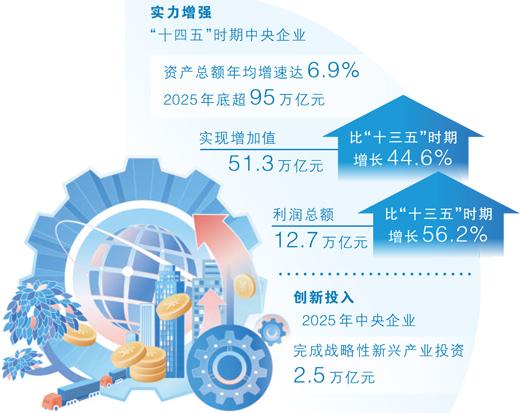
Core Insights - The State-owned Assets Supervision and Administration Commission (SASAC) reported that by the end of 2025, the total assets of central enterprises will exceed 95 trillion yuan, contributing to the stable improvement of the national economy [1] - Central enterprises are expected to achieve a total profit of 2.5 trillion yuan, complete fixed asset investments of 5.1 trillion yuan, and pay taxes of 2.5 trillion yuan by 2025 [1] - Continuous strengthening of technological innovation is highlighted, with R&D investment reaching 1.1 trillion yuan, maintaining over 1 trillion yuan for four consecutive years, and the establishment of 23 innovation alliances involving over 100 participants [1] - Strategic emerging industries will receive 2.5 trillion yuan in investments, accounting for 41.8% of total investments, with new companies formed and integration in various high-tech fields [1] Summary by Sections Central Enterprises Growth - During the 14th Five-Year Plan period, the scale and strength of China's central enterprises have continuously increased, with total assets rising through the milestones of 70, 80, and 90 trillion yuan, achieving an average annual growth rate of 6.9% [2] - The added value of central enterprises reached 51.3 trillion yuan, representing a 44.6% increase compared to the 13th Five-Year Plan period [2] - Total profits amounted to 12.7 trillion yuan, marking a 56.2% growth from the previous five-year period [2]
人民日报权威发布:两个万亿元,标注国资央企创新刻度
Ren Min Ri Bao· 2026-01-29 02:22
Core Insights - The central enterprises in China are projected to achieve significant financial milestones by 2025, including a total profit of 2.5 trillion yuan, fixed asset investments of 5.1 trillion yuan, and tax contributions of 2.5 trillion yuan, with total assets exceeding 95 trillion yuan by the end of 2025 [5][19]. Group 1: Financial Performance - By 2025, central enterprises are expected to realize a total profit of 2.5 trillion yuan and complete fixed asset investments of 5.1 trillion yuan [5][19]. - The total assets of central enterprises are projected to surpass 95 trillion yuan by the end of 2025 [5][19]. - The average annual growth rate of total assets during the 14th Five-Year Plan period is 6.9%, with a total value added of 51.3 trillion yuan, marking a 44.6% increase compared to the previous five-year period [6][20]. Group 2: R&D and Innovation - Central enterprises are set to invest 1.1 trillion yuan in R&D by 2025, with a notable increase in the number of scientific and technological talents by nearly 50% [8][22]. - The cumulative R&D investment during the 14th Five-Year Plan period exceeded 5 trillion yuan, with a 0.27 percentage point increase in R&D intensity [6][20]. - Central enterprises led or participated in all 22 national major science and technology projects in 2025, achieving breakthroughs in 121 leading technologies [8][22]. Group 3: Strategic Emerging Industries - Revenue from strategic emerging industries is expected to exceed 12 trillion yuan by 2025, with an annual growth of 1 trillion yuan for three consecutive years [9][23]. - Investment in strategic emerging industries will account for 41.8% of total investments, with cumulative investments exceeding 10 trillion yuan since the beginning of the 14th Five-Year Plan [9][23]. Group 4: Transformation and Upgrading - Central enterprises are focusing on the transformation and upgrading of traditional industries, establishing 70 advanced intelligent factories and 39 projects recognized as national green low-carbon advanced technology demonstration projects [11][25]. - The integration of artificial intelligence technologies is being actively pursued, with significant investments in new infrastructure and the development of over 1,000 application scenarios in key industries [12][26]. Group 5: Regulatory and Governance Enhancements - The central enterprises are implementing a personalized assessment system, with 76% of individual indicators for the 2025 assessment and 79% for the 2025-2027 term being customized [13][27]. - A nationwide state-owned assets system property information database has been established to enhance the scientific and effective regulation of state-owned enterprises [14][28]. Group 6: Future Directions - In 2026, the focus will be on ensuring continuous growth in value added, aligning with national GDP growth, and enhancing the quality of technological supply through increased investment in key technologies [15][29]. - Central enterprises will accelerate the establishment of pilot platforms for testing and validation, aiming to convert more innovative results into productive forces [15][29].
两个万亿元 标注国资央企创新刻度
Ren Min Ri Bao· 2026-01-29 01:42
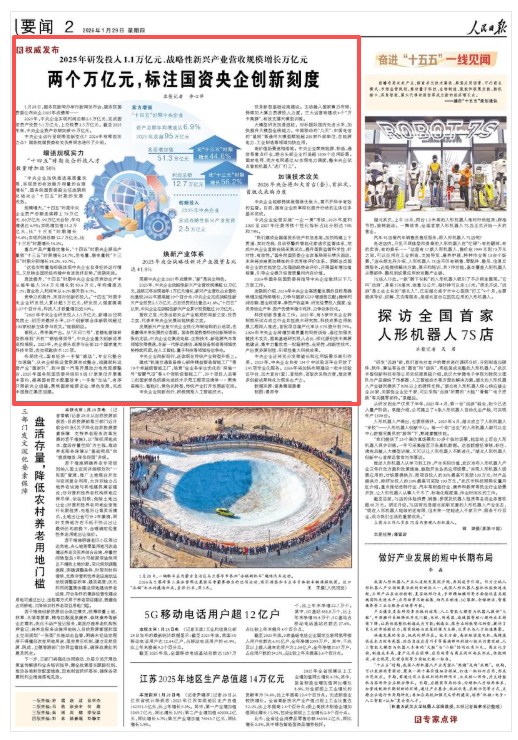
Core Insights - The central enterprises in China are projected to achieve a total profit of 2.5 trillion yuan and fixed asset investment of 5.1 trillion yuan by 2025, with total assets exceeding 95 trillion yuan by the end of 2025 [1] Group 1: Scale and Performance - During the 14th Five-Year Plan period, the total assets of central enterprises increased significantly, reaching over 90 trillion yuan with an average annual growth rate of 6.9% [2] - The added value of central enterprises reached 51.3 trillion yuan, a 44.6% increase compared to the previous five-year period, while total profits grew by 56.2% to 12.7 trillion yuan [2] - Key product outputs, such as crude oil and electricity generation, saw substantial increases of 24.7% and 38.2% respectively during the same period [2] Group 2: Innovation and R&D Investment - Central enterprises invested over 5 trillion yuan in R&D during the 14th Five-Year Plan, with R&D intensity increasing by 0.27 percentage points and a nearly 50% rise in the number of technology talents [4] - By 2025, R&D investment is expected to reach 1.1 trillion yuan, with significant achievements in major technological projects and innovations [4] - Central enterprises are leading or participating in all 22 national major science and technology projects, overcoming 121 key technologies [4] Group 3: Strategic Emerging Industries - Revenue from strategic emerging industries is projected to exceed 12 trillion yuan by 2025, with a continuous annual growth of 1 trillion yuan [5] - Investment in strategic emerging industries will account for 41.8% of total investments, reflecting a shift towards new industry structures [5][6] - Central enterprises are focusing on sectors such as integrated circuits, biotechnology, and new energy vehicles, while also enhancing their positions in high-end equipment manufacturing and artificial intelligence [6] Group 4: Traditional Industry Transformation - Central enterprises are actively transforming traditional industries by establishing smart factories and promoting green technologies [7] - The construction of intelligent factories and the implementation of advanced technologies are opening new development spaces for traditional sectors [7] Group 5: Future Goals and Regulatory Framework - In 2026, central enterprises will enhance procurement efforts for first sets and batches of products, aiming for continuous growth in value added and alignment with national GDP growth [9][10] - A more precise evaluation system will be implemented to improve the quality and internal value of state-owned enterprises [10] - The focus will be on increasing high-quality technological supply and advancing original technology development [11]
资产超95万亿、利润2.5万亿!央企2025“成绩单”发布
中关村储能产业技术联盟· 2026-01-29 00:41
Core Viewpoint - The article highlights the significant achievements of state-owned enterprises (SOEs) in China by 2025, emphasizing their role in economic development, strategic investments, and contributions to national goals. Group 1: Financial Performance - By the end of 2025, the total assets of SOEs exceeded 95 trillion yuan, with a profit of 2.5 trillion yuan and fixed asset investments reaching 5.1 trillion yuan [5][4] - During the "14th Five-Year Plan" period, SOEs achieved an average annual growth rate of 6.9%, with total profits increasing by 56.2% compared to the previous five-year period [6][4] Group 2: Strategic Investments - In 2025, SOEs invested 2.5 trillion yuan in strategic emerging industries, accounting for 41.8% of total investments, with revenues from these industries exceeding 12 trillion yuan [7][4] - Cumulatively, SOEs invested over 10 trillion yuan in strategic emerging industries since the beginning of the "14th Five-Year Plan," increasing their investment share from 22% to over 40% [8][4] Group 3: Research and Development - SOEs' R&D investment reached 1.1 trillion yuan in 2025, maintaining over 1 trillion yuan for four consecutive years, with significant breakthroughs in various fields [9][4] - The establishment of 23 innovation consortia involved over 100 entities, enhancing the national strategic technological capabilities [9][4] Group 4: Social Responsibility - By 2025, SOEs contributed 160.3 billion yuan in support funds and trained 1.487 million personnel, significantly aiding rural revitalization efforts [11][4] - SOEs' revenue from key sectors related to national security and public welfare exceeded 70% [10][4] Group 5: Environmental Goals - SOEs are on track to meet their energy consumption and carbon emission reduction targets, with a projected decrease of 15% and 18% respectively during the "14th Five-Year Plan" [12][4] Group 6: Organizational Restructuring - New SOEs were established, and strategic reorganizations were conducted to enhance capabilities in key industries, including satellite communication and biotechnology [14][4] Group 7: Future Goals - For 2026, SOEs aim to ensure continuous growth in value added and optimize key operational indicators, aligning with national GDP growth [23][4]

国资央企发力2026年:推进并购重组,谋划新兴产业
Shang Hai Zheng Quan Bao· 2026-01-28 23:51
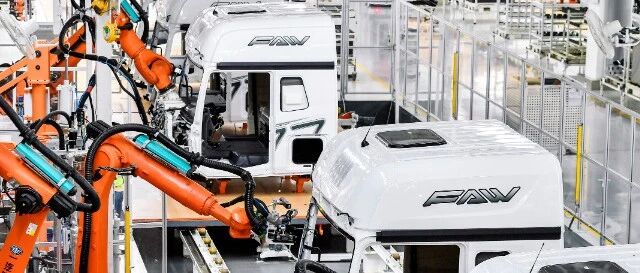
Core Viewpoint - The State-owned Assets Supervision and Administration Commission (SASAC) is focusing on promoting mergers and acquisitions, restructuring, and the development of emerging industries among central enterprises by 2026, with a significant emphasis on high-quality development and strategic planning for new industries [1][6]. Group 1: Mergers and Acquisitions - SASAC plans to concentrate on the "three concentrations" of state-owned capital, using restructuring as a key approach to optimize the layout and structure of state-owned enterprises, aiming to build more world-class companies [2][3]. - In 2025, SASAC successfully guided the establishment of China Yajiang Group and China Chang'an Automobile Group, enhancing competition in the automotive industry and promoting high-quality development in smart connected new energy vehicles [2][3]. Group 2: Industry Integration and Innovation - Professional integration is seen as a crucial method for optimizing the layout and structure of the state-owned economy, with SASAC supporting strong innovative enterprises to conduct horizontal and vertical integrations within the same industry [3][4]. - SASAC is facilitating high-quality mergers and acquisitions to acquire core elements and seize technological advantages, thereby accelerating the development of strategic emerging industries [3][4]. Group 3: Focus on Emerging Industries - SASAC is prioritizing sectors such as artificial intelligence, aerospace, quantum technology, and new materials, with plans to enhance the capabilities of central enterprises in these areas [4][5]. - The upcoming "AI+" initiative aims to advance the integration of artificial intelligence into various sectors, including energy and logistics, while promoting data resource openness for model optimization and application [4][5]. Group 4: Strategic Planning for New Industries - SASAC is drafting a document to guide central enterprises in cultivating emerging pillar industries, aiming for a leap in the overall layout of state-owned economy through significant project investments and breakthroughs in key areas [6][7]. - The new strategy will likely introduce innovative assessment mechanisms for long-term investments in key sectors, addressing the conflict between long-term strategies and short-term financial performance [6][7]. Group 5: Implementation Mechanisms - SASAC emphasizes a differentiated approach for various types of emerging industries, focusing on core tasks and implementation paths to create a resilient industrial ecosystem [7]. - The commission plans to deepen collaboration across the innovation chain and enhance the support for technological innovation through initiatives like industry collaborative innovation consortia and technology application demonstration scenarios [7].
扶持战略性新兴产业 需细化支持方向
Nan Fang Du Shi Bao· 2026-01-28 23:10
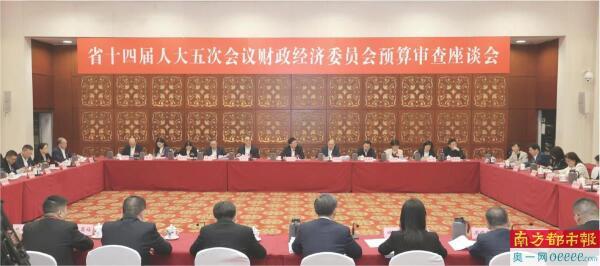
Core Insights - The Guangdong Provincial People's Congress held a budget review meeting, discussing the 2025 budget execution and the 2026 budget draft, with a focus on revitalizing idle assets, strengthening industrial support, and enhancing public welfare [2][4]. Group 1: Revitalizing Idle Assets - Representatives emphasized the importance of managing idle assets, suggesting the establishment of a management group involving finance, state-owned assets, and education departments to optimize the use of these resources [4]. - Suggestions included utilizing idle assets through leasing, selling, or reallocating them to public institutions, transforming "sleeping assets" into "income-generating resources" [4]. - The need to simplify the issuance process of special bonds was highlighted to support new infrastructure and urban renewal projects, which could attract more social capital and financial resources [4] Group 2: Strengthening Industrial Support - The focus on building a modern industrial system with competitive advantages was discussed, with representatives calling for more targeted support for strategic emerging industries like hydrogen energy [6]. - Increased support for the commercial aerospace industry in Yangjiang was proposed to ensure project progress and effective investment [6]. - Suggestions were made to enhance support for marine ranching and textile industries, aiming to establish Guangdong as a hub for fast fashion manufacturing [6] Group 3: Enhancing Public Welfare - The report indicated that from 2021 to 2025, public welfare spending in Guangdong would reach 6.45 trillion yuan, maintaining over 70% of the general public budget [7]. - Representatives called for increased financial support for special education in underdeveloped regions, emphasizing the need for better resources for disabled individuals [7][8]. - There were proposals to accelerate the construction of medical centers in less developed areas and to establish special funds for updating medical equipment in grassroots healthcare facilities [8]