
能源强国

Search documents
锚定能源强国目标聚力发力
Jing Ji Ri Bao· 2025-11-11 22:21
Core Viewpoint - The construction of a strong energy nation is essential for high-quality economic development and is a response to the changing international energy landscape, as well as a requirement for the green transformation of the economy and society [2][3][4]. Group 1: Importance of Energy - Energy is the lifeblood of the national economy, and a robust modern energy industry is a crucial foundation for building a strong socialist modern nation [2]. - The energy industry plays a significant role in fixed asset investment, GDP contribution, and employment absorption, making it a vital part of the national economy [3]. - The new energy industries, represented by solar, wind, storage, hydrogen, and smart grids, have become strategic emerging industries and important growth drivers for the economy [3]. Group 2: Energy Transition and Carbon Goals - Achieving carbon peak and carbon neutrality is a major strategic decision by the central government, with energy activities being the primary source of carbon emissions [4]. - Transitioning from a traditional high-carbon energy system to a clean and low-carbon new energy system is the most effective path for carbon reduction [4]. - The energy sector's reduction process directly impacts the overall progress towards carbon peak and carbon neutrality [4]. Group 3: Current Energy Landscape - By 2024, China's energy production is expected to reach approximately 5 billion tons of standard coal, with non-fossil energy consumption accounting for 19.8% [5]. - China has become the world's largest energy producer and consumer, with a more complete energy supply system and an optimized energy consumption structure [5]. Group 4: Challenges and Systematic Approach - Building a strong energy nation is a systematic project that encompasses supply security, technological strength, energy structure, and governance capabilities [6][7]. - There are still significant shortcomings in various aspects of energy development, indicating that the journey to becoming a strong energy nation is long and challenging [7]. Group 5: New Energy System Construction - The current energy development is at a critical juncture of transformation, requiring a focus on building a new energy system to achieve quality and efficiency improvements [8]. - Strengthening energy supply security is essential, especially given the high dependence on foreign oil and gas resources and rising uncertainties in the international landscape [9]. Group 6: Technological Innovation and Green Transition - The new energy system's construction relies on advancements in energy technology, necessitating a complete innovation ecosystem from basic research to industrial application [10]. - Promoting green and low-carbon transitions is crucial for breaking environmental resource constraints and achieving high-quality energy development [11]. Group 7: Governance and Regulatory Framework - Establishing a robust governance framework is vital for the new energy system, requiring the legal and institutionalization of national energy strategies and major decisions [12]. - Enhancing the energy market's regulatory effectiveness and promoting green finance tools are necessary to guide social capital into energy technology innovation [12].
下更大力气建设能源强国
中国能源报· 2025-11-03 01:20
Core Viewpoint - The article emphasizes the strategic goal of building an energy powerhouse in China, as outlined in the 15th Five-Year Plan, highlighting the importance of energy security and transformation for the country's modernization efforts [1][4]. Group 1: Energy Development Goals - The goal of building an energy powerhouse is integral to achieving a modern socialist country, providing strong energy support alongside manufacturing, technology, and quality advancements [1]. - The past five years have seen China establish the world's largest and fastest-growing renewable energy system, with total installed renewable energy capacity exceeding 210 million kilowatts, accounting for nearly 60% of the national total [2]. Group 2: Technological Innovation and Industry Modernization - China's energy industry is leveraging technological innovation to create new scenarios and stimulate new dynamics, contributing significantly to global green transformation [2]. - Key technological breakthroughs have been achieved in various fields, including new energy generation, ultra-high voltage transmission, and advanced nuclear power, enhancing the country's confidence in transitioning from an energy giant to an energy powerhouse [3]. Group 3: Systemic Restructuring and Safety - Transitioning from an energy giant to an energy powerhouse involves moving from isolated breakthroughs to systemic restructuring and overall reshaping of the energy industry [4]. - Ensuring energy security is crucial for development, necessitating a focus on sustainable and equitable energy production and supply [4]. Group 4: Green Transformation and Environmental Goals - The construction of an energy powerhouse is also a key component in accelerating the green transformation of the economy and society, addressing the challenges posed by global climate change [4]. - The commitment to carbon peak and carbon neutrality goals will drive collaborative efforts in reducing carbon emissions, pollution, and enhancing green growth [4]. Group 5: Future Outlook - The 15th Five-Year Plan is seen as a decisive period for achieving carbon peak goals, requiring significant efforts across the industry to build a robust energy powerhouse [5]. - The future will witness increased clean energy generation and low-carbon technologies, contributing to sustainable development and sharing opportunities globally [5].


殷长波会见中国能源建设集团有限公司党委副书记、董事、总经理倪真一行
Sou Hu Cai Jing· 2025-11-01 08:44
Core Insights - China Gold Group and China Energy Construction Group are exploring collaboration opportunities in business synergy and future development directions [1][3][5] Group 1: Company Overview - China Gold Group has a rich historical background and has developed a complete gold industry chain, playing a crucial role in ensuring the security of strategic mineral resources and promoting high-quality industry development [3] - China Energy Construction Group is recognized as a leading enterprise in national energy and infrastructure construction, having created numerous world-class benchmark projects [3][5] Group 2: Strategic Cooperation - Both companies share a common mission in serving national strategies such as "Energy Strong Nation" and "Resource Security," indicating significant potential for collaboration [3][5] - There is an emphasis on leveraging each other's strengths in areas such as overseas project collaboration, deepening reforms, technological innovation, and supporting mining construction and development [3][5] Group 3: Future Directions - China Energy Construction Group is focusing on strengthening technological innovation and optimizing its business layout to better serve the construction of an energy strong nation [5] - The two companies aim to deepen cooperation in fields such as civil explosives, ecological protection, zero-carbon industrial parks, and overseas business [5]

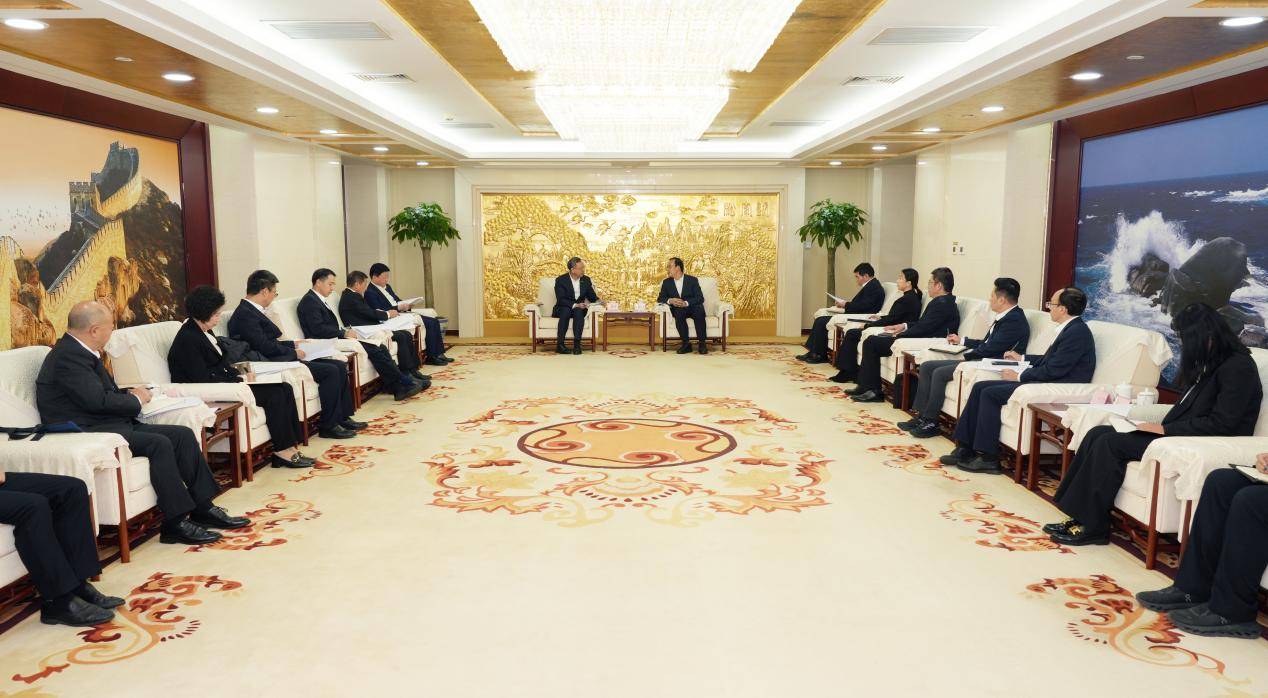
新闻发布︱深刻把握党的二十届四中全会精神 推动能源强国建设
国家能源局· 2025-11-01 01:40
Core Viewpoint - The article discusses the initiatives and measures taken by the National Energy Administration (NEA) to implement the spirit of the 20th Central Committee's Fourth Plenary Session, focusing on the development of a new energy system and the construction of an energy powerhouse during the 14th Five-Year Plan period [2][3]. Group 1: Implementation of the 14th Five-Year Plan - The NEA emphasizes the importance of learning and implementing the decisions made during the 20th Central Committee's Fourth Plenary Session as a major political task [2]. - Key tasks include establishing a clean, low-carbon, safe, and efficient new energy system and building an energy powerhouse [2][3]. - The NEA plans to conduct in-depth discussions and research on major issues related to energy development, considering both domestic and international changes [3][4]. Group 2: New Energy System Development - The new energy system will rely on non-fossil energy as the main supply, with fossil energy as a backup, and a new power system as a key support [4]. - The NEA aims to enhance the flexibility of energy resources to promote the consumption of renewable energy and improve system safety [4][5]. - The NEA will focus on both supply and demand sides to enhance the energy system's flexibility, including the development of large-scale pumped storage power stations and the promotion of virtual power plants [5][6]. Group 3: Policy and Market Mechanisms - The NEA plans to accelerate the establishment of a unified national electricity market system to facilitate the smooth flow of electricity resources across the country [6]. - There will be efforts to improve market mechanisms that allow various operators to participate, thereby enhancing the resilience of the electricity system [6]. - The NEA aims to foster new business models and improve the electricity system's capacity to accommodate and manage renewable energy [6][7]. Group 4: New Power System Construction - The NEA has developed a "1+3" work system to advance the construction of a new power system, which includes an action plan and various implementation guidelines [7]. - The NEA's action plan for 2024-2027 outlines nine major tasks to enhance the grid's capacity to accept and manage clean energy [7]. - Future efforts will focus on improving the adaptability of the new power system to high proportions of renewable energy [7].

新闻发布︱国家能源局举行季度例行新闻发布会
国家能源局· 2025-10-31 10:33
Core Viewpoint - The National Energy Administration (NEA) is actively implementing the spirit of the 20th National Congress of the Communist Party of China, focusing on building a new energy system and ensuring energy supply stability during peak seasons, while promoting renewable energy integration and electric vehicle charging infrastructure development [6][8][9]. Group 1: Energy Situation in the First Three Quarters - The energy supply in China has been stable and effective, with significant policy support leading to orderly industry development and a steady increase in energy investment [10][11]. - The maximum electricity load reached new highs during the summer peak, with July and August seeing electricity consumption exceed 1 trillion kilowatt-hours for two consecutive months [11][28]. - Coal production and oil and gas output have shown steady growth, with coal output increasing by 2%, oil by 1.7%, and natural gas by 6.4% year-on-year [11][12]. Group 2: Renewable Energy Integration - Renewable energy installed capacity has reached nearly 2.2 billion kilowatts, with wind and solar power exceeding 1.7 billion kilowatts, and a 47.7% year-on-year increase in new installations [13][14]. - Renewable energy generation has grown steadily, accounting for approximately 60% of industrial electricity consumption, with total generation reaching 2.89 trillion kilowatt-hours, a 15.5% increase year-on-year [14][15]. - The average utilization hours for hydropower reached 2,551 hours, with wind power achieving a utilization rate of 94% [15][16]. Group 3: Electric Vehicle Charging Infrastructure - The total number of electric vehicle charging facilities reached 18.06 million, a 54.5% increase year-on-year, effectively supporting the charging needs of 40 million electric vehicles [17][18]. - Policies have been implemented to enhance charging infrastructure, with a goal to build 28 million charging facilities by 2027 to meet the demand of over 80 million electric vehicles [18][19]. - New technologies in charging, such as high-power charging stations, have been rapidly adopted, significantly improving charging speed and efficiency [19]. Group 4: Market Mechanisms and Policies - The national unified electricity market has seen a steady increase in trading volume, with a total of 4.92 trillion kilowatt-hours traded, representing a 7.2% year-on-year growth [21][22]. - The NEA is focusing on enhancing the flexibility of the energy system through various measures, including the promotion of virtual power plants and the integration of electric vehicles into the energy grid [41][42]. - The NEA is also addressing the issue of negative electricity prices, which have become more frequent due to the increasing share of renewable energy, indicating a need for better market regulation [36][37]. Group 5: Future Plans and Goals - The NEA aims to achieve a clean, low-carbon, safe, and efficient new energy system by 2035, with specific targets for renewable energy capacity and consumption [37][38]. - Key strategies include expanding renewable energy supply, promoting integrated development, and enhancing the market mechanisms to support high proportions of renewable energy [38][39]. - The NEA is committed to ensuring energy security and stability during peak seasons, particularly in winter, by strengthening fuel supply and enhancing emergency management capabilities [30][31].
中共国家能源局党组召开扩大会议 传达学习贯彻党的二十届四中全会精神
国家能源局· 2025-10-28 09:08
Core Viewpoint - The meeting emphasized the importance of implementing the spirit of the Fourth Plenary Session of the 20th Central Committee, highlighting its significance in the context of achieving the main goals of the "14th Five-Year Plan" and advancing towards the "15th Five-Year Plan" [2][3]. Group 1 - The meeting recognized the Fourth Plenary Session as a crucial event during a key period for China's modernization efforts, providing strategic guidance for the next five years and beyond [2][3]. - It was noted that the session's resolutions will have a profound impact on the development of the Party and the country, emphasizing the need for a comprehensive understanding of the historical context and challenges ahead [2][3][4]. Group 2 - The meeting called for a deep understanding of the role of energy in China's modernization, aligning with the goals set for the "15th Five-Year Plan" and the 2035 modernization objectives [4]. - There is a focus on developing a clean, low-carbon, safe, and efficient energy system, with plans to create a robust energy framework and implement significant policies and projects [4][5]. Group 3 - The meeting highlighted the urgency of completing the "14th Five-Year Plan" effectively, with an emphasis on energy security and the transition to green and low-carbon energy [5]. - It was stressed that the outcomes of the learning and implementation efforts should translate into practical results in building a new energy system and advancing energy reforms [5].
新华社权威速览·非凡“十四五”|加快建设能源强国 这张成绩单振奋人心
Xin Hua She· 2025-08-26 15:18
Group 1: Energy Market Development - The national unified electricity market has achieved substantial progress, with market transaction electricity volume increasing from 10.7 trillion kWh during the 13th Five-Year Plan to 23.8 trillion kWh, representing over 60% of total electricity consumption for four consecutive years [3] - The proportion of electricity generated from non-fossil energy sources has increased by over 5 percentage points since the 14th Five-Year Plan [5] Group 2: Investment in Energy Sector - Annual investment in the energy sector has consistently surpassed 4 trillion, 5 trillion, and 6 trillion yuan, with renewable energy projects accounting for over 80% of power source investments in 2024 [9] - Private enterprises account for over 85% of investment in power facility construction, with an annual growth rate exceeding 15% [9] Group 3: Renewable Energy and Infrastructure - As of July, the number of charging infrastructure units reached 16.696 million, with household photovoltaic installations totaling approximately 180 million kW, generating an annual income of about 14 billion yuan for farmers [7] - Wind and solar power generation has seen annual new installations reach a scale of over 100 million kW, with the share of wind and solar power in total electricity consumption rising from 9.7% in 2020 to 18.6% in 2024 [17] Group 4: International Cooperation and Technological Innovation - China has signed cooperation agreements in renewable energy with over 10 countries, contributing to a significant reduction in the average cost of wind and solar power generation [12] - The country has certified 236 first-of-a-kind projects, with a new energy storage capacity of approximately 95 million kW, reflecting a nearly 30% growth over five years [15]
新华社权威速览·非凡“十四五”|加快建设能源强国,这张成绩单振奋人心
Xin Hua She· 2025-08-26 10:53
Core Insights - During the "14th Five-Year Plan" period, China's energy sector has achieved significant breakthroughs and historical accomplishments, focusing on supply security, improving livelihoods, and transitioning to low-carbon energy, thus providing a Chinese solution for global energy transformation [1] Group 1: National Unified Electricity Market - The construction of a unified national electricity market has made substantial progress, with market transaction electricity volume increasing from 10.7 trillion kWh during the "13th Five-Year Plan" to 23.8 trillion kWh [5] - The proportion of electricity traded in the market has risen from 40% in 2020 to over 60% for four consecutive years, indicating that two-thirds of electricity is now formed through market transactions [5] Group 2: Green Transition in Energy Production - The share of non-fossil energy in power generation has increased by over 5 percentage points since the beginning of the "14th Five-Year Plan" [7] - By July 2024, the number of charging infrastructure units reached 16.696 million, reflecting the growth in renewable energy usage [7] Group 3: Investment Growth in Energy Sector - Annual investment in the energy sector has consistently exceeded 4 trillion, 5 trillion, and 6 trillion yuan, with renewable energy projects accounting for over 80% of power source investments in 2024 [12] - Private enterprises now represent over 85% of investment in power facility construction, with an annual growth rate exceeding 15% [12] Group 4: International Energy Cooperation - China has signed cooperation agreements in renewable energy with over 10 countries, contributing to a significant reduction in the average cost of wind and solar power generation by 60% and 80%, respectively [14] - Collaborative green energy projects have been established with over 100 countries and regions [14] Group 5: Technological Innovation in Energy Sector - The energy sector has seen accelerated technological innovation, with 236 first-of-a-kind projects certified, some being the first in the world [16] - By 2024, China's hydrogen production and consumption scale is expected to exceed 36 million tons, ranking first globally [16] Group 6: High-Quality Development of New Energy - Annual new installations of wind and solar power have reached a scale of over 100 million kW, with the share of wind and solar power in total electricity consumption increasing from 9.7% in 2020 to 18.6% in 2024 [18] - The installed capacity of non-fossil energy power generation has reached 2.23 billion kW, accounting for 60.8% of total installed capacity [20]
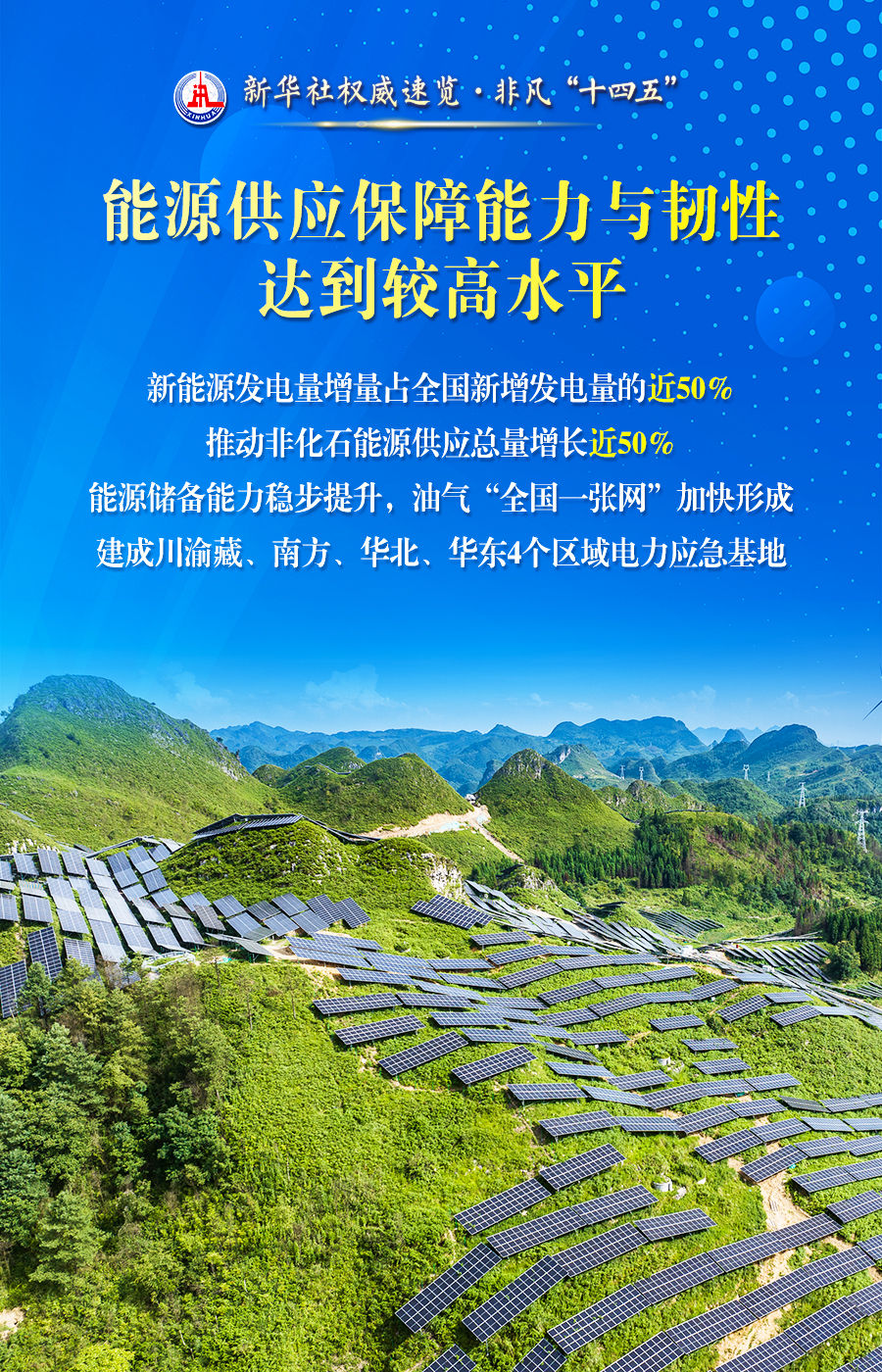
新华社权威速览·非凡“十四五”丨加快建设能源强国,这张成绩单振奋人心
Xin Hua Wang· 2025-08-26 10:06
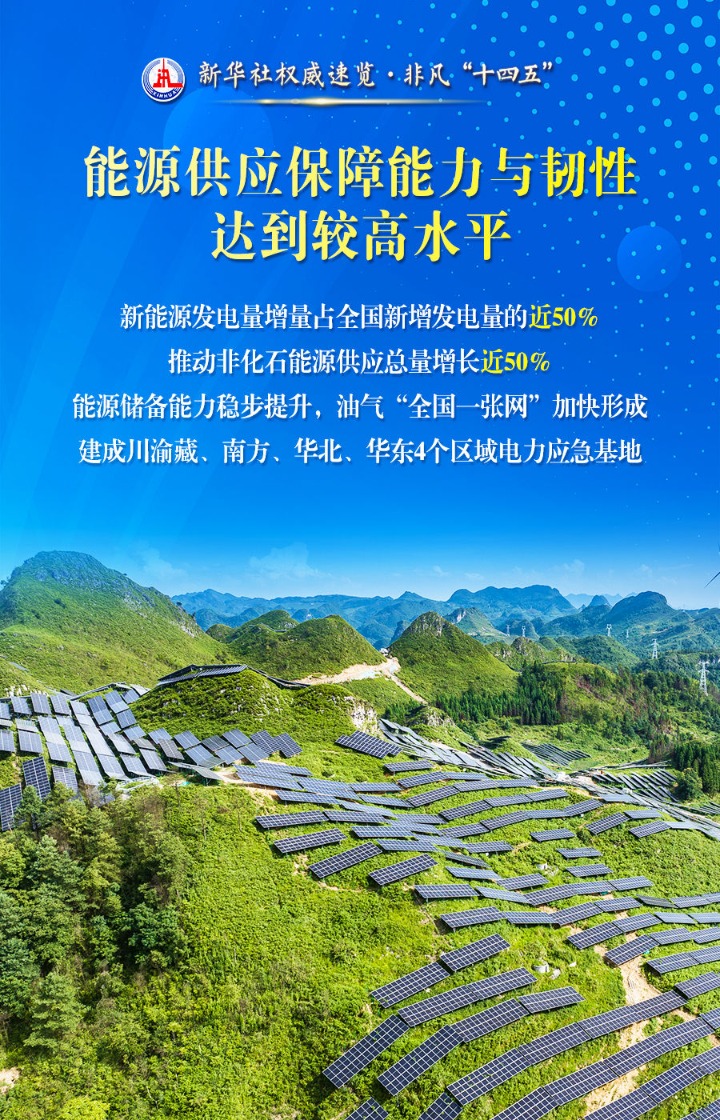
Core Insights - During the "14th Five-Year Plan" period, China's energy sector has achieved significant breakthroughs and historical accomplishments, focusing on supply security, improving livelihoods, and transitioning to low-carbon energy, thereby providing a Chinese solution for global energy transformation [1] Energy Supply and Resilience - The capacity and resilience of energy supply have reached a high level, with nearly 50% of the increase in new power generation coming from renewable energy sources [2] - The total supply of non-fossil energy has increased by nearly 50% [2] Electricity Market Development - Substantial progress has been made in establishing a unified national electricity market, with market transaction electricity volume increasing from 10.7 trillion kWh during the "13th Five-Year Plan" to 23.8 trillion kWh [3] - The proportion of electricity traded through the market has stabilized at over 60% for four consecutive years, meaning that two out of every three kilowatt-hours are formed through market transactions [3] Green Transition in Energy Production - The proportion of non-fossil energy generation has increased by over 5 percentage points since the beginning of the "14th Five-Year Plan" [5] - By July 2024, the number of charging infrastructure units reached 16.696 million [5] Investment Growth in Energy Sector - Annual investment in the energy sector has consistently surpassed 4 trillion, 5 trillion, and 6 trillion yuan, with renewable energy projects accounting for over 80% of power source investments in 2024 [9] - Private enterprises accounted for over 85% of investment in electricity infrastructure construction, with an annual growth rate exceeding 15% [9] International Energy Cooperation - China has signed cooperation agreements in renewable energy with over 10 countries, contributing to a significant reduction in the average cost of wind and solar power generation globally [12] Technological Innovation in Energy - The energy sector has seen accelerated technological innovation, with 236 projects certified as first-of-their-kind in China and some also being the first in the world [14] - The installed capacity of new energy storage has reached approximately 95 million kW, growing nearly 30 times over five years [14] High-Quality Development of New Energy - Annual new installed capacity for wind and solar power has reached a scale of over 100 million kW, with the share of wind and solar power in total electricity consumption rising from 9.7% in 2020 to 18.6% in 2024 [16] - China remains the world leader in both wind and solar power installations for 15 and 10 consecutive years, respectively [16] Green Low-Carbon Transition - Installed capacity of non-fossil energy generation has reached 2.23 billion kW, accounting for 60.8% of total installed capacity [18] - The proportion of electricity in terminal energy consumption has reached approximately 30%, with 95% of coal-fired power units achieving ultra-low emissions [18]
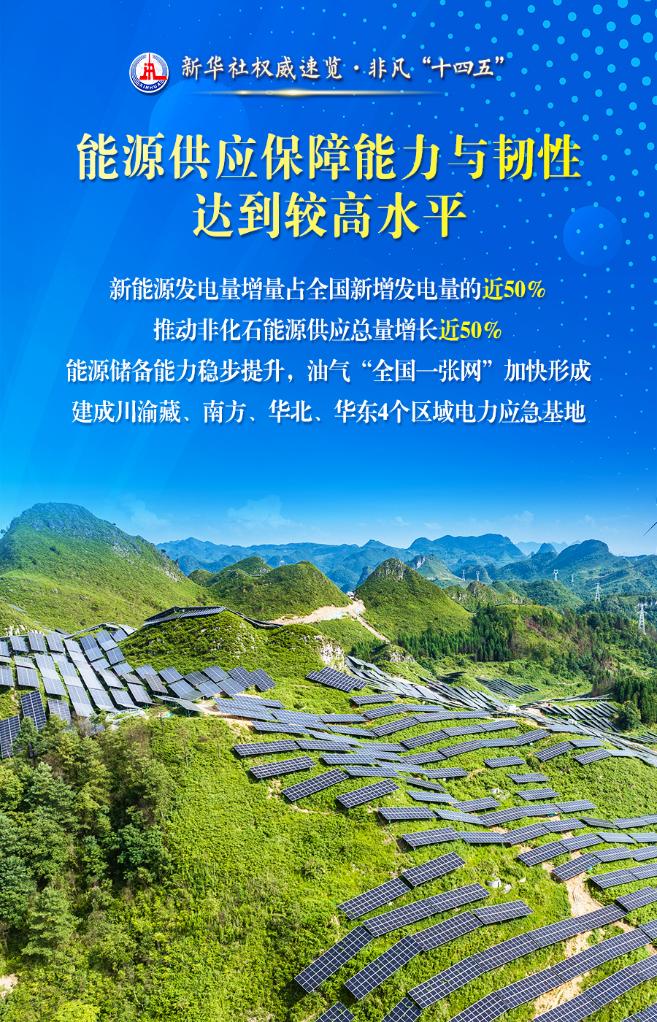
把能源饭碗端得更稳
Zhong Guo Hua Gong Bao· 2025-06-30 02:22
Core Viewpoint - The company is committed to enhancing energy security and achieving high-quality development in the oil and gas industry, aligning with national strategies for energy strength and sustainability [1][2]. Group 1: Resource Foundation - The company prioritizes energy security as its core value and aims for high-quality development in the oil and gas sector, achieving a cumulative increase of 264 million tons in proven reserves and 666 million tons in controlled reserves from 2021 to 2023 [2]. - The company has produced 70.26 million tons of crude oil and 2.29 billion cubic meters of natural gas during the same period, with renewable energy capacity reaching 1.2 billion kilowatt-hours, accounting for over 23% of oil and gas production [2]. - The establishment of a national-level demonstration area for shale oil and the exploration of deep and ultra-deep layers have led to significant resource discoveries, with estimated resource volumes of 10.5 billion tons and 2.8 billion tons respectively [2][3]. Group 2: Technological Innovation - The company emphasizes technological innovation as a core engine for energy security, achieving breakthroughs in key theories and technologies, resulting in an annual increase of over 3 million tons of oil through technological advancements [4]. - Significant progress has been made in shale oil exploration and development, with the establishment of a national key laboratory and the development of new theories and technologies that have converted 90% of previously immobile resources into movable resources [4][5]. - The company has also made strides in chemical flooding techniques, improving recovery rates by 13.7% and covering geological reserves of 12 million tons [4]. Group 3: Green Development - The company integrates green development into its operations, focusing on clean fossil energy, large-scale clean energy, and low-carbon production processes, aiming to create a national-level demonstration area for green and low-carbon development [6][7]. - The establishment of a comprehensive energy service system and the implementation of 184 renewable energy projects have positioned the company as a leader in energy supply, with solar power capacity reaching 445 megawatts [7]. - The company has built the first million-ton CCUS demonstration project in the country, injecting over 1.9 million tons of carbon dioxide, contributing to regional CCUS industry development [7][8].
