
转型金融

Search documents
为传统重工业城市绿色低碳转型提供“地方解决方案” 攀枝花市通过定制化框架和财政激励引导资金支持高碳产业绿色转型
Jin Rong Shi Bao· 2025-08-28 02:32
Core Viewpoint - Panzhihua, a southwestern industrial city in China, has made significant progress in the green transition of high-carbon industries through innovative financial standards and tools, providing a replicable model for other heavy industrial cities in promoting low-carbon development [1][4]. Group 1: Top-Level Design and Standard Innovation - Panzhihua issued the "Panzhihua City Financial Support for Green Low-Carbon Transition Pilot Work Plan" in January 2024, establishing a five-year framework for green finance and a cross-departmental coordination mechanism [2]. - The city collaborated with third-party research institutions to create the "Panzhihua Vanadium-Titanium Steel Industry Transition Financial Work Guidelines (Trial)" which outlines a targeted financial system for the transition, identifying 13 areas in the vanadium-titanium industry and 10 in the steel industry for financial support [2]. Group 2: Fiscal Leverage and Precision Incentives - In May 2023, Panzhihua launched a policy package with 12 measures to enhance fiscal and financial interaction, guiding resources towards green low-carbon sectors through subsidies, loan interest discounts, and risk-sharing mechanisms [3]. - A special reward system was established for banks issuing "transition loans," providing a 0.1% annual reward on the loan amount (up to 50,000 yuan) and a direct reward of 10,000 yuan for enterprises receiving transition loans [3]. Group 3: Standard Implementation and Initial Breakthroughs - Panzhihua established a financial project database for the vanadium-titanium steel industry, with three quality projects included in the first batch, facilitating connections between banks and enterprises [4]. - The first carbon-linked loan in the vanadium-titanium steel sector was issued by Panzhihua Rural Commercial Bank, providing 30 million yuan to a company for a project aimed at comprehensive utilization of tailings, with a loan term of five years [4]. Group 4: Challenges and Future Plans - Panzhihua faces challenges such as a lack of local third-party evaluation institutions, leading to high assessment costs for enterprises seeking financial support, and the high costs and long cycles associated with low-carbon technology upgrades in heavy asset industries [5]. - The city plans to enhance policy promotion, deepen standard applications, and improve infrastructure to lower assessment costs and stimulate enterprise motivation for transition [5].
钒钛之城绽放绿色之花 攀枝花转型金融破冰记
Jin Rong Shi Bao· 2025-08-28 02:32
Core Viewpoint - Panzhihua, a city in Sichuan known for its vanadium-titanium resources, is leveraging financial innovation to drive green transformation and high-quality development as a pilot area for common prosperity in China [1][9]. Group 1: Financial Innovation and Support Mechanisms - The Panzhihua municipal government has established a financial coordination mechanism to enhance the role of finance in urban transformation, aiming to create a green finance innovation pilot area in Sichuan [2]. - A comprehensive plan for financial support of green low-carbon transformation has been issued, outlining key support areas and measures [2]. - The city has initiated the first local vanadium-titanium steel transformation loan, marking a significant step in financial innovation [1][4]. Group 2: Development of Transformation Standards - Panzhihua has developed the first local vanadium-titanium steel transformation financial guidelines, which include 23 areas and 143 transformation paths, providing a clear framework for financial institutions [3]. - The guidelines aim to address the financing challenges faced by the high-carbon vanadium-titanium steel industry [3]. Group 3: Agricultural Transformation Financing - Panzhihua has been selected as one of the first national agricultural transformation financial pilot areas, establishing a project library for selected agricultural projects [4]. - By July 2025, the city had issued five agricultural transformation loans totaling 16.87 million yuan, demonstrating the effective deployment of financial resources in agriculture [4]. Group 4: Innovative Financial Mechanisms - A "carbon effect floating interest rate" mechanism has been established, linking energy consumption data with funding costs, incentivizing companies to reduce energy use [5]. - This innovative model has facilitated the issuance of a 300 million yuan vanadium-titanium transformation loan, aligning financial products with carbon reduction efforts [5]. Group 5: Policy Collaboration and Market Activation - The People's Bank of China in Panzhihua has successfully integrated local banks into carbon reduction support tools, enhancing the financial ecosystem for green projects [6]. - A green low-carbon industry fund of 100 million yuan has been established, along with a 50 million yuan photovoltaic risk-sharing fund, to stimulate market activity [6]. Group 6: Formation of a Green Financial Ecosystem - Panzhihua Rural Commercial Bank has developed a transformation financial development plan, becoming one of the first local banks to outline a roadmap for transformation finance [8]. - The "Green Rongrong" platform has facilitated the connection of low-carbon projects, with a loan balance of 95.04 million yuan, reflecting a 27.14% year-on-year increase [8]. Group 7: Overall Transformation and Development - Panzhihua has achieved significant breakthroughs in local vanadium-titanium steel transformation standards, financial policy collaboration, and dynamic carbon effect-linked mechanisms [9]. - The city is actively writing a new chapter in high-quality development for resource-based cities through green finance initiatives [9].
“一条鱼”的价值蝶变 江西吉安农业转型金融实践
Jin Rong Shi Bao· 2025-08-26 02:45
Core Viewpoint - The article discusses the innovative "fish ticket" system in Wan'an County, Jiangxi Province, aimed at transforming ecological fish resources into economic assets, thereby enhancing the income of local fishermen and promoting sustainable development [1][4]. Group 1: Policy and Financial Innovations - The local government is implementing a "fish policy" to facilitate the transformation of the fishing industry, focusing on ecological fish value enhancement and shared prosperity for the community [2][3]. - A comprehensive ecological fish industry research institute has been established, along with a smart management platform to support the sustainable development of the fishing sector [2]. - The People's Bank of China in Ji'an is driving financial support for ecological products through policy guidance and credit empowerment, facilitating the transition to low-carbon fishing practices [3][7]. Group 2: "Fish Ticket" System - The "fish ticket" serves as an asset identification for ecological fish, quantifying their economic and ecological value, and enabling fishermen to access financing [4][5]. - The first "fish ticket" was issued with a value of 105,000 yuan, allowing the holder to improve fish farming practices and increase income through enhanced market prices [4][6]. - The "fish ticket" system includes a buyback guarantee from the local government to mitigate risks for financial institutions, ensuring the sustainability of the financing model [5][6]. Group 3: Financial Performance and Impact - As of June, the total ecological fish loans issued in Wan'an County reached 260 million yuan, marking a year-on-year increase of 24.6%, significantly boosting the local fishing industry's economic output [6][7]. - The establishment of a full ecological fish industry chain has led to an annual production of 6 million pounds of ecological fish, doubling the fishing industry's output value over three years [6][8]. - The local financial institutions have actively engaged in promoting tourism-related financial services, contributing to an increase in visitor numbers and generating 570 million yuan in ecological fish revenue [7][8].
中行上海市分行:深耕绿色金融,润泽绿水青山
Di Yi Cai Jing· 2025-08-25 02:48
Group 1 - The year marks the 20th anniversary of the concept "Lucid waters and lush mountains are invaluable assets," with the Bank of China Shanghai Branch enhancing diversified financial products and services to promote ecological value transformation and optimize energy structure for high-quality economic development in Shanghai [1] - The energy sector is crucial for economic development and carbon neutrality, with nuclear power providing significant advantages in safety, efficiency, and stability, supporting low-carbon energy transition [2] - The Bank of China Shanghai Branch has established a dedicated working group to provide tailored credit services to the State Nuclear Power Technology Company, marking a significant step in supporting green energy industry development [2] Group 2 - The Shanghai Municipal Action Plan for Modern Facility Agriculture (2024-2027) emphasizes promoting green and low-carbon agricultural energy utilization, including biogas power generation and complementary projects [3] - The Bank of China Shanghai Branch has provided targeted financial support for green and low-carbon agricultural development, including a loan of over 50 million yuan for a 50,000 kW photovoltaic project in Chongming District [3] - In Jinshan District, the bank has also financed a biomass waste resource utilization project, contributing to a win-win scenario for social, economic, and ecological benefits in agriculture [3] Group 3 - Transition finance focuses on mitigating climate change by providing financial services to traditional high-emission industries for their low-carbon transition, complementing green finance [4] - The Bank of China Shanghai Branch has developed a work plan to support the city's transition finance development, including 12 specific measures to optimize financial resource supply and establish evaluation mechanisms [4] - The bank has successfully executed Shanghai's first syndicated transition loan to support the organic chemical raw material manufacturing industry, aiding in the city's green and low-carbon economic development [4] Group 4 - The Bank of China Shanghai Branch aims to actively implement the "Lucid waters and lush mountains are invaluable assets" concept by expanding its financial product offerings and providing innovative financial services to contribute to Shanghai's international green finance hub [5]
创新融资机制提升减排动力 金融赋能可持续发展
Zhong Guo Jing Ying Bao· 2025-08-22 18:54
Core Insights - Sustainable development-linked loans are gaining traction as innovative financial products aimed at promoting green transformation [1][6] - These loans tie interest rates to companies' contributions towards carbon peak and carbon neutrality, incentivizing proactive engagement in green initiatives [1][2] Group 1: Implementation and Impact - Multiple banks, including Harbin Bank and Qingnong Commercial Bank, have successfully launched sustainable development-linked loans across various provinces [1][6] - Qingnong Commercial Bank provided a loan of 42.19 million yuan for a biomass energy project, with interest rates decreasing as biomass energy production increases [1][2] - Harbin Bank has issued loans linked to carbon emissions metrics for different industries, encouraging companies to reduce their carbon footprint [2][6] Group 2: Risk Management and Monitoring - Effective risk management is crucial for financial institutions offering these loans, with Harbin Bank integrating credit support into key operational areas of businesses [4] - Banks are establishing dynamic monitoring systems and setting phased carbon reduction targets, with incentives for meeting these goals [2][4] Group 3: Market Trends and Future Directions - The scale of sustainable development-linked loans is expanding, driven by policy guidance, fiscal incentives, and financial innovation [6][7] - Recent trends show a shift in target clients from large energy companies to small and medium-sized enterprises, enhancing product flexibility [8] - Financial institutions are increasingly incorporating digital tools like blockchain and big data to improve risk control and funding efficiency [8][9]

“碳”路转型金融
Zhong Guo Jing Ying Bao· 2025-08-22 18:28
Core Insights - The article emphasizes the significant role of finance in supporting China's green development and the transition from merely supporting green projects to transforming high-carbon industries into low-carbon ones, aligning with the "dual carbon" goals [1][2][6] Group 1: Financial Support for Transition - The recent "Guiding Opinions on Financial Support for New Industrialization" outlines a framework for banks to support high-carbon industries in adopting green technologies and capacity replacement policies [1][2] - Financial services are expanding from supporting renewable energy projects to facilitating the green upgrade of high-carbon sectors such as steel, cement, and chemicals [2][4] - The transition finance model is complex, requiring rigorous technical assessments and innovative mechanisms to ensure funds are directed towards effective emission reduction projects [3][5] Group 2: Case Studies and Innovations - Guangfa Bank has developed a tailored green finance service for a leading glass manufacturer, addressing its high energy consumption and carbon emissions through innovative financing solutions [3] - The bank's approach includes a "transformation recognition + bill financing + dynamic interest rate" mechanism, linking emission reduction targets to financing costs, thus incentivizing companies to actively pursue green transitions [3][5] - Similarly, Bank of Communications has initiated a methanol dual-fuel ship financing project, marking a significant step in supporting the maritime industry's green transformation [4][5] Group 3: Challenges and Considerations - Transition finance faces challenges such as the economic return on investments in traditional industries, which may not be sufficient to encourage deep green transformations [7][8] - The complexity of identifying and managing the transition paths for high-carbon industries poses additional risks for financial institutions [5][7] - There is a need for financial institutions to establish clear standards and mechanisms to mitigate risks associated with high-carbon asset transitions and ensure effective use of funds [6][9]


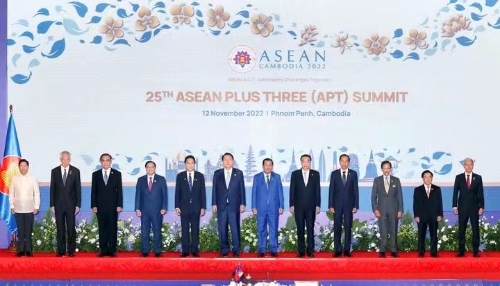
李克强出席第25次东盟与中日韩领导人会议
Xin Hua She· 2025-08-22 08:44
Core Viewpoint - The 10+3 cooperation framework, which includes ASEAN countries, China, Japan, and South Korea, is crucial for regional economic integration and stability, especially in the face of complex international challenges [2][4]. Group 1: Economic Integration - The importance of maintaining the regional economic integration process was emphasized, with a focus on the full implementation of the Regional Comprehensive Economic Partnership (RCEP) to maximize its benefits [3]. - China has proposed the establishment of an RCEP secretariat to facilitate cooperation [3]. Group 2: Supply Chain Stability - There is a strong emphasis on maintaining the stability of industrial and supply chains, advocating for open and integrated development [3]. - The establishment of a 10+3 SME service alliance is aimed at enhancing technological innovation and digital transformation among regional enterprises [3]. Group 3: Crisis Response - China supports the construction of a 10+3 emergency medical supplies reserve center and a rice emergency reserve mechanism to enhance crisis response capabilities [3]. - The effectiveness of the Chiang Mai Initiative is to be improved to strengthen the regional financial safety net [3]. Group 4: Cultural Exchange - The initiation of a 10+3 immigration and consular officials consultation mechanism is proposed to facilitate personnel exchanges [3]. - There is a commitment to optimize pandemic control measures and gradually increase international flights to support the return of ASEAN and Japanese students to China [3]. Group 5: Sustainable Development - China is willing to collaborate on global development initiatives and lead research on 10+3 transformative finance [3]. - The continuation of the East Asia poverty reduction cooperation initiative is aimed at supporting regional development [3]. Group 6: Overall Cooperation - Over the past decade, China has proposed more than 130 cooperation initiatives or projects under the 10+3 framework, most of which have been implemented successfully [4]. - The meeting highlighted the importance of deepening cooperation in various fields, including agriculture, digital economy, financial security, and public health, to address global challenges and promote regional economic integration [4].

以金融“含绿量”赋能绿色发展“含金量”
Xin Hua Ri Bao· 2025-08-18 06:53
Group 1 - The core viewpoint emphasizes the integration of green finance into Jiangsu's economic development, showcasing how financial institutions are supporting green projects and sustainable growth [1][3][5] - Jiangsu's green credit balance is projected to exceed 5.3 trillion yuan by June 2025, reflecting a 19.5% increase from the beginning of the year, indicating robust growth in green finance [1][5] - Agricultural Bank of China has innovatively utilized a "cross-provincial linkage + internal syndicate" model to provide tailored financial solutions for green projects, including a 7.51 billion yuan project loan [2][3] Group 2 - Jiangsu's financial institutions are developing a diverse range of green financial products, including "green innovation combination loans" and "contract energy management loans," to meet the financial needs of the renewable energy sector [3][5] - The establishment of a green financial product system by Bank of China Jiangsu Branch aims to support various sectors, including photovoltaic, wind power, and electric vehicles, enhancing the financing landscape for green industries [3][5] - The People's Bank of China has implemented structural monetary policies to lower financing costs for green projects, with the "Su Carbon Integration" product supporting 3,294 green enterprises and disbursing 40.4 billion yuan in loans at an average interest rate of 4.1% [5][6] Group 3 - The National Development Bank Jiangsu Branch is focusing on ecological restoration projects, such as water environment governance and green infrastructure improvements, to promote sustainable development in the Taihu Lake area [4][6] - The establishment of a green transformation investment fund by Yida Capital aims to support pollution reduction and carbon reduction projects along the Yangtze River Economic Belt, highlighting the collaboration between financial institutions and environmental initiatives [6][7] - The introduction of transition finance is designed to support high-emission industries in their low-carbon transformation, with Jiangsu Bank issuing loans linked to ESG performance for companies in traditional sectors [7][8] Group 4 - The People's Bank of China Jiangsu Branch has developed a transition finance system that includes recognition standards and industry directories to facilitate funding for high-carbon industries transitioning to greener practices [8] - Approximately 2 billion yuan in transition finance loans have been successfully disbursed, incentivizing companies in high-carbon sectors to adopt low-carbon practices [8] - The dual-track incentive mechanism established by the People's Bank aims to enhance the role of financial resources in promoting green development, with transition finance now accounting for 13% of the evaluation system for financial institutions [8]

上半年江苏绿色信贷余额突破5.3万亿元,较年初增长19.5%——以金融“含绿量”赋能绿色发展“含金量”
Xin Hua Ri Bao· 2025-08-17 23:13
Core Viewpoint - The article highlights the significant role of green finance in promoting sustainable development in Jiangsu, with a focus on innovative financial solutions that support green projects and industries. Group 1: Green Finance Development - Jiangsu's green credit balance is expected to exceed 5.3 trillion yuan by June 2025, reflecting a 19.5% increase from the beginning of the year [1] - The Agricultural Bank of Jiangsu has implemented a "cross-province linkage + internal syndicate" model to provide tailored financial solutions for green projects, including a 7.51 billion yuan project loan [2][3] - The China Bank Jiangsu Branch has developed a diversified financial product system to support green industries, while Jiangsu Bank has introduced innovative products for various renewable energy sectors [3] Group 2: Financial Tools and Innovations - The National Development Bank Jiangsu Branch is focusing on ecological infrastructure projects, supporting water environment governance and green development initiatives [4] - The "Su Carbon Integration" product has supported 3,294 green enterprises with loans totaling 40.4 billion yuan, achieving an average interest rate of 4.1% [5] - Various green financial tools, including green bonds and funds, are being utilized, with significant projects like the issuance of technology innovation bonds for offshore wind power [6] Group 3: Transition Finance - Transition finance is emerging to support industries with significant carbon reduction potential, with a focus on high-emission sectors [7] - Jiangsu Bank has issued its first transition finance loan linked to ESG performance, providing a model for financing low-carbon transitions in high-carbon industries [7][8] - The People's Bank of China Jiangsu Branch has established a transition finance system with standards and directories for various high-carbon industries, aiming for comprehensive coverage by 2026 [8]
远东资信ESG双周报(2025年8月上旬)
Xin Lang Cai Jing· 2025-08-15 13:00
Domestic Policy Dynamics - The "Guiding Opinions on Financial Support for New Industrialization" was jointly issued by seven departments including the People's Bank of China, aiming to build a financial system that supports the high-end, intelligent, and green development of the manufacturing industry by 2027 [12] - The opinions emphasize the innovation of bond varieties and the application of diversified green financial tools such as green credit and green bonds in the low-carbon transition of the manufacturing sector [13] International Policy Dynamics - The Financial Stability Board (FSB) released a roadmap summarizing progress in addressing climate-related financial risks, focusing on disclosure, data, vulnerability analysis, and regulatory practices [4][9] - The International Sustainability Standards Board (ISSB) has established global benchmarks for sustainability disclosures, with a transition from the TCFD framework to ISSB standards underway [9] Industry Dynamics - As of August 13, 2025, the domestic market has 3,896 outstanding green bonds with a total issuance amount of 62,621.51 billion, and 2,061 social bonds totaling 87,833.49 billion [19] - From January 1 to August 13, 2025, 639 ESG bonds were issued, amounting to 8,690.98 billion, representing year-on-year growth of 38.01% and 71.72% respectively [19] ESG Practices - Recent events include the "Third China International Supply Chain Promotion Expo" and the "2025 Corporate Social Responsibility & ESG Practice Forum," highlighting the growing focus on ESG standards and practices in the supply chain [21] - Innovations in financial products such as "carbon footprint-linked loans" and sustainable development-linked loans are being introduced to support green transitions in various industries [21][22]
