AI算法

Search documents
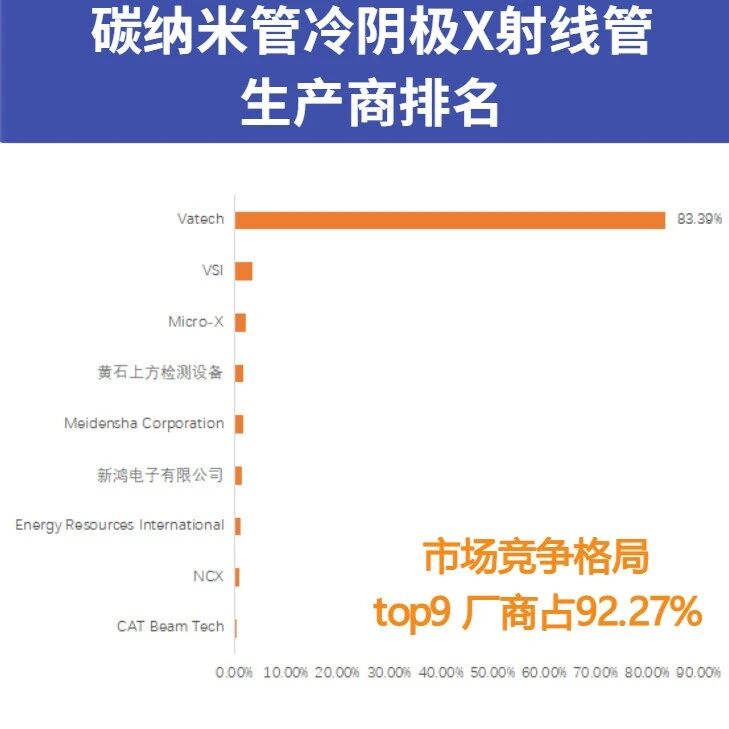
全球碳纳米管冷阴极X射线管市场前10强生产商排名及市场占有率
QYResearch· 2025-09-01 09:42
Core Viewpoint - The carbon nanotube cold cathode X-ray tube is a new type of X-ray generator based on the field emission principle of carbon nanotubes, which eliminates the need for traditional heating processes, offering advantages such as microsecond response, low power consumption, and long lifespan [1][6][10]. Market Overview - According to QYResearch, the global market size for carbon nanotube cold cathode X-ray tubes is expected to reach $0.89 billion by 2030, with a compound annual growth rate (CAGR) of 12.15% in the coming years [1]. - The top five manufacturers in the global market hold approximately 92.27% of the market share, with major producers located in the Asia-Pacific region [5]. Applications in Medical Field - In the medical sector, applications include static CT systems for rapid 3D imaging without mechanical movement, enhancing cardiovascular monitoring and oral diagnostics [6]. - Ultra-fast dental tomography equipment provides richer 3D details at the same radiation dose, significantly improving the detection of small lesions [6]. Future Development Trends in Medical Applications - The future trends focus on three main areas: 1. Breaking through imaging speed limitations towards sub-millisecond scanning for real-time monitoring of dynamic organs [6]. 2. Miniaturization and low-dose technology to promote portable dental CT and breast imaging devices, further reducing radiation exposure [6]. 3. Multi-modal intelligent imaging that integrates gene sequencing and AI algorithms for customized stents and drugs, enhancing targeted treatment precision [6]. Applications in Security and Industrial Fields - In security, the static CT intelligent inspection system utilizes hundreds of independently controllable carbon nanotube cathodes for high-resolution 3D imaging, capable of automatically identifying explosives and drugs [9]. - In industrial applications, the technology is used in nuclear power detection systems and materials science research tools, enabling precise analysis at the nanoscale [13]. Future Development Trends in Security and Industrial Applications - Future trends in security and industrial applications include: 1. Upgrading scanning speed and channel size to exceed 1 meter per second, accommodating large cargo demands [9]. 2. Integrating low-dose technology with intelligent algorithms to enhance the accuracy of prohibited item detection [9]. 3. Multi-modal integration for improved penetration analysis of complex items [9]. 4. Domestic breakthroughs in high-pressure micro-focus X-ray sources to promote localization and reduce reliance on international giants [9]. Summary of Key Manufacturers - Major manufacturers in the carbon nanotube cold cathode X-ray tube market include Vatech, VSI, VEC Imaging, Micro-X, and others, focusing on applications in medical, security, and industrial sectors [15].

望尘科技控股(02458.HK):上半年净利润5370万元 同比上涨110.3%
Ge Long Hui· 2025-08-28 15:09
Group 1 - The company reported a revenue of approximately RMB 470 million for the six months ending June 30, 2025, representing a year-on-year increase of about 48.9% [1] - Gross profit reached approximately RMB 238 million, up 38.6% compared to the same period last year [1] - Net profit recorded approximately RMB 53.7 million, a significant increase of 110.3% from approximately RMB 25.5 million in the previous year [1] Group 2 - The product "Best Football Club" achieved a breakthrough in product strength and commercial value, showcasing the company's technical capabilities [1] - The company has successfully renewed its contract with the German national team and added several legendary players, enhancing its IP ecosystem with a return on investment exceeding 300% [1] - The company obtained complete authorization for the Russian Premier League, expanding its IP matrix to maximize coverage of football culture [1] Group 3 - The global operation of "Best Football Club" saw qualitative and quantitative improvements, supported by a deepening core talent strategy [2] - The localized communication matrix efficiency significantly improved, leading to a year-on-year increase in user community asset accumulation [2] - Key markets such as South Korea, Europe, and Hong Kong have completed a refined transformation, achieving steady revenue growth with lower cost inputs, validating the long-term sustainability of the operational model [2]
追觅科技正式官宣造车:立足中国放眼全球,首款车型对标布加迪威龙
IPO早知道· 2025-08-28 08:37
Core Viewpoint - Chasing Technology officially announced its entry into the automotive industry, aiming to create a super luxury electric vehicle comparable to Bugatti Veyron, with plans to launch in 2027, marking a significant strategic shift from smart hardware to automotive manufacturing [2][8]. Group 1: Strategic Intent - The company has formed a nearly 1,000-person team dedicated to vehicle manufacturing and is continuously expanding its efforts in the automotive sector [2]. - Chasing Technology aims to leverage its technological strengths and global brand recognition to establish itself in the high-end electric vehicle market, which currently has few Chinese luxury brands recognized internationally [2][4]. Group 2: Technological Advantages - The company has deep expertise in high-speed digital motors, with self-developed motors exceeding 200,000 RPM, which can be applied to high-performance electric vehicle powertrains [3]. - Chasing Technology has made significant advancements in intelligent perception and AI algorithms, with technologies like visual recognition and autonomous path planning already commercialized in service robots, applicable to advanced driver-assistance systems (ADAS) [4]. Group 3: Supply Chain and Manufacturing - The company has established a systematic layout for supply chain and manufacturing, collaborating with leading suppliers in critical areas such as battery systems and intelligent driving chips [4]. - Chasing Technology has recruited several executives from the automotive manufacturing sector to enhance its capabilities in research and development, mass production, and quality control [4]. Group 4: Intelligent Features - The upcoming super luxury electric vehicle will feature an intelligent ecosystem centered around "perception-understanding-evolution," differentiating it from traditional luxury cars [4]. - The vehicle will include an AI-enabled companion system that learns user driving habits and preferences, optimizing its responses to enhance user experience [4][5]. Group 5: Global Market Positioning - Chasing Technology has a robust global presence, operating in over 100 countries and regions, with more than 6,000 offline stores and a membership base exceeding 11 million, providing a strong foundation for international promotion of its automotive business [5]. - The company is committed to long-term investment in the automotive industry, focusing on high performance, intelligence, and luxury quality in its product offerings [5].

中创新航2025H1储能收入57.57亿,同比增长109.7%!
中关村储能产业技术联盟· 2025-08-28 05:43
Core Viewpoint - The company reported a significant increase in revenue and profit for the first half of 2025, driven by strong performance in both power battery and energy storage system products [2][3]. Revenue Summary - Total revenue reached 16.42 billion RMB, a year-on-year increase of 31.68% - Gross margin improved to 17.5%, up by 1.9% - Net profit for the period was 753 million RMB, reflecting a year-on-year growth of 80.44% [2][3][4]. Product Breakdown - Revenue from power batteries was 10.66 billion RMB, a growth of 9.7% - Revenue from energy storage systems and other products surged to 5.76 billion RMB, marking a 109.7% increase [3][4]. Market Performance - The company achieved substantial growth in shipment volume and operational efficiency in energy storage projects - It successfully entered the supplier lists of major developers and grid companies in Latin America and South Africa, marking a breakthrough in overseas business [10][11]. Strategic Collaborations - The company deepened strategic partnerships with major state-owned enterprises and energy groups, leading to multiple energy storage projects being operationalized [10]. - Collaborations with system integrators and leading companies in wind and solar energy sectors have been established, enhancing market share and recognition [10]. Product Innovations - The company launched advanced energy storage products, including a 314Ah battery cell with a lifespan of 15,000 cycles and a new generation 600Ah cell with high energy density [6][7]. - The commercial energy storage solutions have been deployed in various applications, including enterprises, parks, and data centers, with successful market penetration in Europe and the US [8][9]. International Expansion - The company has achieved significant breakthroughs in international markets, covering residential, commercial, and large-scale energy storage needs [11]. - It has secured orders for long-cycle energy storage batteries from overseas clients, further solidifying its market position [11].

中国联通雄安互联网产业园投运
Bei Jing Ri Bao Ke Hu Duan· 2025-08-27 03:52
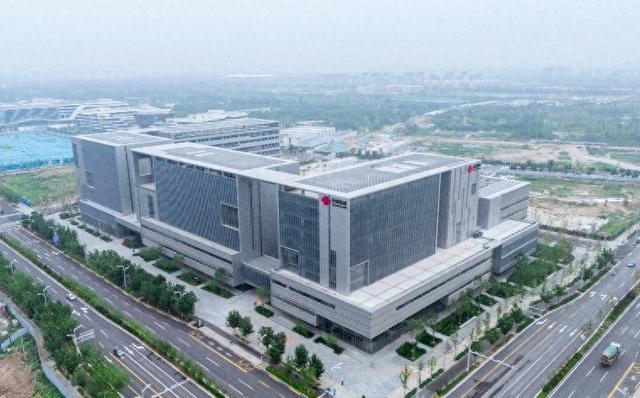
Core Viewpoint - China Unicom's Xiong'an Internet Industry Park (Phase I) has officially commenced operations as part of the market-oriented relief project in the Xiong'an New Area, aimed at supporting high-quality development and innovation in the region [1][4]. Group 1: Project Overview - The Xiong'an Internet Industry Park is located in the key area of the Xiong'an New Area, which is designated for the initial construction and implementation of Beijing's non-capital function relief projects [1]. - The project is a significant initiative by China Unicom to actively contribute to the coordinated development of the Beijing-Tianjin-Hebei region and the high-standard construction of the Xiong'an New Area [1]. Group 2: Technological Focus - The park aims to establish a technology innovation center for China Unicom in the Xiong'an New Area, focusing on creating a "frontier technology application demonstration zone" [3]. - Key areas of development include next-generation information technologies such as IPv6, HarmonyOS, and low-altitude intelligent networking applications [3]. - The park will feature smart facilities and functions tailored to intelligent office and living needs, including smart meeting rooms, environmental monitoring, and intelligent attendance systems [3]. Group 3: Operational Management - The use of AI algorithms and digital twin technologies will enable comprehensive perception, intelligent judgment, and timely response to the operational conditions of the park [3]. - The management system will cover various scenarios such as security linkage, vehicle intelligent monitoring, equipment operation management, and emergency command, ensuring a "visible, manageable, and controllable" overall management approach [3].

中国银河证券:科技进步+龙头布局 AI智能床垫乘风方兴
智通财经网· 2025-08-26 01:56
Group 1 - The health sleep market in China is rapidly growing, with over 90% of the population experiencing sleep quality issues, leading to increased demand for health sleep products. The market size reached 499.58 billion yuan in 2023 and is expected to grow to 658.68 billion yuan by 2027, with a CAGR of 8.5% over ten years [1][2] - The penetration rate of smart mattresses is currently low, but the market is expanding quickly. From 2015 to 2023, the demand for smart mattresses in China increased from 93,000 units to 1.495 million units, representing a compound annual growth rate (CAGR) of 40.2% [2][3] - The smart mattress industry is expected to experience a new wave of rapid development due to advancements in AI algorithms and brain-machine interface technologies, with leading companies like Xilinmen, Mousse, and Qushui Technology launching AI mattress products [3][4] Group 2 - Leading companies are actively entering the health sleep ecosystem. Xilinmen has established a joint research center with Tsinghua University and launched the AI "Baobao·BrainCo" mattress, which utilizes non-invasive brain-machine interface technology [4] - Mousse plans to release the T11 series in 2024, which reduces sleep onset time by 37.3%, turning frequency by 34.2%, and waking frequency by 19.6%. The company is also collaborating with MIT to participate in the formulation of international smart sleep standards [4] - Qushui Technology is set to launch an "AI sleep monitoring improvement mattress" in 2024, integrating with the Mijia ecosystem to create a "sleep + life" integrated scenario, while also enhancing sleep monitoring algorithms in collaboration with ByteDance [4]


【机构调研记录】鹏扬基金调研兆易创新、良信股份
Sou Hu Cai Jing· 2025-08-26 00:12
Group 1: Zhaoyi Innovation - Zhaoyi Innovation reported good growth across all business lines in Q2 2024, with NOR Flash experiencing high single-digit growth, niche DRAM growing over 50%, MCU close to 20%, and sensor chips growing about 10% [1] - The company expects sequential growth in Q3, with annual demand increasing and a tight supply for niche DRAM expected to last throughout the year. Significant revenue growth for niche DRAM is anticipated in the second half, along with rising contract prices [1] - Overall gross margin remains stable, with moderate price increases for Flash and improved DRAM margins. The demand for NOR Flash is driven by an increase in electronic product code volume, while supply is constrained by tight wafer manufacturing capacity [1] - The company is optimistic about customized storage technology's advantages in product performance, anticipating more industries and clients will choose this solution, leveraging first-mover advantages and technological iterations [1] - MCU growth is expected in industrial control, energy storage, and high-barrier domestic replacement sectors, with new product revenue contributions increasing. DDR4 8Gb is projected to contribute one-third of DRAM revenue for the year [1] - The company has significant R&D investments and a large market potential, aiming to achieve revenue comparable to standard interface niche storage. Strong relationships with strategic suppliers ensure capacity and process advantages [1] - The stable niche market and production cuts by leading manufacturers present growth opportunities, with plans to launch the LPDDR5 product line within two years. The automotive MCU market is also promising, with multi-core products and AI MCU applications being developed [1] - The 45nm NOR Flash capacity is expected to ramp up, contributing 15% to revenue by year-end, with a complete product line expected by 2026 and a significant cost advantage due to a 20% reduction in chip area [1] Group 2: Liangxin Co., Ltd. - Liangxin's data center business is divided into three segments: internet enterprises, operators, and standalone projects, with market share concentrated in HVDC and UPS [2] - The growth rate of the new energy business may slow in the second half of the year, but the company will continue to focus on digital energy and infrastructure sectors [2] - Overseas clients have technical upgrade demands, and existing suppliers face capacity bottlenecks, with Liangxin maintaining good cooperation with overseas clients [2] - The gross margin for overseas business slightly decreased compared to the same period last year [2] - The new energy business unit includes significant shares from solar, energy storage, and wind energy, along with rapidly growing segments such as electric vehicles, charging piles, and box-type substations, as well as layouts in nuclear power and hydrogen energy [2]


10年,他“数”遍神州树
Ren Min Ri Bao· 2025-08-25 23:04
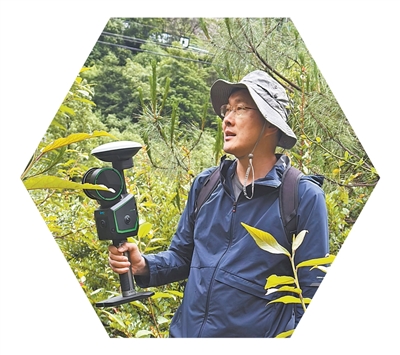
Core Insights - The article discusses the groundbreaking work of a research team led by Guo Qinghua at Peking University, which has developed China's first "Tree Density Map" that estimates the number of trees in the country, revealing approximately 142.6 billion trees as of 2020 [4][5][6] Group 1: Tree Density Map - The "Tree Density Map" shows a tree density of about 689 trees per hectare, with an average of 100 trees per person in China [4] - The map indicates that the southwestern region has the highest number of trees, approximately 36 billion, while the Yangtze River basin leads with about 49.6 billion trees [5][6] Group 2: Research Methodology - The research team utilized drones equipped with LiDAR sensors to scan forests, employing AI algorithms to analyze data and satellite remote sensing to create a comprehensive forest panorama [6][10] - Over a decade, the team collected data from over 70,000 sample plots, resulting in more than 400 terabytes of data, equivalent to over 80 million photos [6][7] Group 3: Technological Advancements - The team has developed an integrated remote sensing platform that includes various LiDAR systems, enabling high-precision data collection even in challenging terrains [10] - The use of LiDAR technology allows for detailed three-dimensional measurements of trees, overcoming limitations of traditional manual measurement methods [9][10] Group 4: Future Research and Conservation - The ongoing research aims to understand the optimal types and quantities of trees to plant in different regions, aligning with China's "dual carbon" goals [8] - The team has also discovered exceptionally tall trees, including a 102.3-meter high Tibetan cypress, emphasizing the importance of continued exploration and conservation efforts [12][13]
中国联通雄安互联网产业园(一期)正式投入运营
Bei Jing Ri Bao Ke Hu Duan· 2025-08-25 13:52
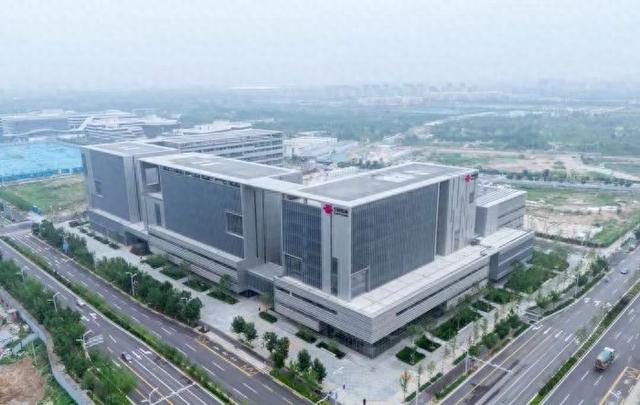
Core Viewpoint - China Unicom's Xiong'an Internet Industry Park (Phase I) officially commenced operations on August 25, marking a significant step in supporting the coordinated development of the Beijing-Tianjin-Hebei region and the high-quality construction of the Xiong'an New Area [1][3]. Group 1 - The Xiong'an Internet Industry Park is part of a market-oriented project aimed at relieving non-capital functions from Beijing and is positioned as a hub for high-end innovation and quality development [3]. - The park aims to establish itself as a technology innovation center for China Unicom in the Xiong'an New Area, focusing on the application of cutting-edge technologies such as IPv6 and the HarmonyOS ecosystem [3][5]. - The park will serve as a demonstration area for advanced technology applications, including the development of a full-stack IPv6 demonstration park and a low-altitude intelligent network innovation center [3][5]. Group 2 - The park features smart facilities designed to enhance office and living experiences, including smart meeting rooms, environmental monitoring, and intelligent attendance systems [5]. - Utilizing AI algorithms and digital twin technologies, the park achieves comprehensive awareness and intelligent response capabilities for operational management, covering security, vehicle monitoring, and emergency command [5]. - The park emphasizes energy efficiency through coordinated operations of energy management, smart lighting, air conditioning control, and irrigation systems, aiming to improve energy utilization efficiency [5].
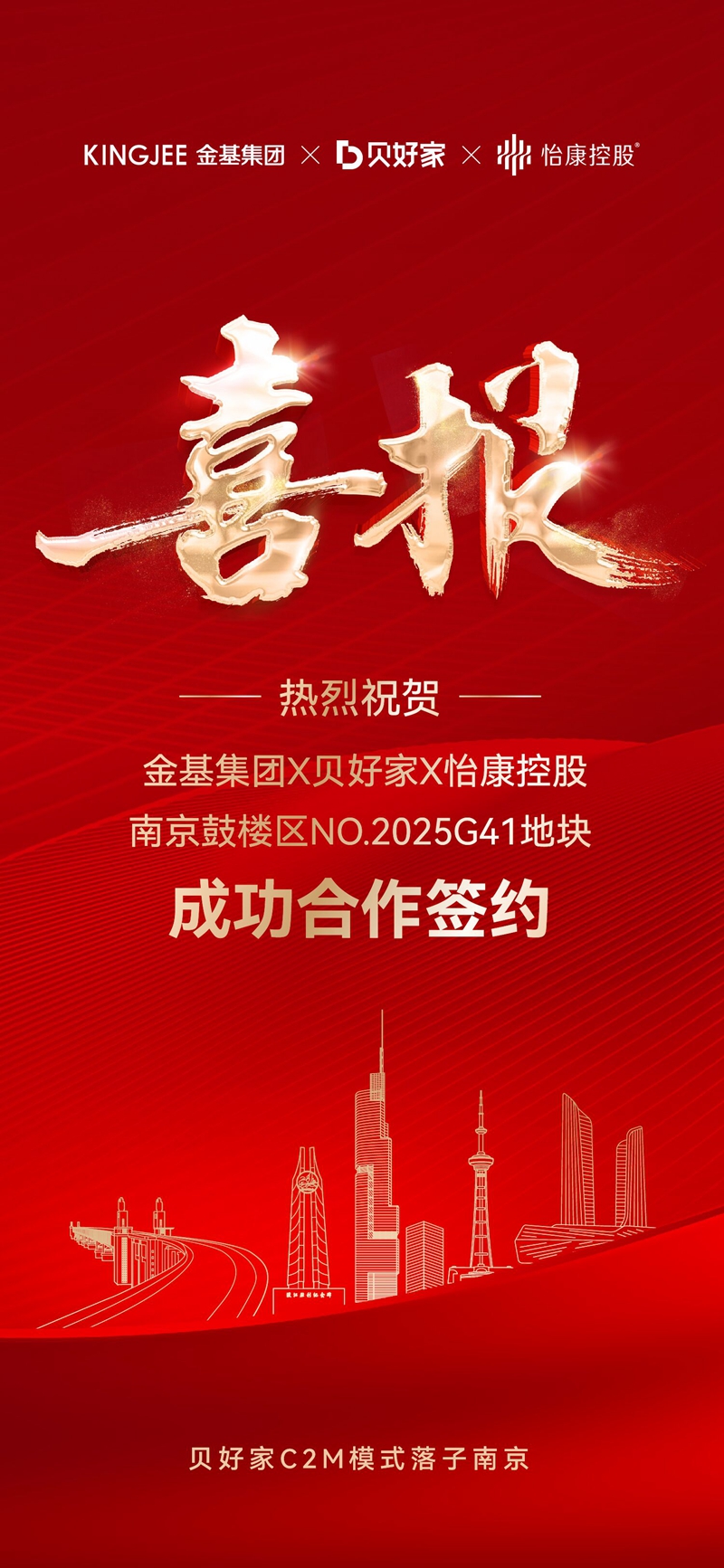
携手金基集团、怡康控股,贝好家C2M模式南京首站启动
Jiang Nan Shi Bao· 2025-08-25 07:18
Core Insights - Beihome has established a partnership with Jinjigroup and Yikang Holdings for a project in Nanjing, marking the first implementation of its C2M (Customer to Manufacturer) model in the city [1][5] Group 1: Project Details - The land parcel is located in the core area of Gulou District, Nanjing, acquired by Jinjigroup for a total price of 340 million yuan [5] - The site is a rare low-density residential land in the area, close to Metro Line 3 and Line 7, and surrounded by various commercial and medical resources [5] - Jinjigroup will leverage its 33 years of operational experience in Nanjing for comprehensive project development, while Beihome will utilize big data and AI algorithms to identify customer needs and provide precise product positioning [5][6] Group 2: Market Context - Nanjing's housing market has shown renewed vitality following the release of the "Seven Housing Regulations" earlier this year, leading to a significant increase in residential land transaction amounts in the first half of the year [6] - The collaboration aims to enhance the living experience for residents by focusing on customer needs and quality residential planning [6] Group 3: Company Overview - Beihome, a subsidiary of Beike Group, positions itself as a data-driven residential development service platform rather than a traditional developer [6] - The company has implemented 15 projects across various cities, including Beijing, Shanghai, and Guangzhou, by providing C2M product solutions and integrated marketing services [6]