C2M

Search documents
红蜻蜓股价下跌3.05% 跨境电商政策或带来潜在利好
Jing Ji Guan Cha Wang· 2026-02-13 04:42
Core Viewpoint - The stock price of Hongqiao (603116) has experienced a decline of 3.05%, closing at 6.35 yuan, with a trading volume of 45.71 million yuan, indicating increased short-term market volatility and potential investment risks [1][2]. Group 1: Stock Performance - The stock price has dropped by 4.08% over the past week (February 9 to 12), with a trading range fluctuation of 6.04% and a minimum support level reached at 6.29 yuan [1]. - Technical indicators show that the current stock price is near a resistance level of 6.36 yuan, with a weak MACD indicator and a KDJ indicator falling into the oversold zone [1]. - On February 12, there was a net inflow of 2.62 million yuan from major funds, but overall, the industry has seen continuous reduction in major fund positions, indicating intensified short-term capital competition [1]. Group 2: Recent Events - On February 10, the Ministry of Finance and other departments announced tax incentives for cross-border e-commerce export return goods, exempting import tariffs for eligible products during 2026-2027, which may benefit e-commerce companies like Hongqiao [2]. - Hongqiao has been engaging in cross-border agency sales through platforms like JD.com and Amazon, aligning with the recent market focus on the C2M (Customer-to-Manufacturer) concept [2]. - The company disclosed in its 2019 annual report that it is advancing C2M flexible manufacturing to meet personalized customization demands, although the direct correlation of its main footwear business with the new policy is limited [2].

2025中国产业带发展趋势报告
Sou Hu Cai Jing· 2026-01-15 08:05
Core Insights - In 2025, China's industrial belts will enter the AI-native era, where AI evolves from a cost-reduction tool to a central intelligence for supply chain transformation, facilitating a historic shift from "digitalization" to "intelligence" [1][6][10] - The macroeconomic environment is transitioning to an "effective supply" era, with policies, capital, and markets favoring companies that create real value, moving away from price competition towards product and service quality [12][13][14] - Regional development is characterized by a gradient pattern of "East high, Central fast, West broad," with Eastern regions housing intelligent factories, Central regions experiencing rapid digital growth, and Western regions forming new supply forces based on unique categories [25][26] Industry Trends - The three high-growth sectors identified are instant retail, customization, and cross-border trade, each leveraging core advantages of speed, specialization, and proximity to achieve scale [34][36] - The top ten active industries include pharmaceuticals, hardware tools, and bags, with a shift in competition focus from "product supply" to "scene response," indicating a demand for tailored solutions [39][40] - AI is deeply integrated across the entire process of research and design, production, supply chain management, and marketing, as evidenced by successful case studies of companies transforming from price wars to value-driven strategies [2][46] Future Outlook - The industrial belts are expected to transition from the "AI add-on" phase in 2024-2025 to the "AI symbiosis" phase in 2026-2027, ultimately achieving an "AI-native" state post-2028 [2][12] - Companies must embrace AI, ensure product quality and fulfillment certainty, and strategically position themselves in dual circulation markets to capitalize on industry dividends [2][12] - The B2B sector is projected to concentrate growth on companies that can deliver stable orders, direct user connections, and self-developed products, with only the top 1% of businesses meeting efficiency, compliance, and certainty standards expected to thrive [22][23][24]


贝壳-W贝好家签约未来科学城置业 C2M服务项目落地
Zhi Tong Cai Jing· 2026-01-07 11:53
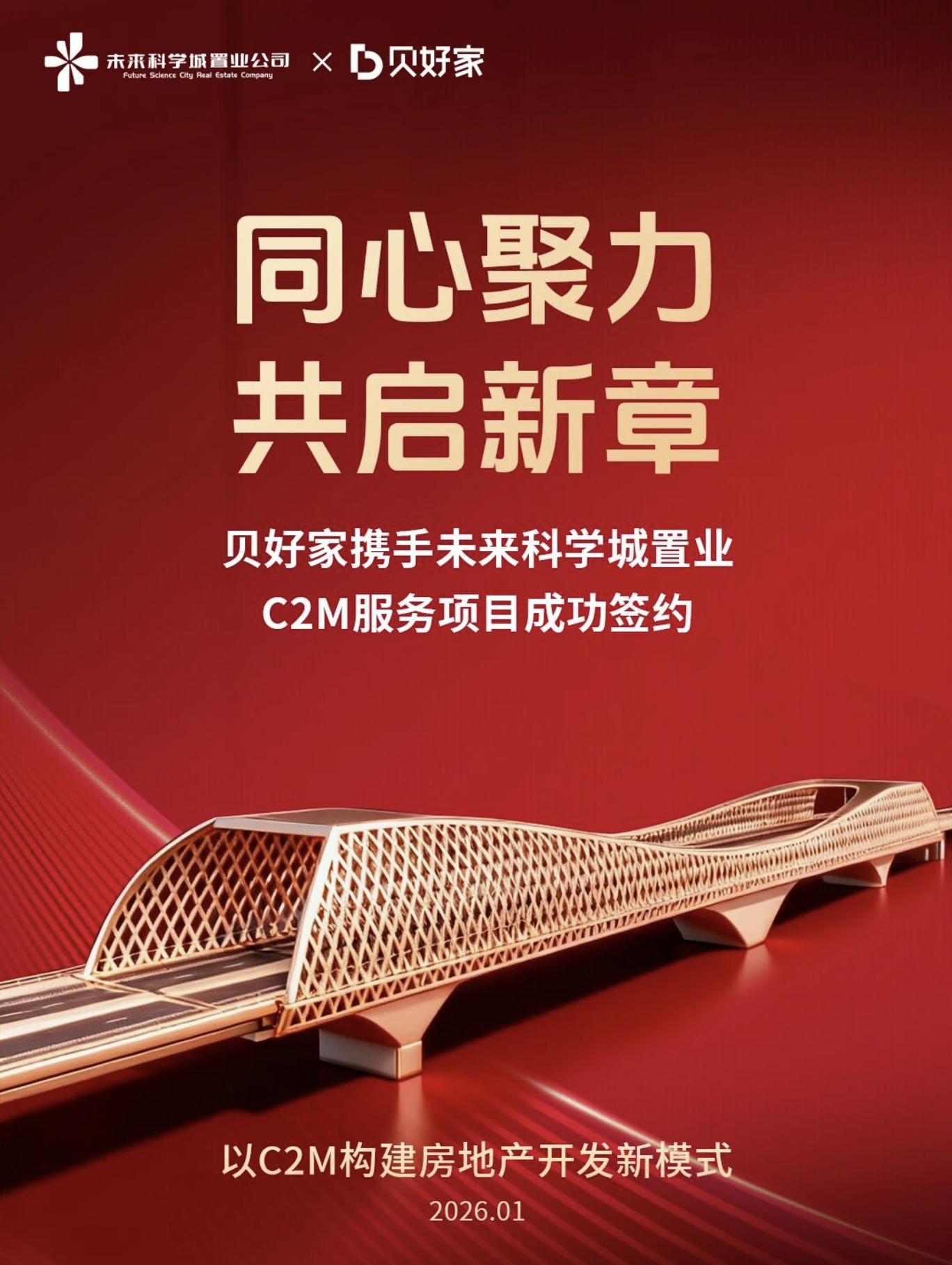
Core Viewpoint - Future Technology City Real Estate Co., Ltd. has signed a deep cooperation agreement with Beike-W (02423) subsidiary Beihome, focusing on residential land parcels in the Energy Valley area of Future Science City, Changping District, Beijing [1] Group 1 - The collaboration involves Beihome leveraging big data and AI algorithms to provide C2M product positioning and marketing services for the project [1] - Beihome will also offer design consulting advice as part of the partnership [1] - This marks Beihome's fourth collaboration project in Beijing and the second partnership with Future Technology City Real Estate [1]
未来科学城置业签约贝好家,合作开发昌平能源谷住宅项目
Xin Lang Cai Jing· 2026-01-07 11:02
Group 1 - Future Technology City Real Estate Co., Ltd. has signed a deep cooperation agreement with Beihome for residential projects in the Energy Valley area of Beijing's Changping District [1][3] - This collaboration marks Beihome's fourth project in Beijing and the second partnership with Future Technology City Real Estate [1] - The Energy Valley residential project is the first residential project in the area following the "Good Housing" policy, with a total land area of 4.3 hectares and a planned construction area of approximately 82,200 square meters [3][10] Group 2 - The land was acquired by Future Technology City Real Estate for a base price of 1.2426 billion yuan on November 19, 2025 [3] - The project includes three sub-plots, with residential land prices calculated at approximately 20,000 yuan per square meter [3][7] - The residential plots have specific zoning and height restrictions, with the western plot having a maximum height of 80 meters and the eastern plot limited to 60 meters [3][7] Group 3 - The cultural facility plot is designated for a comprehensive technology and cultural exchange center, requiring integration with surrounding green spaces and compliance with local government standards [5][11] - The project will also include street-level public cultural facilities and community health services to meet local needs [13][20] - The area is well-connected by the operational Line 17 of the subway, enhancing accessibility for future residents [5][11]
贝壳董事长彭永东,该有人管管了
Sou Hu Cai Jing· 2025-12-19 13:37
Core Viewpoint - Beike's recent developments highlight a shift in strategy as the company decides to cease its own property development projects, focusing instead on its core business of real estate sales amid challenging market conditions [2][6]. Group 1: Company Developments - Beike's subsidiary, Beihome, has announced it will no longer engage in property development, reverting to its original role of selling properties [2][6]. - Beihome has invested over 5 billion in land acquisition across multiple cities, with total projected investments exceeding 7 billion when including construction costs [3]. - The recent launch of the Chengdu Financial City "Beichen S1" project saw Beihome outbid major developers, resulting in a record land price of 10.76 billion, with a premium rate exceeding 42% [4]. Group 2: Sales Performance - The initial sales performance of the Chengdu project was disappointing, with only 22 out of 108 units sold, resulting in a take-up rate of less than 21% [6]. - CEO Xu Wanggang acknowledged the poor sales and confirmed that Beike would not pursue self-operated projects in the future [6]. Group 3: Management and Governance - Following the passing of founder Zuo Hui, concerns have arisen regarding the governance of Beike, as management now holds significant voting power despite owning a small percentage of shares [8][11]. - The management's high compensation packages have sparked public outcry, leading to a commitment from Chairman Peng Yongdong to donate shares to support industry and recent graduates [11][12].

“不做开发商”的贝好家 希望以用户思维重构开发模式
21世纪经济报道· 2025-12-16 13:24
Core Viewpoint - The article highlights the innovative "C2M" (Customer to Manufacturer) model adopted by the "Financial City·Beichen S1" project, which allows consumers to directly participate in the design and production of residential properties, aligning with current market demands and the shift towards a buyer's market in real estate [2][8]. Group 1: Project Overview - The "Financial City·Beichen S1" project, developed by Beike's Beihome, features a unique architectural design and high construction costs, exceeding many luxury properties in Shanghai and Shenzhen, with a construction cost of over 30,000 yuan/m² [1][3]. - The project was acquired for a total price of 1.076 billion yuan, setting a new record for residential land prices in Chengdu at 27,300 yuan/m² [2]. - The project has attracted significant attention from over 50 real estate developers and service providers since its demonstration area opened [1]. Group 2: Innovative Features - Beichen S1 incorporates advanced design elements, including a "landscape home" concept with over 200 types of plants and extensive use of natural materials, creating a luxurious and nature-integrated living environment [4]. - The project features a high level of smart home technology, with over 310 smart devices integrated into the living spaces, achieving four times the average level of high-end smart residences in China [4]. Group 3: Customer-Centric Approach - The C2M model emphasizes understanding customer needs through big data insights, allowing for a more tailored design process that prioritizes customer preferences over traditional real estate norms [6][8]. - The project design includes unique features based on customer feedback, such as specialized amenities for elderly residents and enhanced living conveniences, showcasing a commitment to long-term resident satisfaction [7]. Group 4: Market Implications - The shift from a seller's market to a buyer's market since 2021 has necessitated a focus on quality and customer satisfaction in real estate development, with companies needing to adapt to these changing dynamics [8]. - Beihome's approach positions it as a data-driven residential development service platform, aiming to redefine the real estate landscape by prioritizing customer perspectives and needs [8].

贝壳旗下贝好家发布C2M全链解决方案 CEO徐万刚:并不想成为一家开发商
Zheng Quan Shi Bao Wang· 2025-12-13 06:51
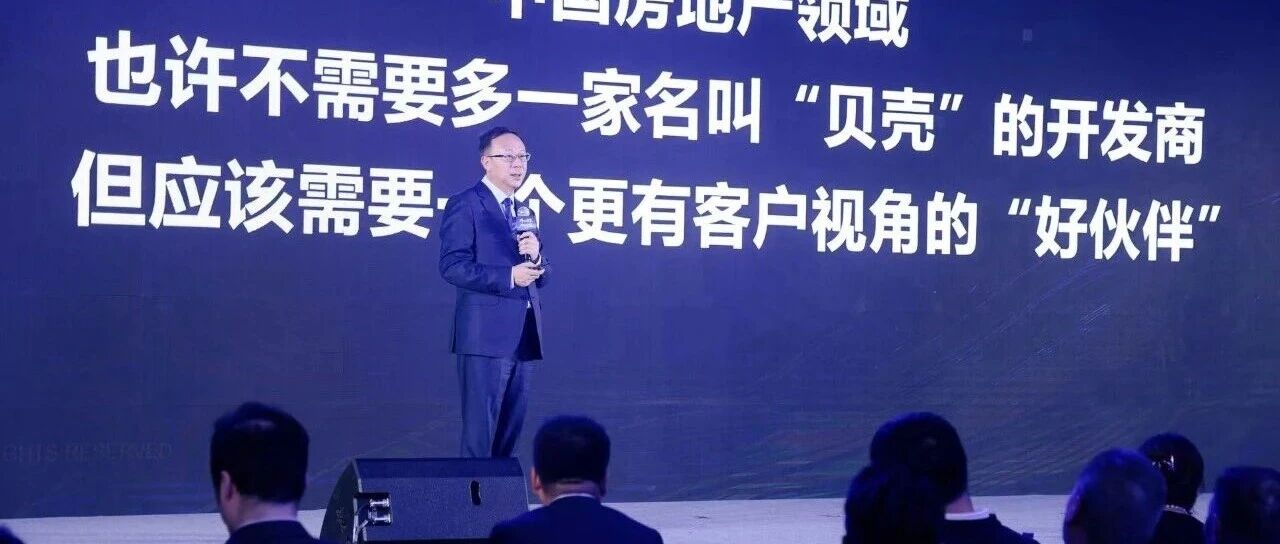
Core Insights - The core viewpoint of the article emphasizes the shift in the real estate market from a seller's market to a buyer's market, highlighting the importance of "customer sovereignty" in housing development [1][4]. Group 1: Market Dynamics - The real estate market has transitioned from primarily addressing "availability" to focusing on "quality," with consumers seeking better living conditions [1]. - Since 2021, the market has shifted to a buyer's market, leading to longer transaction cycles and increased caution among homebuyers [1]. - High-quality projects continue to perform well, indicating a demand for good housing and services despite market challenges [1]. Group 2: C2M Strategy - Beike's subsidiary, Beihome, has launched a C2M (Customer to Manufacturer) full-chain solution, which includes positioning, design, construction management, and marketing [2][3]. - The C2M model aims to leverage big data and AI to accurately predict customer preferences and guide product positioning [1]. Group 3: Project Development - Beihome has decided to limit its self-operated projects to focus on partnerships with developers, allowing for a broader range of projects [4][5]. - The "Financial City·Beichen S1" project in Chengdu serves as a model for validating the C2M approach, achieving significant sales shortly after launch [4]. - The "Beilian C1" project in Shanghai also demonstrates the effectiveness of the C2M model, ranking high in sales shortly after its opening [4]. Group 4: Business Model - The company prefers a light-asset model to enhance its advantages and does not aim to become a traditional developer [5]. - Beihome has established 17 projects across major cities in China, collaborating with various developers to meet customer needs [5].
率先跑通行业级AGI,酷特智能升级「中国智造」
36氪· 2025-12-12 13:51
Core Viewpoint - The article discusses the emergence of Artificial General Intelligence (AGI) and its potential to revolutionize the "Made in China" industry, highlighting the case of Kute Intelligent, a company that has successfully integrated AGI into its operations [2][3][8]. Industry Overview - The AI industry has experienced rapid expansion, with a clear shift towards AGI, as evidenced by significant investments, such as the $100 billion valuation placed on AGI by OpenAI and Microsoft [2]. - China's smart manufacturing industry has surpassed 4.5 trillion yuan, indicating a rapid digital transformation in manufacturing [3]. - Kute Intelligent has evolved from a personalized clothing customization company to a C2M (Customer to Manufacturer) AI technology enterprise, marking a significant shift in its operational model [3][4]. Kute Intelligent's Innovations - Kute Intelligent has developed a new paradigm for enterprise AI applications, consisting of a digital enterprise operating system, intelligent enterprises, and clusters of intelligent enterprises, creating a closed-loop system for AI-driven management [4][11]. - The core products of Kute Intelligent's operating system include: - Kuxiaogong (AI Designer) for automating the design process based on customer input [5]. - Kuxiaoyi (AI Operations Assistant) for task management and progress monitoring [5]. - Kuxiaozhi (AI Organizational Architect) for optimizing enterprise processes and governance [5]. - These products work together to create a flexible manufacturing intelligence hub, enabling companies of various sizes to leverage AGI effectively [5][6]. Practical Applications and Results - Kute Intelligent's approach has demonstrated that embedding AI throughout the production and management chain can yield significant benefits, with management costs reduced by over 50% and overall efficiency improved by more than 20% [8]. - The company has established a credible PDCA (Plan-Do-Check-Act) loop for R&D, ensuring that technological advancements are grounded in real operational scenarios [7][8]. Future Trends and Market Potential - The global flexible manufacturing market is projected to reach 1.8 trillion yuan by 2030, with China accounting for 35% of this market, indicating a growing demand for customized manufacturing solutions [14]. - Kute Intelligent aims to build 100 intelligent enterprise clusters, serving 500,000 people, and is actively pursuing partnerships to enhance its market presence [21][24]. Conclusion - Kute Intelligent's journey reflects a broader trend in the manufacturing sector, where the integration of AGI is seen as a pathway to not only optimize production but also to fundamentally reshape industry structures and supply chains [26].

贝好家:以C2M构建房地产开发新模式
Huan Qiu Wang· 2025-12-10 01:33
Core Insights - Beike Group has launched Beihome as a data-driven residential development service platform, focusing on the C2M (Customer to Manufacturer) model to enhance housing supply and meet consumer needs [1][2][12] - The "14th Five-Year Plan" emphasizes the construction of a new real estate development model, promoting high-quality development and a balance between supply and demand [2][12] - Beihome has successfully implemented 17 C2M model cooperation projects across various cities, demonstrating the effectiveness of its data-driven approach [2][3][12] Group 1 - Beihome's C2M model integrates data analysis and AI algorithms to predict customer preferences and optimize product positioning [3][4][5] - The platform aims to create "good houses" that align with consumer demands, moving from a focus on availability to quality [3][12] - The C2M model allows for customer participation in the entire development process, enhancing engagement and satisfaction [3][4] Group 2 - Beihome's projects, such as Chengdu Beichen S1 and Shanghai Beilian C1, showcase the successful application of the C2M model, achieving strong sales and market recognition [4][9][12] - The platform's data capabilities include comprehensive market data, customer insights, and feasibility studies, forming a robust foundation for decision-making [5][11] - Beihome plans to expand its operations in major cities like Guangzhou, Shenzhen, and Wuhan, continuing to leverage the C2M model for future developments [11][12]

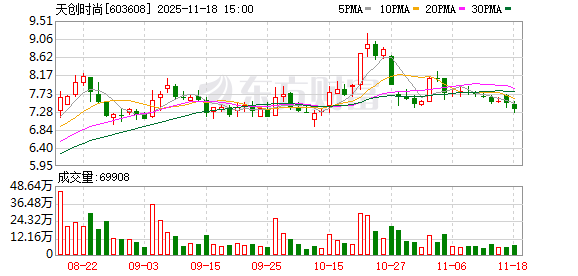
天创时尚:公司主营业务为时尚鞋履服饰类业务
Zheng Quan Ri Bao· 2025-11-18 12:45
Group 1 - The company, Tian Chuang Fashion, primarily operates in the fashion footwear and apparel sector, engaging in a full industry chain integration model that includes research and development, production, supply distribution, sales, and services [2] - Currently, the company's business model does not involve C2M (Customer to Manufacturer) aspects [2]