量子计算

Search documents
闫凯境博士:以还原健康开启生命科学新纪元
Xin Lang Cai Jing· 2025-08-26 03:36
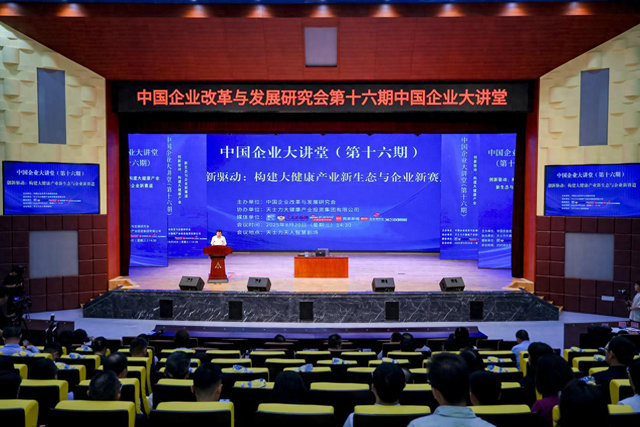
Core Viewpoint - The event focused on "Innovation-Driven: Building a New Ecosystem for the Health Industry and New Business Tracks," emphasizing the intersection of technological revolution and health challenges, with Tianjin Tianshi Group aiming to leverage life science innovations to support the Healthy China strategy and fundamentally transform the health industry [1][2]. Group 1: Event Overview - The 16th China Enterprise Lecture was held in Tianjin, co-hosted by the China Enterprise Reform and Development Research Association and Tianjin Tianshi Health Industry Investment Group, gathering government, industry, academia, and research to discuss topics such as the inheritance and innovation of traditional Chinese medicine and life science advancements [1][2]. - Key attendees included renowned figures such as Zhang Boli, honorary president of Tianjin University of Traditional Chinese Medicine, and Yan Kaijun, chairman of Tianjin Tianshi Group [1]. Group 2: Health Challenges and Strategic Direction - The global life expectancy increased from 66.8 years in 2000 to 73.1 years in 2019, while healthy life expectancy only rose from 58.1 years to 63.5 years, indicating that longer life often comes with health issues and lower quality of life [4]. - The 2025 National Health Conference emphasized a shift from a disease-centered approach to a people-centered health system, highlighting the urgent need for a new health framework [4]. Group 3: Tianshi's Health Restoration Theory - Yan Kaijun introduced Tianshi's "Restoration Health" theory, which focuses on restoring microcirculation networks to activate adult stem cells for functional repair, emphasizing the importance of microcirculation in preventing aging and chronic diseases [4][6]. - The team utilized single-cell RNA sequencing and AI analysis to clarify the role of mesenchymal stem cells (MSCs) in health restoration, establishing a quality control system for MSCs to ensure their stability and effectiveness [6][7]. Group 4: Integration of Technology and Traditional Medicine - Tianshi is integrating cell therapy with traditional Chinese medicine through a large model that provides personalized health services, including precise diagnostics and tailored intervention plans [7][8]. - The collaboration with Huawei Cloud led to the development of a dual-modal model "Smart Herbal Medicine," which enhances both drug development and clinical diagnosis in traditional Chinese medicine [8]. Group 5: Vision for the Future - Tianshi aims to transform the challenges of an aging society into opportunities for health innovation, aspiring to help individuals achieve a healthy lifespan of 120 years and support sustainable societal development [8].


清雁科技(南京)有限公司成立,注册资本650万人民币
Sou Hu Cai Jing· 2025-08-26 02:38
Group 1 - The establishment of Qingyan Technology (Nanjing) Co., Ltd. has been registered with a capital of 6.5 million RMB, fully owned by Qingyan Technology (Beijing) Co., Ltd. [1] - The legal representative of the new company is Han Liyan, and it is classified under the scientific research and technical service industry [2]. - The company's business scope includes inspection and testing services, technology services, IoT technology research and development, software development, and various consulting services [2]. Group 2 - The registered address of Qingyan Technology (Nanjing) Co., Ltd. is located at 108 Xuanwu Avenue, Xuanwu District, Nanjing [2]. - The company is structured as a limited liability company with a business duration until August 25, 2025, with no fixed term thereafter [2]. - The company is registered with the Nanjing Xuanwu District Market Supervision Administration [2].
英媒:数字时代,英国军情六处艰难转型
Huan Qiu Shi Bao· 2025-08-25 23:00
Core Viewpoint - The next head of MI6 faces significant challenges in adapting to the digital age, where traditional espionage methods are becoming increasingly difficult and costly, while the demand for intelligence is growing [1][2]. Group 1: Intelligence Operations - MI6 traditionally focuses on human intelligence (HUMINT) by recruiting agents for espionage activities aimed at national security, economic welfare, and combating serious crime [2]. - The new MI6 chief, Bryce Metreveli, must guide the agency's direction, prioritizing intelligence on foreign technologies such as chips, AI models, and data centers, amidst insufficient funding and personnel [2][3]. - The issue of counter-espionage is becoming more prominent, with foreign entities potentially capturing MI6 agents, necessitating a return to Cold War operational modes [3]. Group 2: Technological Challenges - The digital transformation of human intelligence services is a focal point for MI6, as managing agents' digital identities has become increasingly complex due to big data [4]. - The cost of secret operations has risen exponentially since Metreveli joined in 1999, with a higher proportion of intelligence materials now coming from signal intelligence (SIGINT) rather than HUMINT [4]. - The outdated IT systems of MI6 pose a risk, as external parties can access data more quickly than the agency can, highlighting the need for modernization [4]. Group 3: Collaboration and Training - The relationship between MI6 and its sister agencies is evolving, with MI6 providing decryption materials to the Government Communications Headquarters (GCHQ), which in turn helps identify potential foreign spies [4]. - The agency's strength lies in its ability to build networks and train agents, with leadership typically coming from within rather than external figures [5][6].
塞浦路斯积极推进芯片及量子计算产业
Shang Wu Bu Wang Zhan· 2025-08-25 17:53
(原标题:塞浦路斯积极推进芯片及量子计算产业) 塞浦路斯邮报8月21日报道,塞首席科学家Skourides近日参访塞Phystech公司,该公司新研发技术产品 标志着塞在开发高性能算力、芯片和量子集群方面取得重大进展。Phystech公司总部位于塞浦路斯,专 注研发微处理器、微控制器和其他数字技术的IP核和模块。其首款商业产品是先进的真随机数生成器 (TRNG),可应用于超级计算、银行、网络安全、电信和物联网等领域。这为塞浦路斯在高性能计算、 CPU 和边缘AI研究、创新和设计方面开辟新机遇。 Skourides表示,Phystech公司重大业务进展是塞浦路斯科技研发生态系统发展的重大一步,一旦 Phystech凭借其突破性的技术和知识产权取得成功的话,塞将建立起一个新兴芯片集群。集群包括 Phystech、Tenstorrent 和 SignalGenerix 等头部科技公司,以及塞浦路斯大学、芯片能力中心和塞浦路斯 科技大学等机构,到 2035年,该集群可创造超10 亿美元收入,并创造新的高科技就业岗位。 ...
量子专题:2025量子互联网与算网协同体系架构白皮书
Sou Hu Cai Jing· 2025-08-25 16:07
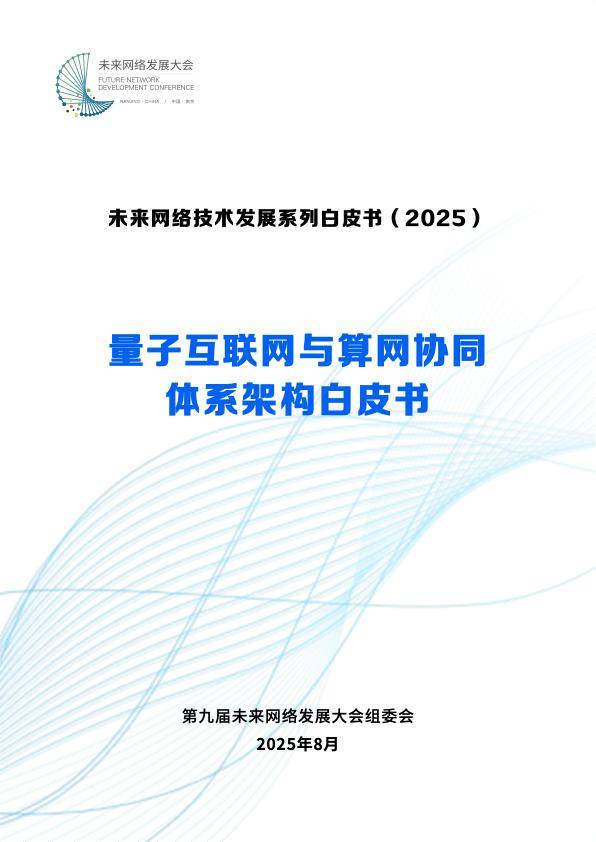
Core Insights - The report titled "Quantum Internet and Computing Network Collaborative Architecture White Paper 2025" systematically outlines the technologies, architectures, and applications related to quantum internet and computing network collaboration [1][4][5] - It emphasizes the foundational concepts of quantum information technology, including quantum communication, quantum computing, and quantum precision measurement, while also discussing the current state and future directions of quantum internet development [1][12] Group 1: Quantum Information Technology Overview - The report introduces core concepts of quantum mechanics such as superposition, entanglement, and quantum measurement, which are essential for understanding quantum information technology [1][11] - It categorizes typical applications into three areas: quantum communication (including Quantum Key Distribution, Quantum Teleportation, and Quantum Secure Direct Communication), quantum computing (with existing platforms like superconductors and ion traps), and quantum precision measurement [1][11][12] - The document also mentions experimental systems and the DiVincenzo criteria necessary for quantum computing [1][12] Group 2: Quantum Internet Architecture - The architecture of the quantum internet is described, highlighting its development in six stages, including trusted relay, preparation, and measurement [1][12] - Various generations of quantum relays are discussed, with the first generation including pre-report entanglement distribution and all-optical relays using cluster states [1][12] - The report outlines multiple protocol stack options, such as the Van Meter and Wehner five-layer models, and discusses packet switching technologies based on classical-quantum hybrid frames [1][12] Group 3: Quantum Internet Operation Modes - Initial resource-efficient operational modes for the quantum internet are proposed, distinguishing between user and main networks, with nodes including users and routers [1][12] - The report illustrates application protocol operations using examples like BBM92-QKD and distributed quantum computing, emphasizing the need for establishing end-to-end entangled channels before executing protocols [1][12] Group 4: Quantum Computing Network Collaboration - The report analyzes three collaborative trends in quantum computing: quantum cloud computing, integration of quantum and supercomputing, and distributed quantum computing [1][12] - It highlights the special requirements of quantum applications regarding fidelity and latency, necessitating collaboration between quantum and computing networks [1][12] - Research directions are proposed, focusing on resource abstraction and modeling, quantum business modeling, and scheduling framework modeling [1][12] Group 5: Current Status and Future Directions - The report concludes that the quantum internet is still in its early stages, facing challenges in hardware technology and architectural maturity [1][12] - It emphasizes the need for breakthroughs in quantum relay and error correction technologies, alongside the integration of classical infrastructure to foster new collaborative business models in quantum computing [1][12]
振华风光:未在量子传感或量子计算领域进行布局或应用
Zheng Quan Ri Bao Wang· 2025-08-25 12:45
Core Viewpoint - The company, Zhenhua Guangguang, is a key supplier of high-reliability analog integrated circuit products in China, focusing on signal chain and power management products for high-reliability sectors [1] Company Overview - The company specializes in providing support for high-reliability fields with its main products including signal chain and power management series [1] - Currently, the company has not made any investments or applications in the fields of quantum sensing or quantum computing [1] Future Outlook - The company plans to continuously optimize its product structure and innovate technologies in response to market demands and technological development trends [1]

2025年未来网络发展大会:量子互联网与算网协同体系架构白皮书
Sou Hu Cai Jing· 2025-08-25 08:29
Quantum Internet Overview - The white paper outlines the technical foundation, architecture design, key technologies, and the synergy between quantum computing and networking, providing a reference for the engineering realization of quantum internet [1][24]. - Quantum internet is defined as a network connecting quantum nodes to support applications that classical internet cannot achieve, currently in its early stages with immature hardware and software [4][24]. Quantum Information Technology Basics - Core concepts include quantum mechanics principles such as superposition, entanglement, quantum operations, and quantum measurement, which are essential for quantum computing and communication [1][2]. - Quantum state evolution follows the Schrödinger equation, providing theoretical support for quantum computing and communication [1]. Typical Quantum Applications - Quantum communication includes quantum key distribution (QKD), quantum teleportation, and quantum secure direct communication (QSDC), ensuring secure information transfer [2][51]. - Quantum computing utilizes quantum superposition for parallel computation, currently in the Noisy Intermediate-Scale Quantum (NISQ) stage, with key algorithms like Shor's and Grover's [2][65]. - Quantum precision measurement aims to surpass the standard quantum limit, with applications in global quantum clock networks and long-baseline telescopes [2]. Quantum Internet Architecture and Key Technologies - The architecture of quantum internet is still developing, with various stages proposed by researchers, including trusted relay and entanglement distribution [4]. - Quantum relay technology is categorized into four generations, addressing long-distance quantum signal attenuation [5][6]. Quantum Internet Protocol Stack - Different research teams propose varied protocol stacks, adapting classic internet architecture to quantum needs, with layers for physical, link, network, and application [7]. Initial Quantum Internet Operation Mode Design - A centralized control scheme is proposed for initial quantum devices, focusing on network layout and node types to manage limited resources effectively [9][10]. Quantum Application Protocol Examples - The BBM92 protocol for quantum key distribution involves a process of path selection, entanglement channel construction, and security checks to generate a secure key [12][13]. - Distributed quantum computing connects multiple quantum processors through entangled channels, overcoming limitations of single-chip systems [14]. Quantum Computing and Networking Synergy - The trend towards quantum cloud computing and integration with supercomputing highlights the need for resource modeling and scheduling frameworks to optimize quantum and classical resource allocation [15][16]. - The necessity for collaboration arises from high fidelity requirements and short coherence times in quantum applications, demanding precise communication timing [16]. Summary and Outlook - The current stage of quantum internet development faces challenges in practical quantum relay and data exchange technologies, with potential cost reductions through the reuse of classical internet infrastructure [18]. - Future directions include breakthroughs in quantum relay and error correction, as well as the development of a resource modeling and scheduling system to support large-scale quantum applications [19].
瞭望 | 加速迈向未来产业
Xin Hua She· 2025-08-25 08:24
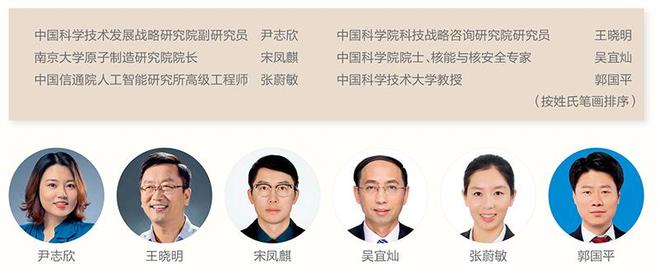
Group 1: Future Industry Development - The strategic choice to vigorously develop future industries is essential for seizing the global technological competitive high ground and forming a modern industrial system [2] - Future technologies serve as the foundation for future industries, with their generation paths filled with uncertainties [2] - Key challenges include strengthening source technology supply, breaking through conversion bottlenecks, cultivating key talents, and balancing development with safety [2] Group 2: Technology Supply System - Future industries require a multi-dimensional technology supply system, including source technologies, frontier cross-disciplinary technologies, and disruptive technologies [3][4] - Advanced nuclear energy innovation is highlighted as a key technology for future clean energy, showcasing significant progress in China's nuclear technology [4] - China has entered the global first tier in quantum computing industrialization, with a complete independent technology system established in superconducting quantum computing [4][5] Group 3: Challenges in Future Technology - Transitioning from future technology to future industry faces multiple challenges, including technology route selection, engineering implementation, and new productivity conversion mechanisms [5][6] - Advanced nuclear technology still faces challenges in commercial application and regulatory standards, impacting its multi-purpose utilization [6] - Quantum computing requires further foundational research to address issues like qubit coherence time and fault-tolerant quantum computing [7][12] Group 4: Talent Development - The breakthrough in future industries relies on deep interdisciplinary collaboration, with a significant talent gap in fields like brain-computer interfaces [11][12] - Recommendations include establishing interdisciplinary programs in key universities and promoting collaboration between academia and industry for talent cultivation [11][12] - A multi-layered talent education system is suggested to support the quantum computing field, addressing the significant talent demand [12] Group 5: Safety and Regulatory Mechanisms - Establishing an inclusive and prudent regulatory mechanism is necessary to manage the uncertainties of future industries, including exploring "regulatory sandboxes" [13] - A comprehensive safety regulatory system is essential for nuclear facilities, emphasizing the need for strict oversight throughout the lifecycle of nuclear projects [13][14] - The development of technical standards and intellectual property protection in quantum computing is crucial to ensure compatibility and safeguard innovations [14]
振华风光(688439.SH):目前未在量子传感或量子计算领域进行布局或应用
Ge Long Hui· 2025-08-25 07:41
Core Viewpoint - Zhuhai Fengguang (688439.SH) is a key supplier of high-reliability analog integrated circuit products in China, focusing on signal chain and power management products for high-reliability sectors [1] Company Overview - The company specializes in providing supporting products for high-reliability fields, indicating a strong market position in this niche [1] - Currently, the company has not made any investments or applications in the fields of quantum sensing or quantum computing [1] Future Outlook - The company plans to continuously optimize its product structure and innovate technologically in response to market demands and technological development trends [1]
从两家AI材料龙头报表中看出什么,以及关注量子计算进展 | 投研报告
Zhong Guo Neng Yuan Wang· 2025-08-25 01:43
Core Viewpoint - The report highlights the strong performance of leading companies in the electronic fabric and copper foil sectors, driven by AI contributions and improvements in core business operations, indicating a positive market outlook for these segments [1][2]. Group 1: Electronic Fabric and Copper Foil - Two leading companies in electronic fabric and copper foil have reported better-than-expected mid-year results, primarily due to AI's contribution to profits and continued improvement in their core businesses [2]. - For instance, Zhongcai Technology's AI electronic fabric products have seen increased shipments, and its wind power blade business has experienced both volume and price increases in Q2, with expectations for further improvement in Q3 [2]. - Copper Crown Copper Foil's HVLP series products have achieved bulk shipments, and the lithium battery copper foil segment has shown significant loss reduction and margin recovery [2]. Group 2: Market Trends and Opportunities - Market attention is shifting towards liquid cooling, power supplies, and generators, but electronic fabric and copper foil remain high-demand sectors, expected to lead in unit value enhancement [2]. - The report expresses optimism for the African building materials market and highlights Keda Manufacturing as a leading local player, with a strong growth forecast for the first half of the year [2]. Group 3: Quantum Computing Developments - The report notes advancements in quantum computing, with strategic partnerships aimed at integrating quantum computing with AI for practical applications [3]. - IBM's 2025 quantum roadmap indicates significant progress, with plans to deliver a large-scale fault-tolerant quantum computer by 2029 [3]. Group 4: Traditional Building Materials Transformation - Traditional building material companies are accelerating their core business transformations, with notable acquisitions and investments in generative AI [4]. Group 5: Market Data and Trends - Cement prices averaged 343 RMB per ton this week, showing a year-on-year decrease of 36 RMB, while the average utilization rate for concrete mixing stations was reported at 6.86% [5]. - The glass market saw a decline in prices, with the average price for float glass at 1205.78 RMB per ton, down 2.42% from the previous week [5].