
双碳目标

Search documents
复合集流体产业化提速 三孚新科3D技术开辟固态电池新路径
Zheng Quan Shi Bao Wang· 2025-11-30 09:19
Core Insights - The penetration rate of new energy vehicles has surpassed 50% for the first time, and the installed capacity of new energy storage has become the largest globally, driven by dual goals of carbon neutrality and industrial upgrades [1][2] - The rise of composite current collectors is attributed to the market's pursuit of battery safety and energy density, with a new sandwich structure that reduces costs and enhances performance [2][3] - The development of solid-state batteries is accelerating, with major companies like BYD and CATL planning to start mass production by 2027, while traditional metal current collectors struggle to meet the demands of solid-state technology [3][4] Industry Developments - The composite current collector's market is experiencing explosive growth, with China's new energy vehicle production and sales reaching 13.015 million and 12.943 million units respectively from January to October, a year-on-year increase of over 32% [2] - The new composite current collector can replace over 60% of metal with polymer materials, reducing battery weight and increasing energy density by 5%-10%, while also improving safety through a unique "fuse + circuit breaker" effect [2][6] - Companies are actively disclosing collaborations in the composite current collector field, with recent agreements between Jiemai Technology and CATL, as well as strategic procurement contracts by Yinglian Co., indicating a strong industry push [3][4] Technological Innovations - Sanfu New Materials has achieved a breakthrough with its 3D composite current collector, which utilizes a three-dimensional porous structure to enhance performance and safety, marking a significant advancement over traditional designs [4][5] - The 3D composite current collector is expected to address key challenges in solid-state batteries, such as interface impedance and uneven lithium deposition, offering substantial advantages in performance [5][6] - Despite the innovative potential of the 3D composite current collector, industry experts note that it still needs to undergo large-scale production and long-term reliability testing to validate its commercial viability [6]

化工园区要在严格约束的环境中各展所长
Jing Ji Ri Bao· 2025-11-30 06:10
Group 1 - The core viewpoint emphasizes the importance of high-quality development in chemical parks, particularly in the central and western regions of China, which face challenges in achieving effective industrial clustering and environmental safety [1][2] - A recent report indicates that there are over 700 recognized chemical parks across various provinces, highlighting a regional imbalance where many areas struggle with a "many but weak" structural dilemma [2] - The report advocates for a shift towards specialized and distinctive development patterns, prioritizing quality over quantity and long-term benefits over immediate gains, urging the need for innovation and differentiation to avoid homogenized competition [2] Group 2 - Successful chemical parks rely on vibrant enterprises, necessitating a focus on both common and individual challenges faced by businesses, including optimizing the business environment and improving logistics [3] - The report suggests enhancing collaboration efficiency through policies that support innovation and infrastructure, thereby strengthening the resilience of industrial, supply, and innovation chains [3] - It emphasizes the importance of addressing the needs of both large and small enterprises, providing support in areas such as talent recruitment and financing to reduce operational costs and enhance competitiveness [3]
1-10月全国累计发电装机容量同比增长17.3%,美国气价周环比上涨
Xinda Securities· 2025-11-30 05:11
Investment Rating - The investment rating for the utility sector is "Positive" [2] Core Insights - The cumulative installed power generation capacity in China increased by 17.3% year-on-year as of October 2025, reaching 3.75 billion kilowatts [5] - The report highlights a significant increase in solar power generation capacity, which grew by 43.8% year-on-year, while wind power capacity increased by 21.4% [5] - The report indicates that the electricity market is expected to see a gradual increase in prices due to ongoing market reforms and supply-demand dynamics [5] Summary by Sections Market Performance - As of November 28, the utility sector rose by 0.9%, underperforming the broader market, which increased by 1.6% [12] - The electricity sector specifically saw a 0.65% increase, while the gas sector rose by 3.27% [16] Electricity Industry Data Tracking - The price of thermal coal at Qinhuangdao Port (Q5500) decreased by 9 CNY/ton week-on-week, settling at 818 CNY/ton [22] - Coal inventory at Qinhuangdao Port increased by 400,000 tons week-on-week, totaling 6 million tons [29] - Daily coal consumption in 17 inland provinces rose by 30,000 tons/day week-on-week, reaching 3.541 million tons [31] Natural Gas Industry Data Tracking - The LNG ex-factory price index in China was 4,312 CNY/ton as of November 28, down 3.88% year-on-year [56] - The U.S. HH spot price increased by 15.3% week-on-week, reaching 4.59 USD/MMBtu, while the European TTF price decreased by 5.6% [59] - The total natural gas supply in the EU for week 47 was 6.23 billion cubic meters, a year-on-year increase of 8.0% [64] Key Industry News - The National Energy Administration reported that the average utilization hours of power generation equipment decreased by 260 hours year-on-year, totaling 2,619 hours [5] - The cumulative geological reserves of coalbed methane in China exceeded 700 billion cubic meters as of October 2025 [5] Investment Recommendations - The report suggests focusing on leading coal power companies such as Guodian Power, Huaneng International, and Huadian International, as well as regional leaders in tight electricity supply areas [5] - For natural gas, companies with low-cost long-term gas sources and receiving station assets are recommended, including Xin'ao and Guanghui Energy [5]





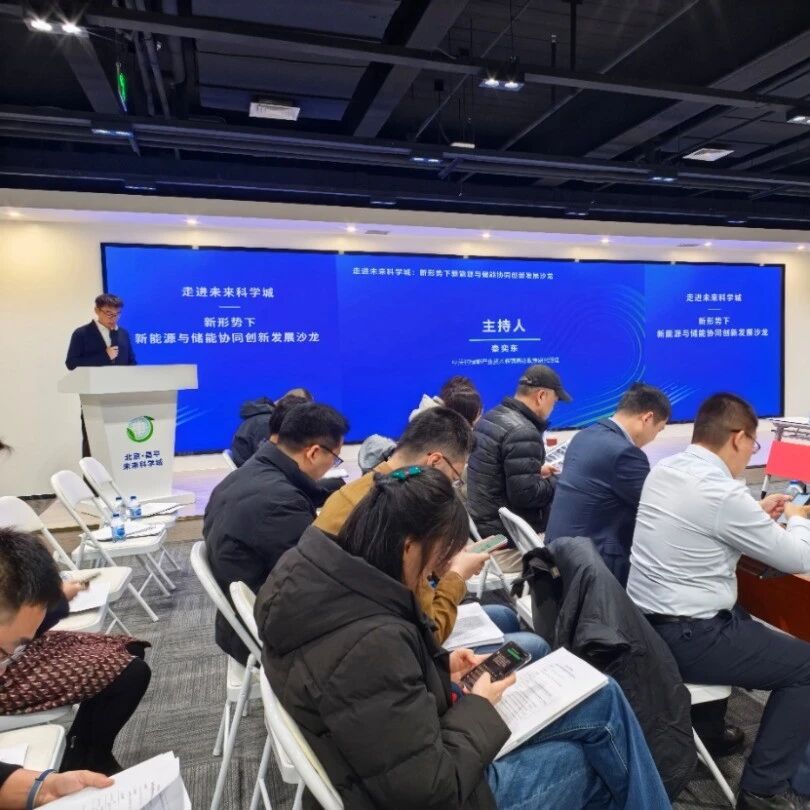
走进未来科学城:新形势下新能源与储能协同创新发展沙龙成功举办
中关村储能产业技术联盟· 2025-11-30 03:46
Core Viewpoint - The article discusses the transition of the energy storage industry from mandatory storage requirements to market-driven models following the release of the "Document 136" in 2025, highlighting both challenges and opportunities for new energy storage development [2]. Group 1: Event Overview - The "Future Science City: Collaborative Innovation Development of New Energy and Energy Storage" salon was held on November 28, focusing on policy implementation and market changes post "Document 136" [2]. - The event aimed to facilitate deep discussions among grid companies, energy generation groups, and energy storage enterprises to promote the successful transition of the energy storage industry from "mandatory storage" to "market-driven" models [2]. Group 2: Key Initiatives - Three initiatives were proposed by Cui Chao, Deputy Director of the Advanced Energy Industry Department of the Beijing Future Science City Management Committee: 1. Establishing a talent cultivation base in collaboration with universities to align training with market needs [4]. 2. Building a technology innovation platform to address critical issues in energy storage safety and enhance collaboration between industry and academia [4]. 3. Fostering a cluster of energy storage industry development by inviting quality enterprises and research teams to settle in Changping [4]. Group 3: Technological Insights - The State Grid Energy Research Institute emphasized the shift of new energy storage from "mandatory" to "market-driven," identifying long-duration and grid-forming storage technologies as key development areas [9]. - The National Energy Group presented advancements in molten salt storage technology coupled with coal power, addressing challenges in flexible transformation [12]. - Huawei introduced intelligent solutions for integrating solar and storage systems, aimed at overcoming large-scale grid connection challenges [13]. - JinFeng Zero Carbon showcased its achievements in smart storage and carbon-neutral projects, delivering over 15 GWh of storage products [15]. - ChuNeng New Energy discussed breakthroughs in lithium supplementation technology to extend the lifecycle of energy storage cells [17]. - XiQing Energy highlighted the use of AI for enhancing safety operations in energy storage stations, focusing on early fault warning systems [19]. Group 4: Collaborative Efforts - The salon provided a platform for industry leaders and enterprises to share insights on technological breakthroughs, market progress, and safety practices in the new energy and storage sectors [25]. - The Zhongguancun Energy Storage Industry Technology Alliance aims to strengthen resource connections and empower the energy storage industry for high-quality development, contributing to the achievement of carbon neutrality goals [25].

质量安全和技术性贸易壁垒带来挑战—— 动力电池产业两大难题待解
Jing Ji Ri Bao· 2025-11-29 21:50
Core Viewpoint - The rapid development of the power battery industry has highlighted increasing quality and safety risks, necessitating a comprehensive quality management system throughout the entire lifecycle of battery production and usage to mitigate major safety risks and ensure sustainable industry growth [1] Group 1: Industry Challenges - The power battery industry in China has maintained its position as the world's largest for eight consecutive years [1] - The industry faces two major challenges: quality safety and technical trade barriers [2] - Quality safety issues are exacerbated by "involutionary" competition, leading some companies to cut costs in material selection and quality control, increasing safety risks [1][2] Group 2: Quality Issues - In a recent inspection of 6,513 batches of electric bicycle batteries, 1,689 batches were found to be non-compliant, significantly higher than other battery types [2] - Key quality issues include underperformance in basic metrics like rated capacity and energy density, lack of essential safety features, and poor environmental adaptability [2] Group 3: Regulatory Environment - The EU's new battery regulation, effective from 2028, will prohibit batteries that do not meet carbon footprint requirements from entering the EU market, posing a potential barrier for Chinese battery exports [3] - The regulation reflects a global concern for green and low-carbon development in the battery industry, reshaping competitive dynamics [3] Group 4: Recommendations for Improvement - Experts suggest enhancing cross-sector technological collaboration, improving consumer rights protection, and developing a digital quality management system to elevate industry governance [4] - The market regulatory authority plans to strengthen quality infrastructure and encourage innovation and collaboration across the battery supply chain [4]
“我是股东”走进南网储能南宁抽水蓄能电站,共探绿色储能发展新机遇
Quan Jing Wang· 2025-11-29 11:08
Core Viewpoint - The event "I am a Shareholder - Entering the Shanghai Stock Market Listed Companies" was successfully held at the South Grid Energy Storage Co., Ltd., showcasing the company's advancements in pumped storage and new energy storage sectors [1] Group 1: Project Development - South Grid Energy Storage currently has 10 pumped storage projects under construction, with a total installed capacity of 12 million kilowatts [2] - The Meizhou (Phase II) project has been put into operation, while the Nanning project is expected to be operational by the end of 2025 [2] - The company has over 10 million kilowatts of pumped storage reserve projects that will be advanced according to national planning and power system demand [2] Group 2: Pricing and Policy - The company addressed investor concerns regarding pricing policies, indicating that future revenues from new pumped storage stations may increasingly depend on market competitiveness, as per the National Development and Reform Commission's document No. 633 [2] Group 3: New Energy Storage Development - In response to the "dual carbon" goals, the company is actively researching its "14th Five-Year" development plan, focusing on various technologies including sodium-ion, flow, compressed air, and gravity storage, in addition to lithium batteries [3] - The Yunnan Qiubei Baochi storage station is currently demonstrating the application of both lithium and sodium batteries [3] Group 4: Market Outlook and Strategic Initiatives - With the large-scale integration of renewable energy into the grid, the demand for pumped storage and new energy storage is continuously growing [4] - The company aims to accelerate project construction to achieve early production and benefits, while also expanding into strategic emerging businesses and international markets to create a "second growth curve" [4] - The Nanning pumped storage power station, a major project under the national "14th Five-Year" plan, has a total reservoir capacity of 13.4 million cubic meters and an installed capacity of 1.2 million kilowatts, expected to be operational by the end of the year, providing 2.5 billion kilowatt-hours of clean energy annually [4]


航油“巨无霸”,真的要来了
Jing Ji Guan Cha Bao· 2025-11-29 08:53
Core Viewpoint - The relative stability of China's aviation fuel market has been disrupted, initiating a transformation led by industry giants that aims to reshape the competitive landscape and industry structure [2][8]. Group 1: Announcement and Reorganization - On October 30, 2025, China Aviation Oil (Singapore) Co., Ltd. announced that its controlling shareholder, China Aviation Oil Group, is undergoing a reorganization with another enterprise group [3][9]. - The reorganization is characterized as a comprehensive integration of assets, channels, and personnel, indicating a significant shift beyond mere capital cooperation to a restructuring of the entire industry chain [4][5]. Group 2: Market Impact and Industry Response - Analysts suggest that if the reorganization is successful, it will reshape the domestic aviation fuel market's competitive dynamics, focusing on enhancing efficiency across the entire supply chain from refining to refueling [7][15]. - Various stakeholders in the industry, from major corporations to smaller firms, are reacting swiftly to the news, with concerns about pricing power and supply stability emerging as key issues [8][20]. Group 3: Strategic Goals and Future Outlook - The reorganization aims to create a "giant" capable of competing with international energy giants, driven by dual strategies of achieving carbon neutrality and ensuring supply chain autonomy [8][12]. - The integration of China Aviation Oil Group's extensive distribution network with the energy giant's refining capabilities is expected to optimize costs and enhance operational efficiency [11][13]. Group 4: Competitive Landscape and Challenges - The aviation fuel market, previously characterized by a stable triangular structure dominated by state-owned giants, is facing a potential shift towards a more competitive environment where efficiency and cost become the primary competitive factors [16][15]. - Smaller companies express concerns about being squeezed out of the market as a result of the emergence of a dominant player, leading to strategic reassessments and adaptations [18][19]. Group 5: Sustainable Aviation Fuel (SAF) Initiatives - China Aviation Oil Group is actively positioning itself in the sustainable aviation fuel (SAF) sector, with strategic investments and partnerships aimed at preparing for future regulatory requirements and market demands [25][26]. - The reorganization raises questions about how the new entity will approach the SAF market, particularly regarding the treatment of private sector players [26][27]. Group 6: Investment and Market Opportunities - Investors are reevaluating the energy sector landscape, focusing on the integration of companies within the newly formed industry ecosystem rather than solely on individual technological advancements [29].

航油“巨无霸”真的要来了!
经济观察报· 2025-11-29 07:30
Core Viewpoint - The relative stability of the Chinese aviation fuel market has been disrupted, initiating a transformation led by industry giants that aims to reshape the rules and landscape of the sector [1][6]. Restructuring Announcement - On October 30, 2025, China Aviation Oil (Singapore) Corporation Limited announced that its controlling shareholder, China Aviation Oil Group, is undergoing a restructuring with another enterprise group [2][8]. - The restructuring involves comprehensive integration of assets, channels, and personnel, marking a significant shift from mere capital cooperation to a full industry chain reconstruction [3][4]. Market Dynamics and Reactions - The restructuring has prompted swift and complex reactions from various enterprises within the industry, with concerns about pricing power and supply stability being paramount among aviation companies and smaller refining firms [6][10]. - The restructuring aims to create a "super supply chain" that integrates distribution networks and refining capabilities, potentially enhancing efficiency from refining to refueling [9][10]. Competitive Landscape - The merger of China Aviation Oil Group and a major energy enterprise could significantly alter the competitive landscape of the domestic aviation fuel market, focusing on efficiency improvements across the entire supply chain [5][11]. - The restructuring is expected to elevate competition from channel-based to efficiency and cost-based competition across the entire industry chain [10][11]. Industry Structure and Market Share - Historically, the aviation fuel market in China has been characterized by a stable structure dominated by state-owned giants, with China Aviation Oil Group acting as a key intermediary [13][14]. - China Aviation Oil Group holds approximately 40% of the market share in the distribution and terminal service segments, while state-owned enterprises like Sinopec and PetroChina dominate the production side with about 81% market share [14]. Future Opportunities and Challenges - The restructuring is anticipated to create both pressures and opportunities for smaller players in the market, as they may face challenges in maintaining market share against a newly formed giant [14][21]. - The focus on sustainable aviation fuel (SAF) is emerging as a critical area, with China Aviation Oil Group actively investing in SAF production to align with future regulatory requirements [20][21]. Strategic Adjustments - Companies within the industry are reassessing their strategies in light of the restructuring, with some exploring partnerships or alternative supply channels to mitigate risks associated with the potential dominance of the new entity [16][18]. - The restructuring is seen as a catalyst for a new wave of differentiation and consolidation within the aviation fuel market, prompting companies to adapt to the evolving competitive landscape [11][21].

生态筑基 转型赋能:棕榈股份书写城乡绿色发展新答卷
Quan Jing Wang· 2025-11-29 03:04
Core Viewpoint - The company, Palm Eco-Town Development Co., Ltd., is deeply engaged in ecological protection and transformation in urban and rural areas, driven by policies, technology, and projects, establishing a three-dimensional system of "ecological restoration + industrial empowerment + low-carbon development" to support high-quality urban and rural development [1][2]. Group 1: Policy Alignment and Strategic Direction - The company aligns its development with national strategies, responding to the 2025 Central Document No. 1, which emphasizes comprehensive rural revitalization and agricultural strength, by focusing on high-standard farmland construction and agricultural technology empowerment [2]. - Palm has implemented advanced agricultural practices in multiple counties in Henan, transforming traditional agriculture into a more intensive model that enhances food security and aligns with the national strategy of "storing grain in the land and technology" [2]. Group 2: Technological Innovation and Environmental Management - The company has developed a comprehensive environmental governance system covering the entire project lifecycle, from planning and design to construction and operation, under its "one body, two wings" green development strategy [2]. - Palm has integrated sponge city concepts into over 30 urban renewal projects and has developed patented technologies for ecological restoration, addressing urban water pollution and enhancing carbon sink capabilities [3]. Group 3: Agricultural Transformation and Productivity Enhancement - The company collaborates with universities for research in crop variety cultivation, soil improvement, and pollution control, achieving over 30% water savings and a 10%-15% increase in crop yields through smart agriculture platforms [3]. - The introduction of composite microbial fertilizers and smart irrigation systems has facilitated the transition of traditional agriculture towards digitization and sustainability [3]. Group 4: Cultural and Economic Integration - Palm leverages its ecological restoration and landscape design expertise in cultural tourism projects, creating eco-corridors that enhance leisure, tourism, and cultural display, thereby boosting local economies [4]. - The company promotes a model of "ecology + industry," ensuring ecological sustainability while expanding income channels, achieving a balance between ecological and economic benefits [4].

化工园区如何避免同质竞争
Jing Ji Ri Bao· 2025-11-29 01:55
Group 1 - Chemical parks are crucial platforms for the development of various industries and play a key role in regional transformation and upgrading, particularly in the central and western regions of China [1] - The distribution of chemical parks shows significant regional imbalance, with most provinces facing structural challenges despite some breakthroughs in the central and western regions, indicating a need for improved industrial quality and clustering efficiency [1] - The total number of recognized chemical parks across provinces has exceeded 700, emphasizing the importance of quality over quantity and long-term benefits over immediate gains in the competitive landscape [1] Group 2 - In the 2025 National Chemical Park Comprehensive Competitiveness Top 100, two parks from Yulin City, Shaanxi Province, are recognized, which is rare in the central and western regions [2] - Yulin City is advancing its energy revolution innovation demonstration zone by incorporating safety, environmental protection, and dual carbon goals into the top-level design of its parks, implementing a refined governance model [2] - To enhance the vitality of chemical parks, it is essential to address common issues throughout the project lifecycle and improve the business environment, logistics, and urban integration for enterprises [2]