科技自立自强

Search documents
北京成为全球创新网络关键枢纽
Bei Jing Wan Bao· 2025-09-27 06:41
Group 1 - Beijing has significantly enhanced its innovation capacity, competitiveness, and influence, becoming a key hub in the global innovation network [1] - The city maintains a research and development expenditure intensity of around 6%, ranking among the top global innovation cities [1] - Beijing has been ranked first in the "Nature Index - Research Cities" for eight consecutive years and is third globally in the number of unicorn companies [1] Group 2 - The high-tech industry in Beijing is projected to reach a value of 1.49 trillion yuan in 2024, representing a 56.9% increase from 2020 [1] - The city has developed three trillion-yuan industry clusters: new generation information technology, healthcare, and technology services, along with seven hundred billion-yuan industry clusters [1] - Beijing has registered 159 large models in artificial intelligence, leading the nation in this area [1] Group 3 - The Beijing Medical Health Collaborative Innovation Three-Year Action Plan has been implemented, with the highest number of approved innovative medical devices in the country [2] - Beijing has established a complete industrial chain in commercial aerospace, including rocket launch, satellite manufacturing, and satellite application services [2] - The Zhongguancun area contributes about one-third of the city's GDP while occupying less than 4% of the land [2] Group 4 - Over 300 technology companies are established daily in Beijing, reflecting the effectiveness of the city's education and technology talent development [3] - Beijing ranks first in Asia and among the top globally in the "Global Entrepreneurship Ecosystem Report 2025" [3] - The city aims to become a global center for scientific innovation and a leading area for future industries during the "15th Five-Year Plan" [3]
青山遮不住
Ren Min Ri Bao· 2025-09-27 02:42
Core Viewpoint - The ongoing trade tensions between the US and China, characterized by tariffs and export controls, have not hindered the growth of trade between the two nations, with China's exports to the US increasing by 22.7% in the first eight months of the year [1][2]. Group 1: Trade Dynamics - Despite tariffs, China's exports to the US have shown resilience, with a reported growth of 30.3% in the first eight months of the year for certain sectors [2]. - Since the imposition of tariffs in July 2018, the overall trade volume between the US and China has generally been on an upward trend, with a notable increase of 8.8% in 2020 [2][11]. - The demand for "Made in China" products remains strong in the US, as evidenced by consumer experiences during the pandemic [4][5]. Group 2: Economic Interdependence - The economic structures of the US and China are highly complementary, with significant mutual benefits derived from trade [6][8]. - In 2020, Chinese goods accounted for 19% of total US imports, with a substantial portion of essential medical supplies sourced from China [6][8]. - The cost advantages of Chinese manufacturing, including lower labor costs and efficient supply chains, continue to attract US companies [7][10]. Group 3: Investment Trends - Despite a decline in US investment in China in certain sectors, there is a growing interest among US companies to expand their operations in China, with 85% of surveyed companies indicating no plans to relocate manufacturing outside of China [13][20]. - The influx of foreign investment into China has been robust, with significant increases from European and ASEAN countries, highlighting China's appeal as a market [13][14]. - The Chinese market's size and growth potential are key factors driving multinational companies to establish or expand their presence in the country [15][16]. Group 4: Innovation and Technology - China's commitment to technological self-reliance and innovation is evident, with increasing investments in research and development [21][23]. - The country is transitioning from a technology follower to a leader in several high-tech fields, demonstrating resilience against external pressures [24][29]. - Collaboration in technology and innovation remains crucial, as both nations benefit from shared advancements and market opportunities [26][30].


上交所召开2025年股权投资机构交流会
券商中国· 2025-09-26 15:52
Group 1 - The Shanghai Stock Exchange held a conference to discuss the implementation of the "1+6" policy measures for the Sci-Tech Innovation Board, aiming to enhance the attractiveness and inclusivity of the capital market [1] - 38 private equity investment institutions and 12 sponsoring institutions participated in the conference, providing feedback on market demands and concerns [1] - Suggestions included supporting hard technology companies for IPOs and mergers, improving the inclusivity and stability of the Sci-Tech Innovation Board, optimizing pricing mechanisms, and promoting orderly participation of long-term funds [1] Group 2 - The Shanghai Stock Exchange will study and incorporate the feedback from market institutions to further advance the implementation of the "1+6" policy [1] - There is a commitment to maintain regular communication with market institutions to foster a better capital market ecosystem [1] - The goal is to better serve high-level technological self-reliance and strength through these reforms [1]
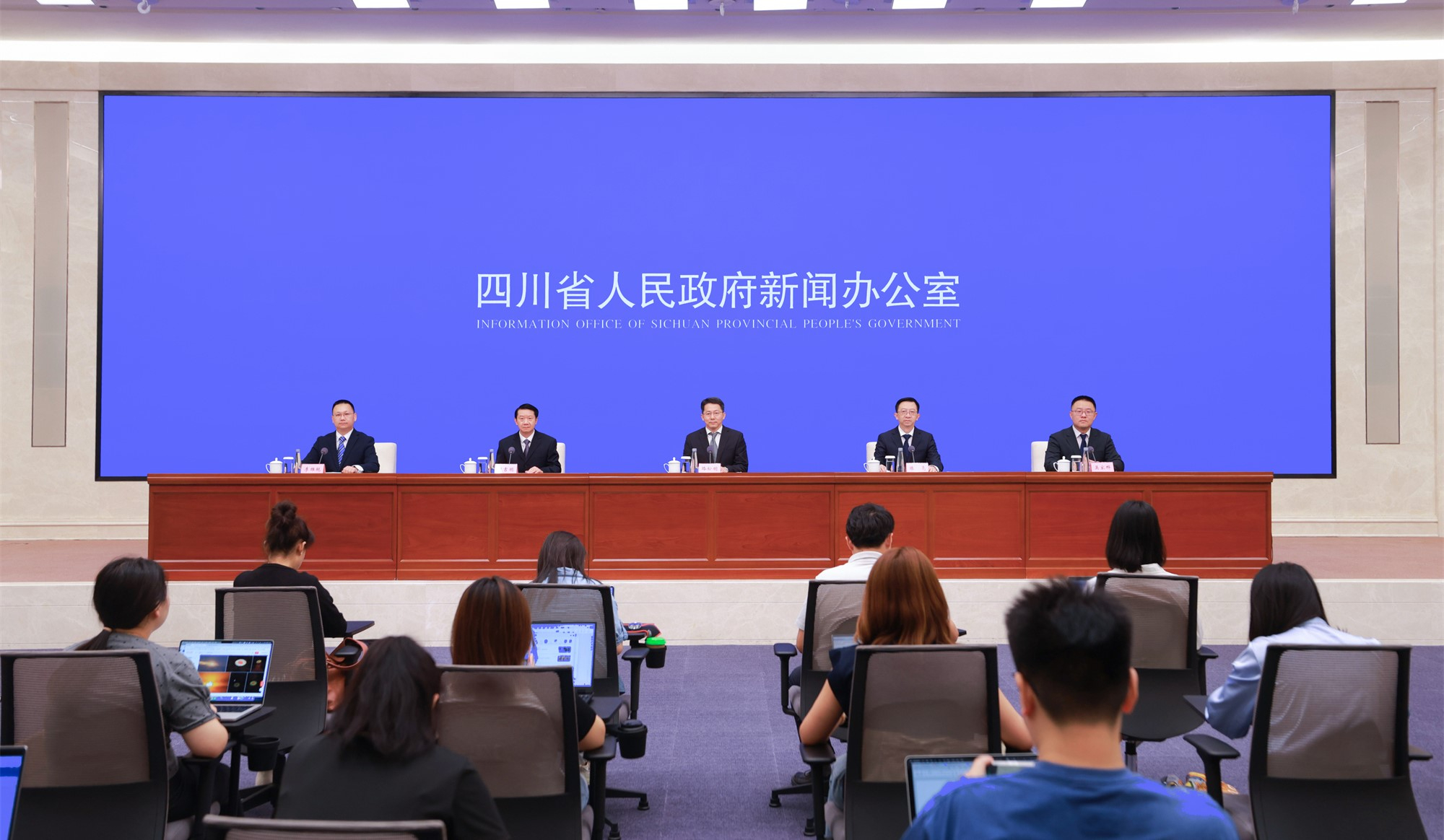
创新成果闪耀世界 四川建设西部创新高地迈出坚实步伐
Zhong Guo Fa Zhan Wang· 2025-09-26 09:37
Core Insights - Sichuan Province is making significant strides in establishing itself as an innovation hub in Western China during the "14th Five-Year Plan" period, focusing on innovation-driven development strategies [2] Group 1: Comprehensive Innovation Capability - R&D expenditure in Sichuan is expected to reach approximately 150 billion yuan, a growth of over 40% compared to 2020, with basic research funding accounting for an estimated 6.5% of total R&D spending [3] - The province has seen a substantial increase in high-value invention patents, with a per capita ownership rate of 7.94 patents, which is 2.7 times that of 2020 [3] - The transaction volume of technology contracts has surpassed 260 billion yuan, doubling since 2020 [3] Group 2: Growth of High-tech Industries - The revenue from high-tech industries in Sichuan has increased from 31.9% to 40.9% of the total industrial output, marking a 9 percentage point rise [4] - Emerging industries such as artificial intelligence, biotechnology, and nuclear technology applications are projected to grow by over 20% in added value in 2024 [4] Group 3: High-level Innovation Platforms - The number of national-level innovation platforms in Sichuan has increased to 205, including the only national laboratory in Western China and 28 national key laboratories [5] - Major scientific facilities are being developed, including 10 national large scientific devices, with significant breakthroughs in various research areas [5] Group 4: Breakthroughs in Key Technologies - In aerospace, Sichuan has successfully completed major national projects and launched the world's first AI large model scientific satellite [6] - In the electronic information sector, significant advancements have been made in integrated circuits and software security, including the release of the first international gallium nitride quantum light source chip [6] - The biopharmaceutical sector has seen the approval of the first domestic TROP2 antibody-drug conjugate and the world's first trivalent COVID-19 vaccine for emergency use [6] Group 5: Innovation Entity Vitality - The number of high-tech enterprises in Sichuan has reached 19,000, a 2.4-fold increase since 2020, with a significant rise in technology-based SMEs [8] - Corporate R&D spending has increased by 58.4% compared to 2020, highlighting the strengthening of enterprises' roles in innovation [8] Group 6: Talent Development - Sichuan has implemented open talent policies, with the number of academicians reaching 67 and R&D personnel exceeding 400,000 [9] - The province has established a comprehensive talent service system, making it a key area for high-level talent innovation and entrepreneurship [9] Group 7: Regional Collaborative Innovation - Sichuan and Chongqing are jointly building the Western Science City and have established 11 joint key laboratories, enhancing collaborative innovation efforts [10] - Chengdu and Mianyang are positioned as major innovation engines, with Chengdu ranking 24th globally among tech clusters [10]
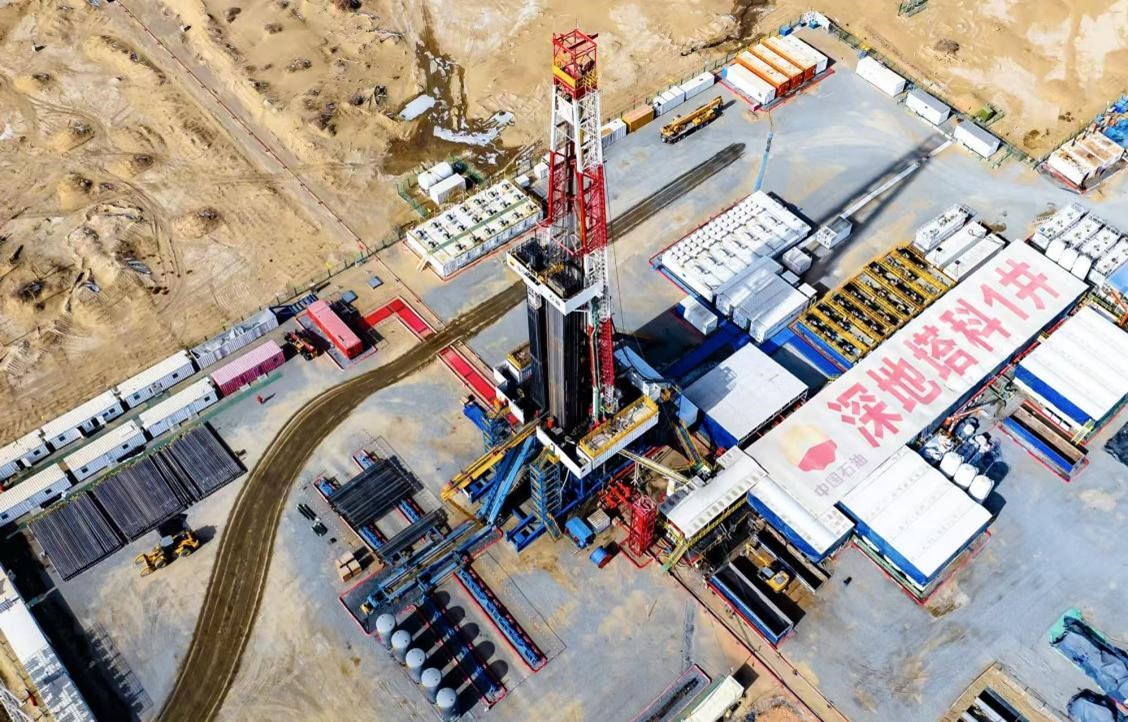
中国石油已成为我国最大的跨国经营企业
Jing Ji Ri Bao· 2025-09-26 07:36
Group 1 - The core viewpoint is that China National Petroleum Corporation (CNPC) has significantly enhanced its energy supply capacity, becoming a crucial pillar for national energy security as it celebrates its 75th anniversary [1][2] - CNPC's oil and gas business has established a "three 100 million tons" structure, continuously consolidating its domestic oil and gas production capabilities [1] - The company has a historical legacy dating back to the early days of New China, where the annual crude oil production was only 12,000 tons, and has since evolved through significant discoveries and developments in major oil fields [1] Group 2 - In response to the global energy revolution and carbon neutrality goals, CNPC is actively pursuing a green transformation, aiming to build a new energy system that is clean and low-carbon [2] - The company emphasizes technological self-reliance, achieving breakthroughs in geological theories and leading global advancements in oil and gas exploration technologies [2] - CNPC has successfully ranked among the top two in the China Enterprise 500 list and has maintained a position within the top six of the Fortune Global 500 for 15 consecutive years, reflecting its robust international presence and growth [2]

中信金融资产:助力工业气体龙头企业高质量发展 推动高水平科技自立自强
Jing Ji Guan Cha Bao· 2025-09-26 04:11
Core Viewpoint - The article emphasizes the role of financial support in driving technological innovation, highlighting the successful implementation of a merger and acquisition project by CITIC Financial Assets to bolster the development of a leading industrial gas company in China [1][4]. Group 1: Financial Support and Investment - CITIC Financial Assets has invested over 500 million yuan in the acquisition and restructuring of Hangzhou Yingde, providing strong financial backing for the company's technological transformation and capacity enhancement [1][3]. - The investment aims to stabilize the shareholder structure of Yingde and accelerate project progress for its subsidiaries, ensuring robust support for the normal operations of upstream and downstream industries [4]. Group 2: Industry Context and Challenges - Industrial gases are crucial for various sectors such as steel, chemicals, and semiconductors, impacting production efficiency and product quality, which in turn affects national economic security and international competitiveness [2]. - Hangzhou Yingde faces uncertainties due to the original shareholders entering an investment exit period, necessitating further exploration of existing asset efficiency and management optimization [2]. Group 3: Collaborative Efforts and Strategic Actions - CITIC Financial Assets has formed a specialized team to conduct thorough due diligence and engage in in-depth analysis of the industrial gas sector, addressing the complexities of asset scale and stakeholder involvement [2][3]. - The company leverages the synergistic advantages of CITIC Group, collaborating with various subsidiaries to optimize asset management and enhance governance structures [3]. Group 4: Achievements and Future Directions - Following the merger and acquisition, Hangzhou Yingde has shown improved operational conditions, maintaining a leading market share with a revenue increase of approximately 10% year-on-year [4]. - CITIC Financial Assets plans to continue providing comprehensive services to strategic emerging enterprises, focusing on professional and precise financial solutions to accelerate the transformation of technological achievements [4].
新华社快讯:我国专业技术人才超过8000万人
Xin Hua She· 2025-09-26 03:19
Core Viewpoint - The Ministry of Human Resources and Social Security reported that China has over 80 million professional technical talents and more than 220 million skilled workers, with over 72 million high-skilled talents, providing strong support for high-level technological self-reliance and the construction of a modern industrial system [1] Group 1 - China's professional technical talent exceeds 80 million [1] - The total number of skilled workers in China surpasses 220 million [1] - The number of high-skilled talents in China is over 72 million [1]
我国专业技术人才超过8000万人
Xin Hua She· 2025-09-26 02:11
Core Viewpoint - The Minister of Human Resources and Social Security, Wang Xiaoping, highlighted the significant number of professional technical talents and skilled workers in China, emphasizing their role in supporting high-level technological self-reliance and the construction of a modern industrial system [1] Group 1 - China has over 80 million professional technical talents [1] - The total number of skilled workers exceeds 220 million, with over 72 million being high-skilled talents [1] - These human resources provide a solid talent foundation for advancing high-level technological independence and building a modern industrial system [1]
七十五载能源报国 中国石油书写12万吨到“三个1亿吨”奋进答卷
Jing Ji Wang· 2025-09-25 10:06
Core Viewpoint - The 75th anniversary of China National Petroleum Corporation (CNPC) highlights its evolution from a struggling oil industry to a leading global energy company, emphasizing its significant contributions to national energy security and economic development [1][4]. Historical Development - In the early years of New China, the annual crude oil production was only 120,000 tons, leading to a pressing demand for oil as the "blood" of industry [2]. - The establishment of the Fuel Industry Ministry's Petroleum Administration Bureau in 1950 marked the beginning of unified management of national oil resources [2]. - Pioneering efforts by oil workers, exemplified by "Iron Man" Wang Jinxi, led to the discovery of major oil fields such as Karamay and Daqing, with national crude oil production surpassing 10 million tons by 1978, positioning China as the eighth largest oil producer globally [2]. Achievements and Growth - CNPC has consistently ranked among the top two in the Fortune Global 500 for 15 consecutive years and is now the second largest international chemical company as of 2024 [1]. - The company has developed a robust oil and gas supply structure, with domestic oil and gas production accounting for approximately half and two-thirds of national output, respectively [4]. Technological Advancements - CNPC has made significant strides in technology, focusing on unconventional oil and gas exploration and development, as well as new materials and products [5]. - The company is at the forefront of a digital and intelligent revolution, utilizing advanced models and software to enhance safety and efficiency in energy production [7]. Commitment to Sustainability - In response to global energy transitions and carbon neutrality goals, CNPC is actively pursuing green transformation, aiming to establish a clean and low-carbon energy system [4]. - The company has achieved a historic breakthrough in ethylene production capacity, exceeding 10 million tons per year, and is exploring renewable energy sources such as wind and solar power [4]. Social Responsibility - CNPC emphasizes its role as a state-owned enterprise, contributing to national and community needs through disaster relief, rural revitalization, and educational support [7]. - The company has gained international recognition for its contributions during major events like the Beijing Winter Olympics, showcasing its commitment to service and excellence [7].
从12万吨到“三个1亿吨”,中国石油如何书写75载能源报国使命担当?
中国能源报· 2025-09-25 09:24
Core Viewpoint - The article commemorates the 75th anniversary of China National Petroleum Corporation (CNPC), highlighting its evolution from a struggling oil industry to a leading global energy company, emphasizing its contributions to national energy security and economic development [4][10]. Group 1: Historical Development - CNPC was established on September 25, 1950, marking the beginning of a centralized oil management system in China, which was crucial for the country's industrial development [5]. - The company has grown significantly, ranking among the top two in the Fortune Global 500 for 15 consecutive years and achieving the second position among international chemical companies in 2024 [4]. - The oil production in China surpassed 1 million tons in 1978, positioning the country as the eighth largest oil producer globally [7]. Group 2: Contributions to Energy Security - CNPC has become a cornerstone of national energy security, with domestic oil and gas production accounting for approximately half and two-thirds of the national output, respectively [7]. - The company has developed significant refining and chemical projects, achieving an ethylene production capacity of over 10 million tons per year and maintaining the second-largest refining capacity globally [7]. Group 3: Green Transition and Technological Innovation - In response to global energy transformations and carbon neutrality goals, CNPC is actively pursuing a green transition, with renewable energy sources now constituting 7% of its domestic energy supply [8]. - The company is at the forefront of technological advancements, focusing on unconventional oil and gas exploration, new materials, and digital transformation initiatives [10]. Group 4: Social Responsibility and National Mission - CNPC emphasizes its role as a state-owned enterprise, contributing to disaster relief, rural revitalization, and international events like the Beijing Winter Olympics, showcasing its commitment to national and public service [10]. - The company aims to continue its mission of ensuring national energy security while contributing to the construction of a strong nation and the rejuvenation of the Chinese nation [10].