
协同创新

Search documents
东北三省一区科技合作交流工作会召开
Zheng Quan Shi Bao Wang· 2025-08-21 09:01
Core Viewpoint - The meeting held on August 20 in Chifeng City focused on enhancing technological cooperation among the four regions, aiming to address issues related to innovation resource distribution and industrial chain connectivity [1] Group 1: Agreement and Collaboration - The technology departments of Inner Mongolia, Liaoning, Jilin, and Heilongjiang signed a cooperation agreement to promote collaborative innovation for high-quality development [1] - The agreement aims to tackle problems such as the fragmentation of innovation resources and insufficient coordination in the innovation ecosystem [1] Group 2: Objectives and Goals - The four regions will work together to build a collaborative innovation mechanism and optimize the allocation of innovation resources [1] - The initiative aims to cultivate new productive forces and empower regional industrial transformation and economic high-quality development [1]
协同创新加速智能产业升级与消费释放
Sou Hu Cai Jing· 2025-08-19 22:17
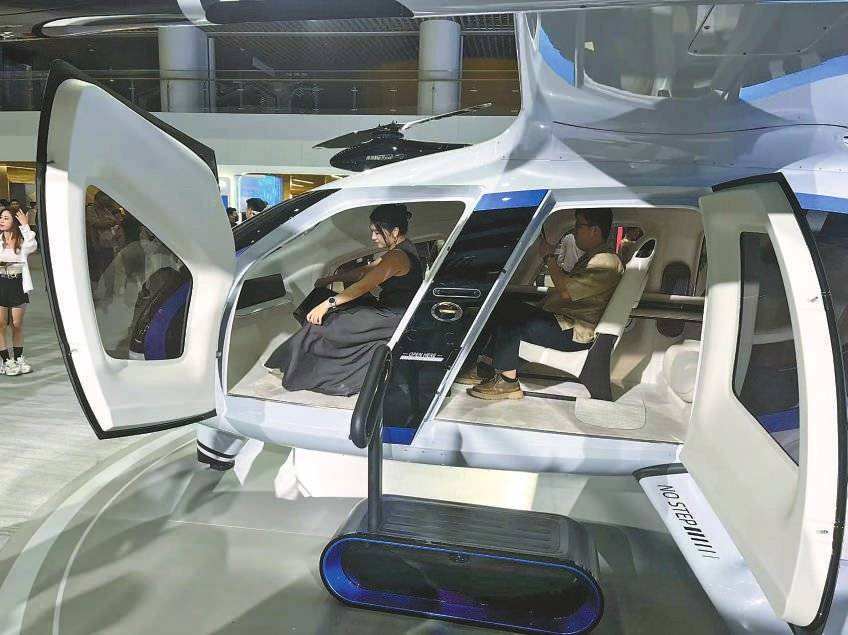
Core Viewpoint - The development of unmanned aerial vehicles, intelligent connected vehicles, and humanoid robots as key strategic industries in China is expected to profoundly reshape future lifestyles through technological breakthroughs [4][6]. Group 1: Market Trends and Consumer Demand - The younger consumer demographic is increasingly willing to pay for trendy experiences, while mainstream consumers are opting for smart technology to enhance their life rituals, and the elderly are looking for technology to improve elder care services [5]. - The market is witnessing a surge in demand for smart applications, with intelligent connected vehicles becoming a significant driver of automotive consumption [5]. - In the first half of this year, the installation rate of L2-level and above assisted driving functions in domestic new energy passenger vehicles reached approximately 80%, with a notable increase in the rate of intelligent driving features in vehicles priced below 160,000 yuan [5]. Group 2: Technological Synergy and Innovation - Approximately 70% of the core components in the three industries share common technological roots, which facilitates collaborative innovation and reduces R&D costs [6]. - The integration of digital twin platforms can support the collaborative routing of vehicles and aerial vehicles, enhancing intelligent decision-making in complex environments [6]. - The automotive industry is becoming a core carrier for the implementation of cutting-edge technologies, with trends towards ecosystem-based operating systems, diversified energy supply, and data-driven closed loops [8]. Group 3: Entry into Low-altitude Economy - The low-altitude economy in China is projected to reach a market size of 1.5 trillion yuan by the end of this year and is expected to grow to 3.5 trillion yuan by 2035 [9]. - Several automotive manufacturers have completed the development of flying cars and are entering the testing phase, indicating a significant transformation in the transportation sector [9]. - Innovations such as the "mother ship vehicle + detachable flying vehicle" design allow seamless integration of land and air travel, redefining urban transportation networks [9]. Group 4: Industry Collaboration and Development - The development paths of intelligent connected vehicles and the low-altitude economy share many commonalities, suggesting positive synergistic effects between the two sectors [10]. - The introduction of specialized aviation batteries with a cycle life of 3,000 times and customized millimeter-wave radar for flying cars indicates a comprehensive upgrade of the supply chain [10]. - The need for technical, scenario-driven, and policy support is crucial for the gradual market entry of low-altitude vehicles, humanoid robots, and intelligent connected vehicles [11].

侧记|国际智慧赋能天衢新能源新材料赛道跑出“中试加速度”
Sou Hu Cai Jing· 2025-08-17 06:54
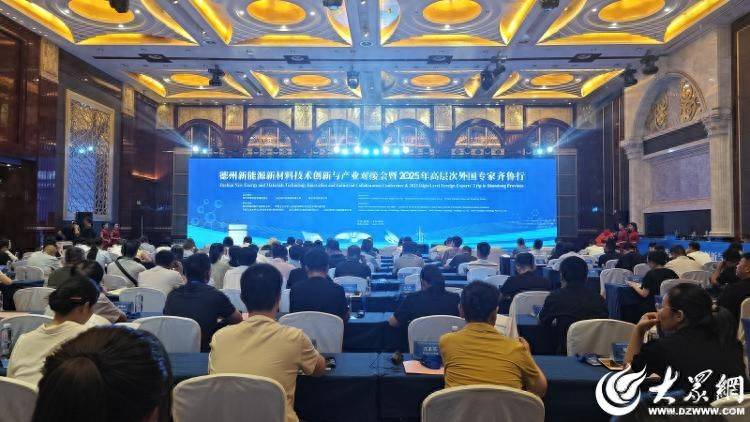
Core Insights - The event focused on technology innovation and industrial transformation in the new energy and new materials sector, featuring international experts and domestic scholars discussing collaboration opportunities [3][4][5] Group 1: Event Overview - The "New Energy New Materials Technology Innovation and Industry Docking Conference" was held in Dezhou, attracting 12 top experts from countries like Singapore, Russia, Australia, and Ukraine [3] - The conference emphasized the importance of applying scientific research and fostering international cooperation to drive technology implementation [3] Group 2: Key Contributions - Ukrainian expert Andrei Belyakinsky proposed three initiatives: effective use of industrial waste, shared regeneration material technology, and the establishment of a green transportation platform [3] - The establishment of the Dezhou Research Institute (pilot base) aims to provide comprehensive services from small-scale trials to industrial transformation, facilitating the transition of technology from the lab to the market [4] Group 3: Collaborative Framework - The conference marked the launch of the "Foreign Expert Workstation" at the Dezhou Research Institute, indicating a new phase of international intellectual cooperation [4] - A collaborative innovation approach was outlined, focusing on integrating enterprise technology needs with academic research and international expert resources [4] Group 4: Future Prospects - The international cooperation aims to propel cutting-edge technology in the new energy and new materials industry, supporting regional industrial upgrades and contributing to global carbon neutrality goals [5] - The Dezhou region is positioned as a key player in the green industry upgrade, leveraging international expertise to enhance local practices [5]
人形机器人运动:一堂充满火花的青少年科学素养课
Xin Jing Bao· 2025-08-14 07:04
Group 1 - The recent focus on robotics highlights its significance in reshaping daily life and engaging youth in science [2][3] - The inaugural humanoid robot sports event features 18 teams from 14 countries, showcasing global interest in robotics [2] - Events like the World Robot Conference and humanoid robot sports serve as platforms for immersive learning, moving beyond traditional education [2][3] Group 2 - Youth participation in interactive activities at the robot conference fosters practical understanding of scientific principles [3] - The 2025 World Robot Competition includes over 10,000 participants from more than 10 countries, emphasizing the global scale of youth engagement in robotics [3] - The events promote the development of scientific spirit among youth, emphasizing exploration, persistence, and innovation [3][4] Group 3 - The collaborative nature of robotics showcases the importance of teamwork and diverse perspectives in problem-solving [4] - Youth experiences in these events help them understand the value of cooperation in future societal contexts [4] - The events create opportunities for youth from different backgrounds to connect, fostering collective intelligence and innovation [4] Group 4 - The initiatives aim to plant the seeds of scientific curiosity in the younger generation, contributing to China's technological self-reliance [4] - The emphasis on science popularization through robotics is seen as a way to cultivate future innovators and support a strong technological nation [4]

破解“内卷”重塑生态 锂行业加码创新为周期拐点蓄力
Zheng Quan Ri Bao· 2025-08-11 02:30
Group 1 - The lithium industry is facing a supply-demand imbalance, with upstream supply clearing but downstream demand not fully recovering, prompting the search for a new balance [1] - The lithium battery industry is recognized as a key driver for global energy transition under China's dual carbon goals, but challenges such as supply-demand mismatch, intense competition, and technological bottlenecks remain [1] - Industry experts emphasize the need for collaboration and innovation to overcome internal competition and establish a healthy development trajectory [3] Group 2 - Major lithium salt companies are implementing production halts and technical upgrades to reduce costs and ensure stable operations [2] - Regulatory measures are being introduced in regions like Jiangxi and Qinghai to help the industry reduce production capacity and address illegal mining activities [2] - The focus on collaborative innovation is seen as essential for improving raw material self-sufficiency and reducing costs in the lithium salt sector [4] Group 3 - Traditional cost-reduction measures are proving insufficient as lithium prices decline, prompting companies to seek innovative solutions [4] - Companies are increasingly focusing on improving lithium recovery rates and reducing operational costs in response to falling lithium prices [5] - The demand for lithium is expected to rise significantly due to the growth of electric vehicles and energy storage, highlighting the need for optimized lithium extraction technologies [6]


淄博高新区两重点研发项目获山东省资金支持
Zhong Guo Chan Ye Jing Ji Xin Xi Wang· 2025-08-11 01:41
Group 1 - Shandong Province's Science and Technology Department has approved two key R&D projects for 2025, including humanoid robot joint module development and pharmaceutical-grade EPA raw material and formulation development, with a total funding of 17.9 million yuan [1] - The Zibo High-tech Zone has enhanced its technology project reserve by dynamically collecting potential project leads through regular guidelines, enterprise visits, and research discussions, establishing a "rolling" project reserve library [1] - The Zibo High-tech Zone aims to improve project competitiveness by providing personalized, full-process guidance to enterprises, helping them refine innovation points, technical routes, and application materials [1] Group 2 - The Zibo High-tech Zone will continue to focus on early planning, deep cultivation, precise guidance, and quality service to enhance project application quality and competitiveness [2] - A virtuous cycle of "reserve-cultivation-guidance-approval-implementation-transformation-re-reserve" will be constructed to improve the management quality and effectiveness of technology projects [2] - The initiative aims to enhance enterprise innovation capabilities and address key technologies that restrict enterprise development and industrial upgrading through collaborative innovation among government, enterprises, universities, and research institutions [2]
破解“内卷”重塑生态锂行业加码创新为周期拐点蓄力
Zheng Quan Ri Bao· 2025-08-10 17:05
Group 1 - The lithium industry is facing a supply-demand imbalance, with upstream supply clearing but downstream demand not fully recovering, prompting the search for a new balance [1] - The lithium battery industry is recognized as a key driver for global energy transition under China's dual carbon goals, but challenges such as supply-demand mismatch, intense competition, and technological bottlenecks remain [1] - Industry experts emphasize the need for collaboration and innovation to overcome internal competition and establish a healthy development ecosystem [3] Group 2 - Major lithium salt companies are implementing production halts and technical upgrades to reduce costs and ensure stable operations [2] - Regulatory measures are being introduced in regions like Jiangxi and Qinghai to help the industry reduce capacity by standardizing lithium resource production [2] - The lithium salt industry is increasingly focusing on innovation to improve efficiency and reduce costs, with advancements in lithium extraction technologies being highlighted [4][5] Group 3 - The cost of lithium extraction from African mines is higher than expected due to transportation and operational costs, leading to a focus on improving domestic production efficiency [4] - Companies are exploring various lithium extraction technologies, such as adsorption and membrane methods, to enhance recovery rates and product quality [4][6] - As lithium prices decline, companies are prioritizing cost reduction and improving recovery rates, with some achieving up to 99.9% lithium recovery through advanced extraction techniques [5][6]
山东济南成立新能源装备产业联盟
Zhong Guo Jin Rong Xin Xi Wang· 2025-08-07 12:57
Core Viewpoint - The establishment of the Jinan New Energy Equipment Industry Alliance aims to consolidate the development of the new energy equipment industry, promote resource integration, and foster collaborative innovation [1] Group 1: Industry Development - The alliance is initiated by 16 organizations, including Jinan Energy Group, Shandong University, and Shandong Electric Group, to leverage the strengths of universities, research institutions, and enterprises [1] - The alliance seeks to break down barriers between innovation entities, accelerating the transformation of scientific achievements into productive forces [1] - The focus is on a dual-engine approach of "resource integration + business matchmaking" to create quantifiable cooperative value for enterprises [1] Group 2: Strategic Importance - The Jinan Industrial and Information Technology Bureau emphasizes that the new energy equipment industry is a key component of the "13 iconic industrial chains" within the city's industrial strength development strategy [1] - The formation of the alliance is expected to further promote breakthroughs in the new energy equipment industry in Jinan, enhancing government-enterprise cooperation and industry aggregation [1] - The alliance aims to create a comprehensive platform for industry research, achievement transformation, order fulfillment, resource activation, capital matching, and innovation entrepreneurship [1]
隆基绿能:加速技术融合与成果转化 BC生态建设“提速”
经济观察报· 2025-08-04 12:27
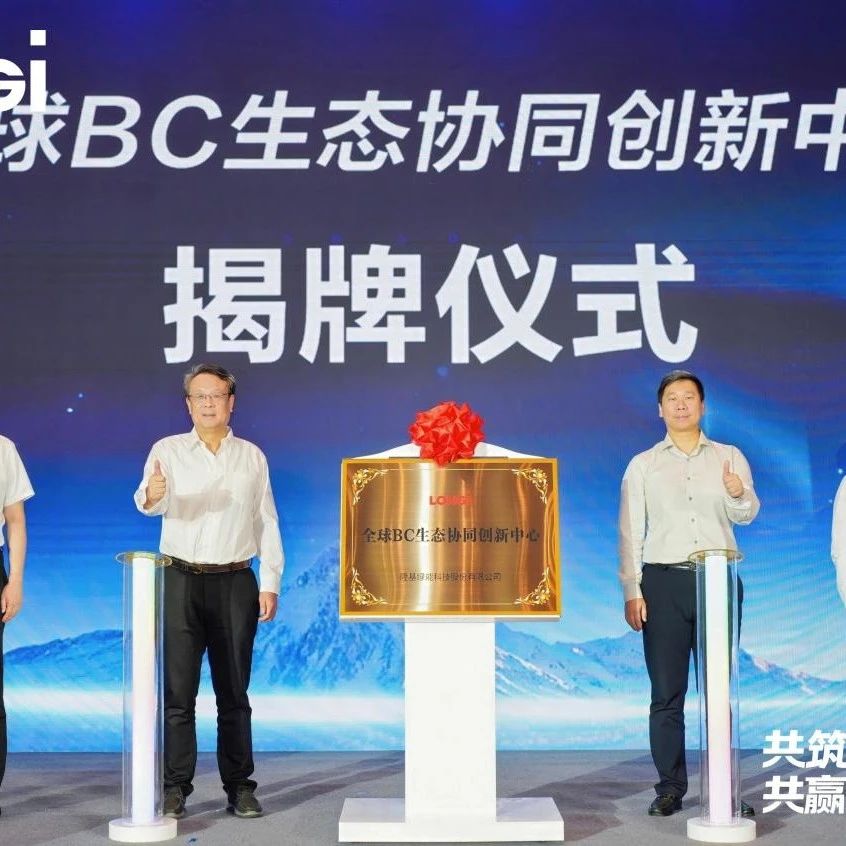
Core Viewpoint - The establishment of the Global BC Ecological Collaborative Innovation Center in Jiaxing, Zhejiang Province, aims to accelerate the industrialization of BC technology, marking a significant milestone in the expansion of the BC ecosystem and collaborative innovation in the photovoltaic industry [2][3]. Group 1: BC Technology and Industry Development - BC technology is recognized as the ultimate technological route in the single crystal silicon era, playing an increasingly important role in the photovoltaic industry [3][6]. - The potential of BC technology can be fully realized through closer collaboration and joint innovation across the entire industry chain [3][9]. - The domestic annual production capacity of BC batteries is expected to reach 300 GW to 400 GW in the next three to five years, indicating over ten times the current production capacity [8]. Group 2: Collaborative Innovation and Ecosystem Building - The future of the photovoltaic industry relies on innovation and collaboration, as the transition from "cheap" to "indispensable" cannot be achieved by a single company [9][11]. - Longi Green Energy has initiated the construction of the BC ecosystem, focusing on open, collaborative, and win-win innovation with partners [11][12]. - As of May 2025, Longi has engaged with 191 global ecological partners, resulting in 55 collaborations and covering seven major fields, including silicon wafers, batteries, and hydrogen energy [14]. Group 3: Case Studies and Practical Applications - Collaborative projects have led to cost reduction and efficiency improvements, such as the partnership between Shenzhen Shijin Technology and Longi in graphite boat development [15]. - Baosteel and Longi are working together to replace aluminum frames with high-strength steel frames, contributing to a zero-carbon future [15]. - The collaboration with Hangzhou Fumo New Materials Technology has resulted in the development of BC component solutions suitable for various applications [15]. Group 4: Future Directions and Strategic Goals - The 2025 BC Ecological Innovation Summit emphasized the need for joint efforts from upstream and downstream enterprises to build the BC ecosystem [16]. - Longi is committed to investing more resources in collaborative innovation and ecosystem enhancement, ensuring that partners benefit from project revenues and intellectual property protection [18].

隆基绿能:加速技术融合与成果转化 BC生态建设“提速”
Jing Ji Guan Cha Wang· 2025-08-04 10:13
Core Viewpoint - The establishment of the Global BC Ecological Collaborative Innovation Center in Jiaxing, Zhejiang Province, aims to accelerate the industrialization of BC technology, marking a significant milestone in the expansion of the BC ecosystem and collaborative innovation in the photovoltaic industry [1][3]. Group 1: BC Technology and Industry Development - BC technology is recognized as the ultimate technological route for monocrystalline silicon, expected to play an increasingly important role in the photovoltaic industry [1][4]. - The potential of BC technology requires closer collaboration and joint innovation across the entire industry chain, emphasizing the importance of shared benefits and value [1][5]. - The Chinese photovoltaic industry is transitioning to a new phase focused on "high-quality development," moving from scale and cost to technological innovation and environmental value [3][4]. Group 2: Collaborative Innovation and Ecosystem Building - The BC ecosystem is being built through the "Longi Partners + Longi" collaborative innovation model, which aims to create an open, collaborative, and win-win innovation ecosystem [6][8]. - As of May 2025, Longi has engaged with 191 global ecological partners, achieving 55 collaborations and covering seven major fields, including silicon wafers, batteries, and hydrogen energy [8][9]. - The 2025 BC Ecological Innovation Summit focused on how to collaboratively build the BC ecosystem, highlighting the need for joint efforts from upstream and downstream enterprises to maintain global competitive advantages [10]. Group 3: Future Prospects and Strategic Goals - The annual production capacity of BC batteries in China is expected to reach 300GW to 400GW in the next three to five years, indicating significant growth potential [5]. - Longi is committed to investing more resources in collaborative innovation and ecosystem improvement, aiming to provide advanced and reliable solutions for the industry [10].