
外汇市场

Search documents
四部门详解“十四五”金融业硬核成绩单
Shang Hai Zheng Quan Bao· 2025-09-22 18:48
Core Viewpoint - The Chinese banking sector has achieved significant milestones over the past five years, with a focus on maintaining financial stability and supporting economic recovery through a supportive monetary policy framework [7][8][9]. Group 1: Banking Sector Achievements - As of June 2023, China's banking sector total assets reached nearly 470 trillion yuan, ranking first in the world [9]. - The stock and bond markets are the second largest globally, while foreign exchange reserves have maintained the top position for 20 consecutive years [7][9]. - The growth rates for loans to technology-based SMEs, inclusive small micro loans, and green loans have exceeded 20% annually during the "14th Five-Year Plan" period [9]. Group 2: Monetary Policy and Financial Stability - The People's Bank of China emphasizes a supportive monetary policy stance, aiming for liquidity sufficiency and reduced financing costs to bolster consumption and investment [8][10]. - The number of financing platforms has decreased by over 60%, and financial debt has dropped by more than 50% compared to the beginning of 2023 [10]. - The bond market has maintained a low default rate, and the overall market operation remains stable [10][11]. Group 3: Financial Services to the Real Economy - The banking and insurance sectors have provided an additional 170 trillion yuan in funding to the real economy over the past five years [12][13]. - Key areas such as scientific research loans, long-term loans for manufacturing, and infrastructure loans have seen annual growth rates of 27.2%, 21.7%, and 10.1%, respectively [13]. - The balance of inclusive small micro enterprise loans has reached 36 trillion yuan, which is 2.3 times that of the end of the "13th Five-Year Plan" [13]. Group 4: Regulatory Enhancements - The financial regulatory framework has been strengthened through comprehensive oversight, including institutional, behavioral, functional, and continuous regulation [15]. - The financial sector has effectively managed risks, with a significant reduction in high-risk institutions and assets compared to peak levels [15]. - Support for affordable housing and rental housing projects has exceeded 1.6 trillion yuan, with loans for housing construction surpassing 7 trillion yuan [15]. Group 5: Foreign Exchange Market Developments - The foreign exchange market has shown stability, with cross-border receipts and payments reaching 14 trillion USD in 2024, a 64% increase from 2020 [21]. - The trading volume in the foreign exchange market is projected to reach 41 trillion USD in 2024, reflecting a 37% growth since 2020 [21]. - The proportion of the renminbi in cross-border trade has increased from 16% to nearly 30%, indicating enhanced market resilience [21][22].

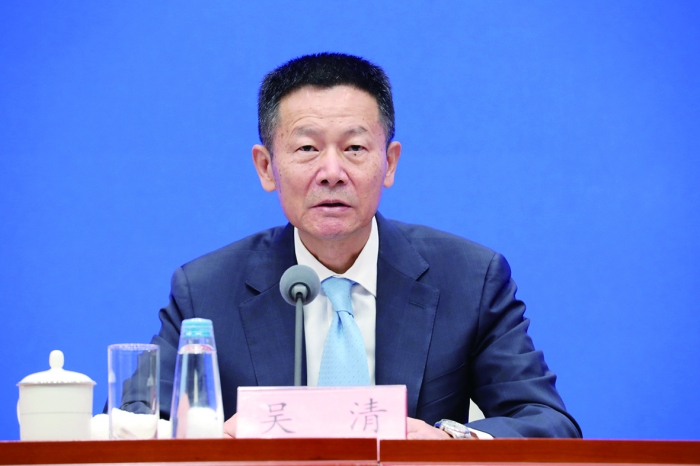
四大金融管理部门详解“十四五”金融业硬核成绩单
Shang Hai Zheng Quan Bao· 2025-09-22 18:48
Group 1 - The People's Bank of China reported that multiple financial indicators rank among the top globally, with total banking assets nearing 470 trillion yuan, the largest in the world [2][3] - The banking and insurance sectors provided an additional 170 trillion yuan in funding to the real economy during the "14th Five-Year Plan" period [2][3] - The average annual growth rates for loans to technology-based SMEs, inclusive small micro loans, and green loans exceeded 20% [2][3] Group 2 - Loans for scientific research technology, medium to long-term loans for manufacturing, and infrastructure loans grew at average rates of 27.2%, 21.7%, and 10.1% respectively [3] - Insurance funds invested over 5.4 trillion yuan in stocks and equity funds, representing an 85% increase from the end of the "13th Five-Year Plan" [3] - The real estate financing coordination mechanism's "white list" project loans exceeded 7 trillion yuan, supporting the construction and delivery of nearly 20 million housing units [3] Group 3 - The foreign exchange market has shown stability, with the holdings of foreign institutions and individuals in domestic stocks, bonds, and deposits exceeding 10 trillion yuan [3] - The proportion of the renminbi in cross-border trade increased from 16% to nearly 30%, indicating enhanced resilience in the foreign exchange market [3] - The market-oriented formation mechanism of the renminbi exchange rate is continuously improving, with more effective macro-prudential management in the foreign exchange market [3]
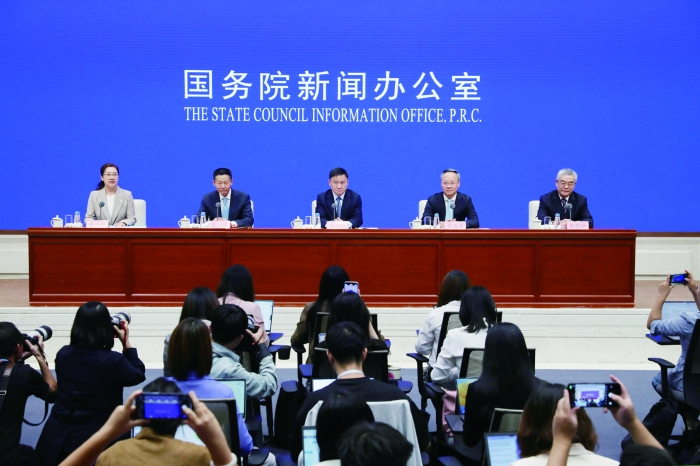
中国人民银行副行长、国家外汇局局长朱鹤新: 外汇市场活力和韧性增强 应对外部风险挑战底气更足
Zheng Quan Shi Bao· 2025-09-22 18:03
Core Insights - The People's Bank of China and the State Administration of Foreign Exchange reported that China's cross-border capital flows have remained generally balanced despite high volatility in international markets, with the RMB exchange rate showing stability among major currencies [1][2] Group 1: Market Performance - In 2024, China's cross-border receipts and payments are projected to reach $14 trillion, a 64% increase from 2020, with an average annual growth rate during the 14th Five-Year Plan period being 8 percentage points higher than the previous period [1] - In the first eight months of this year, cross-border receipts and payments increased by 10% year-on-year, indicating sustained activity in cross-border trade and investment [1] - The ratio of enterprises using foreign exchange hedging has risen from 17% in 2020 to approximately 30%, while the RMB's share in cross-border trade has increased from 16% to nearly 30% [1] Group 2: Foreign Exchange Reserves and Stability - China's international balance of payments has remained fundamentally balanced during the 14th Five-Year Plan, with the current account surplus to GDP ratio staying within a reasonable range [2] - Foreign exchange reserves have consistently remained above $3 trillion, stabilizing above $3.2 trillion in recent years, serving as a crucial stabilizer for the national economy and finance [2] Group 3: Policy and Reform Initiatives - The State Administration of Foreign Exchange has implemented reforms to enhance the efficiency of trade foreign exchange receipts and payments, processing nearly $4.6 trillion in related business since the beginning of the 14th Five-Year Plan [2] - To improve cross-border investment and financing convenience, approximately $300 billion in related business has been processed during the same period [2] - The foreign exchange business reform has included over 23,000 quality clients from small and medium-sized enterprises, private enterprises, and foreign-funded enterprises, with cumulative business transactions exceeding $500 billion [2]
金融监管“一把手”齐发声
Bei Jing Shang Bao· 2025-09-22 16:18
Core Viewpoint - The press conference highlighted the achievements of China's financial industry during the "14th Five-Year Plan" period, emphasizing the stability and growth of the financial sector while indicating that no short-term policy adjustments would be discussed at this time [1][5]. Monetary Policy - The People's Bank of China (PBOC) maintains a supportive monetary policy stance, focusing on balancing domestic and international factors, with significant improvements in financial services for the real economy [3][5]. - The average annual growth rate for loans to technology-based small and medium-sized enterprises, inclusive finance for small businesses, and green loans exceeded 20% during the "14th Five-Year Plan" [3]. - As of June 2023, the number of financing platforms has decreased by over 60%, and the scale of financial debt has dropped by over 50%, indicating a significant reduction in local government financing platform risks [3]. Financial Market - The total assets of the banking and insurance sectors have surpassed 500 trillion yuan, with an average annual growth rate of 9% over the past five years [6]. - The banking and insurance sectors provided an additional 170 trillion yuan in funding to the real economy through various financial instruments [6][7]. - The insurance industry has paid out over 150 billion yuan in claims related to natural disasters during the "14th Five-Year Plan" period, demonstrating its role as an economic stabilizer [7]. Capital Market - The total market capitalization of A-shares exceeded 100 trillion yuan for the first time in August 2023, with direct financing's share rising to 31.6% [10]. - The technology sector now accounts for over 25% of the A-share market capitalization, significantly higher than the combined market capitalization of banking, non-bank financials, and real estate [10]. - Over the past five years, listed companies have distributed a total of 10.6 trillion yuan in dividends and buybacks, reflecting a substantial increase compared to the "13th Five-Year Plan" period [10]. Foreign Exchange Market - China's foreign exchange reserves have remained stable above 3 trillion USD, with a balanced international payment situation and a current account surplus to GDP ratio maintained within a reasonable range [13][14]. - The proportion of enterprises using foreign exchange hedging has increased from 17% in 2020 to 30%, indicating enhanced resilience in the foreign exchange market [14]. - The RMB's share in cross-border trade has risen from 16% to nearly 30%, showcasing the currency's growing international presence [14].
中国人民银行副行长、国家外汇管理局局长朱鹤新:“十四五”以来我国外汇储备始终稳定在3万亿美元以上
Zheng Quan Ri Bao· 2025-09-22 16:11
Core Viewpoint - The press conference highlighted the achievements of China's financial sector during the "14th Five-Year Plan" period, emphasizing the stability and resilience of the foreign exchange market amidst a complex external environment [1][2][3] Group 1: Achievements in Foreign Exchange Sector - The foreign exchange sector has effectively balanced development and security, supporting the new development pattern with a stable foreign exchange reserve above $3 trillion [1] - The cross-border capital flow has shown strong vitality, with a projected cross-border payment scale of $14 trillion in 2024, a 64% increase from 2020, and an average annual growth rate 8 percentage points higher than the previous five-year period [1] - The foreign exchange market has maintained stability, with increased market vitality and resilience, characterized by a balanced international payment and a reasonable current account surplus to GDP ratio [1] Group 2: Market Functionality and Structure - The foreign exchange market has expanded significantly, with a trading volume of $41 trillion in 2024, a 37% increase from 2020, and a diverse range of participants including 703 banks and 115 non-bank institutions [2] - The infrastructure for trading, clearing, and payment has improved, reducing transaction costs and settlement risks, thereby better serving the real economy [2] - The rational and orderly trading in the foreign exchange market has enhanced its stability, with the proportion of enterprises using foreign exchange hedging rising from 17% in 2020 to around 30% [2] Group 3: Future Outlook - The long-term positive economic fundamentals and steady high-level opening up will support a stable international payment balance, while the market-oriented formation mechanism of the RMB exchange rate continues to improve [3] - Enhanced macro-prudential management of the foreign exchange market will provide a stronger foundation for healthy development in the "15th Five-Year Plan" period [3]
8月银行结售汇顺差超140亿美元
Mei Ri Jing Ji Xin Wen· 2025-09-22 14:17
Core Viewpoint - The foreign exchange market in China is showing signs of stability and balance, with significant data indicating a surplus in both bank settlement and foreign exchange transactions for August 2025 [1][2][3]. Group 1: Bank Settlement and Foreign Exchange Data - In August 2025, banks settled foreign exchange transactions amounting to 1.51 trillion yuan, with sales reaching 1.41 trillion yuan, resulting in a surplus [1]. - Cumulatively from January to August 2025, banks settled 11.39 trillion yuan and sold 11.31 trillion yuan, indicating a consistent surplus in bank settlement [1]. - The foreign exchange transactions in August, when converted to USD, showed settlements of 211.8 billion and sales of 197.1 billion, with a cumulative total of 1.59 trillion and 1.58 trillion USD respectively for the first eight months [2]. Group 2: Cross-Border Transactions - In August, the foreign exchange income from clients was 4.55 trillion yuan, while payments were 4.53 trillion yuan, also reflecting a surplus [1]. - For the first eight months, the cumulative foreign exchange income was 37.22 trillion yuan, with payments at 36.34 trillion yuan, indicating a positive balance [1]. - The non-bank sector's cross-border receipts reached 1.3 trillion USD in August, marking an 8% year-on-year increase, with both current and capital account transactions growing [2]. Group 3: Market Activity and Trends - The foreign exchange market is described as active, with a net inflow of 3.2 billion USD in August and a bank settlement surplus of 14.6 billion USD [2]. - The Shanghai region led in bank settlement with 42.6 billion USD in settlements and 50.9 billion USD in sales for August [3]. - The securities investment project recorded a settlement surplus of 4.6 billion USD in August, reversing a previous deficit, closely linked to the strong performance of the A-share market [5]. Group 4: Trade and Consumption - China's total goods trade value for the first eight months of 2025 reached 29.57 trillion yuan, reflecting a 3.5% year-on-year growth [4]. - The increase in inbound consumption is supported by policies aimed at attracting more foreign visitors, with a notable rise in the number of foreign nationals entering China [6]. - The implementation of new policies to enhance service consumption is expected to further boost inbound spending and improve the foreign exchange surplus [6].
【金融街发布】国家外汇局局长朱鹤新:“十四五”期间我国外汇市场运行平稳 活力和韧性都在增强
Xin Hua Cai Jing· 2025-09-22 14:12
Core Insights - The foreign exchange market in China has shown stability and resilience since the 14th Five-Year Plan, with significant growth in cross-border receipts and foreign exchange market trading volume projected for 2024 [1][2] Group 1: Cross-Border Receipts and Foreign Exchange Market - In 2024, China's cross-border receipts are expected to reach $14 trillion, a 64% increase from 2020, with an average annual growth rate 8 percentage points higher than during the 13th Five-Year Plan [1] - The foreign exchange market trading volume is projected to be $41 trillion in 2024, reflecting a 37% increase from 2020, with both spot and derivative trading growing simultaneously [1] Group 2: Market Participation and Infrastructure - As of June 2023, 703 banks and 115 non-bank institutions, including 296 foreign institutions, are participating in the interbank foreign exchange market, covering major currencies to meet diverse trading needs [2] - Continuous improvements in trading, clearing, and payment mechanisms have effectively reduced transaction costs and settlement risks, better serving the real economy [2] Group 3: Market Stability and Future Outlook - The RMB exchange rate has shown increased flexibility, with its share in cross-border trade rising from 16% to nearly 30%, enhancing the resilience of the foreign exchange market [2] - The macro-prudential management system of the foreign exchange market is gradually improving, providing a robust framework to manage external risks and challenges [2]

朱鹤新表态!外汇市场交易理性有序,应对外部风险挑战的底气更足
Bei Jing Shang Bao· 2025-09-22 14:07
Core Insights - The press conference highlighted the achievements of China's financial sector during the "14th Five-Year Plan" period, emphasizing the effective coordination of development and security in the foreign exchange sector [1][3]. Group 1: Foreign Exchange Market Developments - The international balance of payments has remained stable, with a current account surplus to GDP ratio maintained within a reasonable range, reflecting resilience in foreign trade and investment [3]. - By the end of July, foreign institutions and individuals held over 10 trillion yuan in domestic stocks, bonds, and deposits, indicating active cross-border investment [3]. - The foreign exchange service environment has improved significantly, with the number of enterprises able to conduct business with just instructions increasing more than fivefold since the end of 2020 [3]. Group 2: Foreign Exchange Reserves and Market Stability - Foreign exchange reserves have remained stable above 3 trillion USD, exceeding 3.2 trillion USD for the past two years, serving as a crucial stabilizer for the national economy [4]. - The cross-border payment and receipt scale is projected to reach 14 trillion USD in 2024, a 64% increase from 2020, with an average annual growth rate 8 percentage points higher than the previous five-year period [4][5]. - The trading volume in the foreign exchange market is expected to reach 41 trillion USD in 2024, a 37% increase from 2020, indicating a well-developed market capable of accommodating various transactions [5]. Group 3: Currency and Risk Management - The flexibility of the RMB exchange rate has increased, with the hedging ratio for enterprises rising from 17% in 2020 to around 30%, and the RMB's share in cross-border trade increasing from 16% to nearly 30% [5]. - The macro-prudential management framework for the foreign exchange market is being continuously improved, enhancing the ability to respond to external risks [5]. - Future stability of the RMB will largely depend on the performance of the USD and domestic macroeconomic policies, with ongoing growth policies expected to be a key factor in stabilizing the exchange rate [6].
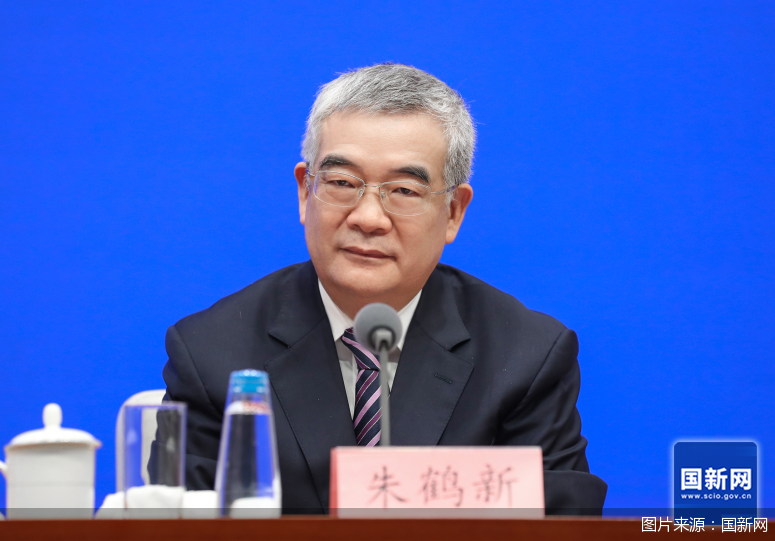
事关外汇市场,朱鹤新最新回应
21世纪经济报道· 2025-09-22 11:25
朱鹤新介绍,"十四五"以来,国际政治、经济、社会等多元因素交织,外部环境更趋严峻复 杂,国际金融市场波动加大。我国坚持推进高质量发展,实施高水平开放,总的看,我国外 汇市场运行平稳,不论是活力还是韧性都在增强,主要有三个方面的特点: 一是涉外经济稳健发展,跨境收支展现较强活力 。跨境收支可以反映一个国家涉外经济的活 跃度。2024年,我国跨境收支规模为14万亿美元,较2020年增长64%,年均增长速度"十四 五"比"十三五"时期提高8个百分点。今年前8个月,我国跨境收支同比增长10%,跨境贸易和 投融资活动持续活跃。 二是外汇市场功能更加完备,市场深度拓展 。从交易规模看,2024年交易量为41万亿美元, 较2020年增长了37%,即期和衍生品交易同步增长,外汇市场有足够的容量承接各类交易, 为高效配置外汇资源创造良好条件。 记者丨唐婧 编辑丨曾芳 视频编辑 丨王学权 9月22日下午3时,国新办举行"高质量完成'十四五'规划"系列主题新闻发布会,中国人民银行 行长潘功胜,金融监管总局局长李云泽,中国证监会主席吴清,中国人民银行副行长、国家 外汇局局长朱鹤新介绍"十四五"时期金融业发展成就,并答记者问。 南方财 ...

高质量完成“十四五”规划丨“十四五”以来我国外汇储备始终稳定在3万亿美元以上
Xin Hua Wang· 2025-09-22 10:27
Core Points - China's foreign exchange reserves have remained stable above $3 trillion since the 14th Five-Year Plan, with over $3.2 trillion in the past two years, serving as a crucial stabilizer for the economy [1] - The cross-border receipts and payments reflect the vibrancy of China's foreign economic activities, with a projected scale of $14 trillion in 2024, a 64% increase from 2020, and an annual growth rate 8 percentage points higher than during the 13th Five-Year Plan [1] - The foreign exchange market has expanded significantly, with a trading volume of $41 trillion expected in 2024, a 37% increase from 2020, and participation from 703 banks and 115 non-bank institutions as of June this year [1] - The government has successfully addressed external shocks through a dual management framework of macro-prudential and micro-regulation, with over 6,100 foreign exchange cases resolved since the 14th Five-Year Plan [1] Industry Focus - Enhancing the efficiency of trade foreign exchange receipts and payments, facilitating cross-border investment and financing, and improving banks' foreign exchange service capabilities are key priorities in China's foreign exchange sector [2] - The government aims to create a market-oriented, rule-of-law, and internationalized foreign exchange business environment while balancing financial openness and security to support a higher-level open economy [2]