情绪经济

Search documents
【民生把脉】老味道何以吃出新情绪
Zheng Quan Shi Bao· 2025-12-15 18:33
王志高 据《消费日报》报道,前三季度蜜饯行业规上企业营收逼近200亿元,利润与出口双双增长,在整体消 费疲软的背景下,这一"古老产业"不仅未显颓势,反而成为食品业创新最活跃的板块之一。这不禁引人 深思:一个曾被视为"老派零食"的传统品类,何以在健康焦虑弥漫、口味迭代加速的今天重焕生机?答 案或许不在怀旧情怀,而在其对时代情绪与消费逻辑的精准捕捉。 (文章来源:证券时报) 值得注意的是,蜜饯行业的转型并非孤立现象,而是中国传统食品制造业集体突围的一个缩影。从酱 油、醋到腐乳、腊味,越来越多"老味道"正在通过科技赋能与用户洞察实现现代化表达。它们不再固守 作坊式生产或地域性口味,而是主动拥抱标准化、功能化与全球化。蜜饯之所以能率先破圈,正因其兼 具原料天然、工艺可塑、口感普适等优势,使其更容易嫁接现代食品科学与消费心理学。这种"守正出 奇"的路径,为其他传统食品提供了可复制的经验。 当然,热潮之下亦需冷思考。当"情绪零食"成为风口,是否所有打着"解压""助眠"旗号的产品都经得起 科学验证?低糖无添加的承诺,又能否在成本压力下持续兑现?若只追逐概念而忽视标准建设与供应链 夯实,再热闹的创新也可能沦为泡沫。正如行业专 ...
Soul启动港股上市进程,高占比Z世代用户夯实“情绪经济”叙事
Sou Hu Wang· 2025-12-15 04:26
Core Insights - Soul App has submitted its main board listing application to the Hong Kong Stock Exchange, emphasizing its focus on "emotional value" for Generation Z [1] - The platform boasts that 78.7% of its daily active users belong to Generation Z, and it has achieved sustained profitability since 2023 [1][3] - The upcoming IPO is seen as a critical moment for Soul to gain recognition in the capital market through its unique positioning [1] User Demographics and Financial Performance - Over 78.7% of Soul's daily active users are from Generation Z, who engage in self-expression and interaction through virtual identities, seeking immersive satisfaction [3] - The company has reported nearly 1 billion yuan in adjusted net profit within three years of operation [3] - By 2021, Soul reached 9.1 million daily active users, with over 70% being post-90s users [4] Unique Business Model and Market Positioning - Soul's business model disrupts traditional social networking by not encouraging real avatars and instead promoting virtual identities, focusing on interests rather than appearances [4] - The platform's core philosophy is to prioritize understanding over recognition, addressing the emotional needs of users [4] - Soul has attracted significant investments from major stakeholders, including Tencent, which holds a 49.9% stake, making it the largest institutional shareholder [4] Future Outlook and Competitive Advantage - The progression of Soul's IPO signifies a shift towards validating its ability to meet deep emotional needs and realizing its value [6] - The company's unique understanding of "emotional value" will be crucial in transforming into a sustainable competitive advantage and ensuring long-term profitability in a highly competitive social networking landscape [6]

传媒行业周报:坚定布局游戏板块-20251214
KAIYUAN SECURITIES· 2025-12-14 15:23
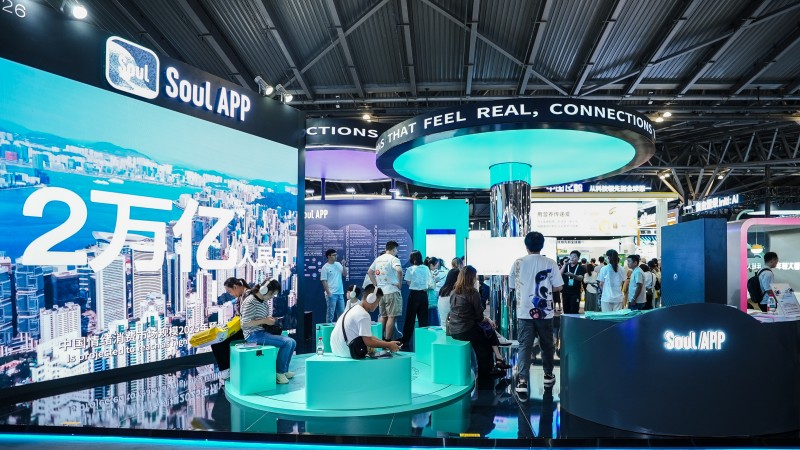
Investment Rating - The report maintains a "Positive" investment rating for the media industry [1] Core Insights - The gaming sector is expected to see a significant increase in revenue due to the upcoming holiday season and the launch of new games, with notable titles like "Nine Muses of the Wild" and "Goose Duck Kill" generating high anticipation [3] - The film industry is highlighted by the upcoming release of "Avatar 3," which has already garnered significant pre-sale interest, indicating strong potential for box office performance [3] - The emotional economy in China is projected to grow substantially, with the market expected to reach 8.1 trillion yuan by 2030, driven by online platforms and AI technology [11][12] Summary by Sections 1. Soul: Leading Immersive Social Platform - Soul is positioned as a leading platform in the immersive social space, leveraging AI to enhance user engagement and emotional value [11][17] - The emotional economy in China is projected to grow from 2.4 trillion yuan in 2024 to 8.1 trillion yuan by 2030, with a CAGR of 22.2% [12] - The platform reported a revenue of 16.83 billion yuan in the first eight months of 2025, reflecting a year-on-year growth of 17.82% [21][26] 2. Industry Data Overview - "Delta Action" topped the iOS free game chart, while "Honor of Kings" led the iOS revenue chart as of December 13, 2025 [27][31] - The film "Zootopia 2" achieved the highest weekly box office, indicating strong audience interest [41] 3. Industry News Summary - The release of GPT-5.2 is expected to enhance AI capabilities in the industry, while Disney's investment in OpenAI emphasizes the growing value of content IP [3] - The gaming sector is experiencing a surge, with "Delta Action" achieving record daily revenue following a new season launch [3] 4. Announcement Summary - Recent changes in leadership at various media companies and the successful "hat removal" of Caesar Culture highlight ongoing developments in the industry [3] 5. Sector Performance Overview - The A-share media sector performed moderately in the market, with the gaming sector showing strong performance [3]


毛利80%!80后女生低调赚了22亿,腾讯撑腰再冲上市
创业家· 2025-12-14 10:01
Core Viewpoint - Soul, a social platform targeting emotional connections, is preparing for its fourth IPO attempt, backed by Tencent's significant investment but facing substantial debt risks and user growth challenges [6][7][60]. Group 1: Company Overview - Soul was founded in 2016, focusing on "soul matching" through interest graphs and personality tests, diverging from traditional social media by not emphasizing appearance or real-life identities [15][20]. - The platform has attracted approximately 3.9 billion registered users, with Tencent holding a 49.9% stake, providing strategic support [7][20]. - Soul's business model includes virtual avatars, membership privileges, and virtual gifts, generating over 80% gross margins [22][25]. Group 2: Financial Performance - In the first eight months of 2025, Soul's "emotional value services" accounted for 90.8% of its revenue, with an average monthly contribution of 104.4 yuan per paying user [25][31]. - The company turned a profit in 2023, earning 361 million yuan, and is projected to earn 337 million yuan in 2024 [31]. Group 3: User Engagement and Challenges - Despite its revenue growth, Soul's monthly active users have stagnated at around 28 million, down from a peak of 29.4 million in 2022 [34][36]. - The platform's paying user rate is only 6.5%, indicating a challenge in converting users to paying customers [35][38]. - User complaints about content safety and negative experiences have increased, highlighting potential risks to user retention and platform reputation [43][59]. Group 4: IPO and Debt Pressure - Soul's IPO attempt is complicated by a significant redeemable debt of 12.4 billion yuan, which poses a repayment risk if the company fails to go public [60][62]. - The company is shifting its narrative from a "social metaverse" to an "AI + immersive social platform" to attract investor interest and justify its R&D expenditures [63][64]. Group 5: Industry Implications - Soul's journey reflects broader trends in the emotional economy and the challenges of monetizing emotional connections in a competitive social media landscape [70][76]. - The platform's evolution raises questions about the sustainability of its business model and the balance between user experience and commercial pressures [74][76].

Soul上市是情绪经济的胜利,AI社交的资本里程碑
Sou Hu Cai Jing· 2025-12-10 01:23
Core Insights - Soul's upcoming IPO in 2025 is a significant event in the capital market, driven by its strategic backing from Tencent and a strong user base of 78.7% Gen Z users [1] - The platform has demonstrated its value in the "emotional economy" with a business model that emphasizes emotional value services, accounting for 90.8% of its revenue [1][3] User Engagement and Retention - As of August 31, 2025, Soul has 389 million registered users and 11 million daily active users, with impressive user loyalty metrics: 80% three-month retention rate, over 50 minutes of daily usage, 75 messages sent per user per day, and 20.1 daily launches [3][4] - The platform has created a "virtual social space" that allows users to connect based on interests and values, moving away from traditional social media's identity labels [3][4] Revenue Growth and Business Model - Soul's revenue compound annual growth rate (CAGR) exceeds 15% from 2022 to 2024, with revenue reaching 1.683 billion yuan in the first eight months of 2025, a 17.8% year-on-year increase [4][8] - The platform's business model combines low-entry barriers with high-margin monetization strategies, including virtual goods and subscription services, leading to a monthly average revenue per paying user (ARPPU) of 104.4 yuan, a 140% increase since 2020 [8][9] Technological Integration - Soul's proprietary AI model, SoulX, enhances user experience by accurately understanding emotions and matching social needs, improving interaction efficiency by 32% and increasing conversion rates by 18% [6][7] - The platform's AI-driven content creation tools enable users to produce high-quality content, resulting in over 10 million new original pieces monthly [7] Market Position and Future Outlook - Soul's successful transition from continuous losses to stable profitability, with adjusted profits of 361 million yuan in 2023 and 337 million yuan in 2024, showcases its effective monetization strategy [8][9] - The stable shareholder structure, with Tencent holding 49.9%, supports Soul's commercialization efforts and strategic continuity [9][10] - The upcoming IPO funds will be allocated to AI development, GPU infrastructure, global expansion, and content creation, indicating a clear strategic direction for future growth [10] Industry Impact - Soul's IPO represents a maturation of the emotional economy in China, highlighting the shift from mere user acquisition to creating irreplaceable emotional value for users [11][12] - The platform sets a new value benchmark in the social media sector, demonstrating the commercial potential of emotional connections and the feasibility of integrating AI into traditional industries [11][12]
爱潮玩更爱拼豆,“狐兔CP”背后的新情绪经济
3 6 Ke· 2025-12-10 00:45
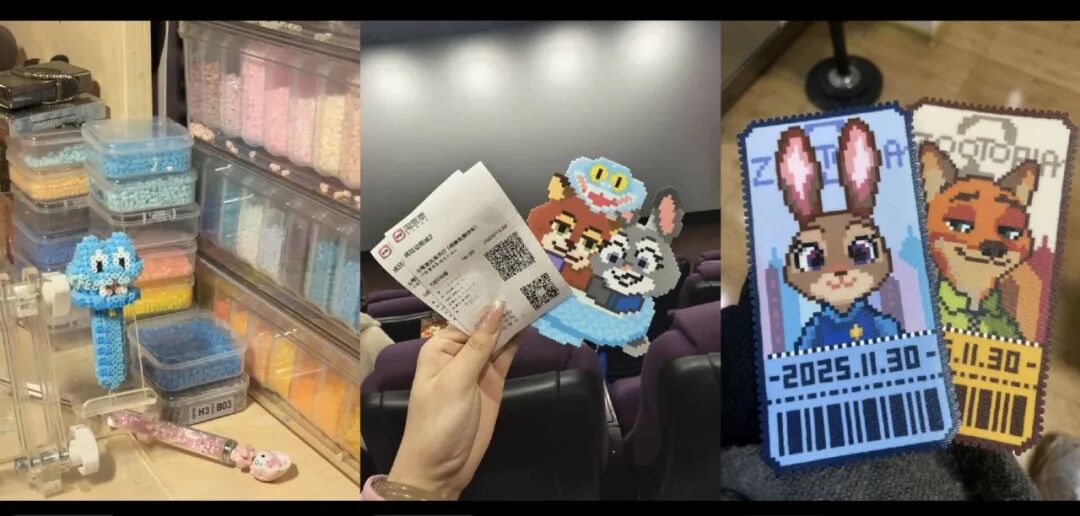
Core Insights - The release of "Zootopia 2" has generated significant revenue of 3.1 billion in the Chinese market within 14 days, also boosting the popularity of related IP merchandise, particularly pixel art beads known as "pin beads" [1][2] - The pin bead trend has evolved from a niche hobby to a mainstream emotional outlet for young adults, with a projected market size nearing 1 billion by 2026 [2][10] Group 1: Market Dynamics - The average price for pin bead DIY experiences is around 50 yuan per hour, revitalizing approximately 18,000 DIY craft studios across the country [2][11] - Online platforms like Taobao and Pinduoduo report monthly sales exceeding 10,000 for pin bead kits, with some stores linked to "Zootopia" IP selling up to 500,000 units [2][11] - The popularity of pin beads has led to a surge in social media engagement, with over 520 million discussions on Xiaohongshu and 5.9 billion views on Douyin [17][19] Group 2: Consumer Behavior - Pin beads serve as a therapeutic activity for many, allowing individuals to express creativity and relieve stress in a fast-paced urban environment [20][24] - The low entry barrier and high satisfaction from creating pin bead art make it an appealing hobby for adults, akin to a simplified version of cross-stitching [25][24] Group 3: Economic Potential - The pin bead market has shown a clear path to profitability, with high margins on experience services and a strong demand for materials and custom designs [29][36] - The integration of celebrity endorsements has significantly expanded the market, transitioning pin beads from a niche interest to a viable business opportunity [26][29] Group 4: Challenges and Future Outlook - The pin bead industry faces challenges related to IP rights, as many designs infringe on copyright, limiting the potential for large-scale commercialization [39][41] - Without proper licensing, the industry may struggle to evolve beyond small-scale operations, relying on fleeting trends rather than sustainable growth [43]
对5A祛魅的年轻人,在景区排队“调戏”NPC
3 6 Ke· 2025-12-08 12:13
01 "御弟哥哥,留在我这女儿国行不行?" "你说四大皆空,却紧闭双眼,要是你睁开眼睛看看我,我不相信你两眼空空。" "我睁眼看你又能咋滴....." 前段时间我在长春动植物园夜场,经历了上面这一幕。 从全国各地赶来长春的"女王们",顶着零下七八度的寒冬,只为上台和唐僧演对手戏的那五六分钟。 你很难想象,在一个以"动植物"为招牌的东北老牌公园里,镇场子的不是东北虎,不是梅花鹿,而是一个"高僧"和一个"猴子"。 趁着唐僧和"女王们"飙戏的间隙,我和人群中两位年轻人闲聊了几句,"昨天才下过雪,为什么这么冷的天,你还要来看御弟哥哥?" 其中一位抿嘴笑了笑,说来"磕CP",另一位很含蓄,"来见活的唐僧,始于颜值,陷于才华。" 后来我找景区工作人员打听,才知道闫东扮演的"唐僧"和王铁柱扮演的"雪饼猴"现在是长春动植物园的两大顶流,抖音粉丝都超过300万。 如果把视线从东北的"戏精唐僧"拉回南方,你会发现"调戏"NPC这事被深圳欢乐谷玩到了另一个Level。 在小红书上搜索深圳欢乐谷,弹出来的不是打卡攻略,而是"男模""集邮"等字眼。 在这里跟男模比心、摸头杀只能算入门;借位亲吻、十指相扣转圈圈、手摸腹肌公主抱,才是解锁 ...

情绪经济的背后是经济情绪
Xin Lang Cai Jing· 2025-12-07 11:02
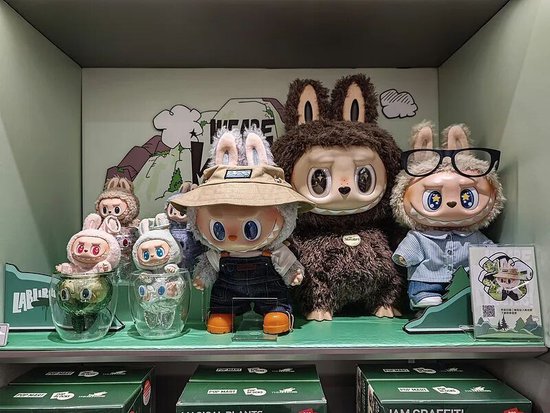
Core Insights - "Emotional value" is becoming a key driver in the 2025 consumer market, reflecting a complex interplay between economic cycles and collective psychology [3][25] - The rise of LABUBU as a cultural icon signifies a shift in consumer behavior, where emotional resonance surpasses practical functionality [25][30] - The emotional consumption market in China is projected to exceed 2 trillion yuan in 2025, indicating significant growth potential [4][22] Group 1: Emotional Consumption Trends - The emotional consumption market has been growing at an annual compound rate of 12% since 2013, with expectations to reach over 2 trillion yuan by 2025 [22][41] - Companies like IKEA are adapting their strategies to incorporate emotional value into product development, moving beyond mere market trends to capture the emotional temperature of consumers [4][26] - The success of LABUBU illustrates the emergence of "social currency," where products serve as symbols of identity and belonging among affluent consumers [28][41] Group 2: LABUBU's Market Impact - LABUBU, a key IP from Pop Mart, has seen its popularity soar, with a peak auction price of 1.08 million yuan for a unique sculpture, highlighting its status as a luxury item [6][28] - In the first half of 2025, Pop Mart's revenue reached 13.88 billion yuan, a year-on-year increase of 204.4%, largely driven by LABUBU's success [7][28] - The LABUBU series generated 4.81 billion yuan in revenue, accounting for 34.7% of Pop Mart's total revenue, showcasing its significant contribution to the company's growth [7][28] Group 3: Cultural and Global Resonance - LABUBU represents a successful case of Chinese cultural creativity going global, employing a "borderless aesthetic" that resonates with diverse consumer bases [29] - The brand has faced challenges with counterfeit products, leading to significant enforcement actions against piracy, indicating its high demand and cultural significance [29] - LABUBU's design and marketing strategies effectively engage with global consumers, creating a cultural phenomenon that transcends traditional toy markets [29][30] Group 4: Emotional Value in Consumer Behavior - The interplay between "belonging" and "existence" is crucial in emotional consumption, with products often serving dual roles in providing security and individual expression [19][39] - The rise of characters like LABUBU and the capybara reflects a collective yearning for emotional stability and personal identity in a rapidly changing social landscape [20][39] - Emotional consumption is not a new phenomenon; historical examples like Hello Kitty and Jellycat illustrate its enduring relevance across different economic contexts [11][32]
Soul三闯港交所 已成Z世代“情价比”消费平台?
Xin Lang Cai Jing· 2025-12-05 20:12
Core Viewpoint - Soul, an AI-driven immersive social platform, has submitted its IPO application to the Hong Kong Stock Exchange, marking its third attempt at going public, with a notable improvement in financial performance compared to previous attempts [1][6]. Financial Performance - For the first eight months of 2025, Soul reported revenue of 1.683 billion yuan, a year-on-year increase of 17.86%, and an adjusted net profit of 286 million yuan, up 73% from the previous year [1][2]. - Projected revenues for 2022, 2023, and 2024 are 1.667 billion yuan, 1.846 billion yuan, and 2.211 billion yuan respectively, with gross profits of 1.439 billion yuan, 1.578 billion yuan, and 1.851 billion yuan, reflecting gross margins of 86.3%, 85.5%, and 83.7% [1][2]. User Engagement - Soul has approximately 390 million registered users, with a daily active user (DAU) count of about 11 million in the first eight months of 2025, and an average usage time exceeding 50 minutes per day [2][6]. - The platform has a monthly user retention rate of 80% over three months, indicating strong user engagement [2]. Emotional Value and Consumer Behavior - A report indicates that 46.8% of youth view emotional value as a remedy for stress, with nearly 60% willing to pay for emotional value, reflecting a shift towards "emotional value consumption" [2][3]. - Soul's unique positioning focuses on AI-driven emotional value services, differentiating itself from traditional social platforms by emphasizing psychological resonance and emotional connections [3][6]. Revenue Model and User Monetization - AI-driven services, including virtual goods and membership privileges, account for over 90% of Soul's revenue in the first eight months of 2025, with an average revenue per paying user of 104.4 yuan [6]. - The platform's paid user conversion rate stands at 6.5%, demonstrating a strong willingness to pay for emotional value services [6]. Shareholder Structure and Strategic Support - Tencent holds a 49.9% stake in Soul, providing significant strategic support without direct involvement in daily operations, which may enhance investor confidence during the IPO process [7]. - Other shareholders include miHoYo, Genesis Capital, and 5Y Capital, contributing to a diverse ownership structure [7].
情绪消费成新风口,如何规范发展?湖南省消保委建议加强监管!
Sou Hu Cai Jing· 2025-12-05 10:01
前不久,"情绪消费"成为一种新的消费方式登上平台热搜。从虚拟情感陪伴服务到线下解压类创意产 品,情绪消费形式不断丰富,情绪经济成为消费新风口。但是,也有不少市民向《为民热线》节目反 映,情绪消费中存在商品粗制滥造、服务背后套路深的问题。情绪消费,要怎么避坑?又该如何健康有 序发展?马上通过今天的《消费维权课堂》了解一下。 情绪经济成新消费增长点 林同学说:"我不断收到保险、买房、健身各种骚扰电话,而且因为自己就读英语专业,不断有留学机 构和教培机构精准找到我。但这些信息我只和"陪聊员"说起过,现在很担心对方用AI合成的声音诈骗爸 妈。" 林同学找到群主想要维权,却被群主踢出群聊,再也联系不到对方。对此,吴卫表示陪聊、树洞等情绪 服务的行业门槛低、服务良莠不齐,部分从业者缺乏专业心理资质,消费者在选择此类消费时应注意三 个方面 省消保委:相关问题有待规范治理 为快乐买单,是很多年轻人的消费态度。11月30日,长沙五一商圈的一家潮玩店里,挑选买单的消费者 络绎不绝。"00后"的王女士与朋友们在此收获不少。 据上海市青少年研究中心发布的《2025 Z世代双十一消费行为报告》,今年Z世代(泛指"95后""00 后") ...