机器学习

Search documents
两院院士增选结果揭晓:周志华、刘云浩当选科学院院士
机器之心· 2025-11-21 02:04
Core Points - The Chinese Academy of Sciences and the Chinese Academy of Engineering announced the results of the 2025 academician elections, electing 73 academicians from the former and 71 from the latter, further optimizing the structure of the academician team in China [2][3] - The average age of newly elected academicians from the Chinese Academy of Sciences is 57.2 years, with 67.1% being 60 years old or younger, and 5 female scientists among the elected [2][3] - Notably, several scholars related to the field of artificial intelligence were elected, highlighting China's ongoing breakthroughs and emphasis on cutting-edge technology [4][7] Summary by Sections Chinese Academy of Sciences - A total of 908 academicians are currently in the Chinese Academy of Sciences after this election [3] - The newly elected academicians include prominent figures in computer science and artificial intelligence, indicating a focus on advanced technology [7] - Notable elected members include Liu Yunhao, a professor at Tsinghua University, recognized for his research in computer system architecture and IoT [10][11] and Zhou Zhihua, a professor at Nanjing University, known for his work in machine learning theory and methods [12][15] Chinese Academy of Engineering - The Chinese Academy of Engineering elected 71 academicians and 24 foreign academicians in 2025 [25] - The election reflects a diverse range of expertise across various engineering disciplines, including mechanical, electronic, and environmental engineering [26][27][29][30] - The elected academicians are affiliated with prestigious institutions, contributing to advancements in their respective fields [26][27][29][30]


Novartis (NYSE:NVS) Update / Briefing Transcript
2025-11-20 09:02
Summary of Novartis Management Investor Event Company Overview - **Company**: Novartis - **Event**: 2025 Meet Novartis Management Investor event - **Focus**: Interaction between investors, analysts, and management teams, discussing company performance and future strategies [1][3] Core Industry Insights - **Industry**: Pharmaceuticals - **Strategy**: Transitioned to a pure-play medicines company, divesting from Alcon and Sandoz, leading to a focused strategy on four key therapeutic areas and key geographies [4][6] Financial Performance - **Sales Growth**: Achieved 7% sales growth and 15% core operating income growth [4] - **Free Cash Flow**: Generated $15.9 billion in the first nine months of the year, comparable to the full year 2024 number [5] - **Return on Invested Capital**: Improved to 17%, above peer median [5] - **Shareholder Returns**: Ranked in the top five for total shareholder returns over five years and second over three years [5] Strategic Focus Areas - **Therapeutic Areas**: Focus on four key therapeutic areas and technology platforms, including data science and artificial intelligence [6] - **Capital Allocation**: Emphasis on investing in business growth, with ongoing share buybacks and a commitment to a growing dividend [7] Product Portfolio and Pipeline - **Blockbusters**: 14 in-market blockbusters and eight brands with peak sales potential over $3 billion [8] - **Pipeline Assets**: 30 high-value pipeline assets with 15 submission-enabling readouts expected in the next two years [11][22] - **Market Potential**: Estimated market sizes for new platforms: $36 billion in RNA therapeutics, $28 billion in radioligand therapies, and up to $49 billion in cell and gene therapies [9] Growth Outlook - **Sales Guidance**: Upgraded guidance for 2024-2029 to 6% sales growth, with 5-6% expected from 2025 to 2030 [11][12] - **Core Margin**: Anticipated decline of 1-2 percentage points in core margin in 2026 due to the Avidity acquisition, with recovery expected to over 40% by 2029 [12] Launch Performance - **Recent Launches**: Strong performance in recent product launches, with significant market shares achieved within months [15][16] - **International Markets**: Notable growth in China, Germany, and Japan, with aspirations to improve market positions [16] Key Product Updates - **Kisqali**: Upgraded to over $10 billion peak sales potential based on strong early performance [17] - **Cosentyx**: Maintained outlook at $8 billion, supported by recent positive data [17] - **Kesimpta**: Projected at over $6 billion, with ongoing evaluations of competitive dynamics [17] - **Scemblix**: Upgraded guidance based on strong brand share growth despite competition [18] Regulatory and Market Challenges - **European Market**: Facing challenges due to MFN agreements affecting pricing and market access, leading to potential delays in product launches [55][56] - **Asia Growth**: Significant opportunities identified in Asian markets, particularly China and Japan [56] ESG Commitment - **Sustainability**: Recognized as a leader in ESG matters, with a AAA MSCI rating and a commitment to global health initiatives [48] Conclusion - **Overall Strategy**: Novartis is positioned for continued growth with a strong pipeline, focused strategy, and commitment to shareholder returns, despite facing regulatory challenges in Europe and a competitive market landscape [49]

本周六,围观学习NeurIPS 2025论文分享会,最后报名了
机器之心· 2025-11-20 06:35
Core Insights - The evolution of AI is transitioning from "capability breakthroughs" to "system construction" by 2025, focusing on reliability, interpretability, and sustainability [2] - NeurIPS, a leading academic conference in AI and machine learning, received 21,575 submissions this year, with an acceptance rate of 24.52%, indicating a growing interest in AI research [2] - The conference will take place from December 2 to 7, 2025, in San Diego, USA, with a new official venue in Mexico City, reflecting the diversification of the global AI academic ecosystem [2] Event Overview - The "NeurIPS 2025 Paper Sharing Conference" is designed for domestic AI talent, featuring keynote speeches, paper presentations, roundtable discussions, poster exchanges, and corporate interactions [3] - The event is scheduled for November 22, 2025, from 09:00 to 17:30 at the Crowne Plaza Hotel in Zhongguancun, Beijing [5][6] Keynote Speakers and Topics - Morning keynote by Qiu Xipeng from Fudan University on "Contextual Intelligence: Completing the Key Puzzle of AGI" [8][14] - Afternoon keynote by Fan Qi from Nanjing University on "From Frames to Worlds: Long Video Generation for World Models" [10][17] Paper Presentations - Various presentations will cover topics such as data mixing in knowledge acquisition, multimodal adaptation for large language models, and scalable data generation frameworks [9][30] - Notable presenters include doctoral students from Tsinghua University and Renmin University, showcasing cutting-edge research in AI [9][30] Roundtable Discussion - A roundtable discussion will explore whether world models will become the next frontier in AI, featuring industry experts and academics [10][20]

重塑现金管理的四大趋势:对公银行业务未来展望
EY· 2025-11-20 02:47
Investment Rating - The report does not explicitly state an investment rating for the industry Core Insights - The future of corporate banking cash management is being reshaped by four major trends, emphasizing the need for customized solutions and data-driven services to enhance client relationships and operational efficiency [5][11] - There is a significant increase in demand for strong liquidity and cash management strategies due to complex geopolitical factors and fluctuating economic conditions [5][9] - The transition from transactional products to strategic, data-driven services is accelerating, requiring advanced knowledge and integrated data flows [5][10] Summary by Sections Cash Management Trends - The report identifies four key trends reshaping cash management, focusing on automation, data-driven services, customized solutions, and blockchain technology [7][11] - Companies are increasingly recognizing the potential of automated digital solutions and richer data sets to enhance their cash management capabilities [5][10] Strategic Cash Management - CFOs and treasury executives are under pressure to transform operations and establish new collaborative models, maximizing internal liquidity and reducing reliance on external financing [9][11] - There is a growing expectation for banks to provide actionable insights and industry-specific knowledge to meet client needs [9][11] Data-Driven Services - The report highlights the importance of integrating multi-source data to provide timely, actionable recommendations tailored to client operations and industry standards [31][32] - Clients are interested in AI-driven solutions that offer predictive insights and access to external data sets [33][36] Industry-Specific Solutions - There is a strong demand for customized cash management services that cater to the unique characteristics of different industries, with a significant portion of CFOs expressing the importance of industry-specific knowledge [43][45] - Banks are encouraged to develop vertical solutions that simplify core functions and adapt to industry-specific cash flow cycles and payment patterns [49][54] Digital Assets and Blockchain - The rise of digital assets, including stablecoins and tokenized funds, presents new opportunities and challenges for cash management solutions [56][61] - Banks are expected to leverage blockchain technology to enhance transaction efficiency and expand their service offerings to digital-native clients [62][63]
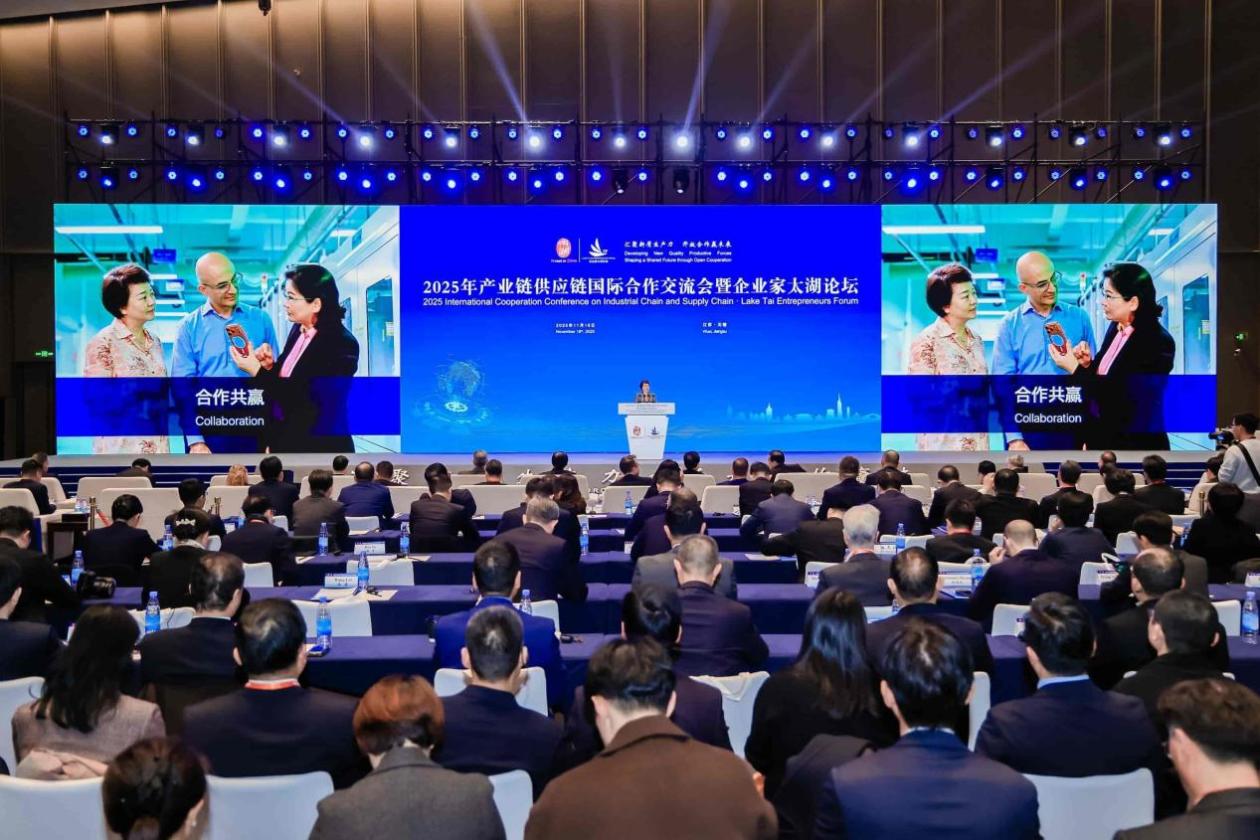
江苏产业链供应链国际合作交流会暨企业家太湖论坛举办,苹果公司深化在华合作
Huan Qiu Wang· 2025-11-19 13:17
以常州瑞声科技为例,在高精密的生产过程中,瑞声科技运用人工智能和机器学习技术提升产品检测效率,通过自动化实现模具循环使用和铜材回收等工 艺,减少材料浪费,践行可持续发展承诺。 崔玉善说:"苹果公司也致力于让世界更美好,过去十年间,已将全球碳足迹降低了超过60%,并大幅提升了再生材料的使用比例。苹果公司承诺到2030 年,在供应链和整个产品生命周期中实现百分百碳中和。" 据悉,目前,苹果公司产品在中国已有超过90%的生产制造采用可再生能源,立讯精密等供应商已完全实现使用清洁能源生产苹果公司产品,并在关键 iPhone部件中100%使用再生稀土元素、再生铜和再生钨。 【环球网科技报道 记者 张阳】11月18日,以"汇聚新质生产力开放合作赢未来"为主题的2025年产业链供应链国际合作交流会暨企业家太湖论坛在无锡成功 举办。作为商务部"投资中国"系列活动重要组成部分,论坛搭建起跨国界、跨行业的交流合作平台,吸引了苹果、辉瑞、LG新能源等全球知名企业代表齐 聚,共探产业链供应链高质量发展新路径。 论坛现场披露的数据显示,江苏已成为外资企业投资兴业的优选地。2024年江苏实际使用外资190.5亿美元,占全国比重16.4% ...

“惊人转变”,美媒:清华AI专利数超过哈佛、麻省理工等美国四校总和
Xin Lang Cai Jing· 2025-11-19 09:23
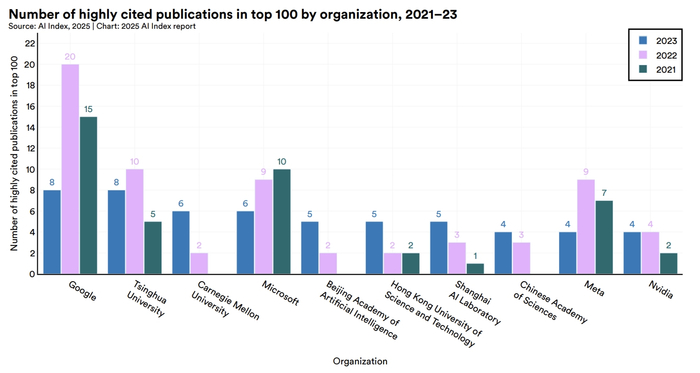
Core Insights - China's artificial intelligence (AI) technology is rapidly advancing, narrowing the gap with the United States, as evidenced by Tsinghua University leading in the number of highly cited AI papers and surpassing top U.S. universities in patent approvals [1][2] Group 1: Academic Achievements - Tsinghua University has accumulated 4,986 AI and machine learning-related patents from 2005 to the end of 2024, with over 900 new patents added in the last year [1] - In the global context, China holds over half of the effective patent families in the AI field [1] - Tsinghua's engineering, AI, and computer science programs consistently rank among the top globally [4] Group 2: Competitive Landscape - Despite China's advancements, the U.S. still leads in influential patents and high-performance models, with 40 notable AI models developed by U.S. institutions compared to 15 from China [1] - The proportion of top global AI researchers from China increased from 10% in 2019 to 26% in 2022, while the U.S. share decreased from 35% to 28% [2] Group 3: Innovation and Startups - The success of Chinese AI startups, such as DeepSeek, demonstrates the capability of Chinese teams to compete in the large language model space [5] - Tsinghua's Brain and Intelligence Laboratory fosters interdisciplinary education, leading to innovative projects like the Hierarchical Reasoning Model (HRM) developed by students [5] Group 4: Government and Institutional Support - The Chinese government is providing substantial support for AI research through tax incentives, funding subsidies, and policies that encourage innovation [4] - Tsinghua University is integrating AI technology across all disciplines, making AI research a common activity among students [7] - The establishment of new AI computing platforms at Tsinghua aims to facilitate research across various fields by providing free computational resources to students [7]
人工智能系列谈丨AI时代的机遇与挑战:从科技创新到行业应用
Xin Hua She· 2025-11-18 06:34
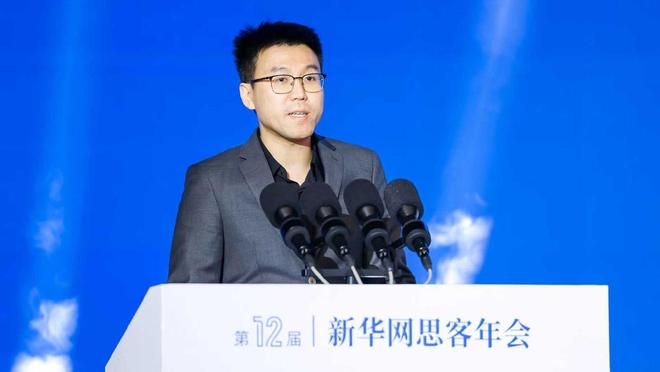
Core Insights - The article emphasizes the accelerating impact of artificial intelligence (AI) on industrial transformation, highlighting the shift from theoretical breakthroughs to practical applications across various sectors [2][3][4]. Group 1: AI Development and Trends - AI has evolved significantly over the past 70 years, transitioning from expert systems to machine learning and now to deep learning, which utilizes neural networks to solve complex problems [3][4]. - The introduction of large language models (LLMs) marks a new phase in AI development, enabling better understanding and generation of human language [4][5]. - The current trends in AI include a shift in focus from model training to inference, with increasing demand for practical applications and solutions to real-world problems [6][7]. Group 2: Policy and Industry Response - The Chinese government is actively supporting the "AI+" initiative, aiming to integrate digital technology with manufacturing and market advantages, with a target for widespread adoption of intelligent applications by 2027 [2][7]. - Companies are encouraged to adopt a four-step methodology for AI implementation, which includes identifying business pain points, defining core values, executing plans, and adapting organizational structures to leverage AI effectively [8][9]. Group 3: Philosophical Considerations - The debate on whether AI will replace humans is ongoing, with contrasting views from industry leaders. Some express concern over AI's potential to surpass human capabilities, while others believe it will enhance human productivity and quality of life [10][12]. - The efficiency of human cognition, which operates on approximately 20 watts, starkly contrasts with the energy demands of training advanced AI models, highlighting the unique advantages of human intelligence [11].
重大转变!“中国:0→47%,美国:88%→9%”
Guan Cha Zhe Wang· 2025-11-18 00:44
Core Insights - The article highlights a significant shift in the global remote sensing research landscape, with China increasing its share of published papers from nearly zero in the 1990s to 47% by 2023, while the U.S. share plummeted from 88% to 9% [1][2][5]. Group 1: Research Output - In 2023, China accounted for nearly half of the global remote sensing publications, while the U.S. share fell below 10% [2]. - The number of remote sensing papers published globally has grown exponentially, from just over ten per year in the 1960s to more than 13,000 annually by 2023 [9]. - A study analyzed over 126,000 scientific papers from 72 journals between 1961 and 2023, revealing China's rapid rise in research output [5]. Group 2: Funding and Institutional Support - Research funding levels are strongly correlated with publication output, with over 53% of China's remote sensing papers funded by the National Natural Science Foundation, compared to only 5% for U.S. institutions [6]. - The top six funding agencies for remote sensing research from 2011 to 2020 were all Chinese, while NASA and the National Science Foundation (NSF) ranked seventh and eighth, respectively [7][8]. Group 3: Technological Advancements - China has made significant breakthroughs in remote sensing technologies, including multi-spectral and hyperspectral imaging, synthetic aperture radar, and advancements in data transmission and processing [12]. - Recent innovations include a dual-station collaborative ranging technology achieving nanometer-level precision, which could support high-precision space research [12]. Group 4: Future Outlook - The article suggests that unless the U.S. government significantly adjusts its funding priorities, it is unlikely to regain its leadership in remote sensing innovation [13][14]. - The ongoing investment in artificial intelligence, machine learning, and quantum computing by China is expected to further enhance its capabilities in remote sensing [10].
王缉慈|中国中小企业的地方集群面面观
Xin Lang Cai Jing· 2025-11-17 03:27
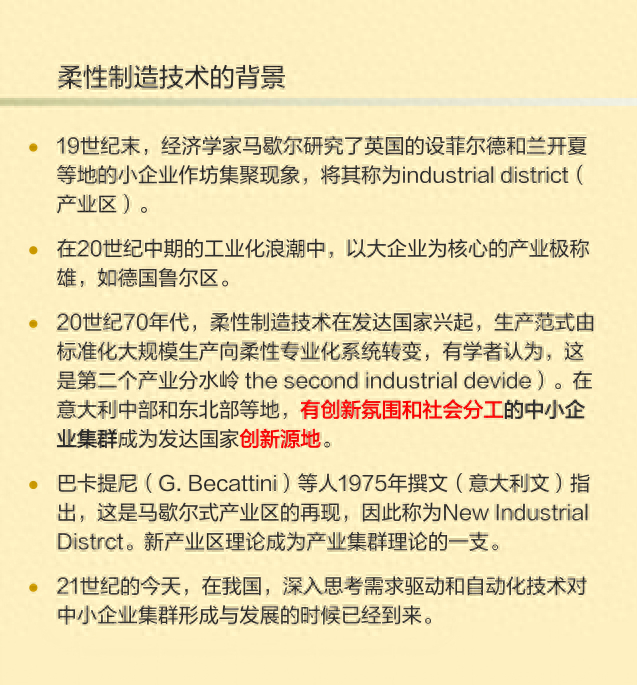
Core Insights - The importance of small and medium-sized enterprises (SMEs) in economic growth and job creation is emphasized, highlighting that isolated enterprises struggle to survive [3][6][8] - The concept of industrial clusters, particularly in the context of SMEs, is discussed, noting that these clusters can enhance innovation and competitiveness against larger firms [2][3][6] - The evolution of SME clusters in China is traced, indicating that many of these clusters are rooted in specific localities and have emerged due to globalization and international outsourcing [6][8][10] Group 1 - SMEs are crucial for economic growth and job creation, but isolated firms face significant challenges [3][6] - The concept of industrial clusters, where SMEs can both compete and collaborate, is vital for enhancing innovation capabilities [2][3][6] - The rise of digital platforms and the establishment of a nurturing ecosystem for SMEs are essential for their development in the current technological landscape [8][10] Group 2 - Historical examples of successful SME clusters in China, such as the cashmere industry in Hebei and the sock industry in Zhejiang, illustrate the potential for growth and innovation [11][12] - The role of community building and local government support is highlighted as critical for the sustainable development of SME clusters [11][12] - The need for a structured approach to fostering these clusters, including the establishment of dedicated organizations and leveraging non-profit resources, is emphasized [11][12]
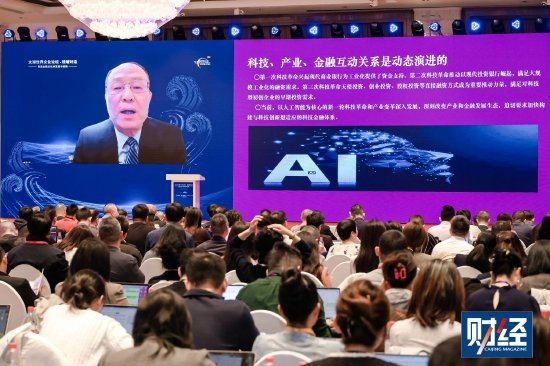
金融如何助力新质生产力发展?王一鸣:利用人工智能加强科技赋能
Zheng Quan Shi Bao Wang· 2025-11-13 13:38
Core Viewpoint - The forum discussed how finance can support the development of new productive forces, emphasizing the need for collaboration between commercial banks and innovative enterprises [1] Group 1: Financial System and Innovation - The current banking-dominated financial system must expand its support for technological innovation, with banks establishing specialized departments to provide tailored financial services for high-tech and specialized small and medium enterprises [3] - Long-term exploration of the investment-loan linkage model encourages banks to collaborate with external investment institutions to share risks while gaining better insights into the operational conditions of loan enterprises [3] - Development of intellectual property pledge financing is facilitated by advancements in AI and digital banking, which improve the assessment of intellectual property market value [3] Group 2: Bond Market and Venture Capital - Establishment of a technology board in the bond market is supported by the central bank, which promotes the issuance of innovation bonds for tech enterprises and provides risk compensation through structural tools [4] - The central government is advancing the establishment of a national venture capital guidance fund to address fundraising, investment, management, and exit issues, particularly focusing on improving exit channels beyond IPOs [4] - The equity market is encouraged to support innovation enterprises, enhancing the service levels of the Sci-Tech Innovation Board and the Growth Enterprise Market [4] Group 3: Technology Empowering Financial Services - The use of AI and machine learning to create intelligent risk control models can lower decision-making costs and risks for financial institutions, optimizing the efficiency of fund utilization [5] - Dynamic credit profiles can enhance risk identification capabilities, while effective risk-sharing and compensation mechanisms, such as insurance, are necessary for financing technology enterprises [5] - The integration of smart technology in financial services is expected to create effective channels for supporting the development of new productive forces [5]