光线追踪

Search documents
卡普空从质疑到惊叹:Switch 2可流畅运行《生化危机:安魂曲》
Sou Hu Cai Jing· 2026-02-25 04:16
Core Insights - The Switch 2 has finally achieved robust third-party game support a year after its release, with notable titles like "Resident Evil: The Devil's Symphony" set to launch soon [1][3] - Initial doubts from Capcom regarding the Switch 2's performance have been dispelled, as the final product exceeded expectations during testing [3] Performance and Development - Capcom initially questioned whether the Switch 2 could run high-demand games like "Resident Evil: The Devil's Symphony" smoothly, but the final performance astonished the development team [3] - The Switch 2's performance is now comparable to the Xbox Series S, and it even outperformed this entry-level console in running "Street Fighter 6" [3] Visual and Gameplay Features - The Switch 2 showcases impressive ray tracing effects and maintains stable frame rates during gameplay [4] - "Resident Evil: The Devil's Symphony" is set to officially release on February 27, with concerns raised over early leaks of the physical version [4]



我用物理公式"造"了一个黑洞,结果和NASA拍的一模一样!
李永乐老师· 2026-02-15 09:30
从牛顿经典物体运动出发,深入广义相对论的光线弯曲原理,再通过光线追踪技术,在Blender中实现了完整的黑洞模拟——引力透镜、爱因斯坦环、光子球阴影、多普勒效应、引力红移,一个不落。最终渲染出的黑洞图像与M87*真实照片(Event Horizon Telescope拍摄)高度吻合,甚至还原了吸积盘的不对称亮度分布。这不是巧合,这是广义相对论的胜利。 章节时间轴: 00:00 开场 — 为什么要手搓黑洞 00:27 等效原理 — 光线为什么会弯曲 04:47 测地线和度规 — 时空的测量尺 07:45 史瓦西度规 — 黑洞的数学描述 12:21 光线偏折 — 广义相对论的核心公式 17:26 光线追踪 — 从理论到渲染 19:46 黑洞模拟 — Blender实现全流程 21:03 爱因斯坦环 — 引力透镜的震撼效果 23:35 黑洞吸积盘 — 最具美感的黑洞 26:58 多普勒效应 — 吸积盘的不对称亮度 27:39 引力红移 — 黑洞阴影的成因 28:05 对比M87 — 模拟vs真实照片 29:15 结尾 — 我们看到的不是黑洞本身 使用的工具与技术: • Blender(几何节点) • 广义相对论(爱 ...

象帝先伏羲GPU,5纳米
半导体芯闻· 2025-12-01 10:29
Core Viewpoint - The article discusses the launch of the new generation GPU, Vusi A0, by the Chinese manufacturer Xiangdi, highlighting its advanced specifications and capabilities in high-end rendering and AI applications [1][2]. Product Specifications - The Vusi A0 GPU is built on a 5nm process and features Imagination Technologies' DXD high-performance GPU IP, focusing on ray tracing, super-resolution, and large 3D scene rendering [1]. - It is reported that the Vusi A0 has an FP32 computing power of up to 160 TFLOPS and is equipped with 12GB of HBM2 memory, confirming earlier market speculations [1]. - The design includes a dual-slot, dual-fan configuration with four DRAM soldering positions, allowing for flexible capacity configurations in the future [2]. - During demonstrations, the Vusi A0 maintained an average of approximately 35 FPS while rendering complex 3D scenes and performing ray tracing in the game "Black Myth: Wukong" [2]. Product Development - The Vusi series chips have entered the tape-out stage, with plans for complete board testing and driver integration in the near future [2]. - The company plans to release two products under the new Vusi architecture: the A0 targeting high-end rendering and desktop-level visual computing, and the B0 integrating GPU and NPU for edge inference and AI PC markets [1].

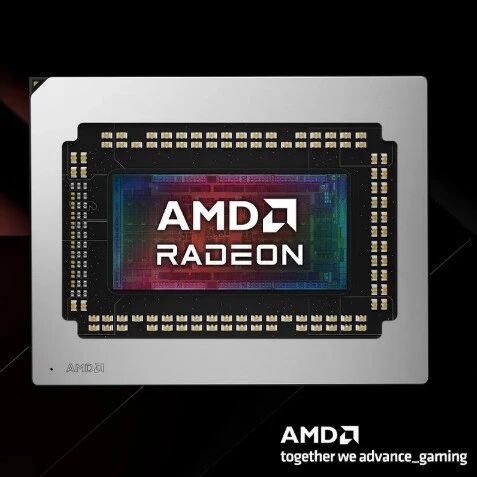
AMD RDNA4 GPU 架构,详细解读!
半导体行业观察· 2025-09-14 02:55
Core Viewpoint - AMD's RDNA4 architecture represents significant advancements in efficiency for gaming GPUs, particularly in ray tracing and machine learning workloads, while also improving rasterization performance [2][4][55]. GPU Architecture Improvements - RDNA4 introduces enhancements in ray tracing and machine learning efficiency, alongside improvements in rasterization [4]. - The architecture is designed with future workloads in mind, focusing on optimizing performance for the next five years [2]. Media Engine Enhancements - The media engine in RDNA4 supports hardware-accelerated video encoding and decoding, with a focus on improving quality for H.265, H.264, and AV1 codecs, particularly in low-latency scenarios [5][7]. - RDNA4's media engine shows superior performance in video quality metrics, such as Netflix's VMAF, across various bitrates [10]. Display Engine Features - The display engine in RDNA4 includes a "Radeon Image Sharpening" filter that enhances image quality without impacting performance, utilizing dedicated hardware for efficiency [13]. - Power consumption optimizations in the display engine target multi-monitor setups, allowing for dynamic refresh rate adjustments to save energy [14][15]. Compute Changes - RDNA4 retains the advanced layout of previous generations while introducing significant improvements in ray tracing units and memory management [16]. - Scalar floating point instructions have been expanded to enhance performance and reduce power consumption by offloading constant operations [18][20]. Memory Subsystem Enhancements - The architecture features an increased L2 cache size of 8 MB, which benefits high-demand workloads like ray tracing [23]. - RDNA4 employs transparent compression techniques across the system-on-chip (SoC) to reduce memory bandwidth usage and improve efficiency [29][42]. SoC Features - RDNA4 incorporates reliability, availability, and serviceability (RAS) features, including error detection and correction mechanisms [43]. - The architecture supports dynamic voltage and frequency scaling (DVFS) to optimize power consumption [51]. Infinity Fabric Integration - The Infinity Fabric in RDNA4 facilitates efficient memory access and consistency between CPU and GPU components, enhancing overall performance [49][51]. Conclusion - RDNA4 achieves a balance between performance and efficiency, with improvements in ray tracing, media encoding, and power management, while maintaining a compact chip size [55][58].

一文看遍热门芯片,Hot chips 2025首日盘点
半导体行业观察· 2025-08-26 01:28
Group 1: RISC-V Developments - Condor Computing, a subsidiary of Andes Technology, focuses on high-performance RISC-V core development with its first design, Cuzco, completed by a small team of 50 engineers [4][6]. - Cuzco aims to provide the highest performance within a similar power range compared to other RISC-V vendors, indicating a competitive landscape that may lead to a consolidation of players in the future [6][9]. - The Cuzco design features a wide front end, a deep 256-entry reorder buffer, and an 8-way execution pipeline, emphasizing optimization rather than reinventing existing technologies [9][11]. Group 2: Cuzco CPU Core Features - Cuzco is a complete IP design that includes not only the CPU core but also cache and coherence management functions, highlighting its comprehensive architecture [11]. - Key features of Cuzco include support for various precision floating-point operations, new bit manipulation instructions, cryptographic functions, and vector instructions, all crucial for high-performance computing [12][14]. - The innovative time-based microarchitecture of Cuzco aims to improve out-of-order execution efficiency while reducing power consumption by utilizing hardware compilation for instruction scheduling [16][19]. Group 3: Performance Metrics - Cuzco's architecture is designed to outperform Andes AX65 cores, achieving nearly double the performance in SPECint2006 benchmarks, showcasing its competitive edge [30][31]. - The design supports up to 8 CPU cores with private L2 and shared L3 caches, connected via a wide CHI bus, enhancing its scalability and performance [33]. Group 4: IBM Power11 Architecture - IBM introduced its Power11 architecture, building on the success of Power10, with a focus on system integration rather than just CPU sales [93][97]. - Power11 features enhancements in memory architecture, supporting up to 32 DDR5 memory ports with speeds up to 38.4 Gbps, aiming for high bandwidth and capacity [117][118]. - The architecture emphasizes fewer, larger cores and integrates AI capabilities directly into the processor, reflecting industry trends towards AI integration [102][114]. Group 5: Intel Clearwater Forest - Intel announced its next-generation 288-core processor, Clearwater Forest, utilizing the 18A process and 3D packaging technology, marking a significant advancement over the previous Sierra Forest generation [124][125]. - Clearwater Forest focuses on energy efficiency and multi-threaded workloads, leveraging smaller, efficient cores instead of traditional large cores [126][130]. - The architecture includes improvements in decoding width, out-of-order execution, and memory bandwidth, with claims of a 17% increase in IPC compared to Sierra [134][142]. Group 6: AMD RDNA 4 Architecture - AMD showcased its RDNA 4 architecture, emphasizing significant updates for graphics and machine learning workloads, with a focus on ray tracing and AI hardware [186][192]. - The architecture features improvements in shader engines, memory bandwidth, and media engines, enhancing performance for real-time workloads [203][205]. - RDNA 4 aims to optimize performance for next-generation gaming, integrating advanced features for ray tracing and AI/ML capabilities [242]. Group 7: NVIDIA Blackwell Architecture - NVIDIA's Blackwell architecture focuses on enhancing machine learning performance and efficiency, with a strong emphasis on FP4 ML computing [244][249]. - The architecture supports advanced features for neural rendering and dynamic scheduling, improving performance across various workloads [253][275]. - Blackwell introduces GDDR7 memory support, significantly increasing overall memory bandwidth and optimizing power consumption for mixed workloads [266][279].




【太平洋科技-每日观点&资讯】(2025-07-23)
远峰电子· 2025-07-22 12:26
Market Performance - The main board led the gains with notable increases in stocks such as XinYa Electronics (+10.00%), Dongxin Peace (+9.99%), and Hengbao Co. (+6.25%) [1] - The ChiNext board saw significant rises with Tai Chen Guang (+11.20%) and Cheng Tian Wei Ye (+10.60%) [1] - The Sci-Tech Innovation board was led by Fu Xin Technology (+20.01%) [1] - Active sub-industries included SW Semiconductor Equipment (+0.89%) and SW Electronic Chemicals III (+0.54%) [1] Domestic News - A new glass substrate project in Sichuan aims to produce glass packaging substrates for high-performance computing systems, with a monthly capacity of 3,000 pieces [1] - The first AI smart glasses, Looktech, have been launched in Wenzhou, with an annual production capacity of 150,000 units and an order worth 9 million yuan to be shipped to North America [1] - MediaTek and NVIDIA's collaboration on the C-X1 cockpit chip has gained traction among Chinese luxury car manufacturers, utilizing a 3nm process technology [1] - Online retail sales of monitors in China reached 7.28 million units in the first half of 2025, a year-on-year increase of 53%, with sales revenue of 8.19 billion yuan [1] Company Announcements - Han Yi Co. announced plans to acquire a 39% stake in Pi Dong Culture for 102 million yuan, which holds exclusive rights to popular esports IPs [3] - Dingxin Communications plans to sell its wholly-owned subsidiary, Qingdao Haina Smart Media Technology Co., for 24 million yuan [3] - Fuguang Co. reported a 0.40% reduction in shares by a major shareholder, Fujian State-owned Assets Management Co. [3] - Ruima Precision has been designated as a supplier for an automotive air suspension system project, with an expected total sales of approximately 336 million yuan over seven years [3] Overseas News - SK Group's chairman indicated that the arrival of HBM4 will change the competitive landscape, ending SK Hynix's exclusive supply position for NVIDIA's HBM3E by 2026 [4] - SK Keyfoundry and LB Semicon have developed an 8-inch wafer-level Direct RDL technology that meets automotive-grade standards [4] - NXP Semiconductors reported Q2 revenue of $2.926 billion, a 6% year-on-year decrease, heavily reliant on the automotive sector [4] - Elon Musk's Robotaxi project has integrated key technological upgrades into the FSD (Full Self-Driving) version [4]

Switch 2开售 任天堂业绩可期
Bei Jing Shang Bao· 2025-06-05 16:07
Group 1 - Nintendo's new gaming console, Switch 2, officially launched globally on June 5, marking the first new handheld product in 8 years since the original Switch was released in 2017 [1] - Switch 2 features significant hardware improvements, including a custom Nvidia processor with GPU performance reportedly 4 to 5 times better than its predecessor, enabling high-definition gameplay for major titles [1] - The console is available in Japan in two versions: a base model priced at 49,980 yen (approximately 2,503 RMB) and a multilingual version at 69,980 yen (approximately 3,504 RMB) [1] Group 2 - The demand for Switch 2 appears to be exceptionally high, with over 2.2 million pre-order applications received in Japan before its official release [2] - In the U.S., pre-orders sold out within two hours on Target's website, indicating strong market interest [2] - Nintendo's global production capacity for the first year is estimated at 12 million units, which is only 60% of the initial production capacity of the original Switch [2] Group 3 - Nintendo's financial performance had been declining prior to the Switch 2 launch, with a reported net sales of 1,164.922 billion yen (approximately 58.668 billion RMB) for the fiscal year 2025, a 30.3% year-over-year decrease [3] - Following the launch, Nintendo projects a 63.1% increase in revenue for fiscal year 2026, with sales targets of 15 million units for Switch 2 and 45 million game copies [3] - Analysts predict that Switch 2 will revitalize the gaming console market by leveraging advanced AI graphics technology and 4K output capabilities [3] Group 4 - Ampere's analyst predicts that Switch 2's sales could exceed 100 million units by 2030, building on the 152 million units sold of the original Switch [4] - In the domestic market, pre-orders for Switch 2 on JD.com have surpassed 400,000, with prices inflated by scalpers before the official release [4] - Various promotional offers and subsidies are available for the Hong Kong version of Switch 2, making it more accessible to consumers [4][5]
TechInsights:预计任天堂Switch 2将在今年重振游戏主机市场
智通财经网· 2025-06-05 06:19
Core Viewpoint - Nintendo's Switch 2 is expected to revitalize the gaming console market in 2025 with significant advancements in handheld gaming performance through AI graphics technology, ray tracing, and 4K output [1] Group 1: Product Features and Performance - The Switch 2 will feature a custom SoC from NVIDIA, equipped with RT cores and Tensor cores, enabling real-time ray tracing, HDR rendering, and DLSS technology, allowing for 4K resolution in docked mode and up to 120 frames per second at 1080p in handheld mode [1] - Nintendo claims that the graphical performance of the Switch 2 is ten times better than the original Switch [1] Group 2: Market Positioning and Pricing - The Switch 2 is priced at $449.99, which is a $50 increase from the launch price of its predecessor, with flagship games like "Mario Kart World" retailing at $80 [2] - Despite initial pricing concerns, consumer enthusiasm for the Switch 2 remains high, indicating a readiness to accept higher-end pricing models as long as performance improvements are significant [1][2] Group 3: Competitive Strategy - Backward compatibility ensures that existing Switch games will still run on the new console, while enhanced wireless bandwidth introduces a new feature called "GameChat," allowing up to 12 players to voice chat in real-time and share screens across games [2] - This strategy positions Nintendo to compete more directly with Microsoft and Sony's online ecosystems [2] Group 4: Industry Recommendations - TechInsights suggests that console manufacturers should evaluate the feasibility of adopting advanced chips and AI features for next-generation devices, particularly in the context of portable or hybrid architectures [2]
Switch 2芯片细节曝光!英伟达专门定制支持DLSS,网友:掌机模式相当于PS4
量子位· 2025-05-15 04:26
Core Viewpoint - The article discusses the confirmed specifications of the upcoming Switch 2, highlighting its custom NVIDIA chip, enhanced performance, and comparisons with previous models and competitors. Group 1: Hardware Specifications - Switch 2 features a custom NVIDIA chip with an 8-core CPU and 12GB LPDDR5X memory [1][6] - The GPU is based on the Ampere architecture, similar to the NVIDIA 30 series, with 1536 CUDA cores and support for DLSS [2][13] - The CPU operates at clock frequencies of 998MHz in docked mode and 1101MHz in handheld mode, with a maximum frequency of 1.7GHz [8][9] Group 2: Performance Comparisons - The performance in docked mode is comparable to PS4 Pro, while handheld mode performance is likened to PS4 [4][3] - The GPU's performance is rated at 3.072 TFLOP in docked mode and 1.71 TFLOP in handheld mode, representing a 51% increase over the previous generation [14][15] Group 3: Memory and Storage - Switch 2 includes 12GB of LPDDR5X memory with bandwidths of 102GB/s in docked mode and 68GB/s in handheld mode [18] - It features a dedicated file decompression engine to load game data without burdening the CPU [19] Group 4: User Feedback and Concerns - Users express concerns about performance drops in handheld mode, despite a majority preferring this mode [25][34] - There are criticisms regarding the lack of support for high refresh rates and the adequacy of the reserved memory for system functions [28][32]