耕地保护

Search documents
前行 | 把监督力度转化为民生温度
Zhong Yang Ji Wei Guo Jia Jian Wei Wang Zhan· 2025-06-02 00:32
Core Viewpoint - The Chongqing Municipal Commission for Discipline Inspection and Supervision is actively addressing corruption and misconduct in local governance, focusing on protecting public interests and ensuring food security through rigorous oversight and accountability measures [1][2][3]. Group 1: Political Supervision and Accountability - The Eighth Supervision Inspection Office has been recognized for its efforts in political supervision, contributing to the protection of public interests and addressing issues related to food security and land protection [1][2]. - A recent investigation revealed that 21 individuals were held accountable for fabricating evidence related to land use changes, highlighting the office's commitment to integrity in governance [2]. Group 2: Food Safety and School Meal Management - The office has initiated a comprehensive review of food safety and financial management in schools, uncovering 4,758 issues related to improper management of meal funds and food quality [3]. - A collaborative effort with various departments has led to the establishment of a detailed supervision framework to ensure compliance with food safety standards in schools [3]. Group 3: Rural Governance and Asset Management - The office conducted inspections in over 160 rural communities, identifying 6,085 issues related to the management of collective assets, resulting in the registration of 249.29 billion yuan in new collective assets [5]. - A systematic approach has been adopted to address rural governance issues, focusing on transparency and accountability in asset management [5]. Group 4: Community Engagement and Problem-Solving - The office has implemented a dual approach to identify and address community issues, utilizing both online platforms and on-the-ground investigations to gather feedback and prioritize problems [5][6]. - A total of 423 issues across ten key areas have been addressed through targeted actions, demonstrating the office's commitment to enhancing public welfare [6].
山西自然资源系统积极推动中部地区崛起
Zhong Guo Xin Wen Wang· 2025-05-29 00:47
Group 1 - The core objective of the Shanxi Provincial Natural Resources Department's recent implementation plan is to leverage natural resources to promote the rise of the central region by establishing a unified management and spatial planning system by 2025 [1] - The plan aims to optimize land use, ensuring that major provincial and national projects receive necessary land guarantees and services [1] - There is a focus on resource conservation and efficiency, with an emphasis on increasing the average output per unit of land and promoting green mining practices [1] Group 2 - The plan includes a target to add over 70,000 acres of supplementary arable land while strictly adhering to the arable land protection red line [1] - Shanxi will enhance the development and utilization of mineral resources, with a goal to increase coalbed methane reserves by 20% year-on-year [1] - The strategy involves optimizing resource allocation in key mining areas and promoting the competitive transfer of coal resources [2] Group 3 - The province will implement a new round of mineral exploration strategies and conduct public geological surveys to identify key mining targets [2] - There is a commitment to expand the successful experiences of standard land reforms and encourage the development of standardized factory buildings [2] - By the end of 2028, the goal is for 90% of large and 80% of medium-sized mines to meet green mining standards [2]
耕地保护一亩也不能少
Jing Ji Ri Bao· 2025-05-25 22:21
Core Viewpoint - The Chinese government emphasizes the importance of arable land protection for food security and public welfare, highlighting the need for strict land protection measures and high-standard farmland construction [1] Group 1: Current Situation and Challenges - The total arable land in China has increased for three consecutive years, with a shift from "south reduction and north increase" to "dual increase in both south and north" [2] - Despite improvements, challenges remain due to low per capita arable land, overall low quality, and insufficient backup resources, with increasing food demand posing ongoing conflicts [2] Group 2: Systematic Approach - A systematic approach is necessary, integrating quantity, quality, and ecology in arable land protection, involving planning control, usage regulation, and standard control [2] - Policies will focus on strict control of non-agricultural land use, ensuring a balance between land occupation and compensation, and promoting high-standard farmland construction [2] Group 3: Problem-Oriented Solutions - A robust incentive mechanism for arable land protection is essential, ensuring farmers benefit from land protection efforts, especially as rising costs reduce profit margins for grain production [3] - The principle of "who protects, who benefits" will guide precise subsidies for actively cultivated land, while addressing abandoned land through restoration initiatives [3] - The goal is to maintain existing arable land, ensure new land is added, prevent illegal occupation, and regulate land use effectively [3]
习近平的民生之问|“是增,是稳,还是降?”
Zhong Guo Xin Wen Wang· 2025-05-23 02:29
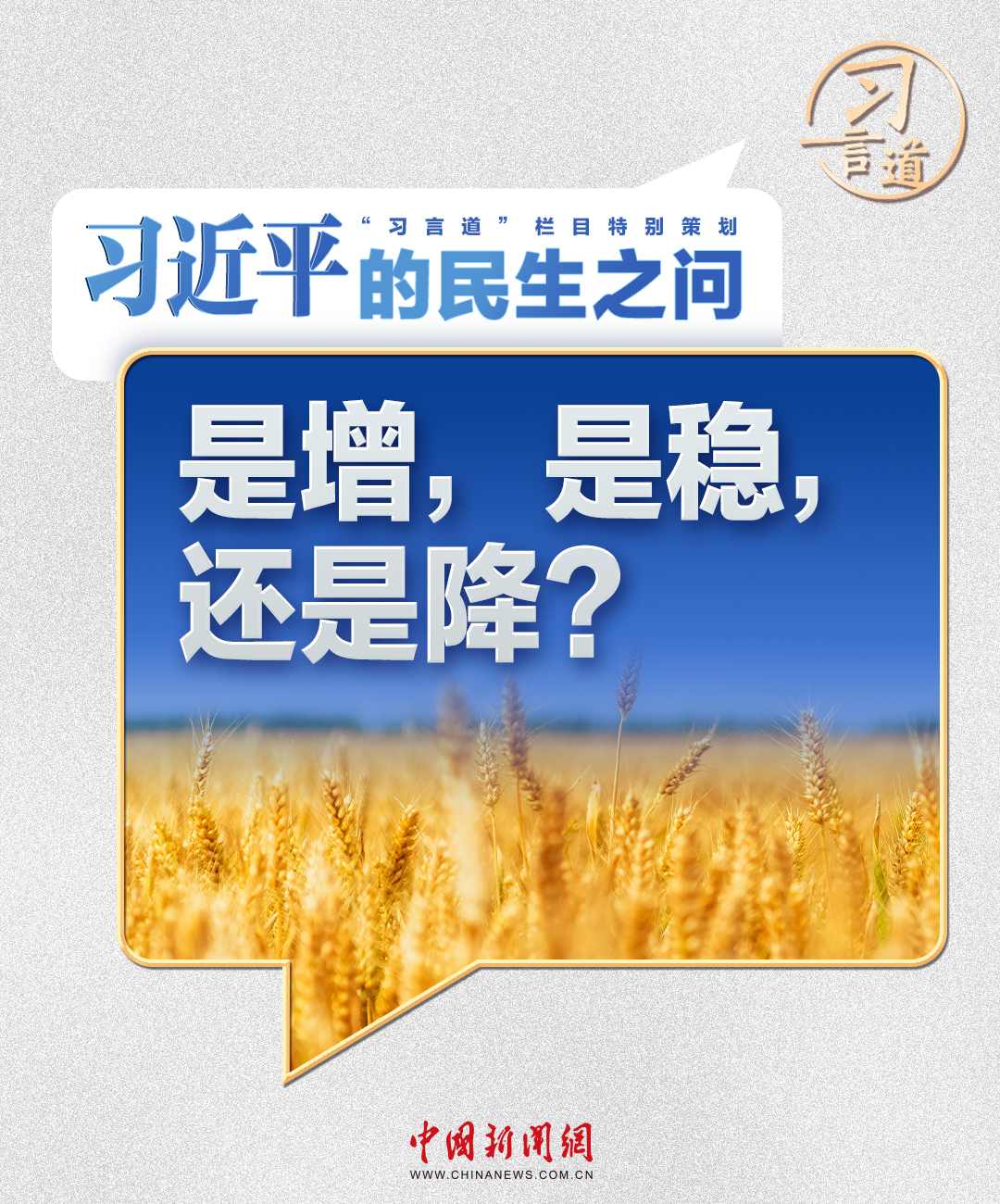
中新网5月23日电题:习近平的民生之问|"是增,是稳,还是降?" 三夏时节,广袤的中原大地上,金黄的麦田静待收获。 这些年来,总书记多次对耕地保护工作作出重要指示批示,强调实行最严格的耕地保护制度,"像保护大熊猫一样保护耕地""确保18亿亩耕地实至名归"。 今年的政府工作报告和中央一号文件,都对耕地保护作出明确要求,其目的就是坚决守住守好18亿亩耕地红线。 这次来到河南,总书记再次要求,"要加强耕地保护和建设,扛牢粮食安全责任"。 "今年的小麦种植面积,是增,是稳,还是降?这次旱情,会不会影响你们的收成?" 5月20日,在河南省委和省政府工作汇报会上,习近平总书记尤为关心粮食安全问题。 他还特别关注当前我国一些地区出现的旱情,"相关部门要密切配合,加强用水调度,确保城乡居民供水和农业灌溉需求"。 确保中国人的饭碗牢牢端在自己手中,这一直都是习近平总书记念兹在兹的"国之大者"。 河南是名副其实的粮食大省,粮食总产量连续8年超1300亿斤,用不到6%的耕地生产了全国近10%的粮食,是全国粮食安全的"压舱石"。 一组数字就能直观反映这个"压舱石"的作用:河南生产了全国1/2的火腿肠、1/3的方便面、1/4的馒头、3 ...

去年新增78亩良田,多收9万余斤稻谷:浙江村级田长王娟惠晒出耕地保护成绩单
2 1 Shi Ji Jing Ji Bao Dao· 2025-05-21 12:02
Core Viewpoint - The news highlights the efforts of Dong'an Village in Zhejiang Province to protect and manage arable land through innovative practices and community engagement, ensuring food security and enhancing land efficiency while increasing villagers' income [1][2]. Group 1: Arable Land Protection Initiatives - Dong'an Village has implemented a comprehensive monitoring system for arable land, combining manual inspections, satellite imagery, and drone surveillance to ensure early detection and prevention of illegal land occupation [1]. - The village has established a responsibility system where each piece of land is assigned a dedicated manager and inspector, allowing for meticulous oversight akin to bookkeeping [1]. Group 2: Agricultural Development Strategies - The village's approach to permanent basic farmland consolidation involves integrated planning that considers arable land, forestry, water systems, and infrastructure, promoting a holistic development strategy [2]. - Dong'an Village has explored innovative agricultural practices such as crop rotation and intercropping, alongside new business models like educational farming experiences, maximizing the utility of high-quality farmland [2]. Group 3: Community Engagement and Incentives - A points-based incentive system has been introduced, where villagers earn points for participating in land protection activities, which can be redeemed for agricultural supplies, thereby increasing community involvement in land conservation [2]. - The village reported an increase of 78 acres of quality farmland and a yield of over 90,000 pounds of rice due to comprehensive land management efforts [2].
四端协同发力把牢粮食安全关
Xin Hua Ri Bao· 2025-05-19 21:39
Core Viewpoint - The article emphasizes the importance of strengthening agricultural production and ensuring food security in China, as outlined in the 20th National Congress report and the 2025 Central Document No. 1, focusing on enhancing supply capacity, reducing losses, leveraging opportunities, and eliminating drawbacks in the agricultural sector [1][2][3][4][5][6] Group 1: Increasing Production - The article highlights the necessity of increasing arable land to secure future food supply, emphasizing the importance of land quality and ecological factors in enhancing actual grain production capacity [2] - It discusses measures to optimize land use, including balancing land occupation and compensation, promoting land reclamation, and preventing non-agricultural and non-grain use of arable land [2] - The article also mentions the need to improve existing arable land quality through targeted measures based on soil quality assessments and promoting organic fertilizer usage [2] Group 2: Reducing Losses - The article outlines the significance of reducing food waste as a critical component of enhancing national food security, with a focus on the entire supply chain from production to consumption [3] - It emphasizes the need for effective pest control, proper agricultural machinery operation, and scientific grain storage techniques to minimize losses during production and storage [3] - The article advocates for improved processing techniques and transportation methods to reduce hidden losses and enhance the efficiency of food distribution [3] Group 3: Leveraging Opportunities - The article discusses the transition of China's agriculture from a "large country with small farmers" to a "strong agricultural nation," highlighting the integration of technology in agricultural practices [4] - It identifies the importance of high-quality labor and digital technologies in enhancing agricultural productivity and promoting sustainable practices [4] - The article stresses the need for a green transformation in agriculture to reduce resource consumption and promote modern agricultural development [4] Group 4: Eliminating Drawbacks - The article addresses the importance of agricultural inputs such as seeds, fertilizers, and pesticides in ensuring food safety, emphasizing the need for strict regulation and quality control [5][6] - It calls for the elimination of counterfeit agricultural products and the establishment of a robust regulatory framework to protect agricultural resources [5][6] - The article highlights the necessity of protecting intellectual property rights in the seed industry to ensure food security and promote high-quality agricultural products [6]
河南省出台实施意见,力争到2035年 具备条件的永久基本农田全建成高标准农田
He Nan Ri Bao· 2025-05-13 23:22
Group 1 - The core viewpoint of the news is the implementation of measures to strengthen farmland protection, improve farmland quality, and establish a balanced compensation mechanism for land use [1][2][3] - The "Implementation Opinions" emphasize the responsibility of local governments and party committees in protecting farmland and permanent basic farmland as a major political task [1] - Specific measures include strict control over land occupation, ensuring that construction projects do not occupy or minimally occupy farmland, and holding local governments accountable for violations [1][2] Group 2 - The management of land occupation and compensation will be adjusted to ensure a dynamic balance of total farmland, with a focus on the net increase of stable farmland utilization [2] - A credit evaluation system will be established to regulate the implementation of supplementary farmland, preventing actions that disregard natural conditions [2] - Economic rewards and penalties will be implemented based on the fulfillment of farmland protection responsibilities, with compensation for those who exceed their protection tasks [2][3] Group 3 - The "Implementation Opinions" call for the identification and utilization of abandoned land and other non-farmland resources to expand agricultural production [3] - By 2035, the province aims to maintain a minimum of 10,955.52 million mu of farmland and 9,837.89 million mu of permanent basic farmland, striving to convert eligible permanent basic farmland into high-standard farmland [3]
不折不扣守护黑土地
Jing Ji Ri Bao· 2025-05-12 21:58
Core Viewpoint - The protection of black soil and arable land requires stringent measures and legal frameworks to deter illegal activities effectively [1][3]. Group 1: Legal Framework and Enforcement - The Supreme People's Court and the Supreme People's Procuratorate have issued interpretations and typical cases to strengthen the legal framework against crimes that damage black soil resources [1][2]. - The new legal interpretation establishes volume-based criteria for illegal occupation of agricultural land, allowing for prosecution if 500 cubic meters of black soil are illegally excavated from permanent basic farmland [2]. - In 2022, judicial authorities in Heilongjiang, Jilin, Liaoning, and Inner Mongolia approved the arrest of 360 individuals in 319 cases related to illegal occupation of agricultural land, with 2,925 individuals prosecuted in 2,459 cases [3]. Group 2: Systematic Approach to Land Protection - The protection of black soil is a systematic project that requires coordinated efforts from government actions and farmers' practices, emphasizing the need for both administrative and legal measures [1][4]. - The central government emphasizes that the 1.8 billion acres of arable land must be genuinely productive and of high quality, reflecting a commitment to sustainable land use and ecological balance [3][4]. - The approach to land protection must include changing traditional agricultural practices and leveraging technological innovations to enhance soil conservation [4].
春耕:坚决把牢粮食安全的主动权
Xin Jing Bao· 2025-05-08 02:05
Core Insights - China's grain production is projected to exceed 1.4 trillion jin in 2024, marking a significant milestone in food security and quality improvement since the founding of the People's Republic of China [1][2] - The government emphasizes the importance of food security as a strategic issue, with a focus on self-sufficiency and domestic production [2][3] - The country has maintained a grain output of over 1.3 trillion jin for the past decade, with per capita grain availability significantly above the international safety line [2] Group 1: Food Security Strategy - The Chinese government prioritizes food security as a top governance issue, with a strategic focus on self-reliance and domestic production capabilities [2][3] - The national food security strategy includes ensuring basic grain self-sufficiency and absolute safety in staple food supplies [2][4] - The government has set a target of approximately 1.4 trillion jin for grain production in its development goals, signaling a strong commitment to food production [1][3] Group 2: Agricultural Development and Technology - Technological innovation in agriculture is crucial for increasing grain production and efficiency, with a contribution rate exceeding 63% [5][6] - The use of advanced agricultural technologies, such as drones and precision farming equipment, is enhancing productivity [5][6] - There is a need for breakthroughs in key agricultural technologies, particularly in crop breeding and smart equipment [5][6] Group 3: Land and Resource Management - Protecting arable land is fundamental to ensuring food security, with strict regulations in place to maintain the 1.8 billion mu red line for cultivated land [4][5] - The government is focused on improving the quality and ecological sustainability of farmland, with over 1 billion mu of high-standard farmland already established [4][5] - Efforts are being made to address issues of land misuse and non-agricultural encroachment on farmland [4][5] Group 4: Waste Reduction and Food Conservation - Approximately 35 million tons of food are wasted annually in China, accounting for about 6% of total grain production [7] - The government has implemented laws and initiatives to promote food conservation and reduce waste across the supply chain [7][8] - A comprehensive approach is being adopted to enhance public awareness and participation in food-saving initiatives [7][8]
长沙全方位夯实耕地保护责任,系统推进耕地保护制度改革创新
Chang Sha Wan Bao· 2025-05-06 09:38
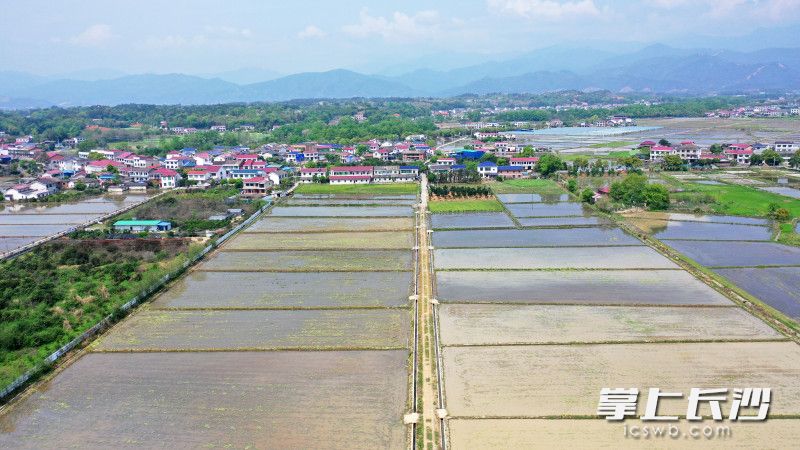
"这些农田去年还种着苗木、养着鱼虾,如今已经全部恢复粮食种植。"看着曾经的耕地又重新变成了沃土粮田, 沿溪镇自然资源所所长唐晓军感慨万分。 粮安天下,地为根基。近年来,长沙始终把"严守耕地红线"作为"头等大事",落实最严格的耕地保护制度,深入 推进耕地数量、质量、生态"三位一体"保护,系统推进耕地保护制度改革创新,切实保护好每一亩耕地、使用好 每一寸土地,走出了一条具有长沙特色的土地保护利用科学路径。近日,记者深入长沙的田间地头,见证耕地保 护制度改革带来的新变化。 耕地保护走出新路子 长沙晚报掌上长沙5月6日讯(全媒体记者 范宏欢 通讯员 易路军)初夏时节,行走在浏阳市沿溪镇建设村,田间 地头呈现出一派热火朝天的繁忙景象,一幅充满活力的耕地画卷在眼前徐徐展开。 "这片地有58亩,之前是虾塘,养殖南美白对虾,耕作层已受到破坏,我们采取了土地培肥、灌溉系统重建等工程 恢复措施,结合实际针对性制定耕地恢复方案,及时恢复种植条件。"在沿溪镇建设村,唐晓军指着一片油菜花田 介绍道。 如今,昔日的虾塘摇身一变,成了油菜花海,油菜收割后再种上水稻,虾塘的水波重新变回起伏的稻浪,勾勒出 一幅满溢着希望与喜悦的美丽乡村画卷。 ...