跨境支付

Search documents
境内首发!工商银行试点推出万事达“10+1”多币种借记卡
Cai Jing Wang· 2025-12-05 03:41
Core Viewpoint - The Industrial and Commercial Bank of China (ICBC) has launched the first set of multi-currency debit cards in collaboration with Mastercard, aimed at enhancing cross-border payment services and supporting China's dual circulation strategy and high-level opening-up [1] Group 1: Product Features - The new debit card series includes the Xianglu Gold Card and the Pixiu Platinum Card, integrating a Renminbi account with accounts in 10 major foreign currencies [1] - Supported currencies include USD, EUR, CAD, AUD, NZD, GBP, HKD, CHF, JPY, and SGD, allowing cardholders to choose the corresponding foreign currency account for cross-border transactions [1] - The product aims to reduce common costs associated with dynamic currency conversion and multiple exchange rate conversions in traditional cross-border payments [1] Group 2: Customer Benefits - The card series offers various user benefits, including annual fee waivers, tailored for scenarios such as outbound tourism, overseas study, cross-border e-commerce, and international business travel [1] - The initiative is designed to provide a safe, efficient, intelligent, and convenient integrated payment experience for users both domestically and internationally [1] Group 3: Strategic Collaboration - ICBC plans to deepen its collaboration with Mastercard, focusing on areas such as card management, consumption stimulation, and payment innovation [1] - The goal is to continuously enrich the multi-currency payment product matrix and expand high-value application scenarios, contributing to the high-quality development of China's payment industry and its high-level opening-up [1]



全球支付产业变革,银联以新“四方模式”给出开放互联中国方案
2 1 Shi Ji Jing Ji Bao Dao· 2025-12-03 10:49
Core Insights - The article emphasizes the transformative role of China UnionPay in the global payment industry, highlighting its innovative approach to cross-border payment solutions and the establishment of a more inclusive payment ecosystem [1][3][7] Group 1: China UnionPay's Role in Global Payments - China UnionPay is positioned as a "connector" in the global payment network, facilitating cross-border payment services and creating a new ecosystem for global payments [3][4] - The company has expanded its service offerings, partnering with local networks in various countries to enhance its global reach, including collaborations in Armenia and the UAE [3][4] - UnionPay's global acceptance network now covers 183 countries and regions, with over 200 local wallets supporting UnionPay QR codes or mobile payments [7][8] Group 2: Innovations and Collaborations - The company has introduced a new "four-party model" that includes wallet providers and mobile manufacturers, aiming to create a more open and inclusive payment environment [1][7] - UnionPay has established partnerships with 11 global institutions, including banks and payment networks from countries like Malaysia and Uzbekistan, to enhance cross-border payment capabilities [1][2] - The "China-Indonesia cross-border QR code interconnection" project exemplifies the collaborative efforts under the new model, showcasing the integration of various stakeholders to facilitate seamless payments [8][9] Group 3: Ecosystem Development and Shared Infrastructure - UnionPay is committed to building a shared infrastructure for payment systems, allowing banks to utilize standardized APIs and security frameworks, thus enhancing the overall efficiency and safety of payment networks [9] - The company aims to reduce fragmentation in the global payment ecosystem by fostering knowledge exchange and collaborative defense against financial risks [6][9] - UnionPay's initiatives are not merely about market expansion but also about creating a sustainable and interconnected payment ecosystem that benefits all participants [6][9]
全球支付产业变革,银联以新“四方模式”给出开放互联中国方案
21世纪经济报道· 2025-12-03 10:42
Core Viewpoint - The article emphasizes that China, driven by innovation, plays a crucial role in the global payment industry's high-quality development, particularly through the initiatives of China UnionPay to create an open and inclusive payment ecosystem [1][2]. Group 1: Global Payment Network Development - China UnionPay has introduced an open and interconnected "Chinese solution" to enhance the traditional "four-party model" by incorporating wallet institutions and mobile manufacturers, thereby creating a more inclusive payment ecosystem [1][2]. - The "2025 UnionPay Global Partner Conference" held in Shanghai marked the establishment of 11 significant global cross-border payment collaborations, showcasing China's influence in the global payment industry [2][4]. - UnionPay aims to break down payment barriers, allowing millions of small and micro merchants to access vast purchasing power through its global payment network, thus contributing to global economic recovery [2][5]. Group 2: Cross-Border Payment Services - UnionPay is positioned as a "connector" in the global payment network, expanding its service offerings and establishing a new cross-border payment service system [5][6]. - The company has expanded its international product offerings, including partnerships with local networks in countries like Armenia and the UAE, enhancing accessibility to UnionPay's global services [5][6]. - UnionPay has implemented flexible cooperation models, such as "Government-to-Government" and "Network-to-Network," to facilitate QR code interoperability in approximately 50 countries [6][7]. Group 3: Ecosystem Building and Collaboration - The new "four-party model" not only expands external services but also enhances collaboration with account holders and acquirers to provide efficient and secure cross-border payment services [8][9]. - UnionPay's global acceptance network covers 183 countries and regions, supporting various payment scenarios and enhancing the cross-border payment experience for Chinese citizens abroad [8][9]. - The collaboration with local payment institutions, such as the partnership with Indonesia's payment association, exemplifies the practical application of the new "four-party model" [9][10]. Group 4: Technological Advancements and Shared Infrastructure - UnionPay is transforming its technological capabilities into "public goods" for the industry, promoting intelligent development and shared infrastructure among financial institutions [10]. - The company offers standardized API interfaces and security frameworks, enabling banks to utilize ready-made solutions rather than building independent systems [10]. - The "Open Payment Joint Initiative" was announced, emphasizing the principles of openness, compatibility, and security in building a shared global payment network [10].

长亮科技(300348.SZ):有包括CIPS在内的二代支付系统相关解决方案与产品
Ge Long Hui· 2025-12-03 07:29
Core Viewpoint - The company has established a product layout in the cross-border payment sector, including solutions related to the second-generation payment system CIPS [1] Group 1 - The company has provided relevant scenario solutions for several large domestic commercial banks [1] - The solutions are designed to meet the cross-border payment scenario needs based on CIPS [1]

银联国际:中国境内银联合作钱包可扫越南VietQR Global二维码支付
Xin Lang Cai Jing· 2025-12-03 06:48
Core Insights - UnionPay International has announced a partnership with NAPAS, Industrial and Commercial Bank of China, and Vietcombank to facilitate cross-border payments for Chinese tourists in Vietnam [1] - The collaboration allows Chinese tourists to use the Cloud Flash Pay APP and UnionPay cooperative wallets at over 10,000 VietQR Global merchants in Vietnam [1] - The Industrial and Commercial Bank of China and Vietcombank will serve as clearing banks to provide local currency settlement services for cross-border payments [1] - Future plans include enabling the VietQR wallet to scan UnionPay QR codes for payments in China [1]
中油资本跌2.07%,成交额3.96亿元,主力资金净流出6558.41万元
Xin Lang Cai Jing· 2025-12-02 06:01
Core Viewpoint - China Petroleum Capital Co., Ltd. has experienced a decline in stock price and significant net outflow of funds, despite a year-to-date increase in stock price of 33.03% [1] Financial Performance - For the period from January to September 2025, the company reported operating revenue of 25.645 billion yuan, a year-on-year decrease of 12.22%, and a net profit attributable to shareholders of 3.997 billion yuan, down 7.95% year-on-year [2] - The company has cumulatively distributed dividends of 15.115 billion yuan since its A-share listing, with 4.437 billion yuan distributed over the past three years [3] Stock Market Activity - As of December 2, the stock price was 9.01 yuan per share, with a market capitalization of 113.905 billion yuan [1] - The stock has been on the "龙虎榜" (a list of stocks with significant trading activity) eight times this year, with the most recent appearance on September 2, where it recorded a net buy of -184 million yuan [1] Shareholder Structure - As of September 30, 2025, the number of shareholders increased to 241,700, while the average circulating shares per person decreased by 13.54% to 52,296 shares [2] - Major shareholders include Hong Kong Central Clearing Limited and various ETFs, with some holdings decreasing compared to the previous period [3]

新致软件跌2.05%,成交额3203.53万元,主力资金净流入29.37万元
Xin Lang Cai Jing· 2025-12-02 02:51
Core Viewpoint - New Zhi Software's stock price has experienced fluctuations, with a year-to-date increase of 16.41% but a recent decline of 5.99% over the last five trading days [2]. Financial Performance - As of September 30, New Zhi Software reported a revenue of 1.439 billion yuan, representing a year-on-year growth of 3.97%. However, the net profit attributable to shareholders decreased by 3.04% to 31.02 million yuan [3]. - The company has distributed a total of 98.88 million yuan in dividends since its A-share listing, with 29.71 million yuan distributed over the past three years [4]. Stock Market Activity - On December 2, the stock price fell by 2.05% to 18.66 yuan per share, with a trading volume of 32.04 million yuan and a turnover rate of 0.65% [1]. - The stock has appeared on the "Dragon and Tiger List" three times this year, with the most recent net purchase on March 6 amounting to 57.74 million yuan, accounting for 21.59% of total trading volume [2]. Shareholder Structure - As of September 30, the number of shareholders increased by 1.81% to 12,800, while the average circulating shares per person decreased by 1.78% to 20,527 shares [3]. - Notable new shareholders include Huabao Zhongzheng Financial Technology Theme ETF and Hong Kong Central Clearing Limited, holding 3.55 million and 3.53 million shares respectively [4]. Business Overview - New Zhi Software, established on June 4, 1994, provides IT solutions and services primarily to financial institutions and other industries, with 84.23% of its revenue coming from IT solutions [2]. - The company operates within the computer software development sector, focusing on vertical application software, and is involved in various concept sectors including cross-border payments and digital currency [2].

又一支付龙头冲刺港股IPO
2 1 Shi Ji Jing Ji Bao Dao· 2025-12-01 01:39
Core Viewpoint - New Guodu (300130) has submitted an application for an IPO in Hong Kong to enhance its global strategy and expand overseas business, following the trend of Chinese payment companies going international [1][2]. Group 1: Company Overview - New Guodu, established in July 2001, is a payment technology service provider with over 1,000 employees and operations in more than 100 countries [2]. - The company aims to deepen its global strategy and enhance its international market competitiveness through the IPO [1]. Group 2: Financial Performance - In 2024, New Guodu reported a net profit of 234 million yuan, a decrease of 68.98% year-on-year, primarily due to tax adjustments and goodwill impairment [4]. - For the first half of 2025, the company achieved revenue of 1.527 billion yuan, down 3.17% year-on-year, and a net profit of 275 million yuan, down 38.61% year-on-year [4]. - In the first three quarters of 2025, revenue was 2.343 billion yuan, a decline of 4.15%, while net profit increased by 37.10% to 407 million yuan [5]. Group 3: Business Segments - The revenue from the acquiring and value-added services segment has been declining, accounting for 67.2% of total revenue in 2024, down from 70.9% in 2022 [5]. - The electronic payment products segment is gradually increasing its share, with revenues of 982 million yuan, 994 million yuan, and 941 million yuan from 2022 to 2024 [6]. Group 4: International Expansion - New Guodu is implementing a dual overseas strategy, focusing on cross-border payment and local acquiring services, and has established a marketing network in India and expanded into Europe and Japan [8][9]. - The company has obtained various international payment licenses, including those from Luxembourg, Hong Kong, and the United States, to support its cross-border payment initiatives [9]. - Revenue from outside mainland China has been increasing, accounting for 21.1%, 26.0%, and 29.0% from 2022 to 2024 [9].

又一支付龙头冲刺港股IPO
21世纪经济报道· 2025-12-01 01:31
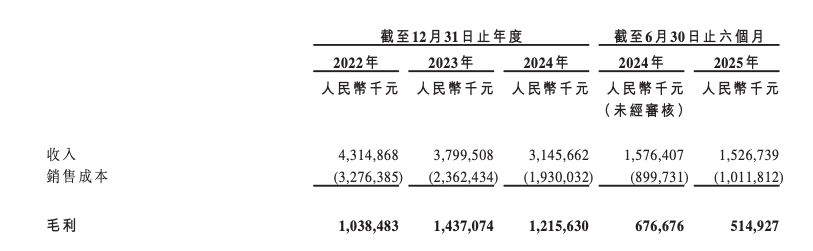
Core Viewpoint - New Guodu, a leading payment service provider in China, has submitted an application for an IPO in Hong Kong to enhance its global strategy and expand overseas operations, aiming to strengthen its international market competitiveness and resource allocation capabilities [1][3]. Financial Performance - The company's revenue for 2022 was RMB 4.31 billion, which decreased to RMB 3.80 billion in 2023, and is projected to decline further to RMB 3.15 billion in 2024 [4]. - The net profit attributable to shareholders dropped significantly by 68.98% in 2024, amounting to RMB 234 million [4][5]. - In the first half of 2025, New Guodu reported a revenue of RMB 1.53 billion, a decrease of 3.17% year-on-year, and a net profit of RMB 275 million, down 38.61% [5]. - The company experienced a slight recovery in the third quarter of 2025, achieving a net profit of RMB 132 million, a substantial increase of 187.18% year-on-year [6]. Business Segments - New Guodu's revenue from its acquiring and value-added services has been declining, accounting for 70.9% in 2022, 68% in 2023, and 67.2% in 2024 of total revenue [6]. - Conversely, revenue from electronic payment products has shown a gradual increase, with figures of RMB 982 million in 2022, RMB 994 million in 2023, and RMB 941 million in 2024 [8]. Global Expansion Strategy - The company is implementing a dual overseas strategy to enhance its international business, establishing a cross-border business group focused on cross-border payments and local acquiring services [11]. - New Guodu has built a marketing service network globally, achieving a leading position in the Indian payment hardware market and expanding into high-value markets in Europe and Japan [11]. - The revenue from electronic payment products outside mainland China has been increasing, with figures of RMB 824.6 million in 2022, RMB 905.9 million in 2023, and RMB 887.5 million in 2024 [11]. Licensing and Product Development - New Guodu has obtained various payment licenses, including those from Luxembourg, Hong Kong, and the United States, enabling it to conduct cross-border payments and local acquiring services [12]. - The company launched its cross-border payment brand, PayKKa, offering a range of payment services, including B2B and B2C solutions [12]. - The revenue from outside mainland China has been increasing, with proportions of 21.1% in 2022, 26.0% in 2023, and 29.0% in 2024 [12].

2025年稳定币创新对非银支付生态的影响动态研究报告
Sou Hu Cai Jing· 2025-11-29 12:14
Core Insights - The report discusses the impact of stablecoin innovation on the non-bank payment ecosystem, highlighting the transformation driven by blockchain technology in cross-border payments and the involvement of various financial and technology companies [1][2][3]. Group 1: Traditional Non-Bank Financial Institutions - Traditional remittance institutions are actively integrating stablecoins into their business models, enhancing cross-border payment systems through self-built applications and API integrations [6][7]. - Major players like MoneyGram and Western Union are launching stablecoin mobile applications and exploring the issuance of their own stablecoins to facilitate cross-border transactions [7][8]. - Visa and Mastercard are focusing on stablecoin strategies, emphasizing card services and tokenization platforms to bridge crypto assets with everyday consumption [9][10]. Group 2: Technology Companies - Technology companies are becoming key players in stablecoin payment innovation, with platforms like PayPal and Stripe developing their own stablecoin capabilities to enhance cross-border payment solutions [2][19]. - PayPal's PYUSD aims to create a closed-loop payment ecosystem, significantly reducing cross-border payment costs by over 80% [20]. - Stripe is expanding its stablecoin services through acquisitions and the development of its own blockchain, targeting emerging markets for enhanced payment efficiency [21][22]. Group 3: Market Trends and Opportunities - The total transaction volume of stablecoins is rapidly increasing, with an estimated $5.7 trillion in transactions in 2024, primarily serving internal crypto asset flows [26]. - B2B cross-border payments are identified as the main opportunity for stablecoin applications, with potential market size in non-G10 regions reaching $18.8 trillion [28][29]. - The penetration of stablecoins in cross-border payments remains low, particularly in underdeveloped emerging markets, indicating significant growth potential [27][28].