
零售转型

Search documents
许家印扔来的“包袱”,盛京银行还要背多久?
Sou Hu Cai Jing· 2025-03-31 08:06
Core Viewpoint - Shengjing Bank, once a top performer among Chinese banks, has faced significant challenges since the Evergrande crisis in 2021, leading to frequent personnel changes and a clear shift away from Evergrande-related issues [1][3]. Financial Performance - In 2024, Shengjing Bank reported revenue of 8.577 billion yuan, a year-on-year decline of 14.57%, and a net profit attributable to shareholders of 621 million yuan, down 15.21% year-on-year [3][4]. - Compared to its peak in 2019, the bank's revenue is less than half of the 21.01 billion yuan recorded that year, and the net profit is only one-ninth of the 5.443 billion yuan achieved in 2019 [3][4]. Operational Metrics - The bank's net interest margin decreased from 0.96% to 0.80%, with net interest income falling by 22.3% to 6.887 billion yuan [5][6]. - Company banking and retail banking revenues both declined, with corporate banking revenue at 4.951 billion yuan (down 27%) and retail banking revenue at 2.467 billion yuan (down 10%) [6][7]. Regional Performance - Shengjing Bank's revenue in Northeast China dropped to 7.668 billion yuan, a decrease of 17.38% from 9.406 billion yuan in 2023, while revenues in North China and other regions increased [7][8]. - The bank's core operations in Northeast China, traditionally a stronghold, are now seen as a constraint on growth, raising concerns among investors [7][8]. Asset Quality - The bank's non-performing loan ratio remained stable at 2.68%, but it is significantly higher than the national average of 1.5% for commercial banks [9][10]. - The amount of loans under special attention increased by 34% year-on-year, indicating potential future asset quality deterioration [9][10]. Capital Adequacy - The capital adequacy ratio improved from 14.12% at the beginning of the year to 14.69% by year-end, although the core tier one capital ratio decreased by 16 basis points to 10.26% [10][11]. Management Actions - In response to declining performance, the management has implemented cost-cutting measures, including a reduction in employee compensation by 1.4% to 3.066 billion yuan and a 7% decrease in other administrative expenses [13][14]. - The new leadership is focused on improving operational efficiency and addressing the historical issues stemming from the Evergrande crisis [15][16]. Future Outlook - Shengjing Bank is attempting to pivot towards credit card business growth, with a 6% increase in credit card issuance, as a strategy to enhance retail banking and overall revenue [19][20]. - Despite the challenges, there is a belief that the worst is over for Shengjing Bank, and future growth may be on the horizon if strategic adjustments are successful [20].


透过郑州银行(002936.SZ/6196.HK)年报,解码区域银行高质量发展密码
Ge Long Hui· 2025-03-31 01:04
Core Viewpoint - The banking industry in China is facing challenges such as reduced profit margins, asset quality pressure, and shrinking credit demand, yet Zhengzhou Bank has demonstrated resilience and a successful transformation strategy amidst these difficulties [1] Group 1: Financial Performance - In 2024, Zhengzhou Bank achieved an operating income of 12.877 billion yuan and a net profit of 1.786 billion yuan, marking a 2.69% year-on-year profit growth, the first positive growth in three years [2] - The bank's non-interest income reached 2.513 billion yuan in 2024, a 30.34% increase, with its share of total operating income rising from 14.10% in 2023 to 19.51% in 2024, an increase of 5.41 percentage points [3] Group 2: Retail Transformation and Efficiency - Zhengzhou Bank has prioritized retail transformation, with personal deposits reaching 218.179 billion yuan by the end of 2024, accounting for approximately 54% of total deposits, which helps reduce interest expenses [4] - The bank's efficiency has improved, with per capita assets reaching 1.09 million yuan and average assets per branch at 371.6 million yuan, both at a three-year high and significantly above industry averages [4] - The non-performing loan ratio was 1.79% at the end of 2024, a decrease of 0.08 percentage points year-on-year, while the provision coverage ratio improved to 182.99%, an increase of 8.12 percentage points [4] Group 3: Support for the Real Economy - Zhengzhou Bank has redefined its business logic to support the real economy, focusing on innovation in financial mechanisms and utilizing data to address financing challenges for small and medium-sized enterprises [5] - The bank's policy-driven innovation in science and technology finance has led to a loan balance of 48.269 billion yuan, with a year-on-year growth rate of 44.50% [6] - Zhengzhou Bank plays a crucial role in the "7+28+N" industrial chain layout in Henan Province, providing quality financial services to key industries and actively engaging in local economic development [6] Group 4: Conclusion - Zhengzhou Bank's strategies in retail transformation, science and technology finance, and digital empowerment have not only restored profitability but also established a symbiotic relationship with the regional economy [7] - The bank's approach illustrates that regional banks can achieve counter-cyclical growth by deeply integrating into local industrial upgrades and addressing the pain points of the real economy through differentiated services [7]
六大行2024年合赚1.4万亿!全员实现归母净利润正增长 息差仍承压
Bei Jing Shang Bao· 2025-03-28 15:44
Core Insights - Six major state-owned banks in China reported a combined net profit of 1.4 trillion yuan for 2024, averaging approximately 38.29 billion yuan per day, despite challenges from declining loan market rates and overall market interest rates [1][2] Group 1: Profitability and Performance - Industrial and Commercial Bank of China (ICBC) led with a net profit of 365.86 billion yuan, a year-on-year increase of 0.5% [1] - China Construction Bank (CCB) followed with a net profit of 335.58 billion yuan, up 0.88% year-on-year [1] - Agricultural Bank of China (ABC) and Bank of China (BOC) reported net profits of 282.08 billion yuan and 237.84 billion yuan, with growth rates of 4.7% and 2.56% respectively [1] - Bank of Communications (BoCom) and Postal Savings Bank of China (PSBC) achieved net profits of 93.59 billion yuan and 86.48 billion yuan, with year-on-year growth of 0.93% and 0.24% respectively [1] Group 2: Net Interest Margin Trends - The net interest margin (NIM) for the six banks declined, with an average drop of 1 to 19 basis points compared to the previous year [1] - PSBC had the highest NIM at 1.87%, followed by CCB at 1.51% [2] - ICBC, ABC, and BOC had similar NIMs of 1.42%, 1.42%, and 1.40% respectively, while BoCom had the lowest at 1.27% [2] Group 3: Strategic Responses and Future Outlook - Banks are focusing on retail transformation, regional finance, and technology empowerment to achieve differentiated growth despite narrowing NIM and slowing profit growth [2][3] - Management emphasized the importance of stabilizing NIM and enhancing profitability, with strategies including optimizing asset-liability structures and managing loan pricing [2][3] - Looking ahead to 2025, banks anticipate continued NIM pressure but expect the decline to be less severe than in previous years, with a focus on balancing growth and risk management [3]



扭转局面、发布现金分红预案!郑州银行实现资产、存款、贷款、利润“四增长”
Zheng Quan Shi Bao· 2025-03-28 04:05
Core Viewpoint - Zhengzhou Bank has achieved growth in assets, deposits, loans, and profits in 2024, marking a positive trend in its operational performance despite challenging market conditions [1][2]. Financial Performance - In 2024, Zhengzhou Bank reported total operating income of RMB 12.877 billion and total profit of RMB 1.786 billion, with a profit increase of 2.69% year-on-year, marking the first positive growth in three years [2]. - The bank plans to distribute a cash dividend of RMB 0.20 per 10 shares, totaling RMB 182 million, which represents 9.69% of the net profit attributable to shareholders [2]. - As of the end of 2024, total assets reached RMB 676.365 billion, a 7.24% increase from the previous year, with total deposits and loans at RMB 404.538 billion and RMB 387.690 billion, reflecting increases of 12.07% and 7.51% respectively [2]. Market Position and Growth - Zhengzhou Bank's deposit growth rate of 12.07% and loan growth rate of 7.51% outpaced the average growth rates of 8.81% and 6.77% for financial institutions in Henan Province, indicating its competitive strength in the regional market [3]. - The bank's corporate loans increased by RMB 15.483 billion, contributing 57.17% of the total loan growth, demonstrating its commitment to supporting the real economy [3]. Retail Transformation - The bank's retail transformation initiative, termed "Project No. 1," has led to a significant increase in personal deposits, which grew by RMB 49.536 billion (29.37%) to RMB 218.179 billion by the end of 2024 [5][6]. - Personal loans also saw an increase of 8.09%, reaching RMB 90.957 billion, indicating enhanced stability in deposit growth and a solid foundation for the bank's operations [5]. Risk Management - As of the end of 2024, Zhengzhou Bank's non-performing loan ratio stood at 1.79%, continuing a downward trend since 2022, with a provision coverage ratio of 182.99% and a capital adequacy ratio of 12.06% [4]. Innovation and Differentiation - Zhengzhou Bank has established itself as a key player in policy-driven technology finance, with a loan balance of RMB 48.269 billion in this sector, reflecting a growth rate of 44.50% [7][8]. - The bank has developed a comprehensive evaluation system for technology enterprises and offers various financial products tailored to different stages of technology companies [8]. Digital Transformation - The bank initiated a digital transformation strategy in December 2024, focusing on enhancing customer experience and internal efficiency, aiming to reshape its business and management models through data-driven approaches [9].

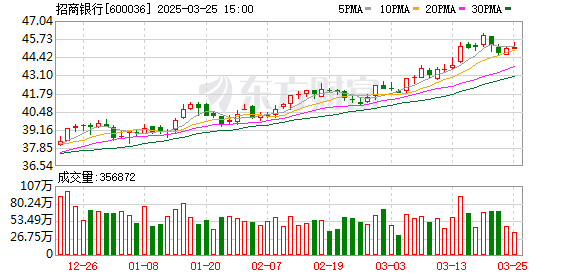
解析招商银行零售业绩: AUM增一成多,私行客户增长加速
Nan Fang Du Shi Bao· 2025-03-25 15:38
Core Insights - The core viewpoint of the article highlights the performance of China Merchants Bank (CMB) in retail banking, showcasing a growth in assets under management (AUM) and an increase in private banking clients despite challenges in net interest income and overall profitability [1][3]. Financial Performance - CMB reported a revenue of 337.49 billion yuan, a slight decrease of 0.48% year-on-year, while net profit attributable to shareholders increased by 1.22% to 148.39 billion yuan [4][5]. - Net interest income fell by 1.58% to 211.28 billion yuan, with a net interest margin of 1.98%, down 17 basis points year-on-year [5][11]. - Non-interest income rose by 1.41% to 126.21 billion yuan, with significant declines in wealth management fees and commissions, particularly a 22.70% drop in wealth management fees [5][6]. Retail Banking Performance - CMB's retail banking segment saw a pre-tax profit decline of 9.56%, with retail customer numbers increasing by 6.60% to 210 million and AUM growing by 12.05% to 14.93 trillion yuan [8][9]. - The structure of AUM indicates a strong performance in non-deposit assets, with non-deposit AUM exceeding 70%, which is considered exceptional compared to peers [9][10]. Private Banking and Credit Card Business - The number of private banking clients increased by 13.61% to 169,100, indicating robust growth in high-end wealth management services [10]. - Credit card circulation slightly decreased, with transaction volume dropping by 8.23% to 4.42 trillion yuan [10]. Asset Quality - CMB maintained a non-performing loan (NPL) ratio of 0.95%, unchanged from the previous year, with a provision coverage ratio of 411.98% [11][12]. - The bank's real estate NPL ratio decreased to 4.94%, while retail loan NPLs rose slightly to 0.96% [14][15]. Strategic Outlook - CMB's leadership emphasized the importance of strengthening capital-intensive businesses while optimizing light capital operations and enhancing wealth management services [15][16]. - The bank aims to leverage technology to drive innovation and improve service delivery, positioning itself as a leading value-creating bank [15][16].

平安银行爬“坑”!对公输血,零售止血
Zheng Quan Shi Bao Wang· 2025-03-17 23:50
Core Viewpoint - Ping An Bank is undergoing a significant transformation in its retail banking strategy, shifting from high-risk, high-reward operations to a more balanced approach focused on medium risk and medium returns, which has resulted in substantial financial pain and challenges [1][2] Financial Performance - In the previous year, Ping An Bank's retail business generated an operating profit of 49.219 billion yuan, but faced credit and asset impairment losses of 48.729 billion yuan, leading to a net profit of only 289 million yuan, a 94.8% decrease year-on-year, representing just 0.6% of total profits [1] - As of the end of Q4 2024, the retail non-performing loan (NPL) ratio was 1.39%, a decrease of 4 basis points quarter-on-quarter, indicating improved asset quality [5] Retail Strategy and Adjustments - The bank's management has confirmed that it will continue to focus on retail banking, with a new strategy emphasizing risk control and a unified management approach, moving away from high-risk products [3][4] - The core of the retail reform is to develop medium-risk, medium-return products, particularly in the consumer and small business sectors, with ongoing internal testing and pilot programs [4][5] Management Changes - Key personnel changes have occurred, including the reassignment of the assistant president in charge of retail, reflecting a strategic shift in leadership to better align with the bank's new direction [4] Corporate Banking Performance - As of the end of 2024, personal loan balances decreased by 10.6% to 1.767168 trillion yuan, while corporate loan balances increased by 12.4% to 1.606935 trillion yuan, indicating a shift towards corporate banking [7] - The bank aims to maintain strong corporate lending growth in 2025, focusing on high-quality enterprises and specific industries, with a significant portion of new loans directed towards infrastructure and technology sectors [8] Interest Margin Management - The net interest margin for 2024 was 1.87%, a decrease of 51 basis points from the previous year, with a focus on reducing funding costs and improving asset quality to stabilize margins [9][10] - The bank aims to maintain a net interest margin above 1.7%, which is higher than the industry average by 30-40 basis points, despite overall pressure on margins in the banking sector [10]

平安银行(000001):2024年报点评:零售规模仍在降,但风险已现改善
Guotou Securities· 2025-03-16 15:21
Investment Rating - The investment rating for Ping An Bank is maintained at Buy-A with a 6-month target price of 14.17 CNY, compared to the current stock price of 11.97 CNY [4]. Core Views - Ping An Bank's revenue growth is under pressure due to ongoing transformation and restructuring, with a reported revenue decline of 10.93% year-on-year for 2024 [1]. - The bank's net profit attributable to shareholders decreased by 4.19% year-on-year, indicating a divergence between revenue and profit growth [1]. - The bank's asset quality shows signs of improvement, with a decrease in the non-performing loan generation rate to 1.8% in 2024, down 9 basis points year-on-year [10][12]. Summary by Sections Financial Performance - In 2024, Ping An Bank's operating revenue was 146.695 billion CNY, with a projected revenue decline of 7.76% for 2025 [14]. - The bank's net profit for 2024 was 44.508 billion CNY, with an expected slight increase to 44.899 billion CNY in 2025 [14]. - The bank's net interest margin for Q4 2024 was reported at 1.70%, down 41 basis points year-on-year [3][9]. Asset Quality - The non-performing loan ratio remained stable at 1.06% as of Q4 2024, with improvements in various loan categories [33]. - The bank has increased its provision coverage ratio, maintaining a stable credit cost despite the pressure on profit growth [10][12]. Retail Business - The retail business is undergoing structural adjustments, with a focus on reducing high-risk loans, leading to a decline in retail credit [2][12]. - The bank's retail assets under management (AUM) showed slight growth, benefiting from improved market conditions in Q4 2024 [11][37]. Credit Growth - New credit issuance in Q4 2024 was 5.7 billion CNY, indicating a slight recovery compared to previous quarters, although retail credit remains under pressure [20]. - The bank's overall credit growth is expected to remain weak in 2025, with ongoing efforts to reduce high-risk retail loans [12][13].