区块链

Search documents
中国科学技术发展战略研究院:6省市综合科技创新水平领先全国
Huan Qiu Wang· 2025-09-23 00:58
Core Insights - China's comprehensive technology innovation level score reached 80.20, an increase of 1.77 points from the previous year, indicating ongoing growth in technology innovation input, output, and high-tech industries [1] - Six provinces and cities, including Shanghai, Beijing, Jiangsu, Guangdong, Zhejiang, and Tianjin, lead the nation in comprehensive technology innovation levels [1] - The second half of the year is crucial for ensuring the successful completion of the "14th Five-Year Plan" and laying a solid foundation for the "15th Five-Year Plan," emphasizing the deep integration of technology and industrial innovation [1] Group 1 - The report highlights the importance of technology innovation as a new driving force for productivity development and the cultivation of internationally competitive emerging pillar industries [1] - The Central Political Bureau of the Communist Party of China has called for a focus on technology innovation to promote the deep integration of technology and industrial innovation [1] Group 2 - Recommendations include encouraging local governments to promote advanced technologies in fields such as artificial intelligence, blockchain, low-altitude economy, future networks, and low-carbon energy [2] - The establishment of demonstrative and experiential technology application scenarios is encouraged to create replicable and promotable models and experiences [2] - Support for market-tested solutions through government procurement, pilot demonstrations, and priority issuance of relevant licenses is advised [2]
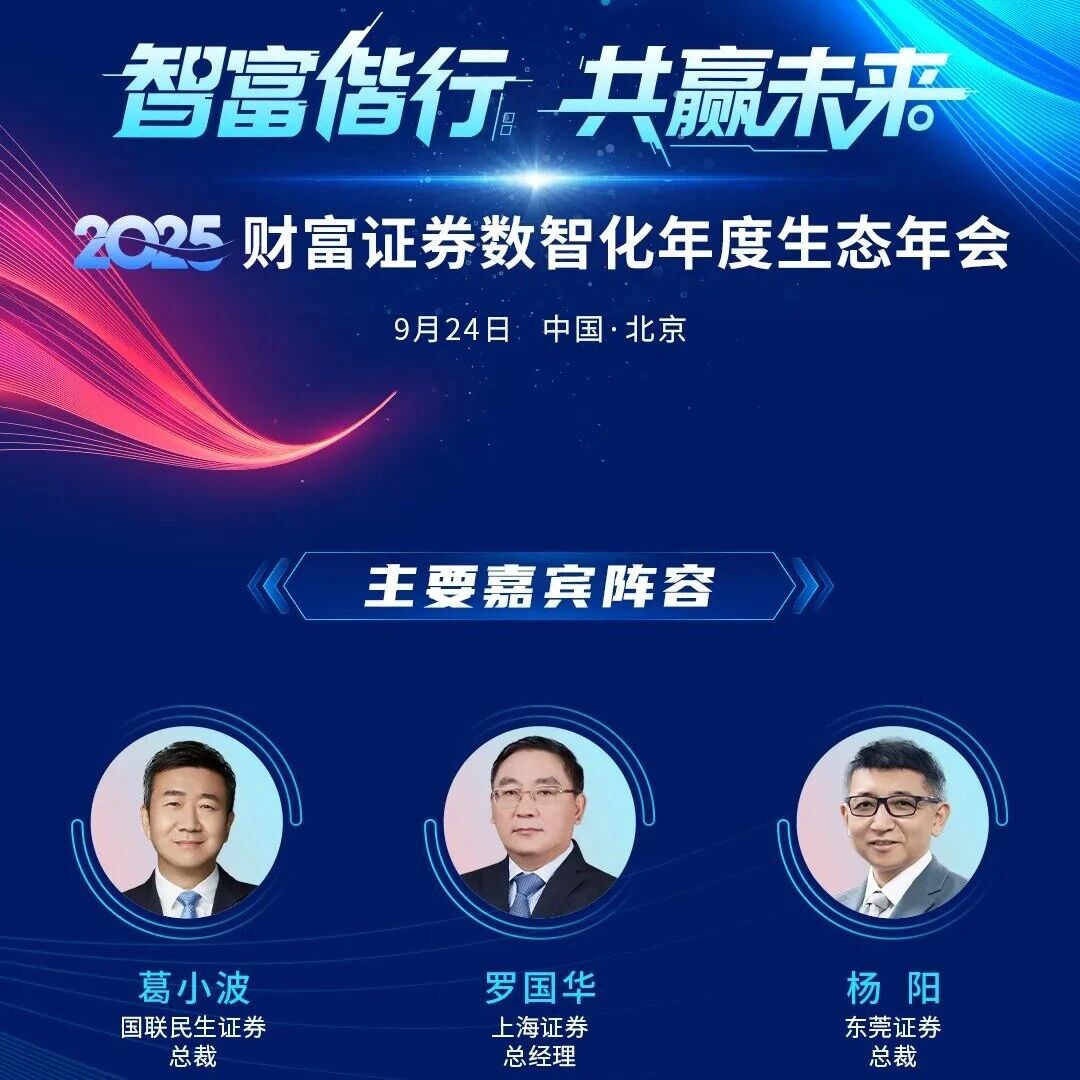
大咖云集!这场盛会,“9·24”见!
券商中国· 2025-09-22 23:38
Core Viewpoint - The article emphasizes the ongoing transformation in wealth management driven by digitalization, particularly in the context of the upcoming "2025 Wealth Securities Digital Annual Ecological Conference" scheduled for September 24 in Beijing, which aims to explore the integration of new technologies like AI, big data, and cloud computing in the securities industry [1]. Group 1: Conference Overview - The conference will focus on the theme "Intelligent Wealth, Win the Future," discussing the integration of new information technologies in securities business and the transformation paths for wealth management in the new cycle [1]. - Two parallel forums will be held: the "2025 China Securities Wealth Brokerage Summit Forum" and the "2025 China Securities Digital Practice Summit Forum," addressing wealth management ecology and technological empowerment [1]. Group 2: Key Participants - The event will feature prominent figures from various sectors, including securities, funds, and financial technology, such as the presidents of Guolian Minsheng Securities, Xiangcai Securities, and Dongguan Securities, among others [2]. - Notable attendees include senior executives from major firms like China Galaxy Securities and Changjiang Securities, who will share insights and practical experiences [2]. Group 3: Industry Trends - The article highlights a significant shift in the securities industry towards intelligent decision-making and operational ecology, driven by technologies such as AI, blockchain, and big data [3]. - Discussions will focus on how AI can systematically reconstruct the competitiveness of the securities industry and share practical experiences from firms undergoing digital transformation [3]. Group 4: Wealth Management Transformation - The "China Securities Wealth Brokerage Forum" will address core issues in wealth management business transformation, exploring industry trends and innovative business models [4]. - Keynote speakers will analyze strategies and innovative paths for wealth management, sharing practical experiences in customer service, product innovation, and channel development [4]. Group 5: Roundtable Discussions - The conference will include two roundtable discussions focusing on "Channel Co-win and Collaborative Empowerment" and "Innovations in Buy-side Advisory Services," featuring executives from various securities firms [5].

新华鲜报|高“含科量”!金融服务科技创新跑出“加速度”
Xin Hua She· 2025-09-22 21:08
Core Insights - The financial sector is significantly supporting technological innovation, with an average annual growth of 27.2% in scientific and technological loans, and over 90% of newly listed companies being tech firms [1][2] - During the "14th Five-Year Plan" period, high-tech enterprise loans and loans to tech SMEs have both exceeded a 20% annual growth rate, indicating a robust financial backing for the tech sector [2][3] Financial Support Mechanisms - The People's Bank of China has emphasized the need to enhance the financial support framework for technology innovation, addressing the diverse financing needs of tech companies at different life cycle stages [2][3] - A series of financial measures have been implemented, including the introduction of a "technology board" in the bond market and 15 initiatives to accelerate the construction of a technology finance system [2][3] Market Dynamics - The number of technology companies among the top 50 by market capitalization in A-shares has increased from 18 at the end of the "13th Five-Year Plan" to 24 currently, reflecting a growing prominence of tech firms in the market [2][3] - Insurance funds have invested over 5.4 trillion yuan in stocks and equity funds, an 85% increase since the end of the "13th Five-Year Plan," contributing to the stability and healthy development of the capital market [3][4] Policy Enhancements - The China Securities Regulatory Commission is focusing on reforms in the Sci-Tech Innovation Board and the Growth Enterprise Market to better support innovative companies through capital market mechanisms [4] - The State Administration of Foreign Exchange is promoting policies to facilitate cross-border financing for high-tech enterprises, enhancing their ability to leverage both domestic and international resources [3][4]
高“含科量”!金融服务科技创新跑出“加速度”
Xin Hua She· 2025-09-22 16:45
Core Insights - Financial services are accelerating technological innovation, with significant growth in technology-related loans and a high percentage of new listings being tech companies [1][2] - The financial system has implemented various measures to support technology innovation, including a clear framework and specific initiatives during the "14th Five-Year Plan" [2][3] Group 1: Financial Support for Technology - The average annual growth rate of scientific research loans is 27.2%, and over 90% of newly listed companies are technology firms [1] - High-tech enterprise loans and loans to technology SMEs have both exceeded a 20% annual growth rate during the "14th Five-Year Plan" [2] - The market capitalization of technology companies in the A-share market has increased from 18 to 24 among the top 50 companies [2] Group 2: Policy and Regulatory Framework - The People's Bank of China has emphasized the need for a robust policy framework to enhance financial support for technology innovation [2] - The insurance sector has provided over 10 trillion yuan in risk coverage, supporting 3,600 innovative application projects [2] - The China Securities Regulatory Commission is focusing on reforms in the Sci-Tech Innovation Board and Growth Enterprise Market to better support companies at different stages of development [4] Group 3: Capital Market and Investment - Insurance capital investment in stocks and equity funds has exceeded 5.4 trillion yuan, marking an 85% increase since the end of the "13th Five-Year Plan" [3] - Cross-border financing channels for high-tech enterprises are being expanded to better utilize domestic and international resources [3] - Financial management departments are encouraged to cultivate patient capital to support long-term development in technology sectors [3]
新华鲜报丨高“含科量”!金融服务科技创新跑出“加速度”
Xin Hua Wang· 2025-09-22 16:04
Core Insights - Financial services are accelerating technological innovation, with significant growth in technology-related loans and a high percentage of new listings being tech companies [1][2] - The financial sector has implemented various measures to support technology innovation, including a robust policy framework and specific financial instruments [2][3] Group 1: Financial Support for Technology - The average annual growth rate of scientific research loans is 27.2%, and over 90% of newly listed companies are technology firms [1] - During the "14th Five-Year Plan" period, loans to high-tech enterprises and technology-based SMEs have seen annual growth rates exceeding 20% [2] - The A-share market has seen an increase in the number of technology companies among the top 50 by market capitalization, rising from 18 at the end of the "13th Five-Year Plan" to 24 currently [2] Group 2: Policy and Regulatory Framework - The People's Bank of China has emphasized the need for a comprehensive technology finance policy framework to meet the financing needs of tech companies at different stages of their lifecycle [2][3] - The insurance sector has provided risk coverage exceeding 10 trillion yuan, supporting 3,600 innovative application projects [2] - The China Securities Regulatory Commission is reforming the Sci-Tech Innovation Board and the Growth Enterprise Market to better support innovative companies through capital markets [4] Group 3: Capital Market Development - Financial management departments are focusing on cultivating patient capital and guiding resources towards new productive forces [3] - Insurance funds invested in stocks and equity funds have exceeded 5.4 trillion yuan, marking an 85% increase since the end of the "13th Five-Year Plan" [3] - The State Administration of Foreign Exchange is enhancing cross-border financing policies for high-tech enterprises, facilitating their access to international markets [3]
东港股份(002117):印刷业务为基石,智能卡、机器人发展迅速
Shenwan Hongyuan Securities· 2025-09-22 12:52
Investment Rating - The report initiates coverage with an "Accumulate" rating for the company [2] Core Views - The company, Donggang Co., Ltd., has a solid foundation in printing business and is rapidly developing in smart cards and robotics. The company has been expanding its smart card business since 2010 and has seen significant growth in revenue and profit in recent periods [7][18] - The smart card business is experiencing explosive growth due to increasing demand in various sectors, including banking and social security, while the printing business is stabilizing after previous electronic impacts [8][21] - The company is also leveraging its channel advantages to explore high-potential robotics markets, which are expected to contribute to future revenue growth [8][27] Summary by Sections 1. Smart Card Business - The smart card business has seen explosive growth, with revenue increasing significantly in recent periods. The company achieved a revenue of 1.62 billion yuan in the first half of 2025, a year-on-year increase of 133.8% [7][21] - The demand for smart cards is stable, driven by the need for higher security and functionality compared to traditional magnetic stripe cards. The global demand for smart cards is expected to reach 9.58 billion units by 2024, with a compound annual growth rate (CAGR) of 0.9% from 2021 to 2024 [7][48] 2. Technical Services - The company is diversifying its technical services, including electronic ticketing and archival storage, which are expected to grow as industry penetration increases. The revenue from technical services is projected to grow steadily [8][27] - The company is also exploring opportunities in AI and robotics, with the global robotics market expected to grow at a CAGR of 16.4% from 2023 to 2028 [8][27] 3. Printing Business - The printing business is stabilizing after being significantly impacted by the shift to electronic invoicing. The company is focusing on improving production efficiency and expanding its market share in personalized color printing and commercial labels [8][21] - The gross margin for the printing business improved to 35.8% in the first half of 2025, reflecting effective cost control measures [8][27] 4. Financial Forecast and Valuation - The company is expected to achieve net profits of 188 million yuan, 228 million yuan, and 276 million yuan for the years 2025 to 2027, representing year-on-year growth rates of 19.3%, 20.9%, and 21.1% respectively [8][27] - The current market capitalization corresponds to price-to-earnings ratios of 32, 27, and 22 for the years 2025 to 2027, indicating potential upside based on industry comparisons [8][27]

贾跃亭融资2.9亿元押注加密货币
21世纪经济报道· 2025-09-22 11:25
Core Viewpoint - Qualigen Therapeutics has entered into a PIPE agreement with Faraday Future, involving a financing of approximately $41 million, aimed at transitioning the company towards cryptocurrency and Web3-related businesses [4][6]. Financing Details - The financing round is led by Faraday Future and its CEO Jia Yueting, with a total investment of about $41 million, including $30 million from Faraday Future at a price of $2.246 per share, giving it a 55% ownership stake in Qualigen [4][6]. - Jia Yueting plans to invest an additional $4 million personally, acquiring about 7% of Qualigen's common stock [4][6]. Strategic Shift - Following the investment, Qualigen is expected to rebrand as CXC10 and focus on cryptocurrency and Web3, moving away from its current biopharmaceutical operations, which are struggling [6][10]. - The company aims to create a new business model centered around a crypto ecosystem, decentralized AI trading, and value stabilization [6][10]. Company Background - Qualigen has faced significant challenges, including a risk of delisting from NASDAQ due to its stock price falling below $1 for 30 consecutive days [8][9]. - Recent leadership changes occurred as the previous CEO and CFO resigned due to strategic disagreements, leading to the appointment of new executives with experience in turning around small-cap companies [9][10]. Current Operations - Qualigen's core product pipeline focuses on rare cancer treatments, with ongoing projects like QN-302 in Phase 1 trials and Pan-RAS in lead optimization [10]. - Despite the strategic investment, the company has not shown substantial operational improvements, and its future remains uncertain in the highly competitive biopharmaceutical industry [10].


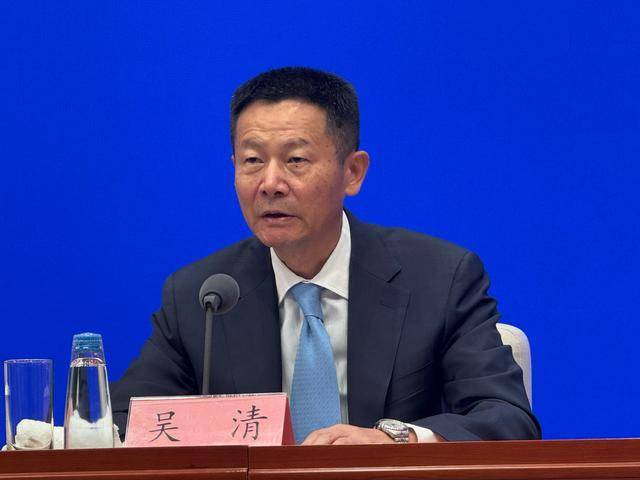
A股进入百万亿新阶段,吴清部署四大着力点
Di Yi Cai Jing· 2025-09-22 10:53
Group 1 - The total market value of A-shares has surpassed 100 trillion yuan for the first time in August 2023, marking a significant milestone in the capital market [2] - The total market value increase is attributed to the rise in the number of listed companies and the influx of real capital from investors, with total financing in the stock and bond markets reaching 57.5 trillion yuan over the past five years [3] - The proportion of direct financing has increased by 2.8 percentage points compared to the end of the 13th Five-Year Plan, reaching 31.6% [3] Group 2 - The market's resilience and risk resistance have significantly improved during the 14th Five-Year Plan, with the annualized volatility of the Shanghai Composite Index decreasing by 2.8 percentage points to 15.9% [4] - As of August 2023, various long-term funds hold approximately 21.4 trillion yuan of A-share circulating market value, representing a 32% increase compared to the end of the 13th Five-Year Plan [4] - Foreign investment in A-shares has also been on the rise, with foreign holdings reaching 3.4 trillion yuan [4] Group 3 - The China Securities Regulatory Commission (CSRC) plans to enhance the adaptability of the multi-level market system, focusing on reforms in the Science and Technology Innovation Board and the Growth Enterprise Market [5] - The CSRC aims to better leverage long-term funds as stabilizers and to attract more global capital to invest in China [6] - There is a commitment to improving the quality and investment value of listed companies, enhancing corporate governance, and ensuring better information disclosure [6]
中国联通涨0.92%,成交额14.45亿元,近5日主力净流入-6.36亿
Xin Lang Cai Jing· 2025-09-22 10:32
Core Viewpoint - China Unicom is focusing on enhancing its digital services and infrastructure, leveraging opportunities in cloud computing, data governance, and 5G technology to drive growth and improve operational efficiency [2][3]. Financial Performance - In 2024, China Unicom reported a revenue of RMB 200.2 billion, a year-on-year increase of 1.45%, with a net profit of RMB 6.349 billion, up 5.12% [9]. - The company achieved a significant revenue increase in cloud services, reaching RMB 26.87 billion, a 142% year-on-year growth, while IDC services generated RMB 18.61 billion, a 12.9% increase [2]. Strategic Initiatives - China Unicom is collaborating with Alibaba, ZTE, and the Ministry of Industry and Information Technology to develop an IoT blockchain framework, aiming to enhance trust, security, and operational efficiency [2]. - The company is set to launch a 5G roaming service in collaboration with other major telecom operators, allowing users to access 5G networks seamlessly without additional costs [3]. Market Position - China Unicom holds over 50% market share in data services for five consecutive years, demonstrating its leadership in the industry [3]. - The company is positioned as a key player in the digital economy, focusing on "big connectivity, big computing, big data, big applications, and big security" as its main responsibilities [8]. Shareholder Information - As of June 30, 2025, China Unicom had 556,900 shareholders, with an average of 55,248 shares per shareholder, reflecting a 6.41% increase from the previous period [9]. - The company has distributed a total of RMB 35.536 billion in dividends since its A-share listing, with RMB 12.427 billion in the last three years [10].

吴清:非常感谢把五年一度的会上最后问题留给我
Sou Hu Cai Jing· 2025-09-22 10:26
Core Viewpoint - The Chinese government is focusing on enhancing the attractiveness and inclusivity of the domestic capital market, with a series of supportive policies and reforms aimed at stabilizing and promoting the development of the financial industry during the "14th Five-Year Plan" period [3][4]. Group 1: Financial Market Developments - Since the Central Political Bureau meeting on September 26 last year, a comprehensive set of policies in finance, industry, and fiscal measures have been implemented to support the stable development of the capital market [3]. - The integration of technological and industrial innovation has accelerated, leading to the emergence of notable technology companies and innovative products [3]. - The "1+N" policy system for the capital market is being rapidly implemented, enhancing the attractiveness of "Chinese assets" [3]. Group 2: Future Directions - The focus will be on improving market development concepts and regulatory methods to enhance competitiveness and better serve high-quality development [4]. - The approach will emphasize stability while promoting progress, with a commitment to deepening comprehensive reforms in investment and financing [4]. - Efforts will be made to improve the adaptability and inclusivity of foundational systems, market functions, and regulatory enforcement, facilitating more efficient resource allocation [4].