能源转型

Search documents
中国天楹第三季度归母净利润大增2905.15% 环保出海与新能源双轮驱动打开长期增长空间
Quan Jing Wang· 2025-10-30 14:56
Core Insights - China Tianying reported a significant increase in net profit for Q3 2025, achieving a net profit of 102 million yuan, a year-on-year increase of 2905.15%, and a non-net profit of 104 million yuan, up 677.04% [1] - The company's total assets expanded to 32.408 billion yuan, reflecting a growth of 10.53% compared to the end of the previous year [1] - Cash reserves reached 2.612 billion yuan, a substantial increase of 80.86% from the beginning of the year, providing a solid foundation for daily operations and future investments [1] Environmental and New Energy Strategy - China Tianying is deepening its "environmental protection + new energy" dual development strategy, aligning with national policies promoting green and low-carbon development [1] - The company is actively expanding its overseas presence, particularly in Southeast Asia and Central Asia, where demand for waste treatment is rising [2] - The Hanoi waste-to-energy project in Vietnam has been expanded, increasing its capacity from 75 MW to 90 MW, solidifying the company's leadership in the Vietnamese environmental energy market [2] Equipment Manufacturing and Urban Services - Beyond core waste incineration, the company is enhancing its environmental equipment manufacturing and sanitation services, establishing a comprehensive industrial ecosystem [3] - As a national champion in manufacturing, the company has a strong reputation for its core grate technology and exports equipment to various countries [3] - The company utilizes a smart service cloud platform for comprehensive management of waste collection, transportation, and processing, further strengthening its competitive position [3] Hydrogen Energy Product Development - The company is accelerating its layout in hydrogen-based energy products, focusing on green methanol, RNG, green ammonia, and SAF, in line with national energy policies [4] - Significant projects are underway in resource-rich areas, including the Liao Yuan and An Da projects, which encompass large-scale wind power and green methanol production [4][5] - The company aims to establish a green circular economy model that integrates renewable energy and chemical production, providing economic, social, and ecological benefits [5] Market Position and Future Outlook - By 2030, the company plans to have a supply capacity of 1 million tons of EU-standard electrochemical methanol, catering to the shipping industry's demand for green alternative fuels [6] - The company's growth is driven by its strategic foresight in identifying industry trends and its strong capabilities in technology research and project implementation [6] - With a focus on "forward-looking layout + technology research + implementation," the company aims to maintain a competitive edge in the global green industry [6]

意大利将参加“阿布扎比国际石油博览会2025”
Shang Wu Bu Wang Zhan· 2025-10-30 14:54
Core Insights - Italy will participate in the "Abu Dhabi International Petroleum Exhibition 2025" from November 3 to 6, showcasing its oil and gas and energy transition technologies [1] Group 1: Participation and Organization - The Italian pavilion is organized by the Italian Trade Agency in collaboration with several industry associations and the Ministry of Foreign Affairs [1] - A total of 40 companies will display their solutions across the entire industry chain, including engineering design, pipeline systems, valves, compressors, and automation technologies [1] Group 2: Export Data - Italy's export value of oil and gas equipment to Abu Dhabi is projected to reach €292.2 million in 2024, representing a year-on-year increase of 45.9% [1] - Italy's market share in this sector has risen to 9.8% [1]
中国企业改革与发展研究会会长彭华岗:以ESG理念为引领 凝聚产业与金融合力
Xin Hua Cai Jing· 2025-10-30 13:54
Core Viewpoint - The energy transition is a long-term and complex systemic change that requires the guidance of ESG principles to enhance the collaboration between industry and finance [1][2] Environmental Dimension - The core of the energy transition is to reduce dependence on traditional fossil fuels, directing financial resources towards clean energy projects such as wind, solar, energy storage, and hydrogen, as well as energy-saving and carbon-reduction modifications in traditional energy sectors [1] Social Dimension - The energy transition impacts energy security, employment protection, and regional coordinated development, necessitating that financial support considers social benefits to ensure livelihood security and stability in industrial and supply chains [1] Governance Dimension - ESG requires companies to establish more transparent and standardized governance systems, which provide important bases for financial institutions to manage credit risks and optimize investment decisions, while also pushing energy companies to accelerate technological innovation and improve management mechanisms [2] Recommendations - Strengthen ESG-oriented financial resource allocation by improving the green financial product system and optimizing ESG rating and pricing mechanisms to direct capital more precisely to green and low-carbon sectors [2] - Enhance the ESG practice capabilities of energy companies by proactively disclosing ESG information and strengthening the research and application of green technologies [2] - Build an ESG collaborative development ecosystem involving government, industry associations, financial institutions, and enterprises to improve ESG standards and information sharing mechanisms, breaking down data barriers and reducing cooperation costs [2]
产业金融如何更好助力能源转型 这些专家给出答案
Zhong Guo Jin Rong Xin Xi Wang· 2025-10-30 13:38
Core Insights - The forum emphasized the critical role of industrial finance in supporting the energy transition and upgrading the energy sector, highlighting the consensus on the shift towards a green and low-carbon energy structure [1][2] - ESG (Environmental, Social, and Governance) principles are seen as essential for linking industrial development, financial support, and sustainable goals, serving as a value benchmark and action guide for energy transition [1][2] Group 1: Energy Transition and Financial Support - The global energy supply and demand landscape is undergoing significant adjustments, with a consensus on the necessity for a green low-carbon transition [1] - Financial institutions are increasingly incorporating ESG into their investment decision-making frameworks, leading to the development of various financial products like green credit and green bonds [2] - China has established a leading position in the global clean energy sector, particularly in solar, wind, and battery industries, while also reducing dependence on imported oil and gas [2] Group 2: Challenges and Financial Strategies - Despite achievements in energy transition, challenges such as climate change urgency and renewable energy consumption issues in certain regions remain significant [2] - The importance of green finance as a tool for supporting the real economy and promoting low-carbon transitions is highlighted, with a call for increased support for green projects along the Belt and Road Initiative [2] Group 3: Risk Management and Technological Integration - Financial safety is crucial, with a need for risk prevention measures to avoid cross-contamination of financial risks [3] - The development of financial products to manage external risks is essential for ensuring sustainable returns on energy transition investments [3] - A strong emphasis is placed on the integration of technology in finance to support the energy sector, advocating for a cycle of technology, industry, and finance [3] Group 4: State-Owned Enterprises and Financial Services - State-owned enterprises must focus on their core responsibilities and leverage their proximity to the real economy to provide tailored financial services [4] - China National Petroleum Corporation (CNPC) has developed a comprehensive financial service system aligned with its oil and gas industry needs, with total assets in its oil financial business exceeding 1.1 trillion yuan [5] Group 5: Collaborative Initiatives and Reports - A joint initiative was launched by CNPC and nine other state-owned enterprises to promote industrial finance in energy transition, focusing on risk control, open ecosystems, and technological support [5] - The forum included discussions on new models for industrial finance services in energy transition, alongside the release of the "China Energy Finance Development Report (2025)" which analyzes the energy finance market and proposes new development paths [6]

TOP20+,阳光电源、比亚迪储能等逐鹿澳洲
行家说储能· 2025-10-30 11:39
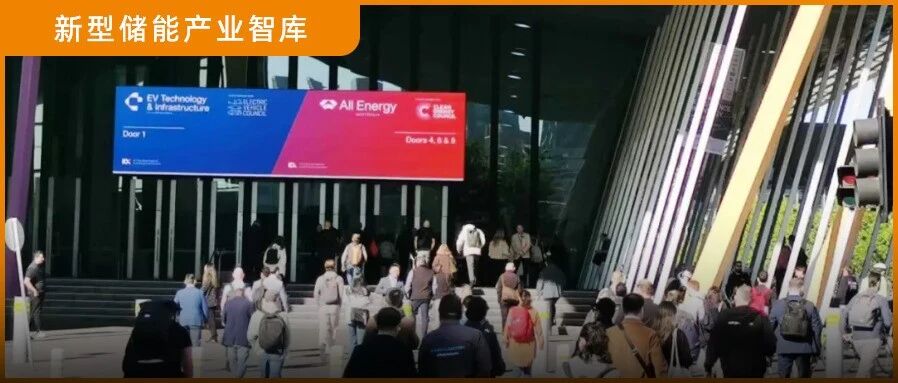
Core Insights - Chinese energy storage companies are rapidly expanding into the Australian energy storage market, which is becoming a new norm in the global energy transition landscape. Australia is projected to become the third-largest large-scale battery storage market globally, with installed capacity expected to surge from 2.3 GWh in 2024 to 18 GWh by 2035, representing nearly an eightfold increase [2]. Company Highlights - **Sungrow Power Supply**: Introduced a new 110KW DC-coupled commercial energy storage system and showcased the PowerTitan 3.0 system, which features a fully liquid-cooled design and a conversion efficiency of 99.3% [4][6]. - **BYD Energy**: Presented the "Haohan" energy storage product, which utilizes a 2710Ah blade battery with a minimum unit capacity of 14.5 MWh, achieving a volume-to-capacity ratio of 52.1% [7][9]. - **Trina Solar**: Showcased the Elementa King 3 system, which has a single cabin capacity of 6.25 MWh and a 12.3% increase in module energy density compared to previous generations [10][12]. - **Jinko Energy**: Launched a full-scene energy storage system solution, including the OmniCube-L233 and PotisFlexi-L261x systems, targeting various commercial applications [13][15]. - **Forsee Power**: Displayed the TIANWU commercial energy storage all-in-one machine, which enhances self-consumption rates and reduces reliance on the grid [16][18]. - **Haitian Energy**: Featured the ∞Power N2.28MWh sodium-ion energy storage system, designed for high-power applications [19][21]. - **Nandu Power**: Exhibited the Center L Ultra 6.25MWh energy storage system, suitable for diverse storage scenarios [23][24]. - **XINWANDA**: Launched the new generation "liquid cooling storage 3.0" technology, which adapts to extreme climate conditions in Australia [26][28]. - **Risen Energy**: Introduced integrated solutions for household and commercial energy storage, focusing on high efficiency and safety [29][31]. - **Sungrow Technology**: Showcased the "E-BRICK" mobile energy storage system, which is modular and suitable for various applications [38][40]. Market Trends - The Australian energy storage market is witnessing significant growth, with numerous Chinese companies participating in the All Energy Australia exhibition, indicating a strong interest in clean energy collaboration between China and Australia [2]. - The advancements in energy storage technologies, such as liquid cooling and sodium-ion batteries, are becoming increasingly relevant in addressing the challenges posed by extreme weather conditions in Australia [28][19].





中集安瑞科(03899):受益能源转型的清洁能源装备龙头,天然气与氢氨醇协同发展
Tianfeng Securities· 2025-10-30 11:21
Investment Rating - The report assigns a "Buy" rating for the company with a target price of 11 HKD, based on a 14x PE for 2026 [6]. Core Insights - The company is a leading player in clean energy equipment, benefiting from the energy transition, with a focus on natural gas and hydrogen-methanol development [1][3]. - The company has shown rapid revenue growth, with a CAGR of 19% from 2020 to 2024, and a projected revenue of 247.6 billion RMB in 2024 [1][28]. - The company maintains a strong market position in the LNG transportation and refueling sector, with over 80 billion RMB in new orders signed by Q3 2025 [2][66]. Summary by Sections 1. Clean Energy Equipment Leader - The company, a subsidiary of CIMC Group, specializes in providing key equipment and engineering services for clean energy, chemical environment, and liquid food industries [15][19]. - It has a comprehensive layout across three core business areas: clean energy, chemical environment, and liquid food, establishing itself as a key equipment manufacturer and integrated service provider [20][24]. 2. Clean Energy: Natural Gas Demand and Hydrogen & Green Methanol Potential - Global natural gas consumption is steadily increasing, with significant growth expected in Europe and North America [44][45]. - The company has a leading position in the LNG transportation and refueling market, with a strong order book and a focus on integrated solutions [57][62]. - Hydrogen energy is gaining traction, with the company being the first in China to offer a full range of liquid hydrogen solutions [69][77]. 3. Chemical Environment - The company is the largest manufacturer of tank containers globally, with a comprehensive service chain [20][24]. - It is actively seeking new growth areas as demand for chemical containers faces pressure [36]. 4. Rapid Development in Liquid Food Industry - The global liquid food industry is expanding rapidly, with the company focusing on turnkey project solutions and maintaining a strong global presence [5][36]. 5. Profit Forecast and Valuation - The company is projected to achieve net profits of 12.53 billion RMB, 14.98 billion RMB, and 17.37 billion RMB for the years 2025, 2026, and 2027 respectively [6][28].

跨越科学与政治,应对人类能源的挑战 | 两说
第一财经· 2025-10-30 10:02
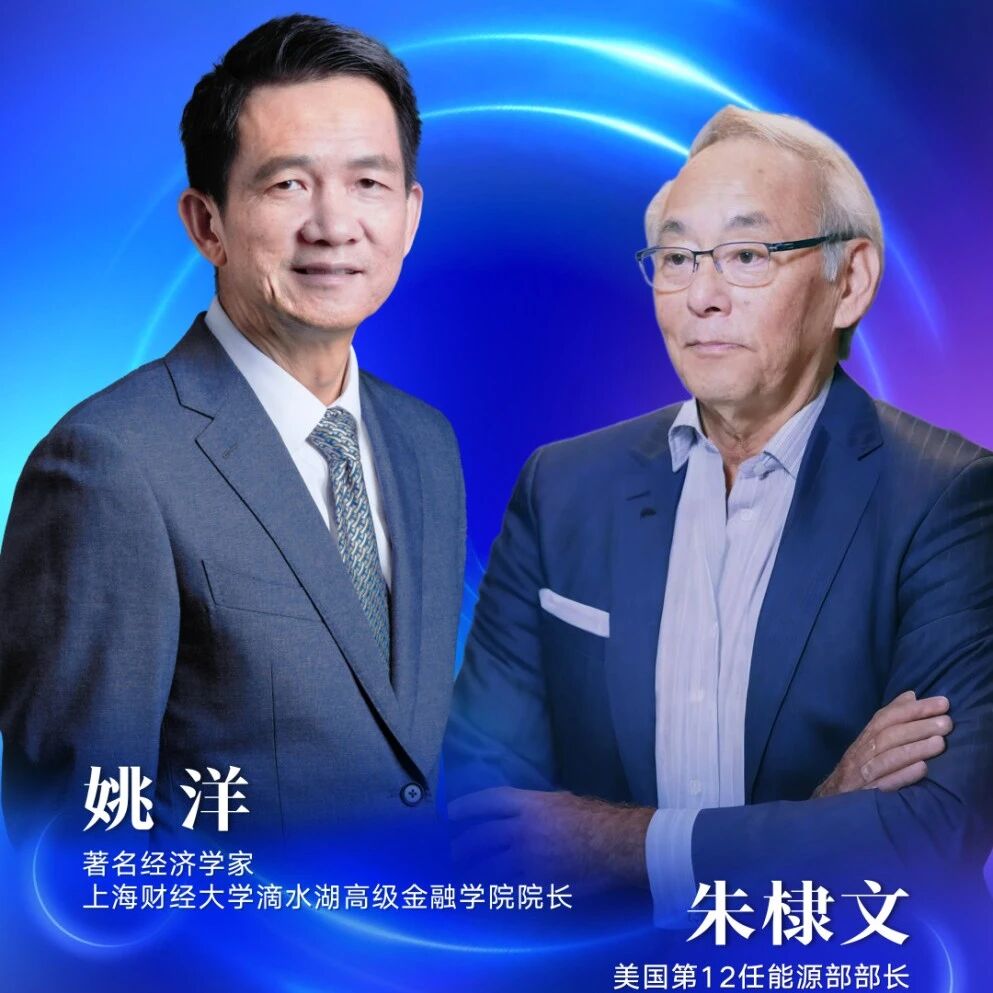
Core Viewpoint - The article discusses the journey of Nobel laureate Steven Chu from a scientist to the U.S. Secretary of Energy, highlighting his contributions to energy transition and his insights on global climate change challenges [1][5]. Group 1: Background and Achievements - Steven Chu became the 12th U.S. Secretary of Energy in 2009 and was the first Asian American cabinet member in U.S. history [3]. - He faced initial challenges in Washington, needing to adapt to a political environment that often diverged from scientific principles [5]. Group 2: Initiatives and Impact - Chu established the Advanced Research Projects Agency-Energy (ARPA-E), emphasizing that "not taking risks is not true success," and funded high-risk, high-reward energy technology research to tackle urgent national energy challenges [6]. - He promoted large-scale renewable energy projects, demonstrating that costly green technologies could be completed "on time and on budget," which garnered trust from major investors like Warren Buffett [6]. Group 3: Global Energy Transition Insights - Chu envisions a leapfrogging energy transition for developing countries, akin to moving directly from no phones to mobile technology, advocating for a combination of solar energy and batteries to bypass traditional grid systems [8]. - He predicts that within ten years, the costs of solar and storage technologies will decline to a level where they can meet demand without relying on the grid, reflecting his deep understanding of technological trends and human innovation capabilities [8]. Group 4: Observations on China's Green Technology - Chu notes that China is investing in foundational research similarly to what the U.S. did in the past, with Chinese companies eager to prove themselves and invest in the future while leveraging economies of scale to reduce costs [10]. - He provides a scientific analysis of China's advancements in green technology, including solar photovoltaics, electric vehicles, battery technology, and wind power, while also highlighting the strategic implications of these developments [10]. Group 5: Legacy and Future Aspirations - When asked about his message for future generations, Chu expressed a desire for his generation to create a better and safer world for the next, emphasizing the importance of addressing climate change and energy transition [13].
破顶后的铜价步入回调轨迹? 市场热议铜将复刻黄金“高处不胜寒”
智通财经网· 2025-10-30 09:52
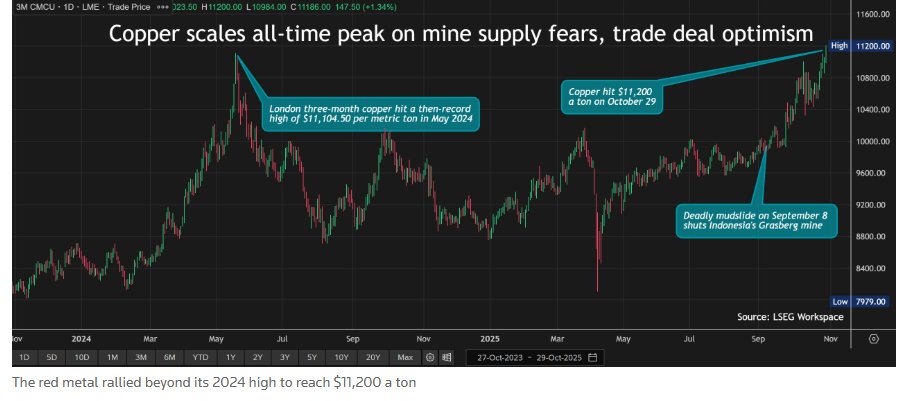
Group 1 - The unprecedented AI boom has led to a surge in copper demand, with international copper prices reaching record highs due to concerns over global supply and hopes for a positive US-China trade agreement [1][2] - Year-to-date, LME copper prices have increased by over 27%, primarily driven by a weakening US dollar and global interest rate declines led by the Federal Reserve and the European Central Bank [1] - Copper is widely used in various sectors such as electricity, construction, industrial machinery, transportation, and communication, making it a key indicator of global economic activity [1] Group 2 - The construction of data centers in the AI and digital transformation era is driving explosive growth in copper demand, with major companies like Microsoft, Google, Amazon, and Meta heavily investing in copper-dependent infrastructure [2] - Analysts from ING predict a tighter copper market supply-demand balance in 2026, with expectations of a copper supply shortage [2] - Mining giant Glencore reported a decline in copper production for the first nine months of 2025, contributing to concerns over supply constraints [2] Group 3 - The International Copper Study Group (ICSG) forecasts a refined copper market shortage of approximately 150,000 tons next year, with total consumption expected to be around 28.7 million tons [4] - Some analysts believe that the recent copper price surge is largely priced in due to easing global trade tensions and expectations of Federal Reserve rate cuts, leading to potential investor pullback [4] - WisdomTree's commodity strategist noted that excessive speculative bets in the futures market could lead to significant price corrections, as seen in other metal markets [4]
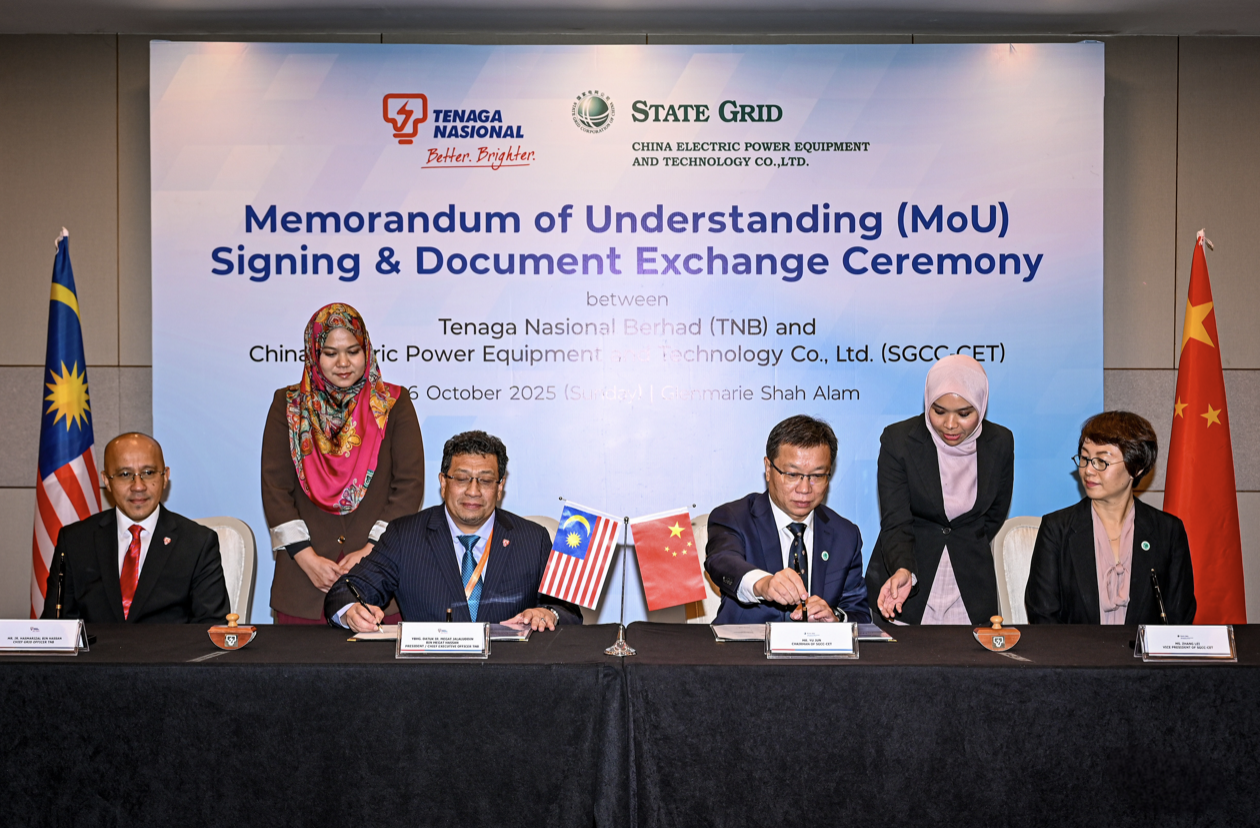
中国电力技术装备有限公司与马来西亚国家能源公司签署合作项目谅解备忘录
Zhong Guo Neng Yuan Wang· 2025-10-30 09:04
Core Viewpoint - The signing of the memorandum of understanding between China Electric Power Equipment and Technology Co., Ltd. and Tenaga Nasional Berhad (TNB) aims to enhance cooperation in addressing the urgent needs of energy transition in Malaysia [1][3]. Group 1: Collaboration Details - The memorandum is based on the principle of "complementary advantages and demand matching," focusing on technical exchanges and project cooperation in areas such as power system planning and integration, smart resilient grids, and digital and AI solutions [3]. - The collaboration seeks to integrate China's advanced technology in power transmission and transformation with Malaysia's energy development needs, supporting the implementation of Malaysia's national energy transition roadmap [3]. Group 2: Future Actions - China Electric Power Equipment will closely align with Malaysia's energy transition development needs and the cooperation outlined in the memorandum, enhancing resource allocation and conducting technical research to pragmatically advance deep cooperation in the electricity sector between China and Malaysia [5].

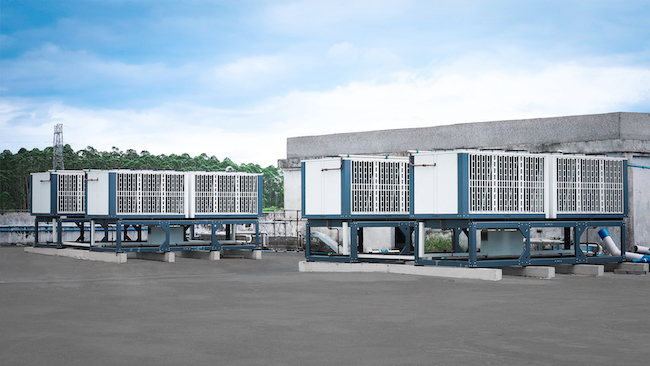
谷轮创新技术赋能中国菌菇种植产业,推动能效升级与可持续进步
Zhong Guo Shi Pin Wang· 2025-10-30 07:01
Core Insights - The collaboration between Copeland and Guangzhou Fusheng Refrigeration Equipment Engineering Co., Ltd. has successfully upgraded the refrigeration system at the Guangdong Dalishi Edible Mushroom Plant, enhancing energy efficiency by over 15% since the project's first phase began in 2024 [1][7]. Group 1: Project Overview - The project utilizes Copeland's advanced ZB series medium-temperature refrigeration scroll compressor parallel unit solution, which has improved energy efficiency and operational stability [1][2]. - The system is designed to meet varying refrigeration demands across different stages of mushroom cultivation, ensuring precise temperature control [2][4]. Group 2: Energy Efficiency and Performance - Since the project's implementation, the plant has achieved a 15% reduction in energy consumption, with a 28% increase in the coefficient of performance (COP) during non-peak hours [7]. - Daily energy consumption fluctuations have been reduced by 40%, resulting in an annual electricity savings of 760,000 kWh, calculated based on Guangdong's grid carbon emission factors [7]. Group 3: Operational Stability and Cost Optimization - The refrigeration system maintains stable performance even in high temperatures exceeding 35°C, with discharge temperatures consistently below 85°C [7]. - The upgrade has reduced the average number of compressor starts and stops from 32 to 9 per day, leading to a 76% decrease in annual maintenance costs and a savings of 144,000 yuan in labor costs [7]. Group 4: Future Prospects and Industry Impact - The project exemplifies the dual value of Copeland's solutions in addressing energy efficiency challenges in modern agriculture while aligning with China's sustainable development goals [7]. - The successful implementation of this project is expected to enhance the competitiveness of mushroom cultivation and may lead to further system upgrades to optimize planting processes and explore additional energy-saving potentials [8].