
ESG

Search documents
展会大平台成为发展新引擎 三个维度看进博会溢出效应
Ren Min Ri Bao· 2025-11-10 00:28
Core Insights - The China International Import Expo (CIIE) has evolved from a mere exhibition platform to a significant development engine over its eight-year history, showcasing its expanding influence across various sectors and regions [1][4]. Length - The CIIE has been held annually since 2018, marking a significant duration of eight years [2]. - The distance from the Andes Mountains to the CIIE venue in Shanghai is over 19,000 kilometers, exemplifying the global reach of products like Chilean cherries entering the Chinese market [3]. - A total of 170 companies have participated in all eight editions of the CIIE, reflecting their confidence and commitment to the Chinese market [4]. Depth - The CIIE serves as a major platform for observing China's high-level opening-up and offers an immersive experience of its vast market advantages [6]. - The event has seen numerous global debuts and showcases, highlighting China's commitment to deepening reforms and promoting institutional openness [6][7]. - The Chinese government has introduced 18 facilitation measures to support the CIIE, enhancing the ease of participation for exhibitors [7]. Breadth - The CIIE has matured into a comprehensive event that integrates product display, trade promotion, investment matching, and supporting conferences, thereby amplifying its spillover effects across various fields [8]. - The concurrent Hongqiao International Economic Forum attracts global experts and organizations to discuss key trade issues, further enhancing the CIIE's role in fostering international cooperation [8]. - Shanghai's initiatives, including the Shanghai Conference and over 100 sub-forums, aim to create high-level platforms for global exhibitors and investors [8][9].
展会大平台成为发展新引擎 三个维度看进博会溢出效应(进博会观察)
Ren Min Ri Bao· 2025-11-09 22:49
Core Insights - The China International Import Expo (CIIE) has evolved from a mere exhibition platform to a significant development engine, showcasing its long-term impact on the market and attracting global participation [1][3][5] Length - The CIIE has been held annually since 2018, marking a journey of 8 years, with continuous growth in exhibition area and number of participating companies [1] - 170 companies have participated in all 8 editions of the CIIE, reflecting their confidence in the Chinese market [3] Depth - The CIIE serves as a major platform for observing China's high-level opening-up and offers immersive experiences of its vast market advantages [5] - The event has facilitated the introduction of global products and innovations, showcasing China's commitment to reform and opening-up [5][6] Breadth - The CIIE has expanded its functions to include product display, trade promotion, investment matching, and supporting conferences, thereby enhancing its spillover effects across various sectors [6][8] - The event has attracted a range of professional service providers, enhancing the overall trade facilitation and reducing institutional costs in import processes [6] Supporting Activities - The Hongqiao International Economic Forum, held concurrently with the CIIE, features numerous discussions on global trade and economic issues, further amplifying the event's impact [7] - Shanghai's initiatives to optimize the business environment and facilitate participation in the CIIE include various policy measures aimed at enhancing the experience for foreign exhibitors [6][7]
破解“应考”难题 完善“阅卷体系” ESG强制披露“倒计时” 市场积极备战迎“大考”
Zhong Guo Zheng Quan Bao· 2025-11-09 22:29
Core Viewpoint - The implementation of mandatory ESG disclosure for A-share listed companies is approaching, with the first reports due in 2026, marking a shift from voluntary to mandatory compliance in sustainability reporting [1][2][3]. Group 1: ESG Disclosure Requirements - Companies listed in major indices like the Shanghai Stock Exchange 180 and the Sci-Tech Innovation Board must disclose their 2025 sustainability reports by April 30, 2026 [2]. - A significant majority of companies (95%) have already begun disclosing sustainability or social responsibility reports ahead of the mandatory requirements, establishing a solid foundation for the new system [3]. Group 2: Strategic Initiatives by Leading Companies - Leading firms such as PetroChina and Shenwan Hongyuan are proactively developing comprehensive ESG strategies, with many adopting a three-year cycle for their ESG reports [2]. - 87% of companies that have disclosed ESG reports have established governance frameworks for sustainability, and 70% have conducted dual materiality assessments [2]. Group 3: Challenges and Support Mechanisms - Some companies, particularly in high-energy and complex supply chain industries, face challenges in transitioning to mandatory disclosure, necessitating targeted support and guidance [4][5]. - Recommendations include structured training and the development of simplified disclosure templates to assist companies in meeting the new requirements [6]. Group 4: Addressing "Greenwashing" Risks - The risk of "greenwashing" poses a significant challenge to the integrity of ESG disclosures, requiring robust technical and punitive measures to enhance compliance and accountability [7][8]. - Establishing a unified regulatory framework for ESG ratings is essential to improve transparency and comparability across the market [8]. Group 5: Future Directions for ESG Reporting - The transition to mandatory ESG disclosure is expected to drive the development of more refined ESG investment products and enhance the overall quality of capital market operations [9]. - Future guidelines may include specific frameworks for biodiversity protection and supply chain ESG management, further enriching the ESG reporting landscape [9].
三个维度看进博会溢出效应(进博会观察)
Ren Min Ri Bao· 2025-11-09 22:20
Core Insights - The China International Import Expo (CIIE) has evolved from a trade show platform to a new engine for development, showcasing significant spillover effects across various sectors and regions [1][3][5]. Length - The CIIE has been held annually since 2018, marking a journey of 8 years, with continuous growth in exhibition area and number of participating companies [1]. - 170 companies have participated in all 8 editions of the CIIE, reflecting their confidence and commitment to the Chinese market [3]. Depth - The CIIE serves as a major platform for observing China's high-level opening-up and offers immersive experiences of its vast market advantages [5]. - The event has seen numerous global debuts and showcases, highlighting China's commitment to deepening reforms and promoting institutional openness [5][6]. Breadth - The CIIE has integrated functions such as product display, trade promotion, investment matching, and supporting conferences, continuously expanding its spillover effects into broader fields [6][8]. - The event has facilitated discussions on trade order, multilateralism, and global cooperation through various forums and meetings, enhancing its role as a global trade platform [7][8].


ESG强制披露“倒计时” 市场积极备战迎“大考”
Zhong Guo Zheng Quan Bao· 2025-11-09 20:13
Core Viewpoint - The implementation of mandatory ESG disclosure for A-share listed companies is approaching, with the first reports due in 2026, marking a shift from voluntary to compulsory disclosure [1][2]. Group 1: ESG Disclosure Requirements - Companies listed in key indices such as the Shanghai Stock Exchange 180 and the Sci-Tech Innovation Board must disclose their 2025 sustainability reports by April 30, 2026 [2]. - Currently, 95% of companies that will be subject to mandatory disclosure have already released sustainability or social responsibility reports, laying a solid foundation for the new system [2]. Group 2: Strategic Planning and Implementation - Increasingly, listed companies are proactively developing comprehensive ESG strategies, with many adopting three-year cycles for their ESG reports that encompass risk identification, strategy formulation, implementation, and accountability [2]. - 87% of companies that have disclosed ESG reports have established governance structures for sustainability, and 70% have conducted dual materiality assessments, indicating a robust governance framework [2]. Group 3: Market Impact and Benchmarking - Leading companies' ESG strategies set benchmarks for the market, facilitating a transition from voluntary to standardized disclosure practices [3]. - The ESG practices of major firms, which account for over 70% of A-share market capitalization, create a positive feedback loop of disclosure, rating, and financing, encouraging smaller companies to follow suit [3]. Group 4: Challenges and Support Mechanisms - Some companies, particularly in high-energy and complex supply chain industries, face challenges in ESG disclosure, often viewing it merely as a compliance task rather than a strategic priority [4]. - Market experts suggest targeted training and support mechanisms to help companies overcome disclosure challenges, including workshops and the provision of simplified templates [5][6]. Group 5: Addressing "Greenwashing" Risks - The risk of "greenwashing" poses a significant challenge to ESG disclosure, necessitating both technological solutions and punitive measures to enhance compliance [7]. - Recommendations include establishing a data monitoring platform to analyze ESG-related data and implementing strict penalties for non-compliance to deter misleading practices [7][8]. Group 6: Regulatory Framework and Standardization - There is a need for a unified regulatory framework for ESG ratings to address the current issues of multiple standards and low comparability [8]. - Regulatory bodies are encouraged to develop quality control standards for ESG ratings and ensure transparency and reliability in the rating process [8][9]. Group 7: Future Directions - The ongoing optimization of ESG disclosure systems and the introduction of specialized guidelines for various sectors will be crucial for enhancing the quality of disclosures [9]. - As mandatory disclosure systems are implemented, ESG investment products are expected to evolve towards greater sophistication, contributing to the sustainable development of capital markets [9].
数字技术赋能ESG,如何打造可持续闭环成为关键 | 2025华夏城市产业链大会
Hua Xia Shi Bao· 2025-11-09 15:13
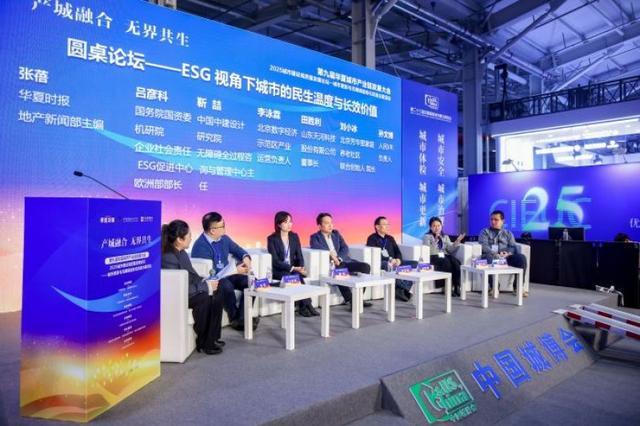
Group 1 - The article discusses the growing importance of ESG (Environmental, Social, and Governance) and accessibility renovations for the elderly, highlighting the need for green and energy-efficient buildings that enhance the quality of life for disabled and elderly individuals [2][10] - A forum titled "High-Quality Development Forum on Urban Renewal and Accessibility Renovation" was held, focusing on how companies can implement ESG practices and create a closed-loop system for ESG initiatives [2][15] - Digitalization is identified as a key driver for ESG development, with companies like People's VR utilizing technology to enhance urban renewal experiences through digital and virtual means [3][5] Group 2 - The Beijing Digital Economy Demonstration Zone has gathered over 10,000 enterprises, focusing on optimizing high-energy-consuming industries through AI and smart building controls to reduce costs and improve efficiency [5][17] - The China Construction Design Institute emphasizes the importance of technology in supporting urban renewal and accessibility renovations, conducting digital assessments to guide the development of age-friendly environments [7][9] - Tianhe Technology, a leader in intelligent mining equipment, integrates accessibility principles into its new facility design, ensuring a barrier-free environment for its employees, including 237 disabled workers [12][14] Group 3 - The article highlights the need for a collaborative approach among capital, policies, and enterprises to achieve sustainable development in ESG and accessibility renovations [15][17] - Specific operational pathways are suggested, including policy support for elderly-friendly development, funding for accessibility projects, and the use of advanced technology to ensure transparency and accountability in ESG initiatives [17][18] - The ideal business model is described as one that allows all participants to feel the goodwill generated by the project, with intelligent applications being essential for sustainable development [18]
鄂尔多斯“神操作”:信披评级惨遭“降级”,董秘薪酬“加薪”!
Zhong Guo Neng Yuan Wang· 2025-11-09 14:08
Core Insights - The information disclosure rating of Inner Mongolia Erdos Resources Co., Ltd. dropped from A to C in 2024, marking a significant decline in disclosure quality [1][2] - Despite the drop in disclosure rating, the salary of the company's board secretary increased from 1.018 million yuan to 1.1267 million yuan, a rise of 10.68% [1][3] Information Disclosure Rating - Erdos had maintained an A rating since 2022, but the recent downgrade breaks this streak [2] - The new disclosure evaluation guidelines issued by the Shanghai and Shenzhen Stock Exchanges emphasize stricter regulations and higher standards for information disclosure [2] - The evaluation criteria include eight aspects such as the effectiveness of disclosure, investor relations management, and social responsibility reporting [2] Financial Performance - In 2024, Erdos reported a revenue of 28.403 billion yuan, a decrease of 7.04%, and a net profit of 1.847 billion yuan, down 36.39% [3][6] - The core business segments, particularly the power metallurgy and chemical sector, saw a revenue decline of 9.03% [6] - The company's main revenue sources include silicon iron (37.05% of main business revenue) and PVC resin (18.59%) [5][6] Salary Discrepancy - The increase in the board secretary's salary contrasts sharply with the company's declining performance, raising questions about the alignment of executive compensation with disclosure quality [3][4] - Comparatively, other companies in the sector showed different trends in executive compensation relative to their financial performance [4] ESG Performance - Erdos received a B rating in ESG performance, ranking 114th out of 196 companies in the metals and mining sector [7] - The company scored 63.68 in the environmental category, 85.59 in social aspects, and 81.18 in governance, indicating areas for improvement [7]

中通快递将持续推进ESG实践
Zheng Quan Ri Bao· 2025-11-09 13:12
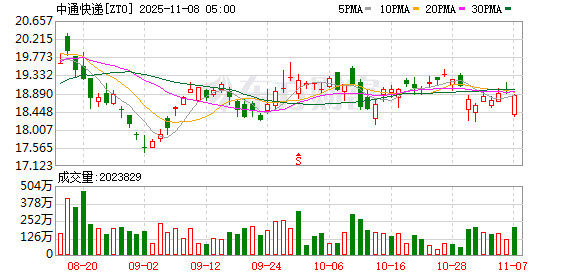
Core Viewpoint - Zhongtong Express has made significant progress in corporate social responsibility (CSR) and plans to continue advancing its ESG practices from 2024 to 2025 [2] Group 1: Corporate Social Responsibility Achievements - Zhongtong Express has integrated CSR into its corporate strategy and daily operations, leading to an improvement in its brand image and international ESG ratings, ranking in the top 10% globally in the S&P Global Corporate Sustainability Assessment (CSA) [2] - The company has established over 20 customer feedback channels, including 95,311 channels and an official mini-program, to enhance customer satisfaction [2] - Zhongtong Express conducts regular customer satisfaction surveys to analyze results and improve service quality [2] Group 2: Employee Welfare Initiatives - By April 2025, 790 outlets and 16,000 employees benefited from the implementation of the "parcel delivery to every corner" policy [3] - The exclusive accident insurance for delivery personnel has increased to 200,000 yuan, covering all risk scenarios [3] - The "Delivery Personnel Care Fund" has grown from 30 million yuan to 200 million yuan, assisting over 500 individuals with 25 million yuan in subsidies [3] - The company provides free smart prosthetics for eligible delivery personnel [3] Group 3: Educational and Community Support - The "Dream 1+1" charity education program has donated over 100,000 books and built 8 hope schools, with total donations amounting to several million yuan by September 2025 [3] - The program has provided over 460,000 yuan in educational support for children in remote areas [3] - Zhongtong Express has initiated a "Fraud Prevention Line" campaign in collaboration with public security agencies, conducting 15,345 fraud prevention training sessions covering 441,563 individuals [3] Group 4: Environmental Initiatives - Zhongtong Express is actively responding to the national "dual carbon policy" by building a green logistics system, focusing on four areas: green collection, green transfer, green transportation, and green delivery [4] - By the end of 2024, the company has invested in 53.43 million reusable bags and recycled 12.767 million quality cardboard boxes [4] - The company has set up 28,017 green recycling devices across 90% of its outlets and stores, achieving a 100% usage rate of electronic waybills [4] - In 2024, the solar panel installation area reached approximately 620,000 square meters, generating 53,410 MWh of electricity, a 33% increase year-on-year [4] - As of October 2025, over 2,900 autonomous delivery vehicles operate in more than 250 cities, delivering over 200,000 packages daily, with a total operating distance exceeding 20 million kilometers [4]
“深海”的万亿机遇
Hua Er Jie Jian Wen· 2025-11-09 07:18
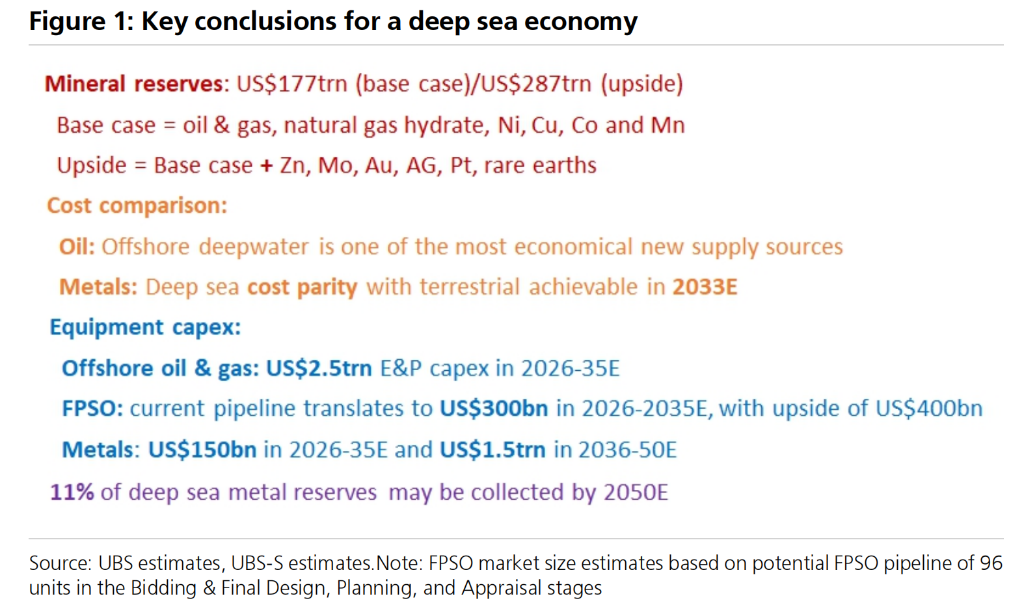
Core Insights - The deep-sea economy is emerging as a trillion-dollar investment theme driven by short-term focus on FPSO oil and gas equipment and long-term interest in deep-sea mining equipment [1][2] Group 1: Market Potential - The deep-sea economy is projected to have a resource value of up to $177 trillion, including $81 trillion in metals and $95 trillion in oil and gas resources [4] - The capital expenditure (Capex) for offshore oil and gas exploration is expected to reach approximately $2.5 trillion over the next decade, while spending on deep-sea mining equipment is forecasted to surge from $150 billion to $1.5 trillion between 2036 and 2050 [4][9] Group 2: Drivers of Growth - The deep-sea sector is driven by two main pillars: mature offshore oil and gas extraction, which is experiencing a new capital expenditure cycle due to energy security and land resource depletion, and emerging deep-sea metal extraction, which is becoming commercially viable due to technological breakthroughs [4][5] - The deep-sea holds significantly higher reserves and grades of key metals compared to land, with estimates suggesting that by 2065, 35-45% of key metal demand will be sourced from the deep sea [5][10] Group 3: Investment Focus - Short-term investment should concentrate on the FPSO supply chain, which is expected to capture a market size of $300 billion over the next decade, benefiting operators, engineering contractors, and suppliers of hull construction and core modules [11][12] - Long-term investment should target deep-sea mining equipment, with a projected Capex of $1.5 trillion post-cost parity, primarily focused on underwater vehicles and systems [9][10] Group 4: Regulatory Environment - The year 2025 is identified as a pivotal point for deep-sea development, with significant policy advancements in China and the U.S. aimed at accelerating deep-sea mining approvals [5][10] Group 5: Key Beneficiaries - Companies capable of manufacturing underwater vehicles, lifting systems, and sensors are positioned to be the biggest winners in the deep-sea mining sector, alongside suppliers of high-performance materials [14]
国资央企加快ESG体系建设,共建ESG良好生态
Ren Min Wang· 2025-11-09 06:08
Group 1 - The core concept of ESG (Environmental, Social, and Governance) is becoming a new benchmark for measuring corporate sustainability, with state-owned enterprises in China accelerating the establishment of an ESG ecosystem [1] - The State-owned Assets Supervision and Administration Commission (SASAC) has emphasized the importance of integrating ESG work into the overall management of social responsibility, responding to opportunities and challenges brought by ESG development [1] - Zhang Xiaosong, Deputy Director of the Social Responsibility Bureau of SASAC, highlighted the significant role of state-owned enterprises in promoting ESG initiatives and their commitment to participating in the formulation of relevant rules and sharing best practices [1] Group 2 - The current internationalization of ESG faces challenges such as the lack of a unified international standard system, evaluation system, and authoritative evaluation institutions [2] - ESG internationalization is seen as a crucial strategy for multinational companies to enhance their international influence and expand into overseas markets [2] - The "Guidelines for Verification of Corporate ESG Reports," led by the China Quality Certification Center, indicates that ESG reporting is becoming an essential channel for companies to demonstrate their social responsibility and is a key reference for analysts and investors [2]