
一国两制

Search documents
第十六届澳门青少年外交知识竞赛总决赛举行
Xin Hua She· 2025-12-03 02:22
新华社澳门12月2日电 由外交部驻澳门特派员公署和澳门特区政府组织的第十六届澳门青少年外交知识 竞赛总决赛,2日在教业中学举行。 外交部驻澳门特派员公署署理特派员程雷,特区政府社会文化司司长代表、教青局局长龚志明出席并致 辞。澳门中联办、解放军驻澳门部队以及特区政府相关主管部门、院校机构负责人和师生代表等300余 人出席总决赛。 本届比赛吸引澳门37所中学近万名学生参与。8支进入决赛的队伍围绕"一国两制"的世界意义、四大全 球倡议等进行精彩论述。最终,镜平学校、濠江中学、圣公会(澳门)蔡高中学、教业中学脱颖而出, 分获冠、亚、季、殿军。 外交部发言人郭嘉昆视频致辞表示,赛事已成为特区国情教育和爱国主义教育的金字品牌。希望同学们 筑牢爱国之志,珍惜时代机遇,树立远大志向,当好"一国两制"事业的建设者和接班人。 程雷表示,同学们要胸怀家国、刻苦学习、拼搏进取,早日成为国家和澳门建设的栋梁之才。 龚志明表示,澳门青少年要以参赛为契机,立足澳门、胸怀国家、放眼世界,讲好澳门故事和中国故 事。(记者齐菲 刘刚) ...
把握机遇 更好融入和服务国家发展大局
Ren Min Ri Bao· 2025-12-02 22:33
11月24日至25日,学习贯彻党的二十届四中全会精神中央宣讲团在香港特区为中央驻港机构和中资企业 代表、香港特区管治团队、社会各界人士进行了三场宣讲,并赴北部都会区调研及交流。 香港社会各界反响热烈,掀起学习贯彻全会精神热潮。各界人士纷纷表示,要通过学习贯彻全会精神坚 定信心、明确方向,抓住中国式现代化建设的重大机遇,主动对接国家"十五五"规划,更好发挥背靠祖 国、联通世界独特优势和重要作用,巩固提升香港国际金融、航运、贸易中心地位,更好融入和服务国 家发展大局。 香港特区行政长官李家超表示,特区政府在全会胜利闭幕后即召开了政府团队研习会,香港社会各界随 后亦发起全会精神学习宣讲活动。中央宣讲团在香港的宣讲活动,对香港各界人士全面深入理解和领会 全会精神有巨大帮助,与会者都获益良多。他希望社会各界将全会精神融会贯通在日常事务中,为促进 国家与香港的高质量发展和以中国式现代化全面推进强国建设、民族复兴伟业不懈努力。 "宣讲让我对全会精神有了更深入的理解,对香港如何把握发展机遇、在进一步融入和服务国家发展大 局中实现更大发展,有了更强的紧迫感、更大的信心和更明确的方向。"香港特区政府政务司司长陈国 基表示。 宣讲 ...
发挥优势 推动经济适度多元发展
Ren Min Ri Bao· 2025-12-02 22:33
Core Viewpoint - The recent seminars in Macau emphasized the importance of understanding and implementing the spirit of the 20th Central Committee's Fourth Plenary Session, focusing on seizing development opportunities and supporting the Macau SAR government's planning and implementation of the "Three-Five" plan to foster long-term prosperity and stability in Macau [1][2]. Group 1: Government Initiatives - The Macau SAR government aims to enhance its sense of responsibility and urgency in seizing national development opportunities, aligning actions with the central government's scientific judgments and decisions regarding the 14th Five-Year Plan [1]. - The government plans to strengthen the comprehensive tourism and leisure industry while accelerating the cultivation of four emerging industries and establishing a Macau Science and Technology Research and Development Industrial Park [2]. - The government is also focused on promoting the integration of the Macau and Hengqin industries to elevate the level of integrated development [2]. Group 2: Cultural and Educational Development - The Macau Cultural Bureau is committed to planning and constructing the Macau International Comprehensive Tourism and Cultural Zone to drive sustainable and high-quality development in the cultural industry [3]. - There is an emphasis on protecting, transforming, and utilizing cultural heritage resources, as well as enhancing the training of cultural and artistic talents [3]. - The importance of youth engagement in understanding national strategies and contributing to Macau's long-term development is highlighted, with initiatives aimed at providing new opportunities for youth growth [3][4]. Group 3: Collaborative Efforts - The Macau Development Strategy Research Center aims to provide valuable policy suggestions to the Macau SAR government and collaborate with various sectors to enhance coordinated governance under the new positioning of "Macau + Hengqin" [4]. - There is a call for increased awareness among young people regarding the 14th Five-Year Plan, encouraging them to align personal development with national and Macau development goals [4].
深化粤港澳合作建设一流湾区
Jing Ji Ri Bao· 2025-11-30 22:50
习近平总书记近日在广东考察时指出,要着力深化粤港澳合作,加强科技创新合作和基础设施互联互 通,推进规则机制"软联通",有效提升市场一体化水平,建设宜居宜业宜游优质生活圈。 建设粤港澳大湾区,对粤港澳三地来说既是重大责任,也是难得的发展机遇。粤港澳要锚定建设富有活 力和国际竞争力的一流湾区和世界级城市群的目标,在基础设施"硬联通"、规则机制"软联通"、人员交 流"心联通"三个维度下功夫,努力实现重点突破、全面推进。 "心联通"是衡量大湾区融合发展的关键指标。当前,超过20万港澳居民常年在广东工作生活,超8000名 港澳专业人才在粤执业。截至今年9月,港澳居民在粤参保达35.3万人次。广东已构建起以粤港澳大湾 区(广东)创新创业孵化基地为龙头、以珠三角12个重点基地为骨干、以各地特色基地为基础的多层次 孵化平台载体布局,为港澳青年创新创业提供广阔平台。港澳专业服务业国际化水平高,粤港澳三地要 持续深化职业资格认定和职称认定,为更多专业人才到大湾区内地城市执业敞开大门。港澳要探索本地 养老、医疗福利的跨境适用政策,为在粤养老就医的港澳居民提供便利。同时,弘扬以粤剧、龙舟、武 术、醒狮等为代表的岭南文化,塑造湾区人文 ...
国台办:赖清德的所谓“行动方案”是“引战方案”“毁台方案”
Xin Hua She· 2025-11-27 16:30
Core Viewpoint - The spokesperson of the Taiwan Affairs Office, Chen Binhua, criticized Lai Ching-te's separatist rhetoric, labeling it as hostile and confrontational, and emphasized that Taiwan is an inseparable part of China, rejecting any notion of Taiwan as an independent state [1][2][3] Group 1 - Chen Binhua stated that Lai Ching-te's so-called "action plan" is an attempt to incite conflict and is characterized by radical and reckless separatist views, which he claims will lead Taiwan into disaster [1][2] - The spokesperson reiterated that the status quo of the Taiwan Strait is defined by the principle of "One China," and any attempts at independence are unacceptable and will not be tolerated [2][3] - Chen emphasized that the idea of "Taiwan independence" equates to war and is a dead end, asserting that the issue of Taiwan is a core interest of China, affecting over 1.4 billion people [3] Group 2 - The spokesperson criticized Lai Ching-te for ignoring mainstream public opinion in Taiwan and for exacerbating tensions across the Taiwan Strait, following previous declarations that labeled mainland China as a "foreign hostile force" [2] - Chen Binhua warned that any attempts to cross the red line of "Taiwan independence" would be met with decisive action, highlighting the strong resolve and capability of the Chinese government to counter separatist actions [3] - The spokesperson called for a peaceful resolution through "peaceful reunification and one country, two systems," which he claims would consider the realities of Taiwan and protect the interests of its people [2]
国台办:赖清德的所谓“行动方案”是 “引战方案”“毁台方案”
Xin Hua She· 2025-11-27 11:39
Group 1 - The spokesperson of the Taiwan Affairs Office, Chen Binhua, criticized Lai Ching-te's statements as filled with hostility and a stubborn "Taiwan independence" stance, indicating that his proposals are radical and provocative [1][2] - Chen emphasized that Taiwan is an inseparable part of China and that the current situation across the Taiwan Strait reflects the existence of only one China, which cannot be changed [2] - The spokesperson warned that any attempts at "Taiwan independence" would lead to war and that the Taiwan issue is a core interest of China, which concerns the feelings of over 1.4 billion Chinese people [3] Group 2 - Chen Binhua stated that Lai Ching-te's actions since taking office have ignored mainstream public opinion in Taiwan and have exacerbated tensions across the Taiwan Strait [2] - The spokesperson reiterated that "Taiwan independence" is a dead end and that any attempts to cross the red line would be met with a strong response from China [3] - Chen called for a peaceful resolution through "peaceful reunification and one country, two systems," which he described as a plan that considers the realities of Taiwan and the interests of its people [2]
香港财政司司长陈茂波访问伦敦 推介香港发展机遇
Zhong Guo Xin Wen Wang· 2025-11-26 12:32
Core Insights - Hong Kong's Financial Secretary, Paul Chan, is promoting investment opportunities in finance and innovation sectors during his visit to London [1][3] - Hong Kong has experienced GDP growth for 11 consecutive quarters, with a revised annual growth forecast of 3.2% [3][4] - The tourism sector is recovering strongly, with an expected 49 million visitors to Hong Kong this year [3][4] Group 1: Economic Development - Hong Kong is positioned as a global leader in digital assets and the third generation of the internet, having recently issued the world's largest tokenized green bond [4] - The city is actively expanding its commodity trading market, with 12 metal warehouses recognized by the London Metal Exchange [4] - The Northern Metropolis area is identified as a key platform for innovation and technology development, with government incentives to attract businesses [4] Group 2: International Relations - Meetings with family offices and financial institutions from Europe, the Middle East, and Asia were held to discuss collaboration opportunities [3] - Discussions with the Chinese Ambassador to the UK focused on Hong Kong's future development and Sino-British relations [3]

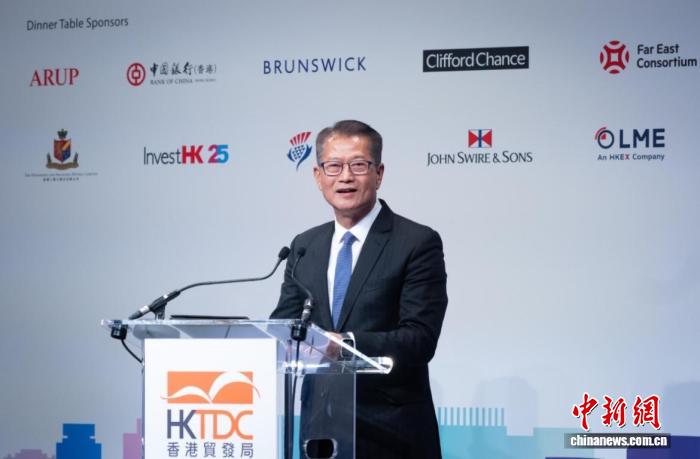
陈茂波在伦敦展开访问行程 向英国政商界介绍香港发展机遇
智通财经网· 2025-11-26 02:39
陈茂波当地时间11月26日会继续在英国伦敦的访问,随后转往意大利米兰。 另外,他又提到北部都会区将成为推动创科发展的关键平台,特区政府正加快该区建设,包括放宽规划 限制,采用更具弹性的发展模式,例如片区开发,实现土地绑定产业的融合发展。特区政府也会推出优 惠政策,吸引企业进驻。 而深圳河套地区将成为跨境的创新走廊,推动创新政策,包括资金、人才、货物、数据,以至生物样本 的自由流动,这些都对从事人工智能和生物科技的国际公司具相当吸引力。 陈茂波总结称,香港的发展前景亮丽,欢迎更多英国企业及专业人士来港投资兴业和发展事业,共享庞 大的发展机遇。 智通财经APP获悉,香港财政司司长陈茂波当地时间11月25日抵达英国伦敦并展开访问,与多家来自欧 洲、中东和亚洲的家族办公室的代表会面,向他们介绍香港在金融和创科方面的投资机遇、慈善和影响 力投资的生态,以及优质的生活环境等,欢迎他们来港设立办公室;此外,陈茂波也与一家有意在港来 港设点营运的金融机构会面。 陈茂波之后出席由香港贸发局举办的"香港晚宴"并发表主题演讲,向英国的政商界介绍香港的最新情况 和发展机遇。他强调,"一国两制"继续是香港繁荣稳定的基石,法治和普通法制 ...
为推进中国式现代化建设贡献澳门力量——党的二十届四中全会精神宣讲活动激励澳门各界团结奋进
Xin Hua She· 2025-11-25 02:01
Group 1 - The central theme of the news is the promotion of Macau's contribution to China's modernization through the understanding and implementation of the spirit of the 20th Central Committee's Fourth Plenary Session [1][2] - The event included three sessions of presentations aimed at various sectors in Macau, with over a thousand participants and widespread public engagement through live broadcasts [1] - Macau's representatives expressed that the presentations provided a thorough and insightful interpretation of the plenary session's spirit, tailored to Macau's context, which serves as a scientific guide for the local government and society [1][2] Group 2 - The Chief Executive of Macau emphasized the importance of the presentations in helping various sectors understand the plenary session's spirit, encouraging confidence in development, innovation, and active engagement in economic diversification [2] - The Secretary for Economy and Finance noted that the presentations clarified the guiding principles and main goals for Macau's socio-economic development during the 14th Five-Year Plan period, highlighting the central government's support for Macau [2] - The Secretary for Social and Cultural Affairs stated that the presentations were clear and relevant, aiming to translate the learning outcomes into actionable steps to enhance public welfare and integrate into the Greater Bay Area development [2] Group 3 - The President of the Macau Scholars Alliance emphasized the need for local think tanks to align with national strategies and contribute to regional cooperation through research and policy recommendations [3] - The President of the Macau Financial Law Association pointed out that the 14th Five-Year Plan offers unprecedented opportunities for the development of Macau's financial legal framework, advocating for active support in financial reforms [3] - The student representative from the University of Macau expressed a commitment to align personal academic pursuits with national development goals, contributing to the Greater Bay Area and national rejuvenation [4] Group 4 - A commentary in the Macau Daily highlighted the 14th Five-Year Plan as a critical window for Macau's transformation, urging various sectors to pragmatically advance their work to achieve economic diversification [4] - The article called for businesses to leverage policy benefits and invest in emerging industries, while community organizations should facilitate collaboration between academia and industry [4] - It emphasized the government's role in leading initiatives, particularly through the "Macau + Hengqin" strategy, to deepen industrial collaboration and achieve developmental goals [4]
十五运会报道全网总点击量超410亿次
2 1 Shi Ji Jing Ji Bao Dao· 2025-11-24 07:59
南方财经记者谭砚文广州报道 11月9日至21日,第十五届全国运动会在粤港澳三地举行,举国关注。据有关部门权威统计,11月8日至 23日,全网关于十五运会的报道约148.8万条,点击量411.97亿次,讨论量3.74亿次。 这是粤港澳三地首次联合承办全国运动会,是"一国两制"在体育领域的创新实践。境内外共有366家媒 体、超3300名记者参与采访报道。开闭幕式直播全国累计收视近2亿人次,充分展现岭南风韵和科技实 力。三地歌手同唱十五运会会歌、三地同传十五运会火炬、三地运动员开闭幕式同时进场、三地火炬手 共同点燃主火炬、全场共唱歌曲《中国人》等感人瞬间,迅速在网络刷屏霸榜。全运会跨境自行车、跨 境马拉松等重要赛事的"无感通关",充分反映粤港澳大湾区"硬联通""软联通""心联通"的建设成就,凸 显了十五运会在丰富"一国两制"实践、彰显制度优势、深化粤港澳合作、推动大湾区高质量发展、激发 港澳同胞爱国热情、推动港澳更好融入国家发展大局等方面的重要作用。 十五运会期间,主转播机构中央广播电视总台各频道累计直播赛事834场次,全国各电视频道累计收视 33.31亿人次。比赛现场的紧张激烈和感人瞬间,运动员刻苦训练、顽强拼搏 ...