合成生物学

Search documents
中国科学院深圳先进技术研究院(SIAT)面向全球招募各层次人才
生物世界· 2026-01-04 08:30
编辑丨王多鱼 排版丨水成文 中国科学院深圳先进技术研究院 (SIAT) 诚邀全球杰出的研究人员、科学家和工程师加入,共谋职业发 展。SIAT 正在积极寻找在以下关键战略领域表现卓越的人才,包括但不限于:先进集成技术、生物医学与 健康工程、先进计算与数字工程、生物医学与生物技术、脑认知与脑疾病、合成生物学、先进材料科学与 工程、碳中和技术以及科学仪器。 SIAT 正在打造一个充满活力的研究社区,诚邀各层次学者加入科学探索之旅,也热烈欢迎您推荐杰出的同 行。 招聘职位与任职条件 杰出 PI 发展潜力:我们为您提供一个集研究、教育和产业资源于一体的一站式职业平台,在这里您将与高素质团 队合作,促进创新和职业发展。 薪酬福利:我们提供具有国际竞争力、以学术为导向的协商薪资和福利,让您能够专注于研究工作。 研究支持:我们提供大量的研究资金和专用的实验室空间,全力支持您的研究工作。 公认的学术成就和贡献; PI 青年学者 博士后 其他职位 :教授级高级工程师、研究助理、助理工程师等。 薪酬与福利 我们为您提供有竞争力的工作支持,并为您打造一个专注的研究环境: 具有国际声誉和影响力; 能够引领学科发展或赶超国际先进水平。 ...


承葛生物完成新一轮超亿元融资,引领精准微生态医疗新范式!
Sou Hu Cai Jing· 2026-01-04 07:13
Group 1: Investment and Market Potential - The leading company in the precision microbiota transplantation field, Chengge Biotechnology, has completed a new round of financing exceeding 100 million yuan, led by Yuanwing Investment, marking its second significant capital injection within six months [1] - The global microbiome drug market is projected to exceed 100 billion yuan by 2028, with China expected to grow at three times the global average rate [2] - The recent financing reflects a strong signal that the commercialization of the human microbiome is on the verge of explosive growth [1][2] Group 2: Policy and Regulatory Environment - The National Health Commission of China has included intestinal microbiota transplantation in the medical service project category, with pilot insurance payment programs already underway in regions like Zhejiang and Guangdong [4] - Chengge Biotechnology has been instrumental in establishing five industry standards that are now being implemented, indicating that policy benefits are about to be fully realized [4] Group 3: Technological Advancements and Innovations - Chengge Biotechnology has developed the world's first Precision Microbiota Transplantation Therapy (PMTT) platform, which integrates deep microbiota analysis, precise matching, standardized preparation, and targeted transplantation [9] - The company has established a national microbiota resource platform, recognized by CNAS, to support clinical applications and research in precision microbiota transplantation [11] - Chengge Biotechnology has created six core technology platforms that comprehensively manage the quality of microbiota extraction and transplantation efficacy, serving tens of thousands of patients across over 30 disease types [11] Group 4: Future Outlook and Industry Position - The shift towards microbiome medicine represents a paradigm revolution in healthcare, with Chengge Biotechnology aiming to create a complete closed-loop system from diagnosis to treatment and prevention [15] - The company has positioned itself as a leader in the microbiota transplantation sector, having received the only approval from the Ministry of Science and Technology for human genetic resources and holding full CNAS accreditation [18] - Chengge Biotechnology has provided professional services to over 300 medical institutions, with more than 300,000 instances of microbiota transplantation and testing conducted [18]
业绩疲软的金城医药陷“多事之秋”
凤凰网财经· 2026-01-02 13:42
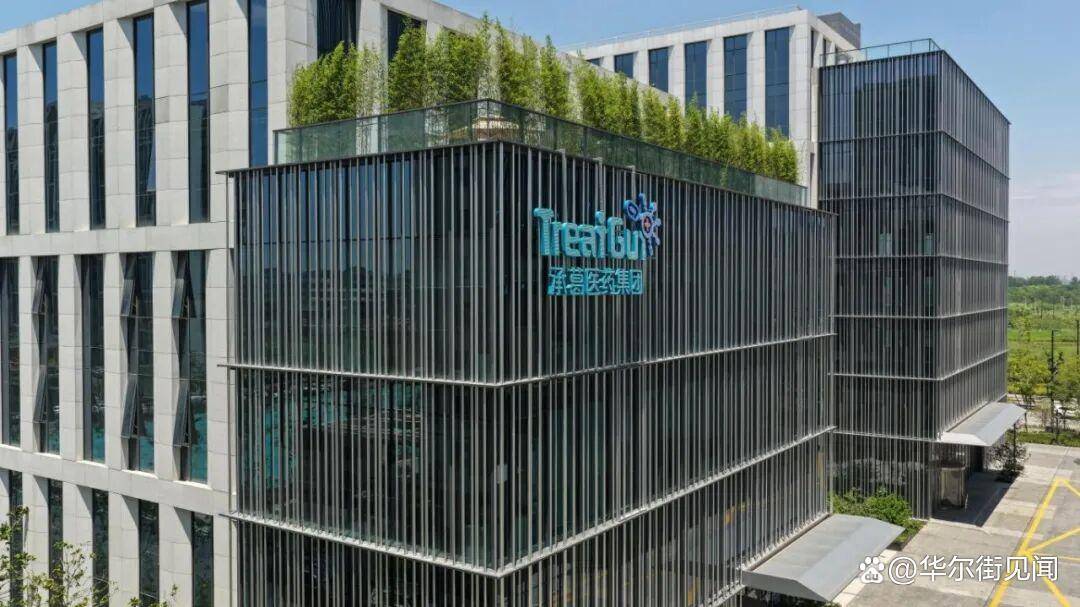
Core Viewpoint - Jincheng Pharmaceutical (300233.SZ) is facing multiple challenges, including tax payment issues, stock manipulation by its actual controller Zhao Yeqing, and declining financial performance, raising concerns about the company's future stability and management effectiveness [2][9]. Group 1: Tax Issues - Jincheng Jinsu Pharmaceutical Co., Ltd. and its subsidiary Guangdong Landu Pharmaceutical Co., Ltd. were required to pay a total of 21.5968 million yuan in back taxes and penalties due to tax issues from 2017 to 2018 [3]. - The tax payments have been completed as of the announcement date, and a supplementary agreement was signed to revise tax liability clauses related to the tax recovery [5]. Group 2: Stock Manipulation - Zhao Yeqing, the actual controller of Jincheng Pharmaceutical, was involved in stock manipulation from August 2017 to February 2020, using 104 accounts to trade the company's stock, which led to a fine and a four-year market ban [7][8]. - The manipulation involved significant trading activity, with 1.19 billion shares bought and 1.07 billion shares sold, resulting in a loss of 7.392 million yuan for the involved accounts [8]. Group 3: Financial Performance - Jincheng Pharmaceutical's financial performance has been declining, with a revenue of 35.38 billion yuan in 2023, a growth rate of only 0.93%, and a net profit decrease of 36.09% to 1.75 billion yuan [9]. - In the first three quarters of 2025, the company reported a revenue of 19.32 billion yuan, down 23.19%, and a net profit of 31.5771 million yuan, down 79.1% [9]. - The company experienced a significant decline in its gross margin to 36.23%, a decrease of 3.9 percentage points, and a net margin of 1.74%, down 4.71 percentage points compared to the previous year [9].

实现农资产品“定向创造”!合成生物学开启可持续新时代
Xin Lang Cai Jing· 2025-12-31 16:00
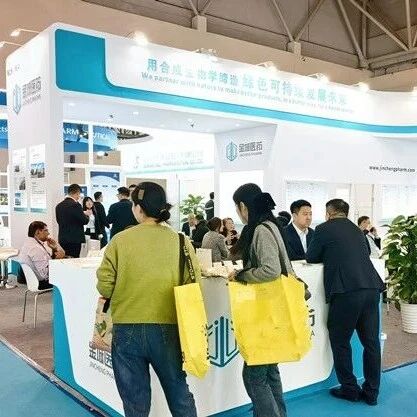
Core Insights - Synthetic biology is leading a transformative change in the agricultural input industry, moving from a traditional reliance on natural processes to a model focused on design and creation [1][17] - Recognized as the "third biotechnology revolution," synthetic biology fundamentally shifts from interpreting natural laws to designing biological functions, impacting various sectors including health, environment, and energy [2][18] - The market acceptance of synthetic biology products is increasing as technology matures, with applications like polyglutamic acid proving their practical value in agriculture [3][19] Industry Transformation - Synthetic biology is reshaping the agricultural input industry by integrating multiple disciplines such as biology, engineering, and information technology, leading to innovations in product development and market ecology [1][17] - The industry is transitioning from traditional chemical-based methods to sustainable biological solutions, enhancing efficiency and reducing environmental impact [29][30] Product Development - A product system centered on functional microbial products and microbial secretions has emerged, including biofertilizers, biostimulants, and biocontrol products [22][23] - Companies are developing high-value microbial products through genetic engineering, which enhances agricultural functions and improves soil health [24][25] Market Trends - The demand for high-efficiency, green products in modern agriculture is driving the growth of synthetic biology applications, with significant market potential anticipated [3][19] - Companies like Limin Holdings are focusing on biomanufacturing, predicting that 60% to 70% of chemical products will be produced through biological synthesis in the future [5][21] Innovations in Crop Breeding - Synthetic biology enables the internal enhancement of crops, allowing for the development of varieties rich in specific nutrients and with greater resistance to stress [11][27] - This approach complements external agricultural inputs, creating comprehensive solutions for crop improvement and sustainability [12][28] Challenges and Future Directions - Despite the promising outlook, the industry faces challenges such as high technical barriers and the need for collaborative innovation to overcome production bottlenecks [15][31] - Companies are encouraged to promote awareness and understanding of synthetic biology products to expand their application in agriculture and enhance overall industry value [15][31]
美容护理系列深度报告2:技术、需求双轮驱动,PDRN应用提速
Orient Securities· 2025-12-31 15:40
Investment Rating - The report maintains a "Positive" investment rating for the beauty and personal care industry, specifically focusing on PDRN applications [6]. Core Insights - The report highlights that PDRN (Polydeoxyribonucleotide) is expected to unleash stronger commercial potential due to increasing registrations and search metrics. The extraction of PDRN is transitioning from animal sources to microbial fermentation and synthetic biology, laying a solid foundation for accelerated applications in the medical beauty and skincare sectors [3][4]. - The report emphasizes that domestic beauty companies are likely to redefine the value boundaries of PDRN, with leading firms accelerating their strategies in this competitive landscape [3][4]. Summary by Sections PDRN Overview - PDRN, derived from salmon and other sources, has a high similarity to human DNA (98%) and is known for its skin repair and cell regeneration properties. Its historical development spans from the 15th century to its current applications in medical aesthetics and cosmetics [8][13][19]. Market Growth Potential - The PDRN market is projected to grow significantly, with estimates indicating an increase from USD 0.72 billion in 2024 to USD 8.55 billion by 2031, reflecting a CAGR of 43%. The demand for anti-aging products is a core driver of this growth [8][30]. Competitive Landscape - Domestic companies are actively entering the PDRN medical and skincare sectors, with significant advancements in extraction technologies. Companies like Huaxi Biological and Lepu Medical are leading the charge in developing PDRN-based products [8][30][34]. Key Mechanisms and Benefits - PDRN operates through two main mechanisms: acting as an agonist for the adenosine A2A receptor to suppress inflammation and providing nucleotides for DNA synthesis, thus promoting cell regeneration and tissue repair [34][36]. - The primary benefits of PDRN include skin repair, anti-inflammatory effects, and anti-aging properties, making it suitable for various cosmetic and medical applications [34][39].




共同药业董事长系祖斌: 布局甾体药物全链条 锻造长期竞争力
Zhong Guo Zheng Quan Bao· 2025-12-30 22:23
Core Viewpoint - The company, Gongtong Pharmaceutical, is strategically positioning itself to extend its operations across the entire steroid drug supply chain, from upstream raw materials to downstream finished products, aiming to enhance its competitive edge and profitability in the market [1][2]. Group 1: Industry Positioning - Steroid drugs are the second largest category of pharmaceuticals after antibiotics, with extensive clinical applications [1]. - Gongtong Pharmaceutical is recognized as a core supplier of starting materials for steroid drugs, holding over 60% market share in the starting material segment with a production capacity of 3,000 tons [1][2]. - The company is transitioning from a trading entity to a manufacturing powerhouse, focusing on vertical integration within the steroid drug supply chain [1][2]. Group 2: Strategic Expansion - The company is expanding into high-value downstream segments, including raw materials and formulations, aiming to become the first domestic supplier to cover the entire range of steroid drugs [2]. - Gongtong Pharmaceutical has established a dual-driven competitive advantage through technological innovation and cost reduction via vertical integration [2]. - The company plans to increase its certified raw material products globally from 13 to 30-50, addressing the current gap in the domestic market [2]. Group 3: Focus on Reproductive Health - The company is actively involved in the reproductive health sector, particularly in the production of sex hormones and progestogens, with new production capacity supporting 60% of the national demand for progesterone [3]. - Future plans include a comprehensive layout in reproductive health, extending from raw material supply to direct consumer engagement through formulations [3]. Group 4: Technological Advancements - Gongtong Pharmaceutical is leveraging four core technologies: high-end strain modification, efficient plant sterol conversion, enzyme modification of steroid structures, and green chemical synthesis to transition steroid drug production towards biological synthesis and green manufacturing [4]. - The company has seen a continuous increase in R&D investment, focusing on high-growth areas such as anticancer and reproductive health drugs [4]. Group 5: International Expansion - The company's overseas sales have been increasing, projected to reach 60%-70% of total revenue in the future, with 28.54% in 2024 and 38.6% in the first half of 2025 [5]. - Gongtong Pharmaceutical is enhancing its brand promotion and sales channels internationally, with a focus on local partnerships and potential mergers to penetrate foreign markets [5]. - The company’s contract manufacturing services for steroid drugs are expected to significantly contribute to future profits, with a gross margin of over 50% [5]. Group 6: Future Outlook - The company aims to overcome environmental and cost challenges in the short term through green processes, while focusing on breaking technical barriers in high-end formulations in the medium term [6]. - Long-term goals include entering the innovative drug market, transitioning from a follower to a leader in the industry, with a projected trillion-dollar market potential in advanced fields like cancer treatment and gene therapy [6].
光伏硅片价格回升,出光兴产、三井化学整合千叶乙烯业务 | 投研报告
Zhong Guo Neng Yuan Wang· 2025-12-30 02:02
Industry Overview - The chemical sector's overall performance ranked 7th this week (2025/12/22-2025/12/26) with a fluctuation of 4.23%, outperforming the Shanghai Composite Index by 2.35 percentage points and the ChiNext Index by 0.34 percentage points [1] - The chemical industry is expected to continue its differentiated trend in 2025, with a focus on synthetic biology, pesticides, chromatography media, sweeteners, vitamins, light hydrocarbon chemicals, COC polymers, and MDI [1] Synthetic Biology - The arrival of a pivotal moment in synthetic biology is anticipated, driven by the adjustment of energy structures, which may disrupt fossil-based materials and favor low-energy products [1] - Traditional chemical companies are expected to compete based on energy consumption and carbon tax costs, with successful firms leveraging green energy alternatives and integrated advantages to reduce costs [1] - The demand for bio-based materials is projected to surge, leading to potential profitability and valuation increases for leading companies in the synthetic biology sector, such as Kasei Bio and Huaheng Bio [1] Refrigerants - The implementation of quota policies is expected to usher in a high-growth cycle for third-generation refrigerants, with supply entering a "quota + continuous reduction" phase starting in 2024 [2] - The demand for refrigerants is anticipated to grow steadily due to the development of heat pumps, cold chain markets, and the expansion of the air conditioning market in Southeast Asia [2] - Companies with a high quota share, such as Juhua Co., Sanmei Co., Haohua Technology, and Yonghe Co., are expected to benefit significantly from this trend [2] Electronic Specialty Gases - Electronic specialty gases are critical to the electronics industry and represent a core component of domestic industrial chain localization [2] - The domestic market faces a contradiction between rapid upgrades in wafer manufacturing and insufficient high-end electronic specialty gas capacity, presenting significant domestic substitution opportunities [2] - Key players like Jinhong Gas, Huate Gas, and China Shipbuilding Gas are positioned to capitalize on the growing demand driven by integrated circuits, panels, and photovoltaics [2] Light Hydrocarbon Chemicals - The trend towards light raw materials in the global olefin industry is becoming increasingly significant, with a shift from heavy naphtha to lighter low-carbon alkanes like ethane and propane [3] - Light hydrocarbon chemicals are characterized by low carbon emissions, low energy consumption, and low water usage, aligning with global carbon neutrality goals [3] - Companies in the light hydrocarbon sector, such as Satellite Chemical, are expected to see a revaluation of their value as this trend continues [3] COC Polymers - The industrialization process of COC/COP (cyclic olefin copolymer) is accelerating in China, driven by domestic companies achieving breakthroughs and the shift of downstream industries to domestic sources [4] - COC/COP materials are increasingly used in various applications, including mobile camera lenses and medical packaging, with a focus on high-end applications [4] - Companies like Acolyte are recommended for their potential in the COC polymer production segment [4] Potash Fertilizers - Potash fertilizer prices are expected to rebound as the industry enters a destocking cycle, with supply constraints due to Canpotex withdrawing new quotes and Nutrien announcing production cuts [5] - The demand for potash fertilizers is likely to increase as farmers respond to rising grain prices, leading to a potential reversal in potash prices [5] - Leading companies in the potash sector, such as Yara International, Salt Lake Potash, and Zangge Mining, are recommended for investment [5] MDI Market - The MDI market is characterized by oligopoly, with demand steadily improving due to the expansion of polyurethane applications [6] - The global MDI production capacity is concentrated among five major chemical giants, which control approximately 90.85% of the market [6] - Companies like Wanhua Chemical are expected to benefit from the favorable supply dynamics and demand recovery in the MDI sector [6] Chemical Price Tracking - The top five price increases this week included NYMEX natural gas (9.59%), PTA (8.95%), and butadiene (6.83%) [6] - The top five price decreases included pure MDI (-4.23%) and acrylic fiber (-3.45%) [6] - A total of 170 chemical companies reported production capacity impacts this week, with 6 new repairs and 10 restarts [6]


华富医疗创新生不逢时,基金经理廖庆阳能力引质疑
Xin Lang Cai Jing· 2025-12-29 03:39
Core Insights - The public fund industry is nearing a total scale of approximately 36 trillion yuan, with active equity funds regaining prominence as the year-end rankings approach [9] - The newly established fund, Huafu Medical Innovation, is projected to be the worst performer of the year, with a net value of approximately 0.7665 yuan and a decline of about 23.35% since inception [3][11] - Fund manager Liao Qingyang has a mixed performance record, managing another fund, Huafu Health and Entertainment Flexible Allocation, which has a modest net value growth of around 25% this year [3][11] Fund Performance Analysis - Huafu Medical Innovation was launched in late July 2025, focusing on investments in quality listed companies related to medical innovation, with a performance benchmark significantly underperforming the CSI Medical Index [4][12] - The fund's performance has been hindered by a lack of market momentum in innovative pharmaceuticals since August and possibly due to rapid portfolio construction by the fund manager [4][12] - The other fund managed by Liao, Huafu Health and Entertainment, has also shown disappointing results, with all top ten holdings experiencing declines, including a major stock that fell approximately 27% [5][13] Managerial Changes - Chen Qi, a mid-level manager with over six years of experience, has resigned from all managed products, with his most successful fund achieving a return of 176.89% [6][14] - Chen's funds often had small asset sizes, indicating potential limitations in platform visibility, with one fund's size being only about 0.15 billion yuan [7][15] - Recent changes in the company's executive team include the appointment of Li Hongsheng as deputy general manager and financial officer, and the departure of veteran executive Chen Qiming [8][16]

华资实业董事长张志军:锚定核心技术 赋能粮食加工高质量突围
Zheng Quan Ri Bao Zhi Sheng· 2025-12-28 16:13
Core Viewpoint - The article emphasizes the transformation of traditional industries, particularly the grain processing sector, through technological innovation and strategic upgrades, with Huazi Industrial as a leading example of this change [1][2]. Group 1: Company Transformation - Huazi Industrial has successfully transitioned from a traditional grain enterprise to a high-tech biological industry company through three key breakthroughs [1]. - The company has established research and development centers and a multi-layered innovation system to support its transformation [2]. - Huazi Industrial's subsidiary, Yuwei Biological, has implemented technical upgrades to production lines, achieving a product yield and purity of 90% using advanced technology [2]. Group 2: Core Technology and Competitive Advantage - The company has focused on mastering core production technologies, particularly in the xanthan gum industry, by acquiring patented technology from the Shandong Food Fermentation Industrial Research and Design Institute [3]. - This technology has led to significant improvements in production efficiency, product purity, and reductions in energy consumption and raw material usage, enhancing the company's competitive edge [3]. Group 3: Industry Insights and Strategic Positioning - The grain processing industry is undergoing profound changes driven by new technologies like artificial intelligence, leading to a structural shift in investment logic [4]. - Huazi Industrial has strategically positioned itself to develop high-value products such as functional foods and plant-based proteins, focusing on key areas like biotechnology and fermentation engineering [4][5]. - The investment logic in the grain processing sector has shifted from traditional resource-driven models to technology and policy-driven approaches, emphasizing deep processing and high-value utilization of by-products [5].

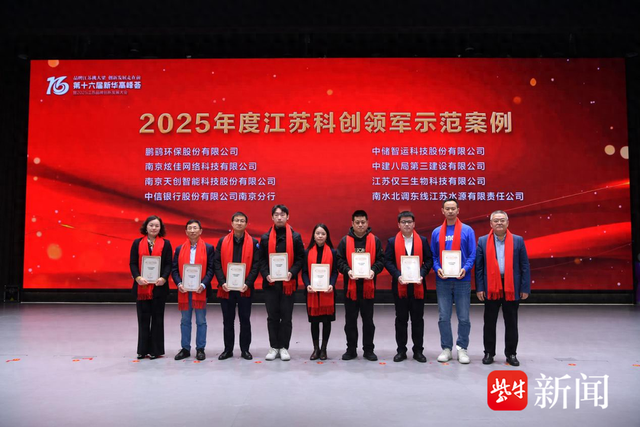
GeneIII仅三生物获评新华致敬·2025江苏科创领军示范案例
Xin Lang Cai Jing· 2025-12-28 03:55
Core Insights - The article highlights the recognition of GeneIII Biotechnology as a leading example in the field of synthetic biology during the 16th Xinhua Summit, emphasizing its innovative contributions and industry leadership in the production of ergothioneine [1][3][6]. Group 1: Company Overview - GeneIII Biotechnology focuses on synthetic biology technology, specializing in the research, production, and application of ergothioneine, a popular antioxidant linked to various age-related degenerative diseases [5][6]. - The company has established a comprehensive industrial platform that includes strain construction, fermentation, purification, and large-scale production, achieving 99.99% purity of ergothioneine [5][6]. Group 2: Clinical Research and Validation - GeneIII is pioneering a shift in the dietary supplement industry by conducting rigorous clinical trials registered with the National Health Commission, moving from marketing-driven approaches to evidence-based validation [8][9]. - The company has completed significant clinical studies demonstrating the efficacy of ergothioneine in improving liver function and alleviating dry eye symptoms, with results showing statistically significant differences [8][9]. Group 3: International Collaboration and Research Network - In 2025, GeneIII established strategic partnerships with the National University of Singapore and the Temasek Life Sciences Laboratory, launching a global evidence-based research initiative for ergothioneine [11][13]. - The collaboration with renowned scientists aims to explore the cellular mechanisms and applications of ergothioneine in women's reproductive health, enhancing the company's global scientific credibility [13][14]. Group 4: Corporate Culture and Values - GeneIII emphasizes a corporate philosophy centered around the "Four Satisfactions"—social, shareholder, employee, and customer satisfaction—as a foundation for sustainable development and innovation [14][15]. - This cultural approach aims to attract top talent, foster internal cohesion, and build external trust, positioning the company for long-term success in the competitive synthetic biology sector [15].