无核三原则

Search documents
国际人士表示高市早苗错误言论破坏地区及世界和平稳定
Yang Guang Wang· 2025-11-25 07:25
Group 1 - The statements made by Japanese Prime Minister Kishi Nobuo are seen as a serious violation of international law and basic principles of international relations, potentially undermining regional and global peace and stability [1][2] - Russian officials express that Kishi's remarks are provocative and an attempt to escape historical truths, challenging post-World War II international agreements, especially during the 80th anniversary of the victory in the anti-fascist war [1] - Concerns are raised about the implications of Kishi's comments on Taiwan, which are viewed as dangerous and indicative of a resurgence of militarism in Japan, prompting calls for international condemnation [1][2] Group 2 - Former Japanese Prime Minister Yukio Hatoyama criticizes Kishi's assertion regarding Taiwan, stating that it could lead Japan into a "survival crisis" and justifies China's criticism [2] - Japanese scholars highlight that Kishi's statements contradict Japan's pacifist constitution and violate international law, particularly regarding military intervention in Taiwan [2] - The remarks made by Kishi are characterized as reckless and a significant misstep, with implications for Japan's diplomatic stance on Taiwan and its adherence to the one-China principle [2]
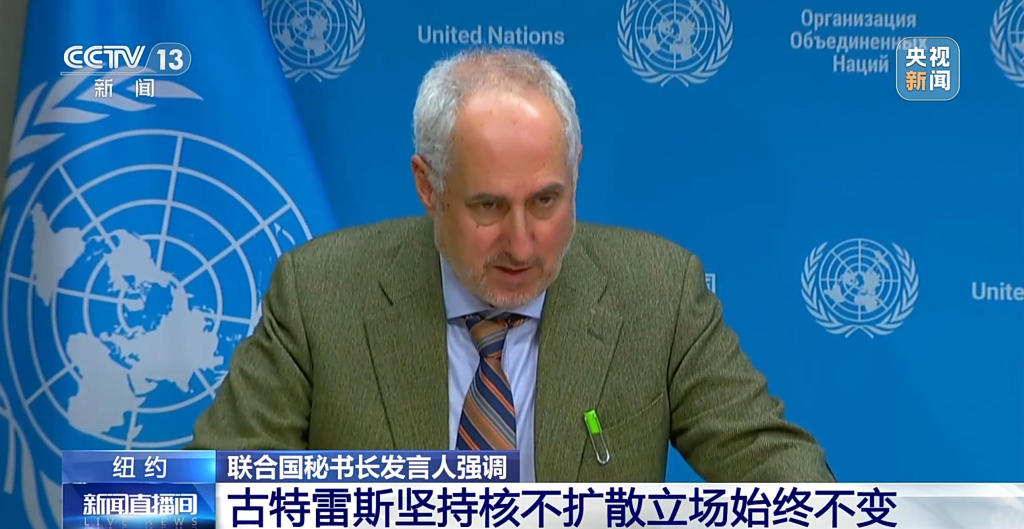
日本欲改“无核三原则”,联合国:坚持核不扩散立场始终不变
Yang Shi Xin Wen· 2025-11-25 03:34
Core Points - The UN Secretary-General's spokesperson emphasized the unwavering stance on denuclearization and nuclear non-proliferation, reflecting the principles set forth by Secretary-General Guterres [2] - The "Three Non-Nuclear Principles" established by Japan in 1967, which state that Japan will not possess, manufacture, or introduce nuclear weapons, remain a fundamental policy of the Japanese government [3] - Recent attempts by Japanese Prime Minister Sanae Takaichi to amend these principles have faced widespread domestic opposition [3]

扩张军力动作不断 日本有何企图?专家解读→
Yang Shi Xin Wen· 2025-11-24 19:31
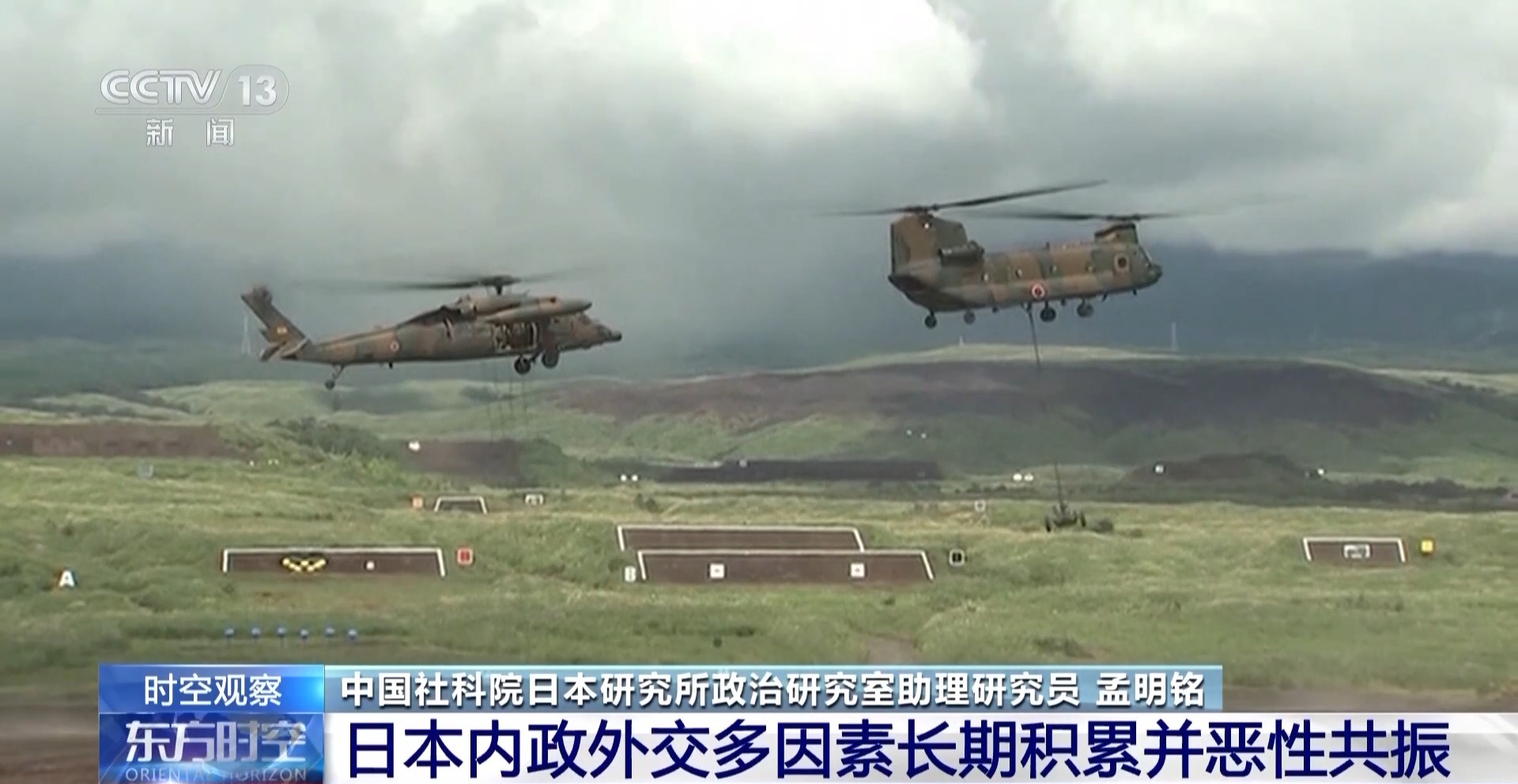
Group 1 - The Japanese government has completed the export of "Patriot" missile systems to the United States, marking the first export of lethal weapons since the relaxation of arms export restrictions [1] - Prime Minister Fumio Kishida has initiated the establishment of a new central intelligence agency, the "National Intelligence Agency," aiming to create a Japanese version of the CIA [1] Group 2 - There are efforts by Japanese right-wing forces to amend the "Three Non-Nuclear Principles" to introduce and potentially use nuclear weapons under the guise of "nuclear sharing" [2] - Kishida's provocative statements on Taiwan, history, territory, and security issues reveal a dangerous historical and strategic perspective held by Japanese right-wing forces [2] - The resurgence of right-wing thought in Japan is attributed to the incomplete reckoning of militaristic crimes post-World War II, compounded by U.S. encouragement of Japan's militaristic tendencies [2][4] Group 3 - The strategic anxiety of Japan's ruling elite is driven by stagnation in national power and the rise of China, leading to a desire to break free from post-war peace constraints and pursue a "normal state" status [4] - Japan is on a perilous path of undermining its "Peace Constitution" while attempting to assert itself in regional security matters [4][6] - The conservative shift in Japan's national security strategy poses significant risks to regional stability and security [6]
世界周刊丨上任满月频挑衅 高市早苗暴露日本“危险转向”
Yang Shi Xin Wen· 2025-11-24 08:37
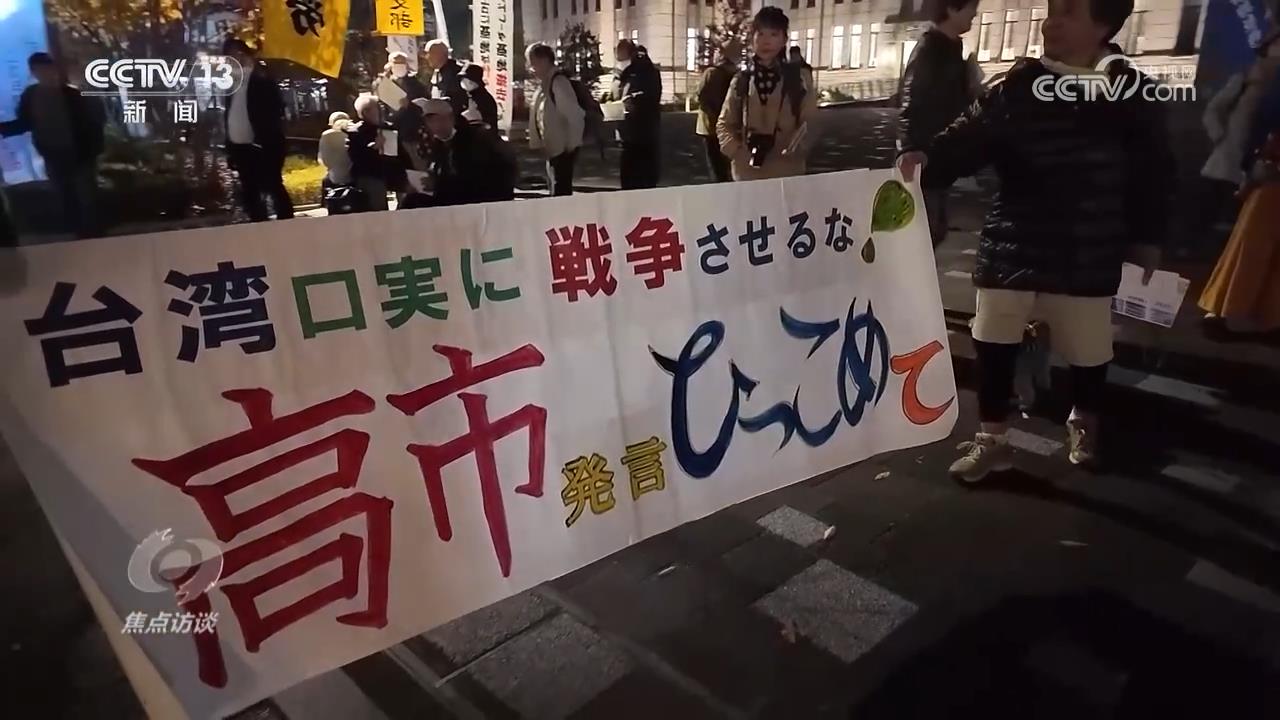
Core Viewpoint - The recent provocative statements made by Japanese Prime Minister Sanna Takashi regarding Taiwan and historical issues have sparked strong protests from neighboring countries, particularly China, raising concerns about Japan's strategic direction and the resurgence of militarism [1][10][38]. Group 1: Public Protests - Thousands of protesters gathered in front of the Japanese Prime Minister's residence demanding the retraction of Takashi's controversial statements [2]. - Protesters held signs calling for Takashi's resignation, expressing their opposition to her war-provoking rhetoric and urging adherence to the constitution [4][8]. - Continuous protests have been reported across Japan, with citizens expressing their unease about the government's militaristic tendencies [6][9]. Group 2: Government Actions and Statements - Takashi has reiterated her stance on Japan's strategic relationship with China while refusing to retract her statements regarding Taiwan, which have been deemed provocative [5]. - The Japanese government has been criticized for its increasing militarization, including discussions on modifying the "Three Non-Nuclear Principles" and expanding defense budgets [15][21]. - Japan's recent arms exports, including the sale of "Patriot" missiles to the U.S., mark a significant shift in its defense policy [14]. Group 3: International Reactions - The United Nations has reaffirmed its stance on Taiwan, emphasizing that it remains a part of China, countering Japan's provocative claims [11][13]. - China's Foreign Ministry has warned that any military intervention by Japan in the Taiwan Strait would be considered an act of aggression [21][24]. - Concerns have been raised by international observers regarding Japan's potential return to militarism, reminiscent of its wartime past [38]. Group 4: Economic Implications - The backlash against Takashi's statements has led to a significant decline in Chinese tourist bookings to Japan, which could negatively impact Japan's economy [22]. - Economic analysts predict that a drop in Chinese tourism could reduce Japan's GDP by 0.36%, resulting in an estimated economic loss of 2.2 trillion yen (approximately 100 billion RMB) [22]. - The deteriorating relations with China are expected to have broader economic repercussions, affecting various sectors in Japan [22].
高市早苗的愚蠢言论,想必连她的政府官员都始料未及
Xin Jing Bao· 2025-11-23 22:58
Core Viewpoint - The current Japanese Prime Minister, Kishi Suga, maintains a firm stance on promoting Japan-China strategic mutual relations while also asserting Japan's position on the Taiwan issue, which has drawn criticism and concern from various quarters, including China [1][2]. Group 1: High City's Statements and Intentions - High City's remarks regarding Taiwan represent a distorted understanding of China, influenced by her lack of diplomatic experience and her right-wing conservative background [2][3]. - The statements are seen as an attempt to align with U.S. interests, particularly in the context of potential Taiwan Strait conflicts, indicating a shift in Japan's defense posture [2][3]. - High City aims to create a sense of external crisis to garner public support for increased defense spending and military reforms in Japan [3][6]. Group 2: Security Policy Developments - High City is pushing for revisions to Japan's "Three Security Documents," which could mark a significant shift from Japan's post-war defense policy of "defensive defense" to a more proactive military stance [6][7]. - The proposed changes include discussions on modifying Japan's "non-nuclear principles" and increasing defense spending, reflecting a response to U.S. pressures for greater military contributions [7][8]. - The urgency of these revisions is tied to High City's desire to establish a legacy and stabilize Japan-U.S. relations amid rising geopolitical tensions [7][8]. Group 3: Regional Implications and Reactions - High City's comments have raised concerns about escalating tensions in Northeast Asia, potentially igniting conflicts in the Taiwan Strait and complicating regional security dynamics [11][12]. - The U.S. may leverage this situation to strengthen military alliances in the Asia-Pacific, which could provoke stronger countermeasures from China and further complicate the strategic landscape [12][13]. - Domestic opposition in Japan is growing, with public protests against High City's remarks, indicating a potential backlash that could affect her political standing [11][14]. Group 4: Future of Japan-China Relations - The relationship between Japan and China is at a critical juncture, with potential scenarios ranging from continued provocations leading to confrontation, to limited compromises resulting in a state of low trust [14][15]. - A possible path to recovery in Japan-China relations hinges on High City taking substantive actions to correct her statements and address the concerns of both domestic and international stakeholders [16][17]. - The ongoing diplomatic crisis may lead to a reevaluation of Japan's foreign policy, particularly if High City fails to navigate the pressures from both China and the U.S. effectively [17][18].
告诫日方停止妄言,划定涉台清晰红线,中方重申《联合国宪章》警告日本
Huan Qiu Shi Bao· 2025-11-23 22:48
Core Viewpoint - The Chinese government has issued a strong warning to Japan regarding its involvement in the Taiwan Strait situation, asserting that any military intervention would be considered an act of aggression, and China will exercise its right to self-defense as per the UN Charter and international law [1][2] Group 1: China's Position - China's permanent representative to the UN, Fu Cong, emphasized that Japan's Prime Minister Kishi's remarks violate international law and provoke the Chinese people and nations that suffered from Japanese aggression [1] - The letter sent to the UN will be distributed to all member states, aiming to alert Japan to cease its provocative rhetoric and to inform the international community about Japan's dangerous legislative moves to expand its collective self-defense capabilities [1][2] Group 2: International Reactions - The letter has been described as the strongest wording used by China in response to the most severe bilateral crisis between China and Japan in recent years, with a clear message to defend its rights [1] - The Chinese Embassy in Japan referenced the "enemy clause" of the UN Charter, which allows for military action against nations that have previously engaged in fascist or militaristic policies without needing Security Council authorization [2] Group 3: Historical Context - Analysts highlight that Japan's attempts to exercise collective self-defense and military threats are legally unfounded, given its status as a World War II defeated nation and its constitutional commitment to renounce war [2][3] - The shift in Japan's stance from a peace-oriented nation to one seeking military capabilities poses a significant threat to regional and global stability, challenging the post-war international order [3]
焦点访谈|公然挑衅,执意玩火!高市早苗挑衅言论会造成什么样的恶果?
Yang Shi Wang· 2025-11-23 13:41
Core Viewpoint - The provocative remarks made by Japanese Prime Minister Sanae Takaichi regarding Taiwan have escalated tensions in Sino-Japanese relations and have drawn widespread condemnation from various parties [1][3][15] Group 1: Political Context - Takaichi's statements suggest a potential military intervention in the Taiwan Strait, linking Taiwan's situation to Japan's collective self-defense rights [3][5] - The remarks have been met with strong criticism from both China and the international community, highlighting the dangerous implications for regional stability [5][9] - China's UN representative has firmly stated that any military intervention by Japan would be met with a strong defense of China's sovereignty [3][9] Group 2: Legal and Historical Implications - Takaichi's comments violate several key political documents, including the Japan-China Joint Statement and the Japan-China Peace and Friendship Treaty, undermining the long-standing political commitments between the two nations [5][7] - The assertion that "Taiwan's issues are Japan's issues" represents a significant departure from Japan's post-war pacifist constitution and international legal norms [9][11] - Historical documents, such as the Cairo Declaration and the Potsdam Proclamation, affirm Taiwan as part of China, further complicating Japan's legal standing on the issue [7][9] Group 3: Domestic and International Reactions - There have been widespread protests in Japan against Takaichi's remarks, indicating significant domestic opposition to her stance [3][11] - China has implemented countermeasures, including suspending imports of Japanese seafood and advising citizens against travel to Japan, to assert its position on the matter [13][15] - The international community has largely condemned Takaichi's statements, reflecting a broader concern over the resurgence of militarism in Japan [15]
中国霸气宣布!有权军事打击实施侵略政策的日本,无需安理会授权
Sou Hu Cai Jing· 2025-11-23 12:08
Core Viewpoint - The recent statement from the United Nations reinforces China's position on Taiwan, asserting that Taiwan has historically belonged to China and that China does not need to seek approval from others regarding its territorial issues [1]. Group 1: International Law and Historical Context - The Chinese Embassy in Japan highlighted the "enemy clause" from the UN Charter, emphasizing that countries like Japan, which have a history of aggression, could face military action from the five founding members of the UN without Security Council approval if they show signs of aggression again [3]. - The "enemy clause" was established post-World War II to prevent the resurgence of Axis powers, specifically Germany, Japan, and Italy, ensuring that necessary actions, including military strikes, could be taken without lengthy Security Council procedures [6]. - China's reaffirmation of this clause is a response to Japan's recent militaristic actions, which are perceived as crossing red lines, including attempts to revive militaristic rhetoric and increasing defense budgets [8]. Group 2: Implications for Regional Stability - The Chinese Embassy's reference to the "enemy clause" serves as a legal warning, indicating that Japan must adhere to its post-war responsibilities and that any military intervention regarding Taiwan will be viewed as an act of aggression [10]. - The invocation of the "enemy clause" acts as a deterrent, aiming to halt any resurgence of militarism in Japan and reminding the international community of the historical lessons learned from past conflicts [12]. - The future actions of the Japanese government will significantly impact not only Japan's trajectory but also the broader peace and stability in Asia and the world [14].
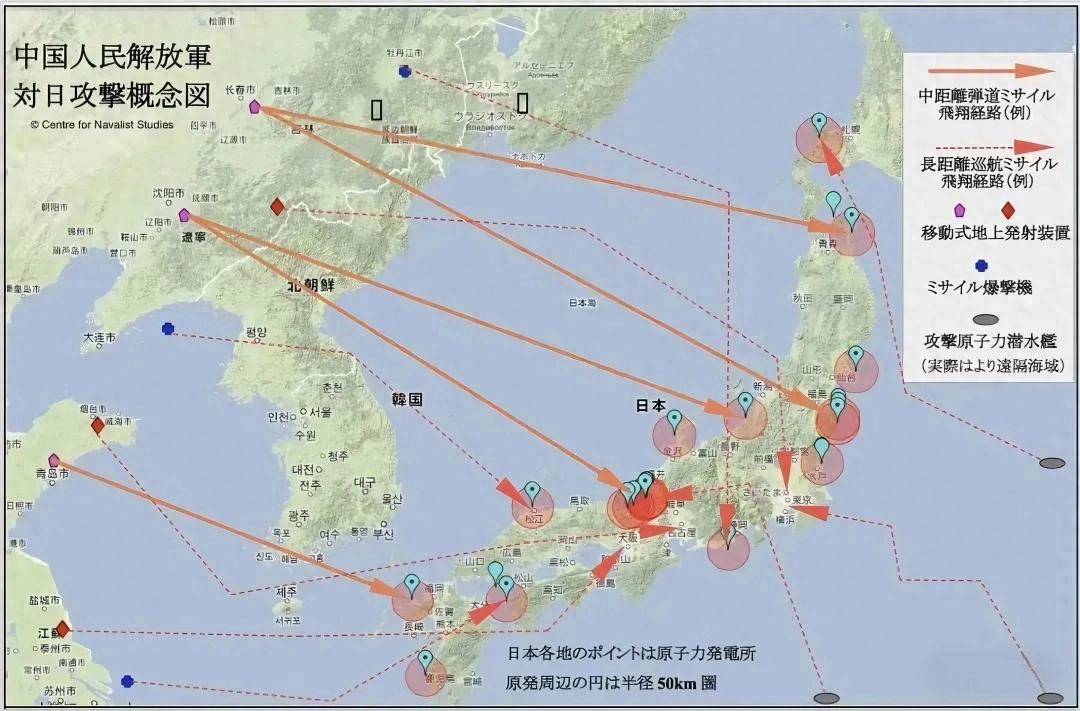
短期内可生产大量武器级钚!专家:日本长期以核能掩盖核武能力
Mei Ri Jing Ji Xin Wen· 2025-11-23 01:27
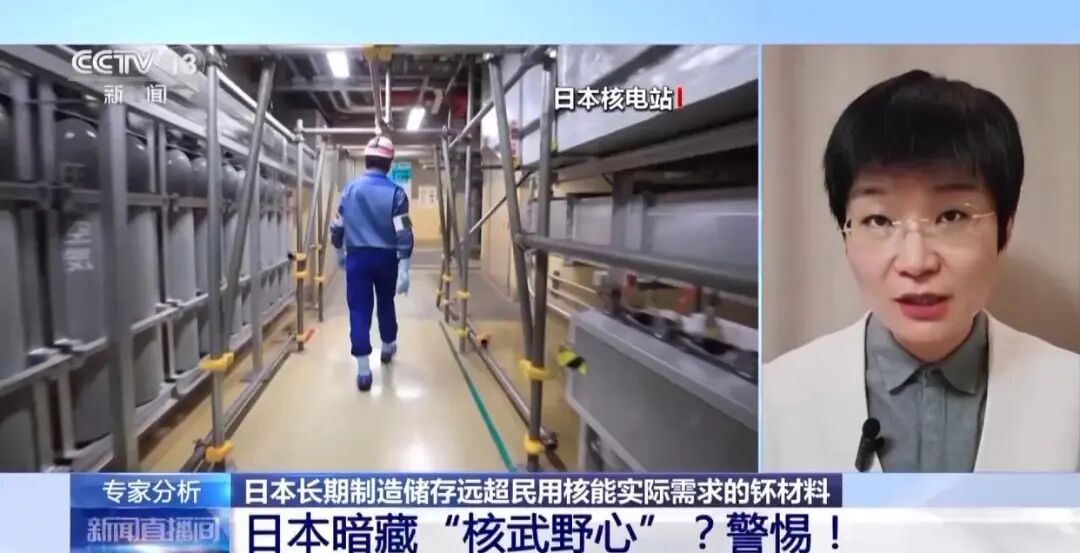
Core Viewpoint - The recent military security movements by Japan have raised significant international concerns, indicating a major negative shift in Japan's policy and sending dangerous signals [1] Group 1: Japan's Nuclear Policy - China emphasizes the need to strictly regulate Japan's nuclear capabilities, especially in light of the new government's ambiguous stance on the "Three Non-Nuclear Principles" [1] - Japan has historically used its nuclear energy development to mask its potential to manufacture nuclear weapons, with an excess of nuclear materials stored domestically [1][3] - Japan possesses a complete set of equipment and capabilities for mining, refining, and processing nuclear fuel, allowing it to produce large quantities of weapons-grade plutonium in a short time if desired [5] Group 2: Domestic Reactions to Nuclear Policy Changes - Prime Minister Kishi's administration is reportedly considering modifying the "Three Non-Nuclear Principles," which could be seen as preparing for increased U.S.-Japan security cooperation, particularly regarding the introduction of U.S. nuclear weapons into Japan [7] - Despite the government's considerations, several prominent figures, including former Prime Minister Kishi and members of the ruling Liberal Democratic Party, have publicly opposed any changes to the "Three Non-Nuclear Principles" [8][9] - The "Three Non-Nuclear Principles," established in 1967, state that Japan will not possess, manufacture, or introduce nuclear weapons, and this policy has been reaffirmed in recent security documents [8][10]
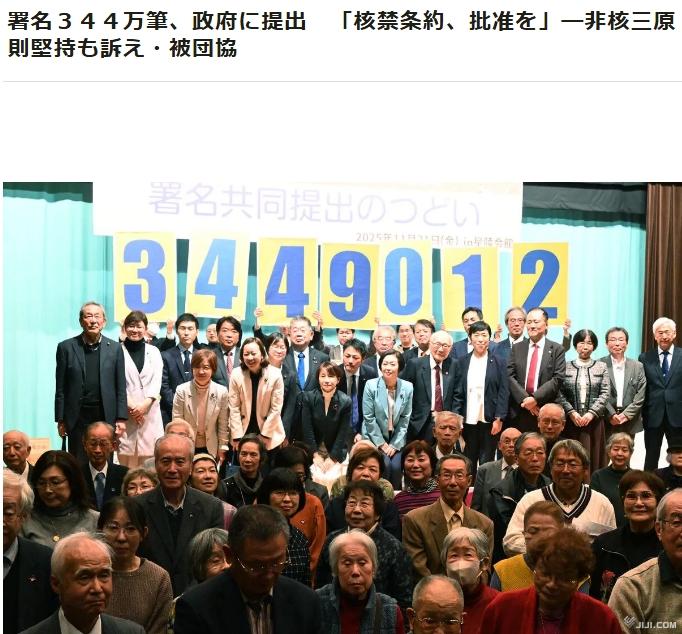
已收集约345万份签名 日本核爆受害者团体抗议高市政府
Zhong Guo Xin Wen Wang· 2025-11-23 00:53
已收集约345万份签名 日本核爆受害者团体抗议高市政府 来源:中国新闻网 图片来源:日本时事通讯社报道截图 编辑:熊思怡 广告等商务合作,请点击这里 中新网11月22日电 据日本时事通讯社报道,当地时间21日,日本原子弹氢弹爆炸受害者团体协议会等 在东京向政府提交共同签名并组织集会,就高市内阁推动讨论修改"无核三原则"等表示强烈抗议。 报道称,截至21日下午,活动已收集到约345万份签名。 据报道,参加抗议集会的日本民众手举"日本更应加入《禁止核武器条约》""坚持无核三原则"等的标 语,对日本首相高市早苗企图修改"无核三原则"的行径表达不满。 据此前报道,"无核三原则"指不拥有、不制造、不引进核武器。1967年,时任日本首相佐藤荣作在国会 发言时提出了"无核三原则"。这一原则于1971年在日本众议院全体会议上通过,成为日本政府关于核武 器的基本政策。 2022年,日本政府通过的"安保三文件"也明确写入坚持"无核三原则"的基本方针不会改变。然而据日本 媒体披露,高市正企图在修订《国家安全保障战略》等"安保三文件"时,修改"无核三原则"中不引进核 武器的原则,引发日本国内强烈担忧。 本文为转载内容,授权事宜请联系 ...