生态文明建设

Search documents
吉林省生态文明建设显成效 生态优势向发展优势转化
Zhong Guo Xin Wen Wang· 2026-01-10 01:10
Core Viewpoint - Jilin Province has achieved significant recognition in ecological civilization construction, leading the Northeast region with 15 designated ecological civilization demonstration zones and 8 "Green Water and Green Mountains are Golden Mountains and Silver Mountains" innovation bases [1][2] Group 1: Ecological Achievements - Jilin Province has been awarded 15 ecological civilization demonstration zones and 8 innovation bases, ranking first among the three northeastern provinces [1] - By December 25, 2025, Jilin Province will have 6 areas recognized in the national list of ecological civilization demonstration zones and innovation bases [1] - Tonghua City has become the first city in Jilin Province to receive full recognition as an ecological civilization demonstration zone [1] Group 2: Economic Integration and Development - Jilin Province is promoting deep integration of "ecology + agriculture" and "ecology + cultural tourism," focusing on comprehensive utilization of livestock waste and straw [1] - The province aims to transform ecological advantages into economic, developmental, and competitive advantages [1] Group 3: Specific Regional Developments - Tongyu County's new energy capacity accounts for approximately 28% of the province's total, with improving air quality [2] - Dongchang District of Tonghua City has achieved an annual output value of over 2.1 billion yuan in the pharmaceutical industry [2] - Linjiang City is developing specialty agriculture, including blueberries and cold-water fish, contributing to increased income for farmers and village collectives [2] - Longjing City is projected to receive 4.5637 million tourists in 2025, generating a total income of 4.379 billion yuan [2] Group 4: Regulatory and Environmental Oversight - Jilin Province has established a collaborative regulatory framework for verifying, investigating, compensating, supervising, and holding accountable for ecological issues [2] - The province has conducted remote sensing interpretation of human activities in important ecological spaces and has completed rectification of key issues in national nature reserves [2] - Ongoing assessments of ecological restoration projects are being conducted to monitor ecological status and changes [2]
黄河口万鸟齐飞,鲲鹏“现身”并非偶然
Ren Min Ri Bao· 2026-01-10 00:53
Group 1 - The article highlights the successful ecological restoration efforts in the Yellow River Delta, leading to a significant increase in bird species from 187 to 376, with over 240,000 migratory ducks observed [1] - The implementation of a "ten-year fishing ban" has contributed to the recovery of aquatic life in the Yangtze River, showcasing the positive impact of environmental protection measures [1] - The article emphasizes the broader theme of green transformation and sustainable development in China, linking cultural heritage with modern ecological achievements [1] Group 2 - The article discusses China's historical achievements in technology and innovation, including the elimination of approximately 628,000 tons of ozone-depleting substances, which accounts for over half of the total reduction in developing countries [2] - The development of the EAST nuclear fusion experiment, which achieved a world record of 1,066 seconds of stable plasma operation at 100 million degrees Celsius, exemplifies China's advancements in nuclear science [2] - The narrative connects ancient cultural aspirations with contemporary technological breakthroughs, illustrating the synergy between Chinese culture and modern scientific endeavors [2] Group 3 - The article reflects on the integration of traditional wisdom with modern ecological governance, emphasizing the importance of holistic environmental protection [3] - It highlights the necessity for high-level technological self-reliance and the pursuit of excellence in various fields, aligning with the cultural ethos of perseverance and self-improvement [3] - The fusion of Marxist principles with traditional Chinese culture is presented as a means to enhance national development and cultural richness [3]
非法狩猎罪保护对象应包括国家重点保护的珍贵濒危野生动物
Xin Lang Cai Jing· 2026-01-09 22:53
Core Viewpoint - The article emphasizes the importance of biodiversity protection in China, highlighting the legal challenges and discrepancies in the application of laws related to the protection of endangered species and illegal hunting [1][2]. Legal Framework - China's Criminal Law specifies two offenses related to biodiversity: the crime of harming precious and endangered wildlife and the crime of illegal hunting, with specific legal definitions and conditions for each [1][2]. - The Supreme People's Court and the Supreme People's Procuratorate established standards for prosecution, stating that the value of endangered species must exceed 20,000 yuan for prosecution under the first offense, while the value for illegal hunting must exceed 10,000 yuan [2]. Discrepancies in Legal Interpretation - There are two main interpretations regarding the protection objects of the two offenses: one denies overlap, suggesting that illegal hunting only applies to non-endangered species, while the other affirms that it includes endangered species [3][4]. - The lack of clarity in the legal definitions leads to challenges in prosecuting cases, particularly in instances involving various species of wild birds, where the public may not be aware of the protection status [2][3]. Judicial Implications - The principle of proportionality in sentencing is highlighted, where individuals may escape prosecution for hunting endangered species if the value does not meet the threshold, while others may face prosecution for hunting non-endangered species, leading to potential public discontent [4][5]. - The article argues for a more inclusive interpretation of the law to ensure that both offenses can apply to overlapping categories of wildlife, thereby enhancing legal consistency and public understanding [5][6]. Legislative History - The evolution of laws regarding illegal hunting and the protection of endangered species is traced back to 1979, with significant amendments made to strengthen protections over the years, indicating a legislative intent to provide comprehensive protection for wildlife [5][6].
以最严格制度最严密法治守护高原绿水青山
Xin Lang Cai Jing· 2026-01-09 18:42
Group 1 - The core viewpoint of the articles emphasizes the commitment of provincial courts to ecological civilization construction during the "14th Five-Year Plan" period through innovative judicial mechanisms and strengthened legal protections [1][2][3] Group 2 - The reform of the trial system has achieved breakthroughs, with the implementation of a specialized trial mechanism for environmental resource cases, resulting in the resolution of 6,730 environmental resource cases over five years, significantly enhancing the efficiency of judicial protection for ecological conservation [1] - Judicial protection of biodiversity has been intensified, with the courts actively prosecuting illegal fishing and wildlife crimes, leading to severe penalties for offenders and the successful execution of public interest litigation, including the release of 156,295 fish fry into Qinghai Lake [2] - The ecological restoration and compensation system has been effectively implemented, with 96 cases related to illegal fishing and endangered species being processed, promoting a dual effect of ecological damage restoration and legal education through a comprehensive governance model [2] - The collaborative governance system has been continuously improved, with provincial courts enhancing cooperation with administrative law enforcement agencies to address illegal land occupation cases and promote ecological environmental governance across provinces [3]
国务院常务会议解读丨我国修订条例高质量推进自然保护区建设
Xin Lang Cai Jing· 2026-01-09 17:40
Core Viewpoint - The revision of the Natural Protected Areas Regulation aims to provide strong legal support for the high-quality development of natural protected areas in China, aligning with the National Park Law and enhancing the legal framework for ecological civilization construction [1][2]. Group 1: Regulatory Changes - The revised regulation will promote standardized, scientific management of natural protected areas, which are crucial for protecting typical ecosystems and endangered species [1]. - The management of natural protected areas will be adjusted into core protection zones and general protection zones, improving management measures [2]. Group 2: Ecological Protection and Development - The meeting emphasized the importance of ecological protection while enhancing public service functions, aiming for a unified approach to ecological protection, green development, and improving people's livelihoods [2]. - The regulation encourages a scientific principle of natural recovery as the primary method, supplemented by artificial restoration, to safeguard ecosystems [2]. Group 3: Future Actions - The forestry and grassland departments will refine supporting institutional standards, establish new national parks, and strengthen inter-departmental collaboration for enforcement actions against illegal activities that harm natural protected areas [2].
法治展长卷 碧水入画来(人民时评)
Ren Min Ri Bao· 2026-01-09 01:22
Group 1 - The implementation of two significant laws regarding ecological civilization construction marks a new phase in legal support for environmental protection in China, specifically the "Miyun Reservoir Water Source Protection Regulations" and the "National Park Law" [1] - The Miyun Reservoir regulations are the first of their kind in the country, aimed at safeguarding the water source for Beijing, while the National Park Law represents the first specialized legislation for national parks in China [1] - These legal frameworks provide a clearer boundary for what is permissible and impermissible in ecological construction, thus offering a structured approach to environmental governance [1] Group 2 - The necessity for robust legal frameworks is emphasized to address systemic issues in ecological protection, which often lead to a cycle of governance failures [2] - The Miyun Reservoir's control area spans across multiple regions, highlighting the need for coordinated legal responsibilities between different local governments to mitigate regulatory discrepancies [2] - Collaborative legislation has been successfully implemented in various regions, such as Jiangxi and Hunan provinces, to tackle air pollution and enhance environmental protection efforts [2] Group 3 - Legal systems play a guiding role in promoting green development, as seen in the case of the Yangtze River, where the Long River Protection Law has led to the exit of polluting industries and the establishment of green industrial parks [3] - The focus on preventive measures rather than punitive actions is crucial for effective ecological governance, emphasizing the importance of legal frameworks in preemptively addressing environmental issues [3] - The establishment of legal systems is essential for building ecological civilization, reinforcing the need for law-based approaches in environmental management [3]
法治展长卷 碧水入画来
Ren Min Ri Bao· 2026-01-09 01:04
Group 1 - The implementation of the "Miyun Reservoir Water Source Protection Regulations" and the "National Park Law" marks significant progress in ecological civilization construction in China, providing a legal framework for environmental protection [1] - The "Miyun Reservoir Water Source Protection Regulations" is the first of its kind in the country, aimed at safeguarding the water source for Beijing, while the National Park Law represents the first specialized legislation for national parks, indicating a shift towards legal and standardized management [1] - The establishment of these laws enhances the legal support for ecological civilization, clarifying the boundaries of what can and cannot be done, thus providing a structured approach to environmental governance [1] Group 2 - The necessity for improved legal frameworks is highlighted by the challenges in ecological protection, which often stem from inadequate systems and enforcement, leading to a cycle of governance issues [2] - The regulations for the Miyun Reservoir emphasize collaborative responsibilities between Beijing and Hebei, addressing discrepancies in environmental policies and reducing regulatory gaps through mandatory cross-province cooperation [2] - Collaborative legislation in various regions, such as Jiangxi and Hunan, demonstrates the effectiveness of joint efforts in tackling pollution and environmental management, transforming fragmented governance into unified management [2] Group 3 - The role of legal systems extends to guiding sustainable development, where prioritizing ecological considerations does not preclude growth but rather fosters a higher quality of development [3] - The Long River Protection Law exemplifies this by facilitating the exit of polluting industries and promoting the establishment of green industrial parks, thus addressing pollution at its source [3] - Emphasizing preventive measures over punitive actions in ecological governance is crucial, as it encourages a shift from reactive to proactive environmental management [3]
当好美丽江苏建设主力军 为“强富美高”新江苏提供坚实空间支撑
Zhong Guo Fa Zhan Wang· 2026-01-08 08:00
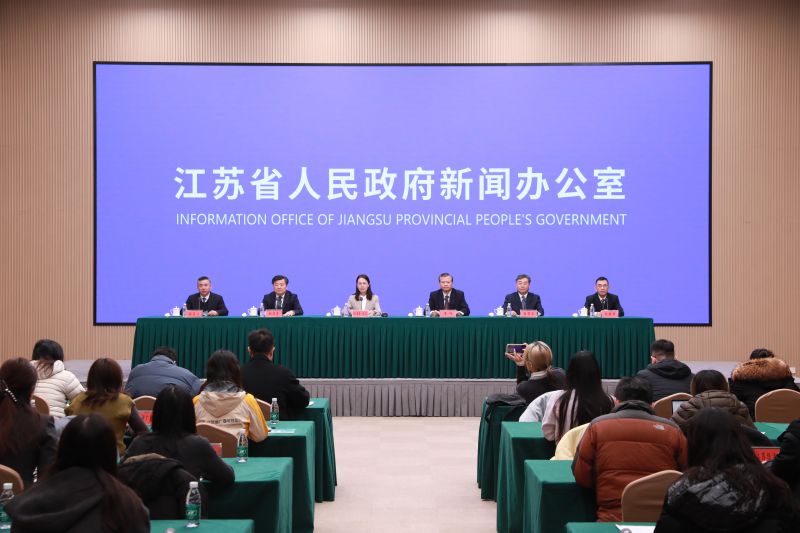
国土空间格局持续优化,构建全省发展"一张图"。在全国率先获批省级国土空间规划,确立 "两心三圈四带" 省域 总体格局,统筹划定农业、生态、城镇空间。同步实施《江苏省国土空间生态保护和修复规划(2021-2035 年)》,构建 "五区三带" 全域生态治理体系。创新编制《江苏省海岸带及海洋空间规划》,科学划定三类海洋功 能区,推动海域资源高效利用、人居品质提升。 中国发展网讯 1月6日上午,江苏省政府新闻办公室在南京举行"以高水平保护支撑高质量发展"新闻发布会。发布 会由省委宣传部副部长胡连生主持,省生态环境厅党组书记祖力亚提·司马义、省发展改革委副主任季鸣、省自然 资源厅副厅长孙卫东、省水利厅副厅长喻君杰、省农业农村厅副厅长朱新华共同出席,介绍相关情况并回答记者 提问。 孙卫东在发布会上介绍,自然资源系统是服务保障美丽江苏建设的主力军,承担着生态文明建设的主责主业。"十 四五"以来,全省自然资源系统深入贯彻习近平生态文明思想,全面落实美丽中国建设部署,统筹高质量发展、高 水平保护与高水平安全,为绘就人与自然和谐共生的"江苏画卷"提供了坚实的资源保障和空间支撑。 推动资源集约利用,服务绿色转型发展。连续12年开展 ...

蒲城县企业环保绩效升级打开高质量发展新空间
Zhong Guo Huan Jing Bao· 2026-01-08 00:52
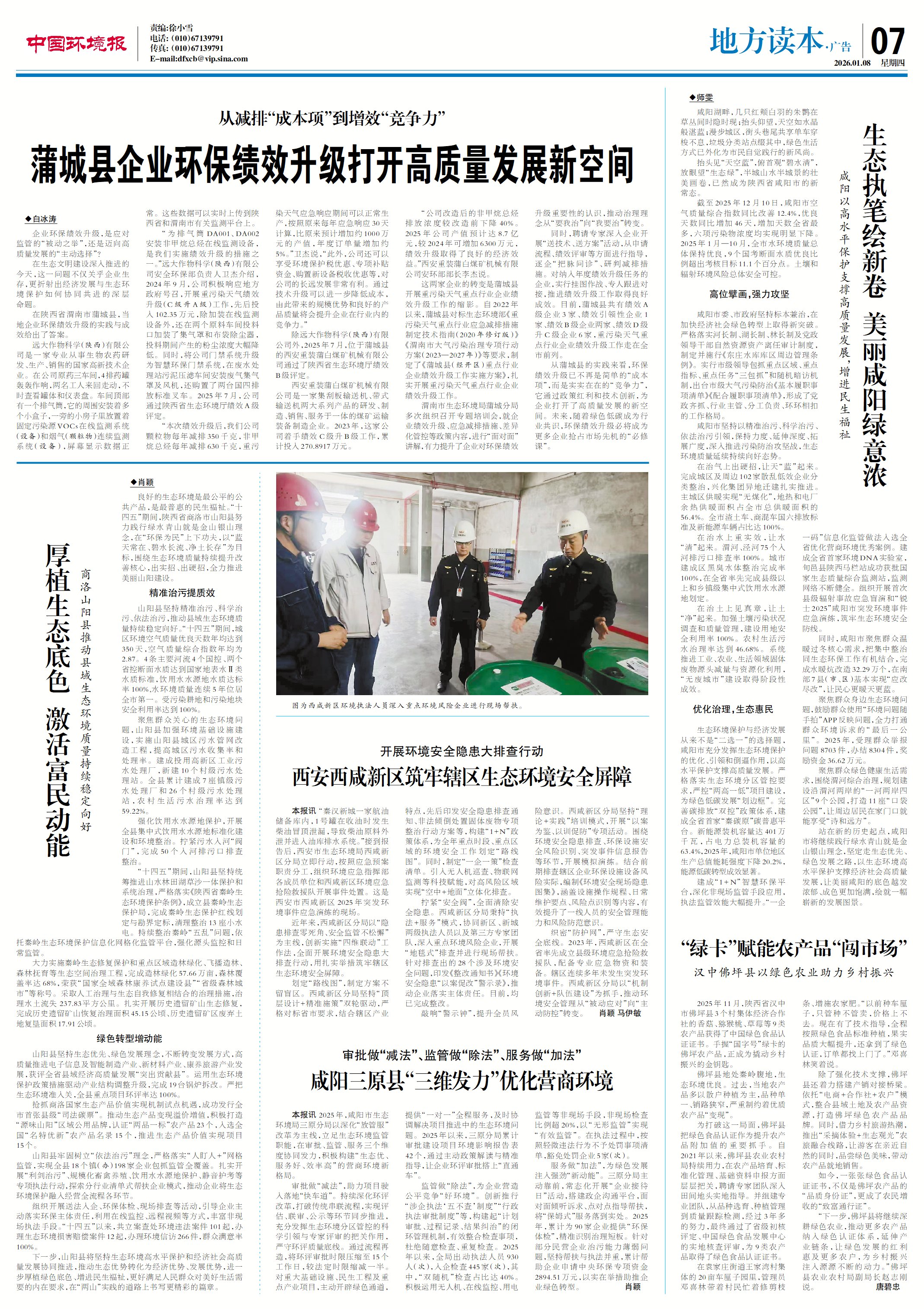
Core Viewpoint - The upgrade of corporate environmental performance is not merely a passive response to regulation but an active choice towards high-quality development, reflecting the deep relationship between economic growth and ecological protection [2][11]. Group 1: Company Initiatives - Yuan Da Crop Science (Shaanxi) Co., Ltd. invested 1.0235 million yuan in environmental performance upgrades, including the installation of online monitoring equipment and dust collection systems, leading to significant reductions in particulate matter and non-methane total hydrocarbons [3][14]. - The company expects to reduce particulate emissions by 350 kg and non-methane total hydrocarbons by 630 kg annually, with an anticipated increase in annual output value by approximately 10 million yuan during heavy pollution response periods [14]. - Xi'an Heavy Equipment Co., Ltd. invested 2.708917 million yuan in upgrading from C-level to B-level performance, achieving a 40% reduction in non-methane total hydrocarbons emissions post-upgrade [4][14]. Group 2: Policy and Support - Since 2022, the local government has implemented a performance upgrade plan for key industries, aligning with national guidelines and providing training to enhance corporate understanding of environmental performance upgrades [15]. - The local environmental bureau has organized multiple training sessions to promote the importance of environmental performance upgrades, shifting the mindset from "mandatory compliance" to "voluntary improvement" [15]. - The region has seen a total of three A-level performance companies, one leading performance company, two B-level companies, and six companies upgrading from D-level to C-level, indicating significant progress in environmental performance upgrades [15]. Group 3: Future Implications - The practice in Pucheng County illustrates that environmental performance upgrades are becoming a source of competitive advantage rather than just a cost burden, opening new avenues for high-quality development [16]. - As green and low-carbon initiatives gain traction, environmental performance upgrades are expected to become essential for companies aiming to seize market opportunities [16].
新疆纵深推进污染防治攻坚筑牢生态安全屏障
Zhong Guo Huan Jing Bao· 2026-01-08 00:46
Core Viewpoint - The news emphasizes the importance of green development in Xinjiang as part of China's modernization efforts, highlighting the region's commitment to ecological civilization and sustainable development through various initiatives and policies aimed at pollution prevention and environmental protection [2][3][22]. Group 1: Green Transformation and Development Goals - Xinjiang aims to accelerate comprehensive green transformation in economic and social development, with a focus on building a beautiful Xinjiang by 2025 [2][3]. - The region's economic work priorities include promoting carbon reduction, pollution control, and green expansion, with specific targets set for energy system construction and green electricity application [2][20]. Group 2: Pollution Prevention and Environmental Quality Improvement - Xinjiang has made significant progress in pollution prevention, achieving high marks in national assessments and maintaining over 90% satisfaction in ecological environment quality among residents [4][5]. - The air quality in the Tianshan North Slope urban cluster improved, with a 91.0% rate of good air quality days in 2025, and a reduction in heavy pollution days [5]. - Water quality has also improved, with 97.3% of surface water meeting good quality standards, reflecting a 1.4% increase [5]. Group 3: Ecological Protection and Sustainable Practices - The region has implemented comprehensive measures for soil pollution prevention, ensuring 100% safety in the utilization of contaminated farmland [6]. - Xinjiang has established a robust system for solid waste management, with 77 hazardous waste disposal facilities capable of processing 13.99 million tons annually [6][11]. - The development of eco-friendly practices, such as desert aquaculture, is being promoted to address ecological challenges while enhancing economic growth [9]. Group 4: Carbon Market Participation and Low-Carbon Development - Xinjiang is actively participating in the national carbon market, focusing on key industries and ensuring compliance with carbon emission regulations [20][21]. - The region is enhancing its capacity for carbon data management and quality supervision, aiming to improve the overall effectiveness of carbon market participation [21]. Group 5: Systematic Approach to Ecological Civilization - The implementation of a comprehensive plan for ecological civilization construction includes 25 key tasks across various sectors, aiming for a coordinated approach to environmental management [9][10]. - Continuous monitoring and improvement of ecological conditions are being prioritized, with new monitoring stations established to enhance data collection and analysis [18].