电动汽车

Search documents
吕瑞浩公参会见中地海外集团副总经理刘伟强
Shang Wu Bu Wang Zhan· 2025-12-11 17:20
(原标题:吕瑞浩公参会见中地海外集团副总经理刘伟强) 1.jpg 12月10日,吕瑞浩公参会见中地海外集团副总经理刘伟强一行。双方就紧 扣农业现代化、新能源、电动汽车等非洲新兴前沿发展领域,依托非洲中国商 会及非盟机构拓宽合作平台,助力在非中资企业获取优质资源,打响中国品 牌,更好服务中非务实合作大局等进行交流。 ...


福特与SK On终止美国电池合资企业
Xin Lang Cai Jing· 2025-12-11 17:05
Core Insights - Ford and SK On have agreed to terminate their joint venture established four years ago, which involved an investment of $11.4 billion to build battery plants in Tennessee and Kentucky for the next generation of electric F-series trucks [1][2][4] - The factories will remain operational, with Ford taking over the two battery plants in Kentucky, while SK On will manage the battery plant in Tennessee [2][4][5] - SK On will maintain a strategic partnership with Ford regarding the Tennessee facility, despite the dissolution of the joint venture [5] Industry Context - The joint venture was formed during a period when the industry was investing billions to expand electric vehicle production capacity [2][5] - Although electric vehicle sales have increased over the past few years, market demand has not met the previously high expectations set by the industry [5] - The end of federal electric vehicle tax credit policies has further slowed the growth rate of electric vehicle sales [5]

又一中国车企要去日本卖电动车,日企急忙反攻
凤凰网财经· 2025-12-11 14:47
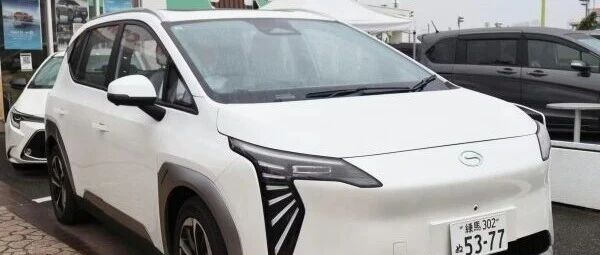
Core Viewpoint - The entry of GAC Group into the Japanese market with electric vehicles is a strategic move to capture market share from traditional Japanese automakers, amidst declining sales in the domestic market [1][2]. Group 1: GAC Group's Market Entry - GAC Group plans to officially enter the Japanese market with pure electric vehicles in the summer of 2026, utilizing M Mobility Japan for sales [1]. - The company aims to sell its Aion brand, targeting 200 orders in 2026 and increasing to 2000 orders in 2027, starting with two models: the Aion UT and Aion V [1]. - The Aion UT is priced at 3.3 million yen (approximately 149,800 RMB), while the Aion V starts at 5 million yen (approximately 227,000 RMB), both supporting Japan's fast-charging standard "CHAdeMO" [1]. Group 2: Domestic Sales Challenges - GAC Group's total sales in the first three quarters of the year fell by 11% year-on-year to 1.18 million units, with Aion brand sales down 20% to 180,000 units [2]. - Financially, GAC reported a revenue of 66.93 billion RMB in the first three quarters, a decrease of 10.45% year-on-year, and a net loss of 4.31 billion RMB, equating to a loss of 3,643 RMB per vehicle sold [2]. - The company's net profit has declined for two consecutive years, with projected revenues of 129.71 billion RMB and 107.78 billion RMB for 2023 and 2024, respectively, showing a year-on-year growth of 17.62% and a decline of 16.90% [2]. Group 3: Competitive Landscape - Other Chinese companies, such as Xiaomi, are also planning to expand their automotive business in Japan, indicating a growing competitive landscape [3]. - Traditional Japanese automakers are responding to the challenge, with Toyota improving its bZ4X model and Nissan set to launch a new Leaf model in January [3].


暴涨115%之后,白银还能涨多高?分析师:明年冲击三位数
Hua Er Jie Jian Wen· 2025-12-11 11:35
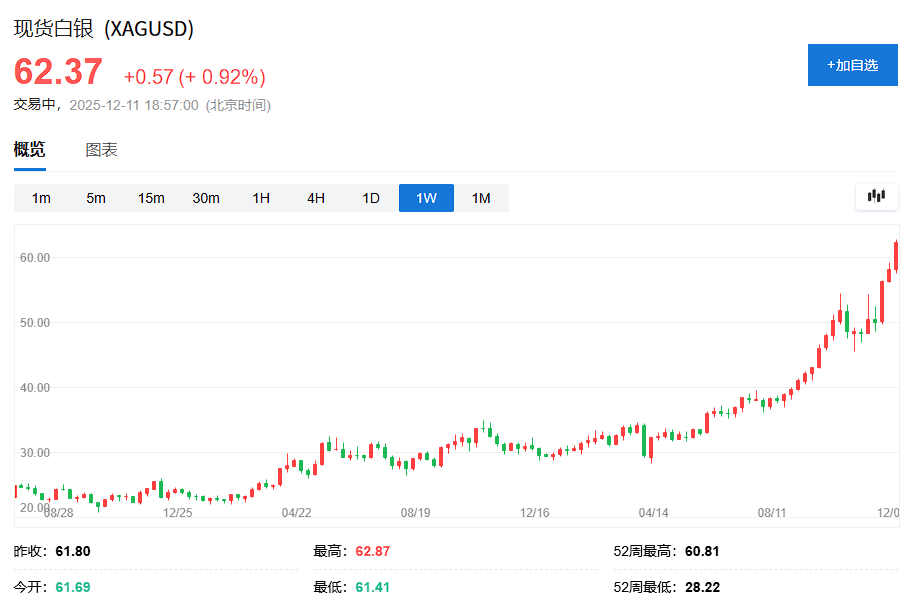
白银今年演绎了一场令市场瞩目的暴涨行情,不仅价格翻倍并屡创历史新高,表现更是超越黄金,有分析师预测这种"魔鬼金 属"的牛市才刚刚开始。 现货白银年内累计上涨114.6%,周三触及每盎司62.88美元的历史高位,截至发稿为62.37美元。白银期货同样飙升113%,本周首 次突破61美元关口。一天前,白银刚刚历史性地突破60美元大关。 工业需求成为关键驱动力 白银价格飙升的核心逻辑之一是其在关键工业领域的应用不断扩大。这种金属是电气开关、太阳能电池板和手机生产的关键组 件,也被用于支撑人工智能繁荣的硬件和基础设施。 白银协会周三发布的报告指出,白银优异的导电和导热性能对推动全球经济的技术转型越来越重要。 据华尔街见闻文章,该机构预计,未来五年全球白银工业需求将进一步增长,太阳能、电动汽车及其基础设施、数据中心和人工 智能等关键技术领域将推动工业需求持续走高至2030年。 (现货白银周线走势图) 分析指出,供应紧张、避险需求以及工业应用推动了这轮涨势。部分市场人士认为白银的上涨逻辑依然完整。Solomon Global董 事总经理Paul Williams表示,白银作为工业资源和价值储存工具的双重属性持续吸引资金流 ...
观察| 铜: 下一个财富密码
未可知人工智能研究院· 2025-12-11 10:01
Core Viewpoint - The article emphasizes that copper is an undervalued investment opportunity, poised for significant growth due to its essential role in the electrification and AI revolution, contrasting it with gold, which is driven more by emotional and speculative factors [1][4][40]. Group 1: Demand Drivers - The demand for copper is expected to surge due to the increasing energy needs of AI data centers, electric vehicles, and renewable energy sources, with projections indicating global copper consumption will rise from 33 million tons in 2024 to 41 million tons by 2030, reflecting a compound annual growth rate of 3.4% [23][24]. - AI models require substantial energy, with a single training session consuming about 12,000 MWh, equivalent to the daily electricity consumption of a medium-sized city, leading to a projected increase in global data center electricity consumption from 415 TWh in 2024 to 945 TWh by 2030 [7][9]. - Electric vehicles consume four times more copper than traditional vehicles, with an estimated additional demand of 200,000 to 300,000 tons of copper by 2030 due to the anticipated 55.7% penetration rate of electric vehicles [17][19]. Group 2: Supply Constraints - The average grade of copper ore has declined from 0.95% in the early 2000s to 0.60% in 2024, meaning more ore must be mined to extract the same amount of copper, effectively doubling the workload and costs [25][28]. - The development of new copper mines is increasingly challenging, with an average exploration to production timeline of 20-30 years, and many potential projects remain in the planning stages [27][28]. - The global copper concentrate supply is expected to face a shortfall, with a projected deficit of 1.2 million tons by 2040, which is 30% of total demand, indicating a significant supply-demand imbalance [37][38]. Group 3: Investment Opportunities - Investing in copper is seen as a more stable and necessary choice compared to gold, as copper's price is driven by fundamental demand rather than speculative trends, making it suitable for long-term investment [40][42]. - The current copper price of approximately $11,000 per ton is still below historical highs, suggesting significant upside potential as supply constraints become more pronounced [43][44]. - Various investment avenues are available for copper, including mining stocks, ETFs, and futures, allowing investors of different risk tolerances to participate in the copper market [46][47]. Group 4: Strategic Recommendations - Investors are advised to focus on upstream copper mining companies with integrated operations, as they are likely to benefit directly from rising copper prices [49][50]. - Attention should also be given to downstream sectors that utilize copper, such as data centers and electric vehicle manufacturers, which are expected to experience high growth due to increased copper demand [52]. - For risk-averse investors, copper ETFs provide a diversified investment option, while more experienced investors may consider futures and options to enhance capital efficiency [53][54].
中国EV纷纷进入日本,广汽也要加入
日经中文网· 2025-12-11 02:47
Core Viewpoint - GAC Group plans to enter the Japanese electric vehicle (EV) market in the summer of 2026, aiming for 2,000 orders by 2027, amid declining domestic sales and increasing competition in the EV sector [2][4]. Group 1: Market Entry Strategy - GAC will sell its AION brand EVs in Japan through M Mobility Japan, targeting corporate clients initially with two models: AION UT and AION V [4]. - The AION UT will have a starting price of 3.3 million yen (approximately 149,800 yuan), while the AION V will start at 5 million yen (approximately 227,000 yuan) [4]. - GAC's total sales from January to September 2025 fell by 11% year-on-year to 1.18 million units, with AION brand sales down 20% to 180,000 units [4]. Group 2: Competitive Landscape - Other Chinese automakers, including BYD and Geely, have also entered the Japanese market, with BYD achieving 3,508 units sold in Japan from January to November 2023, a 64% increase year-on-year [6][7]. - The overall EV sales in Japan from January to November 2023 were 55,380 units, with EVs accounting for only about 1.5% of new car sales, indicating significant growth potential [7][9]. - Japanese automakers are responding with new EV models, intensifying competition in the market [9].


银价狂飙为哪般
Qi Lu Wan Bao· 2025-12-11 01:51
Core Viewpoint - Silver prices have surged to historic highs, driven by multiple factors including a weakening dollar, changes in U.S. tariff policies, and supply shortages, with expectations of further interest rate cuts by the Federal Reserve [2][3]. Group 1: Price Movements - On December 10, spot silver prices reached $60 per ounce, marking a historic high, with London silver peaking at $61.607 per ounce, up over 110% from the year's low [2]. - The main contract for silver in China also hit a record high of 14,420 yuan per kilogram [2]. - Year-to-date, silver prices have outperformed gold, which is currently around $4,200 per ounce with a 60% increase this year [2]. Group 2: Supply and Demand Dynamics - The World Silver Association reported that industrial silver demand has increased by approximately 18% over the past four years, with industrial uses accounting for about 50% of total silver demand [3]. - Global silver production is expected to be around 813 million ounces this year, slightly lower than in 2021, with limited new mining capacity contributing to supply constraints [4]. - The rising demand for silver in industries such as electric vehicles and solar panels is a significant driver of this increased industrial demand [3]. Group 3: Market Sentiment and Investment Trends - There has been a notable increase in demand for physical silver in markets like Shenzhen, with reports of a surge in purchases of silver bars and jewelry [6]. - Investors are shifting from gold to silver due to the latter's lower price point and perceived greater upside potential [6]. - Analysts have mixed views on silver's future, with some predicting further price increases while others caution about potential corrections [7][9]. Group 4: Risks and Volatility - Silver is characterized by higher volatility compared to gold, with significant price fluctuations observed, including a notable drop of over 8.7% in late October [8][9]. - The price spread between buying and selling silver is larger than that of gold, making it more challenging for investors to realize gains [7]. - Experts warn that if silver prices continue to rise, alternative materials may be adopted in industries like photovoltaics, potentially reducing future demand [8].
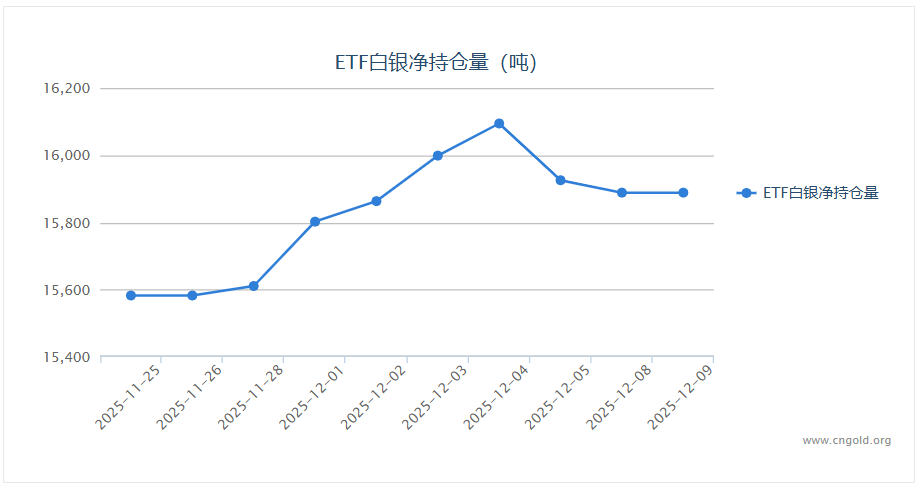
【白银etf持仓量】12月9日白银ETF较上一交易日上涨84.62吨
Jin Tou Wang· 2025-12-10 08:34
Group 1 - The iShares Silver Trust reported a holding of 15,973.16 tons of silver as of December 9, with an increase of 84.62 tons from the previous trading day [1] - On December 9, spot silver closed at $60.65 per ounce, marking a 4.37% increase, with intraday prices reaching a high of $60.83 and a low of $57.56 [1] - Spot silver experienced a significant rise of 4.3%, closing at $60.64 per ounce, and briefly touching a historical high of $60.87 per ounce [3] Group 2 - Analysts predict that industrial demand for silver will be exceptionally strong in the coming years, driven by sectors such as solar energy, electric vehicles, data centers, and artificial intelligence [3] - The Silver Institute's report indicates that these emerging industries will continue to drive silver demand through 2030, exacerbating global supply shortages [3] - Current silver inventories are decreasing, and the recent inclusion of silver in the U.S. critical minerals list provides additional support for prices [4]
福特雷诺联手“过冬”,“西方车企正为生存而战”
Guan Cha Zhe Wang· 2025-12-10 05:43
Core Insights - Ford and Renault have formed a significant partnership to develop affordable electric vehicles for the European market, highlighting the intense competition in the automotive industry [1][3] - The rise of Chinese electric vehicle manufacturers is putting pressure on Western automakers, with a notable increase in market share for companies like BYD [1][3] - Ford's European operations have been struggling financially, with plans to cut jobs and reduce production of certain electric models [3][5] Group 1: Partnership Details - Ford and Renault will collaborate on small, affordable electric vehicles and commercial vans aimed at the European market [1] - The new models will be based on Renault's Ampere electric vehicle platform, with Ford responsible for design and branding [3] - Production will take place at Renault's factory in Douai, France, which currently produces the Renault 5 electric vehicle [3] Group 2: Market Context - The European market is seeing a significant influx of electric vehicle imports, with 55% of the total value coming from China, far exceeding other countries [1] - BYD's sales in Europe surged by 225.3% year-on-year, achieving a market share of 1.2%, surpassing Tesla for the first time [1] - Ford's Cologne plant has been underperforming, with electric vehicle sales falling short of expectations despite a €2 billion investment in production line upgrades [3][5] Group 3: Leadership and Strategy - Ford's CEO, Jim Farley, acknowledges the advanced technology of Chinese automakers and emphasizes the need for Ford to adapt to remain competitive [5] - BMW is also facing challenges from Chinese competitors but is performing better than other German automakers [6] - BMW's leadership transition is set to occur in May 2026, with a new chairman taking over after a long tenure [5]

港股科技投资迎来新“坐标”港交所科技100指数发布 联想、宁德时代等入选
智通财经网· 2025-12-09 10:25
Core Viewpoint - The Hong Kong Stock Exchange (HKEX) has launched the HKEX Technology 100 Index, marking its first technology-focused stock index for Hong Kong stocks [1][2] Group 1: Index Composition and Criteria - The HKEX Technology 100 Index includes the largest 100 technology companies listed on the Hong Kong Stock Exchange, covering sectors such as artificial intelligence, biotechnology, electric vehicles, information technology, internet, and robotics [1] - Component stocks must meet specific liquidity and R&D growth criteria: an average daily trading volume of at least HKD 20 million over the past six months and either R&D spending exceeding 3% of revenue or revenue growth exceeding 5% over the past two years [1][2] - Notable companies included in the index are Tencent Holdings, Alibaba Group, BYD Company, and Meituan, among others [1] Group 2: Index Calculation and Adjustment - The index uses a free-float market capitalization weighting method, with a maximum weight of 12% for any single component stock [2] - Component stocks will be adjusted biannually in June and December, with data cut-off dates on the last trading day of April and October each year [2] - Stocks with an average daily trading amount below HKD 20 million over the past six months or those ranking in the bottom 10% by trading volume will be excluded [2] Group 3: Market Implications - The index aims to identify technology stocks with market momentum and growth potential, which may enhance the development of related products in the mainland Chinese market [2] - It addresses the strong demand from mainland investors for opportunities in the Hong Kong technology sector, aligning with the investment needs of southbound capital [2]