
空间计算

Search documents
苹果不再是一艘火箭飞船,而仍然是一座堡垒
美股研究社· 2025-08-22 10:12
Core Viewpoint - The article emphasizes that despite a recent stock price increase, Apple remains a strong investment opportunity due to its resilient business model, ongoing growth in services, and strategic investments in the U.S. [1][2][15] Financial Performance - Apple's stock price has increased by over 18% since April, reaching a peak of $235.12, although it is still down approximately 7% year-to-date [1] - In the latest quarter, Apple reported a 10% increase in revenue, reaching $94.036 billion, with net income growing by 9% to $23.4 billion [4][10] - The services segment generated $27.423 billion in revenue, reflecting a 13% year-over-year growth, and now accounts for more than $100 billion annually [4][9] Business Model and Strategy - Apple is shifting its business model to reduce reliance on hardware, with services now contributing significantly to profitability, boasting a profit margin close to 75% [2][4] - The company plans to invest $100 billion in the U.S. to mitigate tariff risks and strengthen ties with the government, which is seen as a strategic move [2][5][15] - Apple's R&D spending increased by 11% to $8.9 billion, focusing on enhancing AI and spatial computing capabilities [5] Market Position and Competitive Advantage - Despite a stabilizing smartphone market, Apple maintains strong pricing power, with iPhone revenue rising to $44.582 billion, a 13% increase [8][9] - The company’s ecosystem, including AI and health-focused wearables, continues to open new revenue streams [8] Valuation and Future Outlook - The current P/E ratio is approximately 31, higher than its long-term average of 28, justified by a richer service business and risk mitigation strategies [12] - Analysts project revenue growth from $416 billion in FY2025 to around $462 billion by FY2027, with earnings expected to grow at a high single-digit rate [14][15] - The stock is viewed as a stable investment, with potential for growth if new products or AI developments exceed expectations [12][15]



天娱数科上半年净利翻4.5倍 数据流量业务贡献超九成营收
Jing Ji Guan Cha Wang· 2025-08-22 06:52
Core Insights - The company reported a significant improvement in its financial performance for the first half of 2025, achieving a revenue of 988 million yuan, a year-on-year increase of 29.64%, and a net profit of 23.62 million yuan, marking a turnaround from a loss of 6.68 million yuan in the previous year, with a growth rate of 453.67% [1][2][4] Revenue Breakdown - The data traffic business emerged as the core revenue driver, generating 967 million yuan, accounting for 97.93% of total revenue, with a year-on-year growth of 29.56% [2] - The esports gaming sector, while only contributing 2.01% to total revenue, saw a substantial growth of 57.04%, indicating early success in diversifying the business structure [2] Cash Flow and Regional Performance - The net cash flow from operating activities improved significantly to 88.02 million yuan, compared to a negative cash flow of 20.14 million yuan in the same period last year, reflecting a year-on-year growth of 537.05% [2] - Domestic revenue accounted for 98.72% of total income, while overseas revenue, although only 1.28%, grew by 186.84%, showcasing potential for international expansion [2] Business Platforms and AI Integration - The company has established three core business platforms: AI Marketing SaaS, Mobile Application Distribution PaaS, and Spatial Intelligence MaaS, which are strategically aligned to drive growth through AI and data [3][4] - The AI Marketing SaaS platform generated 208.5 million short videos, with AI-generated content accounting for 5.4%, and has been recognized for compliance and technological advancement [3][4] - The Mobile Application Distribution PaaS platform reached a total of 349 million registered users, maintaining stable monthly active users, and supports various applications across multiple sectors [3] Spatial Intelligence and Technological Advancements - The Spatial Intelligence MaaS platform has accumulated over 1.5 million sets of 3D data and 650,000 sets of multimodal data, with significant datasets registered at the Beijing International Big Data Exchange [4] - The company’s strategic focus on data traffic and AI has laid a solid foundation for future growth, particularly in cutting-edge fields such as AIGC and intelligent recommendation systems [4]

前金立核心创始成员创立,智能眼镜品牌获数千万元融资,已拿下软银、传音等头部厂商订单|硬氪首发
3 6 Ke· 2025-08-22 01:35
Core Insights - Shenzhen Montong Intelligent Technology Co., Ltd. has recently completed a Pre-A round financing of several tens of millions, led by strategic investment from a listed company, with funds allocated for product development, team expansion, and ecosystem implementation [1][3] - The company focuses on the development of AI+AR glasses and a spatial AI operating system, aiming to create intelligent AI entities for the spatial intelligence era [1][3] - The founder, Zhang Maolei, has a strong background in consumer electronics, having been a core member of Gionee Mobile, which aids in rapid technology commercialization [1][3] Company Overview - Montong Intelligent was established in 2022 and specializes in self-developed AI terminal products centered around AI+AR glasses and spatial AI systems [1][3] - The team comprises members from leading companies such as Gionee, OPPO, VIVO, Alibaba, and others, providing a robust background in hardware, software, and AI algorithms [1][3] Market Trends - The global AR/AI glasses market is predicted to experience explosive growth, with shipments expected to exceed 100 million units by 2028 and the spatial intelligent interaction market projected to reach trillions by 2030 [3][4] - The integration of AI large models with AR technology is transforming human-computer interaction, moving from 2D to 3D interfaces [3][4] Industry Challenges - Despite the presence of major players like Meta and Xiaomi, the smart glasses market is still in its infancy, primarily attracting early adopters, and has not yet penetrated mainstream consumer groups [4][6] - The industry is currently likened to the early stages of autonomous driving, indicating that the market is not yet ready for a breakthrough akin to the "iPhone moment" [4][6] Strategic Direction - Montong Intelligent aims to define the next generation of AI entry points between 2025 and 2028, drawing parallels to the smartphone industry's evolution from 2007 to 2010 [6] - The company employs a strategy of "producing one generation, developing one generation, and researching one generation" to build a diverse ecosystem of AI products, including AI Pocket, AI Station, and AI Connect [6][11] Product Development - In 2023, Montong Intelligent launched the world's first third-generation AR glasses with the largest field of view, integrating high-performance display systems into a lightweight form factor [9][11] - The company plans to release a cost-effective AI glasses solution and a new model featuring anti-glare technology to enhance visibility in bright environments [9][11] Financial Projections - Montong Intelligent anticipates a 300% revenue increase in the first half of 2025 compared to the entire year of 2024, with plans for large-scale production and delivery by 2026 [11] - The company is in discussions with major global firms like SoftBank and Honor to expand its AI brand globally [11]

全球最轻的空间计算MR正式发布,望推动空间计算市场加速发展
Xuan Gu Bao· 2025-08-21 14:44
Group 1 - Vivo Vision Explorer Edition MR headset was officially launched on August 21, weighing only 398g, making it the lightest spatial computing device globally [1] - The headset features a compact design, self-developed spatial computing algorithms, and a dual-ring strap for improved wearing experience [1] - It is powered by the second-generation Snapdragon XR2+ platform, with performance improved by 2.5 times compared to the previous generation [1] Group 2 - The core of spatial computing is to merge the virtual and physical worlds, enabling digital interaction in three-dimensional space [1] - According to Wind data, the total revenue of the spatial technology service industry is projected to reach 3.076 billion yuan in 2024, with significant application potential in AI, robotics, and the metaverse [1] - The advancement of AI technology and edge computing is driving spatial computing from concept to large-scale implementation, becoming a key force in industrial intelligence [1] Group 3 - Omdia predicts that the global spatial computing market will exceed $10 billion by 2029, with a compound annual growth rate of 18% [2] - Liard has achieved multiple intellectual property results in the AI and spatial computing sectors, with projected revenue of 307 million yuan in 2024, accounting for 4.29% of total revenue [2] - Entropy Technology is utilizing multimodal BioCV technology to build a comprehensive perception system, transitioning spatial management from static to autonomous decision-making and evolution [2]
晚报 | 8月22日主题前瞻
Xuan Gu Bao· 2025-08-21 14:29
Group 1: Computing Power - DeepSeek-V3.1 was officially released on August 21, showcasing significant improvements in programming capabilities and performance, outperforming ClaudeOpus4 in community tests [1] - The cost of completing a programming task with DeepSeek-V3.1 is only $1.01, which is one-sixtieth of proprietary systems, generating high market expectations for DeepSeek-R2 [1] - DeepSeek-R2 is designed with domestic chip architecture, aligning with China's AI computing power self-sufficiency policy and promoting the maturity of the domestic chip ecosystem [1] Group 2: Spatial Computing - Vivo Vision Exploration MR headset was launched on August 21, weighing only 398g and featuring natural eye-hand interaction, making it the lightest spatial computing device globally [2] - The device utilizes a compact design and self-developed spatial computing algorithms, enhancing user experience and supporting cross-device content transfer [2] - The spatial computing industry is projected to generate a total revenue of 3.076 billion yuan in 2024, with significant application potential in AI, robotics, and the metaverse [3] Group 3: Combustible Ice - A breakthrough in methane direct catalytic conversion was achieved by Hainan University's clean energy innovation team, enabling efficient conversion of gaseous methane into high-value liquid fuel methanol [4] - Combustible ice, primarily composed of methane, is recognized as a strategic energy resource in the South China Sea, with an estimated resource volume of 800 billion tons of oil equivalent [4] - The development of combustible ice is expected to enhance the share of clean energy in the energy structure and reduce dependence on oil and gas imports [4] Group 4: Medical Devices - The National Health Commission and other departments issued guidelines to improve ear and hearing health services, focusing on building a comprehensive health network and enhancing prevention and treatment capabilities [5] Group 5: Innovative Pharmaceuticals - The State Council emphasized the importance of the biopharmaceutical industry for public health and called for strengthening original innovation and key technology breakthroughs [6] - The government aims to enhance the integration of AI in drug development and clinical trials, optimizing the pharmaceutical supply chain and promoting traditional Chinese medicine modernization [6] Group 6: Robotics - Zhiyuan Robotics announced its "A Plan" at the first partner conference, aiming to create a trillion-yuan industry ecosystem and incubate over 50 early-stage projects in the robotics sector [7] - The company plans to begin mass production of its Lingxi X2 robot by the end of August, with unlimited supply starting in the fourth quarter [7] Group 7: Macro and Industry News - The Ministry of Industry and Information Technology is collecting applications for AI empowerment in small and medium enterprises for 2025 [9] - The Ministry of Commerce reported a 7.4% year-on-year increase in online retail sales of agricultural products from January to July [9] - The State Council approved the development plan for the biopharmaceutical industry chain in Jiangsu Free Trade Zone [9]
vivo率先发布国产版Vision Pro,重量是苹果2/3,售价预计苹果1/3
量子位· 2025-08-21 11:10
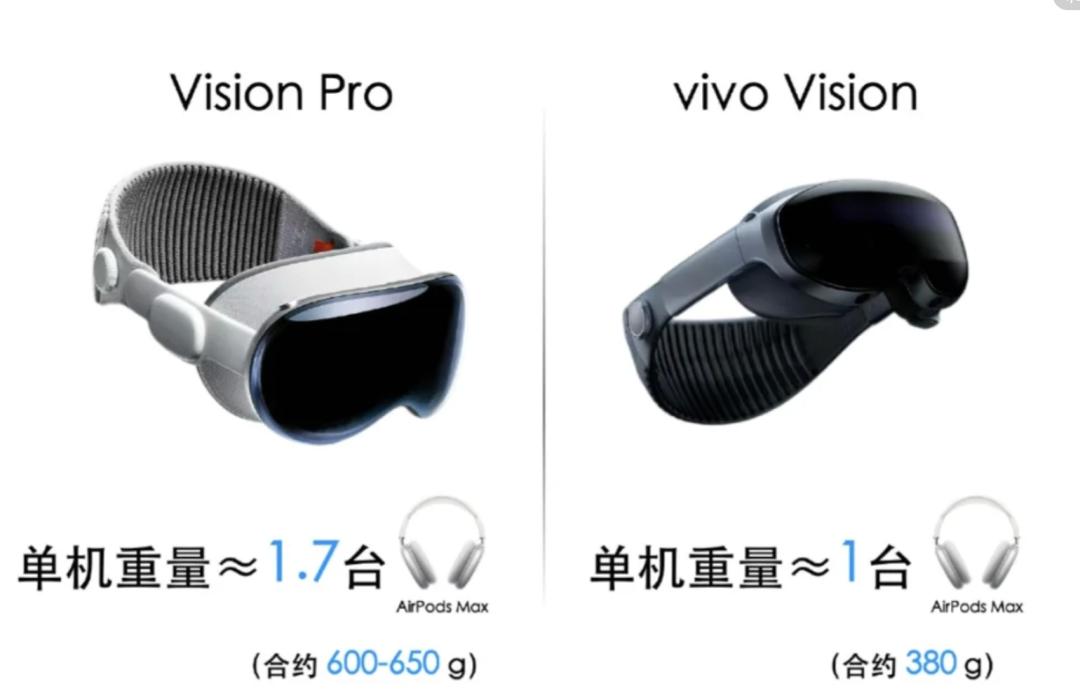
Core Viewpoint - The article discusses the launch of vivo's first domestic MR headset, the vivo Vision Exploration Edition, highlighting its lightweight design, advanced features, and potential market impact compared to competitors like Apple's Vision Pro [1][10]. Group 1: Product Features - The vivo Vision weighs only 398g, significantly lighter than Apple's Vision Pro at 600g, making it comparable to wearing headphones [3][12]. - The headset supports magnetic prescription lenses for users with myopia, accommodating a wide range of vision needs from 100 to 1000 degrees [6][39]. - It features eye-hand interaction, allowing seamless connectivity with vivo smartphones and PCs [7][41]. - The device is powered by the second-generation Snapdragon XR2+ chip, enhancing performance [8]. Group 2: Design and Comfort - The design focuses on reducing weight, which is crucial for comfort, wear duration, and portability, as heavy headsets can lead to discomfort [16][17]. - The ergonomic design is based on human facial measurements to minimize pressure points, resulting in less facial indentation after prolonged use [24][22]. - The headset's dimensions (height: 83mm, thickness: 40mm) allow it to fit easily into small bags, appealing to users who prioritize portability [21]. Group 3: Display and Interaction - The vivo Vision utilizes a Micro-OLED display with dual 8K resolution, achieving a resolution of 3840*3552*2 and covering 94% of the DCI-P3 color gamut [27][28]. - It offers a 180-degree field of view and can simulate a 120-inch virtual screen at a distance of 100 meters [30][32]. - The device supports ultra-low latency color passthrough with a delay of just 13ms, facilitating real-time interaction with the environment [35][36]. Group 4: Market Position and Future Goals - vivo is the first domestic smartphone manufacturer to pursue the MR headset route, positioning itself as a bridge between the physical and digital worlds [50][51]. - The long-term vision includes using MR technology as a foundation for future household robots, addressing challenges in perception and decision-making in unstructured environments [51][52]. - The headset is not yet available for the consumer market, with plans for experiential stores in major cities like Beijing, Shanghai, and Guangzhou [53].

TrendForce 自发光显示产业研讨会正式定档!10月30日深圳见
TrendForce集邦· 2025-08-20 08:34
Core Viewpoint - The article discusses the transformative impact of generative AI and spatial computing on various industries since 2024, highlighting the central role of display technology in this evolution and the opportunities and challenges it faces [2]. Group 1: Display Technology Evolution - The display industry is experiencing significant internal evolution, with major technology routes competing and seeking new development points [2]. - Micro LED technology is gaining clarity in its development path, with accelerated industrialization and potential applications in large displays, high-end automotive, and wearable devices [2]. - Mini LED has successfully transitioned from a "technology pioneer" to a "market leader," competing effectively with OLED in high-end TVs and monitors, and expanding its applications in smaller pitch markets [3]. - OLED maintains its dominance in flagship smartphones due to its advantages in flexibility, thinness, and color performance, while also addressing its limitations in brightness and lifespan for mid-size applications [3]. Group 2: Market Opportunities and Challenges - The global display industry is at a crossroads of opportunities and challenges, driven by new applications and scenarios enabled by AI, but also facing uncertainties in the macroeconomic environment and technological bottlenecks [4]. - The industry requires a strategic direction to navigate the evolving landscape, particularly in emerging markets such as gaming displays, automotive displays, AI PCs, and AI glasses [4].

GPT5的认错了,每个产品经理都是在迭代中试错
3 6 Ke· 2025-08-18 02:23
Group 1 - The core viewpoint of the article is that the upcoming launch of vivo's vision MR glasses will mark a significant shift towards spatial computing, potentially leading to the obsolescence of traditional mobile app product managers [1][2][18] - The vivo vision MR glasses are expected to be significantly lighter than Apple's vision Pro, being half the weight, and will utilize gesture and eye-tracking technology based on the Android system [1][18] Group 2 - The evolution of product managers over the past decade has been marked by various phases, starting from the mobile internet boom in 2016, where entry-level positions were accessible regardless of educational background [3][6] - The emergence of different types of product managers, including C-end and B-end product managers, has led to a more specialized skill set and differentiated performance metrics [8][9] - The rise of data product managers has been driven by the increasing reliance on data for app iteration and optimization, highlighting the importance of data analysis in product development [9][10] - The introduction of AI product managers has transformed the landscape, with a focus on leveraging AI capabilities for application development, particularly in the context of large language models [15][16] - The anticipated growth of brain-computer interfaces and spatial computing is expected to further revolutionize the role of product managers, shifting from traditional interfaces to immersive experiences [16][18]
AI眼镜行业深度:镜观万象,AI启新元
2025-08-14 14:48
Summary of AI Glasses Industry Research Industry Overview - The AI glasses market is projected to have significant growth, with global sales potentially exceeding 90 million units by 2030, and expected shipments nearing 10 million units in 2025, reaching 20 million units in 2026, indicating substantial market penetration potential [1][4] Key Insights and Arguments - AI glasses are positioned as an easy-to-promote, cost-effective end-device, with significant upgrades in internal components such as cameras, chips, and microphones, leading to high investment elasticity similar to the development path of TWS (True Wireless Stereo) headphones [1][5] - The current AI glasses market is likened to the TWS headphone market in 2015-2016, indicating it is in an early attention phase, with expectations of entering a rapid growth phase by 2025 and a potential explosion in 2026 [1][6] - The global eyewear market was valued at approximately $184.1 billion in 2023, comparable to the smartphone market in 2012, suggesting that AI glasses have significant potential to replace traditional eyewear [1][7] Catalysts for Industry Development - Key catalysts for the AI glasses industry include the launch of new products by manufacturers, increased market attention towards AI glasses, and existing product shipments exceeding expectations, all of which will drive sector growth [1][8] Market Dynamics and Supply Chain - The cost structure of Meta's AI glasses includes SoC assembly (34%), storage (21%), and cameras (7%), with Qualcomm being the largest supplier at 36% [1][9] - Notable suppliers in the AI glasses supply chain include GoerTek, Hengxuan, and other companies involved in the core and flexible segments of the industry, which are expected to see significant profit elasticity as sales reach 17 million units by 2027 [1][15] Technology and Product Development - Xiaomi's AI glasses utilize an MCU and SoC chip solution, with significant value in the assembly process, highlighting the importance of component suppliers like GoerTek and Longqi [1][10][11] - The optical display technology in AR glasses is evolving towards full-color displays, with Micro LED and diffraction waveguide technologies being the most promising, although still in development [1][14] Investment Perspective - From an investment standpoint, AI glasses are seen as a relatively simple and cost-effective device with significant future potential, following historical trends of major upgrades in consumer electronics [1][5] - The current stage of AI glasses is expected to yield greater market capitalization increases compared to profit growth during the industry explosion phase, indicating a potential for valuation enhancement [1][6] Conclusion - The AI glasses industry is at a pivotal moment, with substantial growth potential driven by technological advancements, market dynamics, and evolving consumer needs, making it a sector to watch for future investment opportunities [1][8][15]


创维数字跌1.77%,成交额1.96亿元,后市是否有机会?
Xin Lang Cai Jing· 2025-08-14 07:48
Core Viewpoint - The company, Skyworth Digital, is experiencing fluctuations in stock performance and is actively involved in the development of advanced technologies in the VR and smart home sectors [1][2][3]. Company Overview - Skyworth Digital, established on April 16, 2002, and listed on June 2, 1998, is based in Shenzhen, Guangdong Province. The company focuses on research, development, production, sales, and operation of digital smart terminals and front-end systems [7]. - The main business revenue composition includes: smart terminals (75.44%), professional displays (19.73%), operation services (4.51%), and other business income (0.33%) [7]. Recent Developments - On August 14, the stock price of Skyworth Digital fell by 1.77%, with a trading volume of 196 million yuan and a market capitalization of 13.3 billion yuan [1]. - The company was selected as a candidate for the 10G PON dual-band WiFi 6 smart home gateway, capturing a market share of 32.26% [2]. - Skyworth Digital's VR product series is among the leading offerings in China, with various mature products such as VR all-in-one machines and short-focus VR glasses already in sales [2]. Financial Performance - For the first quarter of 2025, Skyworth Digital reported a revenue of 1.799 billion yuan, a year-on-year decrease of 21.24%, and a net profit attributable to shareholders of 5.3274 million yuan, down 94.98% year-on-year [8]. Market Position - As of August 10, the number of shareholders in Skyworth Digital was 82,200, a decrease of 2.41% from the previous period, with an average of 13,511 circulating shares per person, an increase of 2.47% [8]. - The company operates within the home appliance sector, specifically in the black home appliance category, and is involved in various concept sectors including ultra-high definition, mixed reality (MR), streaming media, and smart wearables [8].
