险资举牌

Search documents
年内举牌21次 险资正跑步入市
2 1 Shi Ji Jing Ji Bao Dao· 2025-08-04 12:56
Core Insights - Insurance funds have made a total of 21 stake acquisitions in A-shares and H-shares as of August 4, surpassing the total for the entire previous year [2][4] - Major insurance companies involved include China Life, Ping An Life, and Taikang Life, with acquisitions spanning banks, energy, and public utility sectors [2][3] - The trend is driven by a combination of high dividend yields and new accounting standards that allow for smoother profit fluctuations [4][6] Stake Acquisitions - The insurance institutions that have made stake acquisitions this year include China Life, Ping An Life, Xinhua Insurance, and others [2] - Notable targets for these acquisitions include Agricultural Bank of China, Postal Savings Bank, and various energy companies [2][3] - Hong Kong-listed companies are particularly favored due to lower valuations and higher dividend yields [3] Investment Drivers - The decline in interest rates has increased investment pressure on insurance companies, prompting them to seek stable long-term returns through stake acquisitions [4][5] - The new accounting standards encourage insurance companies to invest in high-yield stocks to reduce profit volatility [6][7] Regulatory Environment - The Chinese government has implemented policies to extend the assessment period for state-owned insurance companies, allowing for a more stable investment approach [7][8] - Recent regulations have increased the upper limit for equity asset allocation, providing more room for insurance funds to invest in the stock market [9] Long-term Investment Strategy - Insurance funds are increasingly seen as a stabilizing force in the market, aligning with national strategies and supporting economic development [7][9] - The establishment of private equity funds by insurance companies aims to enhance their long-term investment capabilities and deepen their engagement with capital markets [9]



年内举牌21次,险资正跑步入市
2 1 Shi Ji Jing Ji Bao Dao· 2025-08-04 12:44
南方财经全媒体记者 林汉垚 北京报道 截至8月4日,保险资金年内在A股及H股市场累计举牌达21次,一举超越去年全年水平。中国人寿、平 安人寿、泰康人寿等十余家机构密集出手,举牌标的涵盖银行、能源、公共事业等领域。 华泰证券分析指出,险资正通过高息股填补现金收益缺口,并借新会计准则下FVOCI(以公允价值计量 且其变动计入其他综合收益的金融资产)计量平滑利润波动。 与此同时,财政部拉长国有险企考核周期、国家金融监管总局上调权益资产配置上限等政策组合拳,推 动"耐心资本"保险资金与实体经济深度协同。 年内举牌量超去年全年 根据原中国保监会于2015年发布的《保险公司资金运用信息披露准则第3号:举牌上市公司股票》,保 险公司举牌上市公司股票,是指保险公司持有或者与其关联方及一致行动人共同持有一家上市公司已发 行股份的5%,以及之后每增持达到5%时,按照相关法律法规规定,在3日内通知该上市公司并予以公 告的行为。 中国保险行业协会网站信息显示,截至8月4日,保险资金年内在A股及H股市场已累计举牌上市公司达 21次,已超过去年全年举牌次数。 据统计,今年以来举牌上市公司的保险机构有中国人寿、平安人寿、新华保险、瑞众人寿 ...
桂浩明:险资缘何频繁举牌上市公司?
Zheng Quan Shi Bao· 2025-08-01 23:52
Group 1 - Insurance companies are increasingly investing in the stock market due to low interest rates and reduced profitability in bond investments, leading to a shift from real estate investments to equities [1][2] - In 2023, insurance capital made 9 equity stakes in 8 listed companies, which increased to 20 stakes in 18 companies in 2024, and 21 stakes in 17 companies in the first half of 2025, indicating a significant rise in investment activity [2] - The focus of insurance capital has shifted towards well-performing companies with high dividend yields, moving from short-term trading to long-term investments [2][3] Group 2 - Insurance capital is increasingly investing directly in equities of public utilities and environmental sectors, reflecting a diversification of investment strategies [2] - The trend of insurance capital making equity stakes is particularly prominent in H-shares of mainland companies listed in Hong Kong, driven by the AH price difference and the characteristics of the H-share market [2] - The frequent equity stakes taken by insurance capital indicate a growing demand for market influence and pricing power among institutional investors [3]

险资缘何频繁举牌上市公司?
Zheng Quan Shi Bao· 2025-08-01 17:15
Group 1 - The core viewpoint is that insurance companies are increasingly investing in the stock market due to low interest rates and the need for higher returns, shifting from real estate investments to equities [1][2] - Insurance funds, which were initially restricted to fixed-income products, have now become more active in the stock market, with significant investments in equities and ETFs [1] - The trend of insurance capital frequently taking significant stakes in listed companies reflects a shift towards long-term investment strategies focused on high dividend-yielding companies [2][3] Group 2 - In 2023, insurance capital made 9 stake acquisitions in 8 listed companies, which increased to 20 acquisitions in 18 companies in 2024, and 21 acquisitions in 17 companies in the first half of 2025 [2] - The amount of capital used for these acquisitions has significantly increased, with China Pacific Insurance investing 8.66 billion HKD in Guangda Environment and Ping An Life investing over 583 billion HKD in China Merchants Bank [2] - The focus of insurance capital has shifted towards H-shares of mainland companies listed in Hong Kong, driven by the AH price difference and the characteristics of the H-share market that favor large capital investments [2]
21次!险资举牌创五年新高,投资逻辑告别“野蛮人”
Xin Lang Cai Jing· 2025-07-28 12:28
Core Viewpoint - The recent surge in insurance capital's significant stake acquisitions in the secondary market reflects a shift towards long-term value investment strategies, driven by declining interest rates, regulatory encouragement, and asset-liability management needs [1][2]. Group 1: Insurance Capital Activity - As of July 28, 2025, insurance companies have completed 21 stake acquisitions, surpassing the total for 2024 and setting a five-year record, with major players including Ping An Life, China Post Insurance, and New China Life [1]. - Ping An Life and its affiliated asset management companies have been the primary force behind these acquisitions, triggering seven stake purchases, including three for China Merchants Bank H-shares, increasing their holding from 5% to 15% [1]. Group 2: Investment Rationale - The frequent buying of state-owned bank H-shares by insurance capital is a strategic decision based on factors such as dividend yield, tax advantages, market liquidity, regulatory requirements, and counter-cyclical attributes [2]. - Stake acquisitions allow insurance companies to optimize financial statements and mitigate the impact of market volatility by accounting for investment income using the equity method [2]. Group 3: Asset Allocation Trends - As of Q1 2025, the proportion of stocks and funds in domestic insurance capital reached a historical high of 13.3%, indicating a strong desire among insurance companies to increase equity investments due to declining yields in bonds and non-standard assets [3]. - New China Life has shown a strong commitment to increasing its equity asset ratio, which reached nearly 20% in 2024, with a further increase of 2 percentage points in the first half of 2025 [3]. Group 4: Regulatory Support - The regulatory framework is encouraging long-term equity investments by insurance capital, with a recent notice from the Ministry of Finance introducing a five-year cycle indicator for assessing the performance of insurance funds [4]. - The new assessment method adjusts the evaluation of net asset return rates and capital preservation rates to include annual, three-year, and five-year indicators, promoting stability and sustainability in long-term investments [4].
A股市场融资余额续创4月以来新高|财富周历 动态前瞻
Sou Hu Cai Jing· 2025-07-28 00:42
A-share Market - Beijing State-owned Assets Management Co. has become the controlling shareholder of Credit Suisse Securities with an 85.01% stake after acquiring shares from UBS Securities and Founder Securities, renaming it to Beijing Securities [2] - As of July 22, the financing balance in the A-share market reached 1.9196 trillion yuan, marking a new high since April, with an increase of 15.048 billion yuan from the previous trading day, continuing a trend of over 15 billion yuan increase for two consecutive days [2] - By July 22, 329 listed companies in the A-share market had announced plans for mid-term profit distribution for 2025 [2] - Insurance companies have made 21 stake acquisitions this year, surpassing the total number of acquisitions in 2021-2023 and setting a five-year high, with monthly acquisitions occurring consistently [2] Fund and Investment - The issuance of new funds has accelerated, with 15 funds announcing the effectiveness of their contracts on July 24, and several funds shortening their fundraising periods to 3 to 5 days [4] - The People's Bank of China announced a 400 billion yuan MLF operation on July 25 to maintain liquidity in the banking system, with a one-year term [4] - The basic pension insurance fund is expected to inject stable long-term capital into the market as it expands its entrusted investment scale [4] - The number of bond ETFs has reached 39, with a total scale surpassing 507.695 billion yuan, reflecting a growth of 191.82% from the beginning of the year [4] Foreign Investment - In the first half of the year, foreign investment in domestic stocks and funds increased by 10.1 billion USD, reversing the net selling trend of the past two years [5] Personal Pension Funds - The personal pension fund sector is gaining attention, with nearly 90% of funds established since inception showing positive returns, and total scale exceeding 12 billion yuan with 297 products available [5] Financial Services - The People's Bank of China and the Ministry of Agriculture and Rural Affairs issued guidelines to enhance financial services for rural reforms and promote comprehensive rural revitalization [6] - The State Administration for Market Regulation is conducting a nationwide quality safety inspection of charging treasures to ensure public safety [6] - The National Health Insurance Fund has seen a cumulative expenditure of 12.13 trillion yuan, with a stable insurance coverage rate of around 95% [6] Loan Statistics - As of the end of Q2 2025, the balance of various RMB loans from financial institutions reached 268.56 trillion yuan, with a year-on-year growth of 7.1% [7] Retail and Wholesale Industry - The consumption upgrade policy has led to over 66 million consumers participating in the trade-in program for 12 categories of home appliances, with over 1.09 million units exchanged [7]


大资金持续发力!新一轮举牌潮进行中
券商中国· 2025-07-24 03:30
Core Viewpoint - The recent surge in insurance capital's stock acquisitions, marking a new wave of investment activity, reflects a strategic shift in asset allocation and operational adjustments in response to the evolving economic landscape [2][18][19]. Group 1: Insurance Capital Activity - Insurance companies have initiated a record 21 stock acquisitions as of July 22, surpassing the total for 2021-2023 and setting a five-year high [2][10]. - The latest acquisitions include significant purchases by Zhongyin Life and Taikang Life, with Zhongyin acquiring 726,000 shares of Green Power Environmental, reaching a 5.0722% stake [7][6]. - The trend of stock acquisitions has been consistent, with four instances occurring in July alone, indicating a robust interest from various insurance firms [5][6]. Group 2: Investment Strategy and Market Conditions - The current investment strategy emphasizes high-dividend stocks and long-term equity investments, driven by a low-interest-rate environment and new financial regulations [11][18]. - The insurance sector is increasingly focusing on stable, high-yield investments to enhance returns, with a notable shift towards equities as a means to navigate low returns from traditional fixed-income assets [18][19]. - The ongoing policy support for long-term investments is expected to further expand the space for equity asset allocation among insurance companies [19][22]. Group 3: Historical Context and Future Outlook - This marks the third wave of stock acquisitions in the past decade, with previous surges occurring in 2015 and 2020, indicating a cyclical pattern in investment behavior [8][9]. - Although the current annual acquisition count has not yet surpassed the previous waves, the duration and total volume of acquisitions since 2024 have already exceeded the second wave [9]. - The focus on banking stocks remains prominent, with significant investments in major banks, reflecting their stable operations and attractive dividend yields [12][10].

举牌!举牌
Zhong Guo Ji Jin Bao· 2025-07-23 09:47
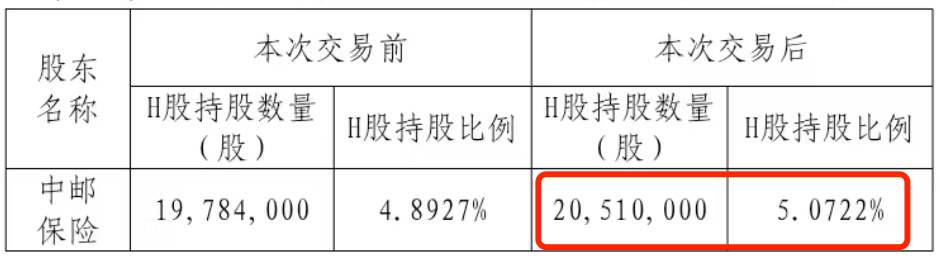
Group 1 - Zhongyou Insurance has acquired 726,000 shares of Green Power Environmental, triggering a stake increase [1][2] - Prior to this acquisition, Zhongyou Insurance held 19.784 million shares, representing 4.8927% of the H-share capital [2][3] - After the acquisition, the total shares held increased to 20.51 million, raising the ownership percentage to 5.0722% [2][3] Group 2 - In 2023, insurance companies have made 21 stake increases in listed companies, surpassing the total for the entire previous year [1][5] - Major insurance firms, including Ping An Life and Great Wall Life, have also made significant stake increases in various companies across different sectors [5] - The trend of stake increases is driven by low interest rates, regulatory support for long-term investments, and a focus on high-dividend stocks [5]

举牌!举牌!
中国基金报· 2025-07-23 09:27
Core Viewpoint - Zhongyou Insurance has increased its stake in Green Power Environmental Protection, marking the 21st time insurance companies have made such moves this year, surpassing the total for the previous year [2][6]. Group 1: Zhongyou Insurance's Actions - On July 22, Zhongyou Insurance announced the purchase of 726,000 shares of Green Power Environmental Protection H-shares, triggering a stake increase [2][4]. - Prior to this purchase, Zhongyou Insurance held 19.784 million shares, representing 4.8927% of the H-share capital. After the purchase, the total shares held increased to 20.51 million, or 5.0722% of the H-share capital [4]. Group 2: Financial Metrics - As of July 4, the book value of Zhongyou Insurance's holdings in Green Power Environmental Protection was approximately RMB 94.1 million, accounting for 0.014% of the company's total assets as of the end of Q2 2025 [5]. - As of March 31, Zhongyou Insurance reported total assets of RMB 631.38 billion and net assets of RMB 7.997 billion. By June 30, the book value of equity assets was RMB 100.775 billion, making up about 17.08% of total assets [5]. Group 3: Industry Trends - In 2023, over ten insurance institutions have made stake increases in A-shares and H-shares, totaling 21 instances, which exceeds the total from the previous year [6][7]. - The most frequently targeted sector for stake increases by insurance companies has been the banking sector, followed by public utilities, energy, transportation, high technology, and environmental protection [7]. - The motivations behind these stake increases include the pursuit of higher yields in a low-interest-rate environment, the implementation of new financial instrument standards encouraging long-term equity investments, and supportive policies for long-term capital market entry [7].

21次举牌,险资狂买!
经济观察报· 2025-07-23 06:52
Core Viewpoint - Since 2025, insurance companies have triggered 21 investment events involving stock acquisitions, surpassing the total number of such events in the previous year [4]. Group 1: Investment Activities - The A-share market has been experiencing upward fluctuations, and the Hong Kong stock market is recovering, leading to increased activity from insurance funds in the capital markets [2]. - In July 2025, Zhongyou Insurance announced its acquisition of shares in Green Power Environmental (01330.HK), triggering a stock acquisition disclosure [3][8]. - Other insurance companies, such as Xintai Life and Lianan Life, also disclosed stock acquisitions in July 2025 [9] [10]. Group 2: Specific Investment Cases - Zhongyou Insurance purchased 726,000 shares of Green Power Environmental, increasing its holdings to 20.51 million shares, representing 5.0722% of the company's H-share capital [8]. - Xintai Life increased its holdings in Hualing Steel (000932.SZ) to 345 million shares, raising its ownership from 4.99% to 5.00% [10]. - Lianan Life acquired 1.1 million shares of Jiangnan Water (601199.SH), increasing its stake from 4.91% to 5.03% [10]. Group 3: Financial Data and Trends - As of June 30, 2025, Zhongyou Insurance reported a net buy of over 90 billion yuan in public market equity investments [6]. - Xintai Life's equity assets amounted to 565.78 billion yuan, accounting for 19.07% of its total assets as of June 30, 2025 [10]. - Lianan Life's equity assets were reported at 205.6 billion yuan, making up 16.29% of its total assets as of May 31, 2025 [10]. Group 4: Market Dynamics and Regulatory Environment - The current wave of stock acquisitions by insurance companies is driven by a preference for high-dividend stocks, particularly in sectors like banking, public utilities, and pharmaceuticals, with an average dividend yield of 4.6% since 2024 [14]. - The downward trend in interest rates has increased investment pressure on insurance companies, prompting them to seek stable long-term investment returns through frequent stock acquisitions [15]. - Regulatory changes have encouraged insurance funds to engage in long-term equity investments, with new guidelines introduced to assess net asset returns over extended periods [19].