文旅融合

Search documents
文旅融合发展 点亮美好生活
Yang Shi Wang· 2025-09-29 13:56
0:00/2:09 国务院新闻办公室今天(9月29日)举行"高质量完成'十四五'规划"系列主题新闻发布会,文化和 旅游部相关负责人介绍"十四五"时期文化和旅游高质量发展成就。 文化和旅游部相关负责人介绍,"十四五"以来,文化和旅游系统在党中央坚强领导下,统筹推进文 化事业、文化产业和旅游业发展,高效完成"十四五"规划的目标任务,有力促进了经济社会高质量发 展,为不断满足人民美好生活需要作出了积极贡献。 文艺精品创作繁荣活跃,文艺创作生产引导扶持机制更加健全,中国艺术节、全国美术作品展览等 活动成功举办,越来越多的优秀作品走进群众生活。文旅公共服务惠及城乡,公共文化服务标准化、均 等化建设持续推进,截至2024年底,全国共有公共图书馆3248个、群众文化机构近4.4万个、新型公共 文化空间4万多个,公共文化设施网络更加健全。 "十四五"期间,文化遗产工作开创新局,中华文明探源工程等项目成果丰硕,非遗系统性保护水平 持续提升,文化生态保护区建设加快推进,国家文化公园建设成效明显。文旅产业发展蓬勃兴旺,文旅 融合深入推进,扩大内需、带动消费,2024年文化产业实现营业收入19.14万亿元,比2020年增长 37.7 ...

人民日报海外版看新疆 | 努力打造世界重要旅游目的地 “火热”新疆美名扬
Ren Min Ri Bao Hai Wai Ban· 2025-09-29 13:08
Core Insights - Xinjiang's tourism is experiencing significant growth, with a total of 227.6 million visitors from January to August, representing an 8.6% year-on-year increase, and total tourist spending reaching 255.99 billion yuan, up 8.65% [1] - The newly opened Ahe Road has become a popular scenic route, attracting over 267,000 vehicles and 910,000 visitors since its opening on June 30 [2] - Alatai City has seen a remarkable increase in tourism, with 11.03 million visitors from January to August, a 64.53% increase, and total spending of 10.848 billion yuan, up 71.84% [3] - The transformation of Kuqa's ancient alleys into a tourist attraction has led to a daily foot traffic of 20,000, with over 30,000 on weekends, and has generated significant local employment and investment [4][6] - Hami's Dahuai Scenic Area is gaining recognition as a unique tourist destination, with various events and activities enhancing its appeal [7] - The Xinjiang government aims to develop a modern tourism industry that enhances employment and improves living standards, positioning the region as a key player in national tourism development [8] Group 1 - Xinjiang's tourism growth is highlighted by 227.6 million visitors and 255.99 billion yuan in spending from January to August [1] - Ahe Road has become a significant attraction with over 267,000 vehicles and 910,000 visitors since its opening [2] - Alatai City reported 11.03 million visitors and 10.848 billion yuan in spending, marking substantial growth [3] Group 2 - Kuqa's ancient alleys have transformed into a tourist hotspot, attracting significant foot traffic and local investment [4][6] - Hami's Dahuai Scenic Area is emerging as a unique destination with various engaging activities [7] - The Xinjiang government is focused on building a competitive tourism industry to enhance employment and living standards [8]
文旅产业营收破19万亿元 融合发展释放乘数效应
Zheng Quan Shi Bao Wang· 2025-09-29 13:04
Core Insights - The cultural and tourism industry in China is experiencing robust growth, becoming a significant driver of domestic demand and economic empowerment, with projected revenue of 19.14 trillion yuan in 2024, a 37.7% increase from 2020 [1] - The industry is shifting from a traditional "ticket economy" to a more resilient and dynamic "comprehensive consumption economy" through deep integration with various sectors [1] Industry Development - The cultural industry has reached a new level of development during the "14th Five-Year Plan," with total assets amounting to 34.4 trillion yuan and revenue exceeding 19 trillion yuan in 2024, alongside a profit total of 1.77 trillion yuan [2] - New cultural business models are emerging, with new cultural sectors generating 5.9 trillion yuan in revenue, accounting for over 40% of the entire cultural industry, reflecting an 88% increase since 2020 and an average annual growth rate of around 17% [2] Economic Impact - The release of consumer potential is evident, with 21,000 related benefit activities held in 2024, distributing 2.3 billion yuan in consumer vouchers, which stimulated over 140 billion yuan in consumption [3] - The total cultural trade reached 1.4 trillion yuan in 2024, with over 370 billion yuan attributed to digital, networked, and intelligent cultural trade, representing more than a quarter of the total [3] Integration and Synergy - The deep integration of culture and tourism is a key focus during the "14th Five-Year Plan," creating significant spillover and multiplier effects, with over 60% of cross-city concert attendees contributing to related sectors like transportation and hospitality [4] - Cultural heritage is being monetized effectively, with nearly 1.5 billion visitors to museums in 2024, highlighting the economic potential of cultural tourism [4] Future Directions - The Ministry of Culture and Tourism aims to enhance the integration of culture and tourism at broader and higher levels, leveraging the spillover effects to better empower economic and social development [8] - Continued emphasis on cultural creativity, technological innovation, and industry integration is expected to drive high-quality development in the cultural sector, meeting diverse cultural needs [8]
今年上半年国内居民出游32.85亿人次、花费3.15万亿
Nan Fang Du Shi Bao· 2025-09-29 12:07
Core Insights - The press conference highlighted the achievement of high-quality completion of the "14th Five-Year Plan" with significant growth in domestic tourism and cultural industries by 2025 [1] Group 1: Cultural Industry Growth - The cultural industry is expected to achieve a revenue of 19.14 trillion yuan in 2024, representing a 37.7% increase compared to 2020 [1] - The number of large-scale cultural enterprises has increased to 78,000, up by 13,000 since 2020 [1] - The cultural industry is playing a crucial role in expanding domestic demand, driving consumption, and stabilizing expectations [1] Group 2: Tourism Recovery - Domestic tourism is projected to reach 3.285 billion trips and total spending of 3.15 trillion yuan in the first half of 2025, setting new records [1] - The tourism sector has rapidly recovered from the impacts of the pandemic, with continuous improvements in product supply and service quality [1] - The government has effectively addressed market irregularities in the tourism industry, contributing to sustained high growth in travel frequency and spending [1] Group 3: Integration of Culture and Tourism - The integration of culture and tourism is advancing, with initiatives promoting mutual enhancement between cultural and tourism sectors [1] - New tourism trends such as cultural heritage tourism, red tourism, educational tourism, and performance tourism are gaining popularity [1] - The synergy between cultural tourism and various industries is becoming a significant driver for stimulating cultural consumption, boosting overall consumption, and creating job opportunities [1]
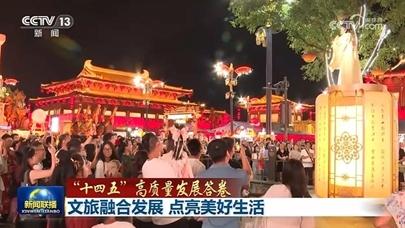
【“十四五”高质量发展答卷】文旅融合发展 点亮美好生活
Yang Shi Wang· 2025-09-29 12:02
"十四五"期间,文化遗产工作开创新局,中华文明探源工程等项目成果丰硕,非遗系统性保护水平持续 提升,文化生态保护区建设加快推进,国家文化公园建设成效明显。文旅产业发展蓬勃兴旺,文旅融合 深入推进,扩大内需、带动消费,2024年文化产业实现营业收入19.14万亿元,比2020年增长 37.7%。"以文塑旅、以旅彰文"的双向赋能为文旅产业培育新动能、塑造新优势,国际交流合作进一步 走深走实。 文化和旅游部相关负责人介绍,"十四五"以来,文化和旅游系统在党中央坚强领导下,统筹推进文化事 业、文化产业和旅游业发展,高效完成"十四五"规划的目标任务,有力促进了经济社会高质量发展,为 不断满足人民美好生活需要作出了积极贡献。 文艺精品创作繁荣活跃,文艺创作生产引导扶持机制更加健全,中国艺术节、全国美术作品展览等活动 成功举办,越来越多的优秀作品走进群众生活。文旅公共服务惠及城乡,公共文化服务标准化、均等化 建设持续推进,截至2024年底,全国共有公共图书馆3248个、群众文化机构近4.4万个、新型公共文化 空间4万多个,公共文化设施网络更加健全。 央视网消息(新闻联播):国务院新闻办公室今天(9月29日)举行"高质量完成 ...
文旅产业发展蓬勃兴旺 文旅公共服务惠及城乡不断满足人民美好生活需要
Zhong Yang Ji Wei Guo Jia Jian Wei Wang Zhan· 2025-09-29 11:59
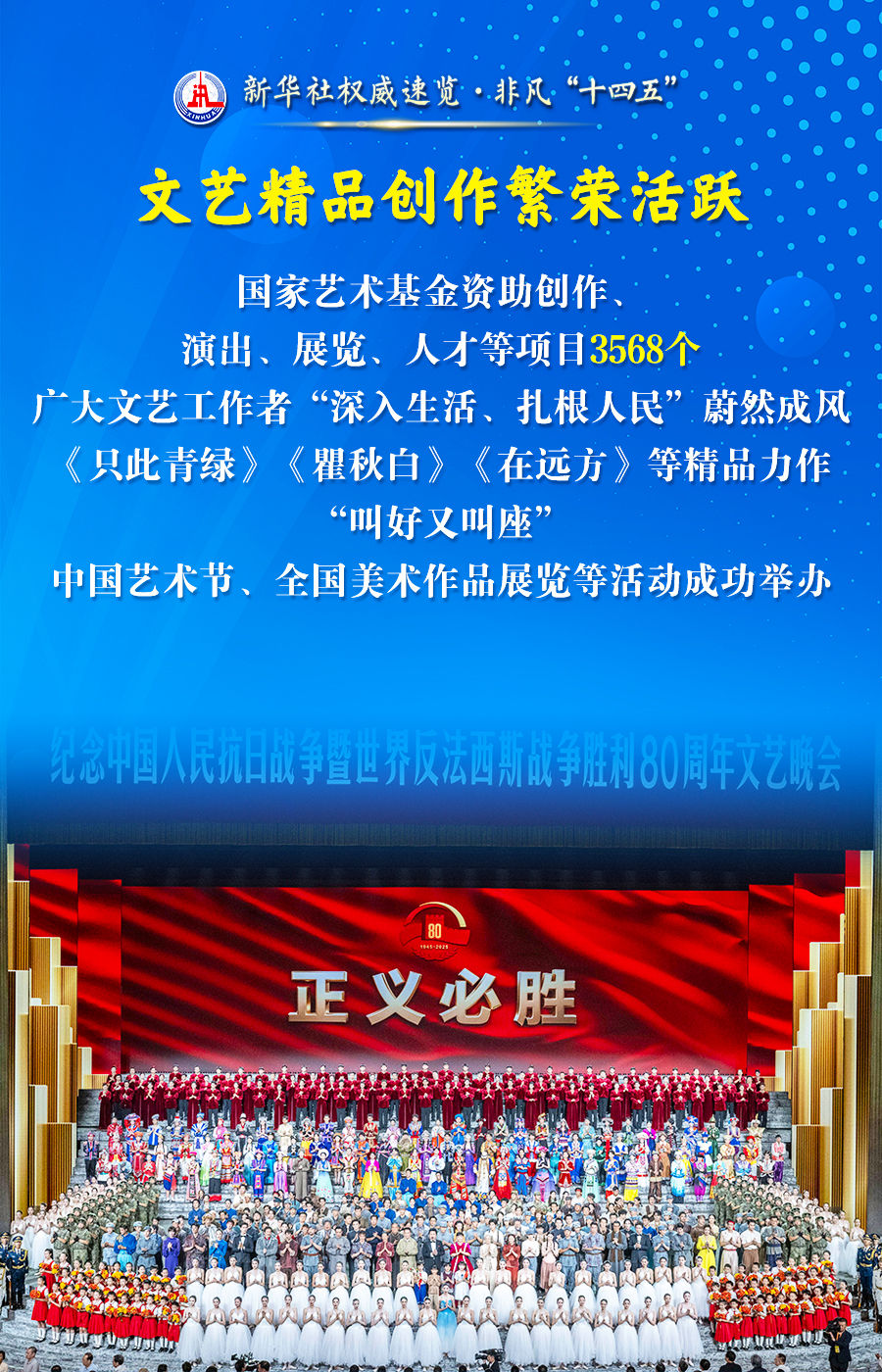
Core Insights - The "14th Five-Year Plan" period has seen significant advancements in China's cultural and tourism sectors, contributing positively to high-quality economic and social development [1] Group 1: Cultural and Tourism Development - The cultural and tourism sectors have effectively promoted the development of cultural undertakings, cultural industries, and tourism, achieving the goals set in the "14th Five-Year Plan" [1] - The creation of artistic works has flourished, with 3,568 projects funded by the National Arts Fund, enhancing the support mechanisms for artistic production [2] - By the end of 2024, there will be 3,248 public libraries and nearly 44,000 community cultural institutions across the country, providing more cultural service options for the public [2] Group 2: Cultural Heritage and Public Services - Cultural heritage protection and archaeological research have been strengthened, with 325 new national intangible cultural heritage projects and 942 new representatives announced [2] - Public cultural services have become more accessible, with a 49% increase in library visits compared to 2019, totaling an additional 44 million visits [4] - The government has encouraged community-driven cultural activities, with 81,700 "village evenings" held in 2024, attracting 262 million participants [4] Group 3: Integration of Culture and Tourism - The deep integration of culture and tourism has been a key focus, enhancing the quality and efficiency of both sectors, and leading to innovative consumption experiences [3] - In 2024, museums are expected to welcome nearly 1.5 billion visitors, setting a new historical record [3] - The cultural and tourism sectors have positively impacted various industries, including manufacturing, agriculture, and commerce, while also promoting job creation and income growth [3] Group 4: Economic Impact - The cultural industry is projected to achieve a revenue of 19.14 trillion yuan in 2024, marking a 37.7% increase from 2020 [2] - In the first half of 2025, domestic tourism is expected to reach 3.15 trillion yuan in total spending, with 3.285 billion trips taken by residents [2]
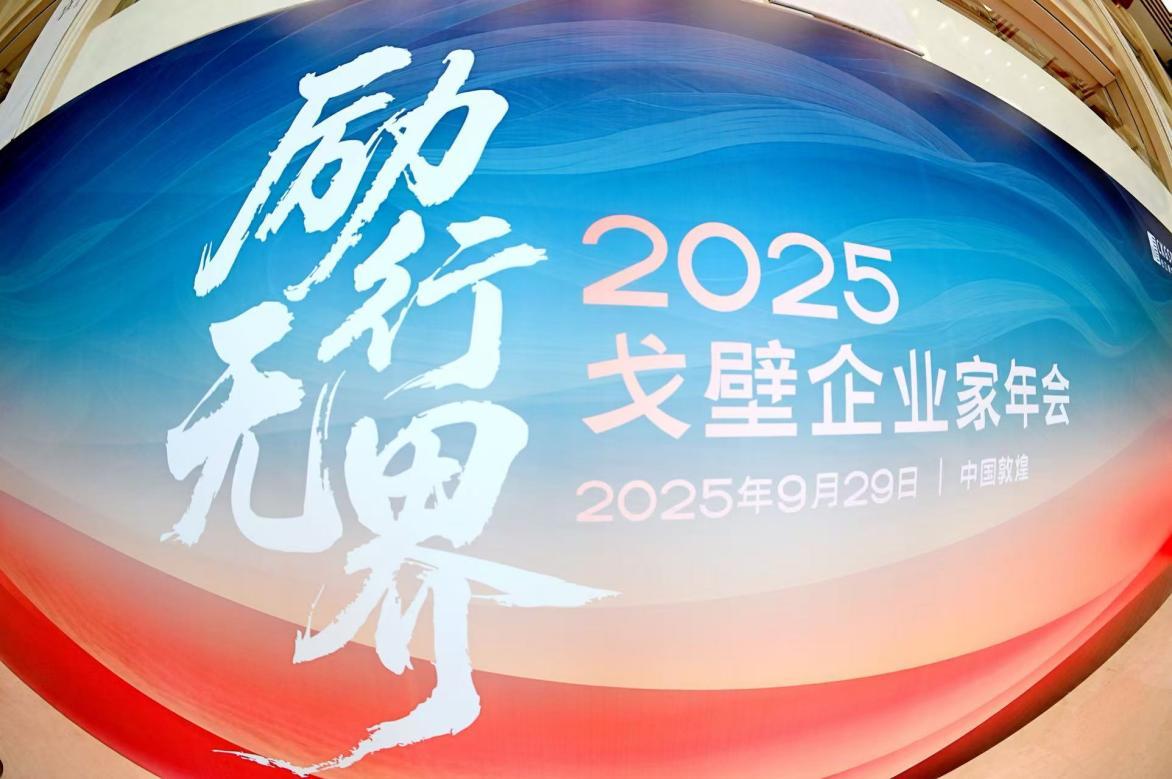
励行无界 2025戈壁企业家年会在敦煌圆满举行
Feng Huang Wang Cai Jing· 2025-09-29 10:09
Core Insights - The "Gobi Entrepreneurs Annual Conference" held in Dunhuang focused on themes such as globalization, industrial intelligence, green transformation, and cultural tourism integration, attracting over 200 entrepreneurs and notable speakers from various sectors [2][4]. Group 1: Economic and Industrial Insights - Dunhuang is positioned as a key hub for civilization dialogue and commercial exchange, with ongoing efforts to optimize the business environment through initiatives like "Entrepreneur Day" and credit system enhancements [4]. - The conference highlighted the historical opportunities for Chinese enterprises amid the transition to a new global order, emphasizing the importance of AI and emerging industries such as aerospace, health, and circular economy [7]. - The potential of Central Asia as a strategic location for Chinese enterprises was underscored, given its industrialization benefits and resource endowments [7]. Group 2: Green Transformation and Innovation - The discussion on green transformation revealed that China is experiencing systemic changes in energy, technology, and market management, driven by the dual carbon goals [11]. - The need for traditional manufacturing to adopt a dual-track approach of "intelligent + green" was emphasized, aiming for a shift from scale efficiency to quality effectiveness [13]. - The establishment of a green economy ecosystem encompassing carbon markets and trade is anticipated to create a trillion-dollar market by 2035 [11]. Group 3: Cultural Tourism and Rural Revitalization - The role of cultural tourism in driving rural revitalization was discussed, with a focus on creating sustainable development mechanisms through talent cultivation and digital infrastructure [15]. - The transformation of China's cultural tourism industry from resource-oriented to experience and content-driven was highlighted, emphasizing the importance of cultural IP and emotional value [17]. Group 4: Strategic Thinking in a Changing Environment - The need for enterprises to develop dynamic capabilities to respond to global uncertainties was articulated, with a focus on five paradigms of thinking for digital transformation [19]. - The conference concluded with a call for businesses to discover and meet high-quality demands as a core capability in the new era [19].
非凡“十四五”丨文化旅游事业,这样满足人民美好生活需要!
Xin Hua She· 2025-09-29 08:54
"十四五"以来,文化和旅游系统在党中央坚强领导下,统筹推进文化事业、文化产业和旅游业发展,高效完成"十四五"规划的 目标任务,有力促进了经济社会高质量发展,为不断满足人民美好生活需要作出了积极贡献。跟随海报,一起看看。 新华社权威速览 ·非凡" 文旅公共服务惠及城 截至2024年底,全国共有公共图书馆3248 群众文化机构近4.4万个 新型公共文化空间4万多个 "村晚"活力四射,"村歌"唱响全 "广场舞"舞动城乡 旅游厕所革命深入实施,新建改扩建厕所约15万座 公布第五批国家级非遗代表性项目325项 第六批国家级非遗代表性传承人942人 北京中轴线、西夏陵和中国茶、春节申遗成, 我国列入《世界遗产名录》项目60项 列入联合国教科文组织非遗名录名册项目44项 新华社权威速览 ·非风 "十四五 文旅产业发展蓬勃兴旺 新华社权威速览 · 非风 · 十 文化遗产工作开创新 新华社权威速览 ·非凡 ·十四) 国际交流合作走深走实 中国 -- 中亚峰会、中非合作论坛峰会、 上海合作组织峰会等配套文化活动成功举办 服务了大国外交、展现了中国形象 海外中国文化中心、旅游办事机构增至73家 会同相关部门推动入境旅游便利化国际化 ...
文旅部部长:演唱会、音乐节等跨城观演率超60%
Xin Jing Bao· 2025-09-29 08:38
Core Insights - The trend of traveling to attend concerts and music festivals has become common, with over 60% of attendees traveling to different cities for such events [1] - Cultural tourism activities, including museum visits and traditional heritage experiences, are on the rise, with projections indicating that museums will receive nearly 1.5 billion visitors in 2024, setting a new historical record [1] - The integration of culture and tourism with technology is creating new, interactive, and immersive tourism products that are highly favored by visitors [1]
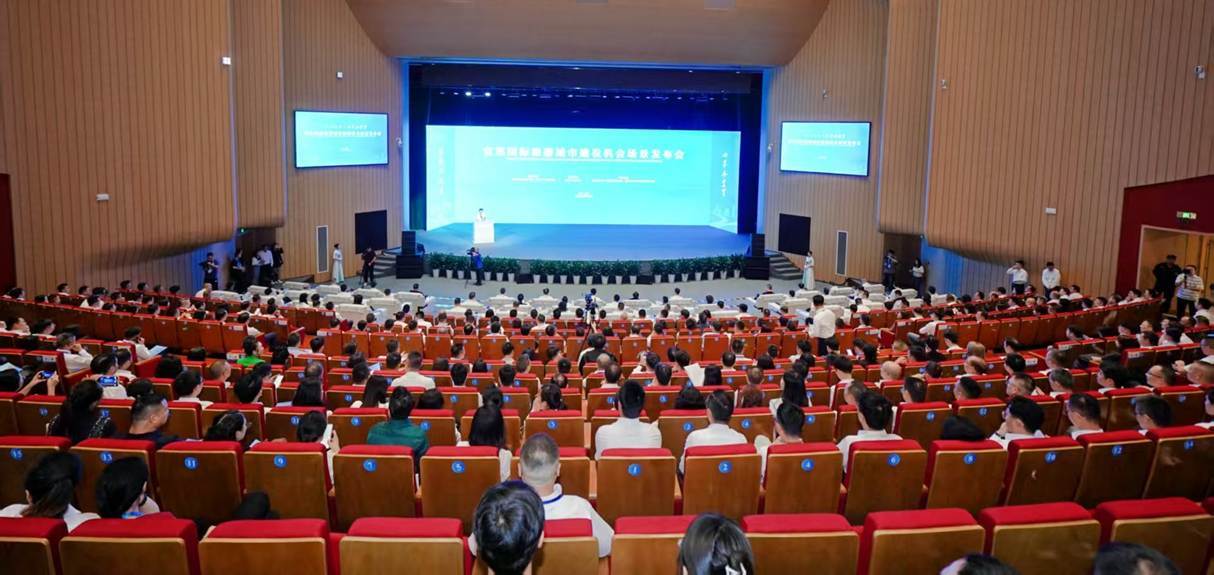
“剑指”国际旅游城 宜宾释放超169亿元投资机遇开启“世界共宜宾”时代
Huan Qiu Wang· 2025-09-29 08:16
Core Insights - The "Romantic Jiangzhitou · World Together in Yibin" International Tourism City Construction Opportunity Release Conference was held in Yibin, showcasing a total investment of over 16.9 billion yuan across 67 quality opportunity scenarios and signing 14 major cultural tourism projects worth 3.65 billion yuan, marking the official launch of Yibin's international tourism city construction [1][6] Group 1: Strategic Context - The conference aligns with national and provincial strategic deployments, emphasizing tourism as a strategic pillar industry, with Yibin designated to build an international tourism city as part of its urban and industrial transformation [3][4] - Yibin's unique cultural and ecological resources, such as the historical LiZhuang Ancient Town and the ecological wonder of the Bamboo Sea, position it well for this development [3][4] Group 2: Development Goals - Yibin aims to create a composite international tourism city, focusing on integrating scenic spots with urban development, and establishing three centers: cultural, ecological, and wine tourism [4] - The city plans to attract local residents and tourists from surrounding areas, aiming for a sustainable influx of visitors [4] Group 3: Investment Opportunities - The release of 67 tourism opportunity scenarios with a total investment of 16.9 billion yuan is intended to attract global enterprises and entrepreneurs [4][5] - Key projects highlighted include the "Yangtze River Music Street Renewal Project" and the "Five Grains Liquid Wine and Tourism Integration Project," showcasing diverse investment hotspots [5] Group 4: Market Confidence - The signing of 14 major tourism projects, with a total investment of approximately 3.65 billion yuan, reflects strong market confidence in Yibin's tourism development prospects [6][8] - Industry leaders expressed optimism about Yibin's potential, citing its unique resources and strategic position as key advantages for future growth [6][8] Group 5: Future Plans - Yibin will establish a project follow-up mechanism to ensure effective support for signed projects, committing to provide comprehensive services for investors [10] - The successful hosting of the conference is seen as a milestone in Yibin's journey towards becoming an international tourism city, inviting global collaboration [10]