
国内国际双循环

Search documents
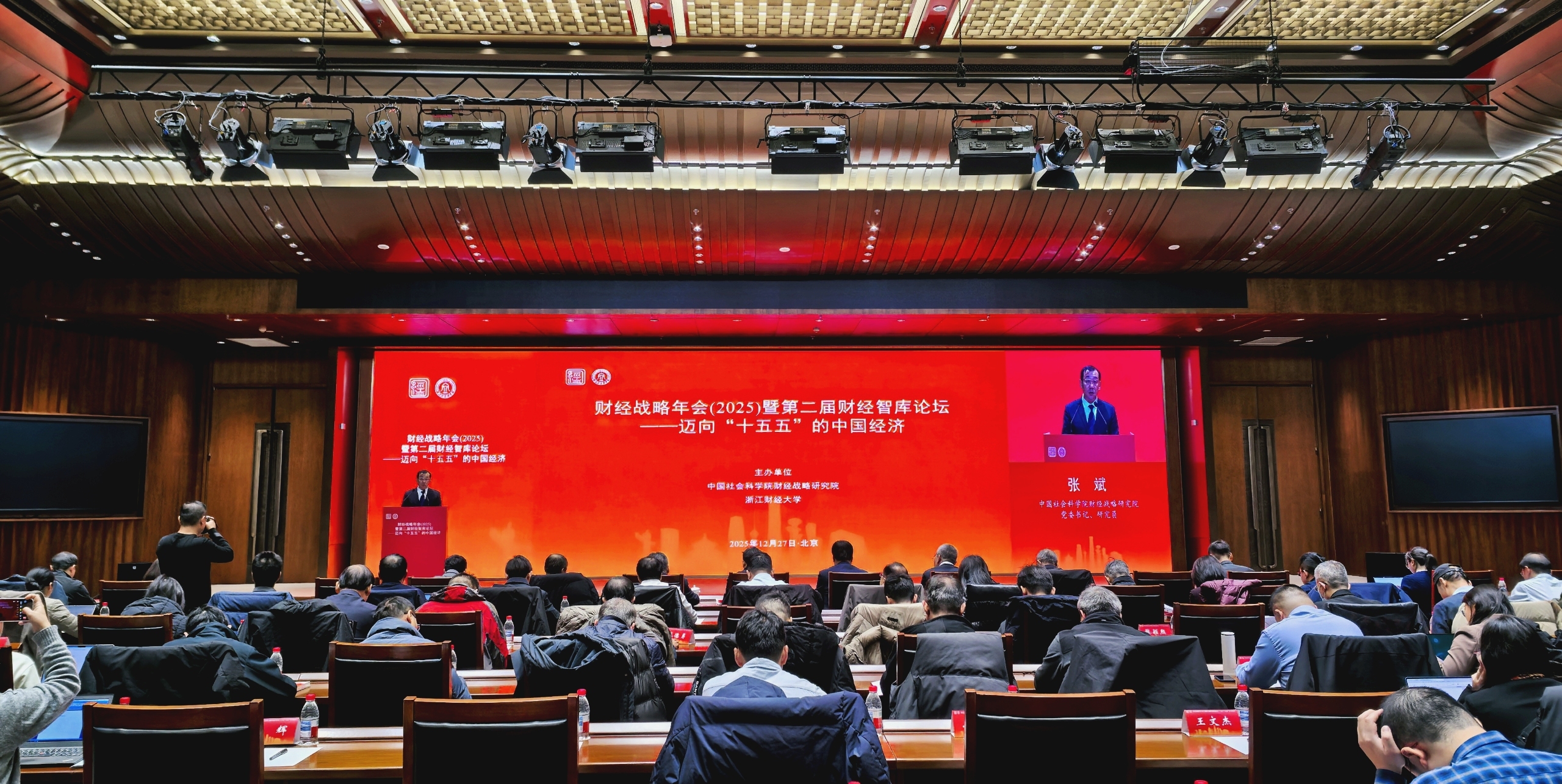
财经战略年会暨第二届财经智库论坛在京举办
Zhong Guo Jing Ji Wang· 2025-12-28 06:19
Core Viewpoint - The "15th Five-Year Plan" period is identified as a critical phase for China's economic development, emphasizing the need for comprehensive strategies to achieve modernization by 2035, with a focus on expectation management, income distribution reform, and the integration of investment in goods and people [3][4]. Group 1: Economic Development Strategies - The "15th Five-Year Plan" should reflect the transitional characteristics of the economy, aiming for a solid foundation and comprehensive efforts to meet the 2035 modernization goal [3]. - Emphasis on expectation management mechanisms, integrating them into macroeconomic analysis and policy frameworks [3]. - The need for reform in income distribution systems to establish a fair and just social security and transfer payment system [3]. Group 2: Macroeconomic Policies - The period will see peak levels in population, real estate demand, heavy industry scale, export volume, and carbon emissions, necessitating a combination of counter-cyclical and cross-cyclical macroeconomic policies for smooth transitions [4]. - High-quality development requires both qualitative improvements and reasonable quantitative growth, with a focus on maintaining economic growth while adjusting structures [4]. Group 3: Financial and Resource Management - The "debt-asset-resource" framework is proposed to revitalize existing economic structures, emphasizing the importance of resource liquidity and value creation [4]. - The need for financial theory innovation to support the development of a strong financial nation, addressing practical issues and enhancing core competitiveness [5]. Group 4: Fiscal Policy and Governance - Fiscal reforms are essential for national governance, requiring coordination between fiscal policies and other policy areas, while addressing structural issues in the medium to long term [5]. - The establishment of a budget system and tax system that aligns with responsibilities and powers is crucial for effective governance [5]. Group 5: Consumer-Focused Financial Systems - A consumer-friendly financial system is necessary to address the challenges in financial services and consumer behavior, promoting supply-side financial reforms and enhancing financial inclusivity [6]. - The significance of building a consumer-friendly financial system lies in guiding financial reforms and advancing inclusive finance [6]. Group 6: Forum Discussions - The conference featured six sub-forums discussing topics such as AI empowerment in think tank construction, economic growth and macroeconomic policies, fiscal policies and tax reforms, and the dual circulation development pattern [6].

不断巩固拓展经济稳中向好势头——对话财政部原副部长朱光耀
Jing Ji Ri Bao· 2025-12-28 02:53
Economic Overview - China's economy is projected to reach approximately 140 trillion yuan, marking a significant achievement during the 14th Five-Year Plan period, with a growth rate that ranks among the highest globally [2][3] - The economic growth from 2020 to 2025 represents an increase of 40 trillion yuan, equivalent to over 5 trillion USD, which is comparable to creating the world's third-largest economy [2][3] - China's economy contributes around 17% to the global economy and has an average annual contribution rate of over 30% to global economic growth [2] Key Support Factors - The two major breakthroughs supporting this economic growth are the rapid development of the digital economy and artificial intelligence, and the robust growth of the green economy [3] - The digital economy has empowered traditional industries, while emerging technologies like artificial intelligence and quantum information have reached the world's top tier [3] - From 2012 to 2024, China's energy consumption grew at an average rate of 3.4%, supporting an average economic growth rate of 6.1%, with a reduction in carbon emission intensity of over 35% [3] Future Economic Projections - The expected actual growth rate for the 15th Five-Year Plan period is between 4.5% and 5%, with contributions from capital and labor inputs expected to exceed 3% [3] - The nominal growth rate could reach 7% if the actual growth rate of 5% is combined with a reasonable inflation rate of around 2% [3] Macroeconomic Policy - The Central Economic Work Conference emphasized the need for more proactive macroeconomic policies, including a fiscal deficit rate set at around 4% for 2025 and a local government special debt limit of 4.4 trillion yuan [6][7] - The focus of monetary policy will be on stabilizing prices, with a target inflation rate of around 2% to support economic recovery [6][7] International Trade and Relations - China has maintained its position as the world's largest goods trader for eight consecutive years, with a projected goods trade volume of 6.16 trillion USD in 2024 [9] - Despite challenges, China's foreign trade remains resilient, with a total import and export value of 41.21 trillion yuan in the first 11 months of the year, reflecting a year-on-year growth of 3.6% [9] - The U.S. tariff policies pose risks to global trade, potentially undermining the multilateral trading system established post-World War II [8][9] Artificial Intelligence Sector - China is positioned as a global leader in artificial intelligence, with significant investment interest from international investors, particularly from Wall Street [12][14] - The country aims to leverage its advantages in application scenarios, data resources, and infrastructure to foster a competitive AI industry [14]
利润逆势上扬,中国何以成跨国企业“增长福地”?
Sou Hu Cai Jing· 2025-12-27 06:50
Core Viewpoint - The latest industrial profit data from China's National Bureau of Statistics indicates a resilient and hopeful development amidst global economic challenges, with a 0.1% year-on-year increase in profits for large-scale industrial enterprises from January to November 2025, primarily driven by a 2.4% growth in profits from foreign and Hong Kong, Macau, and Taiwan-invested enterprises [1][2]. Group 1: Data Comparison - There is a significant divergence in profit trends among different types of enterprises, with state-owned enterprises experiencing a 1.6% year-on-year decline, joint-stock enterprises down 0.4%, and private enterprises down 0.1%, while foreign and Hong Kong, Macau, and Taiwan-invested enterprises saw a profit increase of 2.4%, totaling 1,635.53 billion yuan [2]. Group 2: Factors Supporting Growth - The success of foreign-invested enterprises amidst challenges is attributed to China's ongoing high-level opening-up, the creation of a market-oriented, law-based, and international business environment, and the continuous reduction of the negative list for foreign investment [3]. - China's vast market, characterized by a complete industrial system, an upgrading consumer market, and efficient infrastructure, provides robust support for foreign enterprises, which view China as a strategic market rather than just a low-cost production base [3]. - The stability and predictability of policies in China, in contrast to the frequent policy shifts in other economies, instill long-term investment confidence in multinational companies [3]. Group 3: Win-Win Effects - The performance of foreign-invested enterprises not only reflects their profit growth but also enhances the overall competitiveness of China's industrial system through collaboration in the supply chain, technology spillover, and management demonstration [4]. - Foreign enterprises contribute to the stability of employment and increase orders for upstream and downstream small and medium-sized enterprises by deeply embedding themselves in local supply chains [4]. - They serve as a crucial link in connecting domestic and international dual circulation, aiding Chinese manufacturing in moving up the global value chain [4]. Group 4: Open vs. Closed Logic - Some countries are adopting protectionist measures and market barriers, attempting to gain benefits through isolation. However, China's experience demonstrates that true competitiveness arises from open cooperation and fair competition [5]. - The profit growth of foreign enterprises in China is a direct affirmation of the fairness and profitability of the Chinese market, showcasing the success of China's economy and the effectiveness of an open logic against a closed one [5]. Group 5: Future Prospects - Chinese leadership has emphasized that the door to openness will only widen, with future initiatives aimed at opening up service sectors, digital economy, and green low-carbon fields, creating a more transparent, convenient, and fair investment environment [6]. - For multinational companies, the Chinese market is not only a "must-have" but also a "source of growth" [6]. Group 6: Reflection of Market Conditions - The reverse growth of foreign enterprises in China reflects the true temperature of the Chinese market, characterized by a broad arena for fair competition without barriers like "glass doors" or "revolving doors" [7]. - The 2.4% growth signifies not just numerical progress but also a vivid interpretation of China's commitment to openness and win-win development in the context of globalization [7].
国家商贸物流中心,“五型”国家物流枢纽链接全球
Chang Jiang Ri Bao· 2025-12-27 03:10
Core Viewpoint - Wuhan is rapidly developing into a national trade and logistics center, leveraging its geographical advantages and enhancing its transportation network to boost domestic and international trade [1][8]. Group 1: Logistics and Transportation Development - On December 26, Wuhan set a new record by dispatching 11 China-Europe freight trains in a single day, reflecting the city's growing logistics capabilities [1]. - By June 2025, Wuhan will become the second city in China to have all five types of national logistics hubs, enhancing its transportation network across rail, road, air, water, and logistics [2]. - The construction of the Shuangliu Yangtze River Bridge aims to reduce travel time from 1.5 hours to just 5 minutes between specific districts, contributing to the development of a "one-hour commuting circle" [2]. - The expansion of highways from four to eight lanes is expected to improve traffic efficiency by 150% during peak hours [2]. - Wuhan's Tianhe Airport has entered a new phase with three runways, enhancing its cargo hub capabilities and global connectivity [3]. Group 2: Freight and Cargo Operations - As of December 16, 2023, Wuhan's China-Europe freight trains have operated 868 times this year, with a 21.6% increase in dispatches compared to the previous year [3]. - The port of Yangluo has seen a 53% increase in the number of inbound and outbound vessels, with container throughput expected to exceed 70,000 TEUs for the first time [3]. - Wuhan has opened 42 multimodal transport routes, significantly enhancing logistics efficiency through integrated transport methods [4][5]. Group 3: Consumer Market and Economic Growth - Wuhan has seen the opening of 398 new retail stores this year, contributing to a vibrant consumer market and reflecting a trend of consumption upgrades [6][8]. - The city has hosted over 1,600 promotional events, integrating consumption with culture, tourism, and sports, thereby enhancing its appeal as a shopping destination [7]. - In the first three quarters of 2023, Wuhan's total retail sales of consumer goods reached 629.97 billion yuan, marking a 5.5% year-on-year increase, the highest among 19 sub-provincial cities [8].
大道穿天山 新疆南北不再远
Zhong Guo Xin Wen Wang· 2025-12-27 01:15
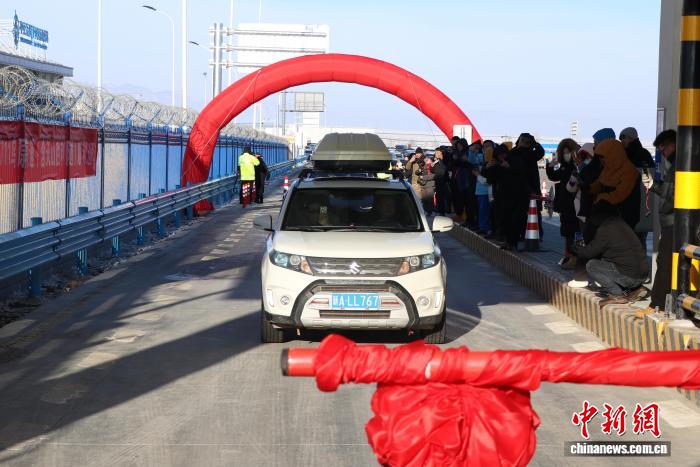
Core Points - The G0711 Urumqi to Weili Expressway (Uwei Expressway) has been completed and opened to traffic, significantly reducing the driving time from Urumqi to Korla from 7 hours to 3.5 hours [1][4]. Group 1: Infrastructure Development - The Uwei Expressway is a key component of the national expressway network, stretching 324.7 kilometers and featuring the Tian Shan Victory Tunnel, which is the world's longest expressway tunnel at 22.13 kilometers [2][4]. - The expressway connects various regions, enhancing the transportation network in Xinjiang and facilitating faster travel and logistics across the region [4][8]. Group 2: Economic Impact - The Uwei Expressway is expected to boost local economies by improving access for farmers and herders, allowing for quicker transportation of goods and services [5][7]. - The expressway is part of a broader strategy to enhance Xinjiang's role as a strategic hub in domestic and international trade, linking multiple economic corridors and reinforcing the region's connectivity [4][8]. Group 3: Future Developments - Additional expressways, such as the G577 Jinghe to Yining Expressway and the Duku Expressway, are under construction, which will further improve connectivity across the Tianshan Mountains and reduce travel times in the region [10].
穿越天山 乌尉高速全线通车
Yang Shi Wang· 2025-12-26 12:09
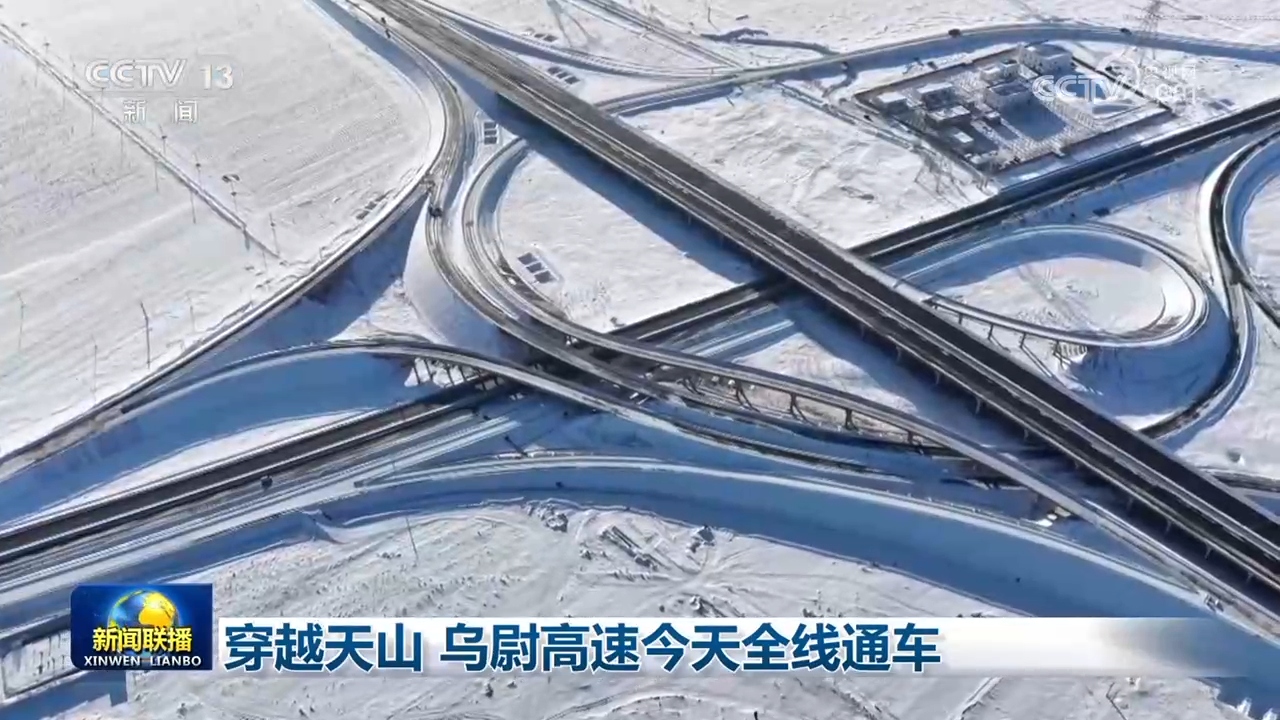
Core Points - The G0711 Urumqi to Yili Expressway has been completed and opened to traffic on December 26, significantly reducing the driving time from Urumqi to Korla from 7 hours to 3.5 hours [1] - The expressway is a key part of the national expressway network, with a total length of 324.7 kilometers, featuring the Tian Shan Victory Tunnel, which at 22.13 kilometers is the longest expressway tunnel in the world [3] - The expressway connects the Urumqi metropolitan area, Northern Xinjiang urban belt, and Southern Xinjiang urban cluster, enhancing the strategic hub function of Xinjiang in facilitating domestic and international dual circulation [5]
乌尉高速通车 让古丝路枢纽“手牵手”
Xin Hua Wang· 2025-12-26 08:22
而今,乌尉高速如同展开的双臂,跨越天山这一天然屏障,将乌鲁木齐与尉犁县这两个古丝绸之路上的重要节点连在了一起。 新华社乌鲁木齐12月26日电(记者尹茹红、顾煜)世界最长高速公路隧道——天山胜利隧道及其所在的G0711乌鲁木齐至尉犁高速公路(简 称"乌尉高速")于12月26日通车。这条路到底是什么来头?让我们先从乌尉高速的名字说起—— 古丝路枢纽"手牵手" 桥隧相连的乌尉高速穿越天山山脉。新华社记者 王菲 摄 "乌"是丝绸之路经济带核心区重要节点城市乌鲁木齐,它地处亚欧大陆地理中心,是古丝绸之路上的枢纽重镇。 "尉"是位于天山南麓、塔里木盆地东北缘的"沙漠明珠"尉犁县,塔里木河从这里流向罗布泊尽头,塔克拉玛干沙漠与它相依相偎。这里有被 誉为"绿色宝藏"的神奇植物罗布麻,有世界最大的原始胡杨林保护区,有营盘古墓、兴地岩画、太阳墓遗址、孔雀河烽燧群等丝路文化古迹…… 天山胜利隧道及其所在的乌尉高速实现全线通车后,乌鲁木齐、库尔勒、尉犁县等地人流物流往来的时间成本将大大降低,天山以北的乌鲁 木齐至天山以南的库尔勒的通行时间将从7小时缩短至3小时多。 长隧了却"行路难" 12月下旬,记者驱车从乌鲁木齐前往乌尉高速采访。 ...

全球化布局提速!会通股份拟收购意大利OMIKRON 70%股权,加码欧洲改性材料市场
Jin Rong Jie· 2025-12-26 02:54
Core Viewpoint - The acquisition of 70% stake in Italian company OMIKRON by Huaitong New Materials is a significant step in the company's globalization strategy, enhancing its presence in the European market for modified materials [1][5]. Group 1: Acquisition Details - The acquisition amount will not exceed €25 million, with payments to OMIKRON's shareholders MICCA 22 S.R.L and INVESTAR S.R.L totaling up to €10.35 million for a 70% stake [2]. - The base transfer price is €20.7 million, with additional interest calculated at an annual rate of 3% from December 31, 2024, until the closing date [2]. - An additional performance incentive of up to €3 million will be paid if OMIKRON meets certain EBITDA targets from 2026 to 2028 [2]. Group 2: Financial Performance - Huaitong New Materials reported a revenue of ¥4.721 billion for the first three quarters of 2025, a year-on-year increase of 10.03%, and a net profit of ¥166 million, up 8.96% [2]. - The company generated a net cash flow from operating activities of ¥686 million, a significant increase of 64.15%, providing a solid financial foundation for the acquisition [2]. Group 3: OMIKRON Overview - OMIKRON, established in 2008, specializes in modified materials, including polypropylene composites and nylon composites, serving key markets in Europe such as automotive and home applications [3]. - The company is projected to achieve a revenue of €41.176 million and a net profit of €1.238 million in 2024, with total assets of €35.2116 million and net assets of €17.1143 million [3]. Group 4: Strategic Importance - The acquisition is a crucial part of Huaitong's international strategy, which emphasizes a "multi-base, small scale, Local For Local" approach to expand overseas [3][4]. - The company has already established a modified plastic factory in Thailand and a representative office in Vietnam, significantly increasing its overseas sales [4]. - The European market is critical for high-end modified materials, and the acquisition will allow Huaitong to enhance its local operations and customer service capabilities in Europe [4][5]. Group 5: Industry Context - The European market is becoming increasingly competitive due to tightening environmental regulations and rising demand for high-end manufacturing [5]. - The acquisition will help Huaitong navigate compliance barriers and strengthen its dual circulation operational framework, enhancing overall profitability and risk resilience [5][6].

中国人民银行举行新闻发布会:协同发力 赋能西部陆海新通道高质量发展
Jin Rong Shi Bao· 2025-12-26 02:37
Core Viewpoint - The People's Bank of China and several government departments have jointly issued guidelines to financially support the construction of the Western Land-Sea New Corridor, which is crucial for the Belt and Road Initiative, aiming to enhance financial cooperation and resource allocation between China and related countries [1][2]. Group 1: Financial Support and Policy Implementation - The issuance of the guidelines represents a significant step in promoting high-level opening-up in inland regions, including Chongqing, by providing robust financial support for the development of the Western Land-Sea New Corridor [2]. - The guidelines outline six main tasks, including improving financial organization collaboration, constructing a high-quality financial resource allocation system, and promoting institutional reforms to facilitate cross-border trade and investment [4][5]. - The guidelines emphasize the importance of regional collaborative development and institutional innovation to provide efficient settlement and financing services for enterprises [5]. Group 2: Achievements and Future Directions - The People's Bank of China has reported several achievements in supporting the corridor's construction, including the establishment of a financial service center and the development of over 30 innovative financial products, with financing balances exceeding 730 billion yuan [3]. - Future efforts will focus on creating more landmark financial achievements and enhancing the financial service ecosystem for the corridor [3]. Group 3: Capital Market Support - The China Securities Regulatory Commission is committed to strengthening multi-level capital market construction, supporting various financing channels such as stock issuance, corporate bonds, and asset-backed securities to aid the corridor's development [7]. - As of November, over 650 A-share listed companies are located along the corridor, with significant fundraising activities reported, including nearly 7 billion yuan from bond issuances [7]. Group 4: Cross-Border Financial Services - The guidelines propose measures to enhance cross-border trade settlement and investment facilitation, including encouraging enterprises to participate in high-level cross-border trade pilot programs and simplifying foreign investment processes [8][9]. - The establishment of a cross-border financial service platform is highlighted as a key initiative to support the corridor's high-quality development, with successful applications already reported in several provinces [9]. Group 5: Inter-Departmental Collaboration - The People's Bank of China plans to establish a collaborative mechanism among various departments and regions to ensure the effective implementation of the guidelines, focusing on policy sharing and financial service coordination [10][11]. - Emphasis is placed on enhancing cooperation between financial institutions and local governments to mobilize resources effectively and support key areas of development within the corridor [11].
国内外专家学者热议海南自贸港全岛封关
Hai Nan Ri Bao· 2025-12-26 02:26
Core Viewpoint - The official launch of the full island closure of Hainan Free Trade Port marks a significant milestone in China's commitment to expanding its openness to the world, providing new opportunities for global cooperation [2][3]. Group 1: Institutional Opening Pathways - The full island closure of Hainan Free Trade Port sends a clear signal of China's ongoing commitment to expanding openness amid rising unilateralism and protectionism globally [3]. - The deeper significance of Hainan's development lies in its comprehensive exploration of institutional opening, which goes beyond "zero tariffs" to include the integration of trade, investment, capital, personnel, and data flows with international standards [3][4]. - Hainan's strategic location allows it to implement liberalization policies characterized by "one line open, two lines controlled, and free within the island," positioning it as a key gateway for China's new era of openness [3][4]. Group 2: Reshaping Industrial Ecology - The "policy dividend" effect from the full island closure is expected to profoundly reshape the industrial landscape of Hainan Free Trade Port, particularly benefiting industries that can leverage "zero tariff" imports and tax-exempt domestic sales [5][6]. - Hainan aims to develop a modern industrial system with unique characteristics, focusing on optimizing four leading industries and nurturing new productive forces in sectors like biomanufacturing and hydrogen energy [6]. - Attracting regional headquarters of global Fortune 500 companies is crucial for measuring the level of openness, as these companies seek to connect with China's vast domestic market [6]. Group 3: Talent Acquisition and Development - There is an urgent need to gather high-quality talent in Hainan Free Trade Port post-closure, with a significant increase in demand for international high-end talent and domestic leading figures expected in the next 1 to 3 years [8]. - Recommendations include policy innovations to ease entry barriers for international talent, enhancing awareness of talent policies, and creating a conducive environment for talent retention and utilization [8]. - Building a highly internationalized and professional talent pool is essential for the high-standard construction of the free trade port, with suggestions to engage in international cooperation in higher and vocational education [8].