投资于人

Search documents
再见2025,你好2026
21世纪经济报道· 2026-01-01 13:16
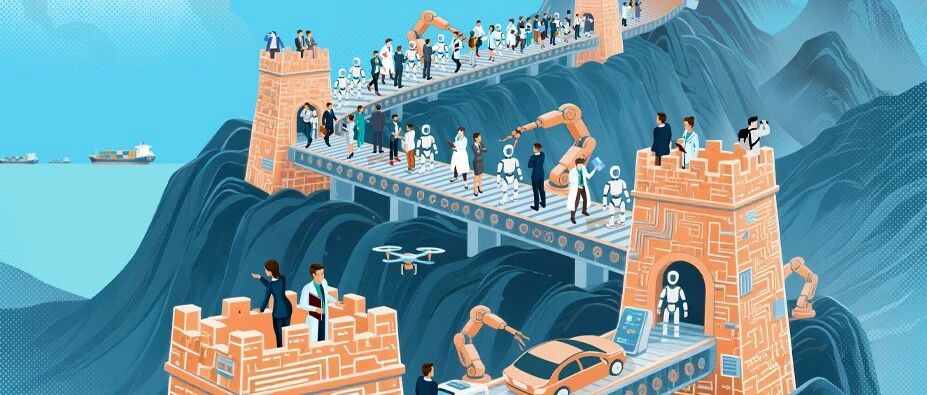
Group 1 - The core viewpoint of the article emphasizes that understanding the Chinese economy requires looking beyond GDP growth rates, focusing instead on five key themes that will shape the economy leading into 2026, the start of the 15th Five-Year Plan [1] Group 2 - Keyword 1: Artificial Intelligence - AI is seen as a revolutionary technology that is becoming a universal efficiency amplifier across all industries, with significant advancements in manufacturing, logistics, healthcare, and governance. The complete industrial ecosystem around AI is being established, positioning it as a new infrastructure for China's economic growth over the next decade [2] - Keyword 2: Expanding Domestic Demand - The focus is on enhancing consumer willingness and capacity by addressing the entire production-distribution-保障 chain. The aim is to stabilize income and improve social security, making "expanding domestic demand" a critical task for economic work in 2026 [3] - Keyword 3: Investment in People - The shift from "investment in material" to "investment in people" highlights the importance of improving residents' income, social security systems, education, and healthcare. This represents a paradigm shift from a "Chinese economy" to a "people-centric economy" [4] - Keyword 4: Countering "Involution" Competition - The article discusses the need to move away from low-level repetitive competition that harms profits and innovation. The government aims to refocus competition on efficiency and value creation, indicating a structural adjustment in supply-side economics that may be painful in the short term but necessary for long-term stability [5] - Keyword 5: Quality Housing - The focus has shifted from merely having housing to ensuring the quality of housing, which should be safer, more energy-efficient, and better suited to real living needs. This indicates a return to the residential attributes of real estate, moving away from its financial characteristics [6]


风正劲,气如虹,再扬帆——二〇二六年元旦献词
Xin Lang Cai Jing· 2026-01-01 00:16
Group 1 - The core theme of the articles revolves around China's economic resilience and transformation amidst global challenges, highlighting the importance of innovation and consumer engagement in driving growth [1][2][3] - The concept of "Artificial Intelligence +" is emphasized as a foundational element for industry restructuring, showcasing advancements in smart manufacturing and robotics that enhance international competitiveness [1] - The "ticket economy" is identified as a significant driver of consumption, illustrating how events and experiences are transforming service industries and consumer behavior [1] Group 2 - The initiative to "break the internal competition" is noted for its role in unleashing market potential, with a focus on regulatory measures that promote market fluidity and economic vitality [2] - Investment in human capital is highlighted as a key strategy, with policies aimed at improving employment support, childcare subsidies, and access to education, thereby enhancing societal well-being [2] - The "Go China" and "China Purchase" movements reflect the country's growing soft power, as global consumers increasingly recognize the quality of Chinese products and the potential of its market [2] Group 3 - The articles discuss the significance of the upcoming year 2026, marking it as a pivotal moment for national goals and aspirations, with public sentiment reflecting hope and determination for future achievements [3] - The narrative emphasizes the need for continuous effort and resilience in the face of transformation, urging stakeholders to harness their strengths and address challenges proactively [4] - The concept of Chinese-style modernization is presented as both a formidable challenge and a remarkable opportunity, driven by collective effort and commitment to national development [4]
以个体微光,燃山河滚烫
Xin Lang Cai Jing· 2025-12-31 21:05
Group 1 - The core idea emphasizes the integration of technology, particularly AI, into daily life, with over 500 million people in China interacting with AI in various aspects such as health, career, and emotions [1] - The narrative highlights the importance of human values that cannot be quantified, such as love, faith, courage, and compassion, which define humanity [1] - The article discusses China's advancements in technology, including the "artificial sun" achieving a world record and the successful construction of a quantum computing prototype, showcasing the country's technological breakthroughs [1] Group 2 - The concept of "investing in people" is presented as a central theme, reflecting a shift towards prioritizing individual well-being and societal values in development [2] - The article notes tangible benefits for individuals, such as childcare subsidies, consumer vouchers, and improved healthcare access, illustrating the government's commitment to enhancing the quality of life [2] - The narrative connects the broader story of China's modernization with the everyday experiences of its citizens, emphasizing the importance of individual happiness in the national narrative [2] Group 3 - The rapid advancement of technology is acknowledged, but there is a call to ensure that human values remain central to this progress, emphasizing the need for technology to resonate with real human experiences [3] - The article stresses that the ultimate value of technology lies in its ability to listen and respond to the needs of individuals, reinforcing the idea that people are the foundation of societal progress [3] - It highlights the collective strength of individuals' stories, which contribute to the resilience and unity of the nation [3] Group 4 - The transition into the "14th Five-Year Plan" is marked as a pivotal moment for realizing national goals, with an emphasis on the importance of individual contributions to collective progress [4] - The narrative suggests that the realization of national aspirations is rooted in the everyday actions of citizens, linking personal growth to national development [4] - The article concludes with a hopeful vision for 2026, encouraging a shared commitment to the country's future [5]
【丝路话语】促进居民就业增收,让“投资于人”更贴近民生
Xin Lang Cai Jing· 2025-12-31 14:50
"投资于人"不是抽象口号,而是系统性政策安排。它意味着从"重物轻人"转向"以人为本",将资源更多 投向教育、培训、医疗、社会保障等关乎人的全面发展领域。例如,国家持续加大职业技能培训投入, 实施"技能中国行动",针对制造业、数字经济、养老服务等紧缺行业开展定向培训,帮助劳动者适应产 业升级需求。这不仅是提升就业能力的"输血工程",更是增强发展韧性的"造血机制"。当劳动者掌握新 技能,就能在劳动力市场中掌握主动权,实现从"有工作"向"好工作"跃迁。 稳就业的关键在于稳市场主体。政策层面持续优化营商环境,落实减税降费、融资支持、稳岗补贴等举 措,特别是对中小微企业、个体工商户给予精准帮扶。这些企业吸纳了我国八成以上的城镇就业,是居 民增收的"毛细血管"。2023年以来,多地推行"免申即享"政策,让稳岗返还资金直达企业账户,既减轻 了经营压力,也稳定了就业岗位,实现了"保企业"与"保就业"的双赢。 同时,增收路径不断拓宽。除了工资性收入,政策鼓励通过创业带动就业,支持新就业形态发展。零工 市场、共享用工、平台经济为灵活就业者提供新选择。多地建立公益性零工市场,提供岗位对接、权益 保障服务,让"打零工"更体面、更安心 ...
再见2025,你好2026丨财经早察
2 1 Shi Ji Jing Ji Bao Dao· 2025-12-31 14:43
Group 1 - The core viewpoint emphasizes that understanding the Chinese economy requires looking beyond GDP growth, focusing on five key themes that will shape the economy leading into 2026 [1][2][3][4][5] Group 2 - Keyword 1: Artificial Intelligence - AI is seen as a transformative technology that will enhance efficiency across various industries, creating a complete industrial ecosystem from computing power to applications [1] - Keyword 2: Expanding Domestic Demand - Policies will focus on improving consumer willingness and capacity by addressing the entire production-distribution-保障 chain, making income stability and comprehensive security a priority [2] - Keyword 3: Investment in People - The shift from "investment in material" to "investment in people" highlights the importance of enhancing income, social security, education, and healthcare, positioning human capital as a critical asset for future growth [3] - Keyword 4: Countering "Involution" Competition - The government aims to eliminate low-level repetitive competition that harms profits and innovation, focusing instead on efficiency and value creation as part of a structural adjustment in supply [4] - Keyword 5: Quality Housing - The focus in real estate is shifting from mere availability to the quality of housing, emphasizing safety, energy efficiency, and livability, thus returning to the fundamental residential attributes of real estate [5]
于613篇推文,见动能之变
Mei Ri Jing Ji Xin Wen· 2025-12-31 13:22
Core Insights - The year 2025 is characterized as "extraordinary" by the Central Economic Work Conference, highlighting significant developments in various sectors, particularly in artificial intelligence and human investment [2][3] Group 1: Artificial Intelligence - Artificial intelligence has transitioned from being labeled as "laboratory technology" to being deeply integrated into various industries, marking the beginning of the "AI+ era" [2] - The "Hangzhou Six Dragons" emerged as a key term in the AI sector, with significant developments such as the approval of local regulations for embodied intelligent robotics in Hangzhou [4] - The AI industry is projected to grow from 486.2 billion yuan in 2026 to 1 trillion yuan by 2030, with a compound annual growth rate of 19.8% [4] Group 2: Investment in People - The government has emphasized "investment in people" for the first time in its work report, focusing on initiatives like childcare subsidies and free preschool education [7] - This shift towards prioritizing human capital is seen as a long-term strategy to enhance economic growth and address the challenges of a declining population [8] Group 3: Trade Connectivity - China's exports have shown resilience, with ASEAN, the EU, and Belt and Road countries becoming key growth engines for foreign trade [3][9] - The central government has initiated measures to enhance domestic and foreign trade integration, with a focus on expanding market diversity [10] Group 4: Economic Powerhouses - Economic powerhouses like Guangdong, Jiangsu, and Zhejiang contribute over 60% of the national GDP, playing a crucial role in stabilizing the economy [14] - The central government has reiterated the importance of these provinces in achieving national modernization goals [14] Group 5: Hainan Free Trade Port - The Hainan Free Trade Port, which officially commenced operations on December 18, 2025, represents a significant step in China's openness, encompassing various sectors including trade, finance, and talent [15][16] - The establishment of this free trade port is seen as a pioneering experiment in systemic openness, with the potential to set precedents for national policies [16]
年度报告 | 于613篇推文,见动能之变
Mei Ri Jing Ji Xin Wen· 2025-12-31 12:40
Group 1: Economic Trends and Developments - The year 2025 is characterized as "extraordinary" by the Central Economic Work Conference, highlighting significant economic transformations and developments [1] - China’s exports have shown resilience despite a complex external environment, with ASEAN, EU, and Belt and Road countries becoming key growth engines for foreign trade [2] - The "14th Five-Year Plan" is nearing completion, with new development strategies focusing on expanding domestic demand, high-level openness, and innovation-driven growth [2] Group 2: Artificial Intelligence and Innovation - The term "Hangzhou Six Dragons" has emerged as a key phrase in the artificial intelligence sector, marking a significant development in AI applications across various industries [3][4] - The introduction of local regulations for the embodied intelligent robot industry in Hangzhou signifies a growing focus on AI, with predictions indicating that the AI industry will grow from 486.2 billion yuan in 2026 to 1 trillion yuan by 2030, with a compound annual growth rate of 19.8% [4] - The Central Economic Work Conference has emphasized the establishment of international technology innovation centers in major regions, aiming to integrate innovation resources across broader areas [5] Group 3: Investment in Human Capital - The government has explicitly stated the importance of "investing in people," with initiatives such as childcare subsidies and free preschool education reflecting a shift towards prioritizing human development [6][7] - This focus on human capital is seen as a strategic adjustment to stimulate domestic demand and enhance economic growth, especially as the country transitions from a "demographic dividend" to a "talent dividend" [7] Group 4: Trade Connectivity and Foreign Trade - Trade is identified as a crucial mechanism for connecting domestic and international economic cycles, with traditional foreign trade provinces continuing to play a significant role [9] - The central government has initiated measures to enhance the integration of domestic and foreign trade, with a focus on diversifying markets and fostering new competitive advantages [10] Group 5: Infrastructure and Logistics - The revival of inland river shipping is highlighted as a strategic focus, with plans to increase the share of inland cargo transport in the overall transportation system by 2030 [11][12] - The development of inland shipping is seen as a means to lower logistics costs and enhance the efficiency of resource allocation across the country [12] Group 6: Economic Powerhouses - Economic powerhouses such as Guangdong, Jiangsu, and Zhejiang are expected to contribute significantly to national GDP, with the central government reiterating the importance of these provinces in driving economic growth [13][14] - The "15th Five-Year Plan" emphasizes the need for these provinces to lead development efforts, with specific targets set for GDP growth and modernization [14] Group 7: Hainan Free Trade Port - The establishment of the Hainan Free Trade Port is marked as a significant step in China's openness, with the port being the largest and most diverse in the world [15] - The operationalization of the free trade port is seen as a systemic experiment in opening up various sectors, including trade, finance, and talent [15][16]
2025,中国经济热词
Jing Ji Wang· 2025-12-31 08:35
Economic Development - In 2025, China's economy is advancing under pressure, focusing on new and improved quality [1] - The "15th Five-Year Plan" emphasizes the importance of the period for laying a solid foundation for achieving socialist modernization by 2035 [3] Future Industries - The "15th Five-Year Plan" suggests a forward-looking layout for future industries, promoting sectors like quantum technology, biomanufacturing, hydrogen energy, and nuclear fusion as new economic growth points [7][8] - Future industries are expected to significantly impact international competition and create new products, services, and consumption patterns over the next 5-10 years [8] Investment in Human Capital - The 2025 government work report calls for increased investment in human resources and services for people's livelihoods, focusing on education, health, and skills [10] - The implementation of a childcare subsidy system reflects a commitment to enhancing disposable income for families, thereby boosting consumption [15] Silver Economy - The "15th Five-Year Plan" aims to actively develop elderly human resources and the silver economy, indicating a direction for industrial innovation and market development [13] - In the first half of 2025, demand for products suitable for the elderly surged, with sales growth exceeding the national manufacturing average [13] Artificial Intelligence - The "Artificial Intelligence+" initiative is positioned as a strategic pivot for China to gain a competitive edge in global technology, integrating AI into various sectors [17] - The initiative aims to transform research paradigms and enhance the application of AI across industries, culture, and social governance [17] Urban Renewal - Policies for urban renewal are accelerating, with significant improvements in living conditions and quality of life for residents [19] - Over 240,000 old urban communities have been renovated, benefiting over 41 million households [19] Robotics Industry - The humanoid robotics sector is experiencing significant investment interest, comparable to the solar energy boom in 2018, though there are concerns about overvaluation [25] - The industry is still developing, with expectations for future advancements and applications [25] Cultural Products - The LABUBU toy has gained immense popularity both domestically and globally, resonating with young consumers and showcasing the potential of Chinese cultural products [27] - The success of LABUBU and similar products highlights the global appeal of culturally significant Chinese creations [27]

2026年人社工作划重点:进一步扩大社会保险覆盖面
2 1 Shi Ji Jing Ji Bao Dao· 2025-12-31 07:10
Core Insights - The national human resources and social security work conference emphasized the importance of strengthening the party's leadership to ensure and improve people's livelihoods, aiming for common prosperity and high-quality employment [1][3] Employment and Labor Market - The central economic work conference identified the "stabilizing jobs, expanding capacity, and improving quality" action as the top priority for employment in 2026 [2] - The national human resources and social security work conference reported that from January to November 2025, 12.1 million new urban jobs were created, exceeding the annual target of 12 million, with an average urban survey unemployment rate of 5.2%, lower than the expected control target [3] - The "stabilizing jobs, expanding capacity, and improving quality" action will build on experiences from previous employment support plans, including loans, subsidies, and social security support [3] Skills Development and Training - The conference proposed a large-scale vocational skills enhancement training initiative, aiming to improve skills employment and income [4] - By the end of November 2025, 545 million people participated in urban employee basic pension insurance, 530 million in rural resident basic pension insurance, and 249 million in unemployment insurance [4] - The "skills illuminate the future" training action will focus on key sectors such as advanced manufacturing and digital economy, targeting groups like enterprise employees and college graduates [7] Social Security and Coverage - The conference highlighted the need to expand social insurance coverage, particularly for flexible and new employment forms, with over 200 million flexible workers in China [4][5] - The report indicated that by the end of 2024, only 70.57 million flexible workers participated in basic pension insurance, and 66.16 million in basic medical insurance [4] Income and Wage Policies - The central economic work conference called for a plan to increase income for urban and rural residents, emphasizing the need for wage growth to align with productivity [10] - The human resources department will enhance macro guidance on corporate wage distribution and publish wage information by profession and job level [10]
21社论丨锚定中国的世界新坐标
21世纪经济报道· 2025-12-31 01:30
Core Viewpoint - The article emphasizes China's significant advancements in various sectors, particularly in technology and global governance, as it transitions into a new phase of development in 2026, marking the beginning of the 15th Five-Year Plan [1][2]. Group 1: Economic and Technological Advancements - In 2025, China transitioned from a phase of "technological catch-up" to "running alongside and leading" in artificial intelligence, showcasing breakthroughs in large models and a strong presence in the AI open-source ecosystem [1]. - The country has made strides in domestic AI chip production, breaking free from supply chain constraints, and is actively participating in a new global technological and industrial revolution [1]. - China's global governance initiatives, including the global development, security, and civilization initiatives, reflect its commitment to enhancing its role in international governance and providing stability in global trade [2]. Group 2: Strategic Economic Policies - The 20th Central Committee highlighted the need for China to navigate a complex development environment, balancing opportunities and risks during the 15th Five-Year Plan period [3]. - The Central Economic Work Conference emphasized the importance of internal economic stability and structural reforms to address external challenges, focusing on the conversion of new and old growth drivers [4][5]. - A dual approach of policy support and reform innovation is necessary to stabilize the economy and promote growth, with a focus on enhancing domestic demand and creating a robust domestic market [5]. Group 3: Social and Human Development - The article advocates for a shift in development philosophy from GDP-centric growth to a focus on national income and overall human well-being, emphasizing the importance of investing in people [6]. - The goal is to ensure that the benefits of economic growth are shared broadly, enhancing the quality of life and dignity of individuals [6][7]. - The government is encouraged to create an environment that aligns national strategies with individual welfare, fostering a system that promotes both management and empowerment [7].