汽车出口

Search documents
前三季度营收规模跃上2000亿元大关 奇瑞汽车业绩持续高增
Zheng Quan Ri Bao Wang· 2025-11-01 03:39
Core Viewpoint - Chery Automobile Co., Ltd. has reported strong financial performance in its first quarterly earnings report since its recent IPO, indicating significant growth in revenue and sales volume [1] Financial Performance - For the first three quarters, Chery achieved revenue of 214.83 billion yuan, representing a year-on-year increase of 17.94% [1] - The company's gross profit reached 29.464 billion yuan, up 9.1% from 27 billion yuan in the same period last year [1] Sales Performance - Chery Group's cumulative sales volume for the first three quarters was 2.0078 million units, marking a year-on-year growth of 14.5% and achieving a record pace of surpassing 2 million units within the year [1] - In the overseas market, Chery's cumulative export volume was 936,400 units, reflecting a year-on-year increase of 12.9%, maintaining its position as the top exporter of Chinese automobiles [1] - In Europe, Chery's cumulative sales reached 145,000 units, achieving more than double growth [1] Market Position - As of the end of September, Chery Group has over 17.72 million global users, with more than 5.43 million users located overseas [1] IPO Details - Chery Automobile officially listed on the Hong Kong Stock Exchange on September 25, with an IPO price set at 30.75 HKD per share, raising 9.14 billion HKD, making it the largest IPO for a car company in the Hong Kong market this year [1]
中国汽车出口再创新高,“买家版图”加速重构
Zhong Guo Xin Wen Wang· 2025-10-31 13:09
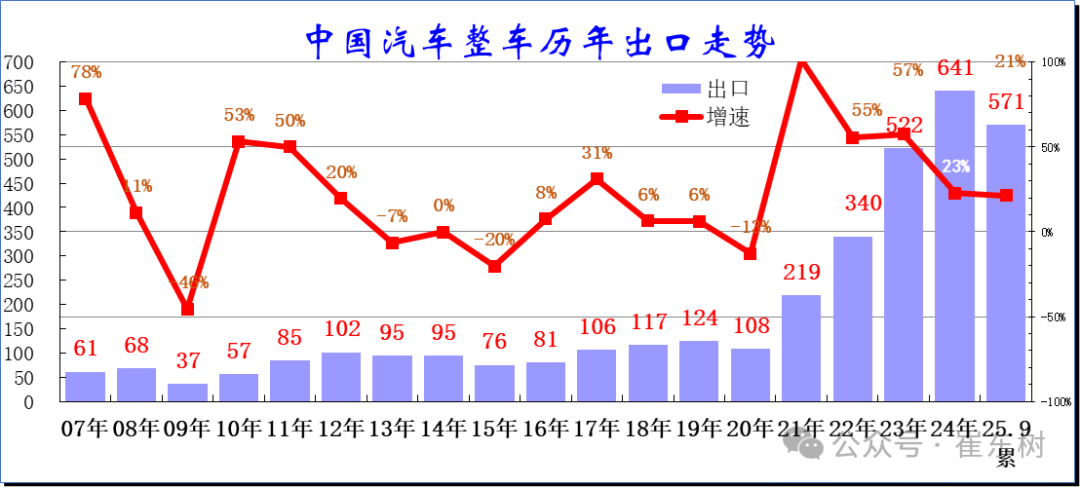
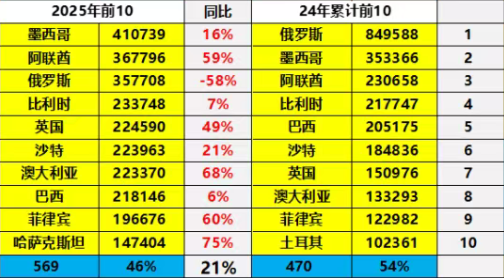
Core Insights - The global market is increasingly favoring Chinese cars, with significant growth in overseas sales, particularly in the Middle East [1][3] - The buyer landscape for Chinese automobiles is diversifying, with Mexico emerging as the largest importer, surpassing Russia [3] - Chinese automotive brands are gaining trust and recognition in various international markets, driven by competitive pricing and technological strength [4] Group 1: Market Performance - In the first nine months of the year, China's total automobile exports reached a record high of 5.71 million units [1] - The UAE has become the second-largest destination for Chinese vehicle exports, with an import volume of 368,000 units and a year-on-year increase of 59% [1] - Mexico has emerged as the largest buyer of Chinese cars, importing 410,000 units with a 16% year-on-year growth [3] Group 2: Regional Insights - The Middle East is witnessing a shift in consumer preferences towards Chinese vehicles, with notable increases in sales in countries like Saudi Arabia and the UAE [1][4] - Chinese electric vehicles are expanding their presence in Europe, Southeast Asia, and South America, with Belgium and the UK being key markets [3] - By 2030, Chinese automotive brands are projected to capture 34% of the market share in the Middle East and Africa, up from 10% in 2024 [4] Group 3: Strategic Developments - Chinese automakers are enhancing their global presence through local R&D, production, and service initiatives, such as NIO's tech center in the UAE and Geely's factory in Egypt [4] - The shift from relying on a few key markets to achieving scale in Asia, Africa, Europe, and Latin America reflects the growing global appeal of Chinese automobiles [3][4] - The automotive industry is undergoing a transformation, with Chinese companies positioned at the forefront of this change, benefiting from operational efficiencies and the global acceptance of electric and smart technologies [4]





汽车视点 | 插混贡献率跌至15%、比亚迪面临多元挑战 专家解读车市三大变化
Xin Hua Cai Jing· 2025-10-30 13:35
Core Insights - The Chinese automotive market is at a critical turning point in 2025, characterized by slowing growth and structural differentiation, with a notable decline in the penetration rate of new energy vehicles (NEVs) and a diversified competitive landscape among brands [2][3]. NEV Market Trends - The growth rate of NEV penetration has significantly slowed, with an increase of less than 4 percentage points from January to September 2025, compared to a 12.5 percentage point increase in 2024 [3]. - The proportion of consumers opting for NEVs under the trade-in policy decreased from 60% in 2024 to 53% in early 2025, indicating a weakening driving force for NEV penetration [3]. - The penetration rate of plug-in hybrid vehicles (PHEVs) has declined from 21.1% in 2024 to 19.8% in 2025, while pure electric vehicles (EVs) continue to rise from 26.6% to 31.4% during the same period [3][4]. PHEV Market Dynamics - PHEV sales dropped sharply from 124.7 million units in 2024 to 27.2 million units in the first three quarters of 2025, leading to a decrease in their contribution to overall NEV growth from 69.7% to 15.1% [4][5]. - The weakening momentum in the PHEV market is attributed to market saturation in lower-tier cities and increased competition from fuel vehicles, which have lowered their prices significantly [5]. Competitive Landscape - The NEV market is witnessing increased competition, with brands like Geely and Leap Motor gaining market share, disrupting BYD's previous dominance [6]. - In the first nine months of 2025, Geely's NEV sales increased by 566,000 units, while Changan and Xiaomi also reported significant sales growth [6]. - Joint venture brands are also entering the NEV market aggressively, with new models achieving monthly sales of 8,000 to 10,000 units, indicating a resurgence in competition [7]. Export Market Developments - China's automotive exports reached 4.95 million units in the first nine months of 2025, a year-on-year increase of 14.8%, with expectations to exceed 7.5 million units for the entire year [8][9]. - The export growth is shifting from a few major companies to a more diversified group of manufacturers, with BYD and Chery leading the charge [9]. - The second-hand car export market is emerging as a potential growth area, with only 7% of total automotive exports in 2024, indicating significant room for expansion [9][10]. Future Outlook - The second-hand car export market is expected to grow, particularly in regions like Africa and Southeast Asia, with a projected growth rate of nearly 85% in the African market [10][11]. - Companies are advised to focus on establishing after-sales networks in key export markets and to leverage existing resources to avoid blind investments [11].
乘联分会:10月1-26日全国乘用车市场零售161.3万辆 新能源零售渗透率为55.9%
智通财经网· 2025-10-29 10:44
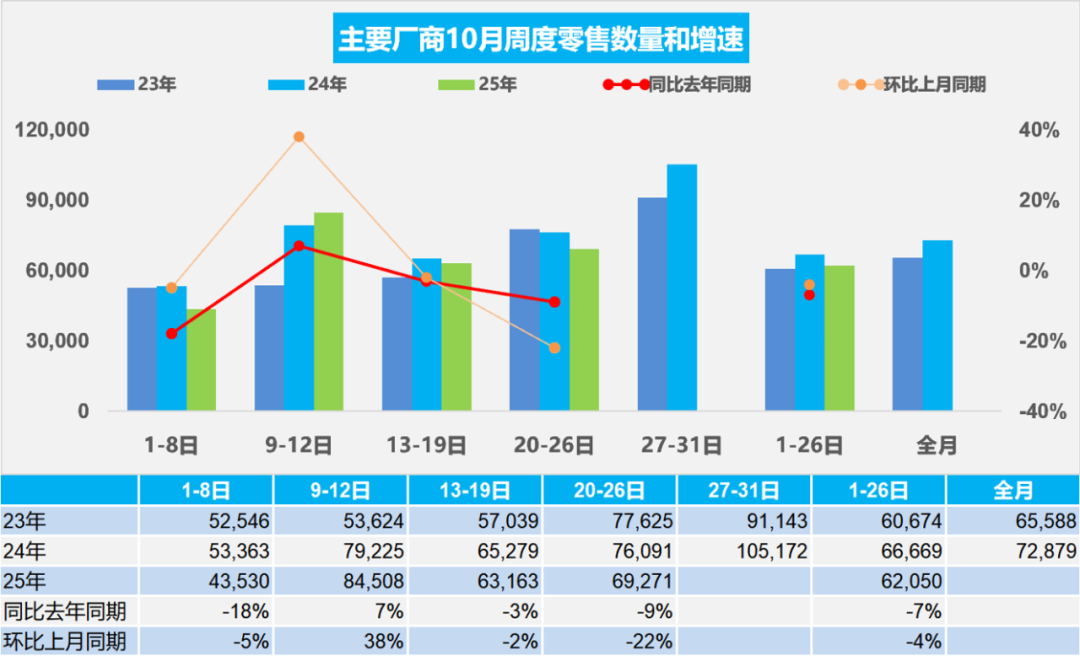
Core Insights - The retail sales of passenger cars in China from October 1 to 26 reached 1.613 million units, representing a year-on-year decline of 7% and a month-on-month decrease of 4% [1][7] - The wholesale volume for passenger cars during the same period was 1.871 million units, showing a year-on-year decrease of 1% and a month-on-month decline of 5% [1][11] - The new energy vehicle (NEV) retail sales amounted to 901,000 units, with a penetration rate of 55.9%, but saw an 8% decline compared to the previous month [1][7] Retail Market Summary - The average daily retail sales for the first week of October were 44,000 units, down 18% year-on-year and down 5% month-on-month [4] - The second week saw an increase to 85,000 units, up 7% year-on-year and up 38% month-on-month [4] - The third week recorded average daily sales of 63,000 units, down 3% year-on-year and down 2% month-on-month [5] - The fourth week had average daily sales of 69,000 units, down 9% year-on-year and down 22% month-on-month [6] Wholesale Market Summary - The average daily wholesale for the first week was 30,000 units, down 21% year-on-year and down 36% month-on-month [10] - The second week saw a slight recovery with average daily wholesale of 76,000 units, down 1% year-on-year and up 15% month-on-month [10] - The third week recorded 87,000 units, up 1% year-on-year and up 18% month-on-month [11] - The fourth week had average daily wholesale of 102,000 units, up 8% year-on-year but down 12% month-on-month [11] Year-to-Date Performance - Cumulatively, retail sales for the year reached 18.621 million units, reflecting an 8% year-on-year increase [7] - Cumulative wholesale for the year stood at 22.718 million units, showing a 12% year-on-year growth [11] - NEV wholesale for the year reached 11.48 million units, up 29% year-on-year [1][11] Market Dynamics - The market is experiencing fluctuations due to seasonal factors and government policies, including the impact of the "Golden September, Silver October" sales period [7] - The recent "trade-in" policy has positively influenced sales in September, but the effects have led to a decline in October [7] - The export market for Chinese vehicles is showing positive trends, particularly for new energy vehicles, with increasing competitiveness in international markets [11]
中国汽车出口第一国易主
Di Yi Cai Jing· 2025-10-27 06:17
Core Insights - China's automobile exports have shown significant growth in 2023, with a total of 5.71 million vehicles exported from January to September, marking a 21% year-on-year increase. Notably, September alone saw exports of 763,000 vehicles, a 26% increase compared to the previous year [1] - The export of new energy vehicles (NEVs) has been particularly strong, with 2.32 million units exported in the first three quarters, representing a 52% increase year-on-year, compared to a 22% growth in the same period last year. In September, NEV exports reached 300,000 units, up 66% year-on-year [1] - The growth in automobile exports is attributed to the enhanced competitiveness of Chinese products, as noted by Cui Dongshu, Secretary-General of the China Passenger Car Association [1] Market Dynamics - The market landscape for Chinese automobile exports has shifted from a reliance on the Russian market to a more diversified approach, with stronger performances in Central and South America and Europe [2] - In the first nine months of 2025, Mexico emerged as the largest destination for Chinese automobile exports, with 410,739 units, followed by the UAE with 367,796 units, while Russia fell to third place with 357,708 units, reflecting a significant change in export dynamics [3] Regional Trends - The UAE has shown remarkable growth in importing Chinese automobiles, with a year-on-year increase of 59% in the first nine months of 2025, while Australia and the Philippines also reported substantial increases of 68% and 60%, respectively [4] - Europe remains a core market for Chinese electric vehicles, with Belgium and the UK being the top importers. In the first nine months of 2025, Belgium imported 223,532 units, while the UK imported 153,265 units [7] Product Trends - The export of plug-in hybrid vehicles has become a new growth point, with 690,000 units exported in the first nine months of 2025, a staggering 208% increase year-on-year. This growth is largely driven by demand in the EU and emerging markets like Turkey [8] - Despite the expansion in export volumes, the average export price of Chinese automobiles has declined, with the average price in 2025 projected at $17,000, down from $19,000 in 2023 and $18,000 in 2024. This trend is attributed to a decrease in Tesla's export share and the growing influence of Chinese brands in the mid-to-low-end market [9] Challenges and Future Outlook - The global energy transition is accelerating, providing opportunities for Chinese electric vehicles to expand their market presence. However, challenges such as EU tariffs and fluctuating market demands remain significant hurdles [10] - Industry leaders emphasize the importance of sustainable growth and the need for Chinese brands to establish a reliable and high-quality image in international markets [10]
福建今年出口至沙特阿拉伯的最大批次汽车启航
Zhong Guo Xin Wen Wang· 2025-10-27 04:00
Core Points - The article highlights the export of 991 MG cars from the SAIC Ningde base to Saudi Arabia, marking the largest batch of cars exported to Saudi Arabia from Fujian province this year [1][3] - This shipment represents the first export of "Ningde-made" passenger cars to Saudi Arabia, with a total export value of 11 million USD [3] - The new shipping route from Ningde to Saudi Arabia significantly reduces logistics time, saving approximately 3 to 5 days compared to previous transportation methods [3] Summary by Sections - **Export Details** - A total of 991 MG cars were loaded onto the large roll-on/roll-off ship "SAIC Anji Phoenix" for export [1] - The total export value of this shipment is 11 million USD, indicating a significant economic contribution [3] - **Logistics and Transportation** - The new route allows for direct shipping from Ningde, eliminating the need for road or rail transport to other ports, which previously extended the shipping time [3] - The implementation of a "green channel" and 24-hour customs service ensures efficient and timely processing of the shipment [3] - **Operational Efficiency** - The ability to load and ship directly from the production site enhances logistics speed and reduces the order delivery cycle [3] - The flexibility in shipping arrangements based on overseas sales plans is a notable advantage for the company [3]

中国汽车行业:2025 年三季度前瞻及 2026 年展望-China Auto Industry_ 3Q25 preview and expectations into 2026
2025-10-27 00:31
Summary of China Auto Industry Conference Call Industry Overview - **Industry**: China Auto Industry - **Focus**: 3Q25 preview and expectations into 2026 Key Points and Arguments 1. **Sales Forecasts**: - Total Passenger Vehicle (PV) sales are projected to reach 30.59 million units in 2025 and 31.43 million units in 2026, reflecting a year-over-year growth of 7% and 3% respectively [5][6][89] - The sales of New Energy Vehicles (NEVs) are expected to grow significantly, with wholesales reaching approximately 19.06 million units by 2027, representing a compound annual growth rate (CAGR) of 16% from 2023 to 2030 [6][89] 2. **Market Dynamics**: - The market share of Chinese brands in the overall PV industry is anticipated to increase from 65% in 2024 to 80% in the long term, driven by gains in the NEV segment and the adoption of advanced driver-assistance systems (ADAS) [75] - The export of vehicles is projected to continue growing, with a record level of approximately 5.9 million units exported in 2024, and an expected increase to around 6.6 million units in 2025 [83][84] 3. **Pricing Environment**: - Pricing discounts have risen to record highs since Q1 2022, although they have narrowed slightly due to government initiatives aimed at reducing market competition [44][52] - The average discount for domestically made models is around 8%, while imported models see an average discount of 13% [52] 4. **OEM Performance**: - Key OEMs such as BYD, Geely, and SAIC are expected to maintain strong sales volumes, with BYD projected to sell approximately 1.14 million units in 3Q25, despite a slight decline of 3% from the previous quarter [90][91] - Leapmotor is expected to show significant growth, with a 30% increase in sales volume to 174,000 units in 3Q25 [90] 5. **Policy Implications**: - There is a 50% probability that subsidies or some form of stimulus will continue into 2026, with a focus on energy efficiency for NEVs [88] - Historical cycles indicate that government policies, such as tax cuts, have previously led to significant rebounds in auto sales [19][23] Additional Important Insights - **Segment Analysis**: - The NEV segment is expected to dominate future sales, with wholesales projected to reach 12.29 million units by 2025, indicating a strong shift towards electric vehicles [6] - The penetration rate of NEVs in the overall market is expected to rise to 60% by 2030 [6] - **Market Share Trends**: - The top 10 OEMs currently hold 86% of the market share, indicating a highly concentrated market [30][32] - The market share of NEVs is expected to grow significantly, with domestic brands leading the charge [37] - **Challenges**: - The industry faces challenges such as fluctuating demand and pricing pressures, which could impact profitability for some OEMs [54][56] This summary encapsulates the key insights and forecasts regarding the China auto industry as discussed in the conference call, highlighting the expected growth in sales, market dynamics, and the implications of government policies on the sector.



连续四年汽车出口破百万辆 外港海通码头前三季度出口创新高
Cai Jing Wang· 2025-10-25 07:40
Core Insights - The Shanghai Waigaoqiao Port's Haitong International Automobile Terminal has become a crucial gateway for China's automobile exports, achieving a record export volume of 1.109 million vehicles in the first three quarters of this year, representing a year-on-year increase of 14.2% [1] - This marks the fourth consecutive year that the terminal has surpassed the one million vehicle export threshold [1] - The terminal's strategic location at the Yangtze River estuary and its extensive shipping routes have made it a preferred port for domestic automakers [1] Industry Developments - The ongoing growth of the roll-on/roll-off automobile export business has led to the terminal covering global shipping routes to 131 countries and regions, with connections to 289 ports [1] - On average, 2 to 3 roll-on/roll-off ships depart daily, fully loaded with domestically produced vehicles [1]
连续四年破百万辆 上海外港海通码头前三季度汽车出口量创新高
Ge Long Hui A P P· 2025-10-25 00:20
Core Viewpoint - The Haikong International Automobile Terminal in the Shanghai Waigaoqiao Port area has become a crucial gateway for China's automobile exports, achieving a record export volume in 2023 [1] Group 1: Export Performance - In the first three quarters of this year, the terminal's automobile export volume reached 1.109 million units, marking a year-on-year increase of 14.2% [1] - This marks the fourth consecutive year that the terminal has exported over one million vehicles [1] Group 2: Strategic Location and Connectivity - The terminal is strategically located at the Yangtze River estuary, leveraging its geographical advantage to connect to global shipping routes [1] - Currently, the terminal's export routes cover 289 ports in 131 countries and regions worldwide [1] Group 3: Operational Insights - An average of 2 to 3 roll-on/roll-off ships depart daily from the terminal, fully loaded with domestically produced vehicles [1]
崔东树:中国新能源车出口表现好于预期 插混和混动替代纯电动成新增长点
智通财经网· 2025-10-24 11:51
Core Insights - In the first nine months of 2025, China's new energy vehicle (NEV) exports exceeded expectations, with plug-in hybrid and hybrid vehicles becoming new growth points, particularly in the pickup truck segment [1][5] - The total export volume of Chinese automobiles reached 5.71 million units from January to September 2025, marking a 21% increase year-on-year, with September alone seeing exports of 763,000 units, up 26% year-on-year [1][6] - The export of Chinese NEVs in the same period reached 2.32 million units, a 52% increase compared to the same period in 2024, significantly higher than the 22% growth rate in 2024 [1][5] Export Performance - The top ten countries for Chinese automobile exports in September 2025 included Russia (69,126 units), Mexico (48,636 units), and the UAE (47,700 units), with notable increases in exports to the UAE and Mexico [2] - In the first nine months of 2025, the cumulative export volume to the top ten countries included Mexico (410,739 units), the UAE (367,796 units), and Russia (357,708 units) [2] NEV Export Trends - The top ten countries for NEV exports in September 2025 were Belgium (20,869 units), the UAE (20,859 units), and the UK (19,521 units), with significant growth in exports to the UAE and the UK [3] - From January to September 2025, the top ten countries for NEV exports included Belgium (223,532 units), the Philippines (153,386 units), and the UK (153,265 units), with the Philippines showing the highest growth in exports [3] Historical Context - China's automobile exports have shown a consistent upward trend since breaking the million-unit mark in 2021, with a growth rate of over 50% in 2022 and 2023, and a projected growth rate of around 20% for 2024-2025 [5][6] - The export structure has shifted, with passenger vehicles increasingly dominating the export market, reaching 85% by 2023, while the share of commercial vehicles has declined [11][16] Vehicle Type Performance - In 2025, the export of light trucks and passenger cars showed strong growth, particularly in the context of a sluggish domestic fuel truck market [12][14] - The export of gasoline vehicles has seen a decline, while the export of hybrid and plug-in hybrid vehicles has surged, indicating a shift in consumer preferences [15][16]