
碳排放双控

Search documents
破除“内卷式”竞争!国家发改委最新发声
Zheng Quan Shi Bao Wang· 2025-07-31 12:46
Core Viewpoint - The National Development and Reform Commission (NDRC) emphasizes the importance of maintaining economic stability and growth in the second half of 2025, highlighting the resilience and potential of China's economy despite facing external pressures and risks [1][2]. Group 1: Economic Performance and Outlook - China's economy has shown strong performance in the first half of the year, with major economic indicators reflecting positive trends and new achievements in high-quality development [1]. - The NDRC acknowledges the challenges ahead but remains confident in the long-term positive trends and supportive conditions for high-quality development [1][2]. Group 2: Policy Implementation and Focus Areas - The NDRC is committed to implementing the decisions of the Central Government, focusing on stabilizing employment, businesses, and market expectations while enhancing both domestic and international economic cycles [2]. - Key areas of focus include investment promotion, consumer stimulation, and the cultivation of new productive forces, particularly in artificial intelligence and digital economy [2][3]. Group 3: Strategic Initiatives - The NDRC plans to strengthen the construction of a unified national market, promote high-level opening up, and ensure the safety of key sectors such as food, energy, and supply chains [2][3]. - Emphasis will be placed on green and low-carbon development, as well as coordinated regional and urban-rural development strategies [2][3].
国家发展改革委:以稳就业扩内需为重点做好政策预研储备
Zheng Quan Ri Bao Wang· 2025-07-31 12:45
Core Insights - The National Development and Reform Commission (NDRC) held a meeting to discuss the economic situation and strategies for the second half of 2025, emphasizing the importance of high-quality development and the resilience of the Chinese economy [1] Group 1: Economic Performance - China's economy has shown steady progress in 2025, with major economic indicators performing well and new productive forces developing positively [1] - The economy has managed to withstand external pressures and accumulated risks, ranking among the top in growth among major economies [1] Group 2: Policy Focus - The NDRC aims to focus on stabilizing employment, enterprises, markets, and expectations while enhancing both internal and external economic cycles [2] - There is a commitment to solidly implement the decisions of the Central Committee and the State Council, ensuring the completion of annual targets and the "14th Five-Year Plan" [1][2] Group 3: Investment and Consumption - Efforts will be made to stabilize investment and promote consumption, with a focus on expanding investment increments and invigorating private investment [2] - The government will manage investment projects throughout their lifecycle to enhance market vitality and boost consumption [2] Group 4: Innovation and Development - The NDRC plans to cultivate new productive forces and promote the "Artificial Intelligence +" initiative, as well as advance the development of the low-altitude economy and digital economy [2][4] - There will be a push for high-quality development in various sectors, including green and low-carbon initiatives [3][4] Group 5: Regional Development and Coordination - The strategy includes promoting coordinated regional development and urban renewal, as well as facilitating the urbanization of agricultural migrants [4] - The NDRC emphasizes the importance of maintaining the safety of key sectors such as food, energy, and supply chains [4]
纵深推进全国统一大市场建设,破除“内卷式”竞争!国家发展改革委发声
Zhong Zheng Wang· 2025-07-31 12:41
Core Viewpoint - The National Development and Reform Commission (NDRC) emphasizes the resilience and vitality of China's economy, highlighting the need for effective implementation of policies to ensure stable economic growth and high-quality development in the second half of the year [1][2]. Group 1: Economic Performance and Analysis - China's economy has shown steady progress in 2023, with major economic indicators performing well and new productive forces developing positively [1]. - Despite facing external pressures and accumulated risks, China's economic growth rate ranks among the top in major economies, indicating strong foundational support for long-term growth [1]. Group 2: Policy Implementation and Focus Areas - The NDRC stresses the importance of implementing the decisions of the Central Committee and ensuring stability in employment, enterprises, markets, and expectations [2]. - Key areas of focus include enhancing domestic circulation, optimizing external circulation, and achieving the goals set for the 14th Five-Year Plan while laying a solid foundation for the 15th Five-Year Plan [2]. Group 3: Investment and Consumption - There is a call to stabilize investment and promote consumption by expanding investment increments and enhancing the management of government investment projects [2]. - The aim is to invigorate private investment and implement policies that enhance quality and efficiency in economic activities [2]. Group 4: Innovation and Development - The NDRC encourages the cultivation of new productive forces, particularly through initiatives like "Artificial Intelligence+" and the development of the low-altitude economy [2]. - There is a focus on stimulating innovation within the digital economy to drive growth [2]. Group 5: Market and Competition - The NDRC aims to promote a unified national market, eliminate "involution" competition, and reform bidding and investment practices to facilitate smooth circulation of factors [2][3]. - The goal is to support the healthy and high-quality development of the private economy [2]. Group 6: Green Development and Sustainability - The NDRC emphasizes the transition to a dual control system for energy consumption and carbon emissions to promote green and low-carbon development [4]. - There is a commitment to enhancing regional and urban-rural coordinated development, focusing on urban renewal and rural revitalization [4]. Group 7: Safety and Social Welfare - The NDRC highlights the importance of maintaining safety in key sectors, ensuring food, energy, and supply chain security, and addressing seasonal energy supply challenges [4]. - There is a focus on improving public welfare services and ensuring the stability of essential goods and prices [4].
破除“内卷式”竞争!国家发改委最新发声
券商中国· 2025-07-31 12:14
Core Viewpoint - The meeting emphasized the importance of implementing the decisions of the Central Committee and the State Council, focusing on stabilizing employment, enterprises, markets, and expectations to achieve the annual goals and tasks of the 14th Five-Year Plan, laying a solid foundation for a good start to the 15th Five-Year Plan [2][3]. Group 1: Economic Performance and Challenges - In the first half of the year, China's economy showed resilience and vitality, with major economic indicators performing well despite external pressures and accumulated risks [1]. - The meeting acknowledged that while there are risks and challenges, the fundamental conditions for long-term economic growth remain unchanged, with strong support for high-quality development [1]. Group 2: Policy Implementation and Strategic Focus - The development reform system is tasked with conducting thorough analysis and research on major changes, important indicators, and significant issues, with a focus on stabilizing employment and expanding domestic demand [2]. - There is a call to enhance investment and consumption, stimulate private investment, and implement high-quality policies to boost market vitality [2]. Group 3: Development Goals and Initiatives - The meeting outlined several key initiatives, including promoting new productive forces, advancing the digital economy, and fostering a unified national market to eliminate unhealthy competition [2]. - It emphasized the importance of expanding high-level opening-up and promoting green and low-carbon development through a comprehensive transition to dual control of energy consumption and carbon emissions [2]. Group 4: Social and Safety Considerations - The meeting highlighted the need to prioritize the safety of people's lives, strengthen safety production, and enhance disaster prevention and mitigation efforts [2]. - It also stressed the importance of maintaining the security of key areas such as food, energy, and supply chains while ensuring the stability of prices for essential goods [2].

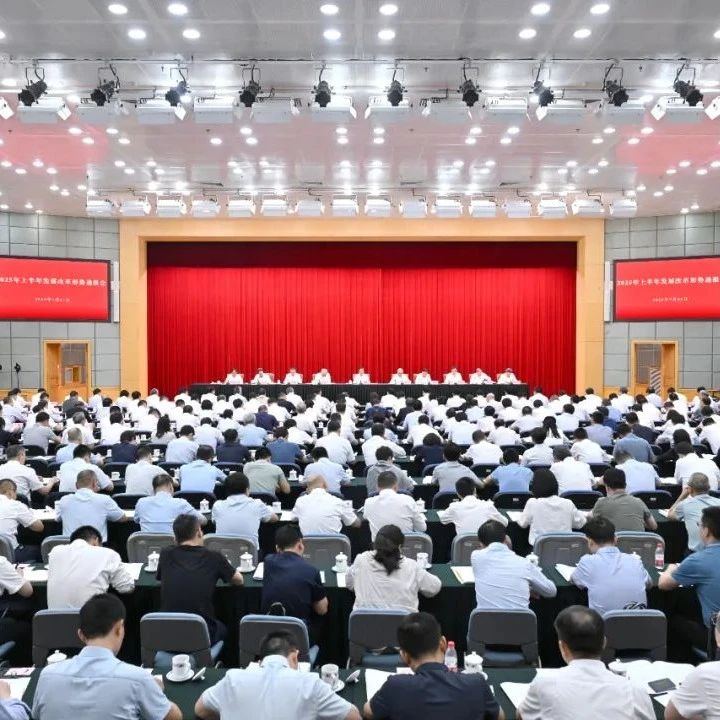
稳投资促消费、破除“内卷式”竞争……国家发改委召开会议
Di Yi Cai Jing· 2025-07-31 11:40
Group 1 - The meeting emphasized the need for the development reform system to fully implement the decisions and deployments of the Central Committee and the State Council, focusing on stabilizing employment, enterprises, markets, and expectations, while strengthening domestic circulation and optimizing external circulation to achieve annual targets and tasks of the 14th Five-Year Plan [2][3] - Key areas of focus include conducting analysis and research on major changes, important indicators, and significant issues, with an emphasis on stabilizing employment and expanding domestic demand [2] - The meeting highlighted the importance of promoting investment and consumption, enhancing government project management, and stimulating private investment to boost market vitality and consumption [2][4] Group 2 - The meeting called for the cultivation and strengthening of new productive forces tailored to local conditions, promoting the "Artificial Intelligence +" initiative, and advancing the high-quality development of the low-altitude economy to stimulate innovation in the digital economy [2][4] - It was noted that there is a need to deepen the construction of a unified national market, eliminate "involution" competition, and promote the smooth flow of factors to support the healthy and high-quality development of the private economy [2][3] - The meeting also stressed the importance of expanding high-level opening up, balancing "bringing in" and "going out," and collaboratively building the Belt and Road Initiative with high quality [3]
国家发改委:坚定不移扩大高水平对外开放
news flash· 2025-07-31 11:15
国家发改委消息,国家发展改革委召开上半年发展改革形势通报会。会议强调,坚定不移扩大高水平对 外开放,统筹做好"引进来"和"走出去",高质量共建"一带一路"。七是以碳排放双控全面转型推动绿色 低碳发展,加快建立能耗双控向碳排放双控全面转型新机制。 ...
“碳双控”制度下省间减碳额度交易的构思与运作
Jin Rong Shi Bao· 2025-07-21 02:45
Group 1 - The core governance system focuses on dual control of carbon emissions, establishing a foundation for the "dual carbon" goals and promoting a systematic path for green economic transformation [1] - The synergy between carbon emission dual control and green finance can lead to an additional reduction of 1.1 billion to 1.5 billion tons of emissions by 2030 while keeping GDP losses within an optimal range [1][2] - The implementation of a carbon budget management system at provincial levels is essential for enhancing carbon emission control and promoting regional collaboration [2][4] Group 2 - The design of inter-provincial carbon compensation mechanisms is crucial for balancing the heterogeneous costs of carbon reduction across provinces, with significant differences in marginal reduction costs [3][4] - A three-tier control system consisting of provincial carbon budgets, a national carbon market, and a central carbon reserve mechanism is proposed to support the national carbon emission dual control targets [4][5] - The establishment of a central carbon reserve "safety reserve" mechanism can help stabilize trading prices and support provinces facing challenges in emission reductions [5][6] Group 3 - Provinces can trade limited annual reduction amounts through inter-provincial carbon compensation mechanisms, allowing for flexibility in meeting carbon budget targets [6][8] - The pricing mechanism for inter-provincial carbon compensation should reference the national carbon market price to ensure stability and transparency in trading [7][8] - The development of a green financial system is essential for providing precise funding support for emission reduction projects, reducing reliance on inter-provincial carbon trading [8][9] Group 4 - The establishment of resource and environmental asset rights systems can facilitate the financial attributes of carbon assets, enabling provinces to attract social capital for carbon reduction initiatives [9][11] - The integration of green finance with inter-provincial carbon trading mechanisms can enhance the sustainability and effectiveness of emission reduction efforts [11][12] - Continuous exploration of various policy tools by provinces is necessary to deepen the integration of green finance and carbon reduction initiatives [11]
欧盟委员会提出《欧洲气候法》修订案,设定2040年减排目标
Xinda Securities· 2025-07-05 13:45
Domestic Highlights - Xiamen has launched the "ESG Report Verification Cost Compensation Insurance," aiming to enhance ESG disclosure and verification coverage in the region[12] - The Xiamen Free Trade Zone has introduced 632 innovative measures, with 153 being national firsts, to promote ESG standards and practices[12] International Developments - The European Commission proposed amendments to the European Climate Law, targeting a 90% reduction in greenhouse gas emissions by 2040 compared to 1990 levels[3] - The proposal includes mechanisms like carbon credit allowances to alleviate pressures in achieving these reduction targets[3] ESG Financial Products Tracking - As of July 5, 2025, China has issued 3,605 ESG bonds, with a total outstanding amount of 5.52 trillion RMB, where green bonds account for 61.53% of the total[22] - In the past month, 41 ESG bonds were issued, raising 39.8 billion RMB, while the total issuance over the past year reached 1,007 bonds worth 1.1758 trillion RMB[22] Public Fund Insights - The market has 902 existing ESG products, with a total net asset value of 1,055.066 billion RMB, where ESG strategy products represent 52.98% of the total[34] - No new ESG public funds were issued in the past month, but 236 funds were launched in the last year, totaling 170.639 billion units[34] Banking Wealth Management - There are 965 existing ESG products in the banking sector, with pure ESG products making up 55.85% of the total[40] - In the last month, 12 new ESG products were issued, primarily focused on pure ESG and environmental protection[40] Index Performance - As of July 4, 2025, major ESG indices, except for the Wind All A Sustainable ESG, outperformed the market, with the 300 ESG Leading Index showing the highest increase of 1.87%[41] - Over the past year, the Huazheng ESG Leading Index had the largest growth at 17.59%, while the Shenzhen ESG 300 Index increased by 13.3%[41] Expert Opinions - UNEP FI's Butch Bacani emphasized the insurance industry's role in managing climate-related risks and supporting sustainable industrial transitions[8] - The need for a comprehensive asset-liability perspective was highlighted to align insurance and investment efforts towards building resilient and carbon-neutral communities[8] Risk Factors - Potential risks include slower-than-expected ESG development, delays in the dual carbon strategy, and insufficient policy advancements[43]
“十四五”减碳改写能源转型逻辑,下一个五年怎样全面转型?|“十四五”规划收官
Di Yi Cai Jing· 2025-06-30 04:00
Group 1 - The next five years mark the beginning of a comprehensive market entry for renewable energy in China, with expectations for continued growth beyond coal-fired power generation capacity [1][11] - China's energy development is transitioning towards a safe, efficient, and clean green direction, with a strong emphasis on reducing carbon emissions [1][3] - The "14th Five-Year Plan" aims for a 13.5% reduction in energy consumption per unit of GDP and an 18% reduction in carbon dioxide emissions [3][4] Group 2 - Despite the acceleration in energy transition, challenges remain, particularly regarding energy security and the "impossible triangle" of energy security, economy, and cleanliness [2] - The transition from energy consumption control to carbon emission control is a significant policy shift, emphasizing the role of carbon emissions in the energy revolution [5][6] - The focus on carbon emissions will facilitate the development of non-fossil energy sources and alleviate constraints faced by enterprises using clean energy [6] Group 3 - By 2025, the proportion of non-fossil energy consumption is expected to reach around 20%, with non-fossil energy generation accounting for approximately 39% of total generation [7][8] - As of July 2024, the installed capacity of wind and solar energy reached 1.206 billion kilowatts, surpassing coal power capacity [8] - The rapid development of renewable energy poses challenges for the energy system, necessitating enhanced flexibility and security measures [8][10] Group 4 - The upcoming five years will see renewable energy fully entering the electricity market, with expectations for continued growth in installed capacity [11][12] - The transition to a carbon emission control system will require significant efforts to manage the increasing pressure on the electricity grid due to higher renewable energy integration [12][13] - Climate change and extreme weather events are becoming critical factors in electricity planning, necessitating a new adaptive planning approach for the energy system [13]
中信建投:钢铁市场处弱平衡状态 2025年继续关注特钢主线
智通财经网· 2025-06-23 08:37
Core Viewpoint - The current market is in a "low inventory, low price, low demand, high supply elasticity" weak equilibrium state, with future trends dependent on the intensity of production cuts and the speed of policy implementation [1][2] Supply - The government is continuing to implement crude steel production controls and promote "dual control of carbon emissions" [3] - Strict enforcement of production capacity replacement is mandated, prohibiting the addition of new steel production capacity under various pretenses [3] Demand - The proportion of steel used in manufacturing has been steadily increasing, nearing 50%, supported by stable traditional manufacturing and rapid growth in high-end manufacturing and strategic emerging industries [4] - The forecast for steel demand in manufacturing is projected to reach 440 million tons by 2025, driven by supportive monetary and fiscal policies [4] Profit - If a production cut of 50 million tons is implemented, the annual crude steel output would be 955 million tons, leading to a potential recovery in industry profitability with gross profit per ton expected to reach around 400 yuan [5][6] - If production remains at last year's levels, a rebound in output in the second half of the year could lead to oversupply and further profit decline [6] Investment Recommendations - For ordinary steel investments, focus on high dividend and high yield companies, particularly leaders in various downstream sectors, such as Hualing Steel and Baosteel [7] - For special steel and new materials, the demand for high-end special steel is expected to grow rapidly, with companies like Nanjing Steel and Jiu Li Special Materials being highlighted for potential investment [7]
