
数字经济

Search documents
城记 | 潮涌长三角,攻坚正当时:新质生产力的突围与跃升
Xin Hua Cai Jing· 2025-12-04 16:23
Core Insights - The Shanghai 2025 Forum focuses on the development of new productive forces in the Yangtze River Delta, aiming to provide intellectual support for regional integration and high-quality development [1] - The Yangtze River Delta is recognized as a leading region in China's economic landscape, with significant infrastructure advantages and a strong role in national development [4][5] Economic Performance - The Yangtze River Delta's GDP growth rate is projected to average 5.58% annually by 2024, surpassing the national average by 0.27 percentage points [5] - The region's economic output is expected to reach 11.68 trillion yuan, equivalent to Indonesia's total economic output in 2024 [5] - The economic contribution of the Yangtze River Delta accounts for approximately 26% of the national economic growth over the past six years, despite representing only 4% of the country's land area and 14% of its population [5] Collaborative Innovation - The G60 Science and Technology Innovation Corridor is identified as a key model for collaborative innovation, addressing challenges such as technology bottlenecks and resource allocation inefficiencies [6][9] - The corridor has established a comprehensive coordination mechanism and has made significant progress in creating cross-regional industrial alliances and innovation ecosystems [7][8] Digital Economy and Industrial Upgrading - The Yangtze River Delta's local technology investment is expected to exceed 25% of the national total by 2024, with technology contract transaction volume reaching 209.2 billion yuan [10] - The region's manufacturing scale is projected to reach 36.4 trillion yuan, accounting for 30.6% of the national total, with significant contributions from high-tech enterprises [10] Future Development Paths - Experts suggest that the development of new productive forces should focus on integrating traditional industries with advanced technologies, emphasizing the importance of digital economy and data value [11] - A systematic approach to "factor coupling" is proposed to enhance the digital economy's role in driving new productive forces, aiming for a transformation from additive to multiplicative effects in economic development [11]


三季度支付数据回暖 释放哪些信号
Bei Jing Shang Bao· 2025-12-04 16:07
Core Insights - The People's Bank of China reported significant growth in digital payment transactions in Q3, indicating a recovery in consumer spending and a shift in payment habits [1][2] Group 1: Non-Cash Payment Growth - In Q3, banks processed 1,685.08 billion non-cash payment transactions amounting to 150.336 trillion yuan, showing a year-on-year increase in transaction volume and value [1] - The increase in non-cash payments is attributed to credit transfers and electronic payments, driven by the central bank's relaxation of transfer limits and improvements in payment systems [1][2] - Electronic payment transactions reached 775.54 billion, totaling 82.297 trillion yuan, with online payments at 181.4 billion transactions worth 67.797 trillion yuan and mobile payments at 556.94 billion transactions worth 12.996 trillion yuan [1] Group 2: Third-Party Payment Institutions - Third-party payment institutions processed 3,380.19 billion online payment transactions worth 85.28 trillion yuan in Q3, reflecting a recovery in transaction scale despite a slight decline in transaction volume compared to previous periods [2] - The increase in transaction value suggests a shift towards larger transactions, indicating a change in consumer behavior towards higher-quality goods and services [2][3] - Companies like Tencent and Lakala reported growth in payment transaction values, with Lakala's QR code transaction amounting to 1.04 trillion yuan, a 3.5% year-on-year increase [2][3] Group 3: Market Trends and Future Outlook - The growth in digital payments is supported by the expansion of online consumption scenarios and advancements in payment technologies, enhancing security and convenience [3] - Despite the growth in QR code transactions, traditional card transaction volumes are declining, with Lakala reporting a 13.72% decrease in card transaction value [3][4] - The future outlook suggests that QR code payments will dominate the small payment market, while card payment services will face ongoing pressure, particularly in B2B and cross-border transactions [4]
印尼经济统筹部长:期待深化与中国人工智能产业合作
Xin Hua She· 2025-12-04 15:10
Core Viewpoint - Indonesia views artificial intelligence (AI) as a key driver for economic growth and aims to deepen cooperation with China in the AI and digital economy sectors to promote high-quality industrial development [1] Group 1: AI Ecosystem Development - Indonesia currently has only 25 AI startups and needs to accelerate the construction of an AI ecosystem [1] - The country seeks to attract Chinese AI companies to support the growth of local AI startups, particularly in enhancing the resilience of SMEs in key sectors such as education, healthcare, and agriculture [1] Group 2: Education Initiatives - Indonesia has implemented smart blackboards and AI teaching systems in most schools nationwide to improve education quality and reduce dropout rates [1] - The government is willing to collaborate with Chinese companies to build an inclusive online education platform, ensuring access to quality educational resources for students in remote areas and overseas workers [1] Group 3: Digital Infrastructure Projects - Indonesia plans to advance key projects in semiconductor, photovoltaic, submarine cables, and green data centers, while collaborating with international universities to cultivate technical talent [1] - The country is constructing 15 comprehensive service centers aimed at the gig economy and digital entrepreneurs, with plans to launch AI application projects in 10 cities to encourage youth to master emerging technologies [1]
海南封关下投资布局机会:封关背景下的产业落地与招商策略演变
Tou Bao Yan Jiu Yuan· 2025-12-04 12:46
Investment Policy and Management Model - Hainan Free Trade Port adopts a "one line open, two lines controlled" management model to balance trade facilitation and risk prevention, allowing foreign goods to enter freely while controlling domestic market safety[4] - The management model aims to establish Hainan as a competitive open economy by simplifying regulations for international trade while ensuring domestic regulatory compliance[5] Key Industries and Growth Opportunities - Hainan focuses on four leading industries: tourism, modern services, high-tech industries, and tropical efficient agriculture, leveraging policy advantages to enhance international tourism and service sector innovation[8] - The tourism sector is projected to receive 97.21 million visitors in 2024, a year-on-year increase of 8%, with total tourist spending reaching 204.01 billion yuan, up 12.5%[8] - The modern service industry is expected to grow by 3.6% in 2024, driven by reforms in financial services and the establishment of international education and healthcare hubs[9] - High-tech industries are developing rapidly, with significant advancements in sectors like electronic information and biomedicine, showcasing strong innovation potential[10] - Tropical agriculture is being modernized and internationalized, supported by policies that promote high-quality agricultural products and brand development[11] Future Industry Focus - Hainan is prioritizing three future industries: seed industry, deep-sea technology, and aerospace, with over 2,800 seed innovation enterprises established in the "South Breeding Silicon Valley"[13] - The deep-sea industry is expected to attract around 1,000 marine enterprises, focusing on deep-sea intelligent equipment and marine biomedicine[13] - The aerospace sector is leveraging Hainan's geographical advantages to develop a comprehensive aerospace industry chain, including satellite and rocket manufacturing[14] Investment Incentives and Market Dynamics - Hainan Free Trade Port offers zero-tariff policies for eligible enterprises, significantly reducing costs and promoting high-value-added processing industries[15] - The cross-border service trade negative list and other policies are designed to lower operational costs and attract financial investments, enhancing the growth of private and high-end industries[17] - In 2024, private enterprises accounted for 63.7% of Hainan's total import and export value, reaching 176.85 billion yuan, reflecting a 36.9% year-on-year growth[18]
第三方支付交易回暖!三季度支付数据还释放哪些信号
Bei Jing Shang Bao· 2025-12-04 11:31
Core Insights - The People's Bank of China reported significant growth in digital payment transactions in Q3, indicating a recovery in consumer spending and a shift in payment habits [1][3] Group 1: Non-Cash Payment Transactions - In Q3, banks processed 1,685.08 billion non-cash payment transactions amounting to 150.336 trillion yuan, showing a year-on-year increase in transaction volume and value compared to 1,545.16 billion transactions and 132.242 trillion yuan in Q3 2024 [3] - Electronic payment transactions reached 775.54 billion, totaling 82.297 trillion yuan, with online payments at 181.4 billion transactions (67.797 trillion yuan) and mobile payments at 556.94 billion transactions (12.996 trillion yuan) [3] Group 2: Growth Drivers - The growth in non-cash payments is attributed to credit transfers and electronic payments, driven by the central bank's relaxation of transfer limits and the integration of payment systems, indicating an acceleration in digital payment adoption by businesses [3][4] - The increase in transaction amounts suggests a shift towards larger transactions, reflecting a change in consumer behavior towards higher-quality goods and services [4] Group 3: Market Trends - Third-party payment transactions are recovering, particularly in large online payments, indicating that the market is transitioning from quantity to quality, focusing on the value of each transaction rather than just the number of transactions [4] - Companies like Tencent and Lakala reported growth in payment amounts, with Lakala's QR code transactions reaching 1.04 trillion yuan, a 3.5% year-on-year increase [5] Group 4: Challenges and Future Outlook - Despite the growth in digital payments, traditional card transaction volumes are declining, with Lakala reporting a 13.72% drop in card transaction amounts [6] - The market is facing challenges from regulatory policies and increased competition, leading to a need for payment institutions to adapt and diversify their services [6]

数字人民币试点范围进一步扩大
Sou Hu Cai Jing· 2025-12-04 10:12
从技术层面来看,数字人民币采用"双层运营"架构,央行通过指定运营机构向公众兑换服务。这种设计既保证了央行对货币发 行权的掌控,又充分发挥了商业银行在用户服务方面的优势。与第三方支付工具不同,数字人民币具有法偿性,任何机构不得 拒收,这为消费者提供了更可靠的支付保障。 随着数字人民币试点范围的进一步扩大,这一新兴支付方式正逐步融入我们的日常生活。作为一种由国家信用背书的数字法定 货币,数字人民币不仅具备传统现金的便捷性,更融合了电子支付的高效性,为公众提供了全新的支付体验。 值得关注的是,数字人民币在隐私保护方面做了精心设计。采用"可控匿名"机制,日常小额交易完全匿名,仅在大额及可疑交 易时依法进行监管。这种设计既满足了公众对隐私保护的需求,又为金融安全提供了保障。相比之下,传统电子支付方式往往 需要绑定银行账户,交易数据可能被商业机构获取。 对于老年人等特殊群体,数字人民币也提供了友好的使用方案。支持屏幕朗读、字体放大等无障碍功能,同时保留实体卡片形 态,兼顾不同人群的使用习惯。部分试点地区还推出了"数字人民币+智能合约"应用,在预付卡消费、财政补贴发放等领域展现 出独特优势。 随着试点城市的不断增加,数字人 ...


工行菏泽分行借助融安e信平台筑牢数字经济金融安全防线
Qi Lu Wan Bao· 2025-12-04 10:12
李可 融安e信平台依托大数据分析,有效整合社会公信体系等多方权威信息。一方面,能实时识别诈骗电话、短 信和链接,对涉嫌欺诈的犯罪行为及时发出风险提示和自动预警,从源头上降低诈骗成功率;另一方面,可 查询企业信息、法人涉诉信息、失信信息等风险情况,全面了解企业状况,及时发现失信、涉诈等潜在风 险,有效提升融资业务风险管理水平,为防范外部欺诈筑牢屏障。 广泛宣传,助力快速止损 工行菏泽分行对融安e信的宣传推广工作制定了明确任务,并逐步推进落实。首先做好员工内部培训,让员 工了解产品特点、功能、使用方法及服务管理要求,以便结合目标客户的产品需求,为客户分析产品特点 及优势,实现精准营销。各网点通过电子显示屏不间断播放产品宣传标语,将产品资料摆放在柜台醒目位 置,对意向客户进行面对面讲解。此外,还通过走访企业用户,推广融安e信的反欺诈手段,提升企业用户信 任度,帮助其规避融资风险。 精准掌握,有效防范金融风险 该分行将继续履行国有大行的社会责任,凭借优质的金融产品和高效的服务质量,在助力社会高效治理、 防范化解金融风险等方面积极作为,为维护社会安全稳定和保障群众资金安全贡献金融力量。 通讯员 刘宏明 菏泽报道 融安e ...

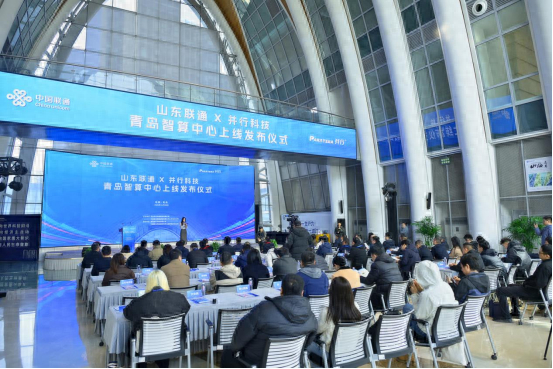
打造算力服务新标杆——山东联通与并行科技青岛智算中心正式上线
Xin Lang Cai Jing· 2025-12-04 08:15
发布会闭幕后,参会嘉宾还到智算中心近距离考察中心的硬件配置与运营管理体系,通过实地探访对其 专业实力给予高度认可,切实感受到支撑未来数字经济发展的澎湃算力。 作为多方协同推进的标杆项目,该中心由青岛市工信局指导、崂山区政府统筹、青岛联通与并行科技共 建,定位为战略级人工智能基础设施,旨在打造"政策+网络+算力"融合的政企合作典范,为区域数字 经济发展注入新动能。 该智算中心的一大亮点是其部署的"三千卡高性能GPU智算资源池",不仅可为科研和企业的研发提供强 大的算力支持,还具备了胶东半岛1ms超低时延的技术优势,可高效支撑智慧海洋、智能制造等企业研 发场景与高校科研教学需求。发布会现场,由政府、联通、并行及相关行业单位领导共同上台,点亮三 千卡青岛智算资源池,并邀请数字青岛建设有限公司副总经理李建伟,解读本地企业算力优惠政策与政 府补贴政策。青岛联通与并行科技还联合向中国海洋大学捐赠算力,用于海洋观测数据处理、气候模型 研发等前沿领域,助力海洋科研与人才培养。 11月28日,山东联通与北京并行科技联合举办的青岛智算中心上线发布会在青岛市崂山区举行,本次发 布会汇聚政企学界多方力量,共同见证青岛算力服务领域这一 ...
“金融有为”地方纵横谈丨以要素证券化为核心的金融服务新要素模式
申万宏源研究· 2025-12-04 08:14
Core Viewpoint - The article emphasizes the need for local governments to develop new financial models that support new factors of production, focusing on value formation, capital support, and ecological collaboration to foster innovative productivity and drive economic growth during the "14th Five-Year Plan" period [1][2]. Group 1: Financial Model for New Factors - Local governments should create financial models that serve new factors of production, focusing on financialization, monetization, and securitization to enhance financial services for these new factors [3]. - The financialization of factors is crucial for discovering their prices and enhancing their value, which is essential for financing new factor enterprises [3]. - Local governments are encouraged to explore financialization paths that align with local characteristics, including promoting data factor marketization and establishing data trading platforms [3]. Group 2: Capital Introduction for New Factor Enterprises - There is a need to attract "patient capital" for the high-quality development of new factor enterprises, which often face challenges in obtaining credit due to long R&D cycles and unclear business models [4]. - Local governments should build a capital supply system that includes specialized fund aggregation platforms to improve the efficiency of capital and project matching [4]. - A comprehensive venture capital service system should be established to support project selection, due diligence, and talent introduction, creating an ecosystem for capital and innovation [4]. Group 3: Dual Empowerment of Financial Services and Industry Development - Financial services should be integrated with industry development to create a dual empowerment effect, where digital technology enhances financial capabilities and financial capital accelerates the development of digital industries [5]. - Local governments are urged to promote the deep integration of financial elements with digital industry systems, encouraging collaboration among leading enterprises, platform companies, and financial institutions [5]. - Financial institutions should develop financial products tailored to the characteristics of the digital industry, such as supply chain finance and algorithm-driven credit assessments [5]. Group 4: Case Study of Hangzhou - Hangzhou has innovatively explored a comprehensive financial service model that integrates industry, data, and finance to support the growth of new industries and technologies [6]. - The city has established a data trading center and is implementing regulations to facilitate data assetization and securitization, becoming a pioneer in data trading legislation [6][7]. - Hangzhou's financial innovation has led to the creation of customized financial tools that replace traditional collateral with new factors like talent and intellectual property, effectively supporting the digital economy [8].

习近平同法国总统马克龙共同会见记者
证监会发布· 2025-12-04 07:38
二是拓展务实合作。巩固航空、航天、核能等传统领域合作,拓展绿色经济、数字经 济、生物医药、人工智能等新兴领域合作。推动双边经贸关系平衡发展,扩大双向投资,为 两国企业提供公平、透明、非歧视、可预期的营商环境。 三是促进人文交流。在去年成功举办文化旅游年的基础上,深化文化、教育、科技、地 方等领域交流合作,开展新一轮大熊猫保护合作。 新华社北京12月4日电 12月4日上午,国家主席习近平同法国总统马克龙会谈后共同会见记者。 习近平指出,欢迎马克龙总统对中国进行第四次国事访问。我们进行了友好坦诚、富有 成果的会谈。双方一致认为,中法同为独立自主大国,面对当前变乱交织的国际形势,应当 高举多边主义旗帜,坚持平等对话、开放合作,充分彰显中法全面战略伙伴关系的战略价值 和世界影响,推动平等有序的世界多极化、普惠包容的经济全球化。我们一致同意做好以下4 个方面工作: 一是增进政治互信。无论外部环境如何变化,始终展现大国的独立自主和战略眼光,在 涉及彼此核心利益和重大关切问题上相互理解、相互支持。 到全面、公正、持久解决。中方将向巴勒斯坦提供1亿美元援助,用于缓解加沙人道主义危 机,支持加沙恢复与重建。 习近平强调,对外开 ...
