
人机协同

Search documents
玩转服贸会丨我在服贸会“买”到了什么
Xin Hua Wang· 2025-09-12 11:46
Group 1 - The event showcased the intangible value of service trade through three concrete "purchase" scenarios, emphasizing the future-oriented nature of these services [1] - The multi-faceted education services highlighted the integration of artificial intelligence in learning, focusing on programming skills and human-machine collaboration [3] - Health and wellness services were demonstrated through AI retinal screening, providing personalized health management solutions within a two-minute assessment [4] Group 2 - The cross-border financial services were illustrated by assisting foreign tourists with tax refunds, showcasing how financial services can transcend national boundaries and create seamless experiences [7] - The overall experience represented a shift from traditional goods to a focus on improved quality of life, broader perspectives, healthier futures, and more convenient living [6]


金融大模型步入“价值”攻坚战,如何跨越三道门槛?
Di Yi Cai Jing· 2025-09-11 10:11
Core Insights - The year 2025 is identified as a pivotal year for the large-scale implementation of AI in China's financial industry, transitioning from mere usage to creating real value [1][2] - Financial institutions are increasingly focusing on the collaboration between technology and business departments to achieve actual benefits and cost control, with "value" becoming a common consensus in the industry [2][3] AI Application in Finance - AI applications in finance have evolved from simple human assistance to intelligent agents capable of perception, learning, action, and decision-making, applicable in areas like market analysis, risk assessment, and wealth management [2][3] - The participation of business departments in AI development has significantly increased from 18% to 74%, indicating a shift towards practical applications of AI [3] Accelerated Implementation - Major banks are rapidly expanding AI applications, with examples such as ICBC's "Navi AI+" initiative introducing over 100 new AI application scenarios in key business areas [3] - Postal Savings Bank has developed over 230 AI model scenarios, showcasing the industry's commitment to integrating AI into their operations [3] Strategic Considerations - Financial institutions are beginning to systematically consider their AI strategies, aiming to become more agile and better manage light capital businesses [3] - There is a consensus that while AI can reshape business processes, it will take time to fully realize its potential, emphasizing the importance of building a robust AI framework in the next 1-2 years [3] Data Utilization Challenges - Companies face challenges in converting data resources into assets, with a need to bridge the gap between data, technology, and algorithms to support decision-making [4][5] - The concept of insight platforms is proposed to activate approximately 70% of "sleeping" data, transforming it into valuable resources for AI model training [4] Security and Trust Issues - The application of domestic AI models in finance is transitioning from isolated breakthroughs to ecosystem reconstruction, but issues like algorithm bias and privacy breaches remain unresolved [6] - The financial sector requires high precision in decision-making, making the introduction of reinforcement learning technology crucial for enhancing decision accuracy [6][7] Uncertainty in AI Deployment - The introduction of AI brings new challenges, particularly regarding uncertainty in investment returns and business outcomes, necessitating innovation in strategic planning and organizational design [7]
人形机器人,撬动经济增长的“智能支点”
Xin Hua Ri Bao· 2025-09-08 00:21
Core Insights - The humanoid robot industry is experiencing significant growth, with a projected sales increase of 125% in China this year, potentially exceeding 10,000 units sold [1] - The market size for humanoid robots in China is expected to reach 8.239 billion yuan, accounting for approximately 50% of the global market [1] - Companies in Jiangsu province are showcasing strong competitive advantages and innovative capabilities, contributing to the rapid development of the humanoid robot sector [6][8] Group 1: Sales Performance - Shenzhen Youbixun Technology Co., Ltd. announced a major contract worth 250 million yuan, marking the largest single contract in the global humanoid robot market [1] - Jiangsu Yunmu Intelligent Manufacturing Co., Ltd. reported sales in the first eight months of this year that are 2.5 times higher than the total sales for the previous year [2] - Nanjing Avatar Robot Technology Co., Ltd. saw a sales increase of approximately 100% in the same period, reflecting strong market demand for humanoid robots [4] Group 2: Product Diversity and Innovation - Jiangsu Yunmu offers a diverse range of humanoid robots, including educational, industrial, and cultural tourism models, with the cultural tourism model being the best seller [2] - The humanoid robots feature advanced interaction capabilities, with 66 degrees of freedom for body movement and 26 for facial expressions, allowing for a wide range of actions and responses [2] - The development of key components, such as the double-curve harmonic reducer, has improved the performance and precision of humanoid robots, enhancing their market competitiveness [6] Group 3: Industry Support and Development - The Jiangsu provincial government has implemented targeted policies to guide the development of the humanoid robot industry, including specific action plans for cities like Nanjing and Wuxi [8] - Collaborative efforts between universities and companies, such as the establishment of the Suzhou University-Legou Humanoid Robot Collaborative Innovation Research Institute, are fostering technological advancements in the sector [7] - The presence of a complete supply chain in Jiangsu is providing solid support for the large-scale development of the humanoid robot industry [6] Group 4: Future Outlook - The humanoid robot industry is viewed as being in a promising growth phase, with ongoing advancements in technology and applications [10] - Companies are focusing on enhancing the versatility and generalization capabilities of humanoid robots to adapt to various operational needs [10] - The future vision for humanoid robots is to serve as collaborators rather than replacements for human labor, aiming to improve overall productivity and efficiency in various sectors [11]

清华教授高小榕:脑机接口竞速,中美在不同路径上“并跑”
3 6 Ke· 2025-09-05 11:19
Core Viewpoint - The brain-computer interface (BCI) technology is advancing rapidly, with companies like Neuralink and Synchron making significant strides in clinical trials, aiming to restore lost functions in patients with paralysis or neurological diseases [1][2][3] Group 1: Current Developments in BCI Technology - Neuralink has completed craniotomy implants in a small number of patients, focusing on restoring motor and speech functions, with plans to conduct speech cortex experiments by Q4 2025 [1] - Synchron has validated the safety and partial recovery of daily functions for paralyzed patients through minimally invasive vascular implants [1] - The public is caught between two visions: one of hope for restoring lost functions and another fueled by tech leaders' marketing, leading to concerns about the implications of BCI technology [1][2] Group 2: Ethical Considerations and Limitations - High Xiaorong, a professor at Tsinghua University, emphasizes that BCI is not a shortcut to "superhuman" capabilities but rather a technology focused on repair and assistance under ethical constraints [2][3] - The concept of "superhumanization" raises ethical issues regarding fairness and accessibility, leading to a shift in focus towards clinical applications [3][4] Group 3: Potential Applications and Future Directions - BCI technology could facilitate human-machine collaboration, addressing communication gaps between human and artificial intelligence [4] - Possible applications include memory enhancement for Alzheimer's patients and aiding communication for those unable to speak [8][9] - The technology is expected to evolve, with advancements in AI playing a crucial role in processing large data sets generated by BCI devices [10] Group 4: Challenges and Research Landscape - Current challenges include hardware and software limitations, with a need for improved signal processing capabilities [10][12] - Clinical applications are primarily focused on medical fields, with potential expansions into elder care, cognitive rehabilitation, and emotional support [15] - The research landscape shows that China leads in non-invasive and semi-invasive studies, while the U.S. excels in invasive research [16] Group 5: Timeline for Maturity - The timeline for achieving mature BCI technology has been revised from an initial estimate of 60 years to a more optimistic 15 to 20 years, although significant limitations still exist [17][18]

北京大学数字金融研究中心最新报告:AI训练呈现普惠性
Huan Qiu Wang· 2025-09-05 05:15
Core Insights - The report highlights the significant positive impact of AI training on customer service workers, showing an average salary increase of 14% compared to traditional training methods [1][3] - AI training demonstrates inclusive benefits across various demographics, particularly for workers aged 45 and above, who show the most improvement in service standards [1][3] Group 1: AI Training Impact - AI training leads to a 14.02% increase in average salary for newly hired customer service representatives within the first six months [1] - Customer service representatives who underwent AI training experienced a 29.46% reduction in daily customer complaints and a 29.70% decrease in quality inspection failures [1][3] Group 2: Demographic Benefits - The benefits of AI training are evident across different genders, age groups, and urban-rural divides, with the most significant improvements seen in those aged 45 and above [3] - After six months, customer service representatives aged 45 and above showed a 33.46% reduction in daily quality inspection failures, outperforming other age groups [3] Group 3: Advanced Training Scenarios - AI training is particularly effective when simulating complex customer scenarios, resulting in a 79.79% decrease in negative feedback and a 49.40% reduction in quality inspection failures for trained representatives after five months [3][6] - The use of AI to simulate various customer identities and emotional states enhances the training experience, improving skills, efficiency, and income for customer service workers [3][7] Group 4: Broader Implications - The report emphasizes that AI's most profound impact is not just efficiency but fundamentally reshaping labor and employment dynamics [6] - The Chinese government's "AI+" action plan aims to accelerate the transition of the service industry towards intelligent-driven services, promoting a new model that combines automated and human services [6][7] - Ant Group's digital platform is positioned as a leader in utilizing AI training to enhance worker capabilities and create a more inclusive employment ecosystem [6][7]

无人机竞速怎么比(秒懂体育)
Ren Min Ri Bao· 2025-09-04 22:16
Core Insights - The Chengdu Universiade features a unique competitive event known as drone racing, where athletes control drones using head-mounted displays [1] - The competition involves navigating drones through a 500 to 600-meter course with 40 to 50 obstacles, including various types of gates and tunnels [1] - Each race typically includes four participants, with a time limit of three minutes and a requirement to complete three laps, where the fastest time wins [1] Industry Overview - Drone racing is not only about speed but also tests athletes' technical skills, psychological resilience, physical fitness, and strategic thinking [1] - Top drone pilots must possess mechanical tuning expertise akin to F1 drivers, quick reflexes similar to esports players, and the pressure-handling capabilities of extreme sports athletes [1] - The appeal of this competition lies in the continuous challenge of human-machine collaboration [1]
“机器狼"亮剑:中国智能作战群改写现代战争规则
首席商业评论· 2025-09-04 03:44
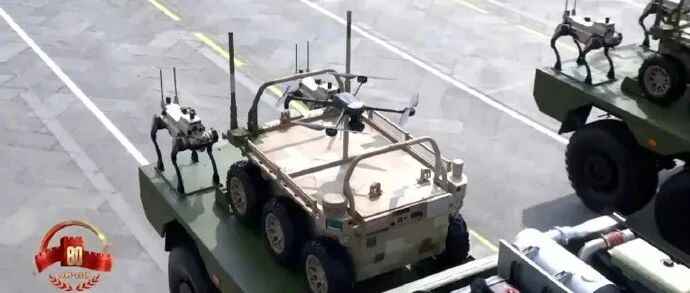
Core Viewpoint - The article highlights the evolution and significance of the "Machine Wolf" unmanned combat units in modern warfare, showcasing China's advancements in military technology and the integration of AI in combat scenarios [6][14]. Group 1: Evolution of Technology - The "Machine Wolf" units, derived from quadruped robotic dogs, have undergone significant upgrades, including the use of domestic chips and a 360-degree perception system, enabling them to navigate challenging terrains [7]. - These units exhibit "swarm intelligence," allowing multiple "Machine Wolves" to autonomously form tactical formations and execute complex missions without human intervention [7]. Group 2: Practical Application - In July 2025, the "Machine Wolf" units demonstrated their capabilities in a military exercise at high altitudes, marking a shift from development to practical deployment in combat scenarios [10]. - The integration of "Machine Wolves" into infantry units has led to the establishment of "unmanned squads," significantly reducing soldier casualties through the use of natural language commands for operation [10]. Group 3: Future Warfare Implications - The modular design of the "Machine Wolf" allows for rapid switching between various operational roles, indicating a revolutionary change in combat strategies [12]. - The combination of "Machine Wolves" with drones and unmanned vehicles is expected to usher in a new era of "human-machine collaboration" in warfare, fundamentally altering the rules of modern combat [12].
清华教授高小榕:大脑的未来,或许没有那么科幻
3 6 Ke· 2025-08-30 16:33
Core Viewpoint - The brain-computer interface (BCI) technology is advancing rapidly, with companies like Neuralink and Synchron making significant strides in clinical trials, aiming to restore lost functions in patients with paralysis or neurological diseases. However, there is a growing divide between the optimistic visions promoted by tech leaders and the ethical considerations surrounding the technology's potential applications [1][2][3]. Group 1: Current Developments in BCI Technology - Neuralink has completed craniotomy implants in a small number of patients, focusing on restoring motor and speech functions, with plans to conduct speech cortex experiments by Q4 2025 [1]. - Synchron has validated the safety and partial recovery of daily functions for paralyzed patients through minimally invasive vascular implants [1]. - The technology is being explored for various applications, including movement compensation, speech recovery, and potential treatments for conditions like schizophrenia and autism [8][9]. Group 2: Ethical Considerations and Limitations - The concept of "superhuman" capabilities through BCI, such as consciousness uploading, is deemed ethically unacceptable and currently unrealistic [2][3][7]. - The focus of BCI technology is on repair and assistance rather than enhancement, with a clear distinction between restoring normal function and exceeding natural human abilities [3][4]. - The potential for BCI to facilitate human-machine collaboration is emphasized, particularly in bridging communication gaps between human and artificial intelligences [4]. Group 3: Future Prospects and Challenges - The timeline for achieving mature BCI technology has been revised to approximately 15 to 20 years, although significant limitations remain, such as the lifespan of implanted devices [17][18]. - The advancement of AI is expected to play a crucial role in overcoming current challenges in data processing and signal interpretation within BCI systems [10]. - There is a notable difference in research focus between the US and China, with China leading in non-invasive and semi-invasive methods, while the US excels in invasive techniques [16].
海亮科技x腾讯教育 联合亮相全球盛会!
Sou Hu Cai Jing· 2025-08-25 11:21
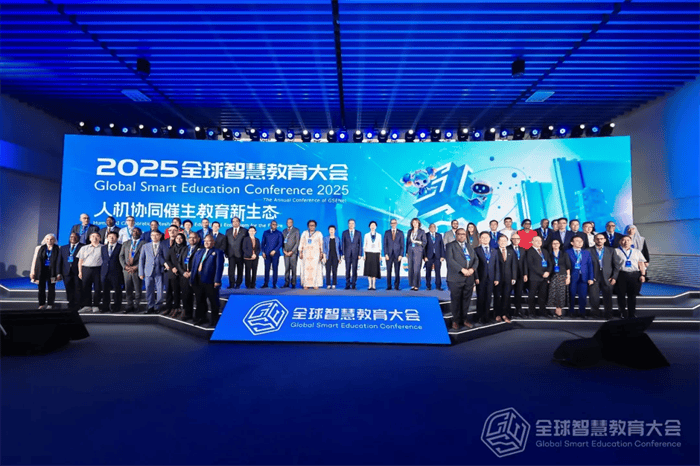
Core Insights - The "2025 Global Smart Education Conference" was held in Beijing, showcasing innovations in the "Education + AI" sector, with HaiLiang Technology Group as a key partner of Tencent Education [1][3] - The conference gathered over 2,200 attendees, including more than 500 experts and scholars from various fields, to discuss the integration of new technologies in education [1][3] Group 1: Event Highlights - HaiLiang Technology showcased its AI large model and "Education + AI" solutions, attracting significant interest from experts [3][5] - The conference featured participation from notable figures, including the Vice Minister of Education and various university presidents and scholars [1][3] Group 2: Solutions and Innovations - HaiLiang Technology's "Education + AI" solutions integrate AI and big data to enhance teaching quality, student management, and teacher development [5][10] - The innovative product "Star Learning Companion: Precision Teaching Tablet" addresses differentiated teaching needs, enabling personalized learning for students [5][10] Group 3: Recognition and Achievements - HaiLiang Technology received recognition with three cases selected as "Excellent Cases of Smart Education" by the Ministry of Education [7][9] - The selected cases include solutions focused on enhancing teaching research capabilities and improving student motivation through digital tools [9] Group 4: Strategic Partnerships - The collaboration with Tencent Education represents a significant opportunity for HaiLiang Technology to showcase its innovative capabilities and cooperative ecosystem [9][10] - The partnership aims to leverage Tencent's AI and cloud computing strengths alongside HaiLiang's educational service capabilities to deliver smarter and more equitable educational products [10][12] Group 5: Future Directions - HaiLiang Technology is committed to exploring AI-assisted learning and teaching scenarios, with solutions already implemented across 30 provincial-level regions [12] - The company plans to continue collaborating with schools and partners to enhance educational equity and quality through joint innovations in the "Education + AI" field [12]
科学教育迎AI重塑,大中小学一体推进!AI通识课落地在即
Nan Fang Du Shi Bao· 2025-08-21 11:30
Group 1: Core Themes of the Conference - The integration of artificial intelligence (AI) and science education is becoming a central topic in the digital education sector, emphasizing a collaborative approach across all educational levels [1][3] - The conference theme "Human-Machine Collaboration to Foster a New Educational Ecosystem" highlights the exploration of innovative paths for deep integration of new technologies in education [1][2] - The Ministry of Education has initiated a nationwide scientific education diagnostic and established a scientific education alliance to support the development of a robust educational ecosystem [1][7] Group 2: AI's Role in Education - AI is creating a "dual empowerment" loop in education, where AI tools enhance teaching and learning while educational scenarios provide feedback for AI improvement [3][4] - The digital transformation in education is seen as an inevitable global trend, with AI and big data technologies rapidly evolving and reshaping educational practices [3][4] - The Ministry of Education's guidelines for AI education in primary and secondary schools aim to implement systematic AI education starting from the 2025 academic year, with a minimum of 8 hours of AI general education per year [7][9] Group 3: Challenges and Solutions in AI Education - There is a significant shortage of qualified teachers in STEM education, with only 27.5% of science teachers having a background in science and engineering [9] - The "1+X" AI general education model developed by a collaboration between companies and educational institutions has been successfully implemented in various schools, addressing the challenges of AI education [9][10] - Ethical considerations and regulatory frameworks for AI applications in education are increasingly becoming focal points in discussions about digital education reform [4][8]
