养老金融

Search documents
养老金融 从政策红利到民生实效 金融支持润泽银发经济
Shang Hai Zheng Quan Bao· 2026-01-13 18:34
Core Viewpoint - The recent joint issuance of measures by eight departments aims to enhance the convenience, safety, and affordability of elderly care services, directly impacting the well-being and happiness of the elderly population [1] Group 1: Optimizing Supply Structure - The measures emphasize the need to optimize the supply of elderly care services and age-friendly products, promoting the expansion of convenient living circles and encouraging care institutions to integrate into communities [2] - Shanghai Rural Commercial Bank has established over 1,000 public service stations, achieving full coverage in 216 streets and towns in Shanghai, thereby enhancing the "15-minute community living circle" [2] - The key to effective elderly finance lies in matching services to needs rather than merely scaling up, with banks collaborating across various sectors to provide tailored services [2][3] Group 2: Technological Integration - The measures encourage technological advancements in elderly care, supporting the development of smart elderly care devices and enhancing user experience through shared services [4] - Shanghai Zhiai Nursing Station has implemented an intelligent management system to streamline operations, supported by a loan of 5 million yuan from Agricultural Bank of China [4] - Digitalization is rapidly improving the efficiency of elderly care services, with banks exploring support for various high-tech products in the sector [5] Group 3: Cost Management - The high costs associated with elderly care services, including space, personnel, and equipment, pose significant challenges [6] - In Suzhou, the transformation of 20 metro stations into elderly care service spaces is underway, supported by long-term financing from the National Development Bank [6] - Financial institutions are not only providing funding but also contributing to project planning to enhance sustainability [6] Group 4: Sustainable Development - Experts suggest that addressing the high costs of elderly care requires enhanced inter-departmental collaboration and financial support to stimulate demand and lower supply costs [7] - The measures open up diverse development opportunities for financial institutions, enabling deeper integration of financial services into community care scenarios [7]
十五五开局 宁波银行以客户为中心,赋能高质量发展
Quan Jing Wang· 2026-01-13 08:47
Core Insights - Ningbo Bank is positioned for a key transformation period in 2026, focusing on serving the real economy with a customer-centric approach and a comprehensive service system [1] Financial Performance - As of September 2025, Ningbo Bank's total assets reached 3.58 trillion yuan, a 14.50% increase from the beginning of the year [1] - Customer loans and advances amounted to 17.2 trillion yuan, up 16.31% year-on-year, with corporate loans growing by 30.83% [1] - Customer deposits totaled 2 trillion yuan, reflecting an 11.52% increase from the start of the year [1] - For the first nine months of 2025, the bank reported operating income of 55 billion yuan, an 8.32% year-on-year growth, and a net profit attributable to shareholders of 22.4 billion yuan, up 8.39% [1] - The annualized weighted average return on equity stood at 13.81%, with basic earnings per share of 3.35 yuan, a growth of 8.77% [1] - By the end of Q3, operating cash flow per share reached 33.68 yuan, a significant increase of 78% year-on-year [1] Service and Product Development - Ningbo Bank has established a multi-dimensional and differentiated service system, with foreign exchange trading volume reaching 72 billion USD in the first half of 2025 [2] - Wealth management clients reached 12.31 million, with private banking assets under management totaling 358.5 billion yuan [2] - The bank's digital transformation includes the upgrade of its treasury management system and the launch of new digital products, enhancing service efficiency [2] - As of June 2025, the bank's wealth management product scale was 601.1 billion yuan, and its international settlement volume was 158 billion USD, a 19% increase year-on-year [2] Risk Management and Asset Quality - As of September 2025, Ningbo Bank maintained a non-performing loan ratio of 0.76%, with a provision coverage ratio of 376% [3] - The capital adequacy ratios are robust, with a core tier 1 capital ratio of 9.21%, a tier 1 capital ratio of 10.70%, and a total capital ratio of 14.62% [3] Strategic Focus - In 2026, Ningbo Bank aims to enhance its customer-centric approach, providing comprehensive financial services to support clients in asset management and risk management [4] - The bank plans to leverage digital systems and open banking to improve operational efficiency and support high-quality development for clients [4] - Ningbo Bank is committed to comprehensive risk management and sustainable development, aiming to create more value for society, shareholders, and customers [4]

“大城养老”新画卷绘就“交银精彩”
Xin Lang Cai Jing· 2026-01-13 07:26
Core Viewpoint - The Shanghai branch of the Bank of Communications (BoCom) is actively engaging in the aging population's financial services, implementing innovative strategies and collaborative models to enhance elderly care and promote silver economy consumption [4][5][6][7]. Group 1: Strategic Initiatives - BoCom Shanghai branch has been recognized for its efforts in the 2025 annual pension financial service competition, showcasing its commitment to developing a pension financial strategy tailored to Shanghai's unique characteristics [4]. - The bank has established a comprehensive support mechanism that integrates government, finance, and elderly care, facilitating regional development through partnerships with local governments and community initiatives [5]. Group 2: Product and Service Innovation - The bank has launched various financial products aimed at the elderly, including "Elderly Service Batch Loans" and "Elderly E-Loans," and has developed a comprehensive account system for elderly wealth management [6]. - BoCom has introduced over 382 elderly-friendly wealth management products and more than 170 insurance products specifically designed for individuals aged 70 and above, enhancing accessibility to financial services for seniors [6]. Group 3: Community Engagement and Support - The bank has created a volunteer team called "90 Silver Age" to promote digital literacy among the elderly, participating in initiatives like the "Digital Partner Program" in Shanghai [7]. - BoCom has been involved in various community projects, such as the "Elderly Welfare Vehicle" service and the establishment of social teaching points in collaboration with senior universities, extending its service reach to better support the elderly [6][7].



倒计时2天!第18届金麒麟论坛·金融新启航即将盛大启幕
Xin Lang Cai Jing· 2026-01-13 03:10
Core Viewpoint - The global economic landscape is undergoing significant adjustments, and the domestic economy is entering a new stage of high-quality development, presenting both strategic opportunities and transformation challenges for the financial sector [2][5]. Policy and Strategic Framework - The Central Financial Work Conference has set the ambitious goal of "accelerating the construction of a financial power," marking the first time this concept has been included in the five-year planning recommendations [6]. - A series of policies aimed at stabilizing growth, promoting innovation, and preventing risks have been implemented, with coordinated monetary and fiscal policies laying a solid foundation for the reform and development of the financial industry [6]. Financial Sector Initiatives - The "1+N" policy system has been established as part of the top-level design of the financial sector, providing precise navigation for industry development [6]. - Key initiatives include: - **Technology Finance**: Focused on achieving high-level technological self-reliance and empowering innovative enterprises [6]. - **Green Finance**: Aimed at supporting the comprehensive green transformation of the economy and society, aligned with the "dual carbon" goals [6]. - **Inclusive Finance**: Targeting underserved areas to ensure financial services reach every household [6]. - **Pension Finance**: Addressing the needs of an aging population and improving the social security system [6]. - **Digital Finance**: Leveraging technological innovation to reshape the financial service ecosystem [6]. Upcoming Events - The 18th Golden Unicorn Forum will be held on January 15, 2026, focusing on the banking and insurance sectors, with discussions on enhancing financial quality and efficiency to support high-quality economic development [7].


医康养融合加速保险业转型
Jing Ji Ri Bao· 2026-01-12 22:12
Core Insights - The aging population is driving the medical and health care industry from a marginal issue to a core component of economic and social development [1] - Insurance is evolving from a mere risk compensation tool to a critical connector within the medical, rehabilitation, elderly care, and payment systems, becoming an indispensable part of the health care industry [1] Demographic Changes - By the end of 2024, the population aged 60 and above in China is expected to exceed 300 million [1] - There is a significant increase in chronic diseases among the elderly, leading to a rising demand for long-term care and medical services [1] Financial Pressures - The growth rate of medical insurance fund expenditures is consistently outpacing income growth due to accelerated aging and advancements in medical technology [2] - A growing "protection gap" is emerging as many rehabilitation, nursing, and special medical expenses remain out-of-pocket for families [2] Role of Insurance - The unique value of insurance lies in its ability to connect customer needs, service supply, and funding payments, creating a closed-loop operational mechanism [2] - Some regions are beginning to integrate insurance products with rehabilitation and nursing services, allowing policyholders to access cash benefits and direct service resources [2] Challenges for Commercial Health Insurance - Current commercial health insurance products often focus on short-term hospitalization, which does not align with the long-term care needs of the elderly [3] - Pricing pressures exist due to high risks and costs associated with elderly care, making it challenging to balance affordability for consumers and sustainability for insurance companies [3] Future Outlook - The medical and health care industry is expected to evolve into a comprehensive system encompassing payment, services, and industry chain collaboration as the "silver economy" and elderly finance become national development priorities [3]
银发浪潮下的金融答卷:一种不断生长的力量|五篇大文章调研行
Hua Xia Shi Bao· 2026-01-12 10:11
Core Viewpoint - The aging population presents both challenges and opportunities, with the financial industry playing a crucial role in developing innovative pension financial services to support the elderly [2] Group 1: Aging Population and Financial Services - The central financial work conference in 2023 included "pension finance" as one of the key topics, highlighting its importance in addressing the needs of the aging population [2] - Commercial banks are tasked with leveraging their resources to provide supportive services for the elderly, marking a new area of exploration [2] Group 2: Enhancing Elderly Services - The Chengdu Qingyang branch of Industrial Bank has undergone comprehensive renovations to create an elderly-friendly environment, including features like non-slip flooring and emergency alert systems [3] - The branch offers personalized services for elderly clients, ensuring they receive assistance without long wait times [3] - Industrial Bank has launched a "big font version" of its mobile banking app and established a green channel for elderly customers to bridge the digital divide [3] Group 3: Innovative Financial Products - Industrial Bank introduced the first "loan linked to the usage rate of elderly care beds," allowing for interest rate reductions based on occupancy rates, benefiting both financial needs and social outcomes [4] Group 4: Community Engagement and Learning - The Chengdu Qingyang branch supports a senior university, providing various courses and activities that engage the elderly community, with the capacity to serve up to 9,000 participants annually [5] - The bank has established "An Yu Learning Hall" in 122 branches, offering diverse classes that cater to the interests of elderly clients [5] Group 5: Expanding Financial Services - Industrial Bank has created the "Silver Talent Reception Hall" to connect retired professionals with societal needs, fostering opportunities for the elderly to contribute their expertise [6] - The bank has been conducting "Respect for the Elderly Month" activities for 11 consecutive years, promoting community engagement and support for the elderly [6] Group 6: Social Security Card Services - The bank has implemented a "face recognition payment" system linked to social security cards, enhancing convenience for elderly customers in dining and other services [7] - As of September 2025, the bank has issued over 1.86 million social security cards across 22 provinces, establishing 173 convenient service points [8] Group 7: Strategic Development in Pension Finance - Since 2012, Industrial Bank has developed a comprehensive pension financial service system, including pension accounts for over 7.6 million individuals by October 2025 [9] - The bank aims to enhance its pension finance services through a "365" action plan, focusing on three main areas: pension finance, elderly service finance, and elderly industry finance [10] - By October 2025, the bank served 29 million clients aged 50 and above, managing over 2 trillion yuan in financial assets [10]


倒计时3天!第18届金麒麟论坛·金融新启航即将盛大启幕
Xin Lang Cai Jing· 2026-01-12 06:13
Core Viewpoint - The global economic landscape is undergoing significant adjustments, and the domestic economy is entering a new stage of high-quality development, presenting both strategic opportunities and transformation challenges for the financial sector [3][6]. Policy and Strategic Framework - The Central Financial Work Conference has set the ambitious goal of "accelerating the construction of a financial power," marking the first time this has been included in the five-year planning recommendations [7]. - A series of policies aimed at stabilizing growth, promoting innovation, and preventing risks have been implemented, with coordinated monetary and fiscal policies laying a solid foundation for the reform and development of the financial industry [7]. - The "1+N" policy system has been established, focusing on five key areas: - Technological finance to support high-level self-reliance in technology and inject financial momentum into innovative enterprises [7]. - Green finance targeting carbon neutrality goals to assist in the comprehensive green transformation of the economy and society [7]. - Inclusive finance to reach underserved segments, ensuring financial services are accessible to all [7]. - Pension finance addressing the needs of an aging population to improve the social security system [7]. - Digital finance leveraging technological innovation to reshape the financial service ecosystem [7]. Upcoming Events - Sina Finance will host the "18th Golden Unicorn Forum: Financial New Start" on January 15, 2026, focusing on the banking and insurance sectors [8]. - The forum will address two main topics: "Banking New Start: Enhancing Financial Quality and Efficiency to Support High-Quality Economic Development" and "Insurance New Start: Reshaping Value Ecology through Core Return" [8]. - Regulatory leaders, industry leaders, and scholars will gather to contribute insights for the transformation and development of the financial industry [8].

立足资管初心 赋能高质量发展——浦银理财四载深耕再创新篇章
2 1 Shi Ji Jing Ji Bao Dao· 2026-01-11 01:18
Core Viewpoint - The company emphasizes its commitment to serving the real economy and fulfilling social responsibilities while adapting to industry transformations and aligning with national development strategies [1][3]. Group 1: Company Development and Strategy - Since its inception four years ago, the company has focused on empowering the real economy and safeguarding public wealth, achieving a management product scale expected to exceed 1.5 trillion yuan by 2025 and serving 15 million customers, generating 130 billion yuan in returns for investors [1]. - The strategic positioning of the company is rooted in its unique role as a connector between resident wealth and the real economy, integrating responsibility into its core development [3]. - The company has initiated the "Three-Five Special Project" to deepen its focus on key areas, including technology finance, green finance, and inclusive finance, supporting the construction of five centers in Shanghai and five major tracks of Pudong Development Bank [3]. Group 2: Product Innovation and Performance - The company has launched innovative products, including equity-based technology-themed investments, and introduced a wealth management product linked to the "Pudong Development Bank - China Bond Credit Technology Innovation Bond Index" to guide investments into strategic emerging industries [4]. - In the green finance sector, the company has integrated ESG principles into its investment practices, with green finance-related assets expected to grow nearly 20% by 2025, with bonds making up nearly 80% of this portfolio [4]. - The company has doubled its inclusive finance asset balance since the beginning of the year, responding to the needs of small and micro enterprises and developing specialized wealth management products for the elderly [4]. Group 3: Product System and Market Recognition - The company has upgraded its product system to meet diverse investor needs, launching the "Day Xin Yue Yi" 2.0 product line, which optimizes asset allocation and introduces multiple investment strategies [6]. - The performance of the company's products has been recognized in the market, with several products winning industry awards such as the "Bank Wealth Management Product Golden Bull Award" and "Best Cash Management Return" [7]. Group 4: Digital Transformation and Innovation - The company is focusing on digital transformation as a core strategy, implementing the "Zhi Pu Wealth Management" project to enhance operational efficiency, risk control, and investment research capabilities [8]. - The launch of the "North Star Intelligent Research" platform integrates investment research and strategy, enhancing the company's ability to adapt to market changes and improve decision-making processes [8]. Group 5: Future Outlook and Commitment - The company aims to continue its journey of high-quality development, driven by compliance and professionalism, while striving to become a leading asset management institution [9]. - The company is committed to deepening the integration of financial services with the real economy, contributing to the construction of a financial powerhouse and creating value for clients [9].

上证深一度 | 银行网点“腾笼换鸟” 一边批量关停 一边新设补位
Shang Hai Zheng Quan Bao· 2026-01-09 18:48
Core Viewpoint - The trend of physical bank branches is not a continuous decline as previously expected, but rather a structural improvement with both closures and new openings, indicating a transformation in the banking sector [1][2]. Group 1: Bank Branch Dynamics - In 2025, over 8,000 bank branches are expected to close, while more than 8,400 new branches will be established, leading to a net increase in the number of bank branches [2]. - The closures primarily involve older, less efficient branches that are far from communities and can be fully replaced by online services [3]. - The new branches are often integrated into communities, providing diverse services such as financial consultations and community activities, thus becoming local "convenience centers" [1][2]. Group 2: Reasons for New Branch Openings - The increase in new branches is driven by the rural revitalization strategy, with a significant proportion located in county-level and below areas [2]. - Mergers and acquisitions in the banking sector have led to the transformation of village banks into branch institutions, contributing to the growth of new branches [2]. - There is a focus on serving niche customer groups and enhancing service scenarios that online channels cannot adequately cover [2]. Group 3: Branch Functionality and Transformation - The closures of inefficient branches are aimed at reallocating resources to areas that require more in-person services, such as elderly and inclusive finance [3]. - The banking industry is reassessing the functions of physical branches, with a shift towards digitalization and cost efficiency, as traditional services are increasingly replaced by online channels [4]. - New branches are adopting a more intelligent, lightweight, and specialized approach, focusing on services for the elderly, inclusive finance, and small enterprises [7]. Group 4: Regulatory and Strategic Considerations - Regulatory bodies emphasize the need for banks to ensure the availability of physical branches in rural areas while balancing economic and social benefits [5]. - Banks are encouraged to avoid redundant constructions and over-competition while addressing potential financial exclusion caused by branch closures [5]. - The future of bank branches is seen as a combination of digital and community services, providing both efficient transactions and personalized service [7].
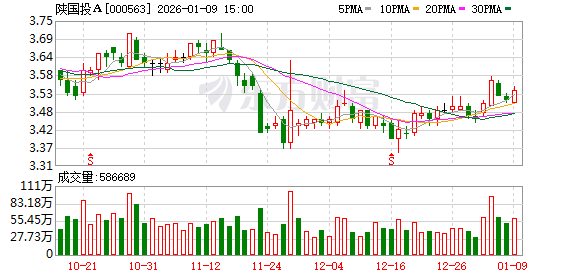
陕国投A:积极布局科技金融、绿色金融、普惠金融、养老金融、数字金融五大领域
Zheng Quan Ri Bao· 2026-01-09 12:36
Core Viewpoint - The company emphasizes high-quality development and aims to optimize its business structure and innovate service models while addressing three main tasks: serving the real economy, preventing financial risks, and deepening financial reforms [2] Group 1: Business Strategy - The company is actively positioning itself in five key areas: technology finance, green finance, inclusive finance, pension finance, and digital finance [2] - The company is committed to fulfilling its responsibilities and obligations as a financial institution in the context of major national strategies [2]