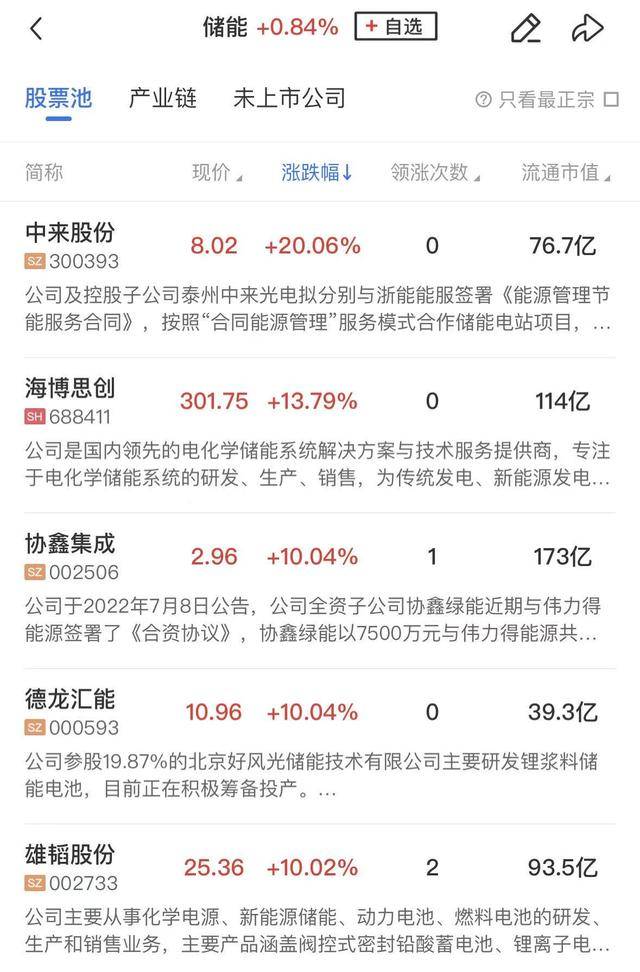
新能源消纳

Search documents
东兴证券晨报-20251111
Dongxing Securities· 2025-11-11 10:48
Economic News - The State Council has issued measures to promote private investment, including 13 targeted policies such as increasing central budget investments and supporting private investment projects with new policy financial tools [1] - The National Development and Reform Commission (NDRC) emphasized the coordination of investment, fiscal, and financial policies to enhance the effectiveness of measures promoting private investment [2] - The Ministry of Foreign Affairs expressed strong opposition to Japan's comments regarding Taiwan, indicating serious violations of the one-China principle [3] - China and the U.S. have agreed to suspend trade restrictions in the maritime, logistics, and shipbuilding sectors, marking a significant step in economic cooperation [4] - Global central banks have seen a significant shift in reserve structures, with gold holdings surpassing U.S. Treasury bonds for the first time [5] - In October, wholesale sales of new energy passenger vehicles reached 1.621 million units, a year-on-year increase of 18.5% [6] - The NDRC and the National Energy Administration released guidelines to promote the consumption and regulation of new energy [7] - The China SME Development Index (SMEDI) for October remained stable at 89.0, indicating steady development among small and medium enterprises [8] Company Insights - Zhongbei Communication signed a comprehensive service framework agreement worth 1 billion yuan [5] - Chaoying Electronics plans to invest 1.468 billion yuan in an AI computing high-end PCB expansion project [5] - Zhongji Xuchuang intends to issue shares overseas (H shares) and list on the Hong Kong Stock Exchange [5] - Shandong Gold's wholly-owned subsidiary has paid 738 million yuan in tax [5] - State Grid Information Communication won a bid worth 1.318 billion yuan [5] Industry Analysis - The food and beverage industry is transitioning from a low win-rate to a high win-rate phase, with expectations for dual growth in fundamentals and valuations in 2026 [6] - High win-rate opportunities are concentrated in consumer goods, particularly companies benefiting from new channels and product categories [7] - Hengyin Technology is positioned as a leader in smart banking solutions, leveraging a three-pronged strategy of smart terminals, AI algorithms, and ecosystem scenarios [8] - The self-service terminal industry is expected to grow significantly, driven by policy support and technological advancements, with market size projected to increase from 35 billion yuan in 2019 to 65 billion yuan in 2024 [10] - Hengyin Technology's revenue and profit are expected to recover in 2024 due to successful international market expansion and cost reduction strategies [9] - The company anticipates significant growth in overseas market revenue, which is expected to increase its overall revenue share [9] - The company is focusing on enhancing its product structure and integrating AI technology to drive innovation [9]
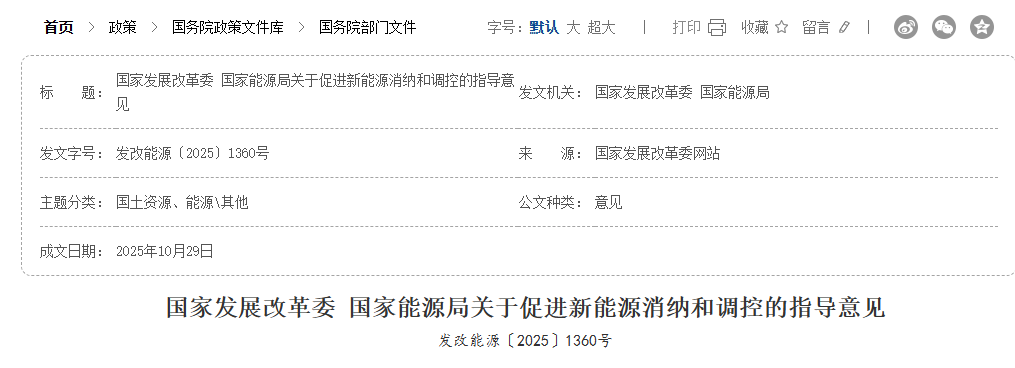
政策东风或催生储能新需求,关注储能电池ETF(159566)、光伏ETF易方达(562970)等产品投资价值
Sou Hu Cai Jing· 2025-11-11 10:19
Group 1 - The National Development and Reform Commission and the National Energy Administration released guidelines to promote the consumption and regulation of renewable energy, aiming for a reasonable consumption demand of over 200 million kilowatts of new energy annually by 2030 [1] - The guidelines emphasize the importance of new energy storage in enhancing consumption capacity, indicating a high demand for new energy storage during the 14th Five-Year Plan period [1] - The renewable energy battery index rose by 0.1%, while the photovoltaic industry index and the carbon neutrality index fell by 0.4% and 0.7%, respectively, indicating mixed market performance [1][5] Group 2 - The storage battery ETF (159566) saw a net subscription of over 60 million units throughout the day, reflecting strong investor interest in the sector [1] - The index focusing on the energy storage sector consists of 50 companies involved in battery manufacturing, energy storage inverters, and system integration, which are expected to benefit from future energy development opportunities [3]

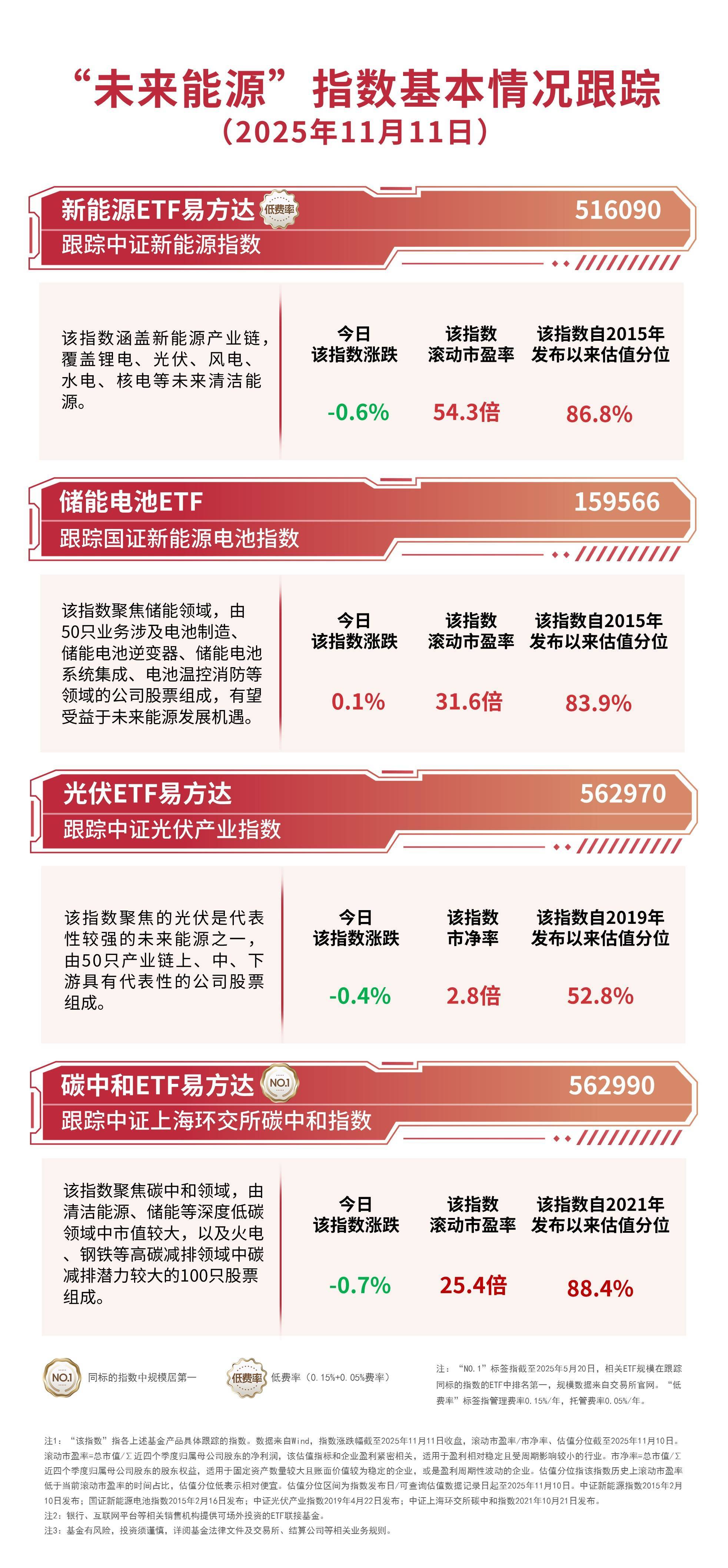
《关于促进新能源消纳和调控的指导意见》解读︱扛牢责任担当 推进转型发展 奋力谱写新能源高质量运行新篇章
国家能源局· 2025-11-11 10:12
Core Viewpoint - The article emphasizes the importance of the newly issued "Guiding Opinions on Promoting the Consumption and Regulation of New Energy" in advancing the development and consumption of new energy, which is crucial for achieving the "dual carbon" goals and constructing a new energy system [3][5]. Group 1: Background of the Guiding Opinions - The Guiding Opinions were introduced in the context of China's commitment to significantly increase its wind and solar power capacity by 2035, aiming for a total installed capacity of over 3.6 billion kilowatts, which is six times that of 2020 [4]. - As of now, China's renewable energy system is the largest and fastest-growing globally, with wind and solar power capacity exceeding 1.7 billion kilowatts, accounting for 46% of total installed capacity, and renewable energy contributing over 20% of total electricity generation [4]. - The increasing share of new energy in the power system presents challenges in terms of grid regulation and consumption, necessitating the timely issuance of the Guiding Opinions to ensure sustainable development [5]. Group 2: Key Requirements of the Guiding Opinions - The Guiding Opinions propose measures across various dimensions, including planning, infrastructure, market mechanisms, and technological innovation, to address systemic issues in new energy development [6]. - It emphasizes the need for coordinated planning to ensure the collaborative development of new energy and the grid, advocating for a mechanism that aligns the development of renewable energy projects with grid capacity [6]. - Infrastructure improvements are highlighted, including the construction of a new grid platform that enhances the grid's capacity to accommodate distributed energy sources and the development of flexible regulation resources [6][8]. - The establishment of a unified national electricity market is crucial for optimizing resource allocation, with a focus on expanding market mechanisms for new energy consumption [7]. Group 3: Implementation of the Guiding Opinions - The National Power Dispatch Control Center is tasked with implementing the Guiding Opinions, focusing on building a collaborative and efficient multi-level new energy consumption regulation system [9]. - Safety in the operation of new energy systems is prioritized, with ongoing research into the stability and balance of supply and demand in the context of high penetration of new energy [9][10]. - The article stresses the importance of market-driven approaches to enhance the consumption of new energy, including the development of electricity spot markets and auxiliary service markets [11].

博时市场点评11月11日:两市弱势整理,成交略过2万亿
Xin Lang Ji Jin· 2025-11-11 09:52
Market Overview - The three major indices in the A-share market experienced fluctuations and adjustments, with trading volume slightly above 2 trillion yuan, a decrease from the previous day [1] - The U.S. market has shown typical risk-averse trading characteristics, with liquidity pressure being a significant factor influencing changes in the U.S. stock market [1] - The net issuance of U.S. Treasury bonds reached 1.2 trillion yuan in the third quarter, with expected fiscal spending being stalled due to the government shutdown in October [1] - The Federal Reserve's overnight reverse repurchase agreements have reached a low point, failing to provide a buffer for the financial market, leading to increased liquidity pressure [1] - There is a divergence in market sentiment regarding the sustainability of AI leading companies' performance, which has also affected the risk appetite in corresponding sectors of the domestic equity market [1] Policy Measures - The State Council issued measures to promote private investment development, proposing 13 policy initiatives aimed at expanding market access and promoting fair competition [2] - The measures encourage private capital participation in new urban infrastructure projects, particularly in smaller cities, marking a first-time initiative [2] - The focus is on addressing practical issues that restrict private investment while guiding capital into traditional sectors like railways and nuclear power, as well as emerging fields like low-altitude economy and commercial aerospace [2] Renewable Energy Initiatives - The National Development and Reform Commission and the National Energy Administration released guidelines to promote renewable energy consumption and regulation, aiming to establish a multi-level renewable energy consumption regulation system by 2030 [3] - The guidelines emphasize the need to meet an annual demand for 200 million kilowatts of new renewable energy consumption, supporting carbon peak goals [2][3] - The focus areas include integrated development of solar, wind, and hydro energy, as well as offshore wind power, with an emphasis on technological innovation and the construction of a unified national electricity market [3] Market Performance - On November 11, A-share indices declined, with the Shanghai Composite Index closing at 4002.76 points, down 0.39%, and the Shenzhen Component Index at 13289.01 points, down 1.03% [4] - The top-performing sectors included retail, real estate, and steel, while telecommunications, electronics, and computers saw the largest declines [4] - A total of 2670 stocks rose, while 2407 stocks fell, indicating a mixed market sentiment [4] Fund Tracking - The market turnover was 20,140.66 billion yuan, a decrease from the previous trading day, while the margin financing balance rose to 25,014.17 billion yuan [5]
新政力挺!光伏、电池板块大涨
Shang Hai Zheng Quan Bao· 2025-11-11 08:36
Core Viewpoint - The recent guidance from the National Development and Reform Commission and the National Energy Administration aims to promote the large-scale development and high-quality consumption of renewable energy, establishing a new power system to support carbon peak and national contribution goals [1][2]. Group 1: Renewable Energy Development - The document sets a target to meet an annual demand for over 200 million kilowatts of new renewable energy consumption, which is equivalent to 200 GW, contributing to carbon peak goals [2]. - By 2030, a multi-level renewable energy consumption and regulation system is expected to be established, ensuring smooth grid connection and efficient operation of renewable energy [2]. Group 2: Energy Consumption Mechanisms - The guidance emphasizes the need for innovative pricing mechanisms to facilitate renewable energy consumption, addressing the intermittent and unpredictable nature of wind and solar power [3][4]. - The document highlights the importance of establishing a pricing mechanism for coal power, pumped storage, and new energy storage to enhance the value recovery of regulatory resources [4]. Group 3: Storage Solutions - Energy storage is identified as a crucial buffer and regulator for wind and solar energy, but its development faces challenges related to profitability and market participation [3][4]. - The guidance aims to clarify subsidy mechanisms and enhance economic viability for energy storage, potentially increasing investment in this sector [4]. Group 4: Vehicle-to-Grid Interaction - The document also focuses on the large-scale application of vehicle-to-grid interaction, utilizing vehicles as distributed energy storage terminals to enhance storage capacity [5]. - This model requires high-performance batteries due to increased usage and charging frequency, thereby raising standards for long-life batteries [5].
预测准确率超95%!国网山西电力上线低压分布式光伏功率预测系统
Xin Hua Cai Jing· 2025-11-11 07:42
Core Insights - A low-pressure distributed photovoltaic power forecasting system has been launched in Shanxi Province, enhancing short-term prediction accuracy to over 95% [1][2] - The installed capacity of distributed photovoltaic in Shanxi reached 14.89 million kilowatts by the end of September 2023, marking a 36% increase compared to the end of 2024 [1] Group 1: System Overview - The forecasting system covers all 11 cities and 115 counties in Shanxi, providing reliable technical support for a new power system with a high proportion of renewable energy [1] - The system utilizes historical generation data, temperature, light, cloud cover, and air quality to optimize prediction strategies through intelligent algorithms [1] Group 2: Operational Efficiency - The system can complete a single forecasting task in under 20 seconds, indicating high operational efficiency [2] - Future enhancements will focus on improving prediction accuracy under extreme weather conditions and adapting to complex meteorological scenarios [2]
电力设备行业快评报告:国家发改委发布指导意见,促进新能源消纳
Wanlian Securities· 2025-11-11 07:14
Investment Rating - The industry investment rating is "Outperform the Market," indicating an expected relative increase of over 10% in the industry index compared to the broader market within the next six months [5][8]. Core Insights - The report emphasizes the importance of promoting the consumption of renewable energy and the construction of a new power system, with specific targets set for 2030 and 2035 [2][4]. - By 2030, the goal is to ensure the smooth integration and efficient operation of renewable energy, with an annual demand for new electricity primarily met by renewable sources, and a capacity to accommodate over 200 million kilowatts of new energy [2]. - By 2035, a new power system that can adapt to a high proportion of renewable energy is expected to be fundamentally established, with a unified national electricity market playing a crucial role in resource allocation [2]. Summary by Sections Development Goals and Requirements - The guiding opinions outline that by 2030, the focus will be on ensuring the integration and efficient operation of renewable energy, with significant annual new electricity demand being met by renewable sources [2]. - By 2035, the establishment of a new power system that can handle a high proportion of renewable energy is anticipated, with a unified market facilitating optimal resource allocation [2]. Specific Guidance - The report details several strategies for renewable energy development and consumption, including optimizing the integration of various renewable sources and enhancing the adaptability of the new power system [3]. - It also highlights the need for innovative development models for renewable energy consumption and the importance of improving the regulatory framework for a unified electricity market [3]. Investment Recommendations - The report suggests that the upgrade and construction of the power grid are critical for building the new power system, with expected steady growth in investment due to supportive policies [4]. - It emphasizes the potential of new energy storage systems, which are essential for managing renewable energy consumption, and anticipates significant market opportunities as demand for integration increases [4].
我国新能源发展进入精细化管理新阶段
Zhong Guo Dian Li Bao· 2025-11-11 05:22
新能源大规模开发的同时,如何实现高质量消纳?国家发展改革委、国家能源局日前发布的《关于促进 新能源消纳和调控的指导意见》(以下简称《指导意见》)给出了思路—— 将新能源开发消纳划分为5类场景,支持4类就近消纳新业态发展,《指导意见》的发布标志着新能源消 纳进入精细化管理新阶段。 根据《指导意见》明确的工作目标,到2030年,协同高效的多层次新能源消纳调控体系基本建立,持续 保障新能源顺利接网、多元利用、高效运行,满足全国每年新增2亿千瓦以上新能源合理消纳需求。 新能源开发与消纳首次实现分类施策 这是我国首次以分类引导方式统筹新能源开发与消纳利用。 《指导意见》明确提出,"统筹'沙戈荒'新能源基地外送与就地消纳""优化水风光基地一体化开发消 纳""推动海上风电规范有序开发消纳""科学高效推动省内集中式新能源开发消纳""积极拓展分布式新能 源开发与消纳空间"。 国家能源局有关负责人表示,长期以来,新能源消纳工作主要聚焦于省内集中式新能源,随着新能源开 发模式日益多元,需要进一步明确分类施策要求。 "不同开发场景的新能源项目,在资源禀赋、发展模式、消纳利用等方面的特性差距较大。以往单一化 的管理模式已难以适应行业发 ...

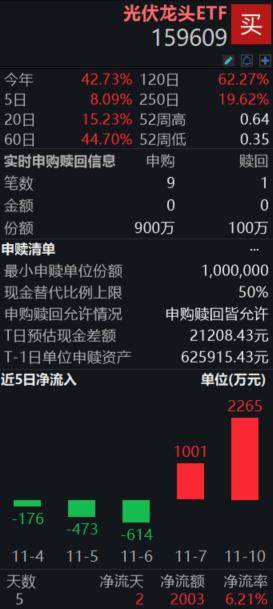
光伏龙头ETF(159609)盘中资金净申购800万份,连续2日资金净流入合计超3200万;新举措:促进新能源消纳
Sou Hu Cai Jing· 2025-11-11 04:42
Core Insights - The photovoltaic leading ETF (159609) has seen a 0.51% increase in the CSI Photovoltaic Industry Index, with significant gains from key stocks such as GCL-Poly Energy and Sungrow Power Supply [1] - The ETF has attracted over 32 million in net inflows over the past two days, indicating strong investor interest [1][4] - Recent government guidelines aim to promote the consumption and regulation of renewable energy, targeting a well-established multi-level consumption and regulation system by 2030 [2][3] Industry Overview - The CSI Photovoltaic Industry Index includes 50 representative stocks from the photovoltaic supply chain, covering upstream to downstream sectors such as silicon materials, wafers, cells, modules, inverters, and mounting systems [3] - The competitive landscape of the photovoltaic industry is expected to improve due to upcoming measures regarding product pricing, mergers and acquisitions, and higher industry entry barriers [3] - The ETF is positioned as an efficient tool for investors to capitalize on the global renewable energy revolution and to invest in core assets of the photovoltaic industry [4]
午报三大指数均小幅下跌,新能源赛道持续活跃,光伏、储能联袂领涨
Sou Hu Cai Jing· 2025-11-11 04:25
Market Overview - The market experienced fluctuations with the three major indices opening high but closing lower, with the ChiNext index dropping over 1% at one point. The half-day trading volume in the Shanghai and Shenzhen markets was 1.26 trillion yuan, a decrease of 184.6 billion yuan compared to the previous trading day [1] - The photovoltaic sector saw a collective surge, with stocks like GCL-Poly Energy and Topray Solar hitting the daily limit. The lithium battery sector also performed strongly, with Yongtai Technology achieving two daily limits in three days [1][3] - The coal sector faced significant declines, with Antai Group experiencing a sharp drop. Overall, the Shanghai Composite Index fell by 0.38%, the Shenzhen Component Index by 0.52%, and the ChiNext Index by 0.74% [1] Photovoltaic Sector - The photovoltaic sector was a major highlight, with stocks such as Zhonglai Co., GCL-Poly Energy, and Jincheng Co. hitting the daily limit. The sector's performance was bolstered by the recent guidance from the National Development and Reform Commission and the National Energy Administration promoting new energy consumption and regulation [2][26] - The research team from the Chinese Academy of Sciences developed a perovskite solar cell prototype with a conversion efficiency of 27.2%, significantly enhancing operational stability and laying the foundation for industrialization [3] Lithium Battery Sector - The lithium battery sector showed renewed strength, with stocks like Fangyuan Co. and Haike New Energy rising over 10%. The price of lithium hexafluorophosphate surged by 99% from October 1 to November 7, indicating strong demand in the domestic lithium battery production [4][10] - The market for lithium hexafluorophosphate reached 119,000 yuan per ton, a year-on-year increase of 115.38%, reflecting robust demand in the energy storage sector [4] Superhard Materials Sector - The superhard materials sector also saw a strong performance, with stocks like Sifangda and Huanghe Xuanfeng hitting the daily limit. This was supported by recent announcements from the Ministry of Commerce and the General Administration of Customs regarding the suspension of certain regulations affecting superhard materials [5][7][14] Food and Beverage Sector - The food and beverage sector showed some activity, with companies like Sanyuan Co. and Zhejiang Dongri experiencing consecutive daily limits. The core CPI excluding food and energy prices rose by 1.2% year-on-year in October, marking the sixth consecutive month of expansion [11][12] Energy Storage Sector - The energy storage sector was highlighted by the guidance from the National Development and Reform Commission and the National Energy Administration, which emphasized the advancement of new energy storage technologies [2][26]