
空间计算

Search documents
对话XREAL徐驰:当雷军投入七八成精力做AI眼镜,百镜大战才真正到来
Tai Mei Ti A P P· 2025-07-24 09:27
Core Viewpoint - The emergence of major players like Xiaomi in the AI glasses market indicates that the industry is maturing, but the current products still lack the sophistication needed for mass adoption [1][3]. Group 1: Industry Insights - The AI consumer electronics era is marked by a rush to integrate AI, yet many sectors are still unclear on practical applications [3]. - The current market for AI glasses is characterized by high return rates, suggesting that consumer experience is not yet satisfactory [1]. - The industry should focus on long-term development rather than short-term gains, with a vision for AI glasses to potentially replace smartphones in the future [3][6]. Group 2: Company Strategies - XREAL aims to sell its AR products in the millions, recently launching the One Pro model priced at 4,299 yuan, featuring advanced optical technology [4][6]. - The company is focused on creating lightweight glasses that provide 80% of the experience of traditional headsets at only 20% of the cost [6]. - XREAL recognizes the importance of ecosystem development but does not intend to create its own; instead, it plans to collaborate within existing ecosystems to enhance scalability [6]. Group 3: Market Dynamics - The XR industry is currently experiencing significant growth, led by major companies like Apple, Meta, Google, and Xiaomi, which is a departure from the previous hype surrounding the metaverse [6]. - The industry is not conducive to quick profits, with Qualcomm being the only company to have made substantial earnings in the past decade [7].



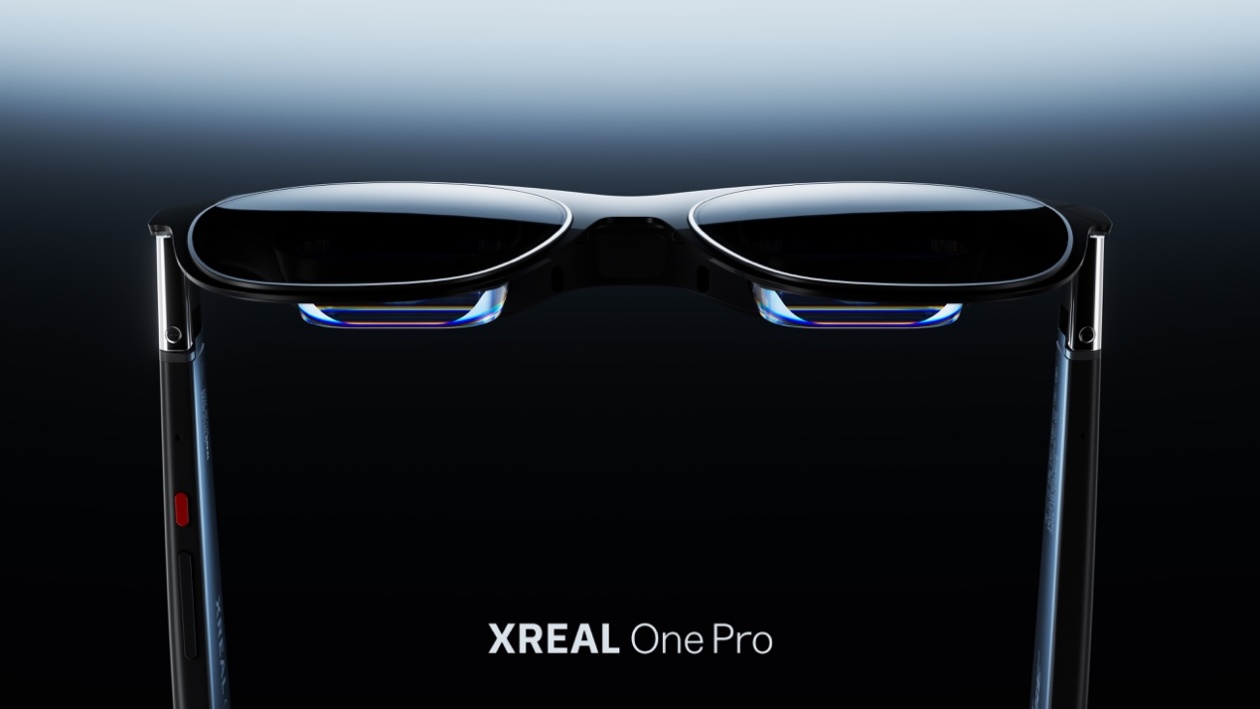
XREAL One Pro正式发布,光学模组与算力架构双重升级
Huan Qiu Wang· 2025-07-23 10:35
Core Insights - XREAL has launched its latest consumer AR glasses, XREAL One Pro, which has already garnered significant consumer interest with over 26,000 online reservations on JD platform [1][3] - The company has maintained its position as the global sales leader in the AR sector for three consecutive years and is projected to become the second-largest market share holder after Meta by Q1 2025 [3] - XREAL's advancements in optical modules and computing architecture have led to a 38% increase in the field of view (FoV) to 57 degrees, enhancing user experience [3][4] - The introduction of the X1 chip has resolved key issues related to computing power distribution, latency control, and bandwidth optimization, achieving a low latency of 3 milliseconds [3][4] - XREAL One Pro supports both 3DoF and 6DoF experiences, allowing seamless connectivity with various devices, thereby improving work and entertainment efficiency [3][4] Product Innovations - The XREAL Eye, a detachable portable camera, weighs only 2 grams and features a 12-megapixel module, enhancing the One series from 3DoF to 6DoF spatial anchoring [4] - The camera supports various functionalities including photo capture, video recording, gesture recognition, and AI capabilities, addressing concerns about battery life [4] - XREAL has partnered with Google to develop Project Aura, the first smart glasses compatible with the Android XR platform, featuring a split architecture design and XREAL's proprietary X1S chip [4][6] Industry Positioning - The company is positioned at the forefront of the AR/VR market, leveraging advancements in AI technology to enhance user experiences [6] - XREAL aims to create a historically significant product and is optimistic about leading the space computing trend, which is expected to become the core of the next generation of computing terminals [6] - The company will participate in the 2025 World Artificial Intelligence Conference (WAIC) in Shanghai, showcasing its latest technologies and products [6]
XREAL接连上新,一批智能眼镜“上海品牌”加速涌现
Di Yi Cai Jing· 2025-07-23 02:32
Core Insights - The article highlights the rapid development of Chinese companies in the smart glasses sector, with Shanghai aiming to cultivate internationally influential brands in this field [1][8] - XREAL, a leading AR glasses company based in Shanghai, has launched its flagship product, XREAL One Pro, which features innovative optical technology and a proprietary computing chip [1][4] - The AR/VR market is experiencing significant growth, with XREAL leading in global sales and aiming for profitability by 2026 [1][3] Group 1: Industry Development - Shanghai's Economic and Information Technology Commission has released an action plan for high-quality development in the next-generation display industry from 2026 to 2030, focusing on smart glasses and display technology innovation [1] - The plan includes building intelligent and automated production lines for smart glasses and developing various forms of AI-integrated eyewear products [1][8] - XREAL has been recognized as the global sales leader in the AR sector for three consecutive years, with a market share in 2025 that surpasses the combined total of its closest competitors [1][3] Group 2: Product Innovations - The XREAL One Pro features a groundbreaking 57-degree field of view (FoV) and a 63% increase in visible area compared to its predecessor, XREAL One [2][3] - The device utilizes the X1 spatial computing chip, which addresses key issues such as power distribution and latency control, achieving a low latency of 3 milliseconds [4][6] - XREAL is collaborating with Google to develop Project Aura, the first smart glasses compatible with Android XR, set to launch in 2026 [5][6] Group 3: Market Position and Future Prospects - XREAL's partnership with Google signifies a deep integration of Chinese AR technology with international platforms, enhancing the global presence of the Chinese XR industry [7][8] - The company aims to create a trillion-dollar ecosystem through its innovations and collaborations, fostering a unified industry landscape [8] - XREAL plans to establish a new headquarters in Shanghai's Pudong district, further solidifying its role in the AR/VR industry [8]
全球AR眼镜“销冠”XREAL发布新旗舰XREAL One Pro
Xin Hua Cai Jing· 2025-07-22 11:37
Core Insights - XREAL has launched its new flagship product, XREAL One Pro, which features a groundbreaking 57-degree field of view (FoV), representing a more than 63% increase in visible area compared to its predecessor, XREAL One [1][2] - The XREAL One Pro is designed for seamless connectivity with various devices, including Windows PCs, Android phones, Macs, iPhones, and Steam Decks, enhancing its usability [1] - The product utilizes XREAL's proprietary X1 spatial computing chip, which addresses key issues such as power distribution, latency control, and bandwidth optimization, achieving a low latency of 3 milliseconds [2] - The XREAL One Pro is priced at 4,299 yuan and has begun online pre-orders in the domestic market, with special promotions available on e-commerce platforms [2] - XREAL has also introduced a detachable portable camera, XREAL Eye, which supports various functionalities including photo capture, video recording, gesture recognition, and AI features [2] - A collaboration with Google is underway for the development of Project Aura, a new generation of smart glasses set to launch in 2026, which will support the Android XR platform and aim to enhance mixed reality experiences [2][3] - The industry consensus is that smart glasses are poised to become a key mobile terminal in the AI era, with XREAL aiming to create a historically significant product akin to the "iPhone moment" in the space computing era [3]
ABeam|中国科技趋势2025系列篇之4——沉浸式互动的新革命
Sou Hu Cai Jing· 2025-07-14 14:55
Core Insights - Immersive interaction is a technology-driven experience that enhances user engagement through various modalities, tracing its roots back to the 1960s with the development of the first computer graphics-driven head-mounted display [2] - The concept of the metaverse in 2021 led to a surge in global shipments of head-mounted devices, surpassing 10 million units for the first time, marking a significant industry trend [2] - The launch of Apple Vision Pro in 2023 represents a major breakthrough in spatial computing technology, attracting widespread industry attention [2] - In China, competitive head-mounted device manufacturers like PICO and DPVR have emerged, and VR large spaces are set to become a new offline entertainment method by 2024, integrating immersive experiences with cultural IP [2] Group 1: Key Technologies of Immersive Interaction - Extended Reality (XR) technology, encompassing VR, AR, and MR, is a crucial driving force in the development of immersive interaction [4] - The four core elements of XR technology are undergoing significant upgrades: - Display technology is evolving towards thinner, lighter devices with improved clarity [7] - Chip technology is advancing towards high computing power, low power consumption, and multifunctionality [7] - Interaction technology is integrating gesture recognition, eye tracking, voice interaction, and brain-computer interfaces for a multimodal experience [7] - Acoustic technology is enhancing sound source localization and creating a multi-sensory immersive experience [8] Group 2: Industry Applications of Immersive Interaction - XR technology has matured in various sectors in China, with active applications in entertainment, sports, cultural tourism, and industrial fields [8] - In the entertainment sector, XR technology is being integrated into gaming, live streaming, and film, with over 21,000 content pieces available on major VR platforms by the end of 2024 [11] - The sports industry is leveraging XR technology to innovate sports experiences, enhancing audience engagement through interactive viewing platforms [14] - In cultural tourism, XR technology is being used for smart guiding, immersive space creation, and digital preservation of cultural heritage, aligning with consumer demand for deep experiences [17] - The industrial sector is utilizing XR technology across various stages, including R&D design, production assembly, quality inspection, and maintenance, improving efficiency and reducing costs [20] Group 3: Future Trends - Generative AI is revolutionizing 3D content production, enabling efficient creation of models, scenes, and animations, and enhancing interactive capabilities [21] - Brain-computer interfaces are expected to deepen immersive experiences by allowing direct communication between the brain and external devices [24] - Spatial computing is emerging as a new paradigm, merging physical and virtual worlds to create seamless interactions and expand user experiences [25][27]

AI日报丨特斯拉被严重错杀!华尔街多头力证:近期特斯拉股价的抛售已然过度
美股研究社· 2025-07-10 12:39
Core Insights - The rapid development of artificial intelligence technology is creating extensive opportunities in the market [1] Group 1: AI Developments - Keling AI launched the Ketu 2.1 model on July 10, achieving comprehensive upgrades in instruction adherence, aesthetic quality, and response capabilities across over 180 styles, with enhanced text generation effects [3] - Keling AI has generated over 344 million images and 168 million videos [3] Group 2: Company Investments and Performance - Morgan Stanley estimates Alibaba's investment in food delivery and flash purchase services reached approximately 10 billion RMB in the first fiscal quarter ending in June, with expectations for this investment to double to 20 billion RMB in the second fiscal quarter, impacting profitability [3] - Meta is reportedly offering a $200 million compensation package to attract AI talent, including a significant salary for a former Apple AI executive [3] Group 3: Corporate Strategies and Market Outlook - Microsoft claims to have saved $500 million through AI implementation while also conducting large-scale layoffs, with 35% of new product code generated by AI [4] - RBC analyst Tom Narayan maintains a "outperform" rating for Tesla, raising the target price from $307 to $319, indicating about a 7% upside potential despite ongoing challenges [5][6] - Narayan believes Tesla's product demand remains strong despite increasing competition in the electric vehicle market, supported by its technological leadership and brand premium [6] Group 4: Product Innovations - Apple is preparing to release the first hardware upgrade for its Vision Pro headset, expected to feature a more powerful M4 chip and improved comfort for long-term wear, with a launch anticipated by the end of this year [9] - OpenAI has completed a $6.5 billion acquisition of a hardware startup co-founded by former Apple design chief Jony Ive, integrating the io Products team into OpenAI while maintaining its independent design responsibilities [11][12][13]




后手机电脑时代的生产力革新?INAIRAI空间计算机套装评测
Qi Lu Wan Bao· 2025-07-08 07:39
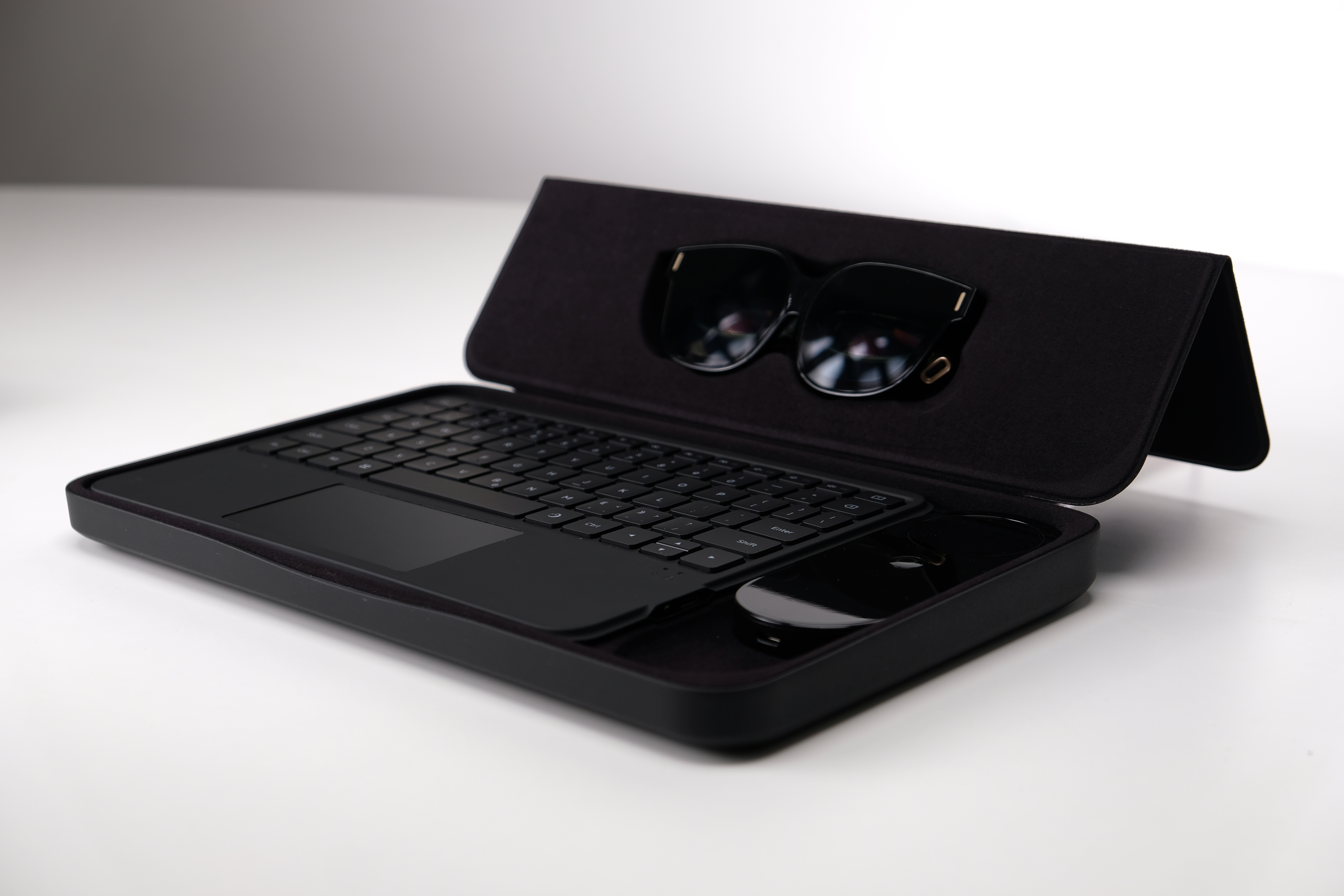
Core Insights - The introduction of the INAIR AR glasses aims to revolutionize office work by liberating users from traditional screens and desks, offering a 134-inch virtual display for enhanced productivity [1][3]. Product Features - The INAIR AI space computer consists of three main components: the lightweight INAIR 2 Pro AR glasses (77g), a compact INAIR Pod computing unit (similar in size to an early iPod), and the INAIR Touchboard keyboard, which supports spatial gestures [3][4]. - The AR glasses utilize Sony's new Micro-OLED technology, providing a high refresh rate of 120Hz and exceptional image clarity, significantly surpassing industry standards [4][5]. User Experience - The immersive experience includes a seamless multi-window display, allowing users to engage in various tasks simultaneously, which reportedly increases efficiency by over 200% compared to traditional single-screen setups [6]. - Initial user interactions reveal some challenges, such as the need for a mobile device to log into certain applications, which may hinder the user experience [7][9]. Technical Challenges - The INAIR Pod exhibits noticeable heat generation during high-performance tasks, although it maintains a quieter operation compared to competitors [10]. - Users may require 1-2 days to adapt to spatial gesture controls, with a high initial error rate reported [11]. Market Positioning - Priced at 6,999 yuan, the product is positioned as a high-end offering, which may limit accessibility for average consumers, although discounts are available on major e-commerce platforms [12]. - The product's ecosystem still requires optimization for professional applications like Photoshop and CAD, indicating room for growth [12]. Future Outlook - The CEO of INAIR emphasizes that the company is not merely selling hardware but promoting a new way of working that transcends traditional desk setups, suggesting a long-term vision for the evolution of workspace technology [13].
利亚德(300296) - 2025年7月4日投资者关系活动记录表
2025-07-07 01:08
Group 1: AI and Spatial Computing Business - The company focuses on AI and spatial computing, leveraging global leading optical motion capture technology for product development and sales, applicable in various fields such as film, robotics, healthcare, sports, and industrial simulation [1] - In 2024, the company entered the embodied intelligence sector, emphasizing "data, services, algorithms, and hardware" as core capabilities, and established a joint laboratory with industry partners [2] Group 2: Data and Service Capabilities - The company has a rich accumulation of motion data and can continuously generate new data based on motion capture technology, creating high-quality, high-precision robot motion datasets [2] - Services have expanded from hardware provision to include data collection, robot training services, and simulation training, tailored to customer needs [2] Group 3: Investor Questions and Responses - The company offers comprehensive solutions, including hardware, software, and data services, based on varying customer requirements [3] - A high-quality motion database is available, allowing robot manufacturers to extract data directly, with ongoing data collection based on specific needs [3] - The amount of data required for training robots varies; for example, training a robot to run may require around 100 effective data points, while more complex actions necessitate more data [4] Group 4: Data Processing and Technology - Data collected from motion capture must be cleaned to eliminate noise and distortion before being optimized for robot use [5] - The company employs various technical routes, including optical, inertial, and hybrid systems, with optical technology currently deemed the most precise for robot training [5]

苹果“沉浸式虚拟显示”专利曝光:防VR晕动症或成Vision Pro新卖点
Huan Qiu Wang· 2025-07-02 02:52
Core Viewpoint - Apple has recently obtained a patent for "Immersive Virtual Display Systems for Mitigating Motion Sickness in Moving Vehicles," which aims to address motion sickness experienced by passengers using VR headsets in moving vehicles [1][3]. Group 1: Technology and Application - The patented technology dynamically adjusts the virtual display to synchronize with vehicle motion, potentially enhancing the user experience in Apple's Vision Pro mixed reality device [1][3]. - This technology is compatible with both "fully enclosed VR headsets" and "transparent AR/VR mixed devices," indicating its applicability in immersive and spatial computing scenarios [3]. Group 2: Competitive Advantage - Compared to competitors, Apple's solution is seen as a significant advancement; Meta's "motion smoothing" feature only blurs images, while Sony's PSVR2 lacks vehicle motion optimization [3]. - The patent is regarded as a standard technology for next-generation VR headsets, positioning Apple favorably in the market [3]. Group 3: Market Context and Sales Performance - Since its launch in June 2024, Vision Pro has faced challenges with high pricing (starting at $3,499) and limited application scenarios, leading to lower-than-expected sales [4]. - Data from Morgan Stanley indicates that only 280,000 units of Vision Pro were shipped in Q1 2025, significantly below Apple's initial target of 8 million units for the year [4]. - Analysts suggest that the motion sickness solution could be a "game-changer" for improving sales performance [4].
北京:拟支持引入放映虚拟现实电影 支持企业向国家电影局申请虚拟现实电影“龙标”
news flash· 2025-06-27 02:07
Core Viewpoint - The document outlines measures to support the construction of an innovative experimental zone for future digital spaces in Beijing, emphasizing the integration of advanced technologies in various sectors such as culture, commerce, tourism, and sports [1] Group 1: Technology Integration - The initiative aims to enhance the application of cutting-edge technologies, including virtual reality, spatial computing, and AI, to create immersive offline experiences [1] - It supports the establishment of large-scale immersive projects like LBE XR spaces, digital art exhibitions, and digital performances, as well as the construction of a national sci-fi park [1] Group 2: Innovation and Standards - The plan encourages the development of humanoid robots and embodied intelligence through innovation experience stores and demonstration application scenarios [1] - It includes the establishment of data testing standards for humanoid robots and spatial intelligence across multiple scenarios, with applications showcased at major events like the Service Trade Fair and the China Science Fiction Conference [1] Group 3: Film and Entertainment - The document promotes research in virtual reality film technology and applications, including the construction of a sci-fi film experience center [1] - It supports the introduction of virtual reality films and encourages companies to apply for the "Dragon Mark" from the National Film Administration for virtual reality films, as well as participation in the standard-setting for virtual reality films and games [1]