
AI医疗

Search documents
推动AI医疗普惠 广州“穗小伊”入驻蚂蚁阿福App
Jing Ji Guan Cha Wang· 2026-01-23 13:55
Group 1 - The core event is the 2026 Greater Bay Area Medical Health Innovation Conference held on January 23, where significant advancements in healthcare technology were discussed [1] - The Guangzhou Health Commission announced the launch of an AI medical assistant named "Sui Xiao Yi," which aims to enhance patient care and streamline medical processes [1] - "Sui Xiao Yi" has officially integrated into the Ant Group's "Afu" app, indicating a collaboration between healthcare and technology sectors to improve accessibility and efficiency in medical services [1]
真视通(002771)新增【AI医疗】概念
Sou Hu Cai Jing· 2026-01-23 12:41
Group 1 - The core viewpoint of the news is that Zhen Shitong (002771) has added the "AI Medical" concept due to its investment in Beijing Xinfeng Future Technology Co., Ltd., which focuses on AI applications in healthcare [1] - The company is involved in various other concept sectors including AIGC, Alibaba, high-pressure fast charging, wind power, DeepSeek, liquid cooling servers, charging piles, East Data West Computing, Huawei computing power, computing power leasing, smart healthcare, virtual reality, spatiotemporal big data, trusted computing, industrial interconnection, remote office, Internet of Things, military-civilian integration, artificial intelligence, data centers, and big data [1] - Zhen Shitong's main business segments include multimedia video, artificial intelligence, industrial internet, and new energy charging piles [1] Group 2 - For the first three quarters of 2025, the company reported a main revenue of 215 million yuan, a year-on-year decrease of 11.73% [2] - The net profit attributable to shareholders was -52.77 million yuan, a year-on-year decline of 128.8%, while the non-recurring net profit was -52.82 million yuan, down 107.91% [2] - In the third quarter of 2025, the company achieved a quarterly main revenue of 84.002 million yuan, an increase of 14.82% year-on-year, but the quarterly net profit attributable to shareholders was -15.6964 million yuan, a decrease of 71.01% [2] - The company reported a debt ratio of 31.47%, investment income of -985,700 yuan, financial expenses of 1.7239 million yuan, and a gross profit margin of 15.81% [2]

AI健康应用爆发,大模型“看病”是否靠谱?我们进行了实测
Bei Ke Cai Jing· 2026-01-23 12:29
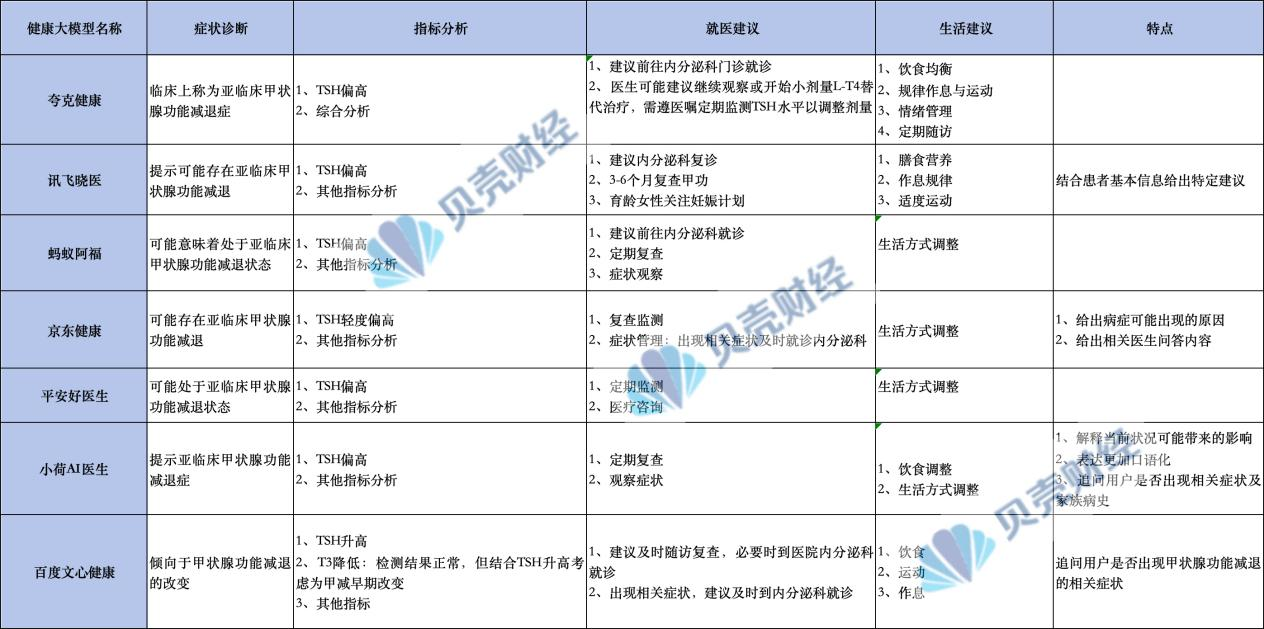
Core Insights - The article highlights the surge in AI health applications, with major companies like Ant Group, Baidu, OpenAI, and JD Health launching new products, indicating a growing trend in AI healthcare solutions [1][19][17] - Despite the advancements, the reliability of AI in interpreting medical reports is questioned, as some applications have made significant errors in diagnosis [8][6] - Regulatory bodies are beginning to establish guidelines for AI in healthcare, aiming to ensure safety and ethical standards [2][10] Group 1: AI Health Application Developments - Ant Group's AI health application "Ant Afu" gained significant traction, reaching the top two in the Apple App Store shortly after its launch [1] - Other notable AI health applications include Baidu's Wenxin Health, OpenAI's ChatGPT Health, and JD Health's evidence-based AI product "Zhi Yi" [1][19] - The competition among these applications is intensifying, with Ant Afu emerging as a strong contender despite being the newest [19][24] Group 2: Performance and Reliability of AI Applications - A test conducted by a news outlet on seven AI health applications revealed cautious interpretations of medical reports, with discrepancies in whether to recommend medical consultations [3][6] - The applications showed a tendency to use cautious language, indicating potential health issues without definitive conclusions [4][6] - Errors were noted, such as misinterpreting TSH (Thyroid-Stimulating Hormone) as HCG (Human Chorionic Gonadotropin), leading to inappropriate medical advice [8][9] Group 3: Regulatory Environment - The Beijing government's new policy on "AI + Healthcare" sets clear boundaries for the industry, while the National Internet Information Office has proposed interim measures for managing AI interactions in healthcare [2] - The regulatory framework aims to create a safe environment for AI healthcare development, emphasizing the need for collaboration between medical professionals and AI technologies [10][2] Group 4: User Interaction and Experience - Users have reported mixed experiences with AI health applications, with some finding the advice reasonable while others express caution [16][15] - Applications like Ant Afu and Baidu Health have integrated online consultation features, allowing users to connect with doctors after AI assessments [16][18] - The language style of some applications, such as Xiaohe AI Doctor, is more conversational, which may enhance user engagement [7][18] Group 5: Commercialization and Market Trends - AI health applications are evolving from simple tools to comprehensive platforms, aiming for a "Super App" model that integrates various functionalities [23][24] - Ant Afu has publicly stated that its health advice is free from commercial influences, focusing on user trust and engagement [23] - The trend indicates a shift towards creating interconnected ecosystems among different health applications, enhancing user retention and service offerings [24][22]

“穗小伊”入驻蚂蚁阿福App 广州推动AI医疗普惠
2 1 Shi Ji Jing Ji Bao Dao· 2026-01-23 10:43
Core Insights - The introduction of the AI medical assistant "Sui Xiao Yi" by the Guangzhou Health Commission aims to enhance the medical experience for citizens by integrating it into the Ant Group's AI health application, Antifuku App, which is the largest AI health management app in China [1][2] Group 1: AI Medical Assistant Features - "Sui Xiao Yi" provides 24/7 health consultation, appointment scheduling, cloud companion services, and report interpretation, catering specifically to the needs of the elderly, chronic patients, and working professionals [2][3] - The app connects users to over 5,000 hospitals and 300,000 real doctors, with more than 1,000 renowned doctors offering their "AI avatars" for health inquiries [1] - The report interpretation feature boasts an accuracy rate exceeding 95% and covers 99% of common report types [1] Group 2: User Experience Enhancements - The "Immediate Question and Action" service allows users to quickly book appointments by simply stating their desired hospital or department, significantly improving convenience [2] - The "Cloud Companion" service is available in over 50 hospitals in Guangzhou, providing real-time guidance throughout the medical process, from appointment to report collection [3] - Users can efficiently complete medical insurance payments through the app by quickly accessing their insurance codes, streamlining the payment process [3] Group 3: Future Developments - The Guangzhou Health Commission plans to further enhance "Sui Xiao Yi" by integrating artificial intelligence into the healthcare sector, aiming to provide smarter and more convenient medical services for residents [3]
创新药ETF国泰(517110)盘中涨超1.4%,连续5日迎资金净流入,关注创新为主的医药科技主线
Mei Ri Jing Ji Xin Wen· 2026-01-23 08:08
Core Viewpoint - The innovation-driven pharmaceutical sector in China is experiencing significant growth, with a shift from traditional growth drivers to innovative ones, supported by demographic changes and advancements in technology [1]. Group 1: Industry Transformation - The Chinese pharmaceutical industry has completed a transformation from old to new growth drivers between 2015 and 2025, with innovation opening new growth trajectories for companies [1]. - Traditional pharmaceutical companies have successfully transitioned to innovation-focused models, enhancing their global competitiveness [1]. Group 2: Market Dynamics - The demand side is bolstered by an aging population and an increase in chronic disease prevalence, while the payment side benefits from stable growth in medical insurance revenues and the establishment of a multi-tiered payment system [1]. - The rapid development of new technologies, such as AI, brain-computer interfaces, and cancer early screening, is expected to drive further industry transformation and growth [1]. Group 3: Investment Opportunities - The Cathay Innovation Drug ETF (517110) has seen over 1.4% increase in intraday trading and has experienced net inflows for five consecutive days, indicating strong investor interest in innovation-focused pharmaceutical technology [1]. - The ETF tracks the SHS Innovation Drug Index (931409), which selects listed companies with strong R&D capabilities and growth potential in the biopharmaceutical and chemical pharmaceutical sectors [1].
医药果然反弹!医药ETF(159929)收涨近1%,近5日狂揽超1亿元!关注创新、出海、困境反转脉冲三大产业演绎脉络!
Sou Hu Cai Jing· 2026-01-23 07:43
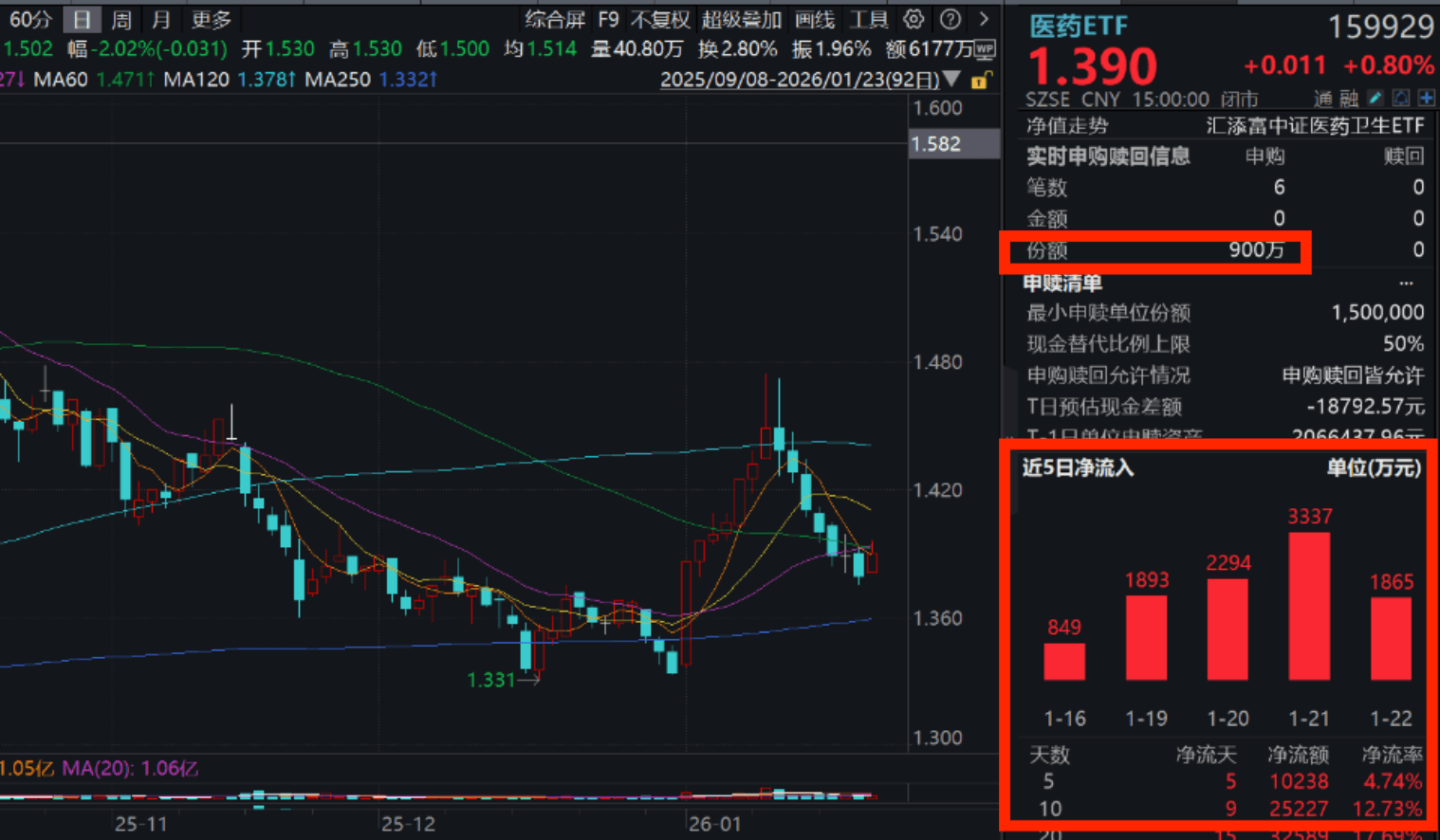
Core Viewpoint - The pharmaceutical sector is experiencing a rebound, with the pharmaceutical ETF (159929) rising by 0.8% and a total trading volume exceeding 86 million yuan, indicating strong investor interest and capital inflow [1]. Group 1: Market Performance - The pharmaceutical ETF (159929) has seen a capital inflow of over 320 million yuan in the last 20 days, with 15 of those days showing increased funding [1]. - The latest financing balance has surged to over 75 million yuan, reflecting continued leverage in the market [1]. - Major stocks within the ETF, such as Mindray Medical and United Imaging, have shown positive performance, with several stocks rising over 1% [4]. Group 2: Sector Analysis - The report highlights a shift in focus within the pharmaceutical sector towards innovative fields such as AI healthcare and medical robotics, moving away from previously strong areas like brain-computer interfaces [3]. - The CRO (Contract Research Organization) sector has also shown some performance, driven by market sentiment and expectations of turning points in the industry [3]. - The top three investment directions identified for 2026 include BD 2.0, small nucleic acids, and supply chain (CXO and upstream), emphasizing the importance of innovation and international expansion [5]. Group 3: Company Highlights - Key companies in the ETF include WuXi AppTec, with an estimated weight of 10.77%, and Hengrui Medicine, with a weight of 9.41%, both of which are significant players in the pharmaceutical industry [2]. - Tempus AI reported a revenue of approximately 1.27 billion USD for 2025, marking an 83% year-on-year growth, showcasing the commercial viability of AI in healthcare [6]. - NVIDIA and Eli Lilly announced a partnership to establish an AI innovation lab, investing up to 1 billion USD over five years to address challenges in drug discovery and development [5].
麦克奥迪:联合开发病理辅助诊断系统,解决基层医院病理医生资源不足等痛点
Sou Hu Cai Jing· 2026-01-23 07:37
Core Viewpoint - The company is actively developing AI medical solutions to address challenges in pathology diagnosis, particularly in resource-limited settings [1] Group 1: Company Initiatives - The company's medical products include cell DNA ploidy analysis systems, automated screening systems for tuberculosis, automated diagnostic systems for malaria, and immunohistochemistry analysis systems [1] - The company is collaborating with domestic enterprises to develop a "pathology auxiliary diagnosis system" aimed at alleviating the shortage of pathology doctors and limited diagnostic experience in grassroots hospitals [1]

爱尔眼科:致力于高质量长远发展,持续建设数智眼科,积极推进"1+8+N"战略
Sou Hu Cai Jing· 2026-01-23 07:37
Core Viewpoint - The company is focused on long-term high-quality development and aims to enhance its medical service capabilities through a strategic framework to drive business growth despite recent performance challenges [1]. Group 1: Company Strategy - The company is committed to building a "smart ophthalmology" system and is actively promoting a "1+8+N" strategy to strengthen its diagnostic and treatment network [1]. - The goal is to provide multi-level ophthalmic medical services for all age groups, which is expected to support continuous business growth [1].

医疗ETF(159828)涨超1.3%,连续5日资金净流入超1亿元,市场关注临床价值与创新主线
Mei Ri Jing Ji Xin Wen· 2026-01-23 07:16
Core Viewpoint - The medical ETF (159828) has seen a rise of over 1.3% on January 23, with net inflows exceeding 100 million yuan for five consecutive days, indicating market interest in clinical value and innovation in the healthcare sector [1]. Group 1: Investment Focus - Future investments in the pharmaceutical sector should emphasize the intrinsic logic of clinical value, which addresses the clinical needs of patients and healthcare providers, with both domestic and international policies assigning higher premiums to clinical value [1]. - The pharmaceutical and biotechnology sectors are driven by innovation (including overseas expansion, AI, and new technologies), performance validation, policy benefits, and seasonal market movements, with a short-term focus on innovative drugs and CXO [1]. Group 2: Key Themes and Directions - High-elasticity sub-themes include AI in healthcare/pharmaceuticals, brain-computer interfaces, and small nucleic acid drugs, which are expected to gain traction [1]. - Continuous attention is required on the collaboration outcomes from the JPM conference, clinical data for innovative drugs, and performance realization [1]. - In the realm of innovative medical devices, there is optimism regarding the upgrade of high-end medical equipment and high-value consumables [1]. Group 3: ETF and Index Information - The medical ETF (159828) tracks the CSI Medical Index (399989), which selects listed companies in the A-share market involved in medical devices, medical services, and medical information technology to reflect the overall performance of related listed companies in China's healthcare industry [1].
20cm速递|科创创新药ETF国泰(589720)连续10日资金净流入近4亿元,资金积极布局,创新浪潮持续涌动
Mei Ri Jing Ji Xin Wen· 2026-01-23 07:05
Group 1 - The core viewpoint is that the Chinese pharmaceutical industry has completed a transformation of growth drivers from 2015 to 2025, with innovation significantly opening new growth avenues for Chinese pharmaceutical companies [1] - The innovation sector in China has reached a scale where traditional pharmaceutical companies have successfully transformed, and their ability to expand internationally has accelerated, making them a key source of innovation for multinational pharmaceutical companies [1] - On the demand side, the aging population is accelerating, leading to increased demand for chronic disease management; on the payment side, health insurance revenue is steadily growing, and the National Healthcare Security Administration is actively promoting the development of commercial insurance to build a multi-tiered payment system [1] Group 2 - New technologies are accelerating industry transformation, with advancements in AI, brain-computer interfaces, early cancer screening, and AI healthcare rapidly developing [1] - The Guotai Innovation Drug ETF (589720) tracks the Innovation Drug Index (950161), which has a daily price fluctuation limit of 20%, focusing on the research and development of new drugs driven by technological innovation [1] - The index emphasizes high R&D investment and innovation capability, favoring allocations in high-tech pharmaceutical sectors such as biopharmaceuticals and chemical pharmaceuticals to reflect market performance and development trends in these areas [1]