绿色低碳

Search documents
智算引领 算网协同 绿色低碳 算力产业迈向高质量发展新阶段
Zhong Guo Chan Ye Jing Ji Xin Xi Wang· 2025-08-05 23:38
Core Insights - The rapid development of China's computing power industry is highlighted by significant advancements in infrastructure and technology, with a focus on high-quality development and strategic initiatives like the "East Data West Computing" project [1][4][9] - The demand for intelligent computing (智算) is surging, with its scale reaching 748 EFlops, accounting for 35% of the total computing power in China, and projected to grow to 1037.3 EFlops by 2025 [2][3] - The integration of computing resources across the nation is being prioritized to enhance accessibility and efficiency, with initiatives like the establishment of a national computing network and the "Computing Power Internet" [4][5][7] Industry Developments - The computing power infrastructure in China is expanding, with over 1,043 million standard computing racks in use, marking an 18.5% increase from 2024 [2] - Major telecom companies are enhancing their computing capabilities, with China Telecom's central computing center in Wuhan expanding by 2 EFlops to support AI applications [3] - The "East Data West Computing" initiative has seen the total computing power of eight major hubs reach 215.5 EFlops, with intelligent computing accounting for 80.8% of this total [3] Technological Advancements - The introduction of advanced technologies, such as liquid cooling, is significantly improving energy efficiency in data centers, with reductions in energy consumption by 50%-60% [8] - The deployment of high-capacity optical transmission networks is facilitating efficient computing resource allocation, with companies like China Mobile and China Unicom achieving significant advancements in network capabilities [6][7] Policy and Strategic Initiatives - The Chinese government is actively promoting policies to drive the integration of computing power and energy efficiency, aiming for a PUE value below 1.35 in existing data centers by 2027 [8] - The establishment of a national computing network and the "Computing Power Internet" is expected to enhance the efficiency of resource allocation and support over 7,000 computing entities in meeting demand [4][5]



外资为何持续深耕中国
Di Yi Cai Jing· 2025-08-05 11:52
商务部最新数据显示,今年上半年我国新设立外商投资企业30014家,同比增长11.7%,实际使用外资 金额增加4232.3亿元,其中瑞士、日本、英国等主要经济体对我国的投资额增幅均在37%以上,尤其是 瑞士对华投资同比增长高达68.6%。 在世界经济复苏乏力、贸易保护主义与单边主义等全球化逆风甚嚣尘上的国际环境中,跨国公司依然加 码中国投资,凸显了中国市场的独特魅力与非凡吸引力。 在世界经济复苏乏力、贸易保护主义与单边主义等全球化逆风甚嚣尘上的国际环境中,跨国公司依然加 码中国投资,凸显了中国市场的独特魅力与非凡吸引力。 更深更优地融入中国 拉长时间看,去年我国新设外商投资企业5.9万家,同比增长9.9%,实际使用外资8262.5亿元。因此, 截至今年上半年,我国外商投资连续增长了六个季度,同时外商累计在华投资设立的企业超过126.9万 家,累计实际使用外资超过21万亿元人民币,其中"十四五"期间累计新设外资企业22.9万家,实际使用 外资累计达到7087.3亿美元。 引资规模不断扩张的同时,外商的投资方向、结构、质量出现了明显优化。一方面,随着我国服务业的 蓬勃发展、对外开放程度的提高,以及制造业服务化趋势加 ...
成都世运会丨场馆“能改不建” 成都世运会节俭办赛妙招多
Jing Ji Wang· 2025-08-05 09:49
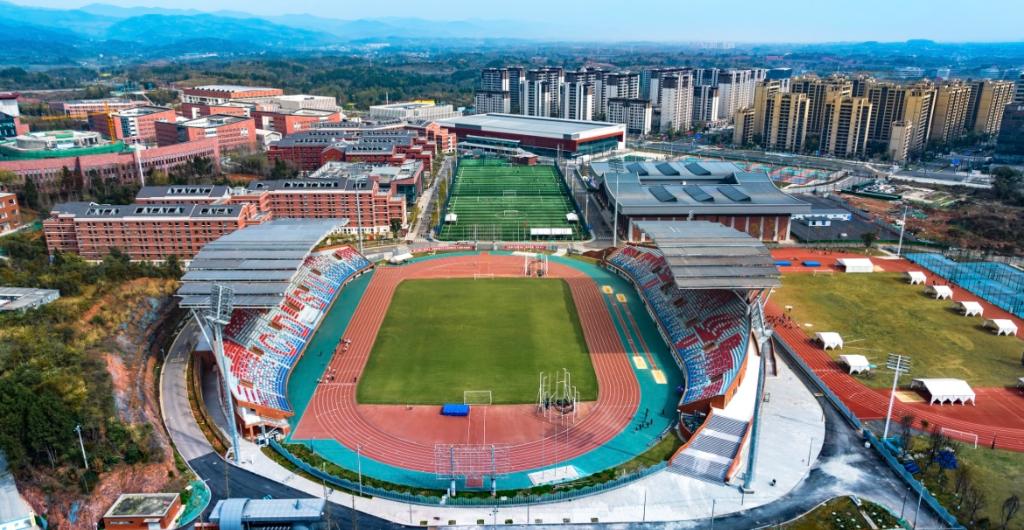
Group 1 - The 12th World Games will open in Chengdu on August 7, with 27 competition venues ready, emphasizing frugality in every detail [1] - All 27 competition venues are either renovated or temporary constructions, utilizing green and recyclable materials, and adopting modular and standardized construction methods [1][4] - The event features 34 major events, 60 sub-events, and 256 minor events, including traditional sports like martial arts and emerging sports like parkour and drone racing [4] Group 2 - Outdoor venues are integrated with parks and natural settings, exemplified by the Chengdu Guixi Ecological Park, which hosts events like frisbee on its grass [2] - The Chengdu Sports Academy venue employs a rental model for large equipment, significantly reducing capital investment and carbon emissions from material production and transportation [4][6] - Facilities are designed for post-event sustainable use, with flexible space configurations and equipment like LED screens repurposed for ongoing educational use [6]

成都世运会 | 场馆“能改不建” 成都世运会节俭办赛妙招多
Xin Hua She· 2025-08-05 05:43
Group 1 - The 12th World Games will open in Chengdu on August 7, with 27 competition venues ready, emphasizing frugality in every detail [1] - All 27 competition venues are either renovated or temporary constructions, utilizing green and recyclable materials, and adopting modular and standardized construction methods [1] - The event features 34 major events, 60 sub-events, and 256 minor events, including traditional sports with cultural significance and new vibrant sports [1] Group 2 - Chengdu Sports Academy will host competitions in four major events, showcasing a commitment to green and low-carbon principles [2] - The venue employs a rental model for large equipment, significantly reducing capital investment and carbon emissions from material production and transportation [2] - Facilities are designed for flexible use post-event, with foldable and easily convertible equipment to enhance venue efficiency [2] Group 3 - Sichuan Provincial Gymnasium will host Muay Thai and freestyle fighting, utilizing temporary facilities from a previous event to minimize new construction [3] - The use of existing temporary facilities covers nearly 500 square meters, contributing to cost-saving measures for the event [3]
包钢股份20250731
2025-08-05 03:20
Summary of Baogang Co., Ltd. Conference Call Company Overview - Baogang Co., Ltd. is the largest industrial enterprise in Inner Mongolia, controlled by the local government [2][3] - The company has a complete integrated industrial chain including coking, sintering, ironmaking, steelmaking, and rolling, with an annual production capacity of 17.5 million tons of steel [2][3] - Baogang owns the Baiyun Obo mine, with confirmed iron ore resources of 1.26 billion tons, the world's largest rare earth resources, and the second-largest niobium resources [2][5] Production and Financial Performance - In 2024, Baogang produced 14.21 million tons of iron, 14.99 million tons of steel, and 1.41 million tons of finished products, along with 377,300 tons of rare earth metals and 578,400 tons of fluorite [2][8] - As of the end of 2024, total assets reached 155.125 billion yuan, a year-on-year increase of 3.349 billion yuan, with a debt ratio of around 60% [2][8] - Revenue for 2024 was 68 billion yuan, a 3% decrease year-on-year, while Q1 2025 revenue was 15.4 billion yuan [2][9] Market and Export Dynamics - In 2024, Baogang exported 1.73 million tons, with 88% of exports going to countries involved in the Belt and Road Initiative [2][9] - The company has a strong focus on high-end manufacturing and digital transformation, with a digitalization rate of 83% [10] Research and Development - In 2024, Baogang achieved localized sales of 4.8726 million tons and a research intensity exceeding 5%, developing 67 varieties and nearly 300 grades of new rare earth steel materials [11] - The company received 150 innovation achievements or utility model patent authorizations in the same year [11] Environmental and Cost Management - Baogang invested 7 billion yuan in ultra-low emission transformation from 2020 to 2023, completing the required modifications ahead of schedule [18] - The company aims to reduce financial costs, with an average financing cost rate decreasing from 3.8% in 2024 to 3.4% in 2025 [26] Strategic Development - Baogang is committed to optimizing its industrial layout and promoting resource utilization, focusing on rare earth as a strategic pivot [13] - The company plans to continue its capital expenditure on technological upgrades, with a total investment plan of 1.876 billion yuan for 2025 [27] Competitive Advantages - Baogang's rare earth alloy steel products exhibit superior toughness and longevity, making them suitable for major engineering projects [25] - The pricing mechanism for rare earth products is influenced by the market prices of key rare earth oxides, with a premium of 100 to 800 yuan per ton compared to ordinary steel [33] Future Outlook - The company remains optimistic about future market conditions, particularly in the context of supply-side reforms and increasing demand from infrastructure projects [22][23] - Baogang is exploring new cooperation opportunities with Baowu Steel Group, particularly in the coking and carbon industries [35]

研判2025!中国氯化钾行业产量、消费量及进出口分析:资源约束叠加需求放缓,2025年前五月中国氯化钾行业呈现量缩态势[图]
Chan Ye Xin Xi Wang· 2025-08-05 01:35
Industry Overview - The domestic potassium chloride production capacity is mainly concentrated in Qinghai and Xinjiang, with Salt Lake Co. and Zangge Mining being the largest producers in China [1][5] - In the first five months of 2025, China's potassium chloride production was 2.33 million tons, a year-on-year decrease of 3.79%, while consumption was 7.73 million tons, down 3.46% year-on-year, indicating a dual decline in both production and consumption [1][5] - The expansion of domestic potassium chloride production capacity is limited due to resource endowment and mining conditions, particularly in major production areas like Qinghai and Xinjiang [1][5] Market Dynamics - Despite the importance of potassium fertilizer for food security, the demand for traditional potassium chloride is slowing due to changes in agricultural planting structures and the promotion of new fertilizers [1][5] - Global economic uncertainties have also impacted industrial demand for potassium chloride, leading some downstream enterprises to adopt cautious procurement strategies [1][5] Price Trends - By the end of June 2025, the domestic potassium chloride market experienced an unusual price increase, with domestic salt lake potassium chloride prices reaching 3,050-3,100 RMB/ton, and port prices for white potassium exceeding 3,300 RMB/ton [7] - The China Potassium Chloride Wholesale Price Index (CKPI) on June 30 was 3,177.90 points, a year-on-year increase of 23.35% and a 60.69% increase compared to the base period (2015) [7] Production Capacity and Utilization - As of June 2025, the industry operating rate was 61.77%, a decrease of 20.22 percentage points month-on-month and 6.89 percentage points year-on-year [9] - The production capacity utilization of Salt Lake Co. was below 70%, while Zangge Mining's capacity was limited due to mining intensity issues, leading to an overall contraction in industry output [9] Import and Export Trends - In the first half of 2025, China's potassium chloride imports were 6.36 million tons, a year-on-year decrease of 2.48%, with an import value of 12.85 billion RMB, down 11.14% [12] - Exports were significantly lower, with only 25,100 tons exported, a year-on-year decrease of 64.23%, reflecting changes in domestic and international market conditions [12] Competitive Landscape - The potassium chloride industry in China is highly concentrated, with the top two companies (Salt Lake Co. and Zangge Mining) holding over 70% market share, and the top five companies accounting for more than 85% [14] - The competitive advantage of leading companies stems from resource endowment differences, with the salt lake resources in the Qaidam Basin accounting for 96% of domestic capacity [14] Key Companies - Salt Lake Co. is the largest potassium chloride producer in China, with a designed capacity of 5 million tons and significant resource advantages in the Qaidam Basin [16] - Zangge Mining is the second-largest producer, with a production capacity of 2 million tons and advanced technology for resource development [18] Industry Development Trends - The industry is transitioning from reliance on domestic resources to global resource allocation, with leading companies accelerating overseas expansion due to domestic resource depletion and stricter environmental policies [20] - Technological innovations are driving industry upgrades, focusing on efficient resource utilization and low-carbon transformation [21][22] - The government is implementing policies to stabilize supply chains, including reserve systems and transportation cost reductions [23]


日照|1945.5亿元产值背后的“钢铁升级”
Da Zhong Ri Bao· 2025-08-05 01:14
Core Insights - The steel industry in Rizhao is rapidly advancing towards the high-end global value chain, with significant technological breakthroughs and a projected output value of 194.55 billion yuan in 2024, accounting for nearly half of the city's industrial output [1] High-end Breakthroughs - Rizhao Steel Holding Group has achieved a significant milestone with its ESP technology, producing steel with thickness precision from 0.6 to 6.0 mm and strength ranging from 200 to 1500 MPa, which is utilized in major projects like the Three Gorges Dam and Hong Kong-Zhuhai-Macao Bridge [2] - Shandong Steel Rizhao's innovations include the successful application of hot-rolled pipeline steel in extreme cold conditions and the production of ultra-thick hot-rolled coils, revolutionizing the steel structure sector [2] Intelligent Empowerment - The integration of AI and digital technologies has transformed steel production processes, with Shandong Steel Rizhao developing AI machine vision for automatic steel transfer, significantly enhancing efficiency [3] - Rizhao Steel has reduced the quality verification time for its products from 48 hours to 30 minutes through its "digital steel coil" technology, streamlining production and improving product quality [3] Green Development - The steel industry in Rizhao is committed to green and low-carbon development, with Shandong Steel Rizhao investing over 8.4 billion yuan in environmental protection, achieving leading energy consumption and zero wastewater discharge [5] - Rizhao Steel's ESP technology has led to a reduction of over 70% in energy consumption and 80% in carbon dioxide emissions compared to traditional processes, setting a benchmark in the industry [5] Industrial Cluster Development - The Rizhao steel industry is positioned as a key driver for industrial transformation, aiming to create a world-class coastal advanced steel manufacturing base with a capacity of 40 million tons [6] - A specialized industrial park covering 36.4 square kilometers has been established, fostering a comprehensive industrial ecosystem that includes upstream operations, raw material processing, and downstream manufacturing [6]

统筹推进高水平保护和高质量发展
Jing Ji Ri Bao· 2025-08-04 22:29
Core Viewpoint - Qinghai Province, particularly Hainan Tibetan Autonomous Prefecture, is rapidly transforming into a national clean energy industry hub, shifting from traditional agriculture to green industries, with significant ecological and economic implications [1][2]. Group 1: Ecological and Economic Transformation - Hainan Prefecture is focusing on developing a clean energy industry, including water, wind, solar, geothermal, and energy storage, leading to a structural shift in its economy [1]. - The region has successfully transformed previously barren lands into productive areas, showcasing the potential of ecological restoration [1]. - The local government is guided by national directives to enhance ecological civilization and develop a world-class salt lake industry and clean energy base [1][2]. Group 2: Sustainable Development Challenges - Despite ecological advantages, the western regions, including Qinghai, face challenges of unbalanced and insufficient development, necessitating a focus on sustainable growth [2]. - The relationship between ecological protection, high-quality economic development, and improving livelihoods is critical for the region's overall progress [2][3]. Group 3: High-Quality Development Strategies - Hainan Prefecture emphasizes the integration of ecological protection with high-quality development, aiming for a balanced approach that does not compromise either aspect [3]. - The region's development strategy includes promoting clean energy and stabilizing agriculture while ensuring ecological integrity [3][4]. - The prefecture is leveraging new productive forces, particularly in clean energy, to drive economic growth while addressing ecological pressures [4]. Group 4: Future Directions and Innovations - The global shift towards green, low-carbon, and sustainable development presents opportunities for Hainan Prefecture to enhance its clean energy sector [4]. - There is a need for reforms, higher levels of openness, and deeper innovations to strengthen the region's technological capabilities and support traditional industry upgrades [4]. - The prefecture aims to integrate green electricity with digital technologies to create new growth drivers and advantages [4].
商品包装轻装上架应成常态
Jing Ji Ri Bao· 2025-08-04 22:10
Core Viewpoint - The excessive packaging of products has been criticized for its environmental impact and resource waste, prompting a joint initiative by various consumer and industry associations in China to advocate for reduced packaging and promote green consumption [1][2]. Group 1: Overpackaging Issues - Excessive packaging is a significant concern, with statistics indicating that packaging waste accounts for approximately 30% to 40% of urban household waste in China, much of which is due to overpackaging [1]. - The push for high-end, intricate packaging by businesses not only raises consumer costs but also contradicts the principles of green and low-carbon development [1]. Group 2: Regulatory Measures - New national standards aimed at limiting excessive packaging will be enforced starting September 2023 and April 2024, setting clear requirements for packaging void ratios, layers, and costs [2]. - Specific products, such as mooncakes and rice dumplings, are restricted to a maximum of three layers of packaging, placing responsibility on producers to comply with these standards [2]. Group 3: Design and Innovation - Effective packaging design should balance simplicity and functionality, enhancing product value while avoiding waste [2]. - Companies are encouraged to innovate in packaging design, focusing on aesthetics and functionality, such as creating packaging that can be reused or repurposed [2][3]. Group 4: Industry Responsibility - The initiative by industry associations aims to raise awareness among businesses about the importance of self-regulation and reducing excessive packaging from the source [3]. - Companies are urged to invest in green technologies and new materials that facilitate resource conservation and recycling, thereby aligning with energy-saving and environmental standards [3].
利好来了!重磅发布!
券商中国· 2025-08-04 13:10
Core Viewpoint - Hainan Province has released a significant policy document titled "Three-Year Action Plan for Accelerating the Construction of a Modern Industrial System with Characteristics and Advantages in Hainan (2025-2027)", outlining 20 specific measures to enhance its industrial system [1][2]. Summary by Sections Overall Goals - By 2027, the value added of the four leading industries is expected to account for approximately 70% of GDP, with a strong emphasis on high-quality economic development. The construction of an international tourism consumption center will be advanced, and the potential for tourism consumption will be continuously released. The modern service industry's value added is projected to approach 30% of GDP, with R&D expenditure intensity reaching 1.8% and high-tech industries contributing over 17% to GDP [8]. Characteristic Industry Cultivation Actions - The plan emphasizes the development of three future industries: seed industry, deep-sea industry, and aerospace industry, alongside the growth of tropical efficient agriculture [9][10][11]. - The seed industry aims to establish a "Southern Breeding Silicon Valley" and achieve an annual revenue of over 20 billion yuan by 2027 [9]. - The deep-sea industry will focus on enhancing oil and gas reserves and production, with a target revenue of over 6 billion yuan for the deep-sea technology industry cluster by 2027 [10]. - The aerospace industry aims to develop a comprehensive industrial chain, with a revenue target of 10 billion yuan for the Wenchang International Aerospace City by 2027 [11]. Advantage Industry Enhancement Actions - The tourism sector will optimize product supply and develop new consumption formats, aiming for a revenue of over 50 billion yuan for the Sanya Haitang Bay leisure tourism industry cluster by 2027 [13]. - The plan supports the development of the Yangpu Port as a regional international container hub, targeting a revenue of 80 billion yuan for the Yangpu Port shipping industry cluster by 2027 [14]. - Financial reforms will enhance cross-border capital flow, with an asset management target of nearly 600 billion yuan for the Sanya Central Business District by 2027 [14][15]. Key Park High-Quality Development Actions - The plan aims to cultivate industrial clusters in various sectors, including offshore wind power, modern logistics, and artificial intelligence, with a goal of nurturing 30 industrial clusters with over 10 billion yuan in revenue by 2027 [18]. - Innovative financing mechanisms for industrial parks will be explored, including the establishment of provincial investment companies [18]. Guarantee Measures - The plan emphasizes the need for strong organizational leadership and the establishment of a project library for key projects to ensure timely implementation and effectiveness [20][21].