
价值投资

Search documents
央妈突发利好!7月15日,今日凌晨有哪些重要消息持续发酵?
Sou Hu Cai Jing· 2025-07-14 23:33
Group 1 - The central bank announced a significant liquidity support measure by conducting a 1.4 trillion yuan reverse repurchase operation on July 15, with 800 billion yuan for 3-month and 600 billion yuan for 6-month terms, which is seen as a strong positive signal for the market [1] - The A-share market continued to strengthen, primarily driven by bank stocks, while technology growth stocks showed weakness, indicating a shift in capital towards large-cap stocks [1] - The market saw a notable increase in active stocks, with 3,000 stocks rising and over 2,000 declining, suggesting improved performance of thematic stocks compared to the previous week [3] Group 2 - The Shanghai Composite Index reached a high of 3,532 points and a low of 3,513 points, indicating a narrow trading range of less than 19 points, reflecting a divergence among the three major indices [5] - The closing data showed the Shanghai Composite Index up by 0.27% while the Shenzhen Component Index fell by 0.11%, indicating a mixed performance in the market [7] - The current market dynamics suggest that while large-cap stocks are performing well, small-cap stocks remain relatively weak, and there is a concern about the sustainability of the upward trend driven mainly by banks and large financial institutions [7]


长钱何以长投?资管掌门人如是说
Shang Hai Zheng Quan Bao· 2025-07-14 18:29
Core Viewpoint - The recent initiatives by the Ministry of Finance and other regulatory bodies aim to guide insurance funds towards long-term and stable investments, enhancing the performance evaluation system for state-owned commercial insurance companies, which is seen as a crucial step for stabilizing the capital market [6][9]. Group 1: Insurance Funds and Capital Market - Insurance funds are characterized as long-term and patient capital, making them naturally suitable for long-term investment needs in the capital market [8][9]. - As of the end of the first quarter, the balance of funds utilized by insurance companies reached 34.93 trillion yuan, indicating a significant potential for long-term investments [8]. - China Life Asset Management, as a major player, aims to reshape the value investment paradigm in the capital market by increasing equity investment proportions and providing stable long-term funding [7][9]. Group 2: Long-term Investment Initiatives - The "Honghu Fund," initiated by China Life and Xinhua Insurance, is a pilot fund with a total scale of 50 billion yuan, focusing on long-term investments in companies with strong competitive advantages [9]. - The push for long-term investment reform is a key focus for regulatory bodies, with China Life Asset Management being one of the first participants in this initiative [9][10]. Group 3: Challenges and Opportunities - The insurance sector faces challenges such as the need for improved risk management tools and a shift from short-term to long-term investment strategies [11][13]. - There is a call for enhancing the investment capabilities of insurance funds, particularly in navigating complex global capital markets and optimizing investment frameworks [13][15]. - The low interest rate environment and insufficient supply of quality assets highlight the necessity for insurance funds to increase their equity asset allocation [15][16]. Group 4: Bank Wealth Management - Bank wealth management is increasingly entering the capital market, with institutions like Everbright Wealth Management leading the way in equity investments [17][18]. - As of June, the proportion of equity products in Everbright's wealth management offerings exceeded 7%, reflecting a significant increase in equity asset allocation [19]. - The shift towards equity investment is seen as a necessary response to the limitations of fixed-income assets in a low-interest-rate environment [20][21]. Group 5: Regulatory and Structural Adjustments - There is a need for regulatory adjustments to support long-term investments, including optimizing accounting standards and enhancing the matching mechanism between client risk profiles and asset styles [30][31]. - The establishment of a multi-dimensional evaluation system for long-term investments is essential to support investment teams in maintaining a focus on fundamental research during market fluctuations [30][31].

APEI vs. LINC: Which Stock Is the Better Value Option?
ZACKS· 2025-07-14 16:40
Core Insights - Investors in the Schools sector may consider American Public Education (APEI) and Lincoln Educational Services Corporation (LINC) as potential stocks for investment [1] - APEI currently holds a Zacks Rank of 2 (Buy), indicating a stronger earnings outlook compared to LINC, which has a Zacks Rank of 3 (Hold) [3] Valuation Metrics - APEI has a forward P/E ratio of 22.31, while LINC's forward P/E is significantly higher at 31.46 [5] - The PEG ratio for APEI is 1.49, suggesting a more favorable valuation in relation to its expected EPS growth, compared to LINC's PEG ratio of 2.10 [5] - APEI's P/B ratio stands at 2.12, indicating a better market value relative to its book value than LINC's P/B ratio of 4.03 [6] Value Grades - APEI has received a Value grade of A, while LINC has a Value grade of D, reflecting APEI's superior valuation metrics and earnings outlook [6][7]



3 Bargain Stocks the Market Is Sleeping on Right Now
MarketBeat· 2025-07-14 15:33
Market Overview - U.S. markets have experienced a significant rally, with the S&P 500 and NASDAQ Composite reaching new all-time highs, driven primarily by the tech sector and speculative assets like Bitcoin [1][4] - Despite the market surge, the macroeconomic outlook remains uncertain due to ongoing tariff policies and low consumer sentiment [2][5] Target Corporation - Target's stock has seen a substantial decline of 24% year-to-date, with Q1 2025 results showing a 2.8% decrease in total net sales and a 3.8% decline in comparable sales [8][9] - The company's current P/E ratio of 11.28 is 32% lower than its 10-year average, indicating potential undervaluation [9] - Digital sales have shown growth, with a 4.7% increase, and the same-day delivery service, Target Circle 360, has grown by 36%, suggesting a possible turnaround if the digital transition is successful [10] Ford Motor Company - Ford has withdrawn its full-year guidance for 2025 amid tariff pressures and challenges in its EV division, but recent Q1 2025 revenue of $40.66 billion exceeded analyst expectations [11][12] - The company's P/E ratio of 9.39 is significantly below its historical average, presenting a potential entry point for investors [14] - Ford's stock has increased by 14% in the last 30 days, and it offers a dividend yield of over 5% [14] MGM Resorts International - MGM Resorts has seen positive consumer sentiment in Macau, with plans to increase gaming capacity by 36% over the next decade [15] - The company's Q1 2025 EPS of $0.69 surpassed estimates, although revenue fell by 2.4% year-over-year [16] - MGM's stock has risen 16% in the last month and 26% over the past three months, yet it still trades at a discount compared to its five-year P/E average of 19.99 [17]


Should Value Investors Buy Teradata (TDC) Stock?
ZACKS· 2025-07-14 14:41
Core Viewpoint - The article emphasizes the importance of value investing and highlights Teradata (TDC) as a strong candidate for value investors due to its favorable valuation metrics and earnings outlook [2][4][7]. Group 1: Value Investing Strategy - Value investing is a popular strategy that relies on traditional analysis of key valuation metrics to identify undervalued stocks [2]. - The Zacks Rank and Style Scores system can help investors find stocks with specific traits, particularly those with high value grades [3]. Group 2: Teradata's Valuation Metrics - Teradata (TDC) has a Zacks Rank of 2 (Buy) and an A grade for Value, indicating strong potential for value investors [4]. - TDC's current P/E ratio is 9.88, significantly lower than the industry average of 18.50 [4]. - The P/S ratio for TDC is 1.2, compared to the industry's average P/S of 1.49, suggesting it is undervalued [5]. - TDC's P/CF ratio stands at 9.39, well below the industry average of 21, indicating a solid cash outlook [6]. Group 3: Earnings Outlook - The combination of TDC's favorable valuation metrics and strong earnings outlook positions it as one of the market's strongest value stocks [7].


主动优选2025年来超额表现好,因为啥呢?
银行螺丝钉· 2025-07-14 13:59
Core Viewpoint - The article discusses the performance of the "Active Selection" strategy compared to the CSI 300 index and other equity fund indices, highlighting its ability to generate excess returns in most years since its inception, particularly noting a recovery in 2025 after underperforming in 2024 [1][2][36]. Performance Summary - As of June 30, 2025, the Active Selection strategy achieved a 5.46% excess return compared to the CSI 300 index [1]. - The performance of the Active Selection strategy since its inception shows that it outperformed the CSI 300 and the equity fund index in most years, particularly excelling during the bull market from 2020 to 2021 [4][8]. - Yearly performance data indicates that in 2020, the Active Selection strategy rose by 65.78%, outperforming the CSI 300 by 24.49% and the equity fund index by 5.61% [7][4]. 2024 Underperformance Analysis - In 2024, the Active Selection strategy increased by 6.56%, but underperformed the CSI 300, which rose by 14.68%, resulting in an 8.12% shortfall [11][12]. - The underperformance in 2024 is attributed to market style shifts, particularly a surge in small-cap and loss-making stocks, which the Active Selection strategy does not engage with [14][23]. Investment Strategy Insights - The article emphasizes the importance of investing in companies with strong profitability, as measured by Return on Equity (ROE), and categorizes companies into three groups based on their ROE [15][18]. - The strategy focuses on high-quality stocks, avoiding speculative investments in loss-making companies, which led to its relative underperformance during periods of "speculative trading" in 2024 [23][34]. - Long-term investment in high-performing stocks is advocated, aligning with the principle that stock prices ultimately reflect the underlying company's value over time [37][38].

翟相栋50.26%收益领跑百亿权益基金自购榜,萧楠自购易方达消费行业股票超百万份,近一年收益-1.67%
Xin Lang Ji Jin· 2025-07-14 13:54
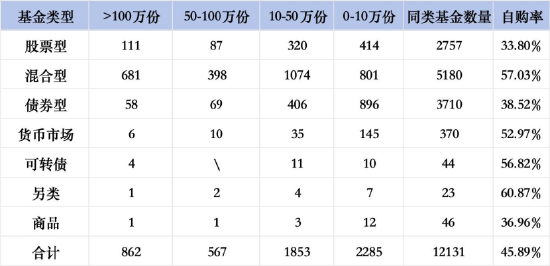
Group 1 - The core observation from the 2024 fund annual report indicates that over half of fund managers do not hold shares in their own funds, with only 7% holding over one million shares, highlighting a significant disparity in self-purchase behavior across fund types and companies [1][2] - Mixed funds are the primary drivers of self-purchase activity, boasting a self-purchase rate of 57.03%, which is significantly higher than that of equity and bond funds [1][2] - Alternative investment funds lead with a self-purchase rate of 60.87%, while convertible bond funds also show a strong self-purchase rate of 56.82%, indicating a deep commitment from fund managers to niche products [2] Group 2 - Among fund companies, Southern Fund ranks first with a self-purchase rate of 51.72%, followed by E Fund at 48.05%, which has the highest number of funds with over one million self-purchases [2] - In contrast, Huaxia Fund shows a stark difference with only 18.06% self-purchase rate and just 24 out of 454 funds achieving over one million self-purchases, indicating a lack of confidence compared to industry leaders [2] - Notable fund managers such as Zhang Kun, Xie Zhiyu, Zhao Yi, and Liu Xu hold over one million shares in their own funds, reflecting a strong alignment with their fund performance [2][4] Group 3 - Zhang Kun, managing over 60.8 billion yuan, demonstrates commitment to value investing despite his funds' returns being below the industry average, with both his funds achieving over one million self-purchases [4] - Xie Zhiyu showcases confidence through self-purchases in two funds that have performed well, with returns of 31.07% and 17.39% respectively, further emphasizing the trend of self-purchase among top managers [4] - The "three-year lock-up" strategy is exemplified by fund managers Zhao Feng and Zhao Yi, who have linked their self-purchases to long-term investment principles, achieving returns of 20.02% and 19.40% respectively [5] Group 4 - The phenomenon of over 54% of fund managers opting for zero self-purchases contrasts sharply with the trend among top managers who hold over one million shares, indicating a shift towards a "risk-sharing contract" model [5] - Large self-purchases create a mechanism that binds the interests of fund managers and investors, effectively establishing a trust signal in a market characterized by diminishing returns [5]
市场积极引导“耐心资本”,险资重仓ETF并不只有高股息
Sou Hu Cai Jing· 2025-07-14 08:24
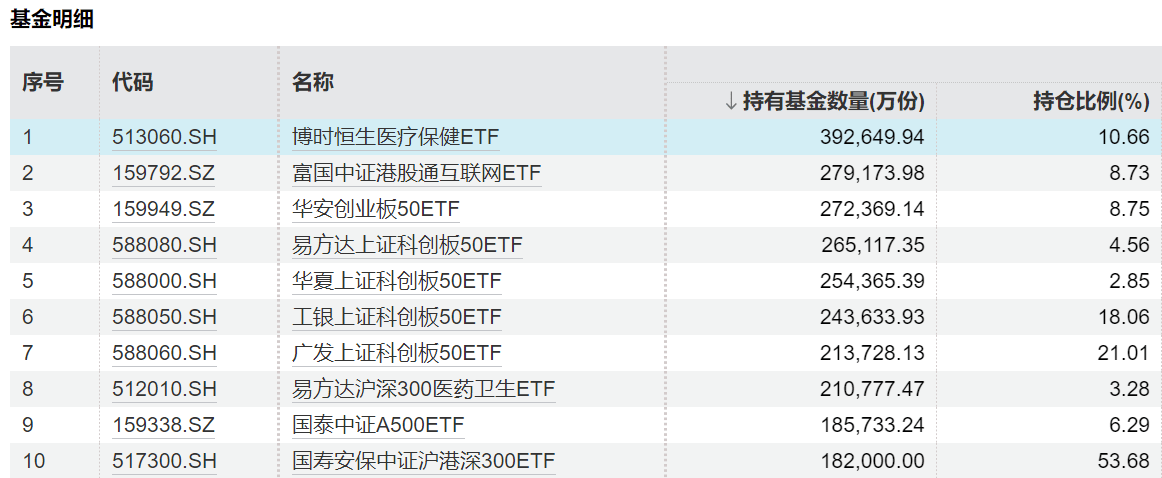
Core Viewpoint - The new regulation from the Ministry of Finance aims to guide insurance funds towards long-term stable investments, shifting the assessment mechanism for state-owned insurance companies to include a five-year dimension, which is expected to encourage value investing and reduce short-term trading behaviors [1][2]. Group 1: Insurance Fund Strategies - The three major insurance companies exhibit different investment styles, with a general perception that insurance investments are conservative and focused on stability [2]. - China Life Insurance Company is the most active in the ETF market, holding 123 ETFs, with significant investments in healthcare and technology sectors rather than just dividend stocks [3][4]. - New China Life Insurance Company also shows a preference for high-growth technology sectors, particularly in Hong Kong stocks, while maintaining some high-dividend assets [5][6]. - Ping An Life Insurance Company adopts a more traditional approach, focusing on core broad-based indices, aligning with the central financial strategy [8][9]. Group 2: Investment Focus Areas - China Life's top holdings include the Bosera Hang Seng Healthcare ETF and various STAR Market ETFs, indicating a pursuit of certainty in investments, particularly in healthcare and technology, which align with national strategies [3][4]. - New China Life's top ETFs are heavily weighted towards Hong Kong technology, reflecting a strategic focus on high-growth sectors and the potential for higher dividend returns from Hong Kong stocks [5][7]. - Ping An's strategy emphasizes core broad-based indices like the Ping An CSI A50 ETF, indicating a preference for stable, low-risk investments amidst market fluctuations [8][9]. Group 3: Overall Investment Strategy - The overall strategy of insurance funds appears to be a "barbell strategy," balancing between high-growth and high-value investments, which aligns with broader institutional investment trends [10]. - The focus is on high-dividend assets, stable operations, and sectors that support national development strategies, such as advanced manufacturing and biotechnology [10].



金融破段子 | 3500点,理解纠结、越过纠结
中泰证券资管· 2025-07-14 08:22
Core Viewpoint - The market is experiencing increased discussion and mixed emotions as the Shanghai Composite Index surpasses 3500 points, a level historically associated with significant market movements [2][5]. Group 1: Market Analysis - The Shanghai Composite Index has spent a majority of its time below 3500 points over the past 20 years, leading to a sense of excitement mixed with apprehension as it enters a "minority time" above this threshold [2]. - The 3500-point level is seen as a critical technical indicator for market transitions, having previously marked the beginning of bull markets in 2007, 2015, and 2021, although not every instance has led to sustained upward trends [5]. Group 2: Investment Strategies - Investors should focus on market differentiation rather than just the index, as there is significant valuation disparity among sectors. For instance, as of June 20, 2025, industries like steel and real estate are valued above the historical 60th percentile, while sectors such as agriculture and non-bank financials are below the 10th percentile [6]. - Portfolio management should not be viewed in binary terms of high or low positions. Investors are encouraged to maintain holdings in stocks they are confident in, allowing for a more flexible approach to portfolio allocation based on individual comfort levels with risk [8]. - Investors should prepare for increased market volatility as participation and emotional responses grow. While volatility itself is not inherently risky, it can lead to poor decision-making if not managed with confidence and a clear understanding of investment fundamentals [9].

NXG: Still Not Sure Where The Income Is
Seeking Alpha· 2025-07-14 08:20
Seeking Alpha's Disclosure: Past performance is no guarantee of future results. No recommendation or advice is being given as to whether any investment is suitable for a particular investor. Any views or opinions expressed above may not reflect those of Seeking Alpha as a whole. Seeking Alpha is not a licensed securities dealer, broker or US investment adviser or investment bank. Our analysts are third party authors that include both professional investors and individual investors who may not be licensed or ...
