碳减排

Search documents
用好“环境粮票”提高减排效率
Jing Ji Ri Bao· 2025-09-11 22:44
Core Viewpoint - The recent document outlines a plan to establish a national carbon emissions trading market by 2030, focusing on a quota system that combines free and paid allocations to drive market-based emissions reductions [1][2][3] Summary by Sections Quota System - Quotas are described as "environmental food stamps" issued by the government to companies, allowing them to sell excess allowances if they manage to reduce emissions effectively [1] - The plan includes a timeline for adjusting quota distribution methods, prioritizing total quota control for stable-emission industries by 2027 [1] Transition from Intensity Control to Total Control - The current method of carbon quota distribution is based on intensity control, which limits emissions per unit of output but does not cap total emissions [1] - This approach has limitations, including unclear reduction expectations and insufficient constraints on emissions, prompting a shift to total emissions control [1] Market Mechanism and Paid Allocation - The carbon market, which will include sectors like steel and cement by 2024, is expected to cover over 60% of national CO2 emissions, facilitating the breakdown of national reduction targets to the enterprise level [2] - The transition from free to paid quota distribution is necessary to enhance market liquidity and reduce volatility, as evidenced by the EU's experience with a 60% paid allocation rate [2] Implementation and Fairness - The document emphasizes the need for a balanced approach in quota distribution, ensuring it is neither too lenient nor too strict, to meet national reduction goals while being fair to advanced companies [3] - Strict regulations will be enforced to ensure accurate carbon emissions data and compliance in quota transactions, enhancing the traceability of each quota [3] Future Outlook - The implementation of these measures is expected to accelerate the transition to a market-driven carbon market, positioning it as a key driver for green transformation in the industry [3]
青岛港与华光自然电力合作开发岸电及船舶充电项目
Da Zhong Ri Bao· 2025-09-11 12:55
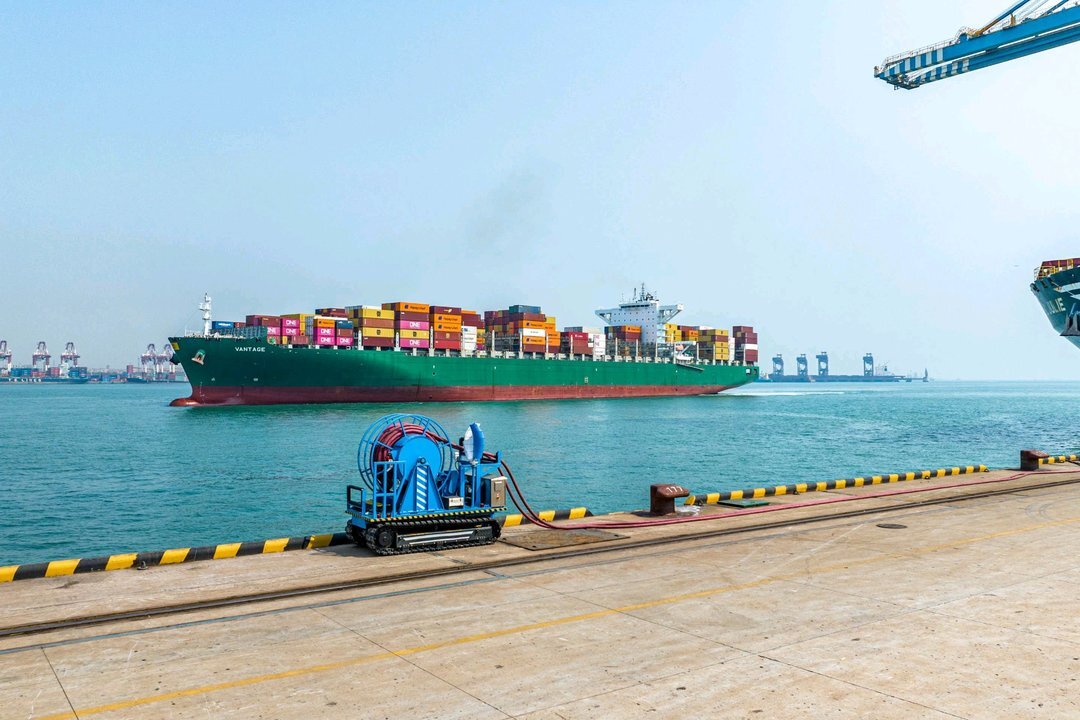
Core Viewpoint - Qingdao Port International Co., Ltd. and Huaguang Natural Power Holdings Limited have signed a strategic cooperation agreement to develop new business models for electric vessels, promote the construction of green shipping corridors, and develop shore power networks [1][3]. Group 1: Strategic Cooperation - The agreement aims to create a global shore power service network, providing integrated and environmentally friendly shore power supply solutions for international shipping clients [3]. - Qingdao Port will share its experience and resources in shore power development to support Huaguang Natural Power in launching and implementing shore power infrastructure projects in Hong Kong [3]. - The cooperation will cover project planning, technical solutions, financing models, construction and commissioning, operational models, and training and personnel exchanges [3]. Group 2: Industry Impact - The partnership is expected to reduce carbon emissions in the shipping industry and support broader energy transitions [3]. - Both companies will work together to promote joint initiatives for carbon reduction and emission mitigation, enhancing Qingdao Port's international influence and brand reputation [3]. - The collaboration is seen as a significant step in deepening mutual trust and expanding the breadth and depth of green energy cooperation, contributing to the construction of a green port and the shipping decarbonization process [3]. Group 3: Company Background - Qingdao Port International Co., Ltd. is a major operator of the Shandong Province Qingdao Port, established on November 15, 2013, focusing on efficient logistics services and innovative green solutions [4]. - The company operates five major port areas and provides various cargo handling and logistics services, equipped with advanced terminal facilities and comprehensive port functions [4]. - Huaguang Natural Power Holdings Limited aims to integrate resources from its parent company and leading renewable energy developers to invest in and operate shipping electrification infrastructure networks in Asia [5]. - The company is dedicated to providing shore power supply for docked vessels and charging services for nearshore electric vessels, promoting decarbonization and sustainable development in the shipping industry [5].


甘肃国瑞化工科技有限公司成立 注册资本1000万人民币
Sou Hu Cai Jing· 2025-09-11 11:37
Core Insights - Gansu Guorui Chemical Technology Co., Ltd. has been established with a registered capital of 10 million RMB [1] - The company is involved in various sectors including mineral resource exploration, energy technology research and development, and carbon reduction technologies [1] Company Overview - The legal representative of the company is Zong Fenxia [1] - The business scope includes licensed projects such as mineral resource exploration, which requires approval from relevant authorities [1] - General projects include energy storage technology services, biomass energy technology services, and oil and gas technology services [1] Services and Products - The company offers a wide range of services including technical services, development, consulting, and technology transfer [1] - It is also engaged in the sale of petroleum products (excluding hazardous chemicals) and specialized equipment for oil drilling [1] - Additional services include landscape engineering, earthwork engineering, and resource recycling technology research and development [1] Technological Focus - The company emphasizes research and development in carbon reduction, carbon conversion, carbon capture, and carbon storage technologies [1] - It manufactures new energy prime mover equipment and gas/liquid separation and purification equipment [1] - The company is involved in the processing of recycled resources, excluding licensed businesses [1]
佛山市睿智南洋科技有限公司成立 注册资本50万人民币
Sou Hu Cai Jing· 2025-09-06 21:20
Core Viewpoint - Recently, Foshan Ruizhi Nanyang Technology Co., Ltd. was established with a registered capital of 500,000 RMB, focusing on various technology services and environmental solutions [1] Company Summary - The company has a registered capital of 500,000 RMB [1] - Its business scope includes technology services, development, consulting, and transfer [1] - The company is involved in carbon reduction, conversion, capture, and storage technology research and development [1] - It offers new materials technology promotion services and sales of various materials including coatings, surface functional materials, and ecological environment materials [1] Industry Summary - The company operates in the fields of chemical products production and sales, excluding licensed chemical products [1] - It is also engaged in the manufacturing and sales of inks and pigments, as well as the sale of building materials [1] - The company participates in technology import and export, as well as goods import and export [1]
塔里木油田(若羌)新能源有限公司成立,注册资本11.18亿
Xin Lang Cai Jing· 2025-09-05 03:22
Core Insights - Tarim Oilfield (Ruoqiang) New Energy Co., Ltd. was established on September 3, with a registered capital of 1.118 billion RMB [1] - The company is wholly owned by PetroChina Taihu (Beijing) Investment Co., Ltd. [1] - The business scope includes solar power generation technology services, emerging energy technology research and development, and carbon reduction technologies [1] Company Overview - The legal representative of the new company is Liang Yulei [1] - The registered capital of the company is 1.118 billion RMB, indicating significant investment in the new energy sector [1] - The company focuses on various technologies including carbon capture, carbon storage, and energy storage services [1]
圣阳股份:公司始终以技术创新为核心驱动力,不断拓展市场边界
Zheng Quan Ri Bao Wang· 2025-09-03 09:47
Core Viewpoint - The company emphasizes technology innovation as its core driving force and aims to expand market boundaries while focusing on the core needs of high-energy-consuming enterprises in carbon reduction and electricity cost optimization [1] Company Strategy - The company adheres to the industrial-grade energy storage design concept of "extreme safety, intelligent efficiency, and flexible deployment" [1] - It has independently developed and launched advanced commercial and industrial energy storage solutions, including outdoor energy storage integrated machines and efficient liquid cooling energy storage systems [1] Market Focus - The company is dedicated to providing safe, reliable, and energy-efficient green energy systems that deeply align with application scenarios [1] - It aims to continuously support the clean and low-carbon transformation and sustainable development of high-energy-consuming industries [1]


昊华科技20250902
2025-09-02 14:41
Summary of Conference Call Records Company and Industry Overview - **Company**: 中华蓝天 (Zhonghua Lantian) and 昊华科技 (Haohua Technology) - **Industry**: Refrigerants, Lithium Battery Electrolytes, Civil Aviation Tires, Specialty Coatings, Carbon Reduction Technologies Key Points and Arguments Refrigerants Market - Zhonghua Lantian's refrigerant business benefits from quota policies and strong downstream demand, especially in the export market, with expectations for the market to remain at high levels despite potential price fluctuations due to policy changes [2][5] - Prices for products like 134a and 32 continue to rise, indicating a robust market environment [2][5] Liquid Cooling Technology - Zhonghua Lantian is actively developing liquid cooling technology for data centers, with products like YL-1-10 and YL-70 designed for silent liquid cooling applications [2][6] - The company has identified 134a as suitable for data center cooling plates and has begun limited sales, indicating a proactive approach to meet growing cooling demands [2][6] Electrolyte Research and Development - Zhonghua Lantian has invested in solid and semi-solid electrolyte research, boasting a production capacity of 250,000 tons and establishing a research institute for sulfide research [2][7] Civil Aviation Tires - The company has achieved significant milestones in civil aviation tires, obtaining airworthiness certificates for various aircraft models and beginning large-scale production [2][10] - Anticipated explosive growth in market supply by the end of 2025 or early 2026 due to successful trials and partnerships with major airlines [2][10][13] Specialty Coatings - Zhonghua Lantian's specialty coatings focus on functional coatings for civil aviation, shipping, and industrial applications, emphasizing high value and customization [2][14] - The company is targeting marine coatings as a key area for future breakthroughs [2][16] Carbon Reduction Business - The carbon reduction segment is benefiting from previous strategic investments, with significant orders nearing 4 billion yuan and a strong market outlook [2][18][19] - The company is recognized for its advanced gas separation technologies and is positioned as a leading provider in the carbon reduction field [2][18] Financial Performance - Haohua Technology reported a sales revenue of 7.76 billion yuan in the first half of 2025, a year-on-year increase of 19.45%, with net profit rising by 20.85% to 645 million yuan [3][4] - The fluorochemical segment saw a revenue increase of 24.99% and a gross profit increase of 40.73%, indicating strong performance across various business units [3][4] Market Dynamics in Lithium Battery Industry - The lithium battery industry is experiencing intense competition and overcapacity, leading to a challenging market environment [2][8][9] - The electrolyte and lithium additive sectors are currently in a downturn, with prices significantly lower than previous highs, necessitating a focus on technological advancements for competitive advantage [2][9] Future Outlook - Haohua Technology aims to become a leading enterprise in the gas sector, focusing on capacity expansion, technological development, and market exploration [2][24] - The company is set to complete a new production line for trifluorine nitrogen by the end of September 2025, which is expected to enhance profitability in the southwest region [2][22][23] Additional Important Insights - The civil aviation tire market is dominated by a few major players, but Zhonghua Lantian has positioned itself as a competitive fourth player with significant production capabilities [2][10] - The specialty coatings business is expected to grow due to increasing demand in various sectors, including renewable energy projects [2][15][16]

科技巨头的“圈地埋粪”计划,奇葩碳抵消方案背后的“环境账单”
Xin Jing Bao· 2025-09-01 14:52
Group 1 - Microsoft's "landfill" plan involves collaborating with Vaulted Deep to collect human and animal waste, converting it into bio-sludge for deep underground storage to prevent greenhouse gas emissions [1] - The project aims to process over 4 million tons of carbon equivalent by 2038, with an estimated cost of $1.7 billion, allowing Microsoft to gain carbon credits and tax incentives under the U.S. 45Q tax credit mechanism [1] - The initiative reflects the broader trend of tech companies exploring unconventional carbon offset methods due to the increasing carbon footprint associated with AI development [2][6] Group 2 - Various innovative carbon offset methods are emerging globally, such as Iceland's Carbfix project that converts CO2 into rock and Switzerland's Climeworks capturing atmospheric CO2 for beverage production [2] - The "whale carbon credit" initiative recognizes whales as significant carbon sinks, allowing companies to purchase credits for whale conservation, thus promoting marine carbon absorption [3] - China's unique approaches to carbon reduction include seed paper for event credentials that can grow into plants and bamboo carbon trading that turns environmental protection into economic benefits [4][5] Group 3 - The "wind-solar-fish" integrated project in Jiangsu combines wind power, solar panels, and aquaculture for efficient resource utilization [5] - The "Carbon Benefit Tianfu" mechanism in Chengdu incentivizes low-carbon behaviors among citizens through rewards, making carbon reduction a part of daily life [5] - Critics argue that effective carbon reduction should focus on reducing emissions at the source rather than relying on purchasing carbon credits, highlighting the challenges faced by the AI industry in achieving carbon neutrality [6][7] Group 4 - China's AI development is characterized by proactive measures, such as the DeepSeek model that significantly reduces computational demands compared to traditional models, showcasing a commitment to sustainable practices [8] - The integration of green principles into technological innovation is essential for achieving a balance between development and environmental responsibility, positioning sustainability as a competitive advantage in the tech industry [8]

破解“减排成本高”难题,碳市场建设进入新阶段
Di Yi Cai Jing· 2025-08-28 12:20
Group 1 - The core viewpoint of the article emphasizes the importance of the newly issued "Opinions" as a guiding document for the construction of a national carbon market in China, marking a new phase in the country's green and low-carbon transition efforts [1][5] - The carbon market is identified as a crucial policy tool for addressing climate change and accelerating the green transformation of the economy, with the establishment of both mandatory and voluntary carbon trading markets [2][5] - The national carbon market aims to reflect the marginal costs of emissions reduction and social value through carbon pricing, guiding capital and resources towards low-carbon technologies and services [2][3] Group 2 - The construction of the carbon market is designed to provide flexible mechanisms for achieving greenhouse gas control targets at lower social costs, allowing companies to choose their compliance paths [3][5] - The national carbon market is expected to accelerate the transition to clean energy and technological innovation in key industries such as electricity, metallurgy, and cement, promoting decarbonization across supply chains [3][5] - The article highlights the need for a unified carbon market with standardized management, trading, and regulatory frameworks to enhance resource allocation efficiency and market potential [6][9] Group 3 - The voluntary carbon market is an essential component of the national carbon market system, aimed at creating significant green market opportunities and supporting national climate goals [8][9] - As of now, the voluntary carbon market has made progress with the establishment of registration and trading systems, and several greenhouse gas reduction projects have been registered, totaling approximately 9.48 million tons of CO2 equivalent [9] - The government plans to focus on key areas for carbon peak and neutrality, developing methodologies for voluntary reduction projects and exploring international pathways for voluntary trading mechanisms [9]
看懂周期赚大钱!巴菲特早年靠这波行情封神,普通人也能学
商业洞察· 2025-08-28 10:08
Core Viewpoint - The article discusses the concept of "super cycles" in the context of investment opportunities and historical performance, particularly highlighting Warren Buffett's early investment success and the broader economic cycles that have influenced market returns over time [1][6][9]. Summary by Sections Buffett's Early Investment Performance - Between 1957 and 1968, Buffett's partnership company significantly outperformed the Dow Jones index, with a notable 50-point lead in 1968 [1][2]. - Buffett ceased accepting new investors in 1966, expressing concerns about keeping up with market conditions [1]. Super Cycles - Super cycles are characterized by long-term upward trends that create and consume wealth, with the most significant returns occurring during these periods [2][9]. - The article identifies three major super cycles: 1. 1949-1968: Post-WWII explosive growth driven by the Marshall Plan and the baby boom [6]. 2. 1982-2000: A modern cycle marked by the resolution of inflation issues, leading to a strong economic recovery and significant stock market returns [7]. 3. 2009-2020: A post-financial crisis cycle characterized by quantitative easing and low interest rates, resulting in one of the longest bull markets in history [8]. Characteristics of Super Cycles - Common factors driving super cycles include initial low valuations, declining or low funding costs, and low initial yields [9]. - Economic growth and regulatory reforms have historically reduced market risk premiums, contributing to higher market returns [9]. "Fat and Flat" Periods - The article describes two significant "fat and flat" periods: 1. 1968-1982: High inflation and low returns, with the S&P 500 showing a nominal return of -5% [11]. 2. 2000-2009: A period marked by the bursting of the tech bubble and subsequent low returns, influenced by geopolitical events and economic uncertainty [13]. Current and Future Cycles - The article posits that the market is transitioning into a "post-modern cycle," influenced by macroeconomic and political changes, with new investment paradigms emerging [14][15]. - Factors driving the post-modern cycle include rising funding costs, slowing economic growth, a shift from globalization to regionalization, and increasing labor and commodity costs [17][18]. Investment Opportunities and Risks - The article suggests that the post-modern cycle may present new investment opportunities and challenges, particularly in sectors related to carbon reduction, regional development, and artificial intelligence [16][20].