生成式AI

Search documents
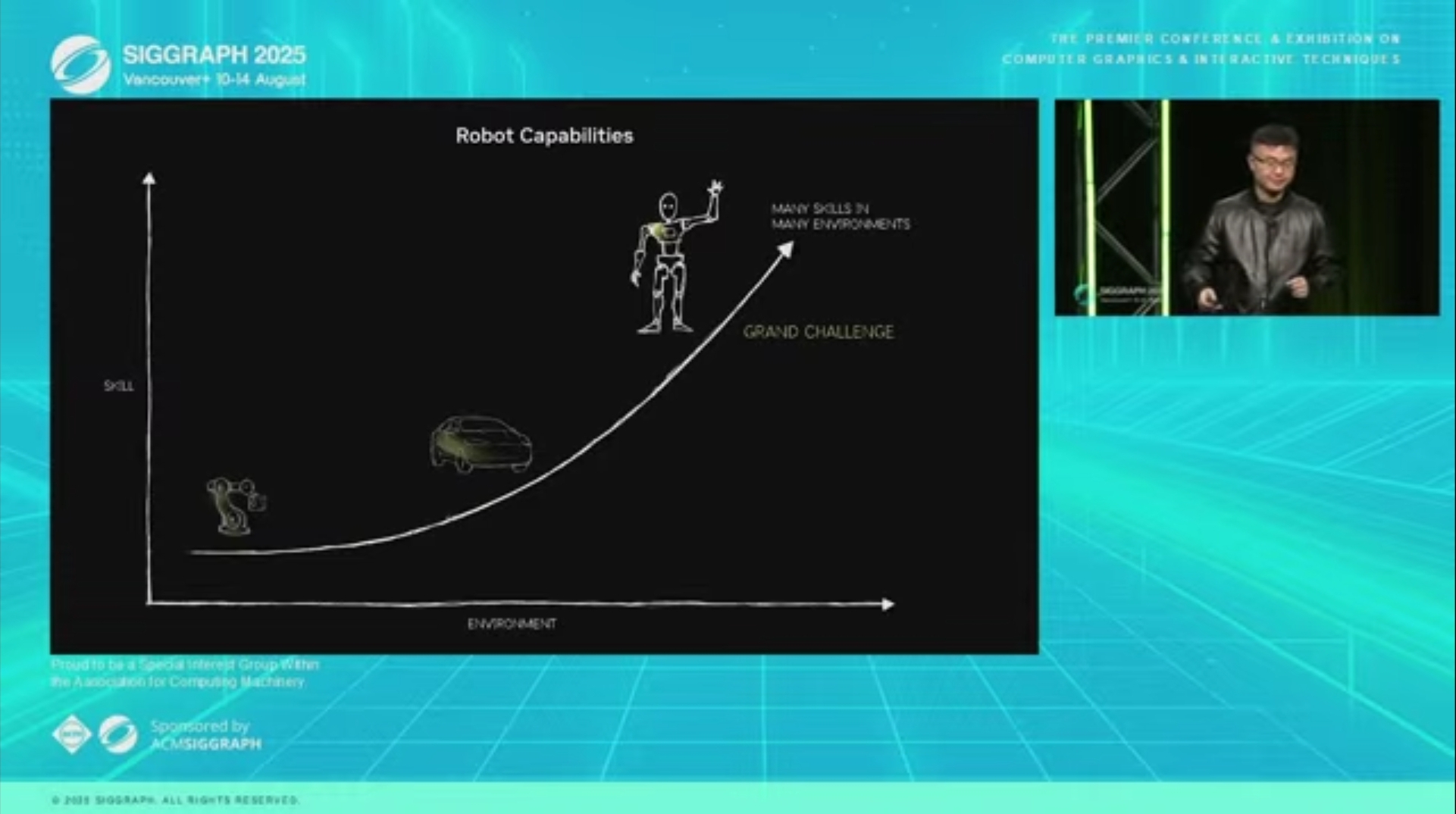
“所有移动的物体都能变成机器人”,英伟达加快物理AI部署
Di Yi Cai Jing· 2025-08-12 04:42
Core Viewpoint - The next wave of innovation is identified as Physical AI, which is emphasized by NVIDIA's CEO Jensen Huang, highlighting its potential to drive significant market growth in various sectors [1] Group 1: Physical AI Development - NVIDIA is accelerating its deployment in the Physical AI sector, which relies on neural graphics, synthetic data generation, physical modeling, reinforcement learning, and AI inference technologies [1] - Physical AI is expected to unlock a trillion-dollar market, as mentioned during the 2025 World Robot Conference [1] - At the SIGGRAPH 2025 conference, NVIDIA presented 16 papers focusing on Physical AI, indicating its central theme for the event [1][2] Group 2: Relationship Between Graphics and AI - There is a close relationship between Physical AI and graphics research, with advancements in rendering technology enabling the creation of realistic virtual worlds for training advanced Physical AI systems [2] - NVIDIA's rendering research has improved real-time path tracing performance by 10,000 times over nine years, showcasing significant technological progress [2] Group 3: Robotics and AI Integration - Future robots are expected to redefine operations in factories, warehouses, and agriculture, with a strong coupling between AI and simulation research [2] - Training robots in virtual environments is safer and more efficient than in the real world, allowing for rapid skill acquisition [2] Group 4: Product Launches and Innovations - NVIDIA has introduced several products related to Physical AI, including the Cosmos world model for generating synthetic driving scenarios and the open-source 70 billion parameter visual language model, Cosmos Reason [5] - New hardware solutions, such as the RTX PRO 6000 Blackwell server GPU, are being launched to support AI and Physical AI workloads [5]


港股午评:恒指微涨0.09% 半导体股拉升 苹果概念股继续强势 创新药高开低走
Ge Long Hui· 2025-08-12 04:08
Market Overview - The Hong Kong stock market showed mixed performance in the morning session, with the Hang Seng Index rising by 0.09% around the 25,000-point level, the Hang Seng China Enterprises Index increasing by 0.17%, while the Hang Seng Tech Index fell by 0.39% [1] Technology Sector - Major technology stocks exhibited weakness, with Kuaishou dropping nearly 7% and Alibaba declining by 1.35%. Baidu, Meituan, and Tencent also showed negative performance, while Xiaomi and JD.com experienced slight gains [1] - The demand for computing power driven by generative AI technology is surging, making semiconductor manufacturing a key focus within the industry. Semiconductor stocks saw an uptick, with SMIC rising over 3% [1] Apple Supply Chain - Institutions are optimistic about Apple's additional investments in the U.S., which is expected to positively impact the valuation of the Apple supply chain. Apple-related stocks continued to perform strongly, with BYD Electronics and Hon Teng Precision reaching new highs [1] Commodity and Other Sectors - Futures for coking coal continued to rise, leading to increased activity in coal stocks, supported by favorable industry news. Dairy stocks collectively rose, while gambling, real estate, insurance, and oil stocks also saw gains [1] Underperforming Sectors - Conversely, rare earth stocks declined, and the biopharmaceutical sector remained sluggish, with innovative drug stocks showing a pattern of high opening and low closing. Other sectors such as application software, military, paper, photovoltaic, education, and steel stocks mostly underperformed [1]
深聊GPT-5发布:过度营销的反噬与AI技术困局
Tai Mei Ti A P P· 2025-08-12 03:18
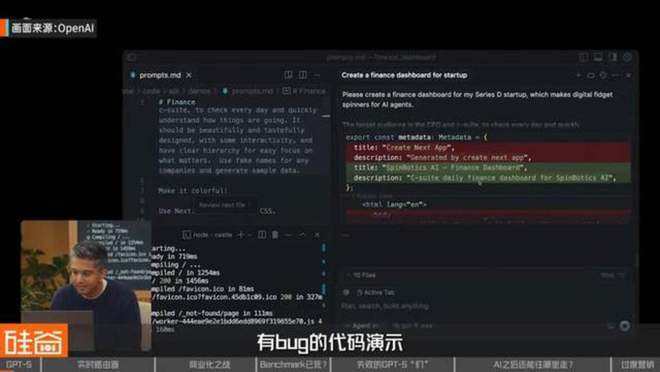
Core Viewpoint - The release of GPT-5 by OpenAI has faced significant criticism from users, leading to the reinstatement of GPT-4o for paid users. The expectations for GPT-5 were high, but the actual advancements were perceived as underwhelming compared to the leap from GPT-3 to GPT-4. The release highlighted various technical challenges and a shift in focus towards market competition and application in specific sectors like education, healthcare, and programming [1][3][4]. Group 1: Technical Challenges and Product Development - The development of GPT-5 encountered numerous technical bottlenecks, including data scarcity and model failures, which have raised concerns about OpenAI's ability to innovate [3][6][41]. - GPT-5 is speculated to be a "unifying system" that integrates various capabilities but relies on a "Real-time Model Router" to connect different sub-models rather than being a groundbreaking single model [6][7]. - The reliance on existing technologies for the routing system has led to skepticism about the novelty of GPT-5, with some experts suggesting it should be considered an incremental improvement rather than a significant upgrade [7][10]. Group 2: Market Implications and Application Areas - OpenAI is targeting three main verticals for GPT-5: education, healthcare, and programming, indicating a strategic shift towards commercial applications [13][14]. - The education sector is particularly highlighted, with concerns that ChatGPT could disrupt existing educational platforms, as evidenced by the stock fluctuations of language learning companies during the GPT-5 announcement [16][17]. - In healthcare, GPT-5 is positioned to assist patients in understanding complex medical information, potentially transforming patient-doctor interactions and empowering patients with knowledge [19][20]. Group 3: User Experience and Feedback - User feedback has been largely negative, with many expressing dissatisfaction over the perceived loss of customization and the effectiveness of GPT-5 compared to GPT-4o. This has led to calls for the return of the previous model [10][12]. - OpenAI's CEO has acknowledged the need for more customizable features and ongoing improvements to GPT-5 in response to user concerns [12][29]. Group 4: Future Directions and Innovations - The article discusses potential future directions for AI development, including reinforcement learning, multi-modal capabilities, and exploring alternative architectures like Joint Embedding Predictive Architecture (JEPA) to overcome the limitations of the current transformer-based models [46][57][62]. - The industry is at a critical juncture, with the need for breakthroughs in AI technology becoming increasingly urgent as existing models face diminishing returns in performance [41][63].
腾讯研究院AI速递 20250812
腾讯研究院· 2025-08-11 16:01
Group 1 - xAI announced the free global availability of Grok 4, limiting usage to 5 times every 12 hours, which has led to dissatisfaction among paid users who feel betrayed by the subscription model [1] - Inspur released the "Yuan Nao SD200" super-node AI server, integrating 64 cards into a unified memory system, capable of running multiple domestic open-source models simultaneously [2] - Zhiyuan published the GLM-4.5 technical report, revealing details on pre-training and post-training, achieving native integration of reasoning, coding, and agent capabilities in a single model [3] Group 2 - Kunlun Wanwei launched the SkyReels-A3 model, capable of generating high-quality digital human videos up to one minute long, optimized for hand motion interaction and camera control [4] - Chuangxiang Sanwei partnered with Tencent Cloud to enhance 3D generation capabilities for its AI modeling platform MakeNow, utilizing Tencent's mixed model [5][6] - Alibaba's DAMO Academy open-sourced three core components for embodied intelligence, including a visual-language-action model and a robot context protocol [7] Group 3 - Baichuan Intelligent released the 32B parameter medical enhancement model Baichuan-M2, outperforming all open-source models in the OpenAI HealthBench evaluation, second only to GPT-5 [8] - Lingqiao Intelligent showcased the DexHand021 Pro, a highly dexterous robotic hand with 22 degrees of freedom, designed to simulate human hand functions accurately [9] - A report indicated that 45% of enterprises have deployed large models in production, with users averaging 4.7 different products, highlighting low brand loyalty in a competitive landscape [10][12]
富士胶片集团发布2025财年第一季度财务报告
Zhong Guo Chan Ye Jing Ji Xin Xi Wang· 2025-08-11 13:46
Core Insights - Fujifilm Holdings Corporation reported a slight year-on-year increase of 0.1% in sales revenue for Q1 of FY2025, reaching 749.5 billion yen, driven by strong performance in Bio CDMO, semiconductor materials, and imaging businesses, which offset adverse effects from currency fluctuations [1][2] - All business segments achieved growth in operating profit, with the imaging segment showing remarkable performance, with operating profit increasing by 21.1% to 75.3 billion yen [1][2] - Net profit attributable to Fujifilm Holdings decreased by 11.5% year-on-year to 53.8 billion yen due to foreign exchange losses [1] Business Segment Highlights Medical Health - Sales revenue was 228.5 billion yen, a slight decrease of 2.9% year-on-year, while operating profit increased by 20.7% to 4.3 billion yen [2] - The decline in sales revenue was primarily due to reduced demand for medical materials in the Chinese market [3] Bio CDMO - Sales revenue increased due to contributions from a new factory in Denmark and the resumption of operations at the Texas production facility in the U.S. [3] Life Sciences - Sales revenue improved due to a recovery in the cell culture media market and strong demand for chemical reagents [4] Electronic Materials - Sales revenue was 102.1 billion yen, a slight decrease of 0.9%, while operating profit rose by 13.0% to 22.5 billion yen [5] - Demand for advanced semiconductor materials for generative AI contributed to a 3.8% increase in sales revenue [6] Imaging - Sales revenue increased by 11.2% to 145.3 billion yen, with operating profit rising significantly by 28.4% to 41.8 billion yen [8] - Strong sales of instant imaging systems and digital cameras drove revenue growth [9][10] Commercial Innovation - Sales revenue was 273.6 billion yen, a slight decrease of 2.3%, while operating profit increased by 7.9% to 15.6 billion yen [11] - The business solutions segment benefited from increased sales related to digital transformation solutions [12] - The office solutions segment experienced a decline in sales revenue due to adjustments in the sales structure of low-margin products in the Chinese market [13]
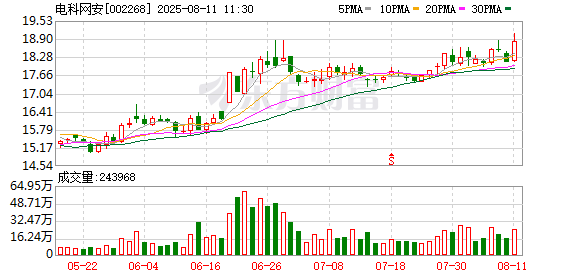
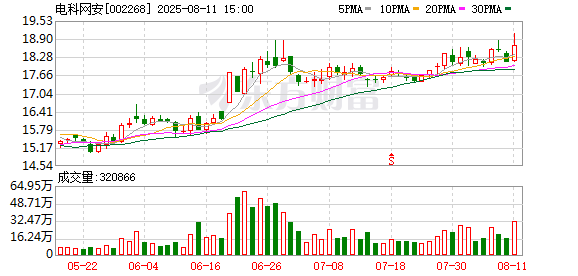
电科网安:公司开展面向安全领域的生成式AI大模型研究
Zheng Quan Ri Bao· 2025-08-11 09:43
(文章来源:证券日报) 证券日报网讯电科网安8月11日在互动平台回答投资者提问时表示,公司开展面向安全领域的生成式AI 大模型研究,尚未具备AI智能体。 ...

What's Next With Duolingo Stock?
Forbes· 2025-08-11 09:20
Core Insights - Duolingo has evolved into a leading AI-driven educational platform, reporting Q2 2025 revenues of $252.3 million, a 42% year-over-year growth, and a net income of $88.6 million, up over 450% from the previous year [2][4] - Daily active users reached 47.7 million, marking a 40% increase, driven by the popularity of AI-enhanced subscription tiers, particularly Duolingo Max [2][3] Financial Performance - Free cash flow has surpassed $270 million, with improving EBITDA margins [4] - Total revenue for 2025 is projected to be between $1.01 billion and $1.02 billion, with long-term annual growth expected at 25-30% [4] - The company maintains a high valuation, with a forward P/E ratio around 103x and a price-to-sales ratio near 18x, reflecting high performance expectations [4] Product Development and Market Expansion - The implementation of generative AI has significantly reduced course development time, allowing the release of over 140 new courses in a year [3] - Duolingo is diversifying beyond language learning, introducing a beta chess course and planning to expand into subjects like math and music, with projections for the chess product to generate $60–$150 million in bookings by 2026 [3] Market Reaction - Following the earnings announcement, Duolingo's stock surged 21% in pre-market trading, indicating strong market confidence in the company's growth trajectory [2]


新闻业的韧性,在AI时代前所未有地凸显
腾讯研究院· 2025-08-11 08:33
Core Viewpoint - The article discusses the cognitive revolution in the news industry driven by generative AI, emphasizing the transformation of news production processes and the evolving relationship between journalists and technology [6][10][11]. Group 1: Historical Context of Technological Outsourcing - The history of human technological advancement can be viewed as a process of "outsourcing" human capabilities, both physical and cognitive [5][8]. - The evolution of media has consistently extended human cognitive abilities, from the invention of writing to the internet, which has facilitated global knowledge sharing [8][9]. Group 2: Impact of Generative AI on News Industry - Generative AI represents a deeper version of cognitive outsourcing, significantly altering the workflow in journalism by transforming traditional processes into a more collaborative model between AI and journalists [10][11]. - The traditional linear workflow of news production has been restructured, allowing for faster content generation and distribution, with AI assisting in various stages of the process [11][12]. Group 3: Changing Roles of Journalists - Journalists are transitioning from active information gatherers to information curators and content validators, raising questions about the implications of this shift [13][14]. - Different media organizations are responding to generative AI in varied ways, with some embracing the technology while others resist it, reflecting a spectrum of adaptation strategies [13][14]. Group 4: Resilience of the News Industry - The article argues against the deterministic view that technology will completely replace journalism, highlighting the unique human qualities that remain irreplaceable, such as empathy, critical thinking, and deep contextual understanding [15][16]. - Historical trends show that journalism has consistently adapted to technological changes, suggesting that the industry will continue to evolve rather than disappear [14][15]. Group 5: Future of Journalism in the Age of AI - The future of journalism will likely involve a focus on depth and quality of content, with human journalists concentrating on in-depth reporting and analysis, while AI handles more routine tasks [19][20]. - The article concludes that the integration of AI should enhance human qualities in journalism, positioning these traits as essential for the industry's survival and relevance [22][20].

新材料周报:2025年全球十大半导体厂商资本支出同比增长7%,英伟达正式获得H20对华出口许可-20250811
Huafu Securities· 2025-08-11 07:07
行 华福证券 基础化工 2025 年 08 月 11 日 业 研 究 行 基础化工 新材料周报:2025 年全球十大半导体厂商资本支 出同比增长 7%,英伟达正式获得 H20 对华出口 许可 投资要点: 业 定 期 报 告 本周行情回顾。本周(2025.08.04-2025.08.08),Wind 新材料指数收报 4182.68 点,环比上涨 2.57%。其中,涨幅前五的有皇马科技(16.52%)、仙鹤股 份(12.23%)、国恩股份(10.69%)、普利特(9.94%)、金发科技(9.85%);跌幅前五 的有阳谷华泰(-5.08%)、联瑞新材(-4.2%)、福斯特(-3.71%)、金博股份(-3.34%)、 确成股份(-2.85%)。六个子行业中,申万三级行业半导体材料指数收报 6489.25 点,环比上涨 2.91%;申万三级行业显示器件材料指数收报 1096.63 点,环比 上涨 0.7%;中信三级行业有机硅材料指数收报 6667.77 点,环比上涨 0.9%; 中信三级行业碳纤维指数收报 1288.95 点,环比下跌 0.01%;中信三级行业锂 电指数收报 1927.17 点,环比上涨 2.01%;W ...
电科网安:公司开展面向安全领域的生成式AI大模型研究,尚未具备AI智能体
Mei Ri Jing Ji Xin Wen· 2025-08-11 04:52
Group 1 - The company is conducting research on generative AI models focused on the security field [2] - The company does not currently possess an AI intelligent agent [2]